
















In Situ Studio and Surface 678 add elevated "canopy walk" to North Carolina park
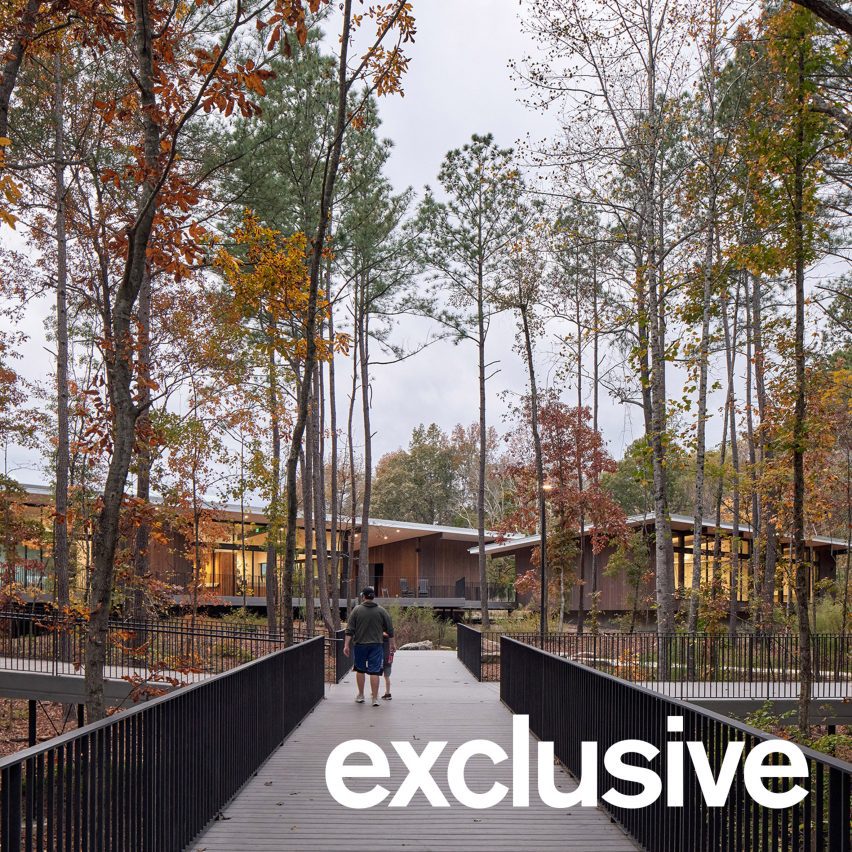
A wildlife viewing deck and an elevated "canopy walk" through the forest are among the features at Beech Bluff County Park, which was designed by local firms In Situ Studio and Surface 678 for an area near Raleigh, USA.
The 300-acre (121-hectare) park is located in southeastern Wake County, a suburban area that has experienced rapid development and population growth in recent years.
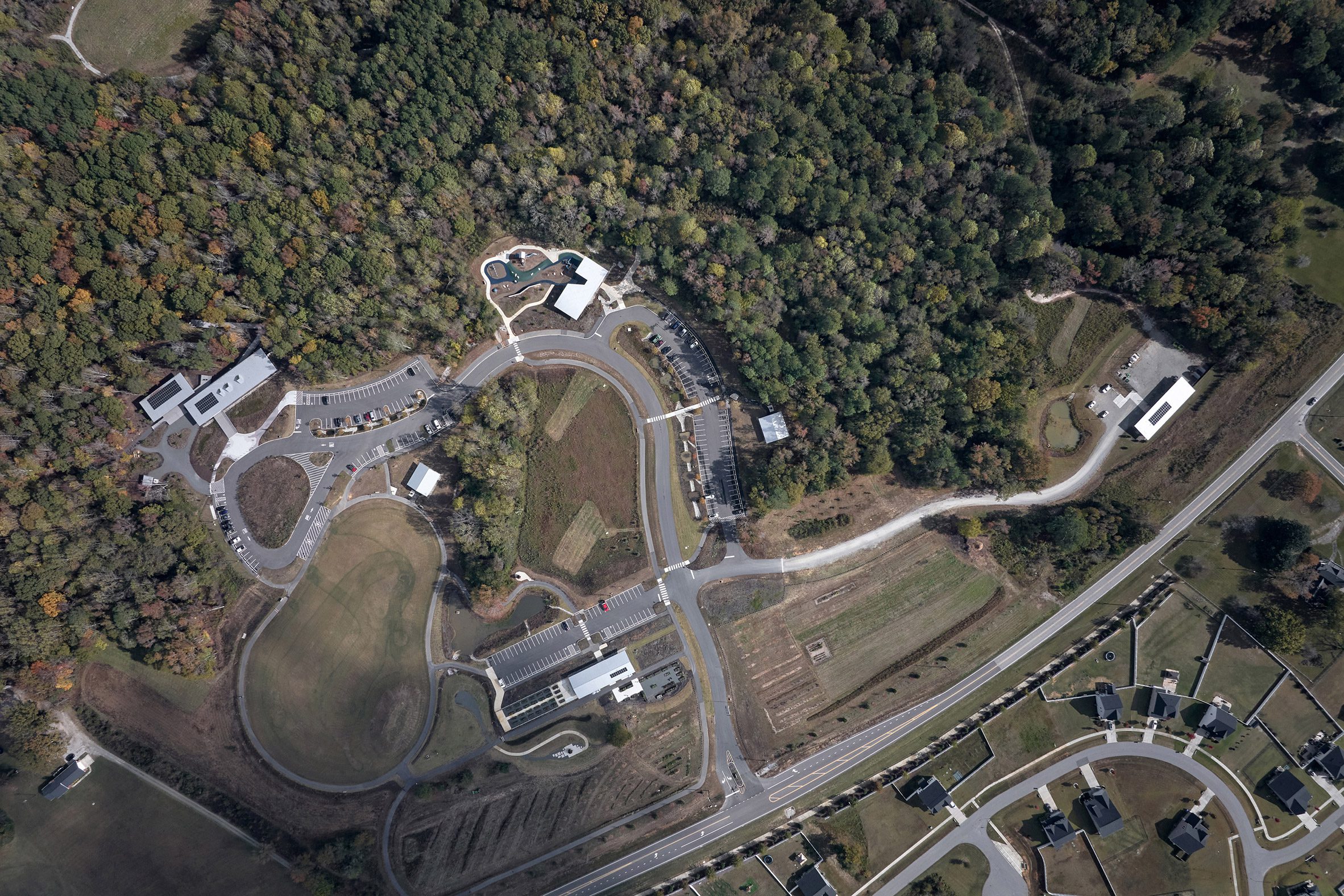
Local firm In Situ Studio designed the park's new structures, which Surface 678 – based in Durham, North Carolina, was the landscape architect.
Much of the park was farmland that was decommissioned and donated to the county. Also found on the site is a large swath of forest.
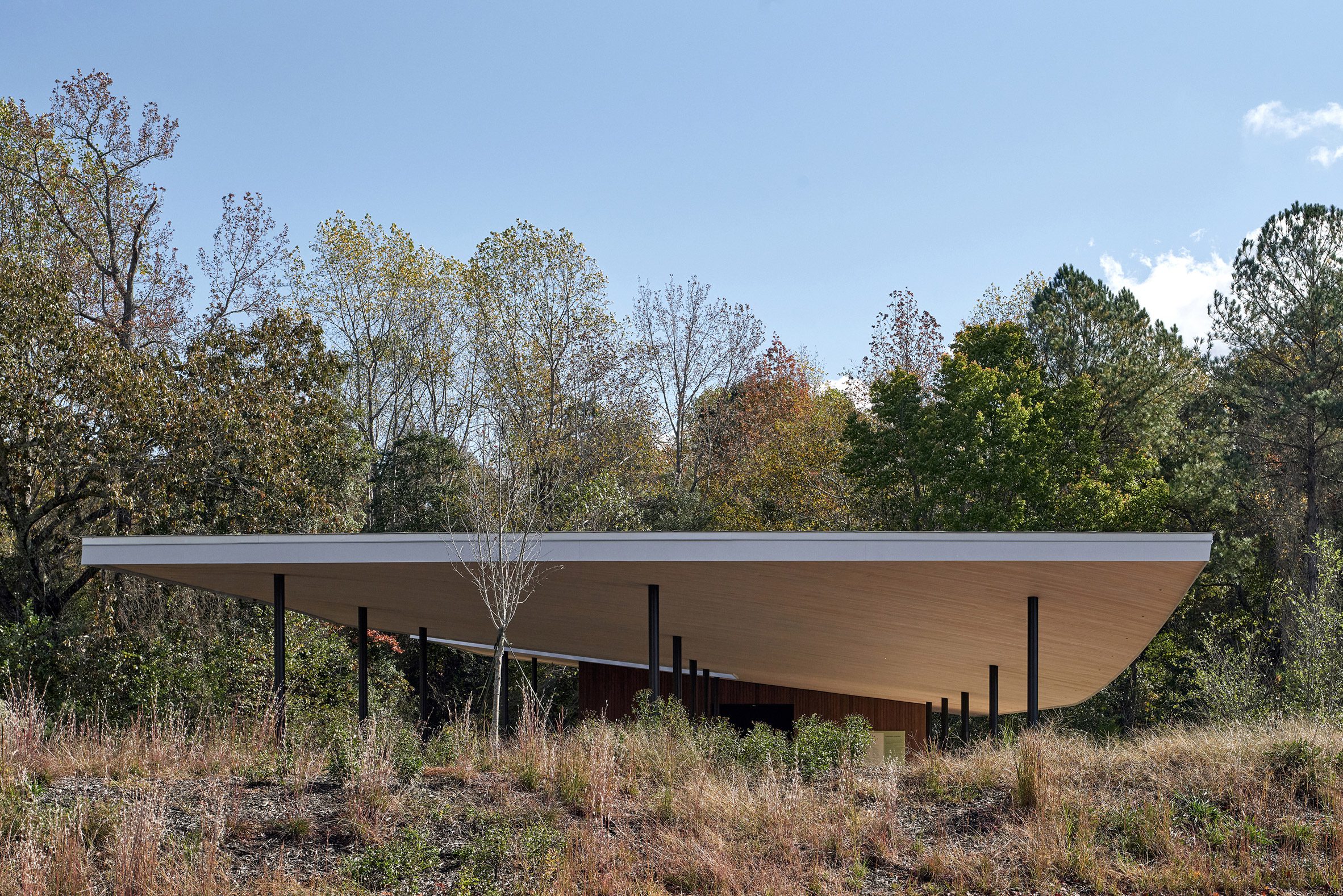
Driven by a desire to be "awake to the site and sensitive to the climate", the team sought to preserve the natural habitat while activating the former agricultural fields for public recreation.
In the forested area at the north of the site, the team created several miles of hiking trails.
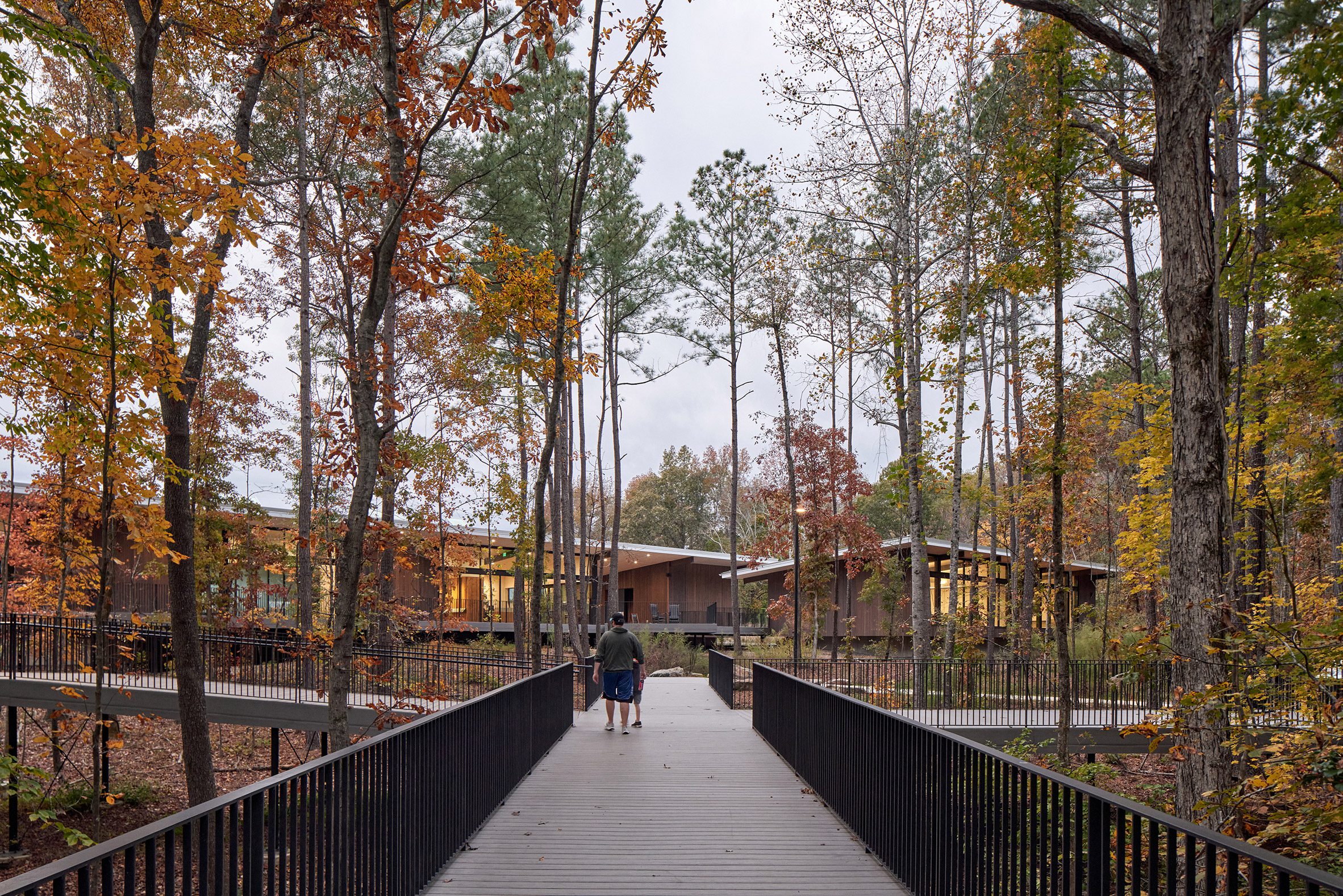
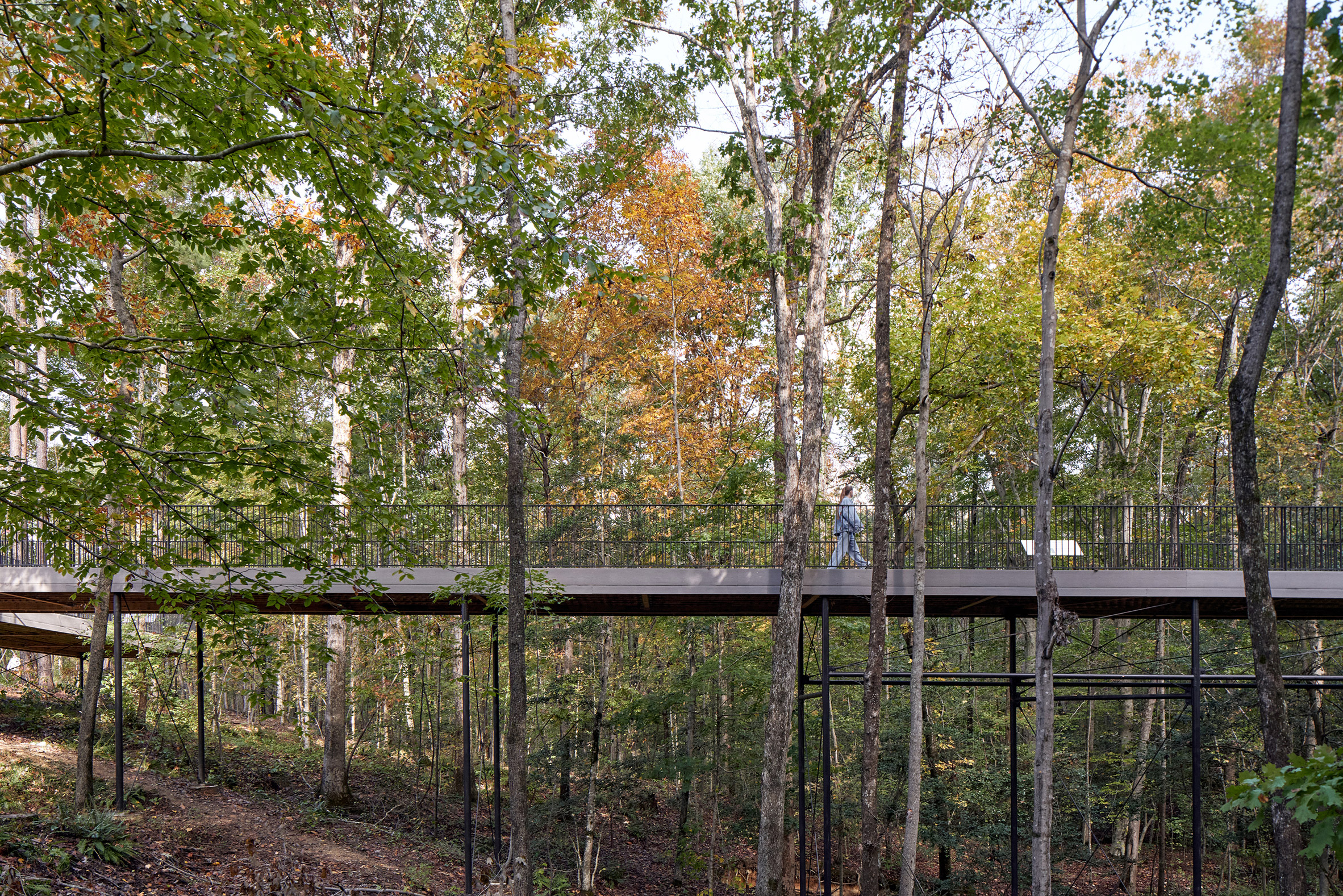
One of the biggest additions is a "forest canopy walk" that was raised 25 feet (7.6 metres) above the ground and traverses a stream running through the site. Adjoining the elevated pathway is a wildlife viewing terrace.
In the southern part of the park the studios added six new structures and recreational spaces such as a playground, community gardens and a great lawn. There also are agricultural fields used for educational purposes.
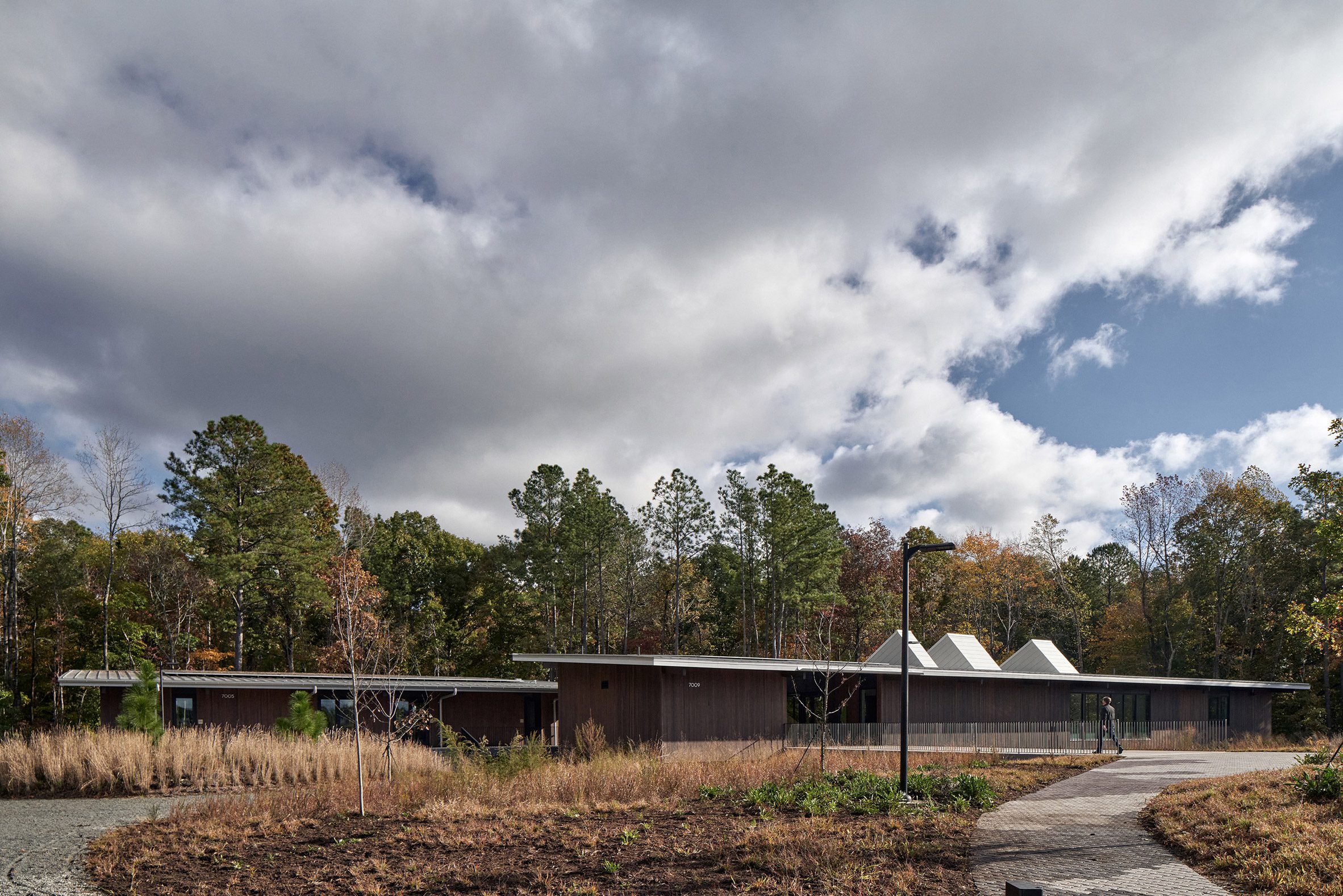
The structures include an educational centre and picnic pavilions, which were designed to work in harmony with the natural terrain.
"The complimentary designs of the buildings and landscape allow people to experience the beauty of the Piedmont," said the studio, referring to North Carolina's central plateau region, known for its verdant rolling hills.
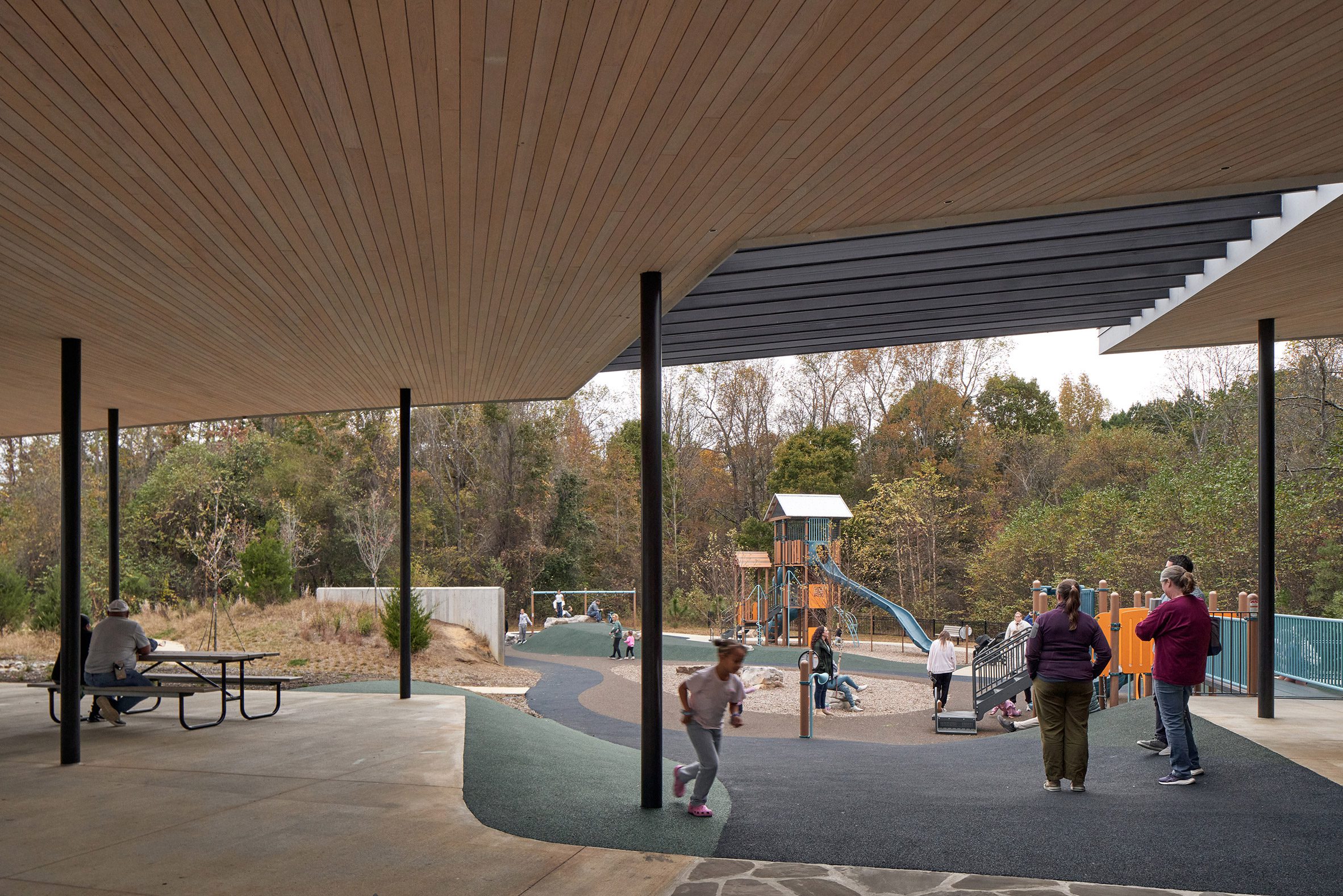
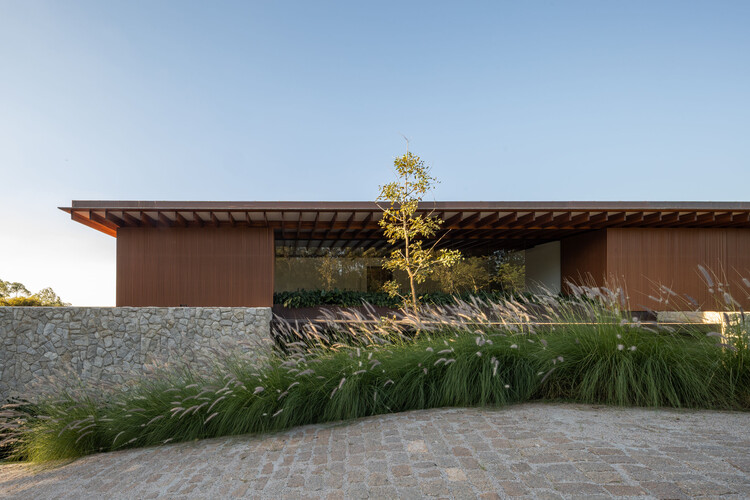
Concrete was used for the foundations and slabs, while wood was mostly used for the structural system.
Walls were wrapped in cypress, and roofs are clad in standing-steam Galvalume, which is made of cold-rolled steel dipped in aluminium and zinc alloys.
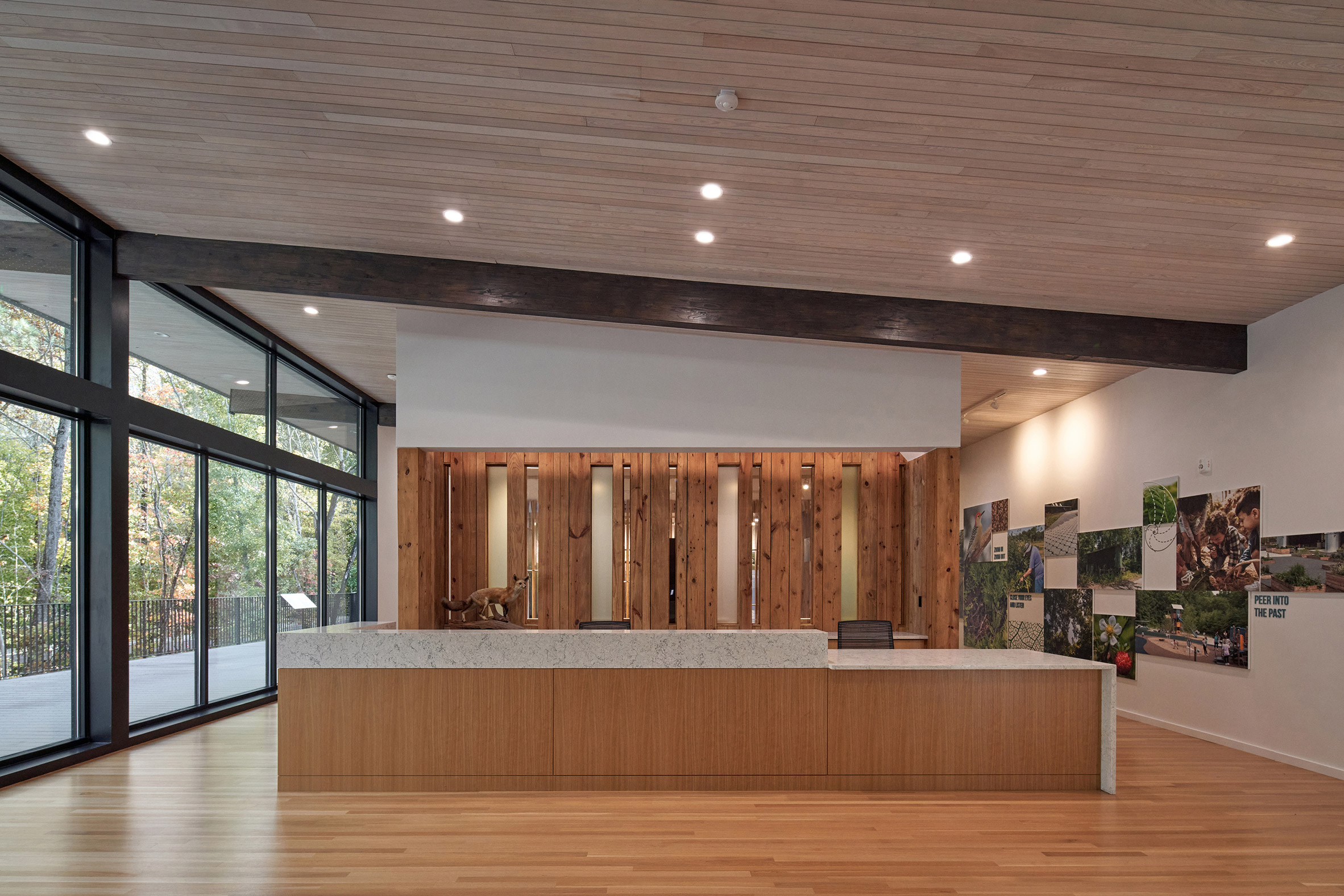
Salvaged material from old farm structures was used to build interior elements, such as educational exhibits, and was also used to create fencing in the park.
To conserve energy, the team incorporated both active and passive strategies into the park structures. These include careful solar orientation, broad roofs with reflective surfaces, and geothermal heating and cooling.
Three of the six structures have photovoltaic arrays, which help generate power for the site.
The park is expected to become an important recreation hub in a "rapidly developing and under-served area of southeast Wake County".
"The park and structures within are intended to become a 'central park' for dozens of new communities and thousands of new homes that have already been built or are planned within a five-mile radius of the park," the team said.
Other projects by In Situ Studio include the overhaul of a mid-century home that was the childhood residence of musician James Taylor, and the creation of a visitor centre at a Raleigh art museum, which features a canopy structure with a sculptural cutout.
The photography is by Cristobal Palma.
Project credits:
Landscape architect: Surface 678
Civil engineer: The Wooten Company
Structural engineer: Lysaght & Associates
PMA engineer: Sigma Engineered Solutions
Contractor: BAR Construction
Client: Wake County Parks Recreation and Open Space
The post In Situ Studio and Surface 678 add elevated "canopy walk" to North Carolina park appeared first on Dezeen.