

.jpg)





Beyond the Ceiling Grid: 7 Office Spaces That Boycott the “Big Light”

Architizer’s newest print publication is available for order! How to Visualize Architecture is an educational guide designed to help you master the craft of architectural storytelling and visual communication. Secure your copy today.
The “big light” debate has quietly made its way into the workplace, and younger generations are not on board. Flat, overhead lighting feels especially out of place in offices where most tasks already happen on screens. It adds strain, washes out materials, and makes long hours harder to tolerate.
As expectations shift, so do interiors. Workspaces are becoming calmer and more considered, with lighting that sits in the background rather than dominating the room. Softer illumination, filtered daylight and localized sources create spaces that feel easier to focus in and more comfortable to occupy.
These projects reflect that change, showing how atmosphere is starting to matter just as much as program when it comes to function.
Salesforce Tokyo Ohana Floor
By Mark Cavagnero Associates, Tokyo, Japan
Popular Choice Winner, 13th Annual A+Awards, Commercial Interiors (<25 000 sq ft)
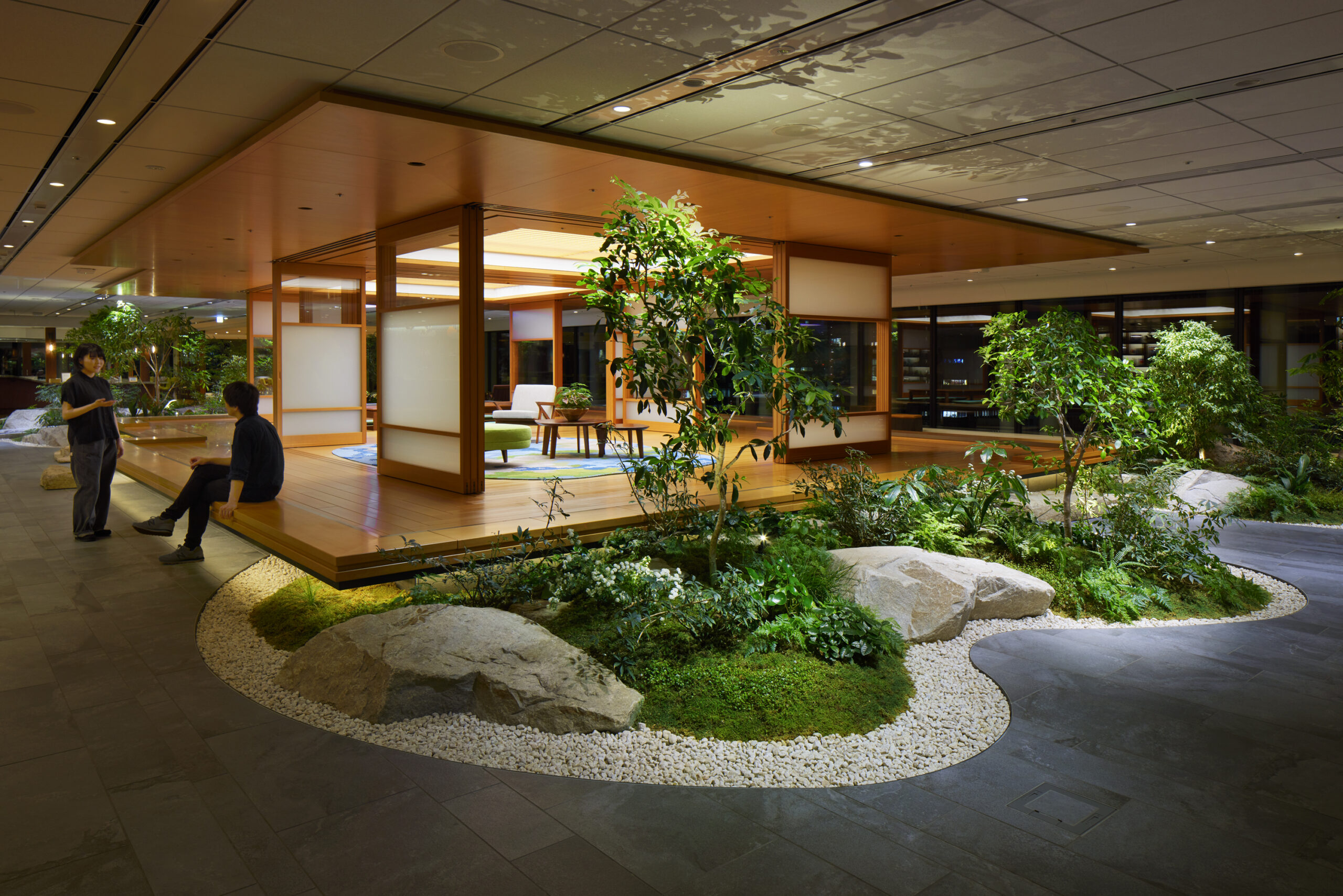
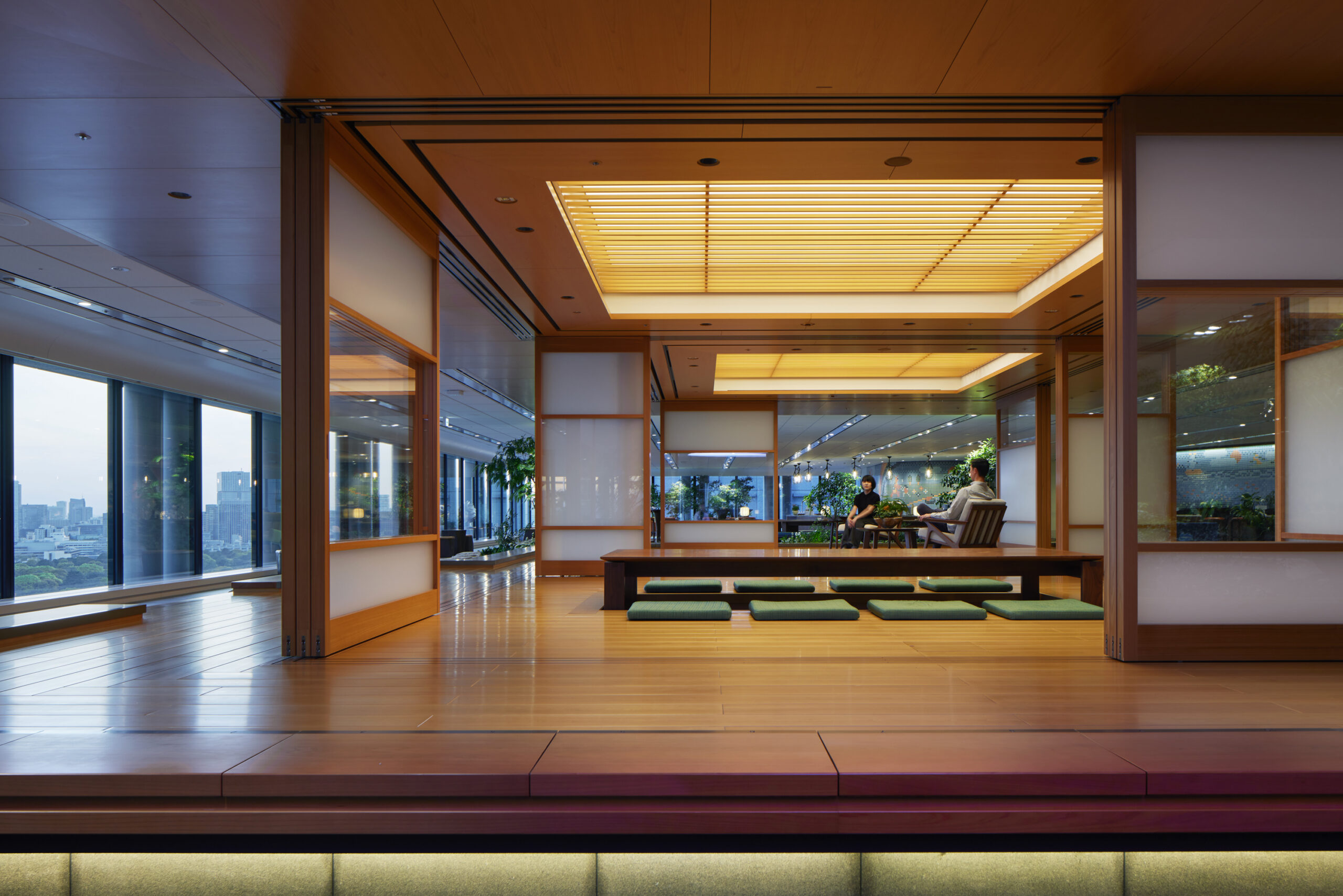 High above Tokyo, this floor feels like a retreat suspended in the city. A Japanese house sits at its center, surrounded by an indoor garden that sets a slower pace. Lighting is kept soft and controlled, washing across hinoki wood and filtering through screens to avoid any harsh glare. It gives the space a calm, evening-like tone even during the day. People gather along the engawa, move between dining areas, or settle into flexible rooms that shift with use. The atmosphere is open and social, with quiet moments built into the overall experience.
100 Congress Lobby
By Olson Kundig, Austin, Texas
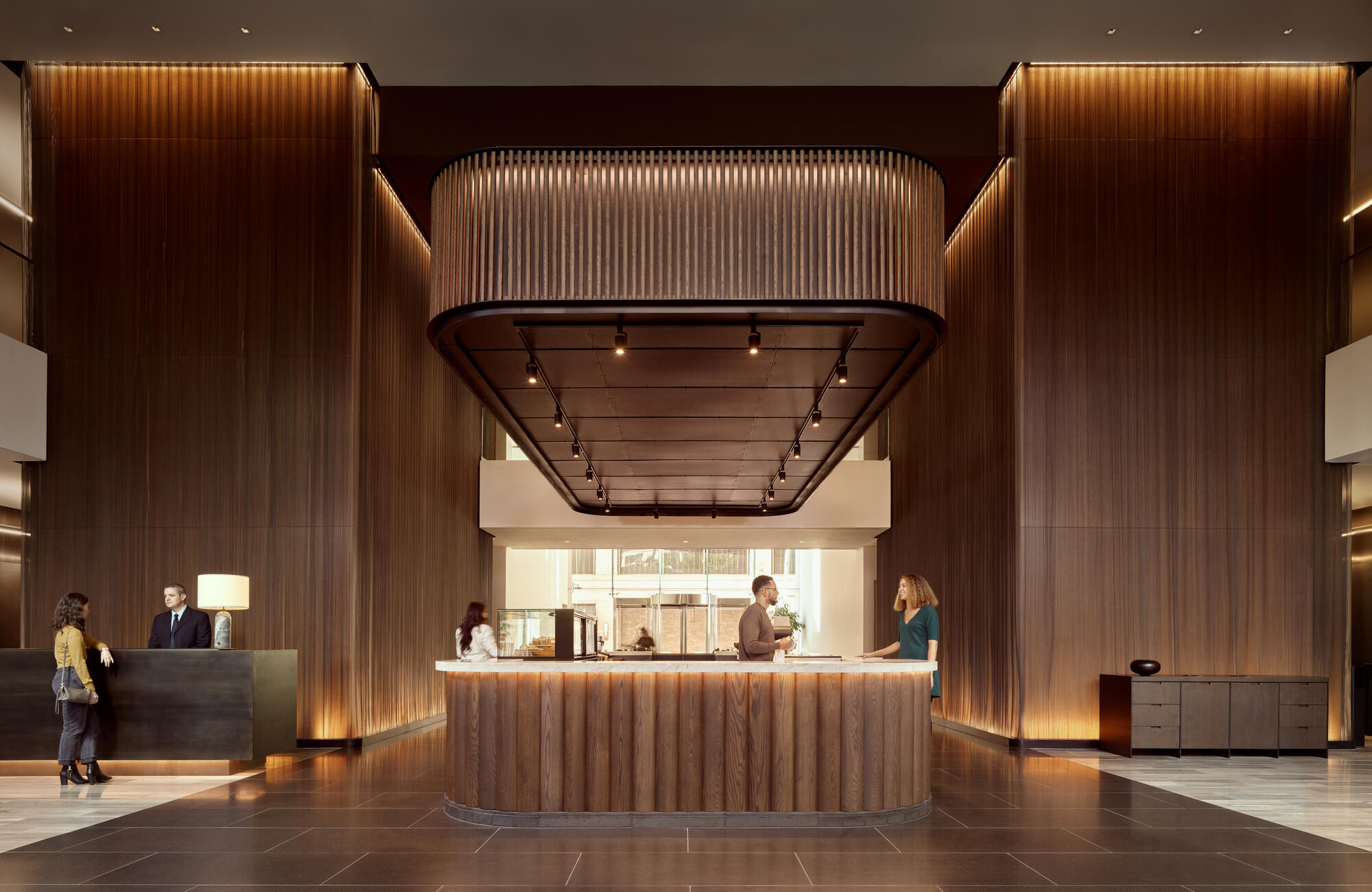
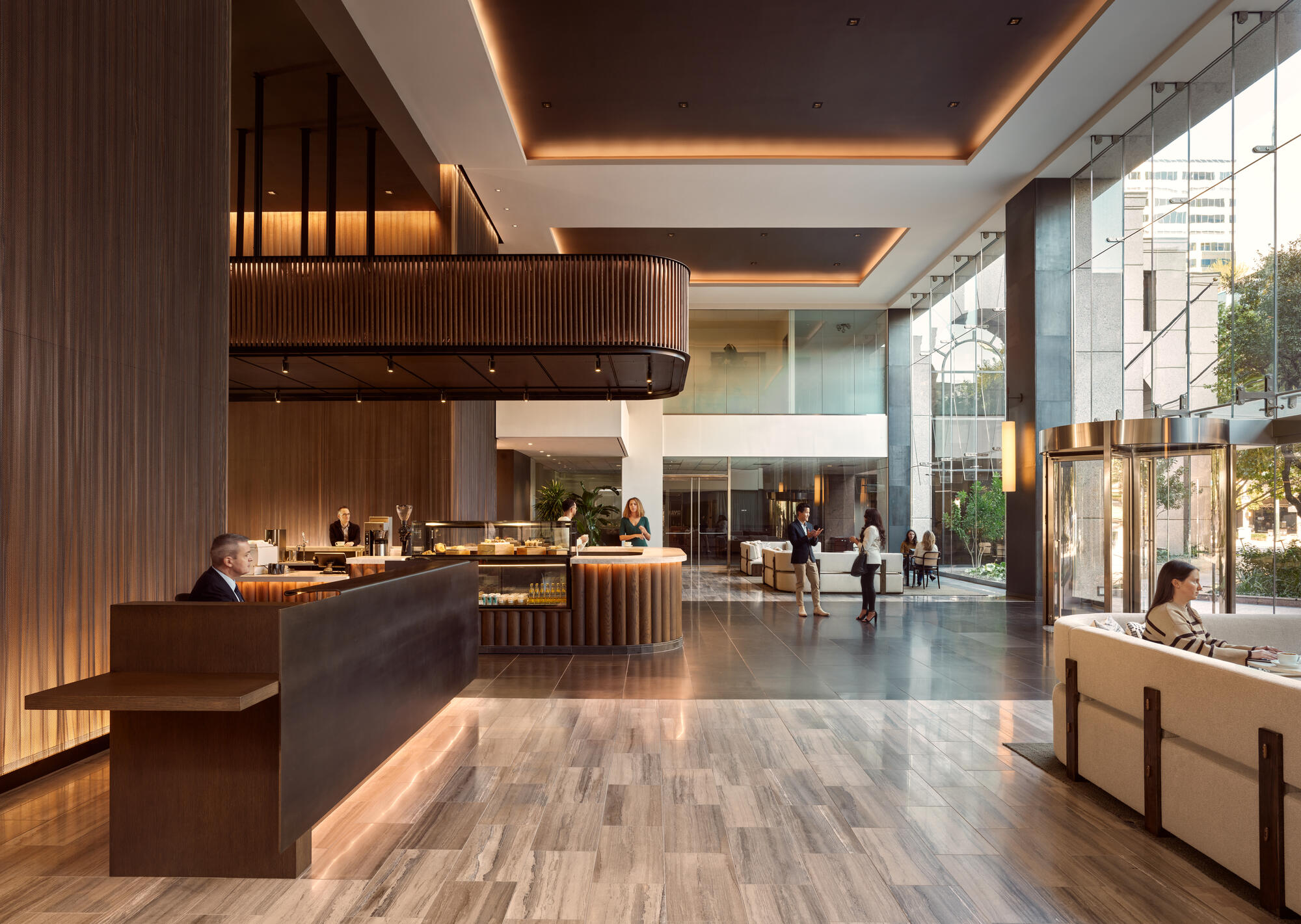 This office lobby trades formality for comfort, making it feel closer to a hotel lounge than a corporate entry. A central café anchors the space and draws people in throughout the day. Seating areas frame views toward a planted garden, softening the arrival experience.
Wood surfaces, woven elements and rich finishes give the interior a grounded, tactile quality. Art and textiles introduce color and personality without overwhelming the room. A former bank vault is opened into a stair and fitness level below, adding movement and curiosity. The result is an office that feels social, relaxed and easy to spend time in.
GO HQ
By FMA, Morelia, Mexico
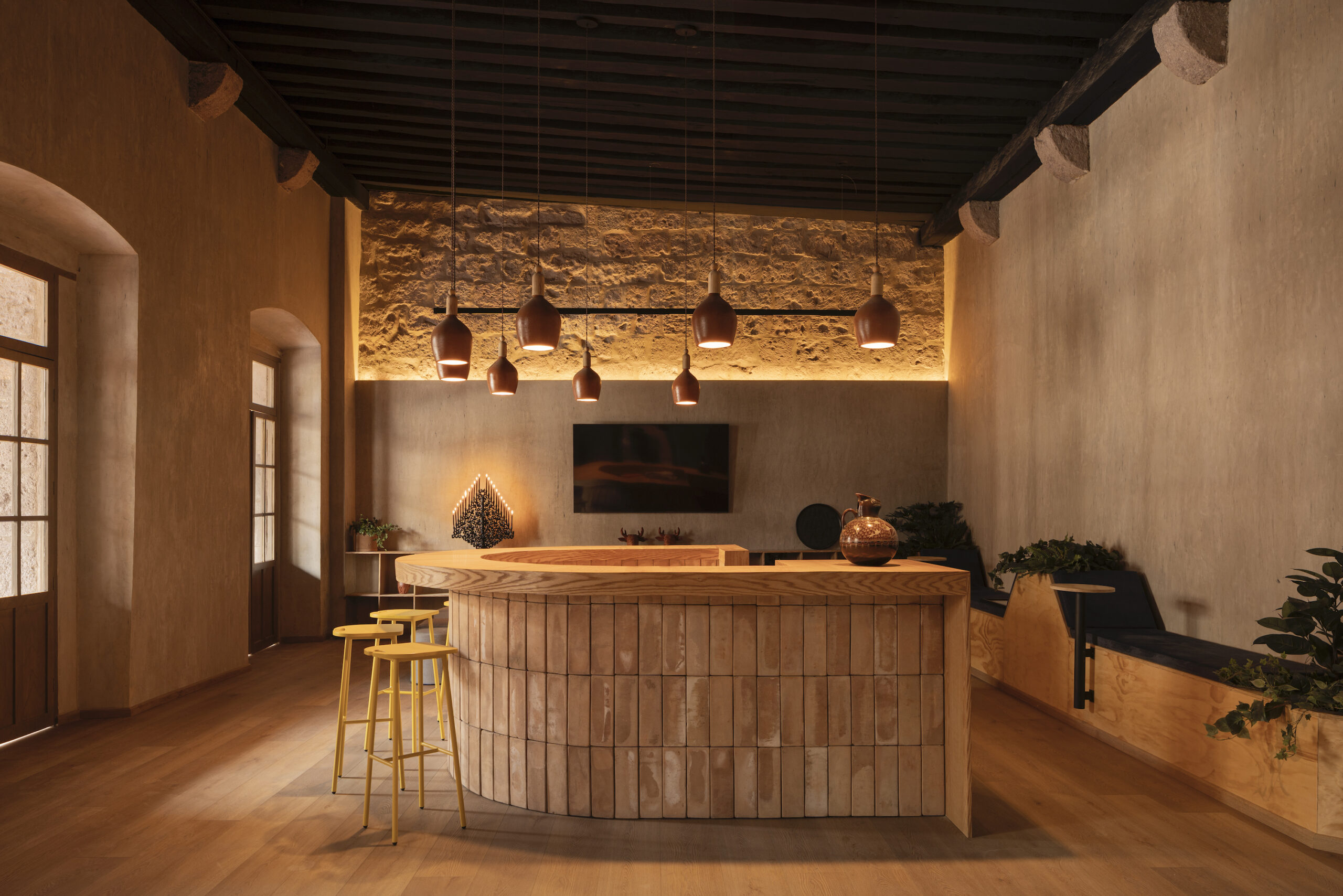 Set inside a former convent, GO HQ keeps the original structure and builds a softer rhythm around it. The courtyard becomes a shared dining space with orange trees that double as informal work spots.
Upstairs, rooms act like living areas, shifting between work and rest. A library works as a reception. An auditorium doubles as a meeting room. A quiet meditation room offers space to reset.
Lighting follows a circadian system, adjusting throughout the day to support focus and comfort. Materials stay warm and local, with oak, clay and soft plaster tones shaping a relaxed, human atmosphere.
Studio at Volta
By Bora Architecture & Interiors, Portland, Oregon
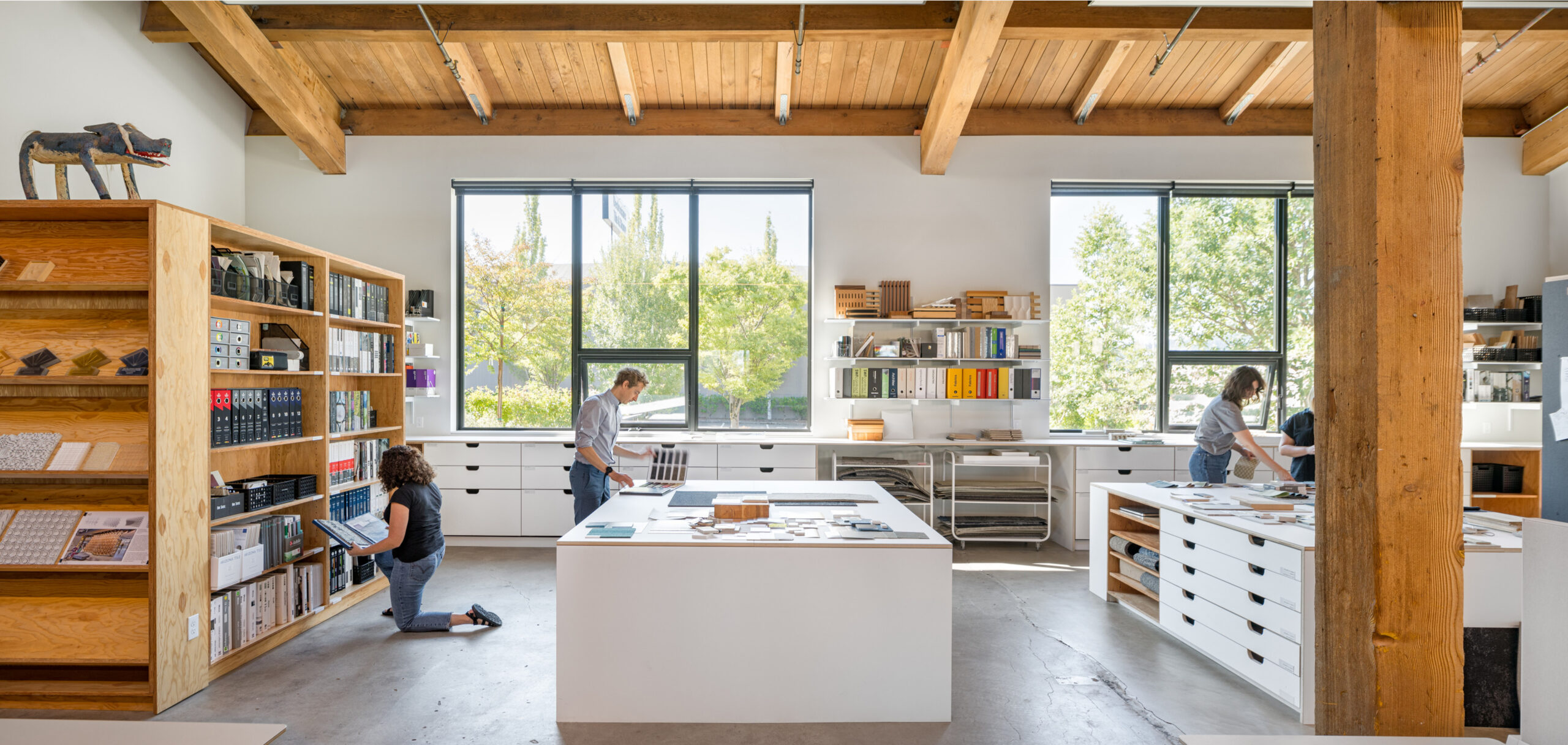
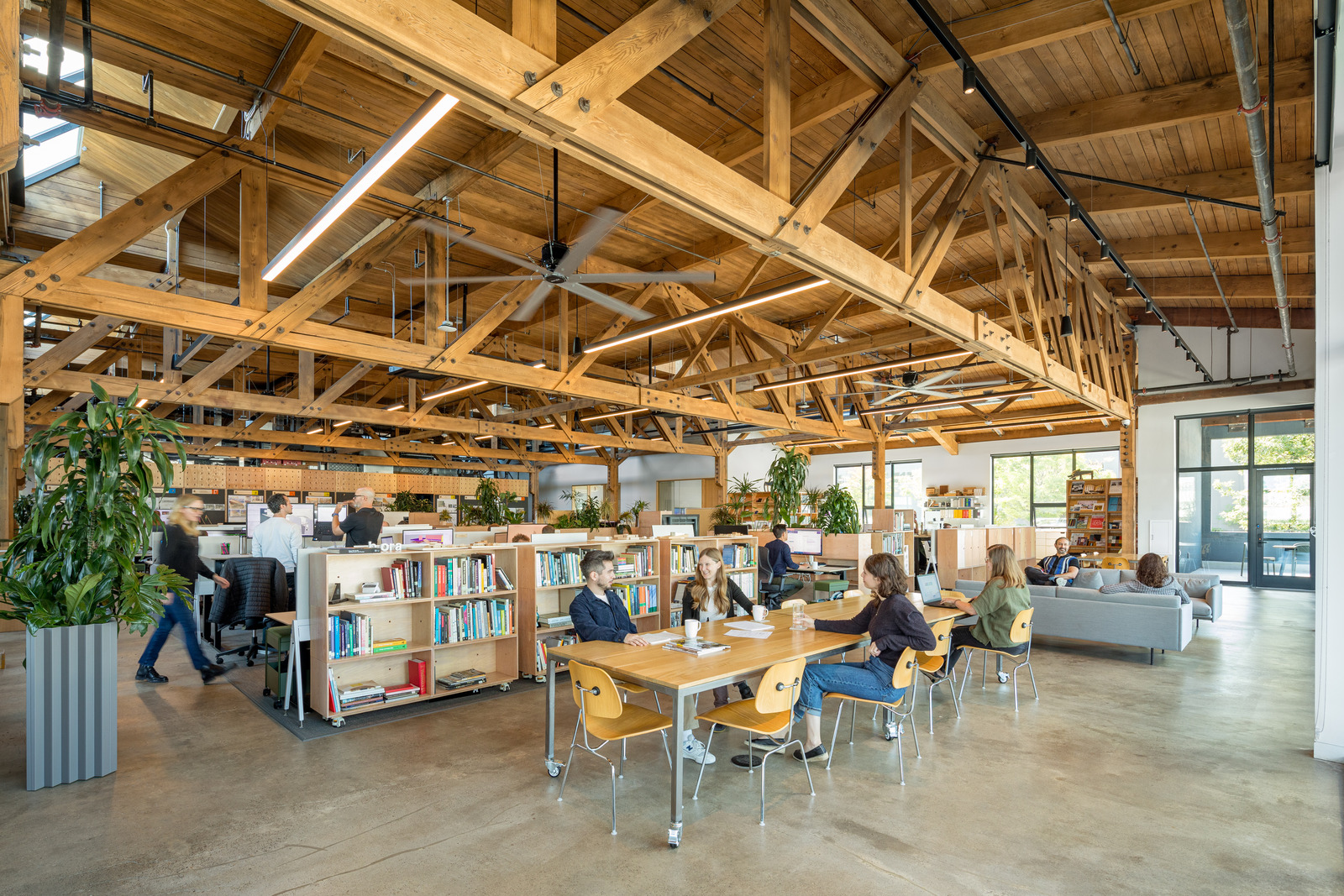 What was once an electrical supply warehouse is now an open design studio shaped around movement and making. The original timber frame remains in view, setting a rough, honest backdrop, while new elements are placed lightly within it. A perforated box gathers meeting rooms and workspaces, helping organize the plan without closing it off. From there, everything flows outward into flexible areas that shift with use. Daylight carries the project. Enlarged windows and tuned roof monitors draw it deep inside, softening the atmosphere and replacing the usual office glare with something far more natural and easy to work in.
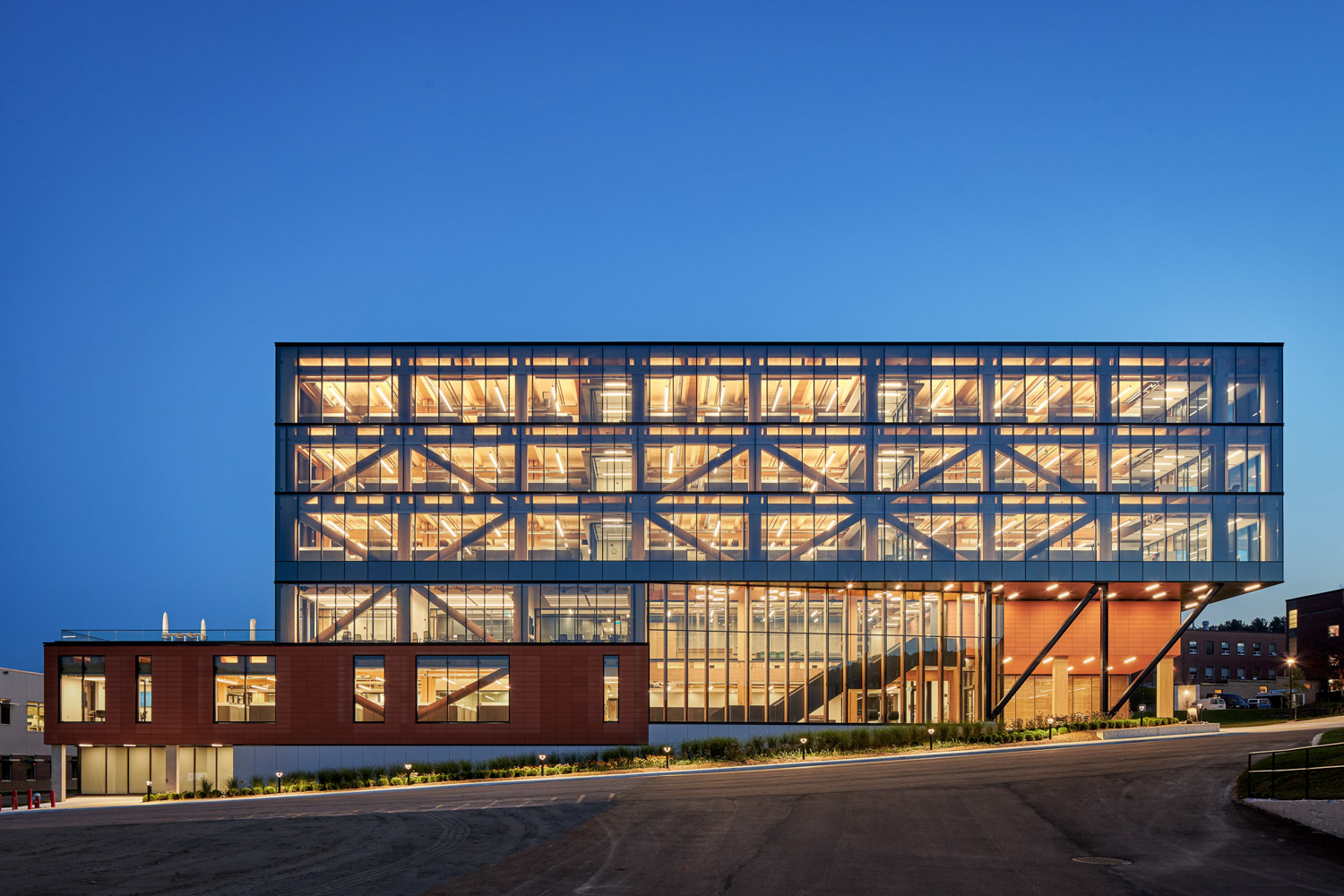
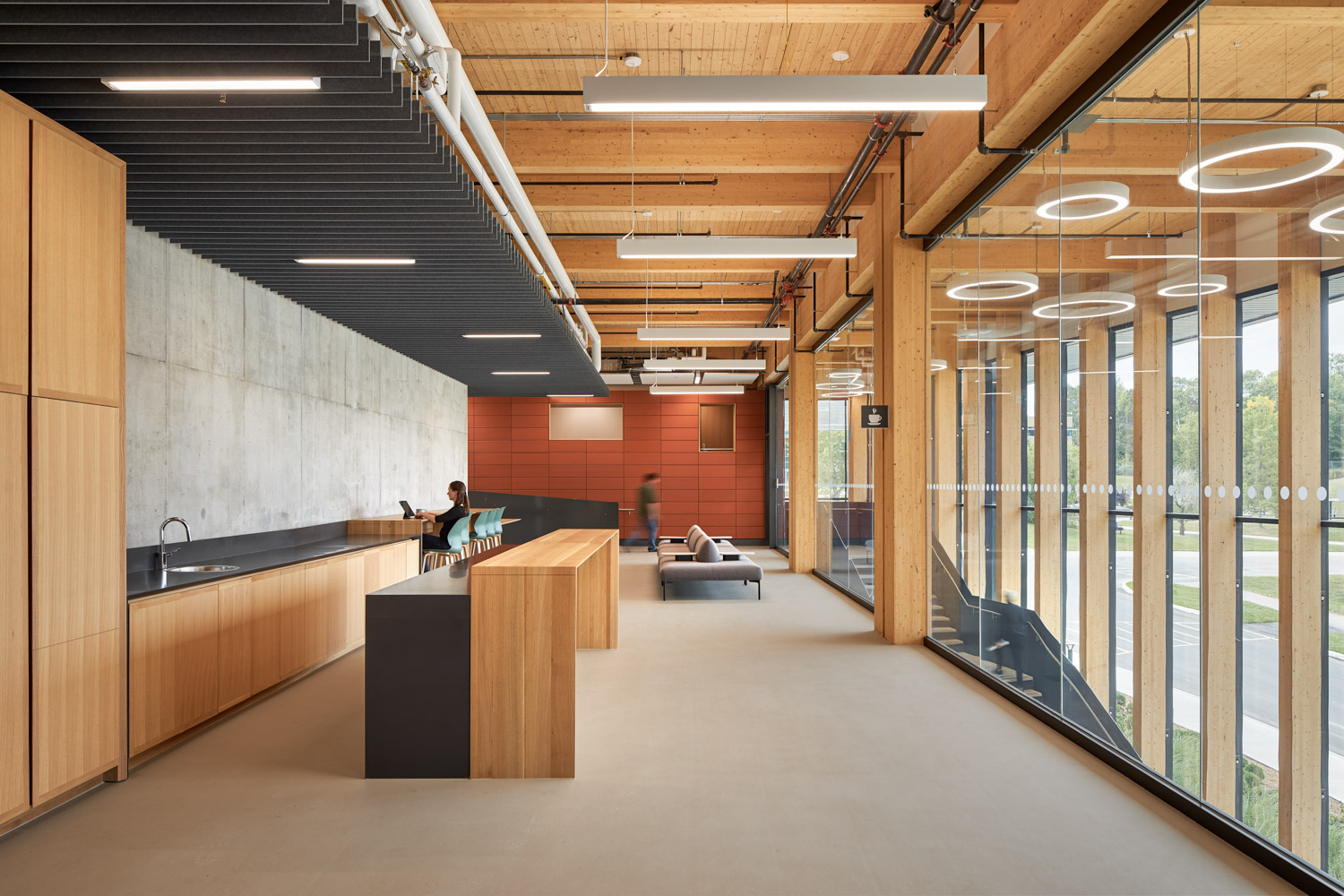
CNL Science Collaboration Centre
By HDR, Chalk River, Canada
Web Artist Office
By OAOA Studio, Hangzhou, China
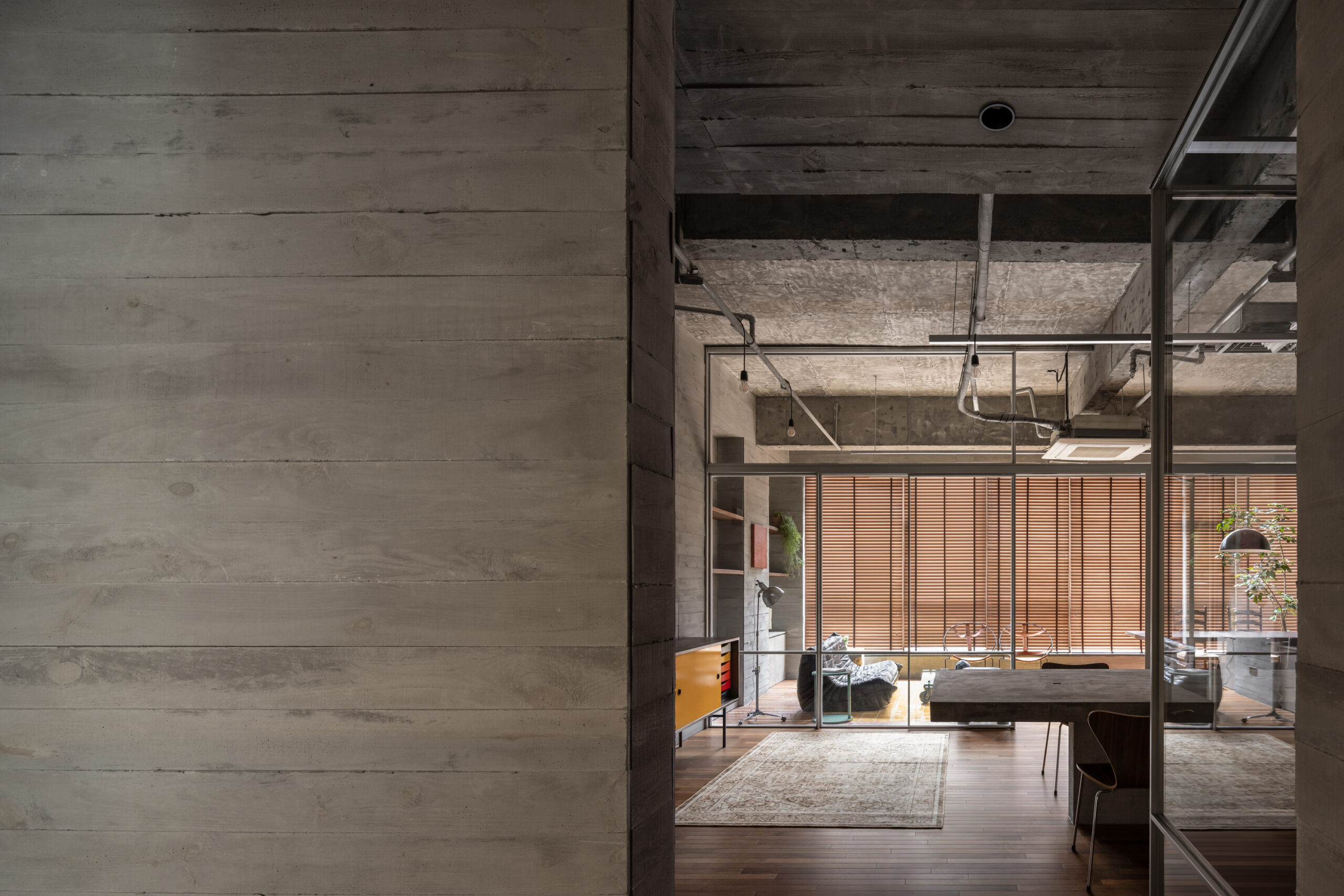
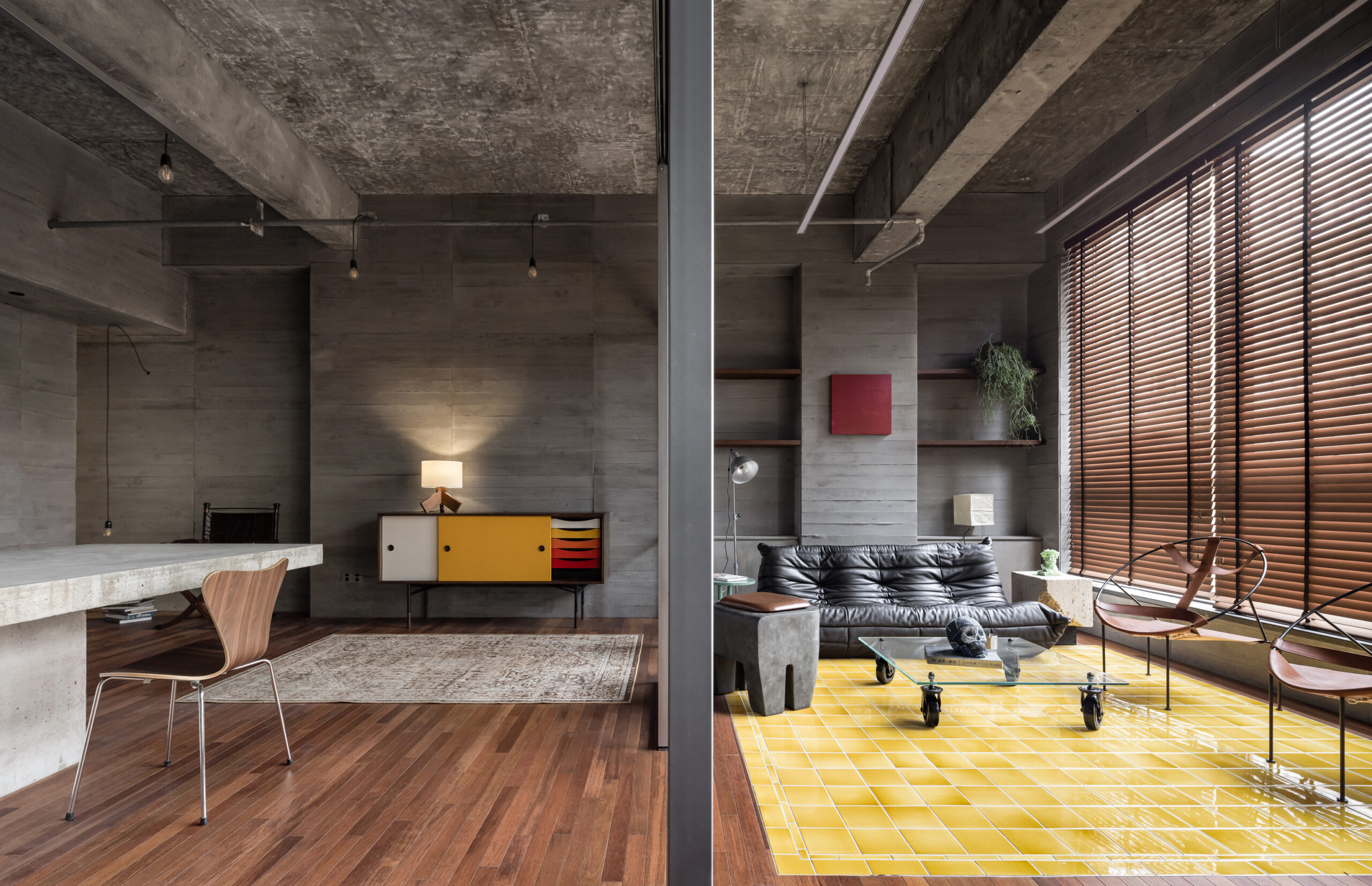 Built for a young Web3 team, this studio leans into contrast, shifting between focus and release throughout the day. The plan avoids rigid zones, using glass partitions and sliding panels to keep spaces connected while still allowing separation. A visible lounge anchors the entry, setting a more relaxed tone from the start.
Materials stay raw and tactile, with concrete and parquet running across the floor. Then light begins to guide movement. Spotlights mark paths and corners, while daylight passes through glass, stretching the space visually. The atmosphere feels open and fluid, shaped by how people move, pause and gather.
Taller Atemporal
By Quinta Fachada | Arquitectura Consciente, Ibarra, Ecuador
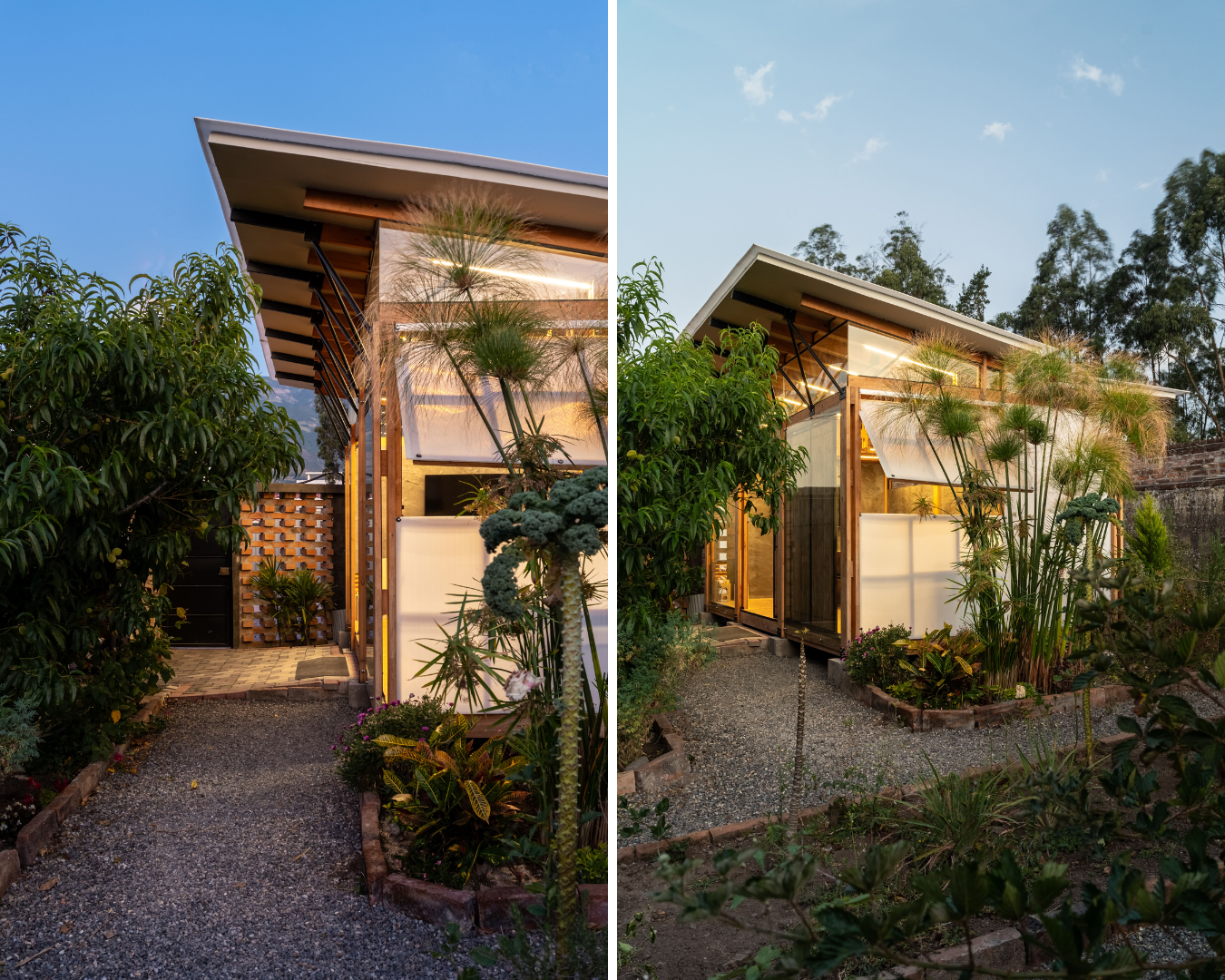
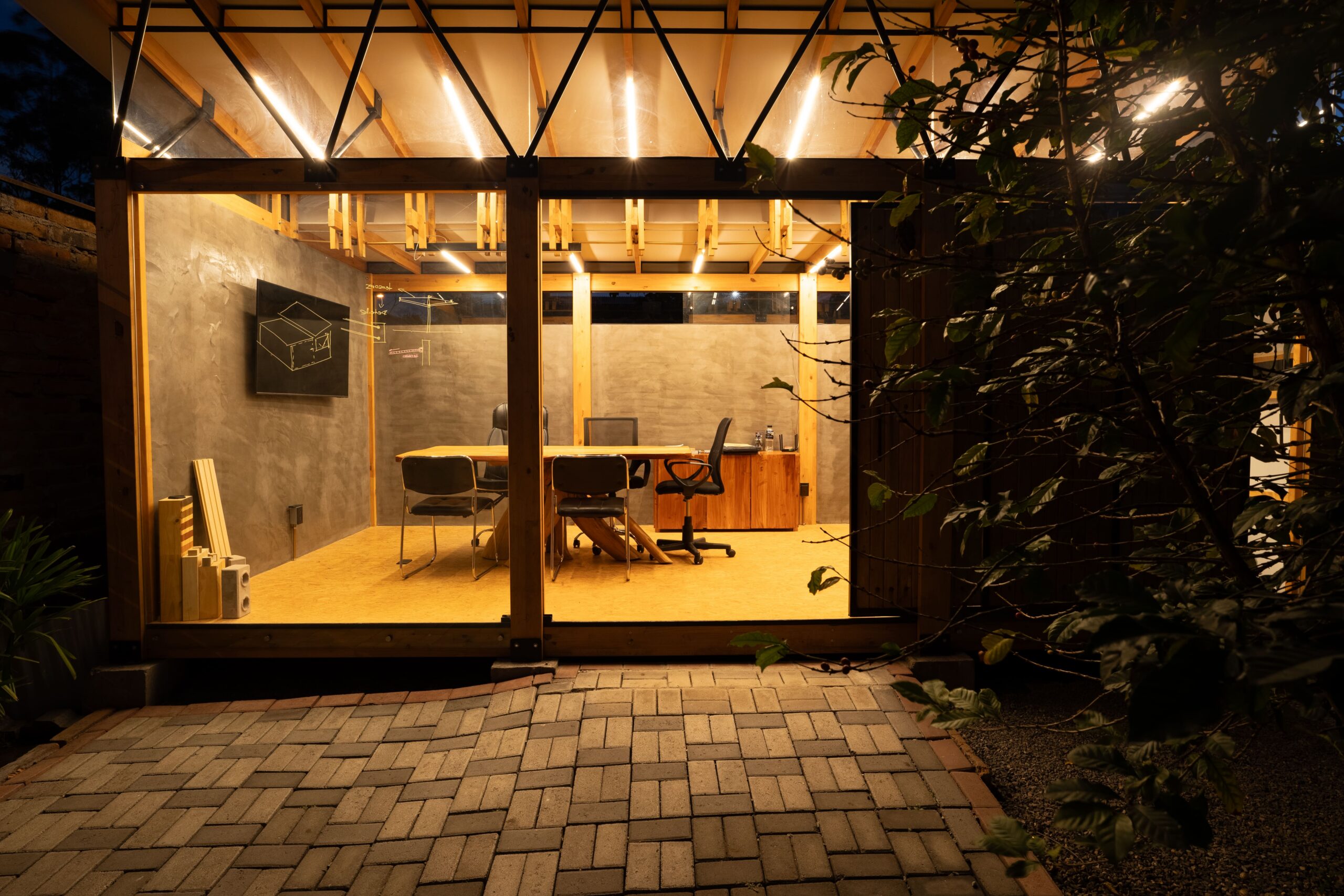 Unlike the others on this list, this one is personal. Designed as a compact studio for an architecture practice, it brings work down to its essentials. Within just 195 square feet (18 square meters), the space shifts between office, workshop and meeting area without fixed zones. The roof lifts upward to shape the interior and free the plan. From there, light defines everything. It enters from above and through a glazed facade, tying the space to the surrounding landscape. Materials stay simple and honest, with wood, polycarbonate and textured panels creating a warm, grounded atmosphere suited to focused, everyday work.
Architizer’s newest print publication is available for order! How to Visualize Architecture is an educational guide designed to help you master the craft of architectural storytelling and visual communication. Secure your copy today.
The post Beyond the Ceiling Grid: 7 Office Spaces That Boycott the “Big Light” appeared first on Journal.