


















Anthill caverns inform "earthy and tactile" Indian home by Kaushal Tatiya Architects

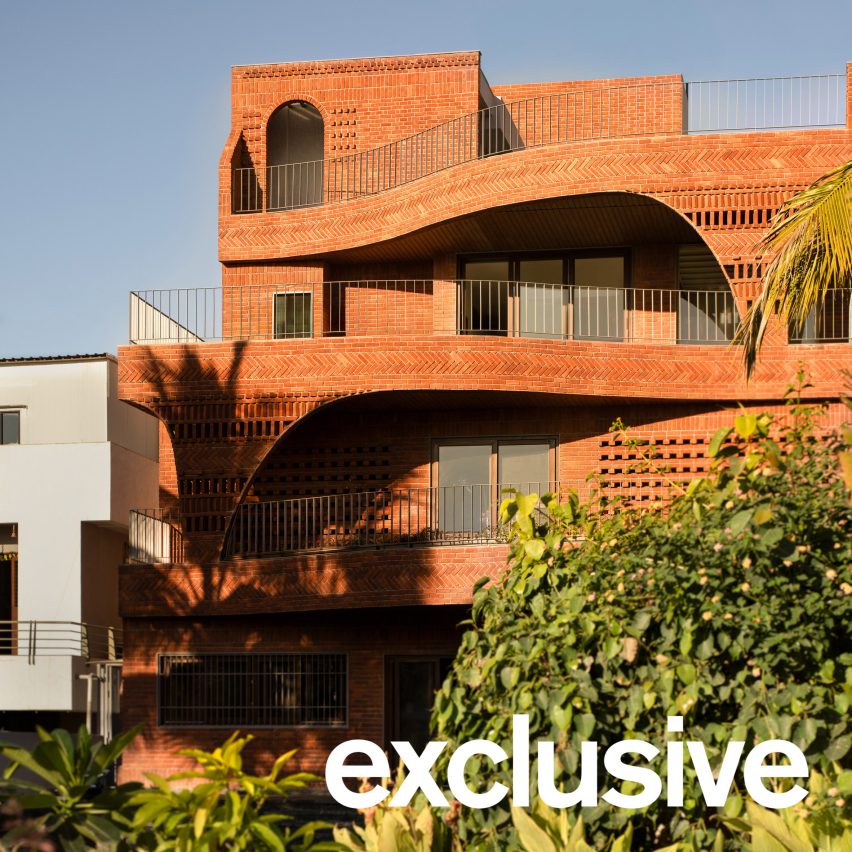
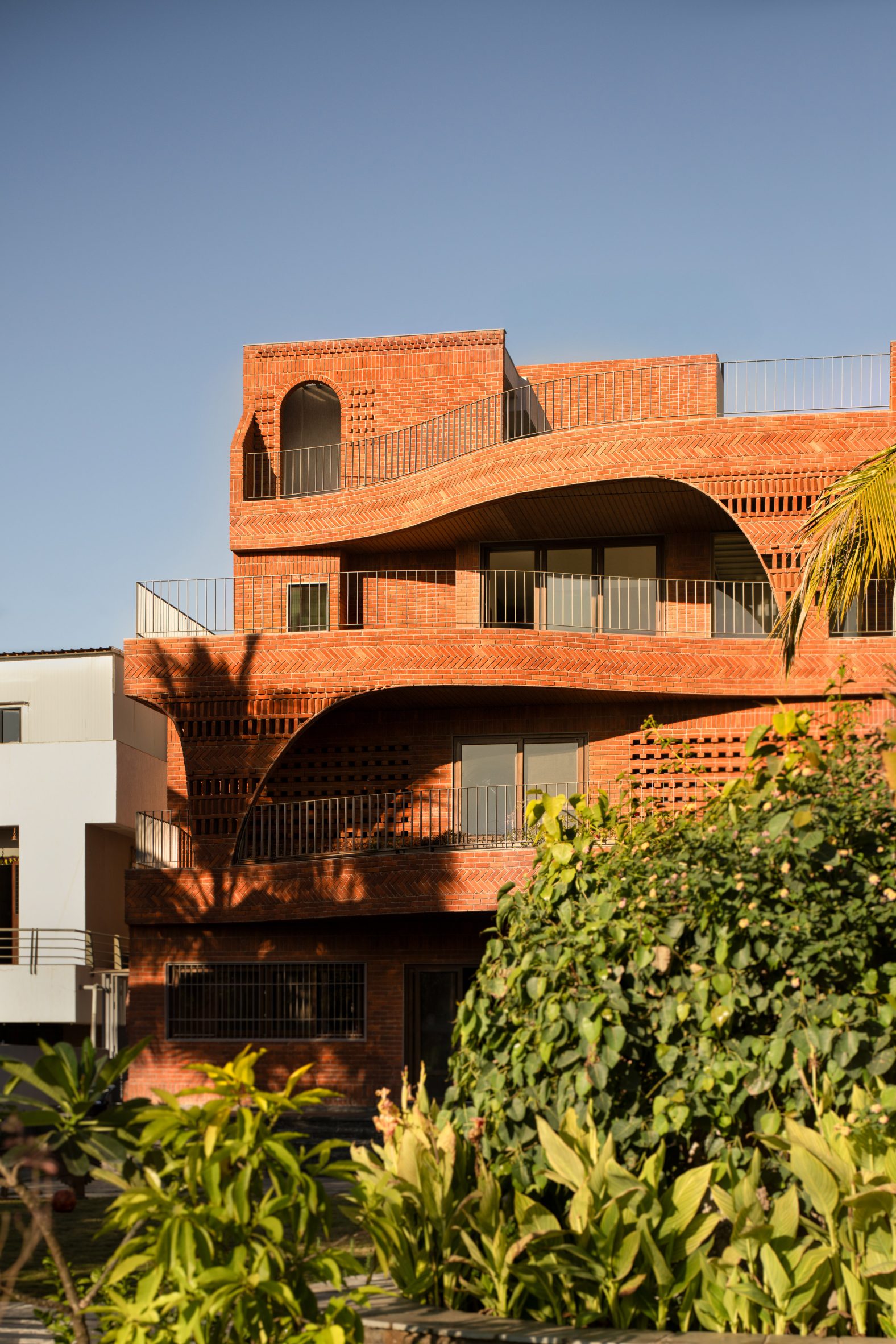
The cavernous earth chambers of an anthill informed the stack of curved brick balconies that front this home in Maharashtra, India, designed by local studio Kaushal Tatiya Architects.
Aptly named The Anthill, the 650-square-metre home in Ahilyanagar is designed to offer cool living spaces in the region's hot, dry climate without mechanical ventilation.
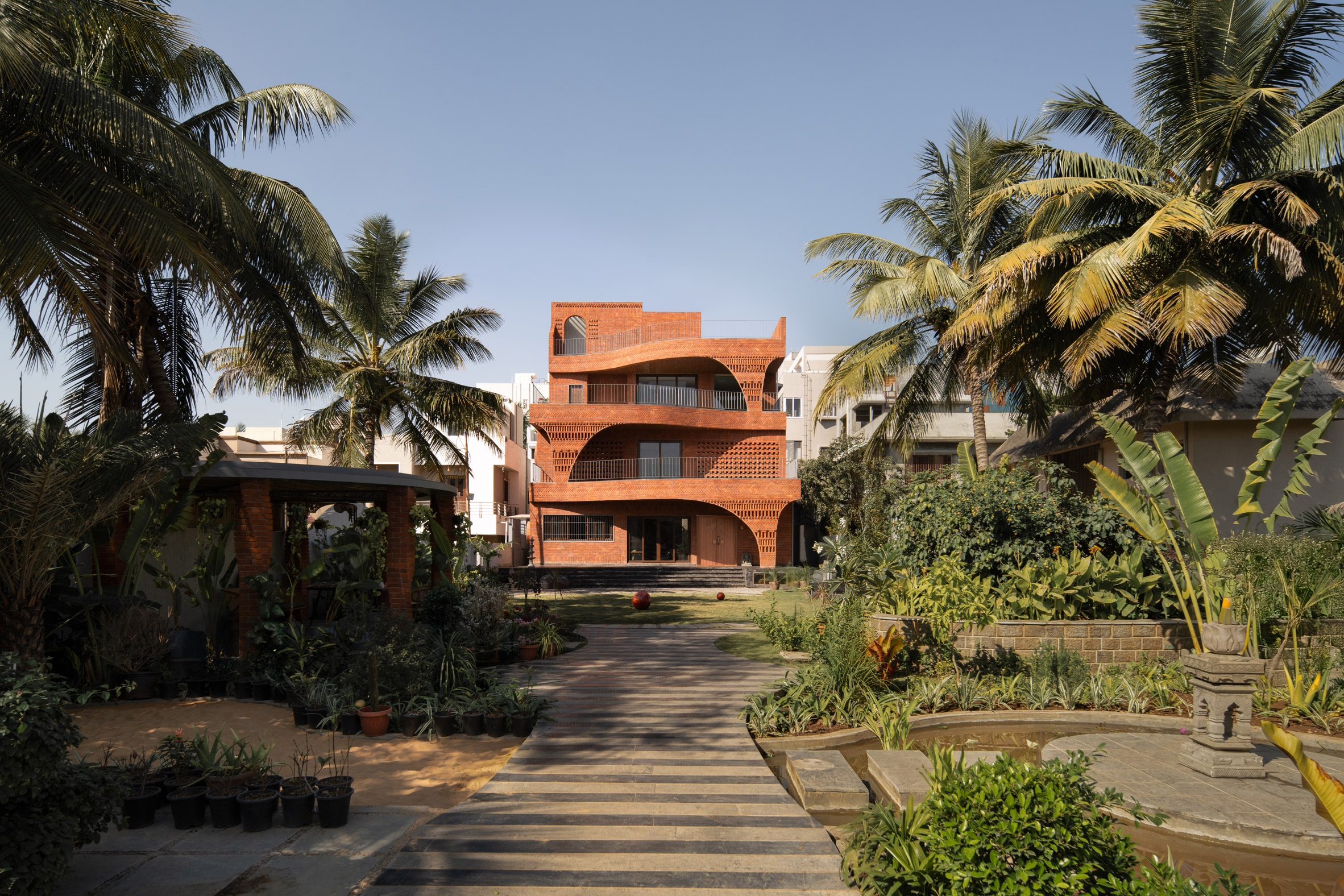
Kaushal Tatiya Architects looked to the form of an anthill to create shaded, passively cooled interiors, surrounding a double-height living space at the home's centre with a series of breezy "chambers" that open onto deep, sheltered balconies.
"The idea for The Anthill came from studying the anthill not as a literal form, but as an intelligent climatic organism," the studio's founder Kaushal Tatiya told Dezeen.
"What fascinated me was its ability to regulate temperature, create ventilation through voids, and function through a network of interconnected chambers without any imposed geometry," he added.
"Throughout the design process, I tried to move away from conventional notions of walls and rooms and instead think in terms of carved spaces, cavities, and layered transitions."
A cluster of circular skylights in the home's roof pulls light through voids in the two floors above down to the central, ground-floor living area. This sits alongside an open-air passage along the side of the home with a cascading water feature.
While diffuse light fills this central area, the more private bedrooms at the perimeter of the home are shaded by deep balconies and smaller square and circular openings behind metal screens that provide ventilation.
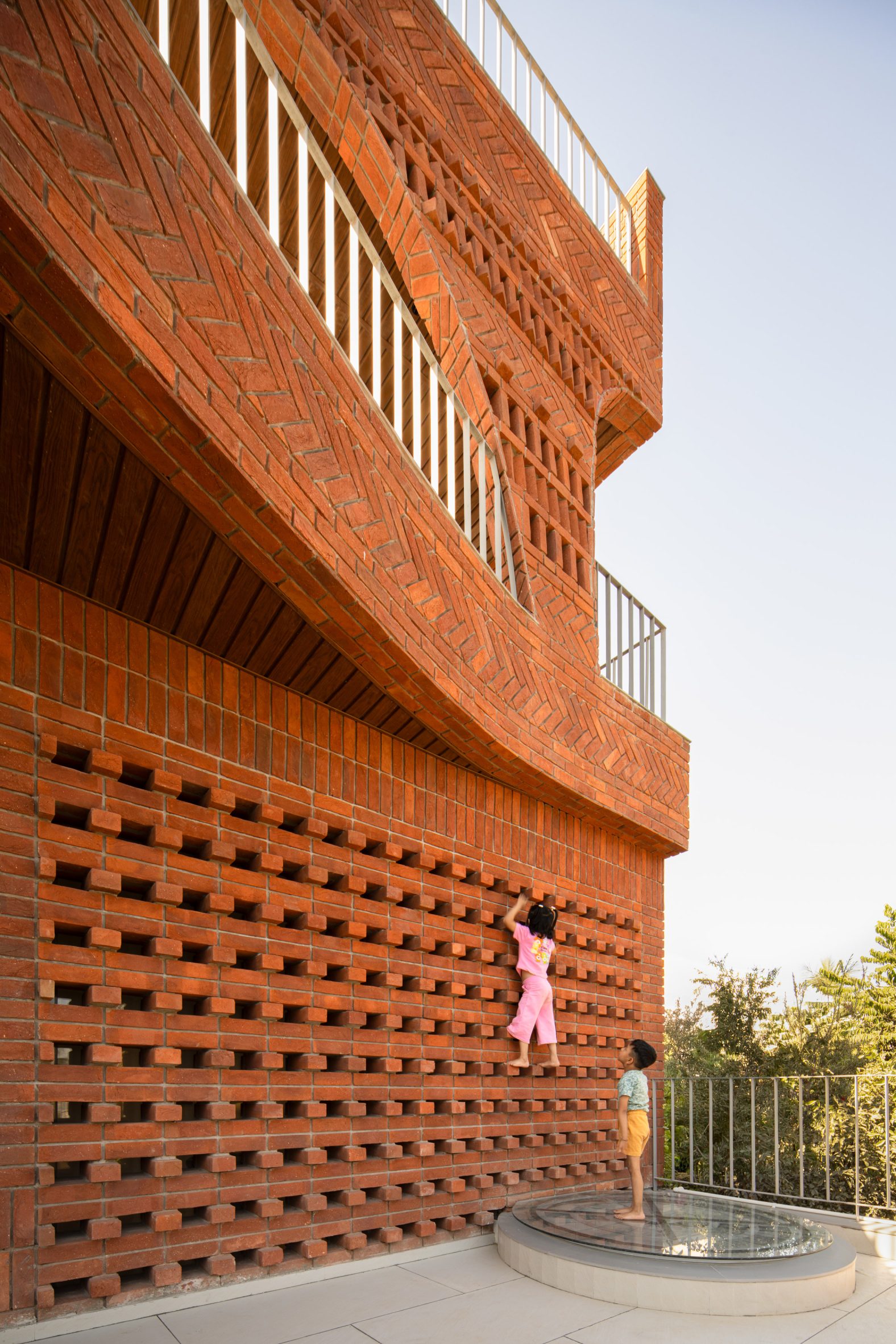
Continuing the metaphor of an anthill, the studio described the home's palette as "earthy, tactile and naturally evolved", dominated by the reddish-brown terracotta, lime plaster and brick.
For The Anthill's curved facade, bricks were laid in varying textured patterns, with the walls also incorporating perforated brick courses informed by traditional jali screens to create ventilation and dappled light.
"One passes through narrow shaded transitions that suddenly open into larger volumes filled with light and ventilation," Tatiya said.
"Courtyards, skylights, jali, and layered terraces create pauses and moments of discovery throughout the journey."
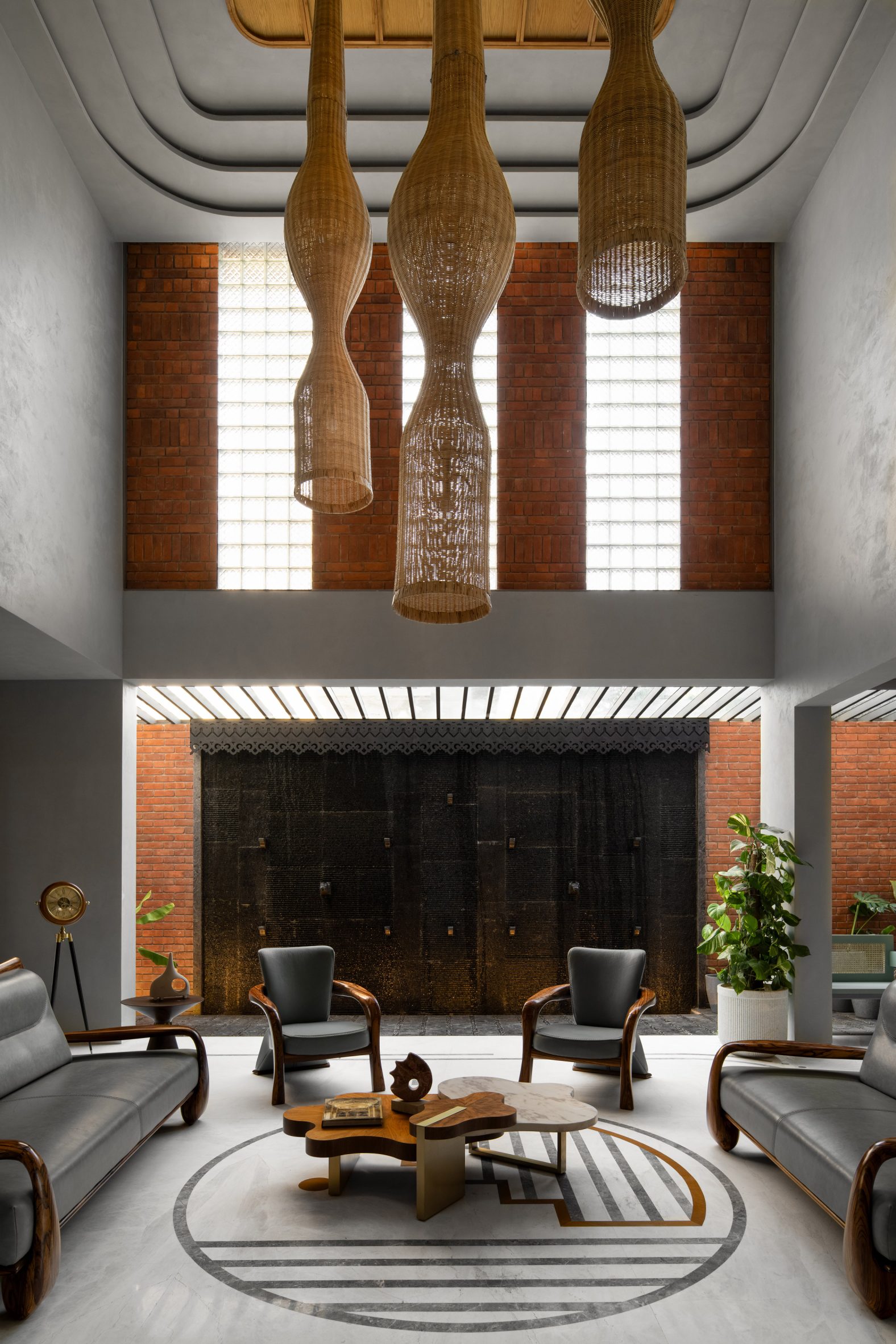
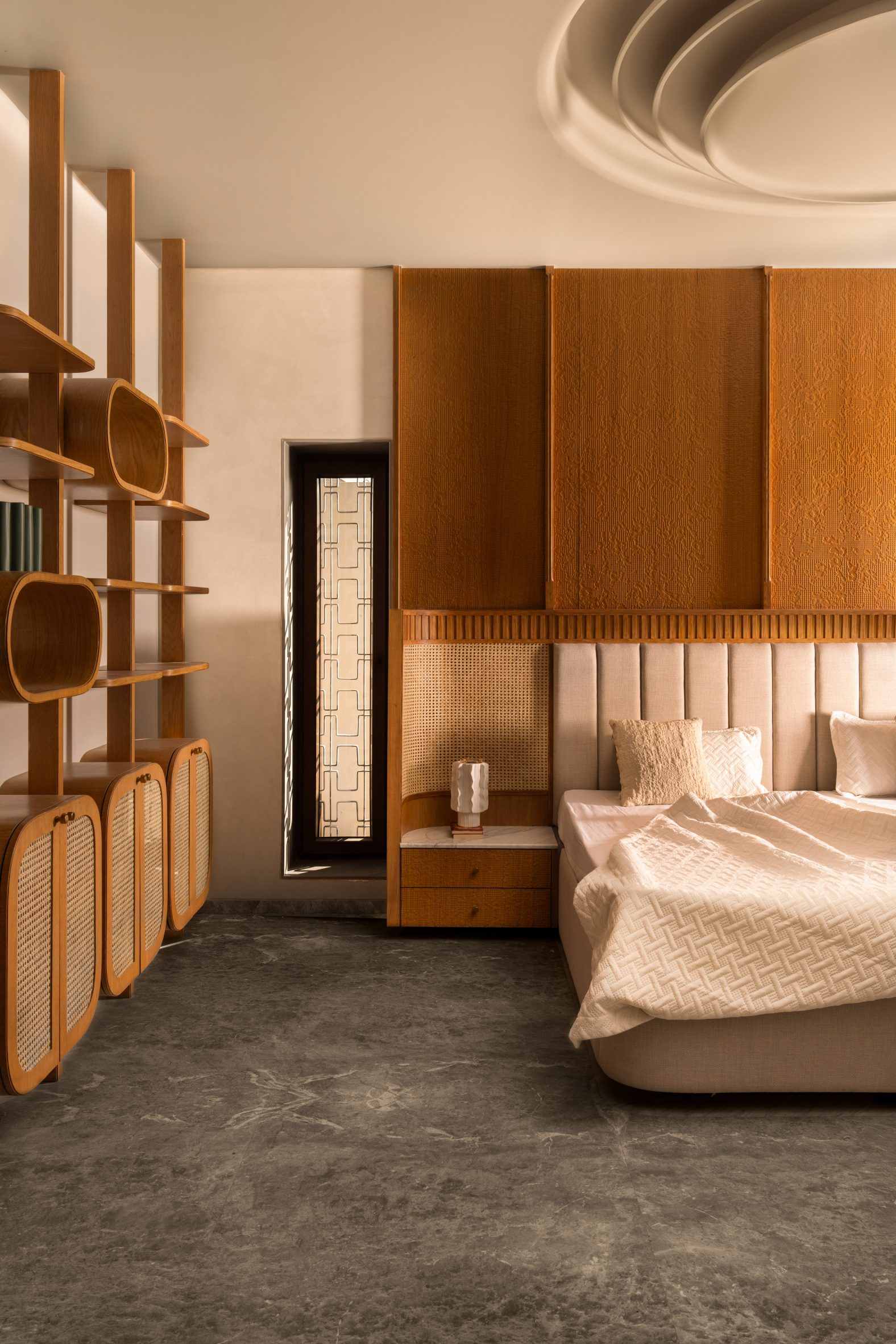
While rough brickwork defines the home's external and circulation spaces, it is contrasted by timber panelling in the bedrooms and living areas, which have been kept "monochromatic and earthy" to allow light and shadow to come to the fore.
"I wanted the building to appear as though it had emerged from the ground over time rather than being artificially imposed on the site," Tatiya said.
"Brick became the primary material because it performs structurally, climatically, and spatially at the same time," he added. "The imperfections, textures, and layered surfaces also echo the eroded and shaped quality of an anthill."
The Anthill is fronted by a large garden, where a lawn and small pond lead to a parking area and the road via a striped, stone-paved path.
Other homes in India recently featured on Dezeen include a glazed dwelling by Mindspark Architects overlooking a cardamom plantation in Kerala, and a home in Indore by Otlo Studio designed to foster a calm, meditative atmosphere.
The photography is by Avesh Gaur.
The post Anthill caverns inform "earthy and tactile" Indian home by Kaushal Tatiya Architects appeared first on Dezeen.