








Peterson Rich Office designs Condé M Nast Galleries at The Met in time for yearly gala exhibition
Brooklyn-based architecture studio Peterson Rich Office has completed the design of five spaces at the Metropolitan Museum of Art in New York, revealing historic facades to showcase the layered history of the museum.
Peterson Rich Office (PRO) was tasked with revamping five spaces inside the historic museum in Manhattan, which is an agglomeration of extensions built over its nearly 150-year-old history by more than a dozen architects.
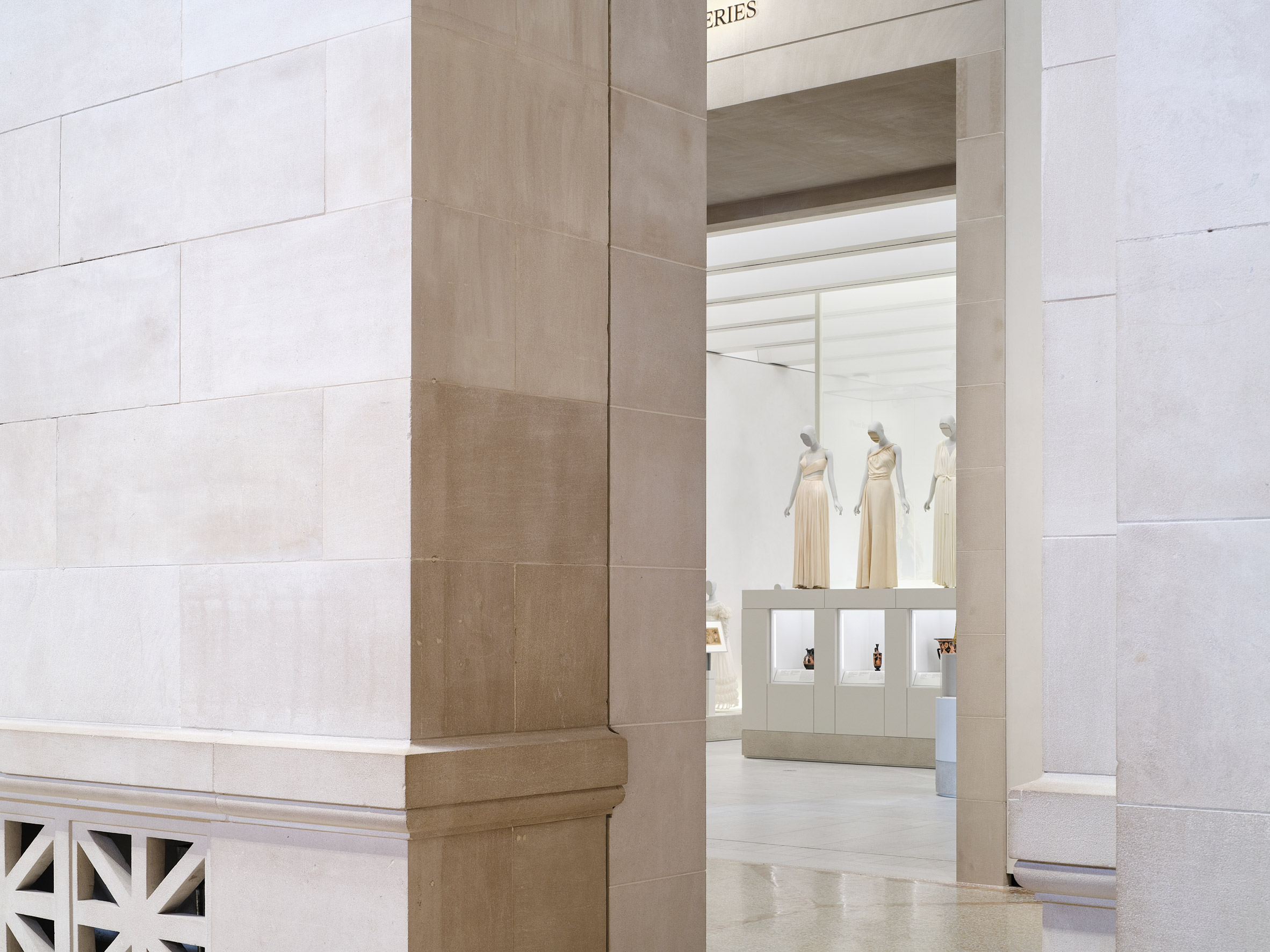
For the Condé M Nast Galleries, PRO worked with 12,000 square feet (1,114 square metres), creating both gallery spaces and auxiliary rooms, nestled in between the historic structures.
The revamped areas are on the site of a historic courtyard between architect Richard Morris Hunt's original Great Hall and other 19th-century buildings by architects Arthur Lyman Tuckerman and Calvert Vaux.
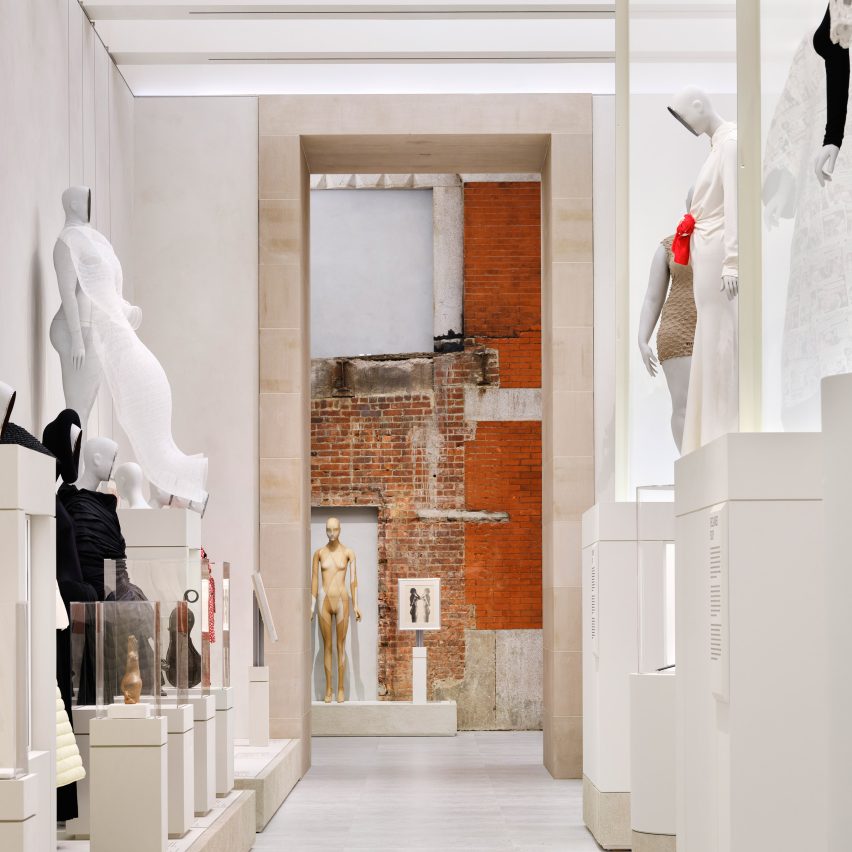
Nearer to the historic buildings, PRO emphasised historic material, even peeling back plaster to reveal the former building exteriors that have now become interior walls, creating transitional spaces between the old and the new.
"For us, working alongside and overlapping with that existing material redefines what the existing thing means, bringing a richer conversation between the present and the past," PRO co-founder Miriam Peterson told Dezeen.
"We used hybrid space before we introduced something that's entirely contemporary, creating a liminal space between what was there before and what's there now."
Directly adjacent to the Great Hall is the Orientation Gallery, fronted by 19-foot-tall limestone openings. With walls clad in traditional grey marmorino plaster, the space nods to the adjacent antiquities and features glass casework windows that provide sight lines into other parts of the museum.
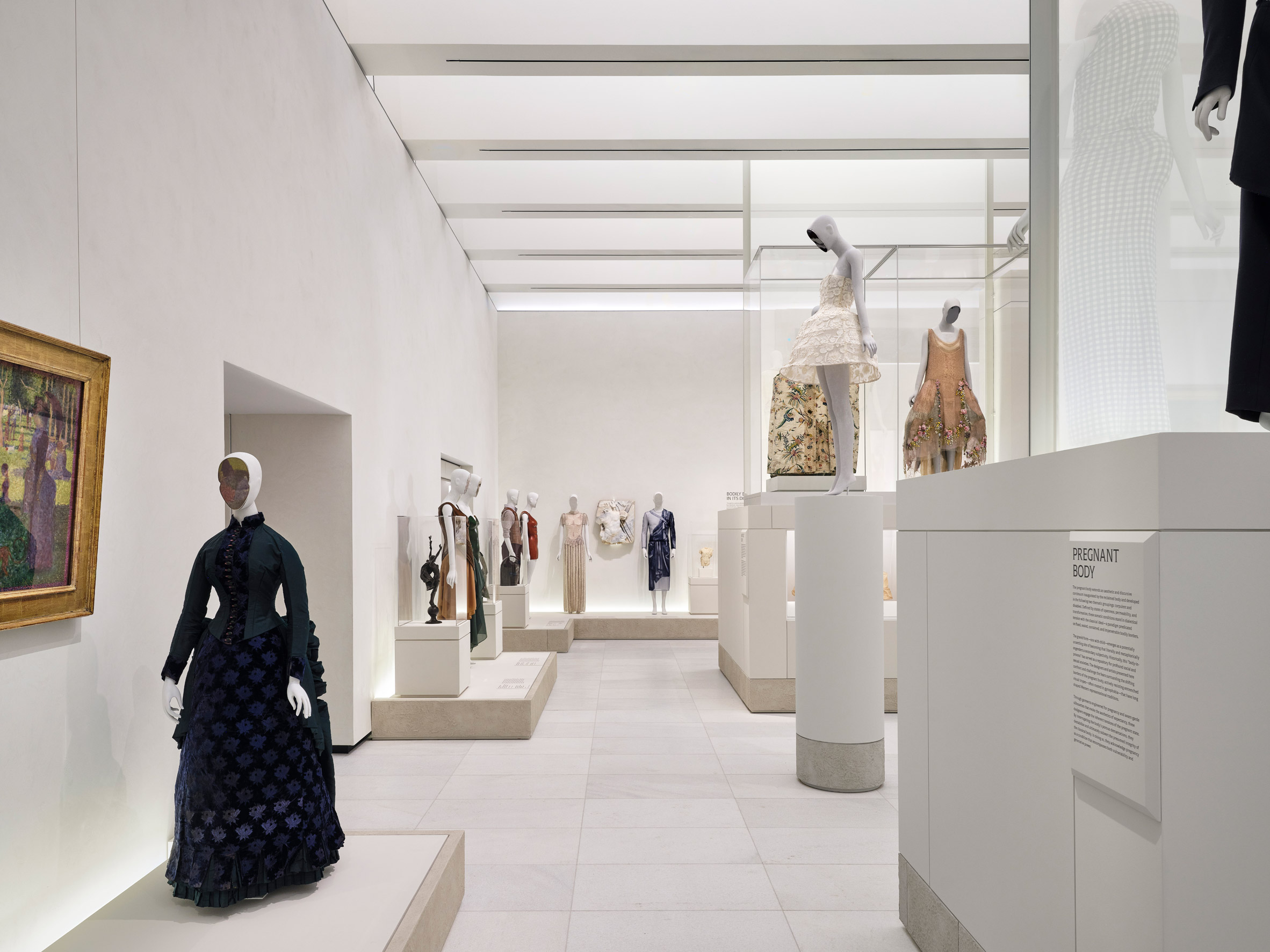
Two grand swinging oak doors lead from the Orientation Gallery into the High Gallery, where the contemporary design language really arrives.
True to its name, the gallery has 21-foot ceilings with beam structures that hide technical elements and support a ceiling plane above a series of rafters, allowing for the implementation of an indirect, soft lighting programme.
This lighting system was important because the gallery will act as a rotating exhibition, its first being the Costume Art exhibition, timed with the annual Met Gala.
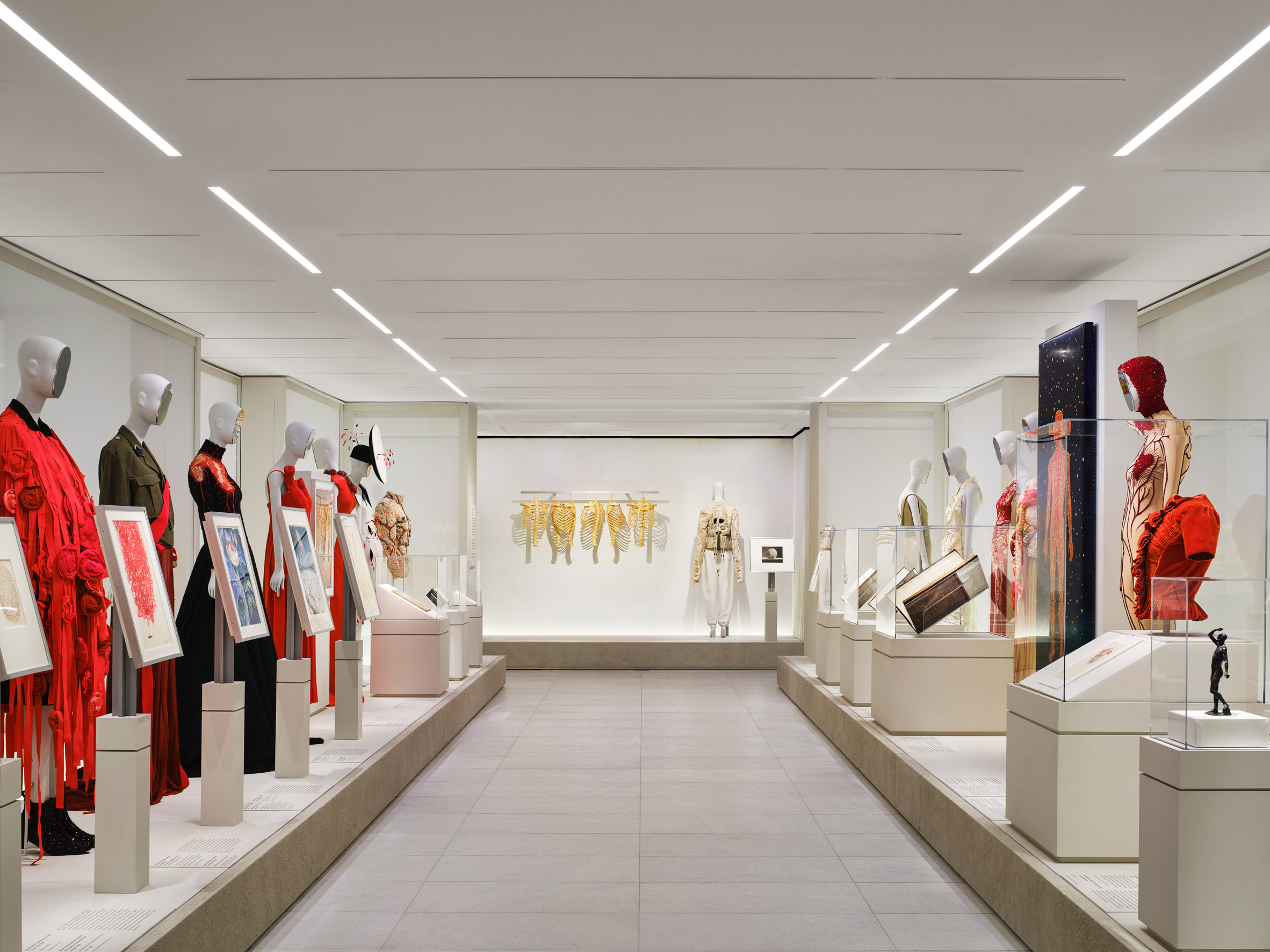
Halfway through the space, to the side, the space compresses into an entrance to the Low Gallery, which has a similar material palette of grey stone flooring and white ceilings, but with a more intimate programme and typical museum track lighting.
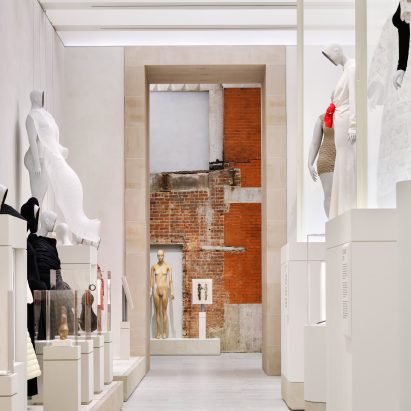
Back out into the High Gallery and out the other side is the Finale Gallery, where the "hybridity" mentioned previously becomes most apparent.
Here, the side of the room that abuts the High Gallery has a similarly sleek finish, but the opposing wall was stripped back to reveal the brickwork and pilasters of the 19th-century buildings.
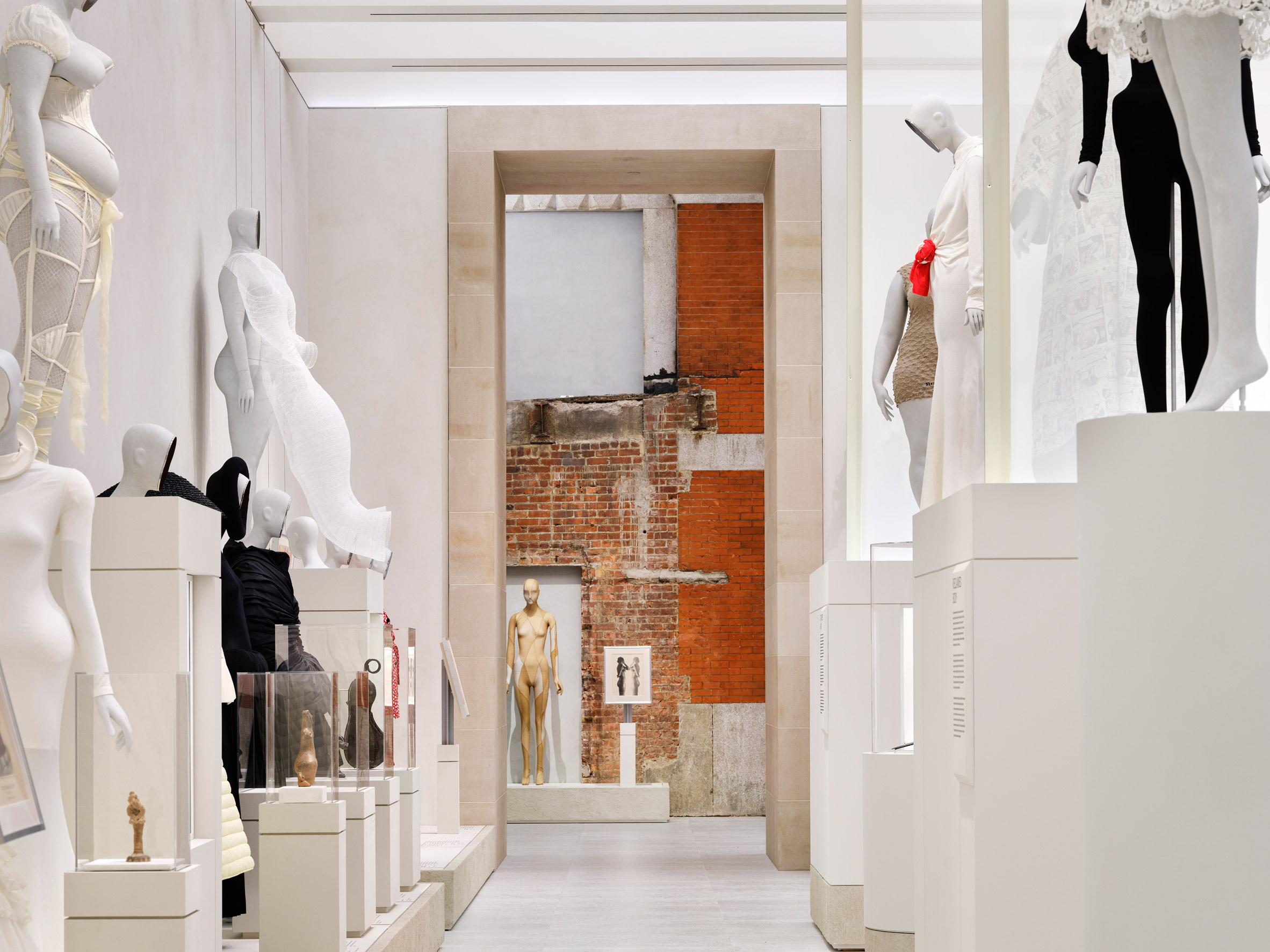
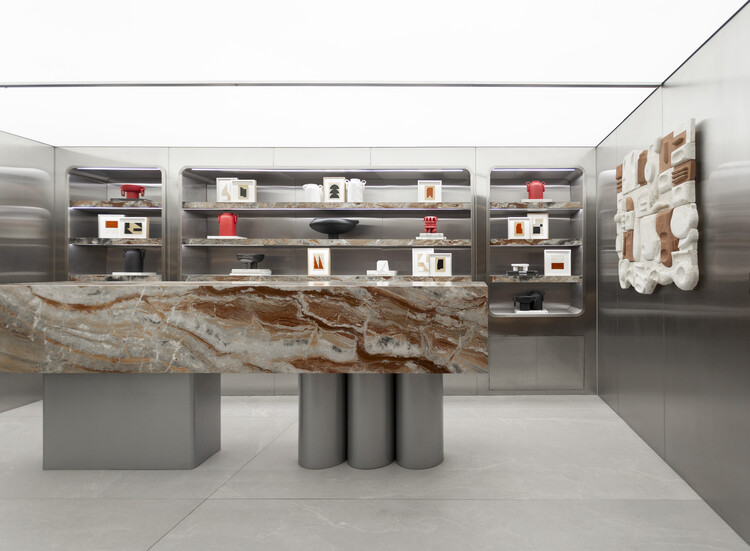
To the side of this space, the programme compresses again into a small shop to support the rotating exhibitions.
Overall, the spaces mark the well-known experience of walking through history that the Met provokes, leaning into the conglomeration of styles and eras without sacrificing efficiency.
"It's a layering of spaces, but as an experience, they hold together," PRO co-founder Nathan Rich told Dezeen.
"Our fundamental attitude was – following cues in the building and creating more layerings of space of construction."
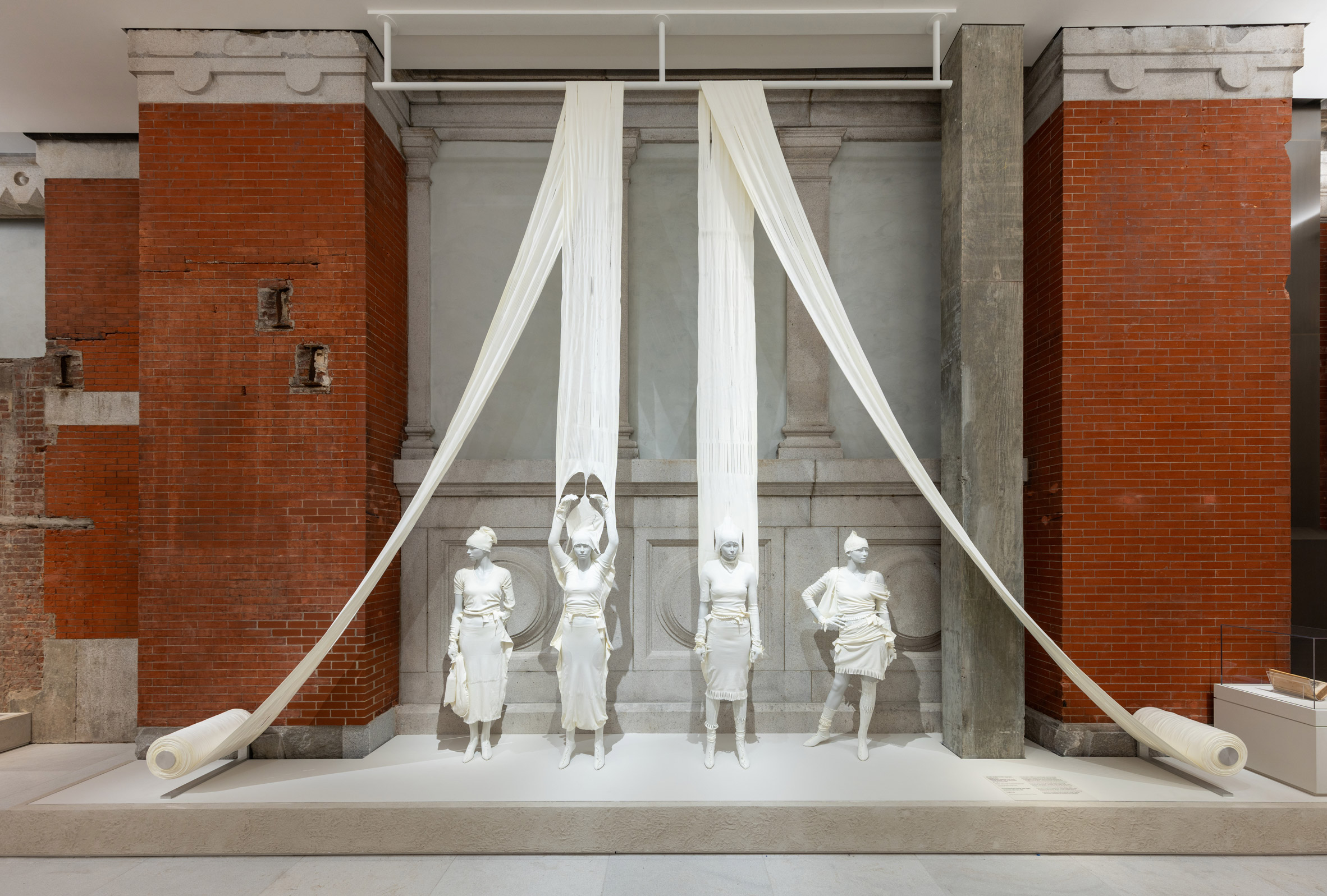
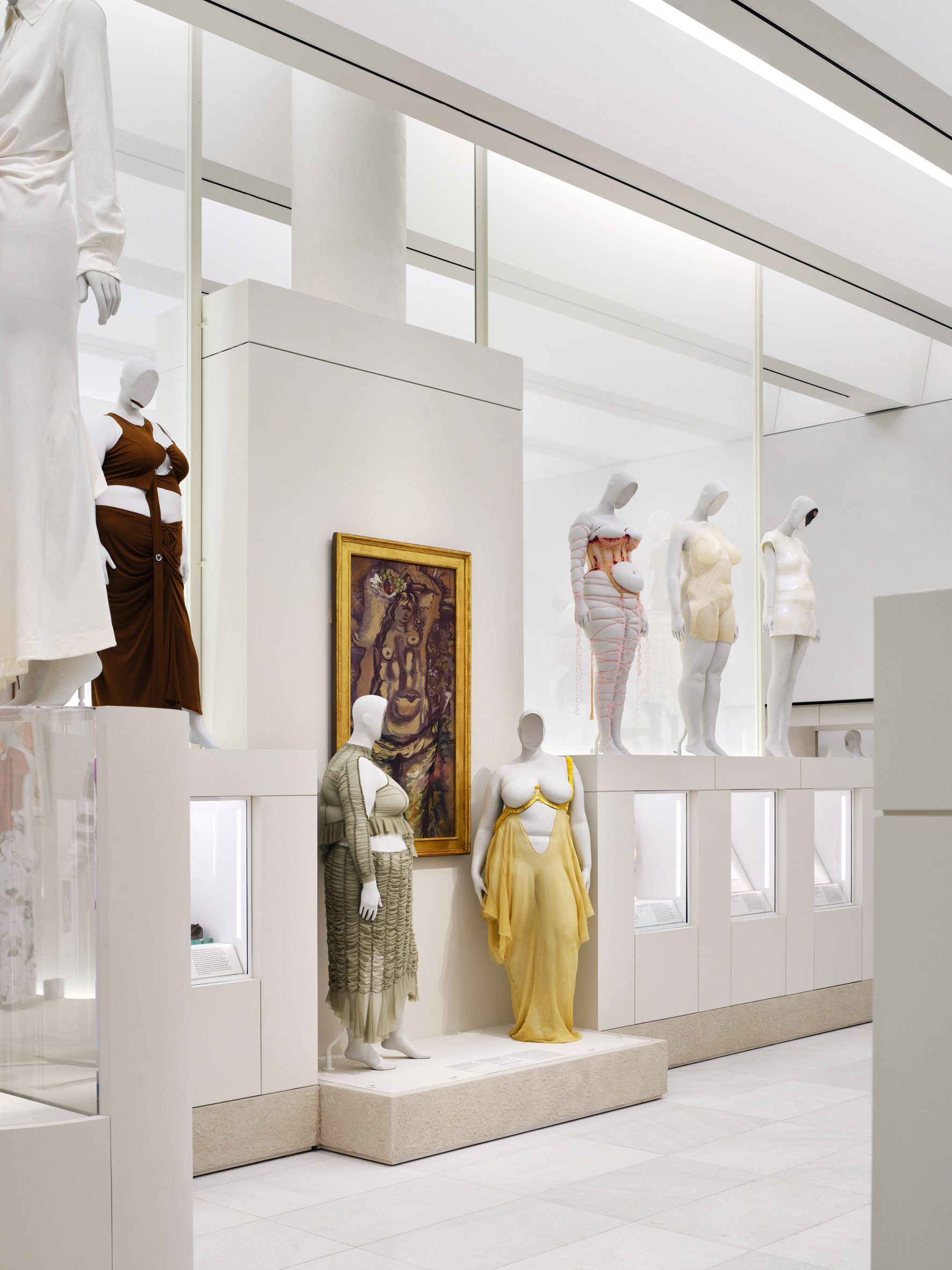
The inaugural installation, Costume Art, features articles of clothing and depictions of clothing and nudity from various eras and for different types of bodies, showing the "social meaning" of clothing, according to the Met.
PRO has carried out other work within historic structures, such as the installation of white-cube gallery spaces within the restored interiors of a church in Detroit, for the creation of an art museum.
The Met continues to grow as well, and Mexican architect Frida Escobedo is currently working on an addition to the building.
The photography is by Nicholas Calcott.
The post Peterson Rich Office designs Condé M Nast Galleries at The Met in time for yearly gala exhibition appeared first on Dezeen.