












"A crisis is a terrible thing to waste" says Kulapat Yantrasast


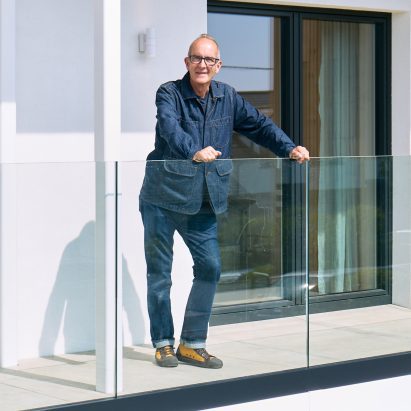
Promotion: environmental crises can create the conditions for new forms of craft and cultural production, said architect Kulapat Yantrasast during a panel discussion about the role of craft in responding to environmental and social change.
Speaking with Dezeen's editorial director Max Fraser at Milan design week, Yantrasast discussed curating When Apricots Blossom, an exhibition commissioned by Gayane Umerova, chairperson of Uzbekistan Art and Culture Development Foundation (ACDF), which explored how craft adapts in response to crisis.
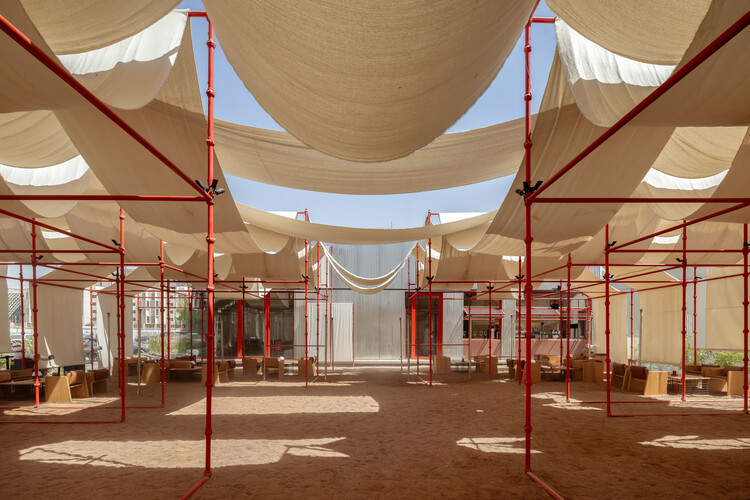
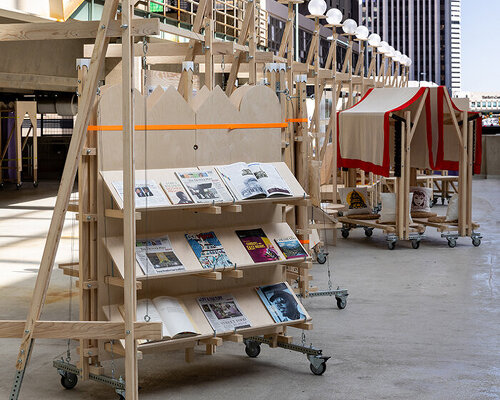
The talk took place inside a temporary garden pavilion at Palazzo Citterio, designed by Yantrasast's studio WHY Architecture as a contemporary interpretation of a traditional yurt.

The exhibition followed Yantrasast's and a group of international designers' research trips across Uzbekistan, where they worked alongside local artisans.
Together, they explored how craft practices continue to evolve in regions shaped by environmental change, particularly around the Aral Sea region.
"I'm very interested in the tenacity and the vibrancy that lives through environmental crises," he said. "And how craft and art survive with people."

Rather than framing the Aral Sea solely as a site of loss, he described it as an example that reveals how communities adapt through making.
"A crisis is a terrible thing to waste," he said, suggesting that disruption can generate new forms of creativity.

The exhibition focused on practices tied directly to daily survival, including shelter, textiles and food. Among these, bread-making became a central thread.
ACDF invited 12 international and local designers to collaborate with Uzbek and Karakalpak artisans to reinterpret traditional bread trays and stamps known as chekich, which are used to imprint patterns into dough.
Rather than isolating these objects as artefacts, the exhibition treated them as part of an ongoing system of making, shaped by necessity, routine and identity.

Designer Bethan Laura Wood, who also featured on the panel, described the process as a careful balance between preservation and reinterpretation.
"It's a complicated beast to find the right balance," she said. "Otherwise, why are you there? The pieces that they're making without me are so beautiful."
For Wood, the project reinforced the idea that craft should not be treated as static.
"It's not just about the craft being historical," she added. "It's about it living now and being woven now."

The exhibition's title, taken from a 1930s poem by Uzbek writer Hamid Olimjon, referenced the arrival of spring as a moment of renewal.
Umerova explained that it also reflected an ongoing effort to reposition the Aral Sea region as a place of potential rather than decline, while placing craft within a global context for younger generations in Uzbekistan.

According to Umerova, Uzbekistan has a relatively young population compared to many countries, which is a key factor shaping the country's evolving creative landscape.
Craft knowledge has historically been passed down through families rather than formal institutions, limiting access to those outside established networks.
She explained that new initiatives by ACDF are seeking to expand that access while creating viable creative careers.

Yantrasast linked this to the importance of visibility and exchange, arguing that collaboration with international designers can help situate local practices within a broader design discourse.
"These opportunities allow [young designers] to see themselves in the context of the global perspective," he said.

Throughout the discussion, the panellists framed craft as something shaped by necessity but also as something capable of evolving into a contemporary design practice.
"This is craft – not of yesterday – but of today and tomorrow," Yantrasast said.
"Hopefully, we will be able to evolve craft from what it used to be, into the craft of the future."
Alongside the installation, the exhibition included a film titled Where the Water Ends directed by Manuel Correa and Marina Otero Verzier.
The film, which had its world premiere during Milan design week, explored the Aral Sea region, reinforcing the relationship between landscape, crisis and cultural production.
When Apricots Blossom was on show at Palazzo Citterio in Milan's Brera district from 20 to 26 April 2026.
Partnership content
This article was written for Uzbekistan Art and Culture Development Foundation as part of a partnership. Find out more about Dezeen partnership content here.
The post "A crisis is a terrible thing to waste" says Kulapat Yantrasast appeared first on Dezeen.