




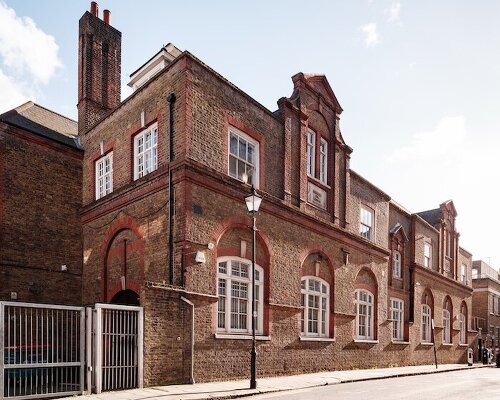

Barber Osgerby to close studio after 30 years "to begin working independently"
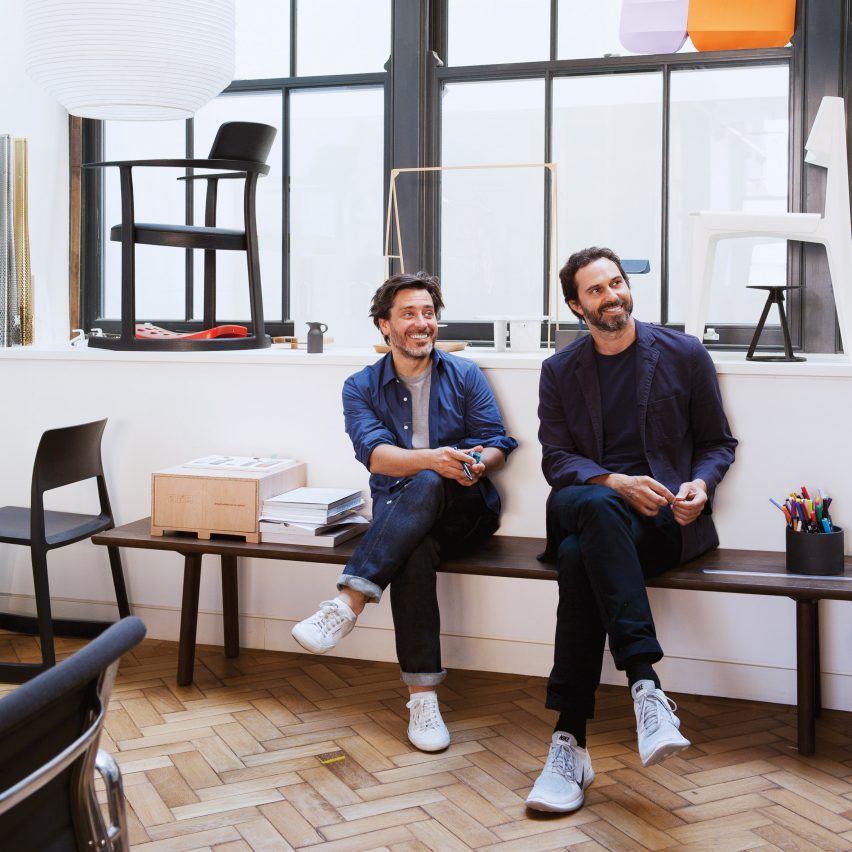
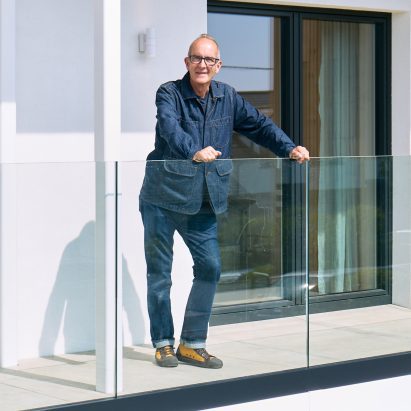
British designers Edward Barber and Jay Osgerby are closing their eponymous London studio after three decades, bringing to an end one of the UK's most influential design partnerships.
Barber and Osgerby announced today that they are closing the studio to establish their own independent studios.
"After more than 30 years of working together, this feels like the right moment for each of us to begin working independently through our own studios," Barber and Osgerby said in a statement issued to Dezeen.
"We have always taken an unexpected path, creatively and entrepreneurially. The diversity of our work, and of the studios we have established along the way, has often surprised people. In that spirit, this next move feels entirely true to form."

Over the years, the studio built an international reputation through collaborations with brands including Vitra, Knoll, B&B Italia, Flos, Cappellini and Magis, while also working across exhibitions, installations and public commissions.
Barber Osgerby became synonymous with a distinctly British approach to industrial design that combined sculptural simplicity and a fascination with material experimentation and manufacturing processes.
Their body of work is celebrated in a retrospective exhibition at Triennale Milano, which opened last month.
The statement continued, "The recent success of Barber Osgerby’s retrospective at the Triennale di Milano, together with an extraordinary Milan design week, felt like a natural high point in the studio’s journey, and a moment to reflect on what has been made and what might come next."
From RCA graduates to international design figures
The duo met while studying architecture at the Royal College of Art in London during the early 1990s. Shortly after graduating, they established a studio together in 1996, initially working from their flat in London's Trellick Tower.
In the early years, the pair balanced small architectural and interior projects with experimental furniture design, often producing prototypes themselves.

One of their breakthrough projects was the Loop table, a bent-plywood design originally made by Isokon for a restaurant interior before being spotted by Italian design entrepreneur Giulio Cappellini at 100% Design.
Cappellini subsequently put the piece into production, helping introduce Barber Osgerby to an international audience and laying the foundations for a long relationship with the Italian furniture industry.
"Like most people who have made it in Italy, we have Giulio Cappellini to thank for it," said Osgerby in an interview with Dezeen last month. "He was responsible for finding our generation of reprobates, along with the Bouroullecs and Marc Newson."
By the early 2000s, Barber Osgerby had emerged as one of Britain's most celebrated design studios, winning the Jerwood Applied Arts Prize in 2004 and later being named Royal Designers for Industry.
Olympic torch and landmark furniture designs
Among the studio's best-known works was the torch for the London 2012 Olympic and Paralympic Games.
Manufactured from aluminium and punctured with 8,000 circular holes representing the torchbearers who carried it across the UK, the design became one of the defining visual symbols of the Games.
The pair also created a commemorative £2 coin marking the 150th anniversary of the London Underground, featuring a graphic depiction of a Tube train emerging from a tunnel.
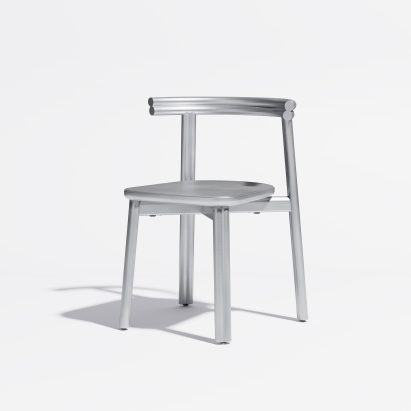
In furniture design, Barber Osgerby produced a series of influential seating collections that helped define contemporary office and contract interiors.
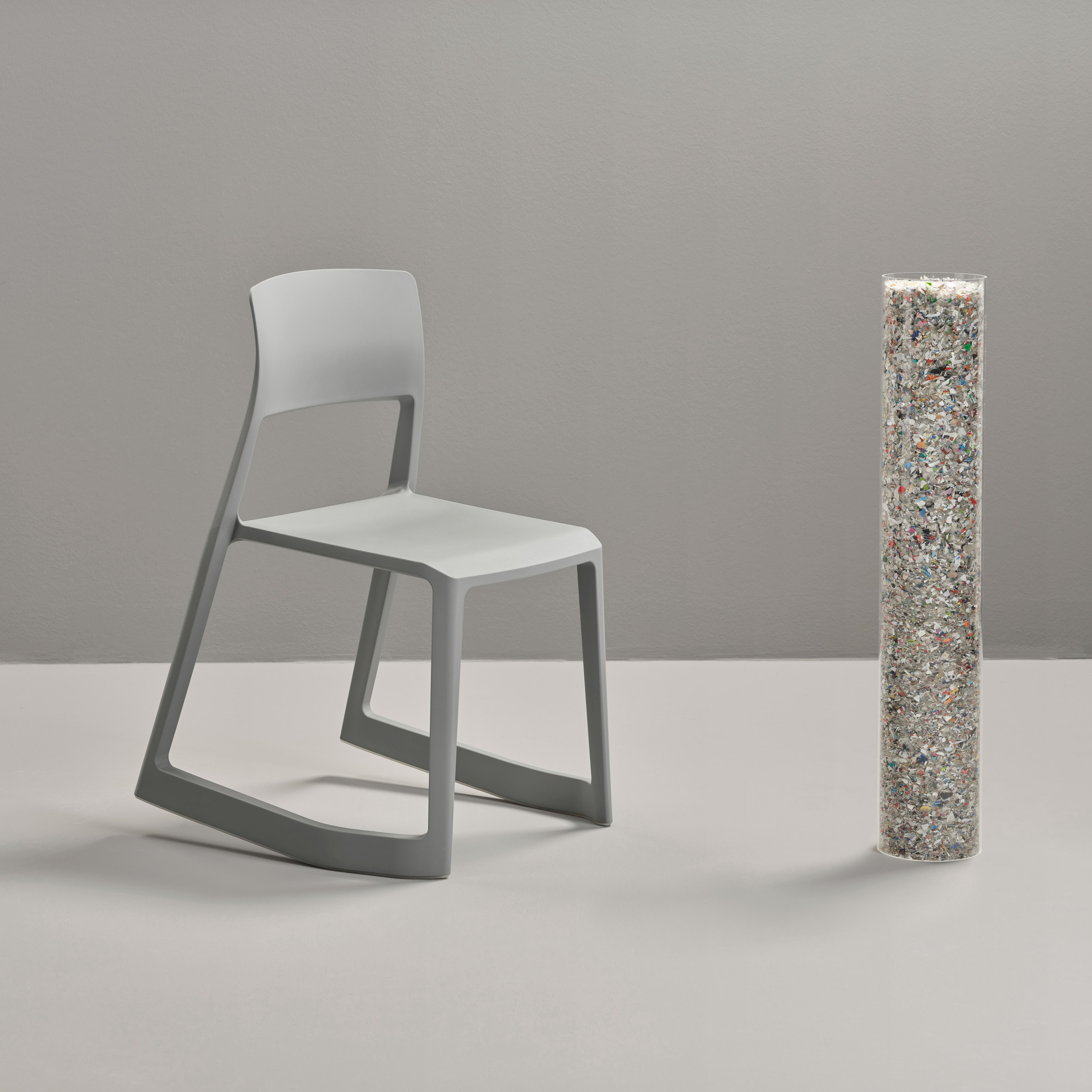
These included the Tip Ton chair for Vitra, which introduced a forward-tilting sitting position intended to encourage movement, and the Pacific chair for Vitra, a task chair designed to reduce visual and mechanical complexity.
Other notable projects included the Zero-In table for Established & Sons, the Bellhop lamp for Flos, the Pilot chair for Knoll and the Tobi-Ishi table for B&B Italia.
Their work entered the permanent collections of institutions including the Victoria and Albert Museum and Design Museum in London, the Metropolitan Museum of Art in New York and the Art Institute of Chicago.
Expansion beyond product design
As the studio grew, Barber and Osgerby expanded their practice beyond industrial design.
In 2001 they founded Universal Design Studio, an architecture and interiors practice that went on to create retail environments, exhibitions and hospitality projects for clients including Stella McCartney, H&M and the Design Museum.
The designers launched Map Project Office in 2012, a consultancy focused on industrial design strategy and technology-driven research.
Six years later, WPP bought a majority stake in these two studios.
Closure of an influential British studio
Barber Osgerby's closure marks the end of one of the most prominent British design studios to emerge during the late 1990s.
Alongside contemporaries including Jasper Morrison and Tom Dixon, Barber Osgerby helped position British industrial design as a major international force during the early 21st century.
Their work bridged the worlds of collectible design, industrial production and public infrastructure, moving fluidly between mass-market products and one-off cultural commissions.
"We remain hugely proud of everything Barber Osgerby has created, and deeply grateful to the clients, collaborators, makers, manufacturers, institutions, friends and teams who have been part of that story," Barber and Osgerby concluded.
Barber Osgerby Ltd will now begin a period of transition.
"We make this transition with friendship, respect and optimism for what lies ahead, and remain open to collaborating together again in the future."
The closure follows designer Michael Anastassiades announcing the closure of his eponymous lighting brand after 20 years in business.
The post Barber Osgerby to close studio after 30 years "to begin working independently" appeared first on Dezeen.