






Tutto Bene combines "the futuristic and the historic" for Milan Fornasetti store


Design studio Tutto Bene has updated Italian brand Fornasetti's Milan flagship store, using stainless steel, burl wood and trompe l'oeil-painted walls to create spaces that reference the brand's history.
Located in central Milan, the store, which was unveiled during Milan design week, was given a new entrance and a total interior overhaul by Tutto Bene.

"Fornasetti is widely known for its icons: the faces, architectural motifs, wallpapers, and decorative imagery," Tutto Bene co-founder Oskar Kohnen told Dezeen.
"Our first instinct was to go into the archive," he continued. "We were especially interested in Fornasetti's historic collaborations and total interiors – moments where ornament became space, not decoration."

The studio divided the three-storey shop into different areas, starting with the Fornasetti Space on the ground floor, which will be used for different exhibitions and other activations.
Here, Tutto Bene chose stainless steel for the walls, creating a clean, modern feel. Images of ornate Fornasetti products were printed on the walls to become a part of the interior.

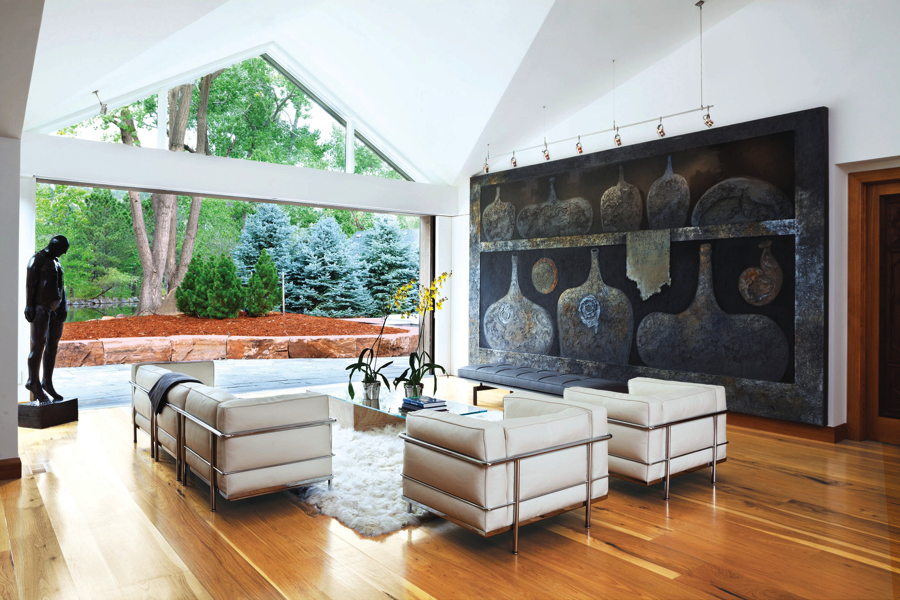
"On the ground floor, we used large screen-printed stainless-steel wall panels, printed with oversized historic Fornasetti vase drawings," Tutto Bene co-founder Felizia Berchtold told Dezeen.
"We liked the tension between the artistic and the industrial, the historic and the almost futuristic."

The rooms in the 270-square-metre flagship store were designed to each have a different feel, but all reference back to the brand.
"Each room was developed around a specific historic or thematic reference from the Fornasetti universe," Kohnen said.
"On the ground floor, the flower shop features enlarged vase drawings by Piero Fornasetti," he continued. "We were interested in the shift of scale: an object associated with flowers becoming architectural and monumental in scale."

In the Zodiac Room, meanwhile, walls were decorated with hand-drawn zodiac signs.
"[These] refer to Fornasetti's long fascination with astronomy and also to the interiors of the Andrea Doria ocean liner that Fornasetti and Gio Ponti had designed together," Berchtold explained.
"Throughout the store, the selected imagery was not chosen as surface decoration alone, but as part of a larger spatial sequence."
The first floor of the store, called The Living Archive, was designed to resemble a museum or gallery space with vitrines displaying Fornasetti products.
The top floor, meanwhile, was conceived as The Apartment and comprises four rooms that were designed to show Fornasetti's objects in "living spaces".

Throughout the store, Tutto Bene mixed a variety of different materials to create a more intimate feel than in the steel-clad ground-floor space.
"Materials become more intimate and domestic," Kohnen said. "Burl wood wall panels, trompe-l'œil painted walls, celebrating Fornasetti's elegance and Italianness, and drawing direct references to historic interiors from the atelier."

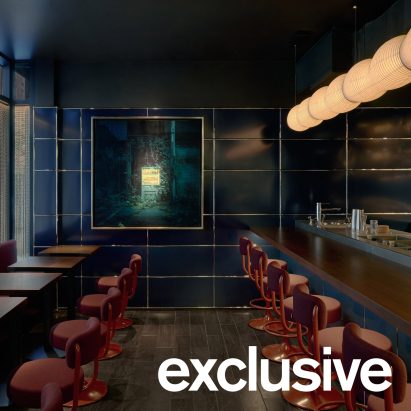
The colour palette in the store was kept mainly white and black to keep the focus on the objects, which often feature playful graphic designs and patterns.
"The palette reflects the codes of the house without overwhelming them: black and white contrast, as seen in the iconic screen-printed artworks, metallic notes, and green as a recurring accent," Berchtold said.
"It is recognisably Fornasetti, but quiet enough to let the objects shine."
Tutto Bene also recently designed the fashion floors and private shopping space at the Globus Basel department store, as well as the "theatrical" Cubitts West Village eyewear store.
The photography is by Ludovic Balay.
The post Tutto Bene combines "the futuristic and the historic" for Milan Fornasetti store appeared first on Dezeen.