








Metropol Parasol wears its parametric structure "on its sleeve"


We continue our Parametricism series by looking at Metropol Parasol by German architecture studio J Mayer H and engineering firm Arup, a flowing timber canopy perched above the historic Plaza de la Encarnación in Seville, Spain.
Officially named Setas de Sevilla or Mushrooms of Seville, the fungi-shaped structure was completed in 2011 and contains food markets, bars, restaurants and an archaeological museum both within and beneath its canopy, which is topped by a winding walkway.

Perhaps better described as a piece of urban sculpture or furniture, the project represented a rare example of parametricism's more fluid architectural forms being inserted directly into the heart of a historic cityscape – though not without controversy.
Metropol Parosol's boldly modern form – and the ballooning budget and schedule overruns incurred through achieving it – contributed to fierce local opposition that dogged the project from its announcement in 2004 until its opening in 2011.

The scheme's origins lay in decades-long plans by the city of Seville to regenerate the Plaza de la Encarnación. This once-bustling square had fallen into disrepair, and when the last of its market buildings was demolished in 1973, the area was fenced off.
After the city pressed ahead with an unpopular office and parking garage scheme for the site in the 1990s, foundation works revealed the remains of a Roman settlement, halting progress and once again seeing the site left dormant.
In 2003, an international competition was launched to revitalise the square's historic use as a market with a scheme that would also incorporate a museum for the archaeological site. In 2004, J Mayer H's Metropol Parosol was announced as the winner.

For the jury, the appeal of Mayer's structure lay in the fact that it not only accommodated the necessary functions, but also acted as a form of public, urban catalyst and a tourist-attracting icon for the city.
True to its futuristic appearance and parametricism's interest in adaptive spaces, Mayer described the project to Icon magazine as "an atmospheric cover for various forms of public activities still to be invented".
While the canopy's flowing form may have jarred with Seville's historic landscape, according to the studio, it was informed by the canopies of the trees that shade other squares in the city, as well as the grand gothic vaults of the nearby Seville Cathedral.
"We sometimes call our project an urban, democratic, open cathedral that is held together by the people and the life in the centre of the city," Mayer said in an interview with Inhabitat in 2017.

The structure of the 30-metre-high canopy is supported by six concrete-and-steel stalks, positioned to avoid the Roman ruins below and large enough to accommodate lift and stair cores.
Below ground, the site's archaeological remains are housed in a museum building designed by Felipe Palomino, while the markets occupy a plinth-like building at ground level, which was finished with curving glass walls.
Above, the canopy contains a restaurant and a viewing platform, connecting to a winding 250-metre-long white-steel walkway that snakes across its rooftop to give visitors a new perspective on the surrounding city.

The distinctive waffle form of Metropol Parosol was made from over 3,000 pieces of microlaminated Finnish pine with a polyurethane coating, which slot together like a giant 3D puzzle.
This is reinforced by steel plates and rods and a resin glue specially developed to resist the city's high temperatures, as well as diagonal stiffeners added beneath high-traffic areas such as the rooftop walkway.
As with many of parametricism's forms, this was only achievable through the use of advanced modelling software, which facilitated the translation of its mushroom-shaped forms into individual timber components.
But unlike many later works in the style, which would strive for smooth, seamless surfaces, Metropol Parosol wears its structure on its sleeve, more akin to the designs of architect Frei Otto, a key precursor to parametricism.

The structure also nods to much earlier forms of system-based design that fed into parametricism's theoretical foundations, in particular Frederick Kiesler's Endless House, a conceptual organic-shaped dwelling that acted as an extension of its residents' needs.
The structural feats on display at Metropol Parasol, however, were not part of its original designs. Rather, they were the result of a complete reworking that took place after Arup informed the city that the project was unfeasible in 2007.
This was largely responsible for the project's budget ballooning from around 50 million euros to approximately 100 million, and its originally planned opening date of 2007 being pushed back four years.
When it finally opened, many perceived the project as a hangover from an era of "iconic" architecture in the early 2000s that felt instantly outdated.
As Rowan Moore wrote in the Guardian, "Oh my God, it's an icon. How very last decade. Did the city of Seville not get the memo?".
On the 10th anniversary of the project in 2021, J Mayer H returned to the site to install LED lighting infrastructure, named Metropol Parosol Aurora.
Embedded into the timber grid, this lighting transforms the canopy after sunset with a series of programmable effects, which are also used to celebrate cultural events.
Today, Metropol Parosol remains divisive, like many works associated with parametricism. But it undeniably achieved its primary goal of revitalising the Plaza de la Encarnación, going some way to demonstrate how the radically contemporary and historic could co-exist.
The photography is by Fernando Alda, unless stated.
Parametricism
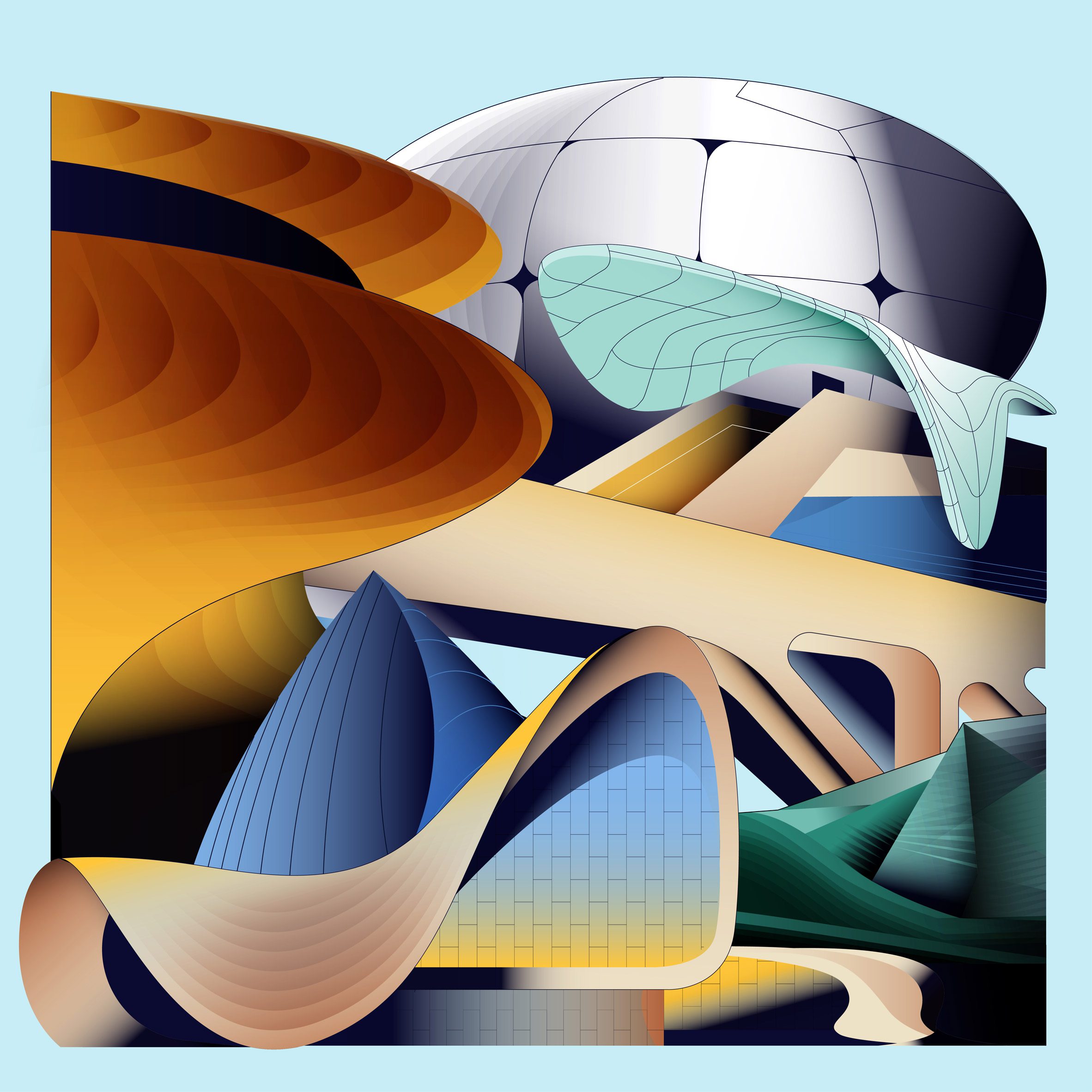
This article is part of our series on parametricism, the theory of architecture developed by Zaha Hadid Architects principal Patrik Schumacher that lays claim to becoming the 21st century's defining style.
The post Metropol Parasol wears its parametric structure "on its sleeve" appeared first on Dezeen.