








SOM "preserves the soul" of 1960s modernist office complex in Milan


Global studio SOM has renewed Corso Italia 23, a 1960s office complex in Milan, retrofitting its modernist structure and fractured interiors to align with modern standards.
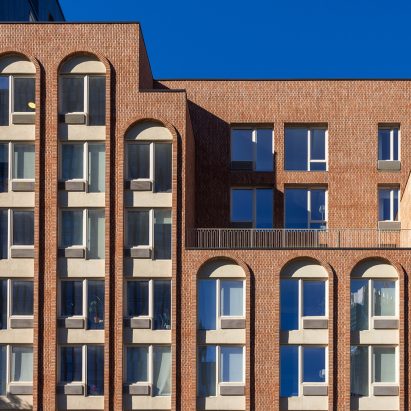
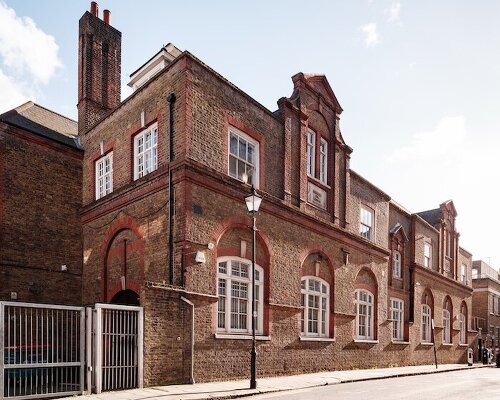
Occupying an entire urban block, the Corso Italia 23 building comprises three distinct volumes originally designed by Italian architects Gio Ponti and Piero Portaluppi.

SOM looked to improve connectivity throughout the 46,500-square-metre complex, transforming its closed-off layout into a "porous urban campus", while preserving its architectural quality.
This approach included the transformation of a large central courtyard from a parking lot into a shared garden, along with the creation of new pedestrian routes and internal staircases.

"Our core objective was to deliver a strategic reinhabitation of a mid-century landmark," studio design partner Kent Jackson told Dezeen.
"Drawing on the lineage of Gio Ponti and Piero Portaluppi, we reinterpreted the building's campus typology – transforming the site from a closed, insular block into a porous and verdant urban campus."
"The result preserves the soul of the 1960s architecture, while replacing its insular logic with one of openness and transparency," he added.

Looking to pay homage to the original design, SOM's strategy focused on material reuse, with 70 per cent of the existing building structures and foundations retained.
One building, which had become severely damaged over time, saw its red granite facade removed and repurposed into a glass fibre reinforced concrete system that matches the building's original colour.
The buildings were also updated to meet modern energy standards, while preserving its original massing and "geometric discipline".
"By treating the existing 1960s complex as a material bank rather than a site for demolition, we significantly reduced upfront embodied carbon," Jackson explained.
"This circular approach preserves the material memory of the original building while achieving the performance required of a contemporary envelope."
New glass-enclosed entrance lobbies have been added to the buildings to reinforce a sense of permeability – offering views into the shared courtyard, which has been completed with planted seating areas.

Inside, new openings in the buildings' existing floor plates accommodate large spiral staircases that were added to improve internal connections.
"The central challenge lay in restoring the architectural legibility of the original campus design," Jackson said.
"Over time, internal connections had fractured, and the central courtyard had become impersonal and disconnected from the life of the campus," he added.

The offices are complemented by a conference centre with a 200-seat auditorium.
Additional common areas and workspaces added by the studio include lounges, breakout spaces and roof terraces with views over Milan.
Elsewhere, Morphogenesis has created an expansive mixed-use office clad with sandstone murals in Kolkata and Felix Lewis Architects transformed an Egyptian-style boiler house in Kent into a workspace.
The photography is by Dave Burk.
The post SOM "preserves the soul" of 1960s modernist office complex in Milan appeared first on Dezeen.