











Sinaldaba organises Cecebre House in Spain around crescent-shaped courtyard
A crescent-shaped courtyard creates a "domestic refuge" at the heart of this minimalist house in Galicia, Spain, designed by local architecture studio Sinaldaba.
Named Cecebre House after the municipality in which it is located, the three-bedroom dwelling sits partially sunk into a sloping, rural site.
According to Sinaldaba, the design is an attempt to "recover the principles" of the region's typical rural architecture in a contemporary way, with its minimal gabled form a response to views and the prevailing wind.
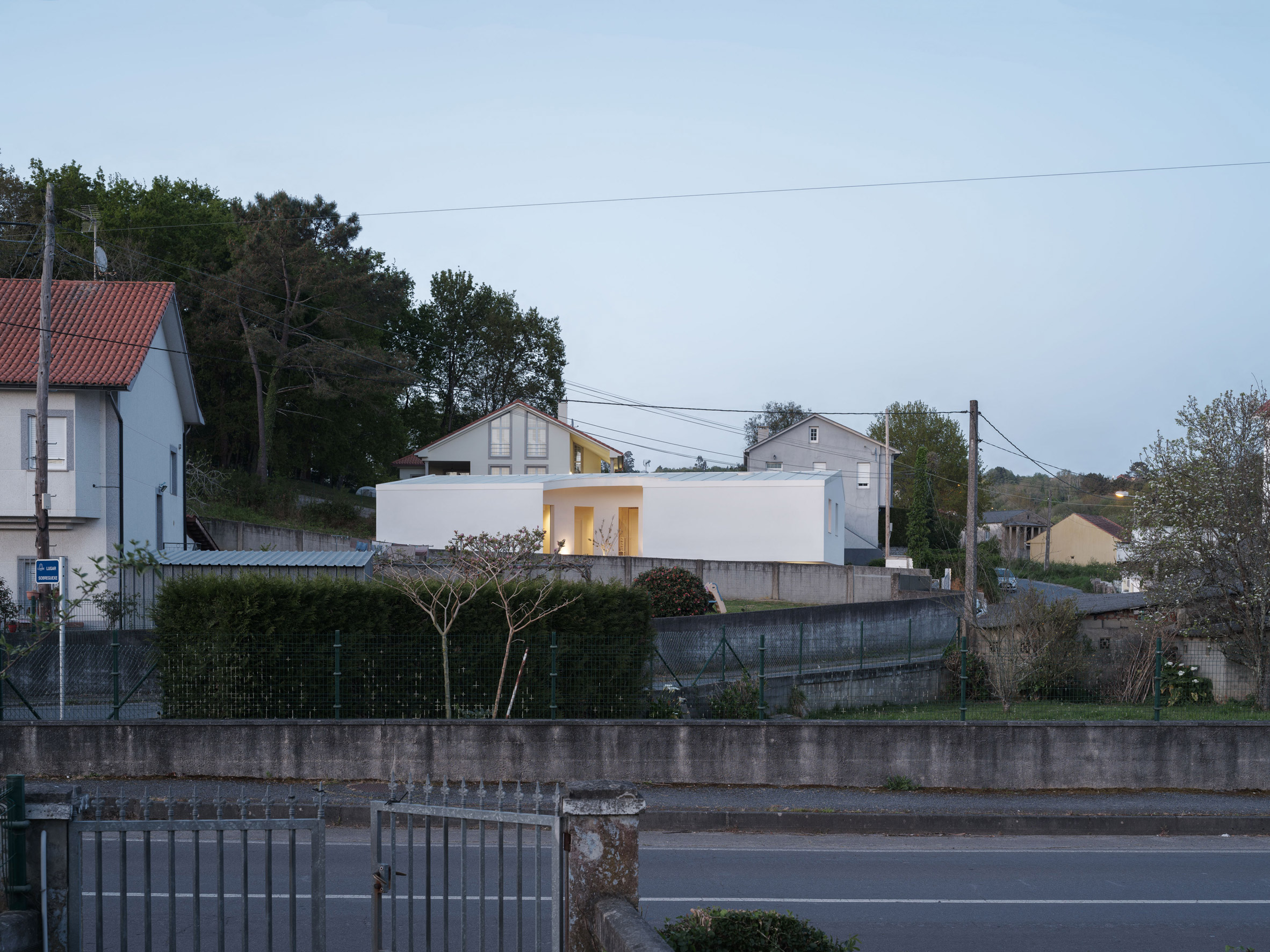
"Rather than reproducing traditional forms, the focus is on recovering the principles that have historically responded to the climate, the landscape and the topography of Galicia," founding partners Susana Vázquez and Ignacio Reigada told Dezeen.
"The compactness of volumes, protection against weather conditions, a precise siting on the land, and a balanced relationship with the surroundings," they added.
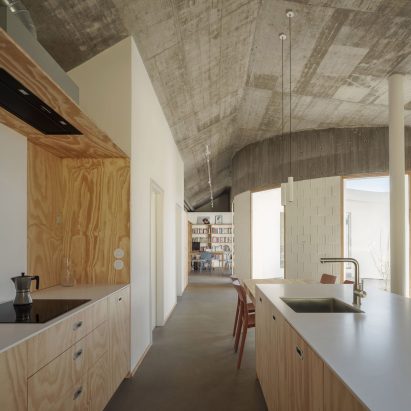
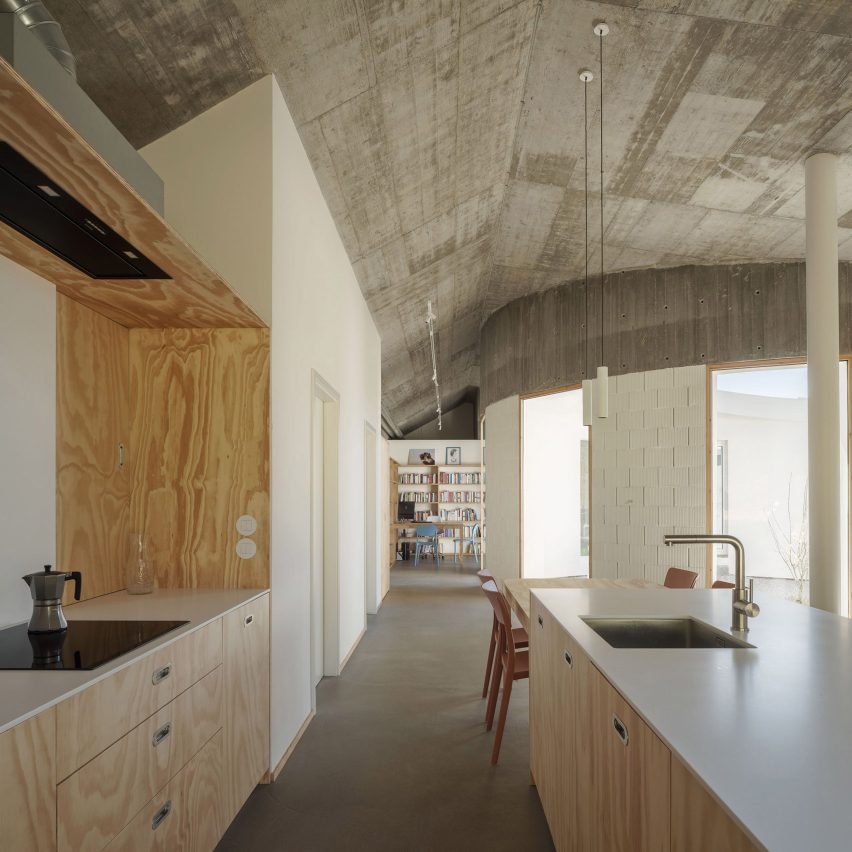
Cecebre House is centred around a living, dining, kitchen and study space that curves around the central courtyard. Here, a gravel patio planted with a tree is overlooked by a row of windows and doors sheltered by a crescent-shaped canopy.
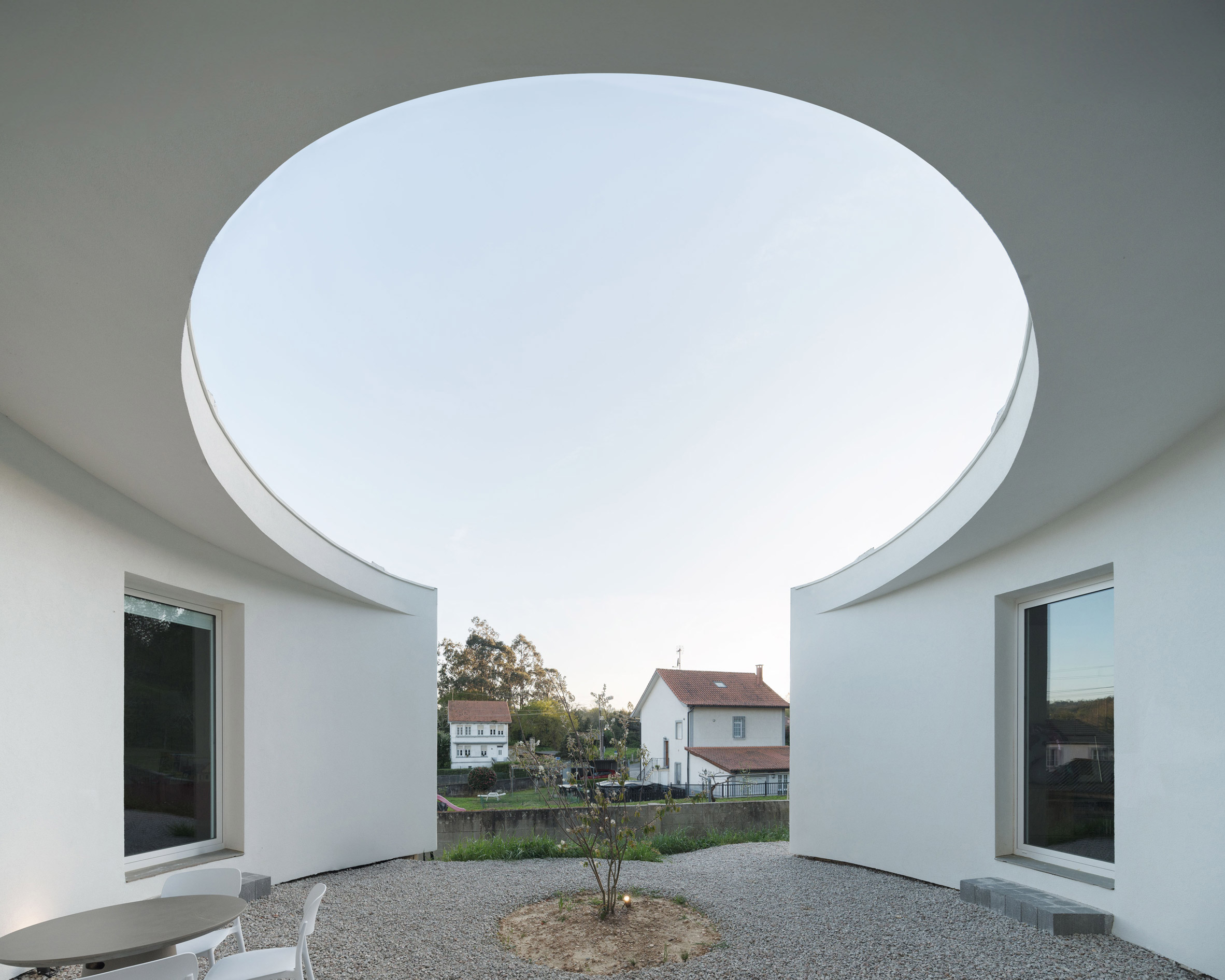
Positioned on the home's southern edge away from the prevailing wind, this courtyard creates a large opening in an otherwise blank facade, which was left without windows to avoid overheating.
"The central courtyard acts as a domestic refuge, an intermediate space that allows for year-round outdoor living while adapting everyday life to the changing conditions of the climate and the seasons," Vázquez and Reigada explained.
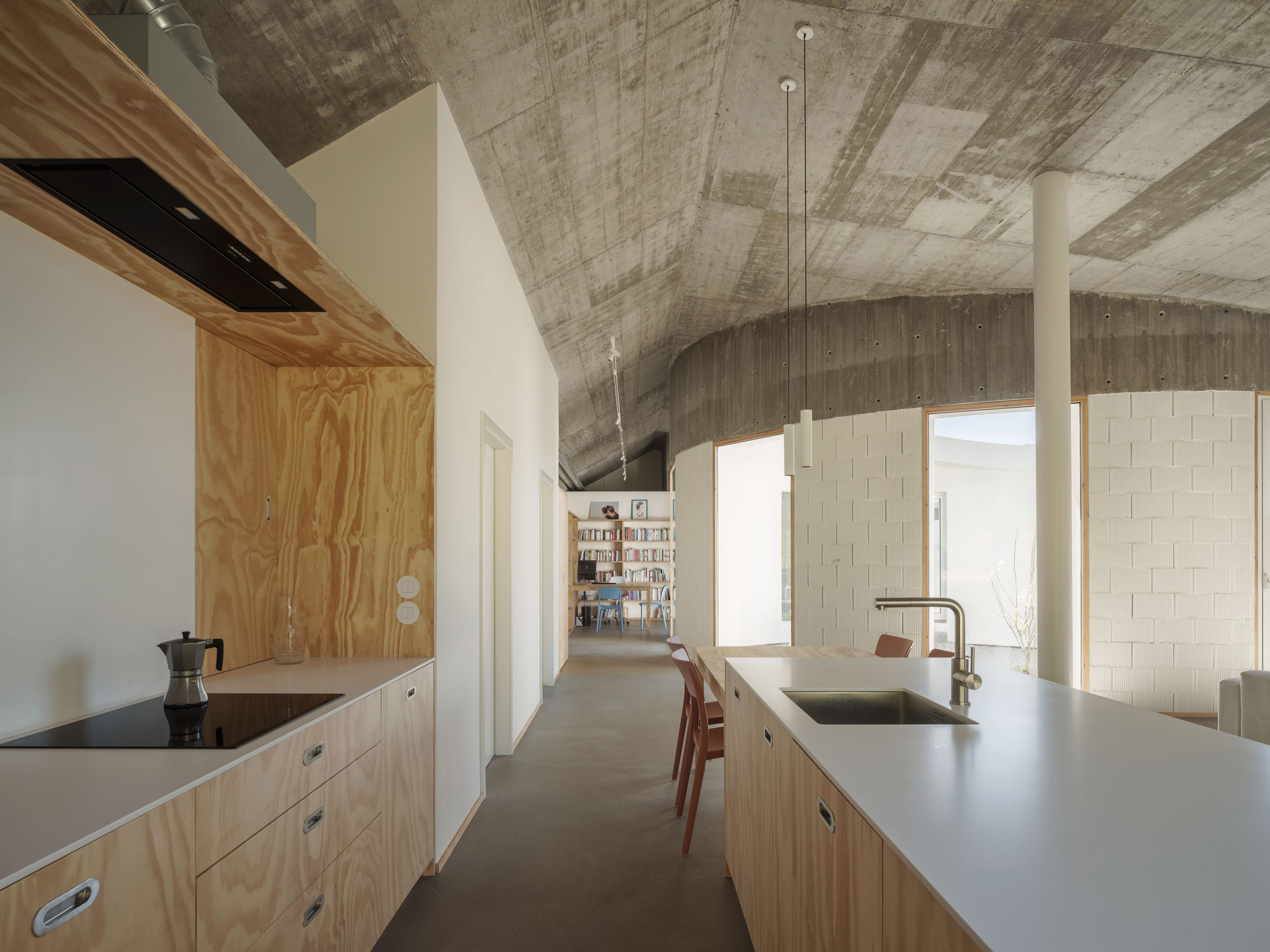
"The choice of a circular geometry also introduces a deliberate tension within the otherwise rigorous orthogonal organisation of the house," added Vázquez and Reigada.
"Its presence introduces an unexpected dimension that gently softens the architecture and strengthens the relationship between the house, the landscape, and the slower rhythms of domestic life."
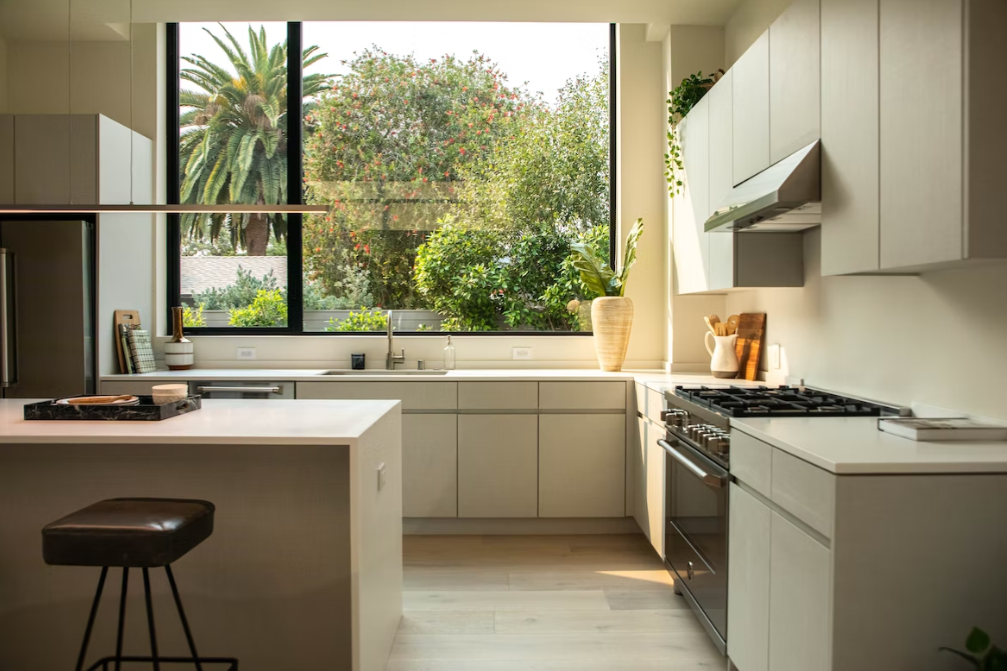
Working with a limited budget, both the living areas and Cecebre House's three bedrooms are lined with blockwork walls beneath concrete ceilings with exposed services, creating an industrial feel that is softened by plywood carpentry.
A concrete basement level containing utility and service spaces has been sunk into the home's sloping site, with a sheltered parking area created beneath the elevated eastern end.
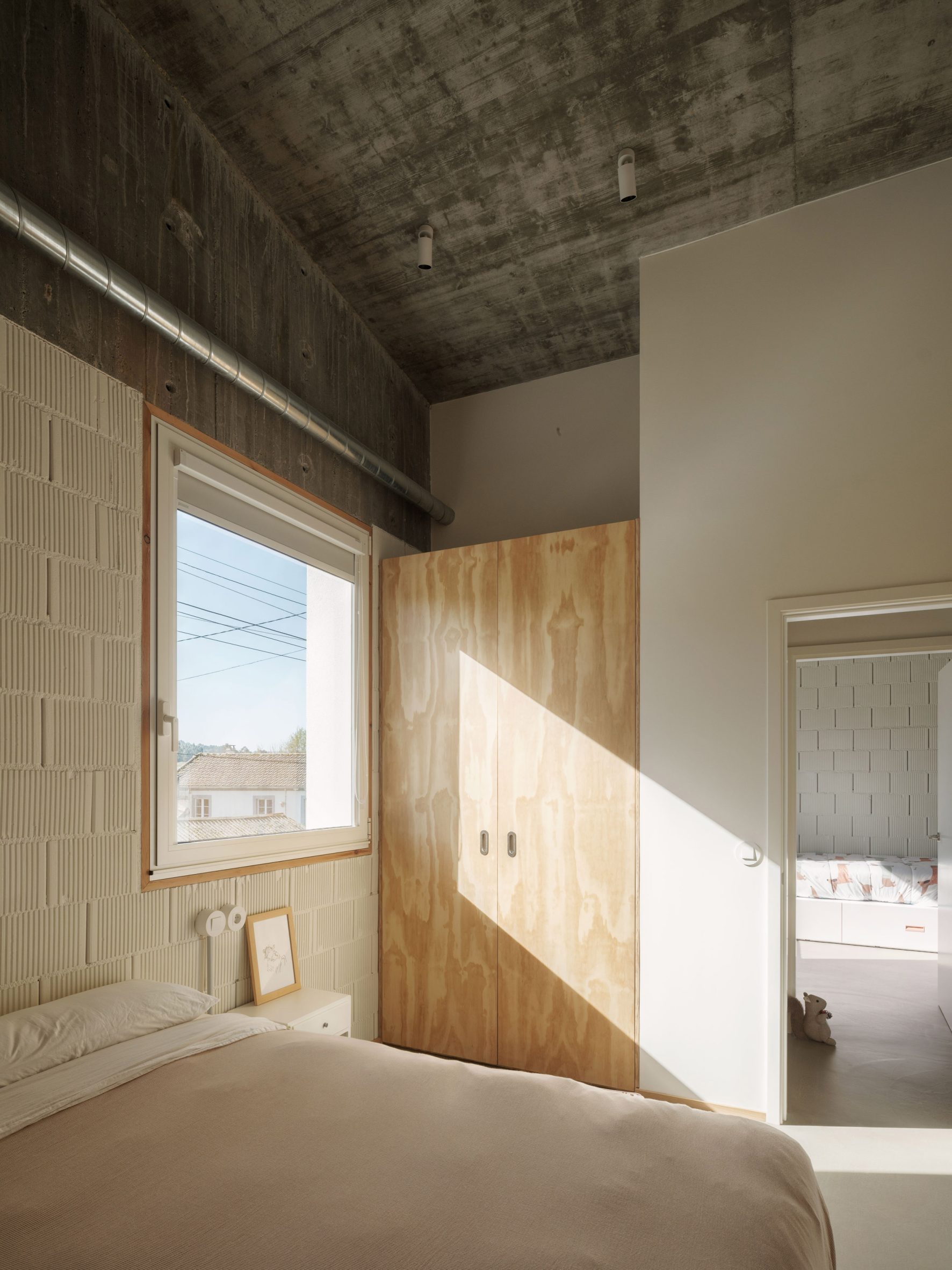
"The choice of materials was driven by two fundamental factors: a simple constructive logic and a very limited budget," said Váquez and Reigada.
"At the same time, a certain dematerialisation of the architecture is sought through a reduced and restrained material palette, avoiding literal references to traditional architecture and moving away from any historicist interpretation," they added.
Other homes recently completed in Spain include a home nestled in a forest in Avila by OF Architects and Ignacio G Galán and a metal-clad home by Jaime Prous Architects and Pineda & Monedero perched on steel.
The photography is by Luis Diaz Diaz.
The post Sinaldaba organises Cecebre House in Spain around crescent-shaped courtyard appeared first on Dezeen.