


.jpg)













Ricardo Leal perches hempcrete chicken coop alongside Portuguese home
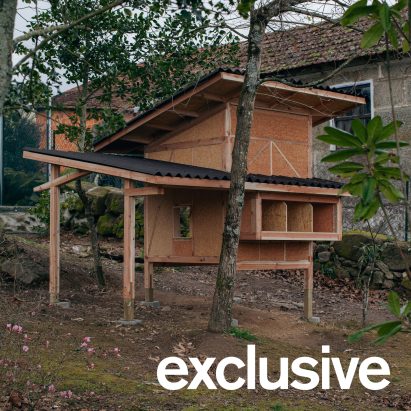
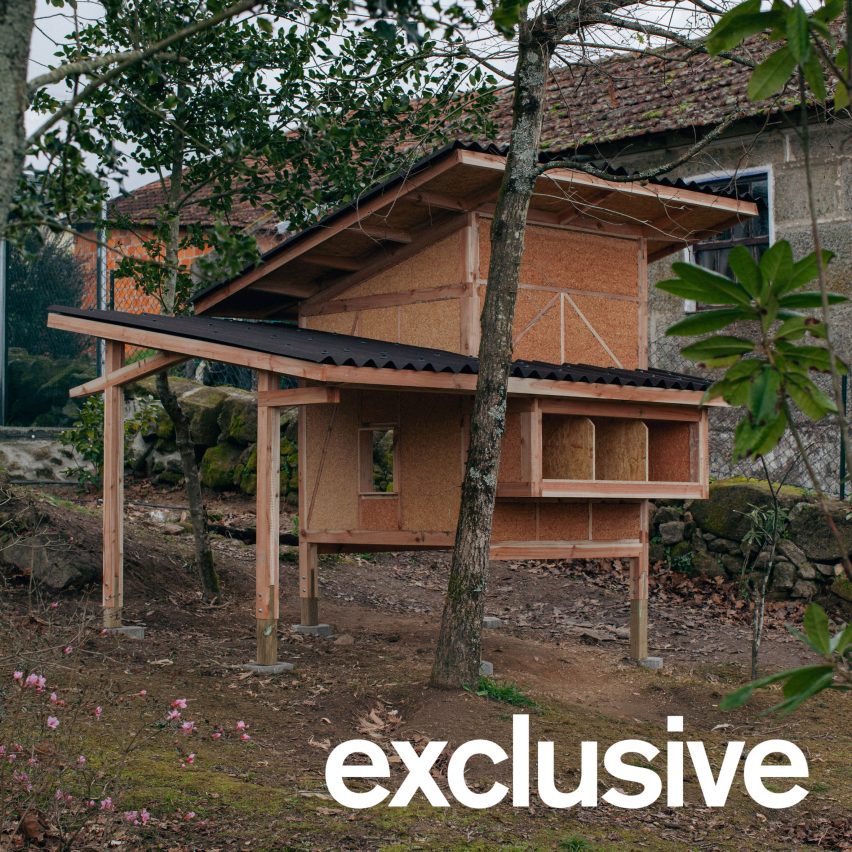
Hempcrete and timber were used to create this compact chicken coop in Portugal, designed by local architect Ricardo Leal to demonstrate that "even the most modest structures deserve careful thought".
Named Pestana Chicken Coop, the structure is perched atop timber columns on a gently sloping site in São Pedro do Sul and provides a sleeping area, outdoor run and nesting boxes beneath two sloping corrugated roofs.
For the coop's exposed timber structure, Leal was informed by the Segal Method – a form of timber construction developed by self-build pioneer Walter Segal that uses simple, bolted connections that can be easily dismantled or altered.
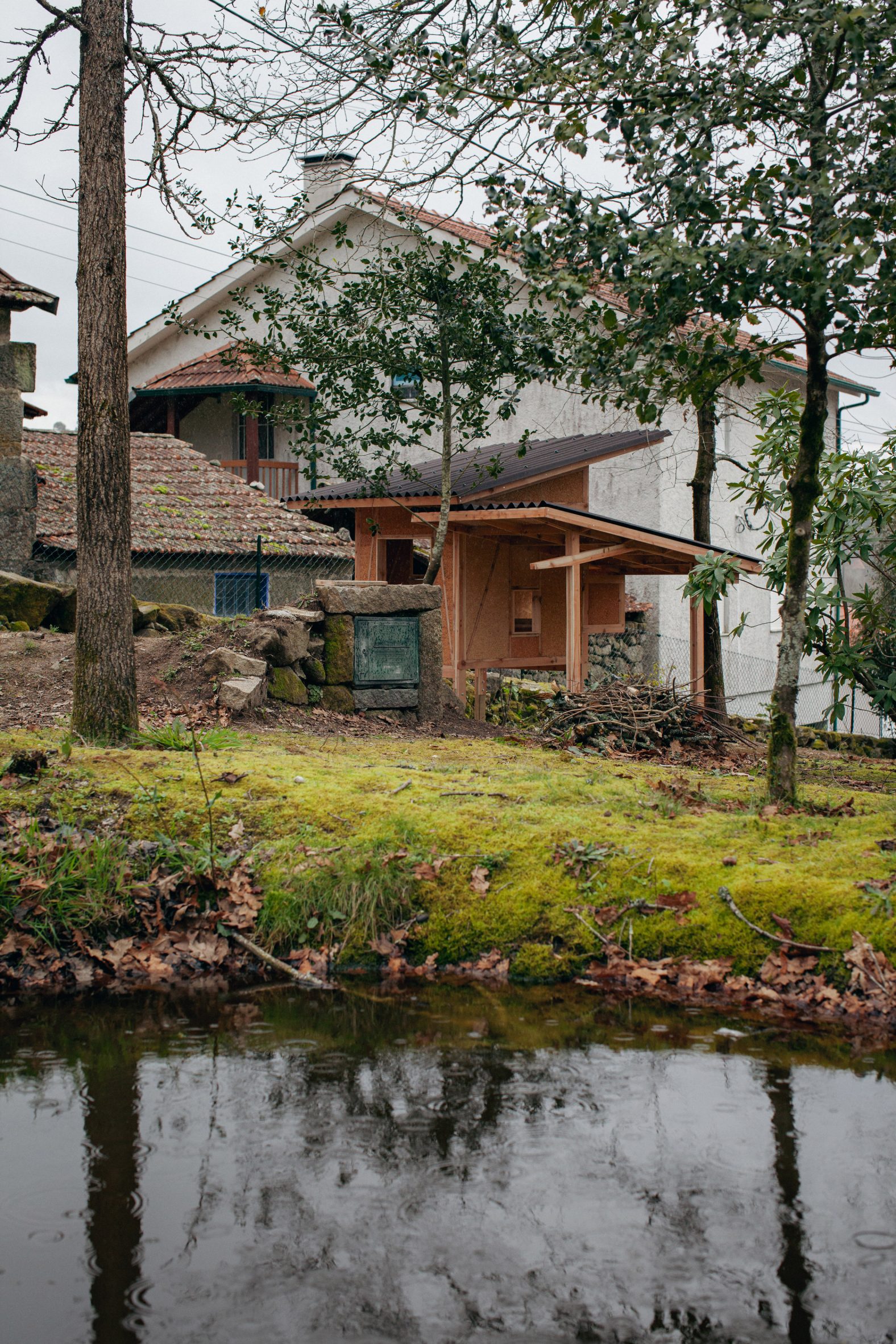
"Perched on slender stilts above a gently sloping site, this small agricultural building makes a quiet but considered argument that even the most modest structures deserve careful thought," said Leal.
"The construction method was inspired both by Japanese rock foundations and the Segal method by Walter Segal," he told Dezeen.
"The result is a building that does not announce itself, but one that handles every decision, from how it sits on the ground to how its most exposed components will eventually be replaced, with the same attention you might bring to a project 10 times its size."
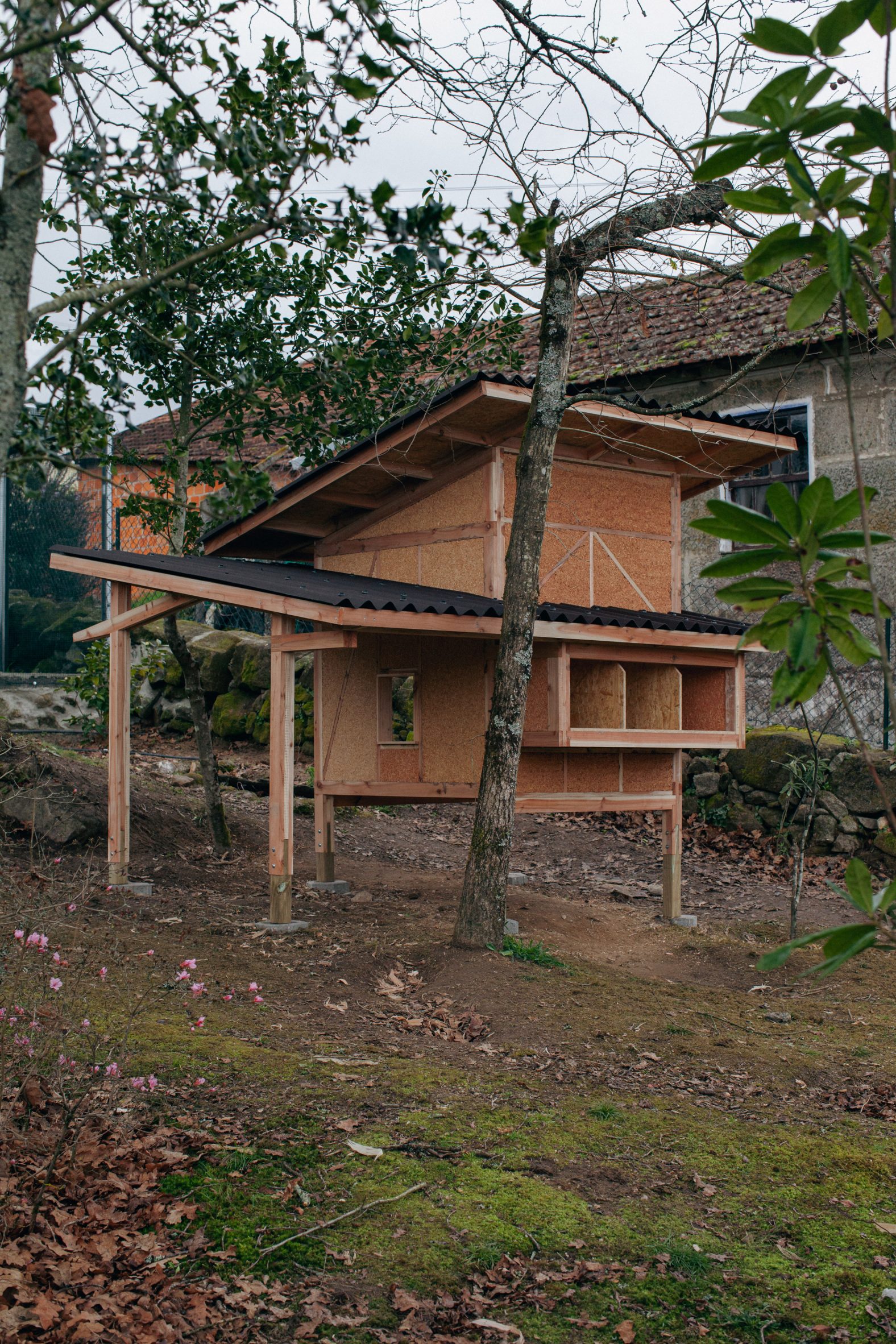
Leal built the main structure of Pestana Chicken Coop from cryptomeria, or Japanese cedar, which is a timber known for its natural weather and insect resistance.
To minimise disruption to the sloping, mossy site, the structure was perched on slim timber columns, which are supported by four small concrete feet at its base.
The timber columns are bolted to these feet in separate sections of treated wood, which were designed to be "sacrificial by design" and easy to replace independently should they decay.
"One of the site features was moss-covered ground. It was quickly decided to put the building on stilts, so it would not interrupt the smoothness of this landscape," said Leal.
"The lowermost elements are deliberately conceived as replaceable parts, sacrificial by design, so that the most vulnerable points can be swapped out over time without touching the structure above."
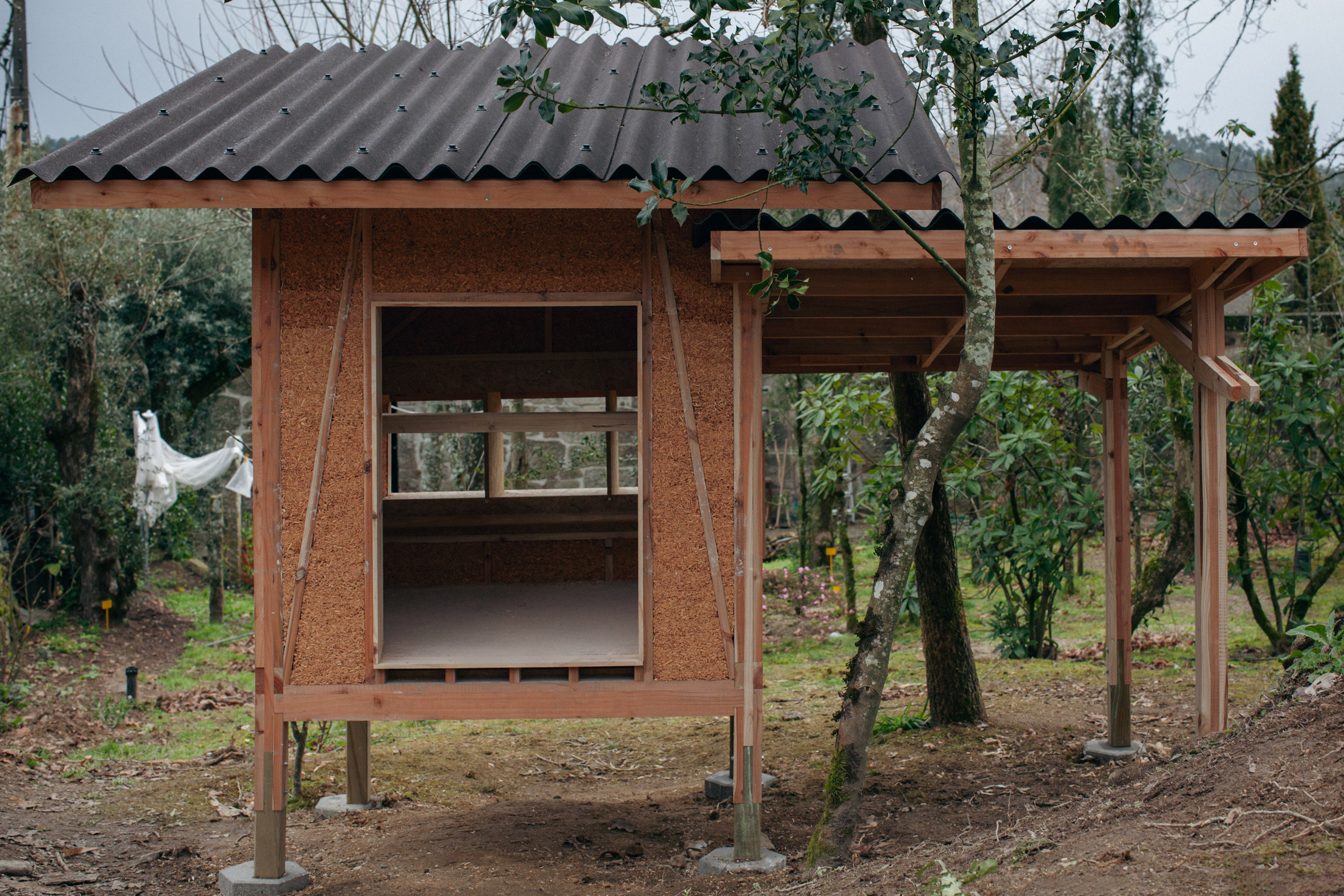
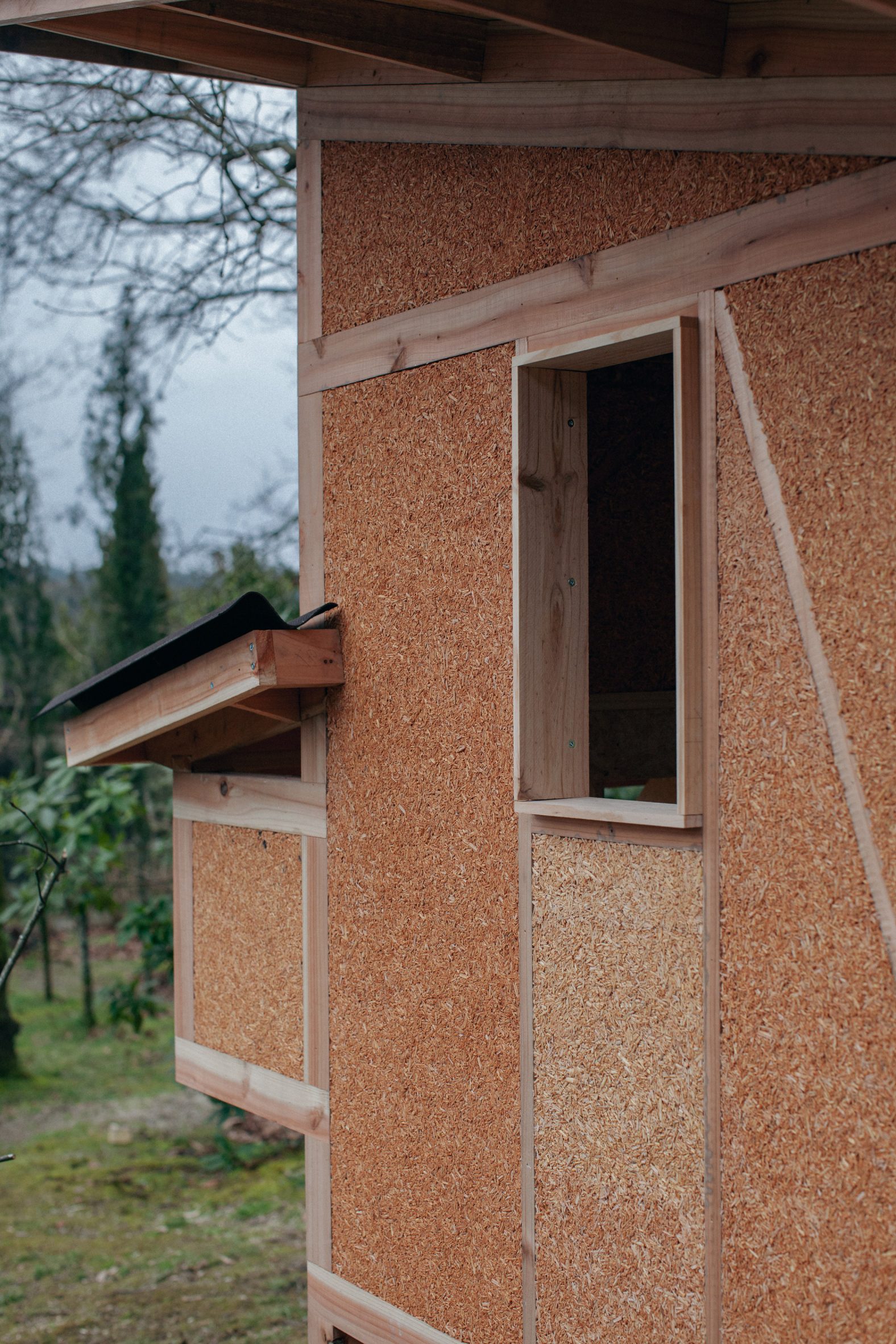
Infilling this frame are sections of hempcrete supplied by Portuguese company Naturamateria, chosen for its thermal mass and breathability. Hempcrete is a bio-composite material made from hemp and lime.
Pestana Chicken Coop's open run space sits alongside an enclosed area with litter and a roosting bar. Both are covered by roofs of corrugated bitumen-fibre panels that slope in opposite directions, with the run roof extending to cover a row of nesting boxes for egg collection.
Other chicken coops featured on Dezeen include a bamboo coop by RAD+ar hidden under an artificial hill in Jakarta, Indonesia, and one in Kyoto by 2m26 that was informed by Japanese shrines.
The photography is by Dinis Sottomayor.
The post Ricardo Leal perches hempcrete chicken coop alongside Portuguese home appeared first on Dezeen.