






Ten DesignMarch highlights that encapsulate Iceland's eclectic creative scene


From a fish-skin lamp to housing wrapped in road barriers, here are Dezeen's picks of the top exhibits at this year's DesignMarch in Iceland.
Held in Reykjavik from 6 to 10 May, the 18th edition of the event brought together creatives across architecture, design and fashion in more than 100 exhibitions.
Speaking to Dezeen, DesignMarch director Helga Ólafsdóttir said this year's edition demonstrated the "international impact" of Iceland's design scene, despite it being a small community.
"What makes Iceland’s design scene especially exciting right now is its openness," Ólafsdóttir told Dezeen. "Designers are working across disciplines and scales with a strong focus on experimentation and responsible production," she continued.
"This year's DesignMarch programme sends a clear message that even small creative communities can have a meaningful international impact through originality, collaboration and bold thinking."
Read on for Dezeen's 10 DesignMarch highlights:

Potential
At the harbourside in downtown Reykjavik, Potential offered a glimpse into the innovations emerging from Iceland University of the Arts' product design department.
The show focused on how overlooked local materials can be given new value, with stand-out exhibits including a lampshade made of discarded skate skin. Dried and moulded by Kári Jóhannsson, it reframed the overlooked waste material as an object of value and distinction.
Meanwhile, Erla Lind Guðmundsdóttir presented Værð, a springless mattress made from Icelandic sheep's wool, which explored how the age-old material could be reinvigorated with new manufacturing processes. It was formed from layers of water-felted wool, applied using a method modelled on 3D-printing technology.

Heimur
In his first solo exhibition, Icelandic-Angolan designer Logi Pedro Stefásson presented a staged interior filled with twenty objects he designed and fabricated.
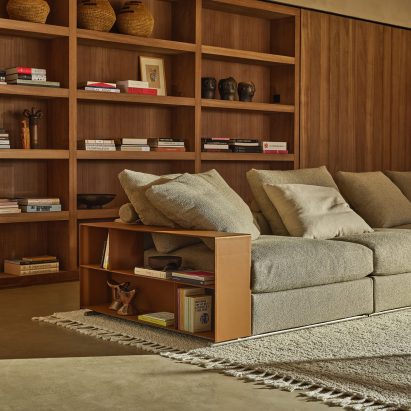
Ranging from a small set of metal cutlery to a tall wooden display case punctuated by a purple shelf, they are all intended to encapsulate Stefásson's personal expression, challenging the trend of modern homes mirroring showrooms and social media feeds.
According to the designer, it draws on the concept of Total Design – a Danish design tradition in which every object is given equal value – while exploring how it feels to grow up between two different cultures with contrasting design traditions.

Inherited Matter – A Finite Resource
With family connections being an important part of life in Iceland, it is no surprise that this year's event saw several collaborations between relatives and life partners.
One of the most impactful examples was Inherited Matter – A Finite Resource, an exhibition curated by relatives of the late craftsman Ólafur Andrés Guðmundsson. This included his son and daughter-in-law, the visual artist duo Ólafur Ólafsson and Libia Castro, alongside design studio Flétta, which is led by designers Birta Rós Brynjólfsdóttir and Hrefna Sigurðardóttir, who is his granddaughter-in-law.
They created a floor installation using everything left behind in Guðmundsson's garage, from well-used tools to a puzzle of project materials. It was a moving tribute to Guðmundsson's life while inviting broader reflections on the limits of Earth's resources.
"He knew how to make everything and how to repair it, and maybe we could look back to this generation more and slow down, repair things and own them for a longer time," Sigurðardóttir told Dezeen.

Frakkastígur
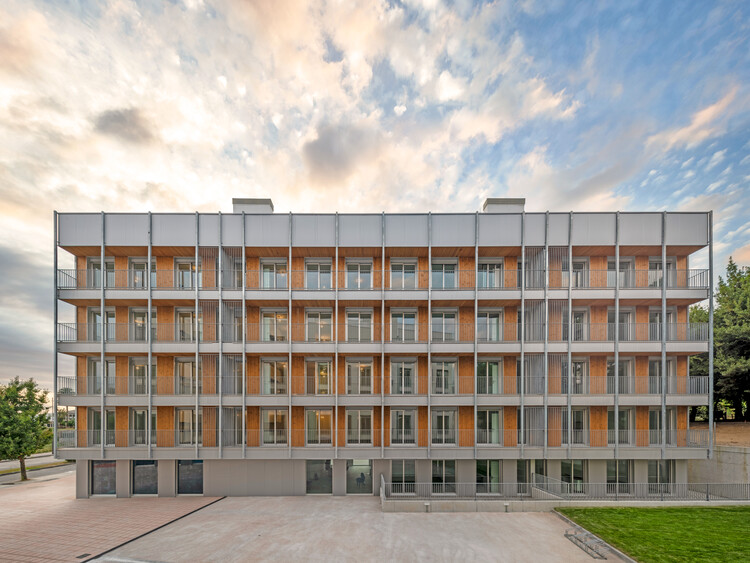
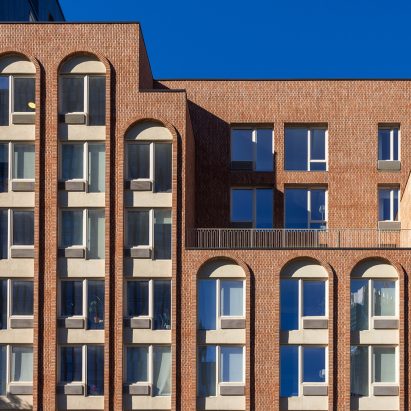
Architecture fans were well catered for across the week, with numerous building tours showcasing innovation within the city's built environment. One of the most exciting buildings to open was the experimental Frakkastígur housing block, which is currently under construction.
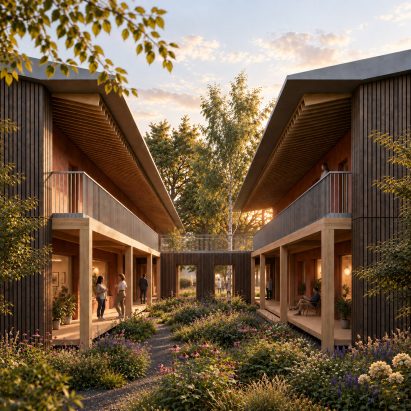
Designed by Arnhildur Pálmadóttir of S.ap Arkitekter, the building focuses on minimising carbon footprint through the use of recycled and local building materials.
Among the reclaimed materials are reclaimed road barriers used as cladding, stone from the site itself and waste glass salvaged from a nearby building site.
"It's a critique of Icelandic construction, as we have extremely high average CO2 emissions in our buildings because we use a lot of concrete," Pálmadóttir told Dezeen during a tour of the building.

Hæ/Hi: Vol V | Night Night
One of this year's most playful exhibitions was Hæ/Hi. The fifth of its kind, the exhibition is a collaboration between Icelandic and Seattle design studios focused on developing products for a room in the home.
This year, that was the bedroom, with a mix of objects designed to support play, rest and sleep. Highlights include softly-glowing Tiltekt lights by designer Jón Helgi Hólmgeirsson, which he artfully made by hand during a clear-out of his studio.
Designer Thorunn Arnadottir presented Bloom, a whimsical diffuser that allows users to turn scents "on and off", while Hage Studio exhibited a chunky blackout blind made from natural black Icelandic sheep wool, arranged in countable stripes to help people fall asleep, referencing the idea of counting sheep.

Thrown into design
Designing with waste continues to be a dominant trend in the global design scene, and this was evident throughout several DesignMarch shows this year.
One of the most convincing examples was a show led by hardware store Húsasmiðjan, which presented products by designers who were given the company's waste as a starting point.
Among the designs was Timber Dyed by Alice Sowa, which focused on dying waste wood with natural dyes made from food waste.
"The research frames waste as a resource of potential, suggesting that by being open to the emergence of new qualities, material can generate new forms of value," she said.

!Hannannah!
For the first time, the Museum of Design and Applied Art held an exhibition to showcase its education programme dedicated to introducing children to design, led by designer Sigríður Sunna Reynisdóttir and her collective ÞYKJÓ.
From a cardboard house with a rooftop bath to paper dolls used to create elaborate fashion designs, it offered an endearing insight into the creative minds of children, while highlighting the value of introducing them to design and architecture from an early age.
"Getting introduced to design at an early age helps open your eyes to your surroundings, helps you appreciate that there has been a thought and a series of decisions made behind everything around us, ranging from toothbrushes to trousers to trains – and that it matters to our quality of life and the future of our planet," Reynisdóttir told Dezeen.

Órar
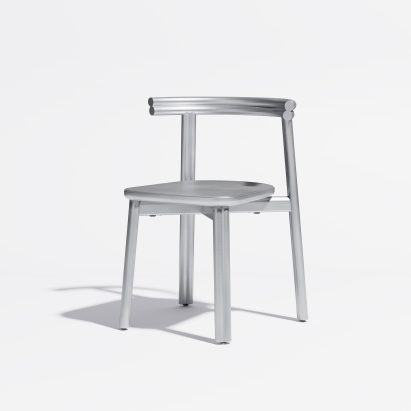
Wood emulates flowing water in this sculptural furniture collection presented by Orar, an emerging Icelandic studio led by artists Elsa Jónsdóttir and Júlíanna Ósk Hafberg.
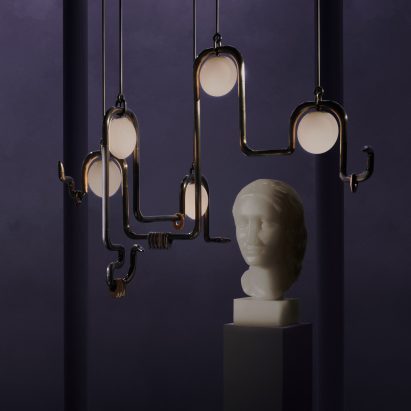
Displayed in the Parliament Hotel lounge, the project comprised a pair of chairs and a trio of suspended lights. The pieces, which form the duo's first collection, were handmade in their studio with the aim of dissolving "the boundaries between art, design and imagination".

Core Collection
Icelandic Theodóra Alfreðsdóttir offered a masterclass in minimalism with a curated selection of works from her newly launched Core Collection, presented at design store Mikado.
Crafted from wood, metal and ceramics, the pieces are described as objects that sit "between functional design and architectural studies in miniature".
Among the products were a wooden bench juxtaposing curved edges and sharp ridges, and a coffee table with geometric legs on which a glass top appears precariously placed.

Elliðaárstöð
Another architectural highlight that became the focus of many conversations during DesignMarch was Elliðaárstöð – an adaptive reuse project by local studio Terta, which was open for building tours.
A popular destination for local families, the project reimagines a closed-off industrial site power plant as an educational exhibition, public space and restaurant, surrounded by play areas, paths and installations that teach children about energy systems.
Its lead architect, Magnea Guðmundsdóttir, also presented the project at DesignTalks – a day-long conference that kicked off the event on 6 May.
The post Ten DesignMarch highlights that encapsulate Iceland's eclectic creative scene appeared first on Dezeen.