


















"Legacy furniture manufacturers have been asleep at the wheel" say Rarify founders


Nostalgia and risk-averse business practices have stifled innovation in the American furniture industry, Rarify founders David Rosenwasser and Jeremy Bilotti tell Dezeen in this interview.
Rarify is a platform for buying and learning about furniture and lighting, with a focus on vintage, hard-to-find pieces.
In their Pennsylvania warehouse, Bilotti and Rosenwasser believe they hold one of the world's largest collections of American mid-century modern furniture.
But despite their ongoing fascination with the brands associated with the mid-century period, such as Herman Miller, Knoll and Steelcase, the pair are highly critical of these companies' role in design today.
"Legacy manufacturers have been asleep at the wheel," said Rosenwasser. "There's no shortage of [design] practitioners or ideas. It seems that there's a shortage of willingness to support progress."
"If there's someone we are to blame on the furniture side or on the product side for not taking a leap of faith: Miller Knoll, Steelcase, Haworth."
"The landscape is bleak"
"The process involved in deciding what furniture is put into production today in the United States has nothing to do with innovation, for the most part," added Bilotti.
"While great designers do exist here, the current market and corporate condition prevents many of their innovative ideas from being exposed to the investment required to resolve them into widely available products."
Rosenwasser and Bilotti are frustrated by what they see as the gap between the inventiveness on which these brands established their reputations during the post-war period and the approach today.
"Sadly, in 2026, the landscape of American innovation in product and furniture design is far more bleak," said Bilotti.
"Furniture products that actually reach consumers now are relegated to be reboots, reissues of 20th-century design work," he added. "Nostalgia is safe, time-tested, widely appealing – and risk-opposite."

Ironically, the pair argue, the brands that have enjoyed the greatest commercial success off the back of experimentation are now the least open to pushing the envelope.
The larger the furniture producer gets, they contend, the less risk it is willing to take.
"Companies that are doing billions of dollars in revenue can afford to spend a few hundred thousand or perhaps even a few million dollars on taking risks and experimenting in a more radical subset of design innovation, instead of just bringing a stylish, hip interior designer to do a cool collaboration," said Rosenwasser.
"Why don't they do what they used to do, and actually fund some research to contribute meaningful new design work to the world?"
"Gatekeeping is such an important word"
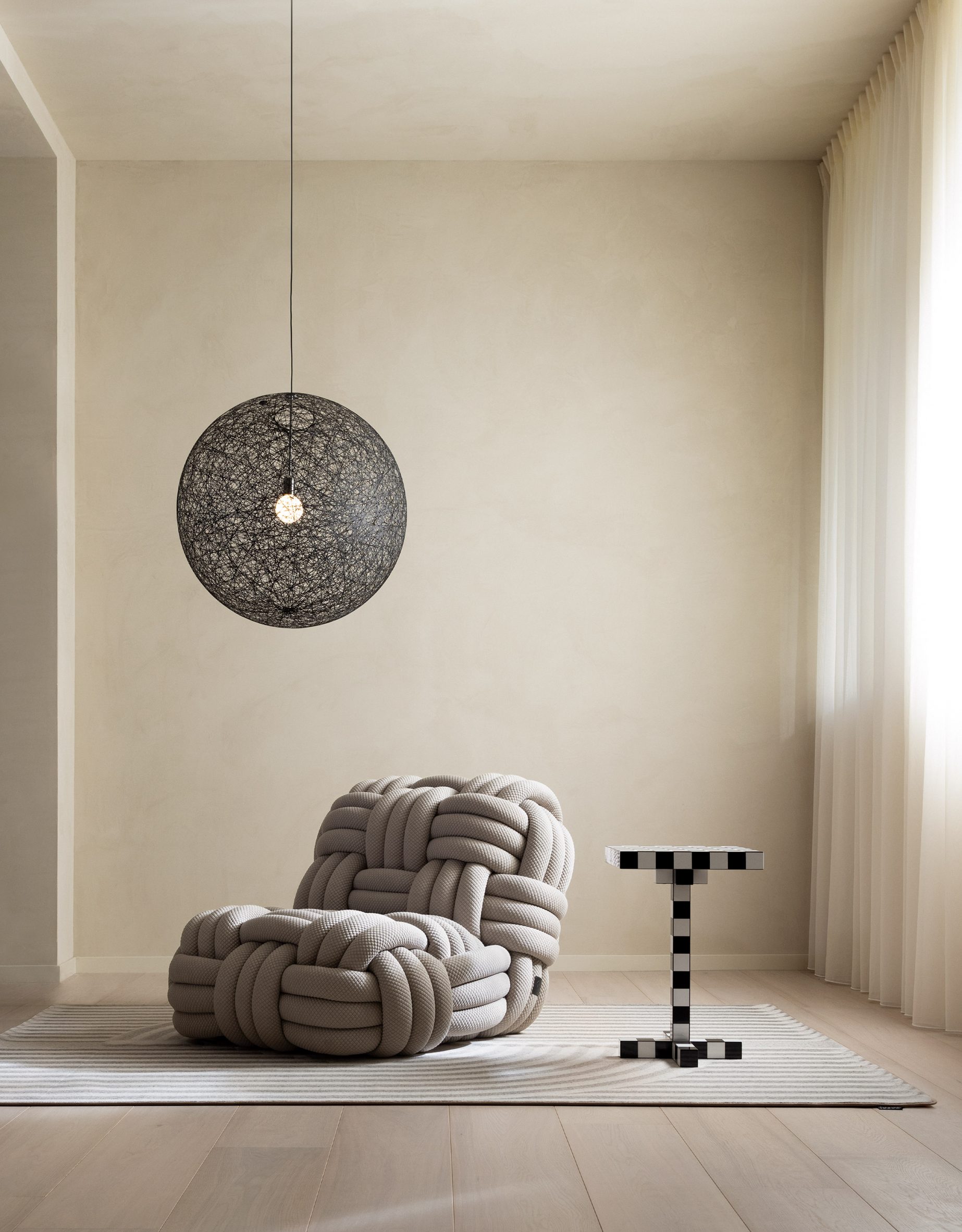
While Bilotti and Rosenwasser say that innovative thinking does exist in the market – pointing to brands such as Blu Dot and Moooi – the profit margins of the firms willing to innovate are often tighter than at the larger ones, leading to certain concessions.
"Gatekeeping is such an important word in the context of design innovation," said Rosenwasser. "Moooi is the only example I can think of off the top of my head, that is innovating in somewhat accessible production furniture."
Companies without massive profit margins are usually forced to embrace minimalism to maintain material rigour and keep prices down, which limits the range of products.
"The economic constraints of pricing, contract discounting and the high cost of doing business in the US put significant constraints on the outcome of products, when compared to some of the wildly groundbreaking designs that were produced in the post-war boom," said Rosenwasser.
"A company like Blu Dot operating in 2026 is forced to be very strategic and develop a design language that is extremely minimalistic in order to keep prices low while still retaining a rigorous design process and high-quality materials."
The difficulties are highlighted by the recent closure of long-time home for experimentation Areaware and the acquisition of Heller, which has showcased new designers working in plastic in recent years, by furniture giant Haworth.
Despite their criticisms of the industry, the celebration of design is at the core of Rosenwasser and Bilotti's work.
For instance, they recently put on an exhibition in New York showcasing rare pieces custom-designed by SOM for architecture projects, rescued and restored.
However, the pair feel they struggle to be taken seriously in the market – with the recent opening of a Rarify showroom in Philadelphia partly an attempt to amplify their status as a serious outlet.
"To these big brands, working with a business like ours is a distraction from the retail domination and design conservatism that has driven their profits sky-high," said Bilotti.
With various barriers to stocking new products from the major design brands, they have gotten creative about sourcing second-hand items, such as rescuing furniture from office liquidations.
"Pull talent from the innovators"
In terms of solutions to the innovation problem, the Rarify founders look to the way that collaborations between design and manufacturing science led to game-changing mid-century modern products.
New methods for bending steel and wood, extrusion and machine cutting fed directly into the work of innovators such as the Eameses and Florence Knoll.
"Post-world war two, manufacturing experienced a paradigmatic transformation that led to the likes of the Eameses and other designers," said Bilotti.
"These designers were able to push the boundaries of new materials and methods in production – and miraculously, also create successful product after successful product that consumers found value in. It was a win-win."
Now, Rosenwasser and Bilotti believe the corporate power of big furniture brands should combine with the cutting-edge research happening in universities.
"Go to a conference like the ACADIA [Association for Computer Aided Design in Architecture] and go poach talent who actually have genuine experience like researching in innovative practices, which is kind of what happened post-world war two," Rosenwasser said.
"Knoll hired experimental designers or artists who were rigorous and talented to do exceptionally creative work, and there was a boom."
"We need to be looking to pull talent from the innovators, a lot of whom are in academia. We need to find a business model that pays the bills."
The top photo is by Garrison Block.
Dezeen In Depth
If you enjoy reading Dezeen's interviews, opinions and features, subscribe to Dezeen In Depth. Sent on the last Friday of each month, this newsletter provides a single place to read about the design and architecture stories behind the headlines.
The post "Legacy furniture manufacturers have been asleep at the wheel" say Rarify founders appeared first on Dezeen.