









Islington House extension features details that "might make a Georgian craftsperson proud"


Local practice Architecture for London and interiors studio Hamish Vincent Design have revamped a neo-Georgian house in London, organising its interior around a triple-height stairwell.
Located in the Canonbury Conservation Area, Islington House has been updated with a skylit rear extension containing a kitchen and dining room and an additional ensuite bedroom on the second floor.

The home sits within a Georgian-style terrace built to replace bomb-damaged historic structures, meaning it was not heritage-listed like many of its neighbours. This gave Architecture for London and Hamish Vincent Design creative freedom to establish an open-plan layout that the homeowners desired.
However, throughout, elements have been designed to honour the original building's neo-Georgian style, including the cantilevered staircase at the home's entrance and a large brick archway that opens the rear extension onto the garden.

"The terraces on St Paul's Road are unique as modern replacements for bomb-damaged historic terraces, although they were built with Georgian-inspired design details," said Architecture for London founder Ben Ridley.
"Our refurbishment and extension develop this theme further, incorporating contemporary detailing that might make a Georgian craftsperson proud: structural arches, a cantilevered staircase, natural stone, and high-quality joinery," he added.

Entry to Islington House is via the new triple-height stairwell, which was introduced to pull more light into the formerly dark front of the home. The staircase itself has been finished with Douglas fir treads with stone details.
On the ground floor, a set of sliding double doors leads from the stairwell into the living area, which subsequently steps down into the rear extension.
Here, two exposed-brick walls frame the dining and kitchen space, where a solid wooden table with bench seating sits beneath a glass ceiling framed by timber beams.
Doors set within the large arched opening connect the dining area to a paved patio in the garden, which is flanked by grey-brick walls to match the extension.

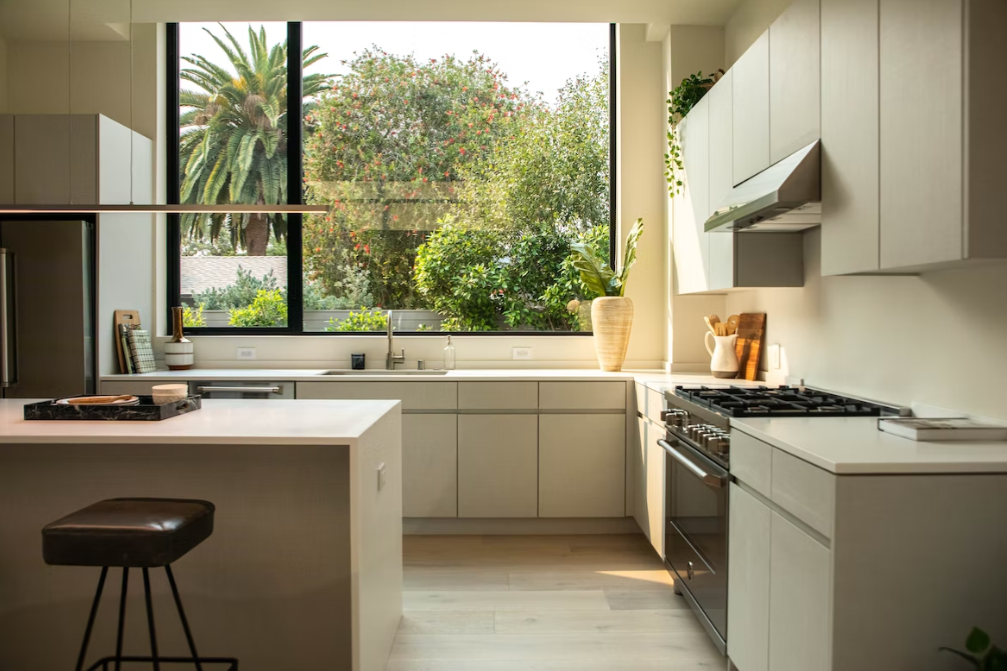
Inside Islington House, the areas of exposed brickwork are contrasted with full-height timber storage areas and clay-plaster walls in the kitchen spaces, as well as stone-topped counters and an island.
"As a studio, we are always exploring materials, their texture, and how they are not just pleasing to look at, but also purposeful," Hamish Vincent Design's creative director Daniel Jones told Dezeen.
"The clay plaster used in the kitchen and entrance hallway void is a perfect example of this. It almost acts as a living wall, with colour and texture shifting throughout the day, while functioning as a diffuser that disperses sunlight," he added.

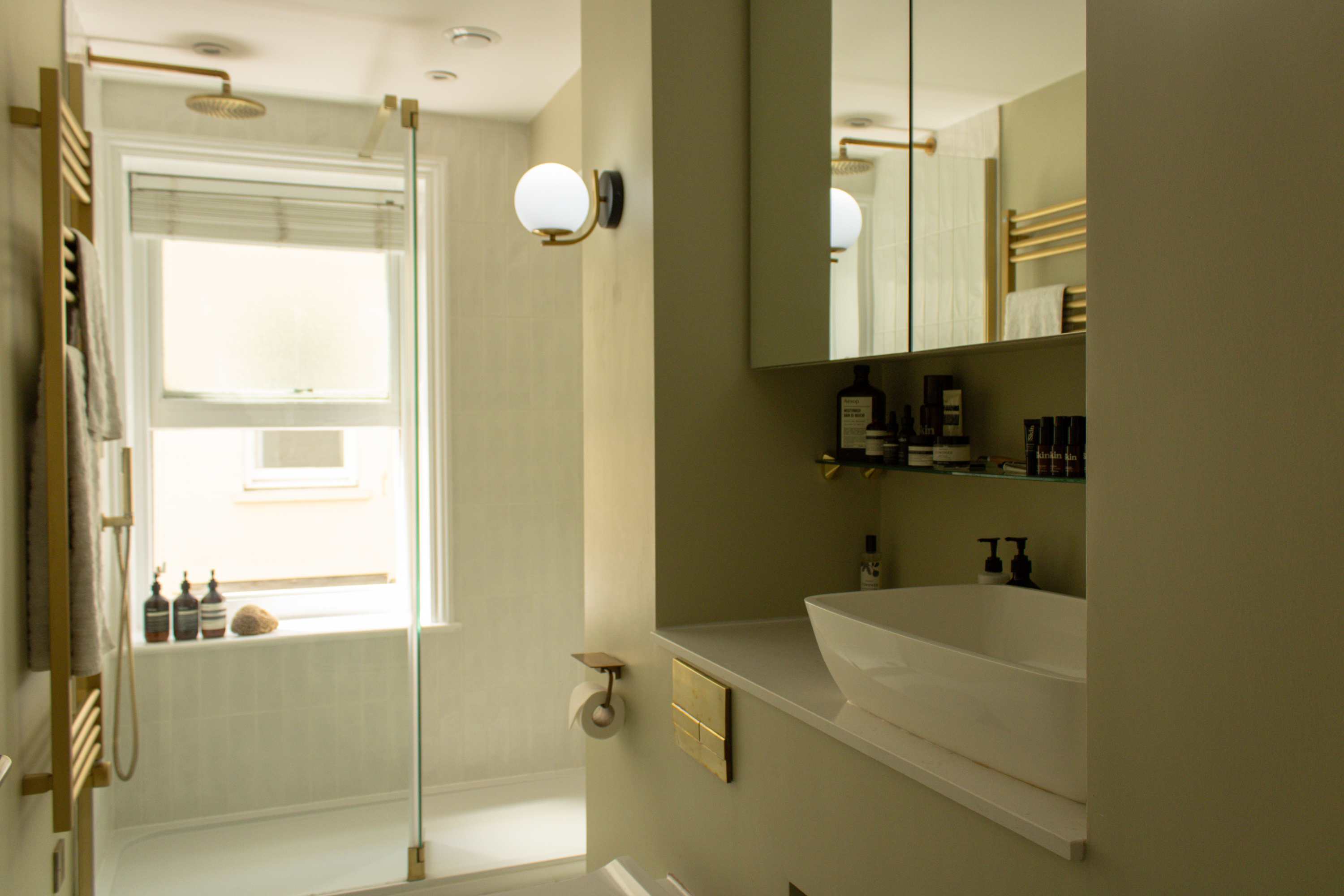
On the first floor, the main bedroom and bathroom sit alongside a guest room at the front of the home, while a study and bathroom space above was tucked beneath the home's roof by adjusting its floor levels.
Elsewhere in London, James Alder Architects recently revamped a terraced home with an extension for bicycle maintenance and gardening, while DGN Studio used sandstone bricks to add textural walls to a family home.
The photography is by Leighton James.
The post Islington House extension features details that "might make a Georgian craftsperson proud" appeared first on Dezeen.