







"Future challenges" lie ahead at Sagrada Familia says lead architect Mauricio Cortés

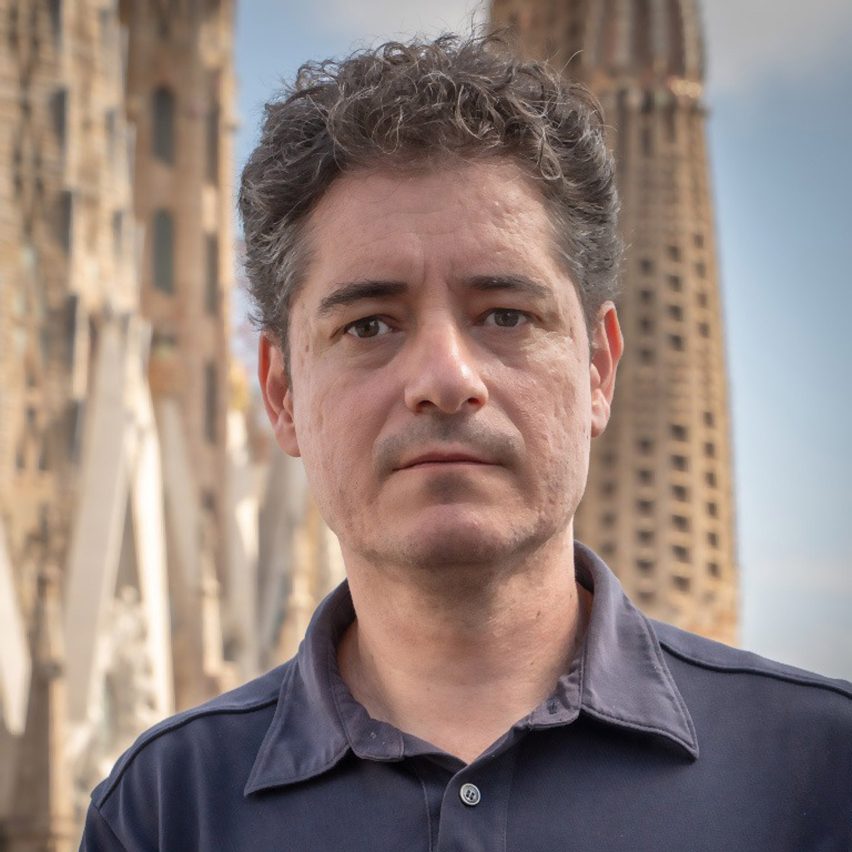
Today marks the inauguration of the Tower of Jesus Christ at the Sagrada Familia. In this Gaudí Centenary interview, its lead architect discusses how modern technology helped reach this monumental milestone, but how work on the church is far from finished.
"I've read a few headlines that said that, this year, the Sagrada Familia will be completed," lead architect Mauricio Cortés told Dezeen.
"However, the case is that the central towers will be completed with the Jesus tower, but then there are future challenges ahead."
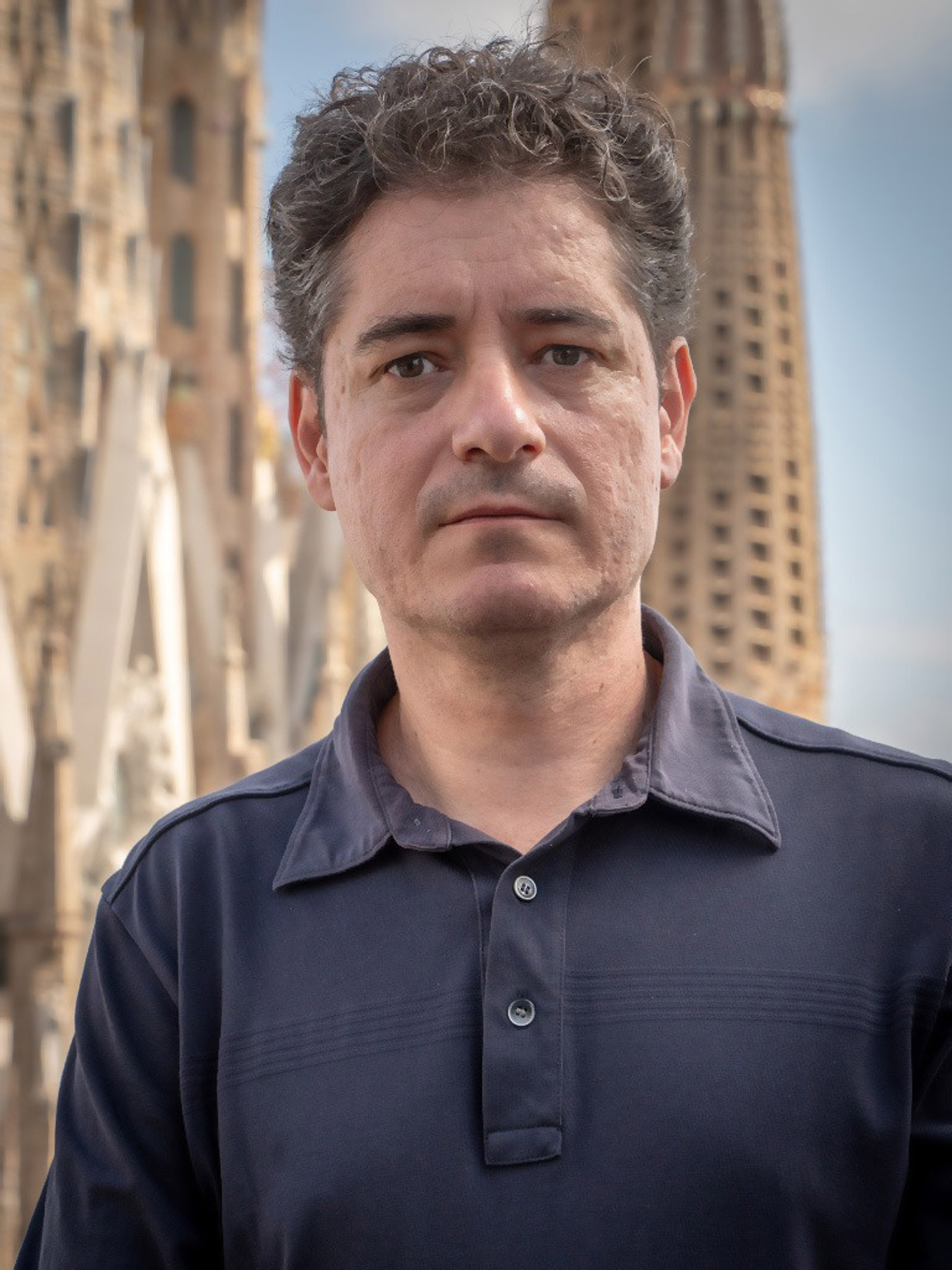
Among these, he said, is the completion of the world-famous basilica's main elevation, for which the timeframe is yet to even be determined.
"The biggest [challenge] will be Glory Facade, which is the main facade," said Cortés. "Maybe it will take 10 years, but we don't yet have a fixed schedule."
"Before the facade becomes a reality, there are several levels of underground construction to make it possible," he explained. "The underground works are ongoing."
"It's been five generations of workers"
Cortés is a Mexican architect who has been working on the Sagrada Familia – the world's tallest church – since 2006. It's a significant time in human terms, but just a short chapter in the building's 144-year history.
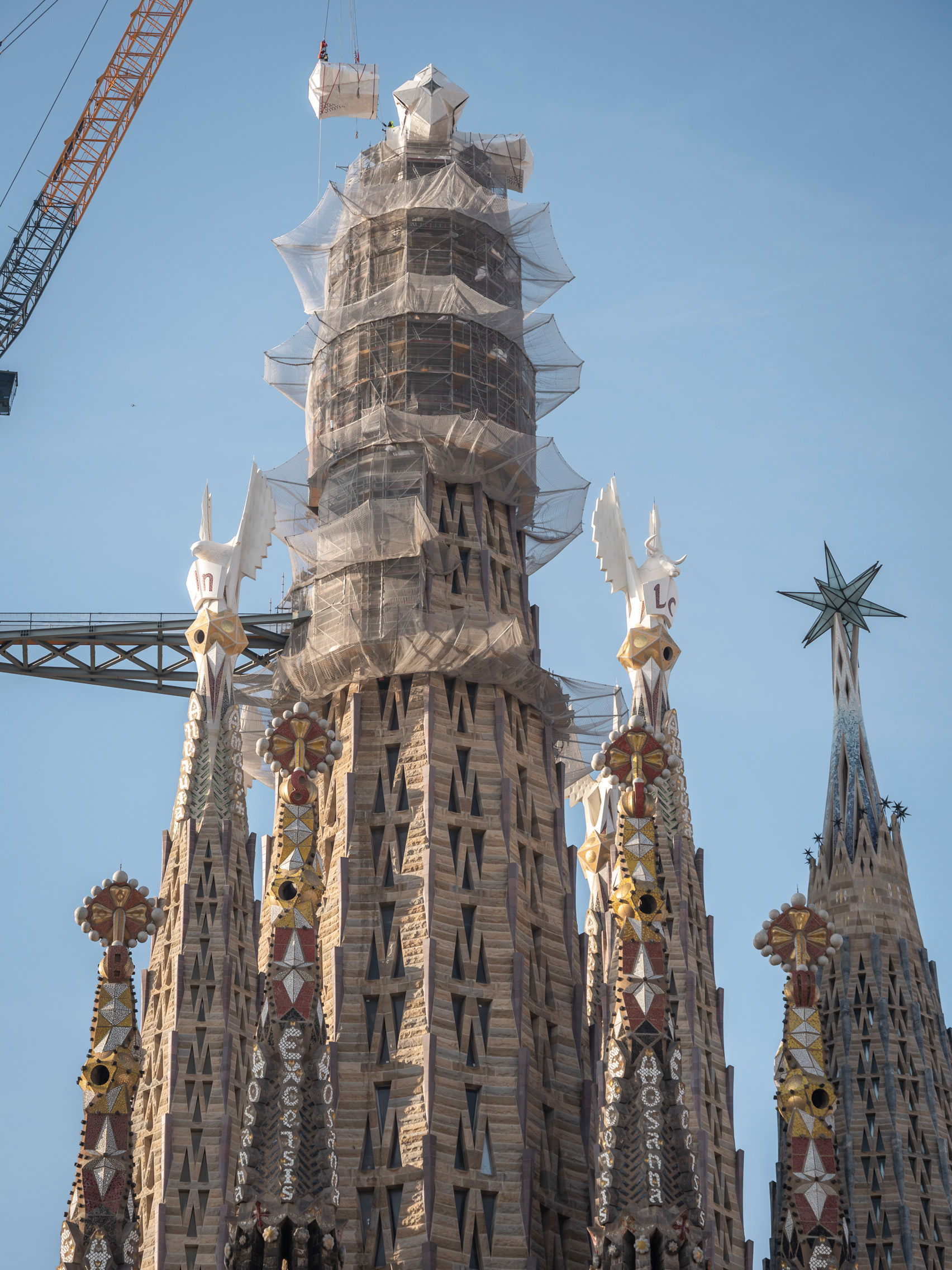
One huge milestone he has been fortunate to have experienced in this time is the completion of the central towers – The Four Towers of the Evangelists, The Tower of the Virgin Mary and the massive centrepiece, The Tower of Jesus Christ – on which he led the design and construction team.
He describes the responsibility of working on the project, which is arguably Spain's most famous landmark, as a daunting but energising experience.
"Obviously, it's pressure, but in a way, a thrill," he reflected. "The vibe is that you are part of a legacy, not only of Gaudí's original vision and striking architecture and genius, but it's been five generations of workers, architects, masons and even donors that have contributed."
"So it's been the work of generations and you feel part of it on that chain, and that is very humbling, it also keeps you focused," he continued.
Cortés's career at Sagrada Familia began on its ground floor, where he worked on extending the neo-gothic cloisters around the Nativity facade, which was the only section Gaudí lived to see completed.
These elements feature highly organic shapes with very free forms, in contrast to the more geometrised, parametric spires, such as the Tower of Jesus Christ, which is being inaugurated by Pope Leo XIV today on the centenary of Gaudí's death.
Cortés said these contrasting styles make working on the building feel as though it is "divided into different projects", offering lessons in Gaudí's career evolution.
"I started with the cloisters around the Nativity facade, so it was a different experience from working on the spires 20 years later," he said. "You always learn new things."
Completing the towers has been a herculean effort, requiring the adoption of new technologies as well as meticulous studies of drawings, models, written sources and photographs.
Thankfully, Gaudí left behind enough of his designs to guide future generations, with the knowledge that he would never see the project completed himself.
"It's very interesting how to mix both worlds," he reflected. "You have to do a lot of testing to make these two worlds match together."
Gaudí's parametric designs are "mindblowing"
Cortés said a common misconception is that "modern technology forces you to go farther away from Gaudí's original vision". He believes it has produced the contrary effect, allowing the team to deliver the design as closely to Gaudí's original vision as possible, and in some areas, even expand on it.
"It was technology that helped us get closer to what we believe was the original intention in several ways, both in the design process, in the engineering and in the construction," explained Cortés.
A specific example of this is the use of prefabricated stone, which has allowed the team to deliver the central towers in line with Gaudí's vision of stone construction, rather than with masonry blocks.
The central towers were predominantly built with post-tensioned stone panels, developed by engineering firm Arup and mass-produced off-site.
While rapidly speeding up the construction of the towers, this system also reduced the thickness of each required component from approximately 1,200 millimetres to 300 millimetres. This minimised the weight of the towers and, therefore, the structure needed to stabilise them.
In the 172.5-metre-tall Tower of Jesus Christ, this resulted in a completely hollow interior, which was previously thought impossible – providing completely new space for the team to innovate.
"It was [originally] believed that the tower of Jesus needed intermediate slabs to stabilise such a big tower, and now modern technology has allowed us to build like a hollow spire with a staircase in the middle," said Cortés.
"So this architectural content could be exploited, and it needed a symbolic interpretation," he continued. "The architect director worked with the theologian committee and artistic committee to create an interior that is consistent with what is happening outside and all the symbology of the halls the Sagrada Familia."
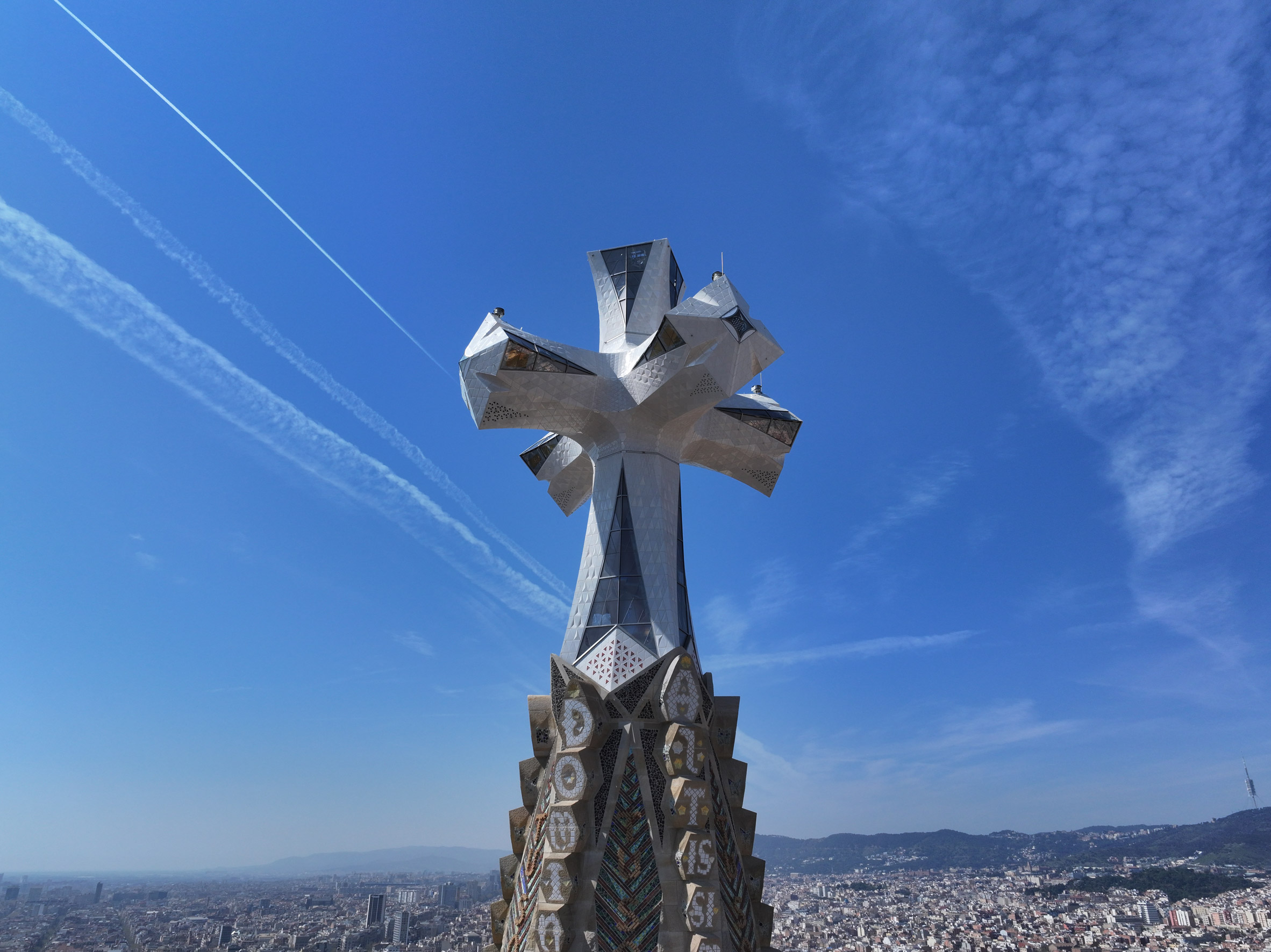
Another example where modern technology has allowed the team to effectively deliver Gaudí's original vision for the four-sided cross that crowns The Tower of Jesus Christ.
Specifically, it allowed the team to create the desired thin skin for the cross, clad in thousands of 3D-printed ceramic tiles and punctuated by double-curved glass panels.
According to Cortés, it was Gaudí's trailblazing mathematics and parametric modelling that facilitated this, as his calculations blended seamlessly with modern computer software.
"It's mindblowing," he said. "The geometries that he established somehow ended up being the perfect fit for putting that into parametric models and algorithms and scripts, because there are known mathematics and even lines of code that makes you explore more iterations of whatever piece," he added.
"So it was state of the art, technology at our disposal to get us closer to the shape of the cross that Gaudí would have wanted."
Gaudí "would be pleased" with progress
Nearly 150 years after it was designed, it is hard to imagine the Sagrada Familia ever being completed without the development of modern technology, let alone safely.
Though, Cortés believes that Gaudí's intelligence and innovation would have led him to find a way – evidenced by his pioneering use of prefabricated concrete in the spire of the Saint Barnabas tower on the Nativity facade, which he completed in 1925.
However, Cortés said one of the biggest obstacles would have been completing it safely without modern cranes and scaffolding, and ensuring its longevity without modern building materials.
"I think of the durability of things," he reflected. "Obviously, the concrete available in the 1920s is totally different from this ultra-high performance concrete that we have now. So it will have taken longer, and I don't know about its durability."
Looking back on the 20 years he has spent working on the Sagrada Familia, Cortés struggles to imagine what his life could look like beyond its completion.
"I hope to contribute here as long as I can," he said.
This won't be difficult, with numerous elements of the project still to complete. Alongside the Glory facade, this includes "a few chapels, a baptistry and numerous roofs".
Despite the monumental length of construction, Cortés confidently said that Gaudí would be happy with the progress on the project. After all, the Catalan architect famously said himself that the "client [God] is not in a hurry".
"[Gaudí] said, 'This is the work of several generations, but that's okay. Every generation will come with their own ideas. I will leave the principles, the geometry, I will define as much as I can, the main parts, but then it's open for two next generations to contribute'," explained Cortés.
"I think all the generations that have done their best and I think everybody always asks themselves, would Gaudí have been proud of this piece? And have all the predecessors been honouring the legacy or not?" he reflected.
"So, yes, I think he will be pleased."
The photography is courtesy of the Sagrada Familia Foundation.
Gaudí Centenary
This article is part of Gaudí Centenary, our editorial series profiling the Catalan architect and designer Antoni Gaudí, marking 100 years since his death.
The post "Future challenges" lie ahead at Sagrada Familia says lead architect Mauricio Cortés appeared first on Dezeen.