








Dive In: Designing a Public Pool Where Canada’s Colonial History Still Surfaces
Deadline extended! The 14th Architizer A+Awards celebrates architecture's new era of craft. Apply for publication online and in print by submitting your projects before the Extended Entry Deadline on February 27th!
Completed by hcma architecture + design in 2024 at a cost of around £100 million, the təməsew̓txʷ Aquatic & Community Center is the most expensive publicly funded building in the history of New Westminster. And it’s likely to stay that way for years to come. As we all know, when you’re dipping into the taxpayers’ purse, you need to get it right. Understandably, the project was realized through a lengthy consultation process, with the first public conversations beginning 10 years ago.
Opened in time to host the 1973 Canada Games, New Westminster’s original pool — on the same site as təməsew̓txʷ — was a beloved asset. As Ali Kenyan, partner at hcma, tells us, “the majority of this community of 70,000 people or so had swum or learned to swim there, or taught swimming there, so there was this real nostalgia.”
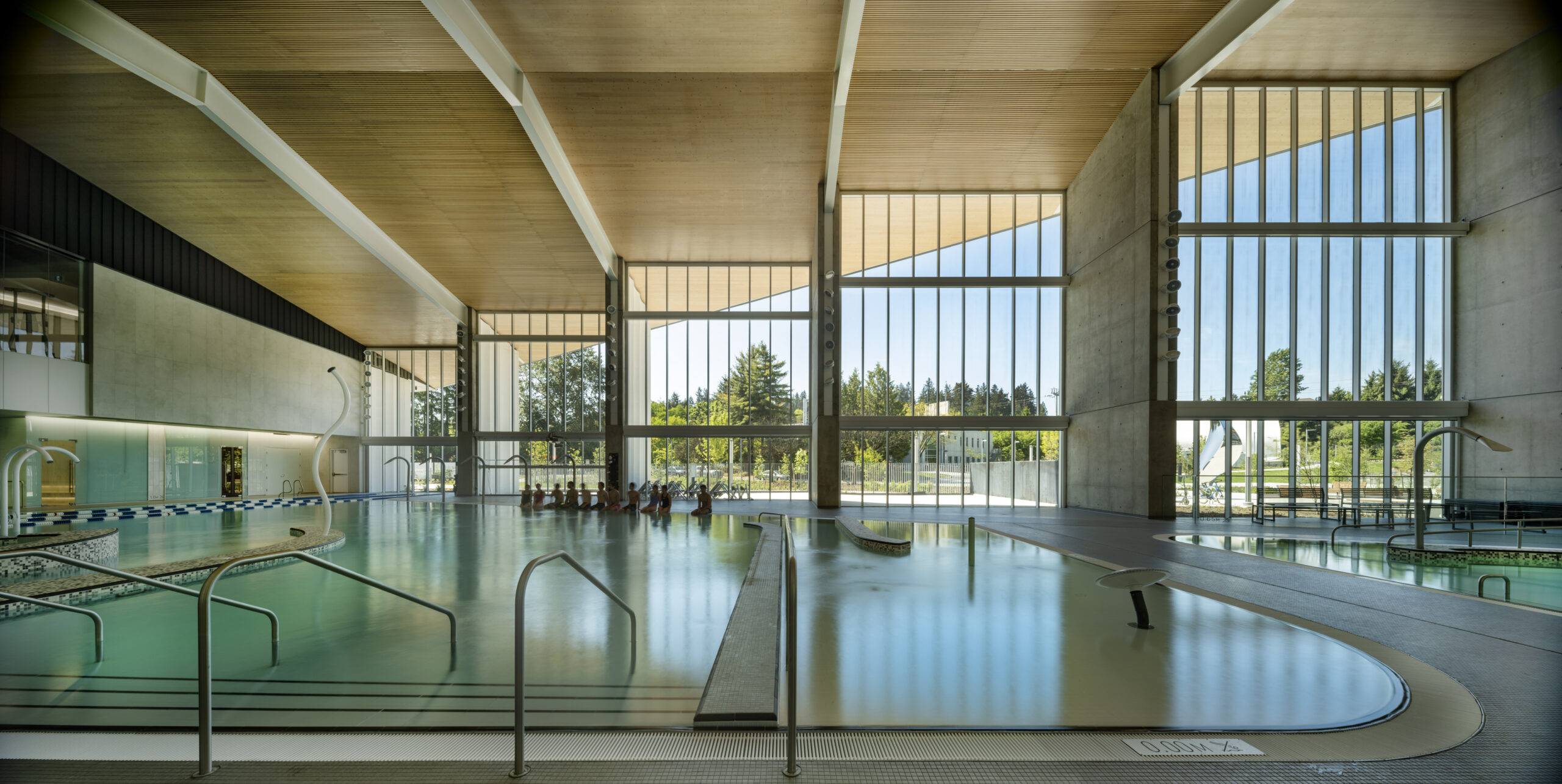
təməsew̓txʷ Aquatic & Community Center by hcma architecture + design, New Westminster, Canada | Photo by Nic Lehoux
A high-ceilinged, barn-style, timber-framed monolith, despite its treasured status, the facility was outdated, inaccessible for those with particular needs, and geared towards semi- and pro-style training, not general users. Worse still, its masterplan involved back-filling Glenbrook Ravine, a natural landmark with great symbolism for the local Qayqayt community and other First Nations.
“So we went out and asked the community: ‘Why are some people using this facility really well, and other folks not using it at all?’,” says Kenyan, explaining that many residents were willing to travel relatively large distances to use other pools. When asked if a more modern building would appeal more, 90% of those in the public engagement said it would.

təməsew̓txʷ Aquatic & Community Center by hcma architecture + design, New Westminster, Canada | Photo by Nic Lehoux
Designing by democracy is something hcma is well-known for. So much so, the practice continues to consult with clients on a regular basis, long after a project is completed and buildings start being used. What makes təməsew̓txʷ unique is how this process has been deployed to try and overcome rifts within the community, and reach people whose ancestors – the original inhabitants of these lands — were the victims of brutal genocide.
Previously on Architizer, we have explored how buildings can be turned into tools of violence, weaponized through damage, transformed from a sanctuary to a danger zone by external forces. But structures can also be objects of reconciliation, community healing and reparation.
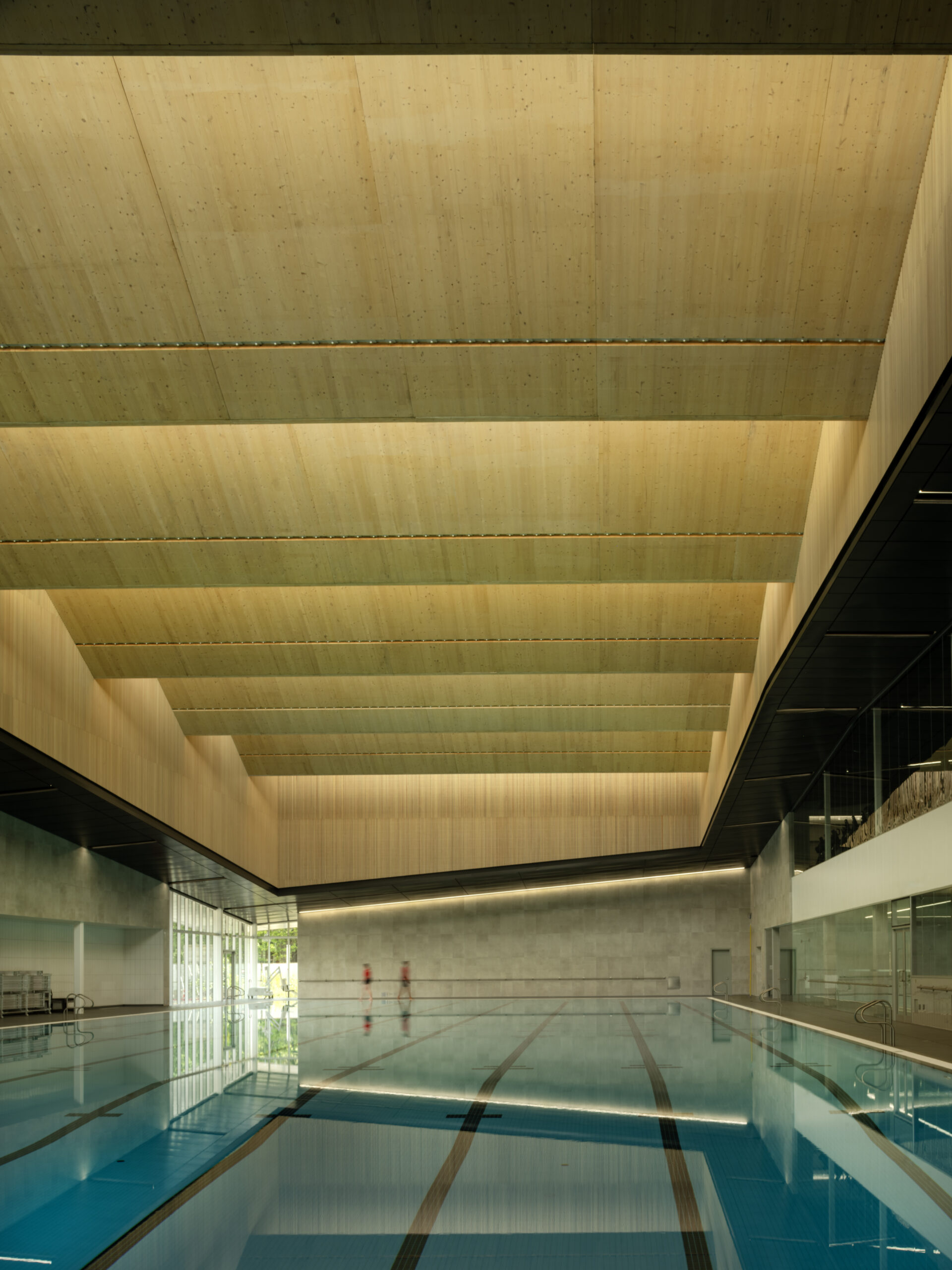
təməsew̓txʷ Aquatic & Community Center by hcma architecture + design, New Westminster, Canada | Photo by Nic Lehoux
Founded in 1858, the City of Westminster was British Columbia’s capital and largest settlement until the 1910s, when nearby Vancouver surpassed it in population and political terms. With this in mind, it’s hard to think of a more fitting location for a public swimming pool and community center, which is highly functional and incredibly symbolic.
Suffice to say, like much of North America, the story of Canada makes for bloody and eye-opening reading. Specifically, the slaughter, forced removal, and compulsory reeducation of First Nations indigenous people at the hands of European colonialists.
And as a comparatively young country, this uncomfortable (and, historically, suppressed) truth has only recently been properly acknowledged. There’s a long way to go, but progress towards reconciliation is now being made, and a striking example can be found in what would normally be a relatively benign architectural project.
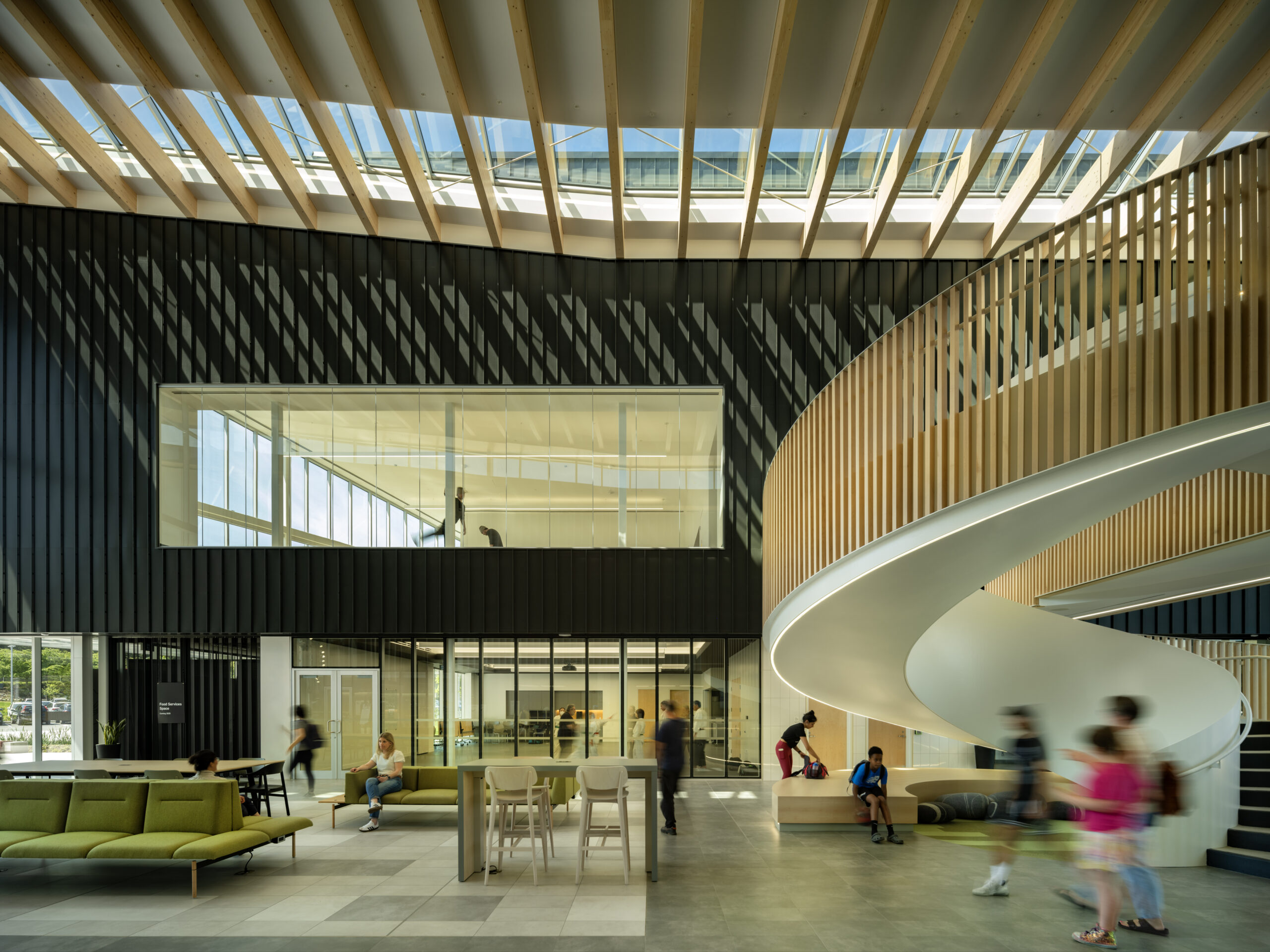
təməsew̓txʷ Aquatic & Community Center by hcma architecture + design, New Westminster, Canada | Photo by Nic Lehoux
“The brief from New Westminster’s council was very unique. Not the kind of thing we usually see at all. So they wanted the building to be high performing, but also something residents could feel proud of. The pride aspect is really unusual,” Kenyan tells us, emphasizing how this had to reflect contemporary Canada’s “truth and reconciliation” mission. The significance of New Westminster as the birthplace of the province’s colonial story, and the loss felt by indigenous people when the old pool was built and the ravine backfilled, also needed consideration.
“This was all really important to the city. When we first began working with them, their logo was a queen’s crown. Over the last 10 years, they’ve undergone a rebrand externally and an internal audit to kind of decolonize them, and focus on what it means to embrace a culture that was lost,” she continues, adding that almost all the area’s First Nations population was eradicated, and those that survived gradually lost connections to languages and practices over time.

təməsew̓txʷ Aquatic & Community Center by hcma architecture + design, New Westminster, Canada | Photo by Nic Lehoux
By 2018 hcma was undertaking engagement activities specifically aimed at the Qayqayt and other indigenous members of the community. This included a series of celebratory gatherings at sites around town, conversations with different urban indigenous groups, performances, and communal dining. The council then issued a call for new public art from indigenous practitioners, which would be the largest they had ever commissioned.
Proposals came from across Canada and as far as Brazil after a decision was made to invite submissions from anyone who identified as indigenous, regardless of location or their ability to prove heritage. An important gesture, given that many in these communities were forced to leave their birthplace and restart life elsewhere. Eventually, Squamish artist James Harry won the £500,000 prize fund to create a striking installation which stands outside the main entrance to təməsew̓txʷ.
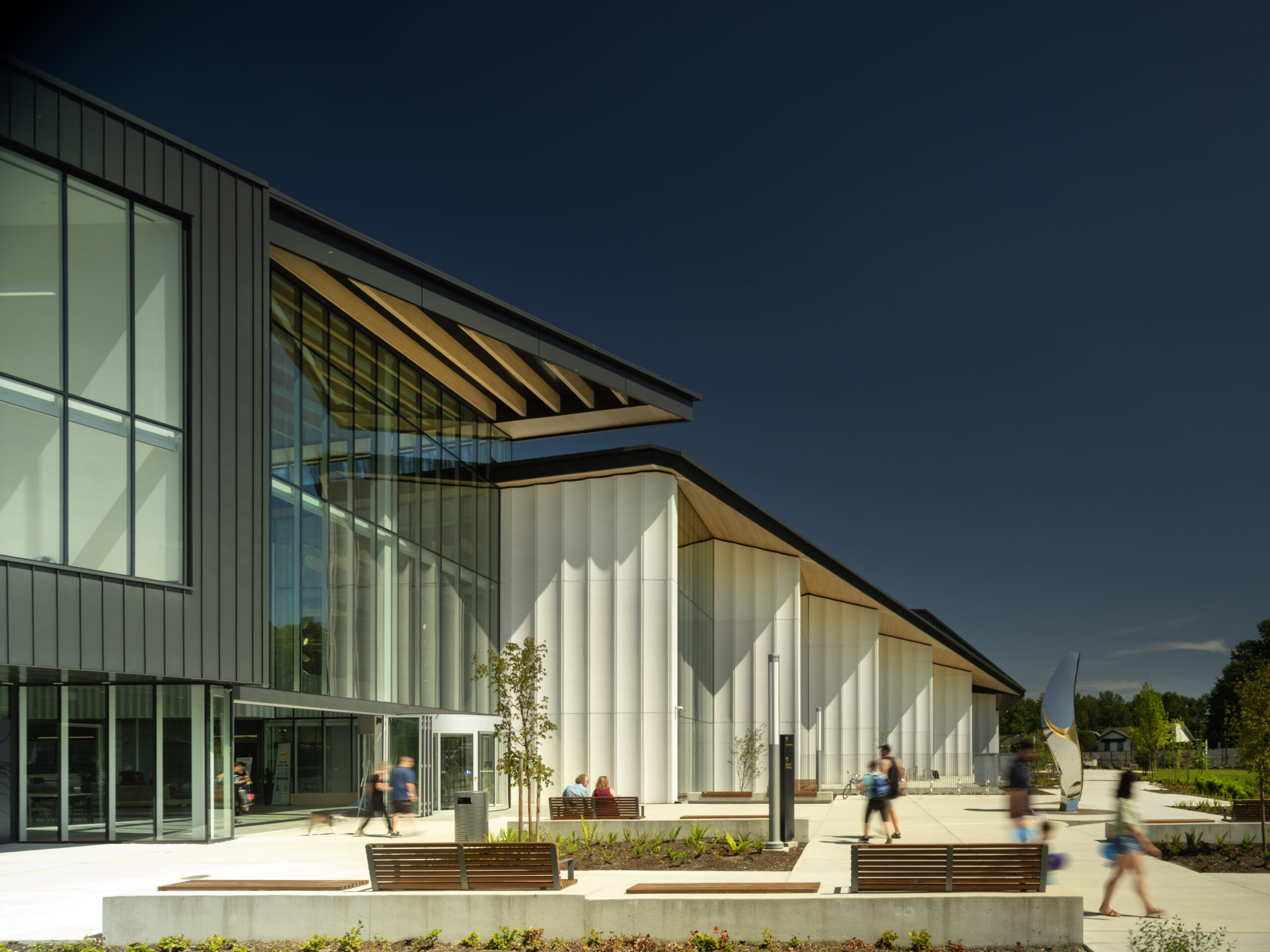
təməsew̓txʷ Aquatic & Community Center by hcma architecture + design, New Westminster, Canada | Photo by Nic Lehoux | Miyiwts Sculpture by James Harry
“We are very conscious that we’re not indigenous. I’m a colonial architect, so I’m not going to try and represent anything that is First Nations cultural,” says Kenyan. “If James Harry had proposed doing a wall installation or something, then indigenous heritage might have shown up in the architecture. But our approach was really about making sure the spaces were conducive to activities these communities wanted to host. And make sure there were outdoor and indoor spaces with real connections to the land.
“For example, we couldn’t excavate the ravine, but we have reinstated a major greenway there, which is now a public park and rain garden… You can follow the route all the way to the Fraser River, too, which is a real lifeblood for First Nations people in these territories. In the past, it’s where they would fish, how they navigated the region,” she continues, explaining the public realm with Harry’s artwork is now a focal point for blessings and other ceremonies.”
Many of New Westminster’s original aims have been realized — including benchmark-setting building performance with high energy efficiency and a game-changing air purification system, and a focus on appealing to young people in the area. But təməsew̓txʷ still reflects the difficult relationship between traditional indigenous cultures and modern societal systems, and leaves us with plenty to think about in terms of how we can approach similar scenarios.
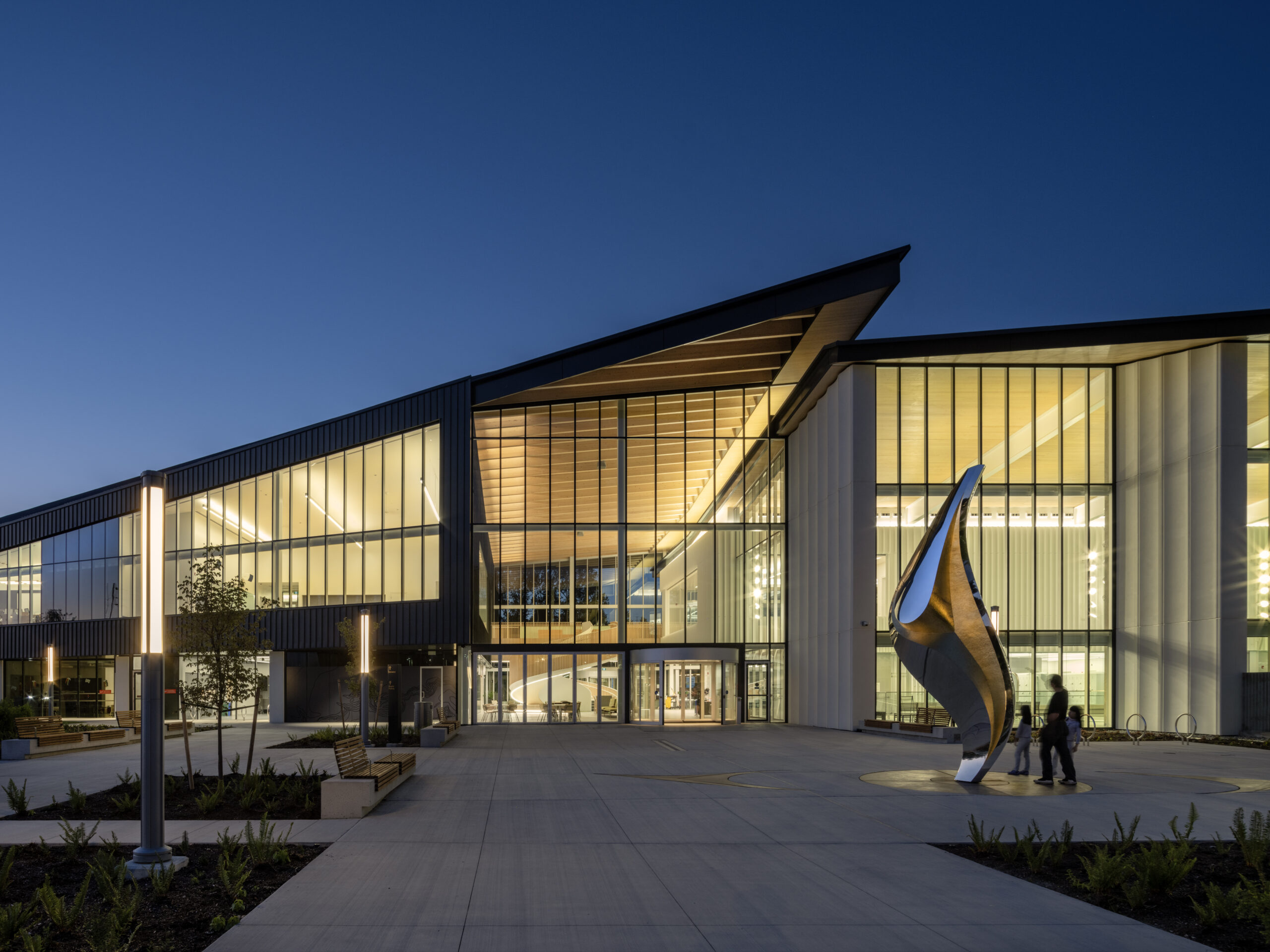
təməsew̓txʷ Aquatic & Community Center by hcma architecture + design, New Westminster, Canada | Photo by Nic Lehoux | Miyiwts Sculpture by James Harry
“If a smudging ceremony were to be hosted somewhere in the building, we have three major spaces that can be used for that, with the right air handling systems to extract that smoke and make it safe. You know, we have to comply with the code. So this is a big question — how do you allow some of these cultural activities to happen that conflict with building code?” says Kenyan. “All of it for us is about providing options. I mean, inclusion is about options and choice.
“On the interior of the building, the Community Living Room lobby space is incredibly adaptive,” she continues. “There’s no price to access it. So for all community members, this could be your workstation, where you bring your kids when your living room isn’t big enough, and you want them to run around. It’s a place where there’s a lot of food service happening, which was something we consistently heard – food is what brings us together.”
Deadline extended! The 14th Architizer A+Awards celebrates architecture's new era of craft. Apply for publication online and in print by submitting your projects before the Extended Entry Deadline on February 27th!
The post Dive In: Designing a Public Pool Where Canada’s Colonial History Still Surfaces appeared first on Journal.