









The Power of the Pitch: 6 Civic Buildings That Multiply the Gable
Architects: Want to have your project featured? Showcase your work by uploading projects to Architizer and sign up for our inspirational newsletters.
Large civic and institutional buildings often face a common design challenge: scale. Sports centers, town halls, research facilities and industrial campuses require large spans and expansive floor areas. This fact often results in buildings that feel heavy and difficult to appreciate at the human scale. When handled poorly, these structures also dominate their context rather than relate to it.
One strategy architects increasingly use to manage this scale is the use of repetitive roof forms. Instead of covering the entire structure with a single massive roof, some designers repeat smaller roof units such as gables, pitched volumes, or saw-tooth profiles across the building. This approach breaks down large masses into more legible parts while maintaining the spatial continuity required for such buildings.
Beyond visual relief, repetitive roof systems often carry practical advantages. This repetition can simplify structural spans and create opportunities to solve some design challenges, such as lighting and ventilation. The following civic projects demonstrate how architects use repetitive roof forms to control massing and create public buildings that feel more approachable in scale.
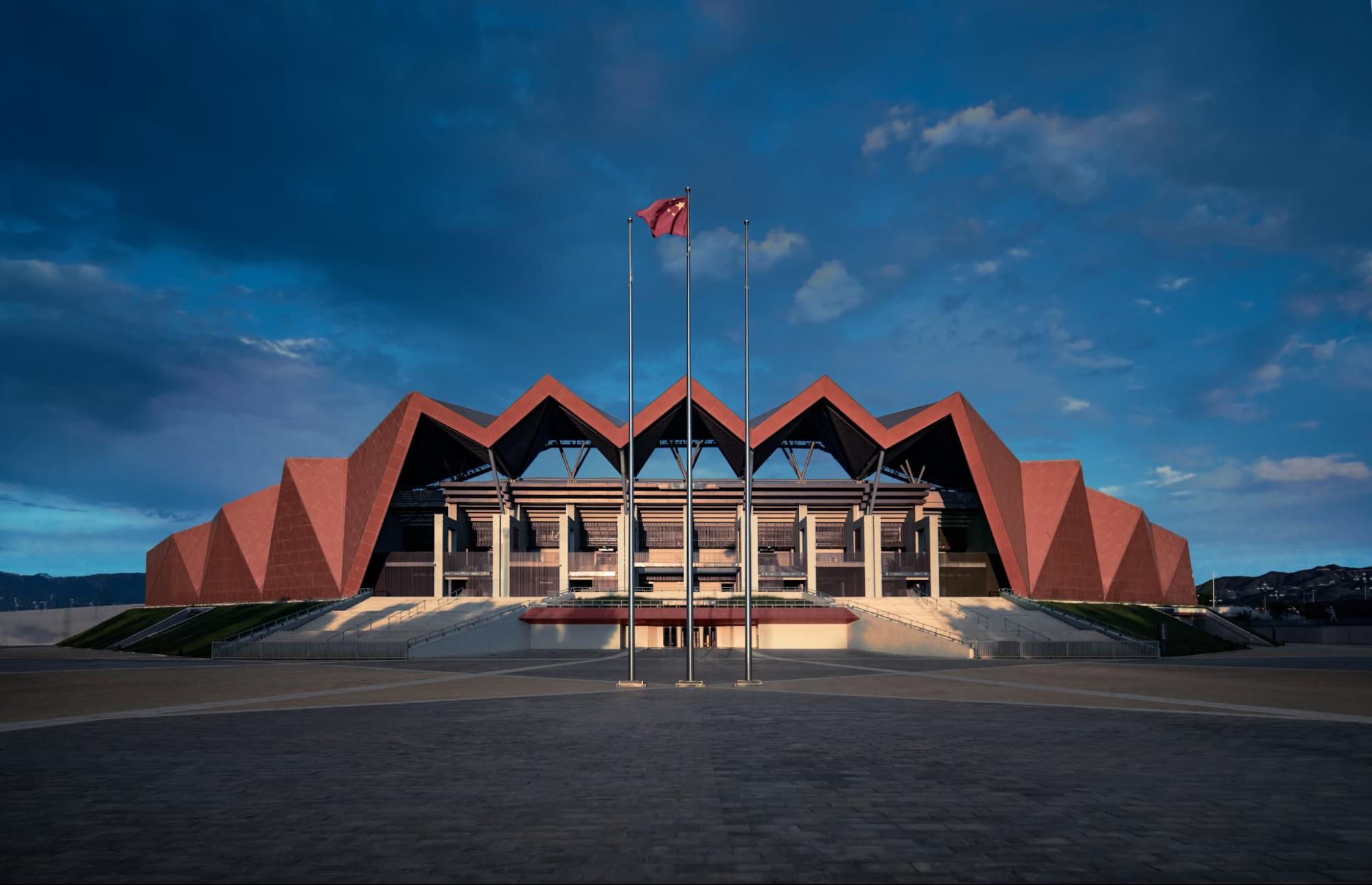
Haidong City Sports Center, China
By Character Architecture Design Studio, China Architecture Design & Research Group, Haidong, China
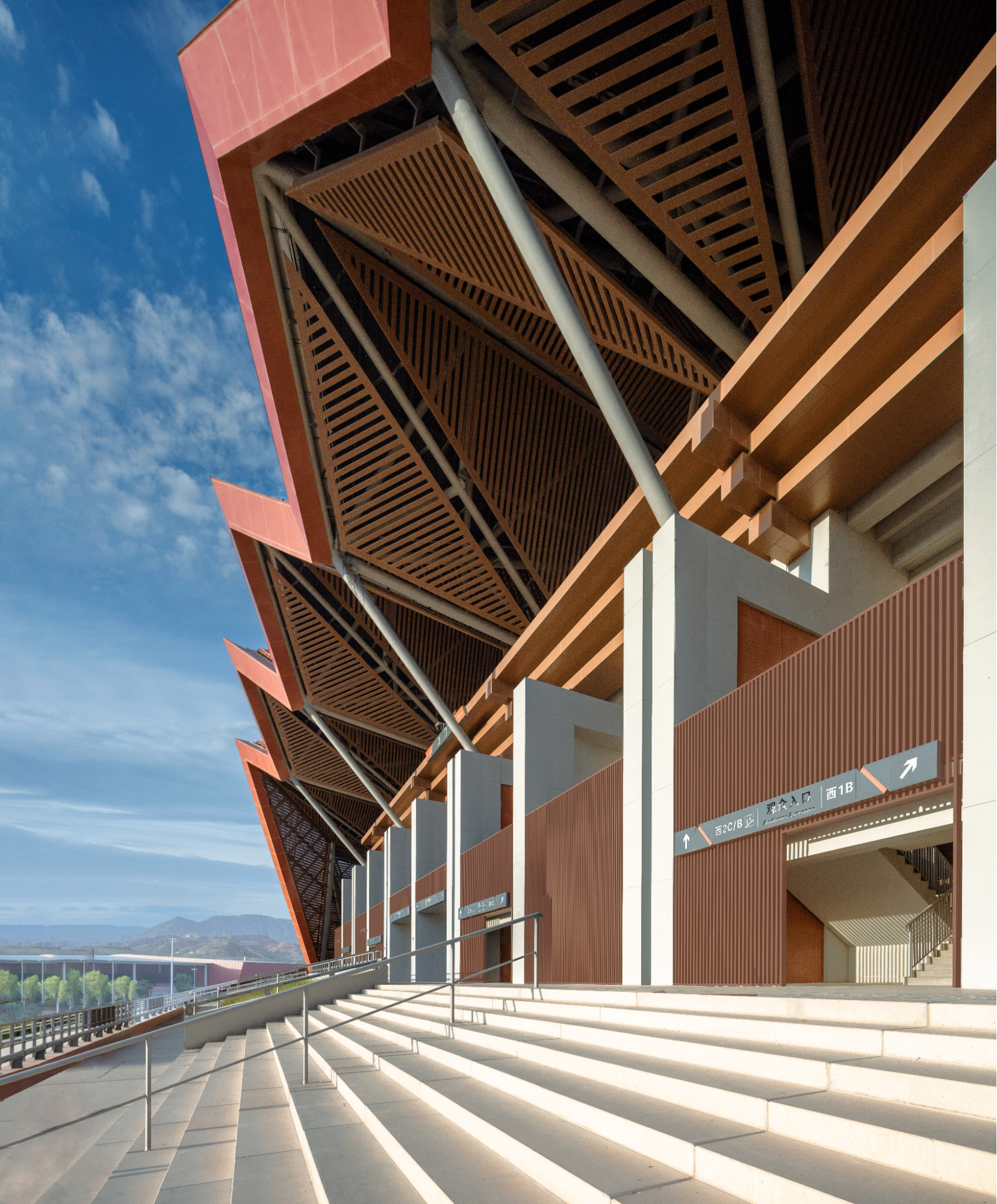
Haidong City Sports Centre by Character Architecture Design Studio, China Architecture Design & Research Group, Haidong, China
The Haidong City Sports Center spans 678,126 square feet (63,000 square meters) and includes a 15,000-seat stadium, a 5,000-seat arena, and a swimming facility. Instead of covering this large program with a single roof, the architects organized the complex under a series of folded saw-tooth roof forms that step across the sloping site. These repetitive roof forms break the sports complex into smaller visual volumes that follow the terrain of the site.
Town Hall and Culture Center Son en Breugel
By INBO, Son en Breugel, Netherlands
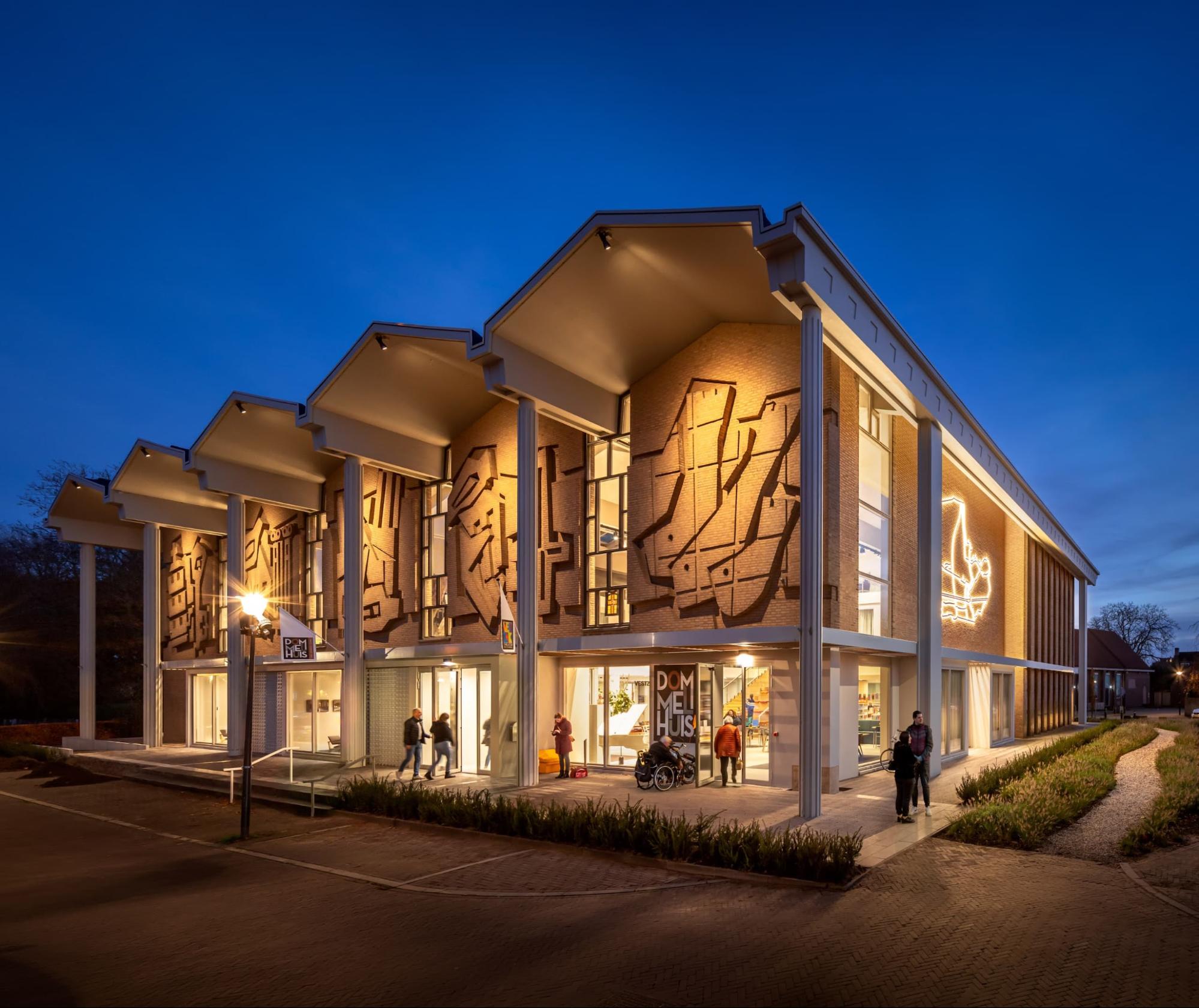
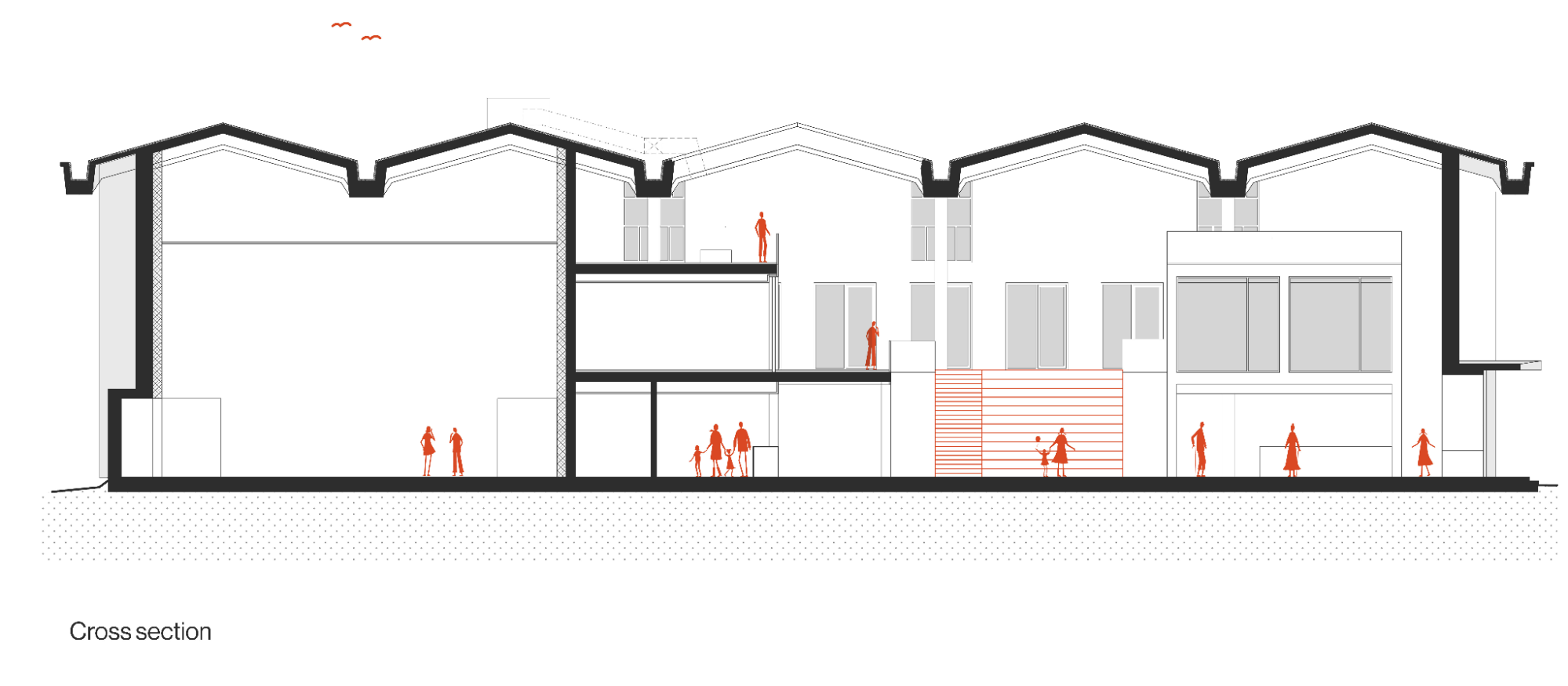
Town hall and culture center Son en Breugel by INBO, NB, Netherlands
INBO converted a 1960s church of at least 25,000 square feet (2,322 square meters) into the town hall and cultural center for Son en Breugel. The architects retained the building’s distinctive concrete shed roof and organized new civic functions as independent volumes beneath it. Instead of replacing the structure, they used the existing repetitive roof forms to introduce daylight into the deep interior. INBO inserted roof lights along the existing roof folds and opened sections of the façade to improve illumination.
Museum Kaap Skil
By Mecanoo, Oudeschild, Netherlands
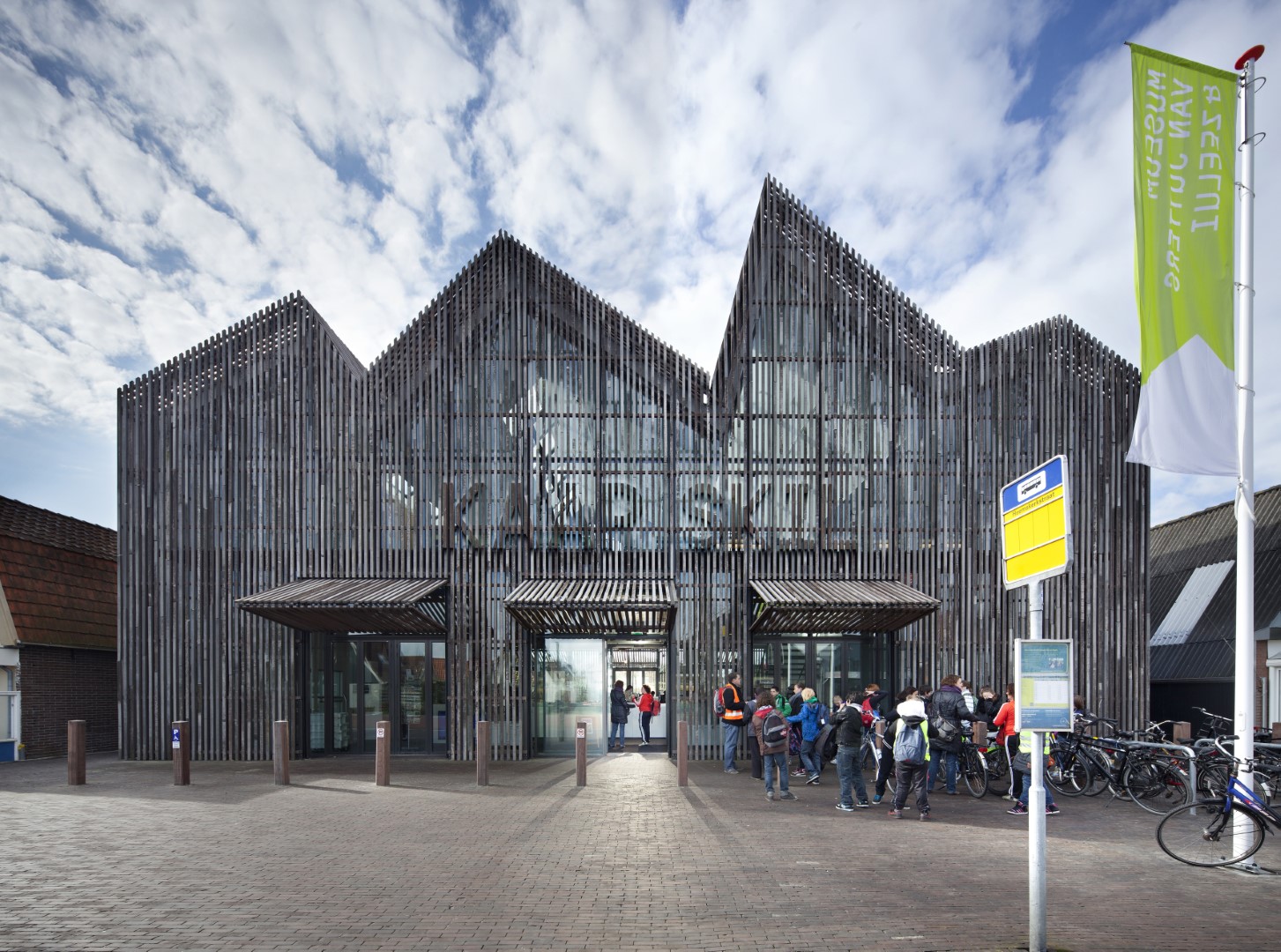
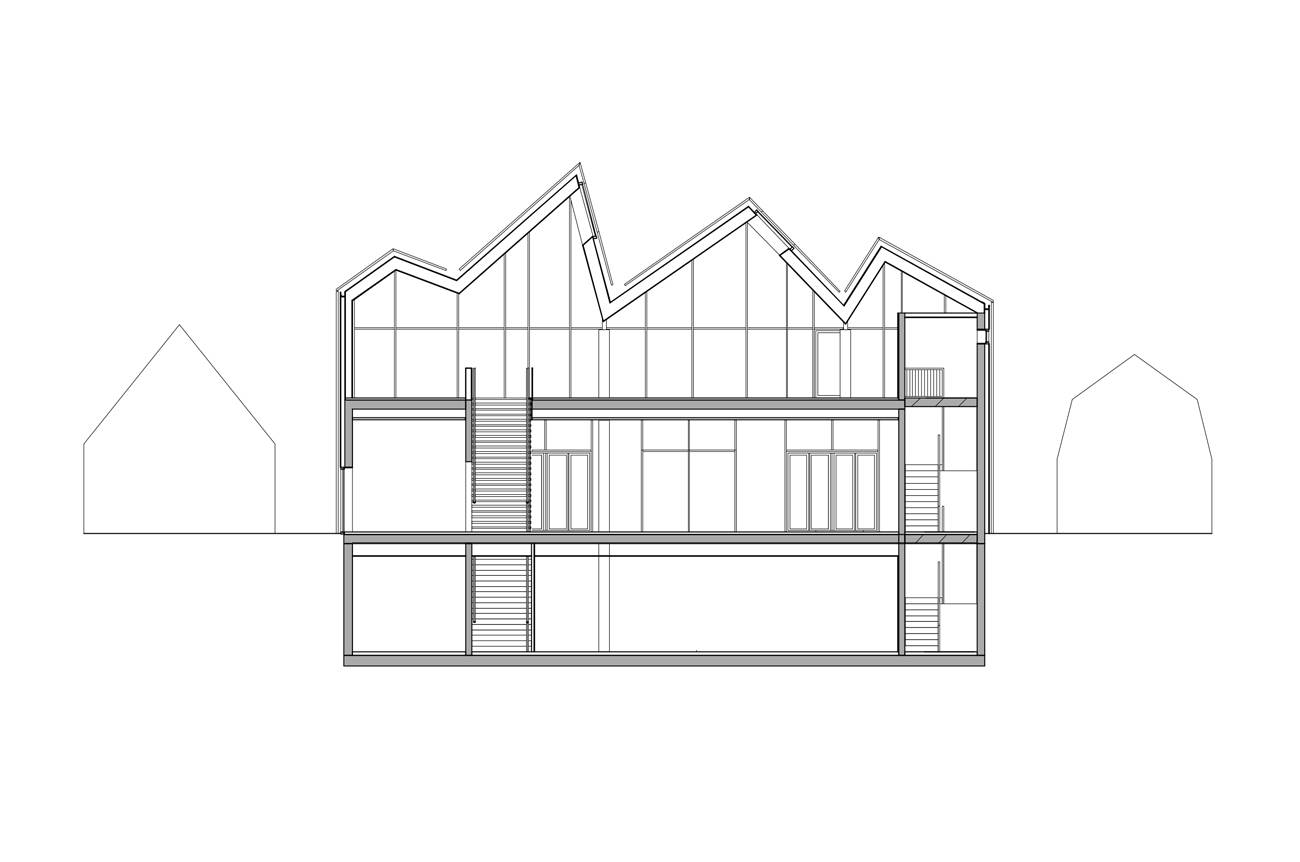
Museum Kaap Skil by Mecanoo, Oudeschild – Texel, Netherlands| Image via Mecanoo
Mecanoo designed the 12,916 square feet (1,200 square meters) Museum Kaap Skil for the small harbor village of Oudeschild on Texel Island. Civic buildings in modest settlements like this must avoid overpowering their surroundings, so the architects used repetitive roof forms to control the building’s scale. They used four atypical linked gabled roofs to break the museum into smaller volumes and match the roofing style of the neighboring buildings. These repeated roofs also shape the exhibition space below and bring daylight into the upper gallery.
MiZa – MAKE + SEAF
By DRAW architecture + urban design, Abu Dhabi, UAE
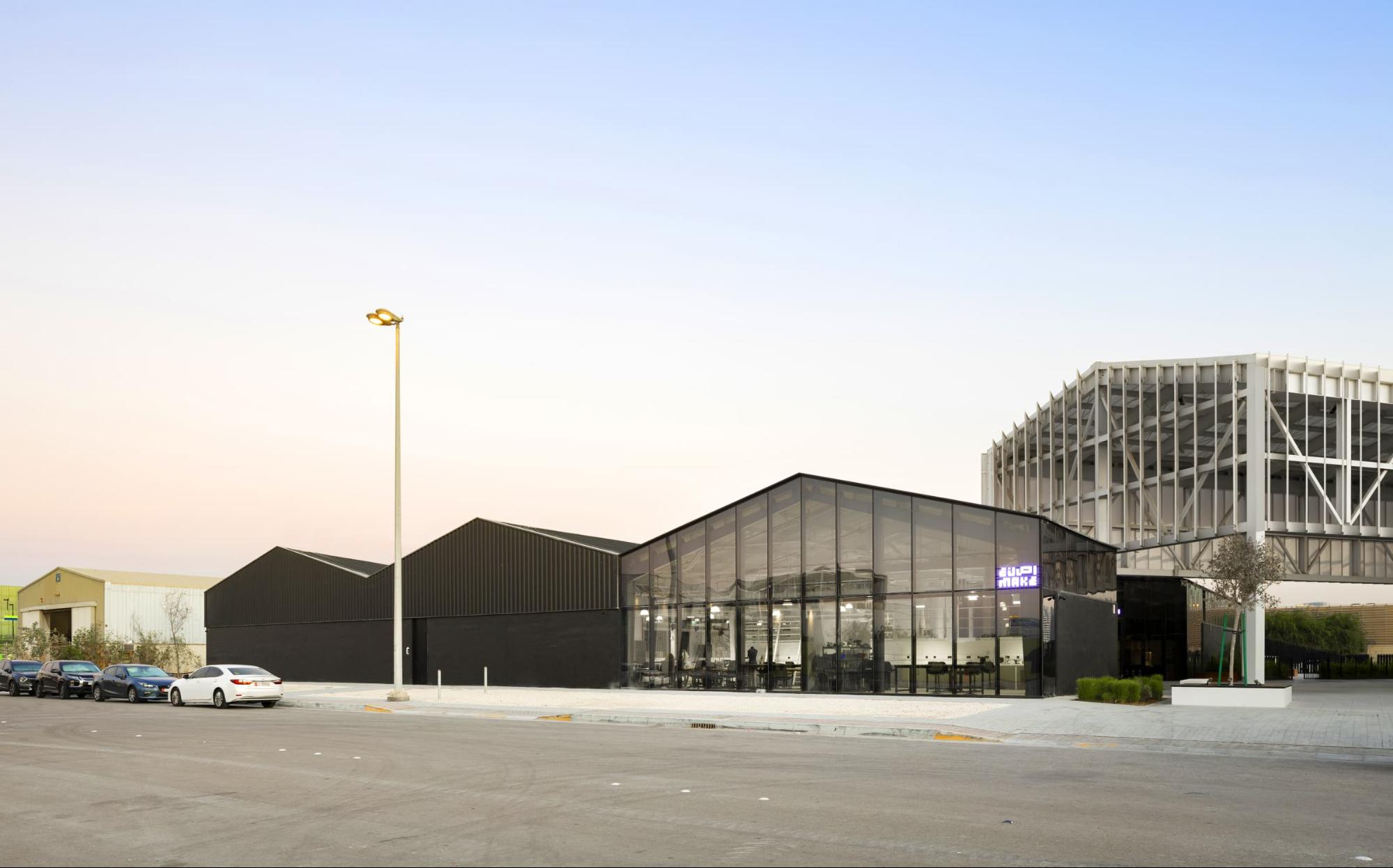
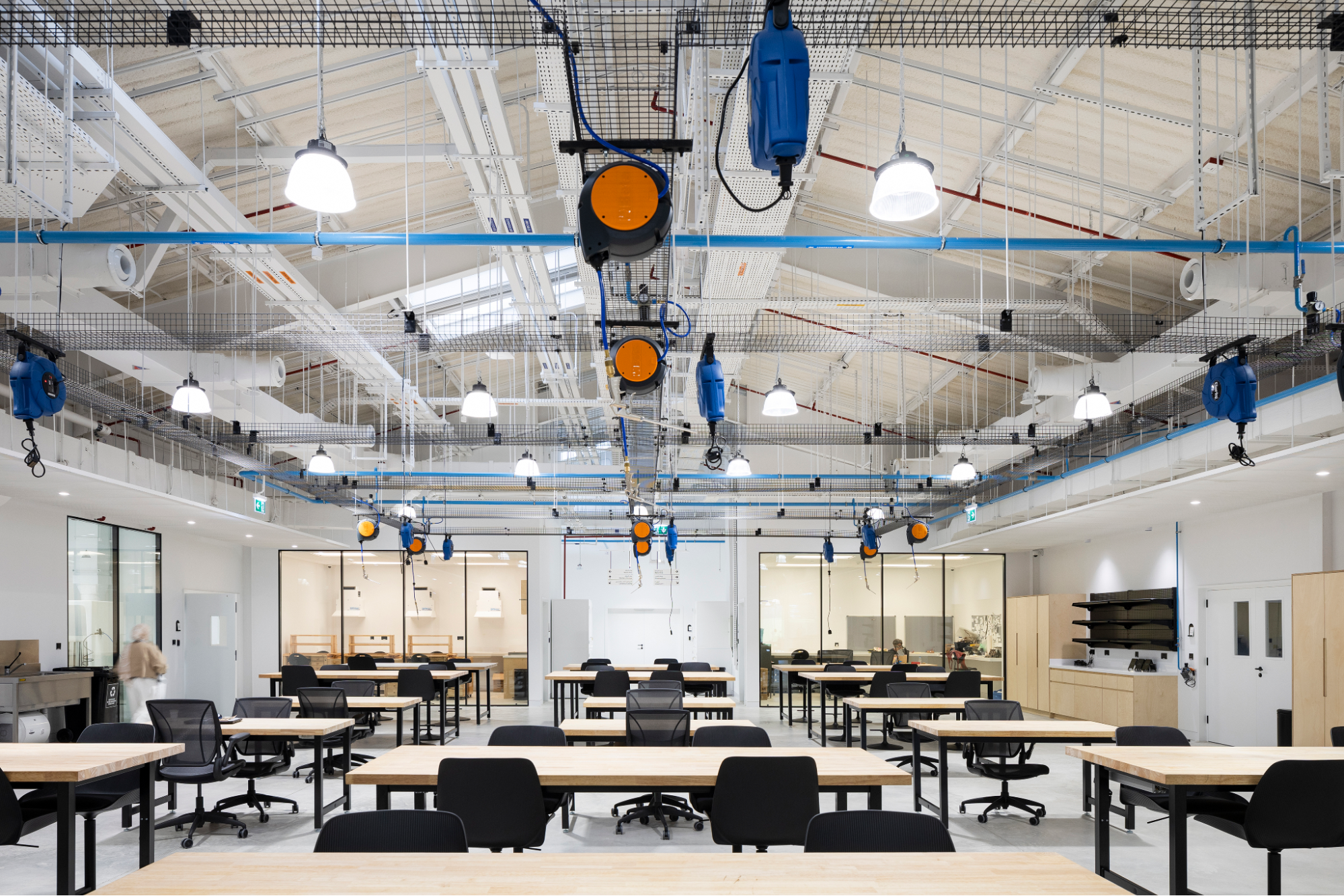
MiZa – MAKE + SEAF, by DRAW architecture + urban design, Abu Dhabi, UAE
Large industrial buildings often read as long, continuous volumes. DRAW addressed this challenge in MiZa – MAKE + SEAF, a cultural makerspace spanning at least 25,000 square feet (2,322 square meters) in Abu Dhabi’s Mina Zayed district. The architects adopted the district’s warehouse typology and organized the building into five repeated gabled roof bays. Each roof defines a structural span and houses creative workspaces. The repetition breaks the long volume into smaller parts and keeps the building aligned with the industrial rhythm of the area. DRAW Architecture then lifted and rotated a pavilion between two roof bays to create a shaded courtyard. This move interrupts the roof sequence and introduces a central gathering space while maintaining the overall roof rhythm.
Horsevænget
By Christensen & Co Architects, Rødovre, Denmark
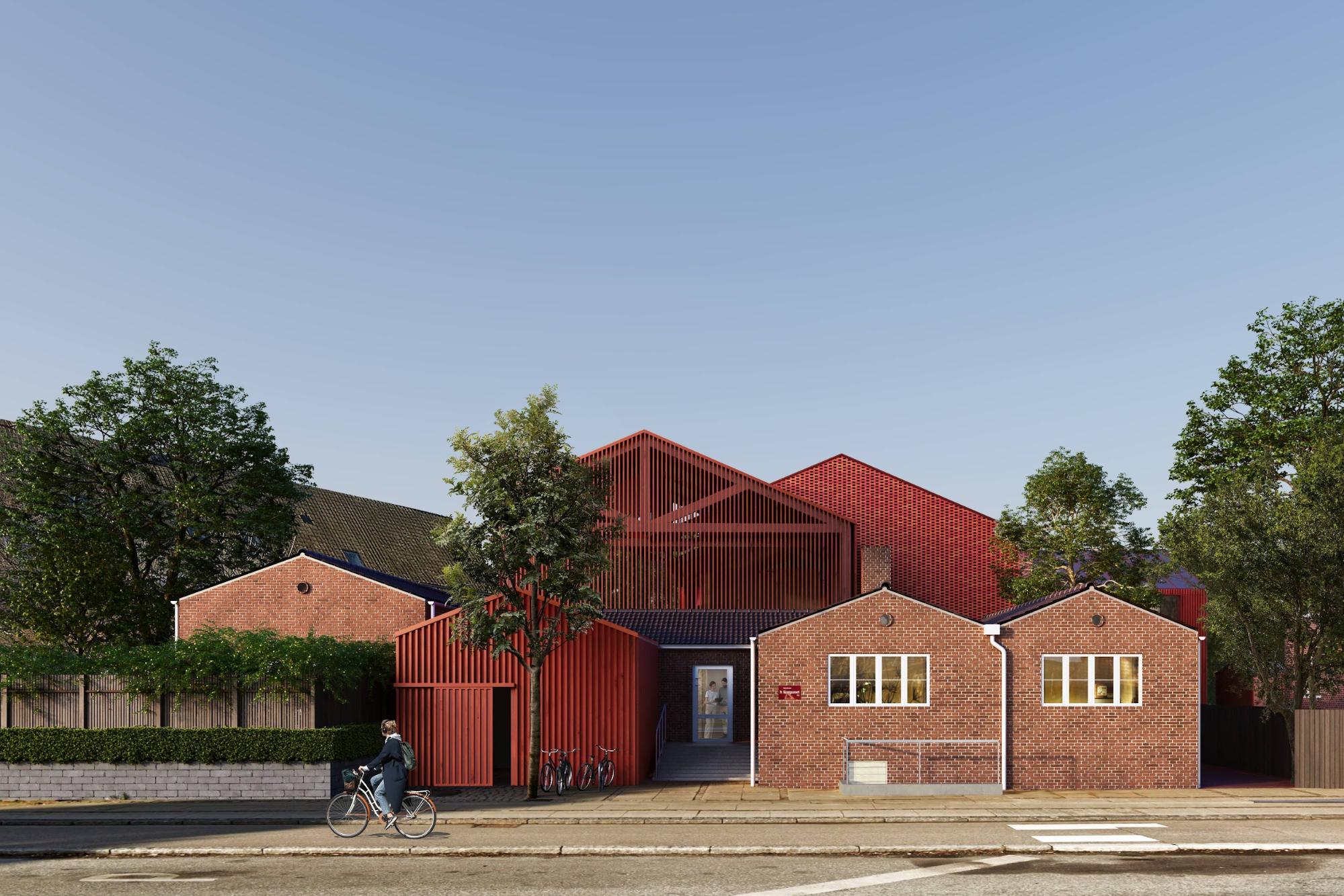
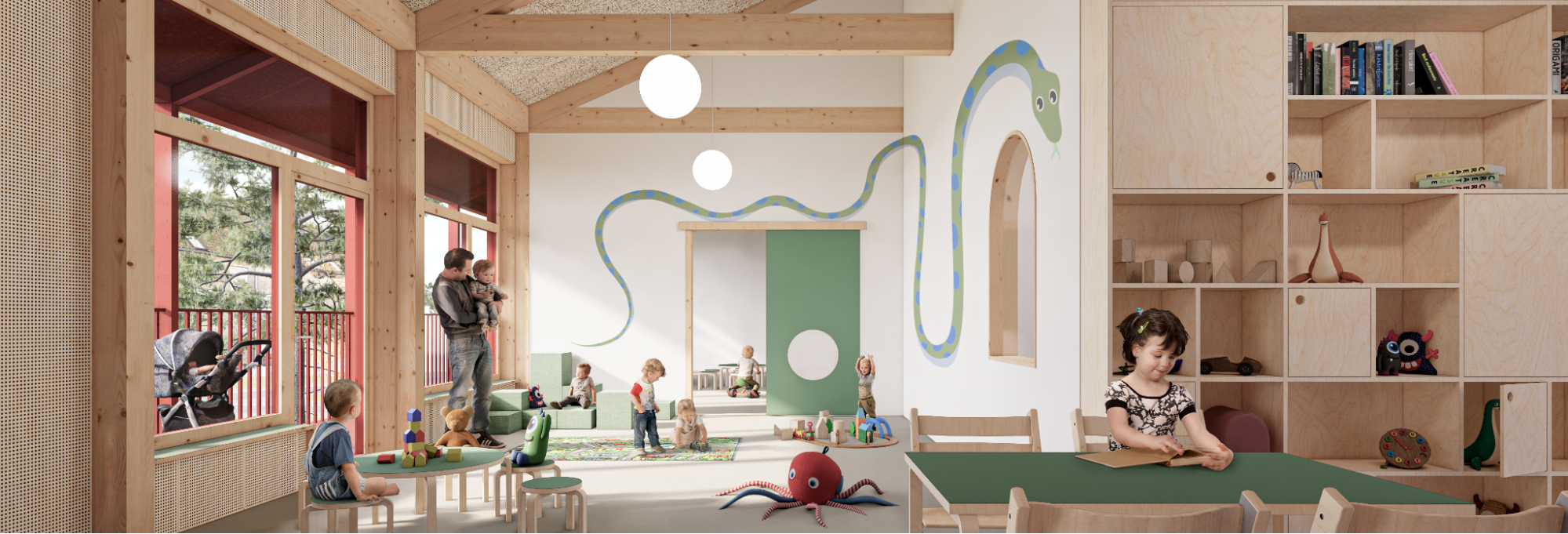
Horsevænget by Christensen & Co Architects, Rødovre, Denmark
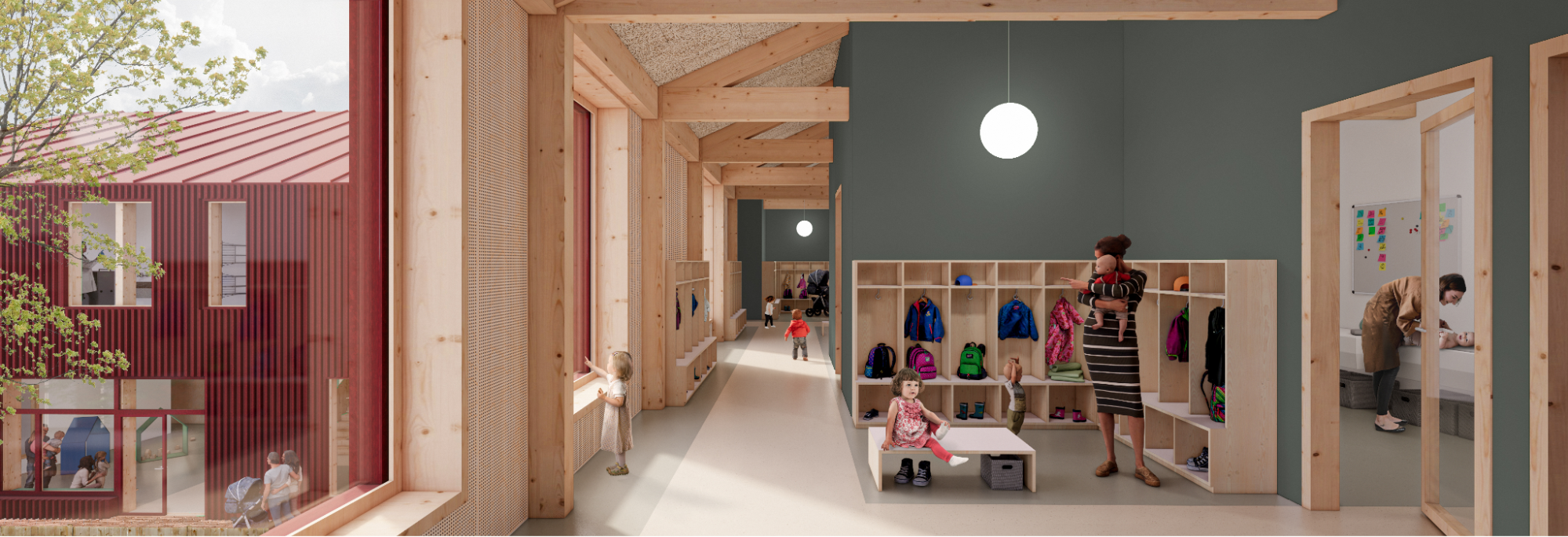
Buildings for children must avoid the scale and character of typical civic institutions. The architects addressed this challenge at Horsevænget Daycare Center, which accommodates 128 children and 40 staff members. They organized the new building as a sequence of repetitive roof forms instead of a single volume. Each roof defines a smaller learning space and connects directly to outdoor play areas. The architects also shift the roof units to different heights. This variation breaks the building mass further and introduces more dramatic interior spaces with changing ceiling levels.
The Lizzie and Jonathan Tisch Center for Innovation and Active Citizenship
By Sasaki, Washington, Connecticut
The Lizzie and Jonathan Tisch Center for Innovation and Active Citizenship by Sasaki, Washington, Connecticut
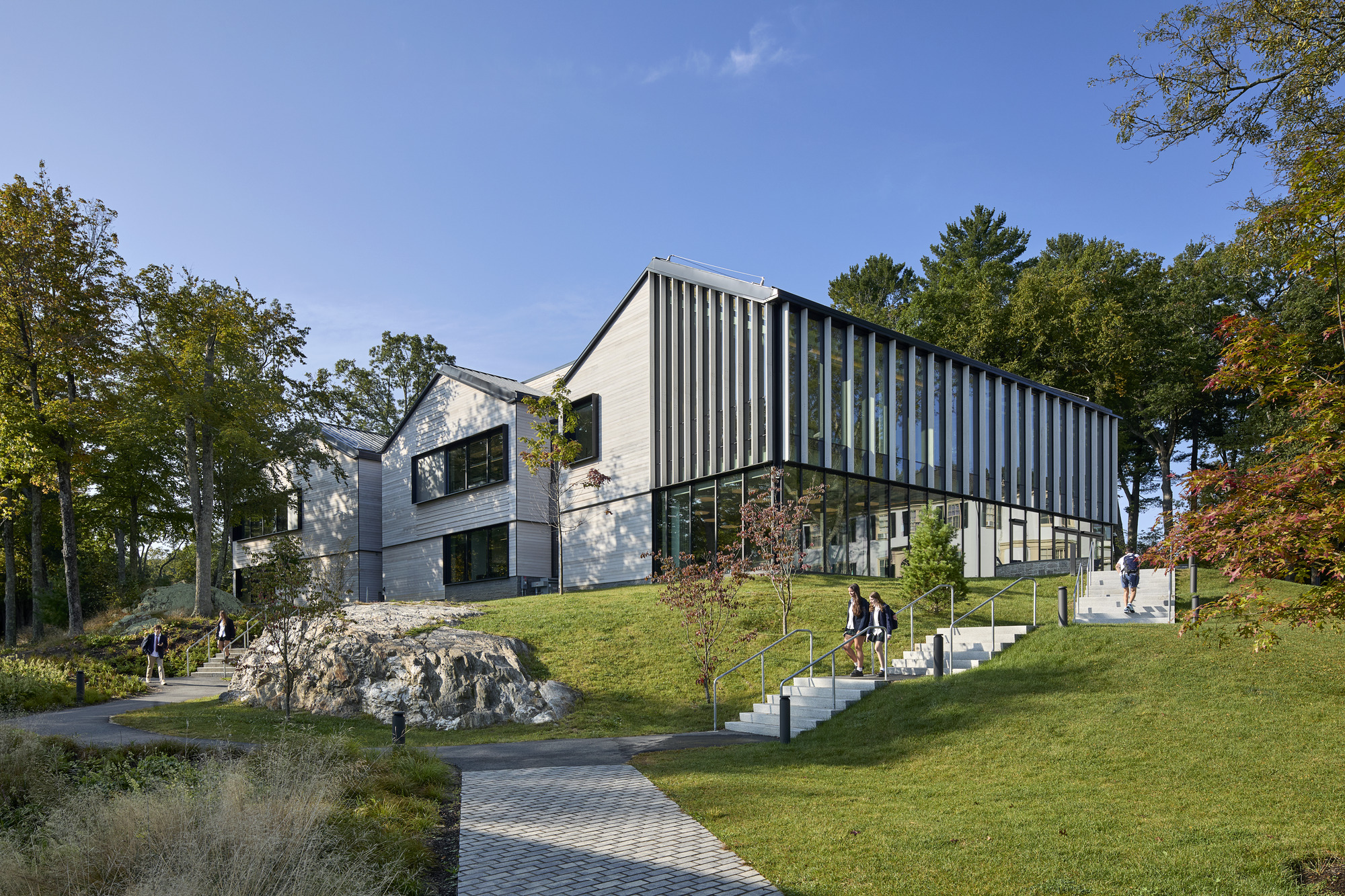
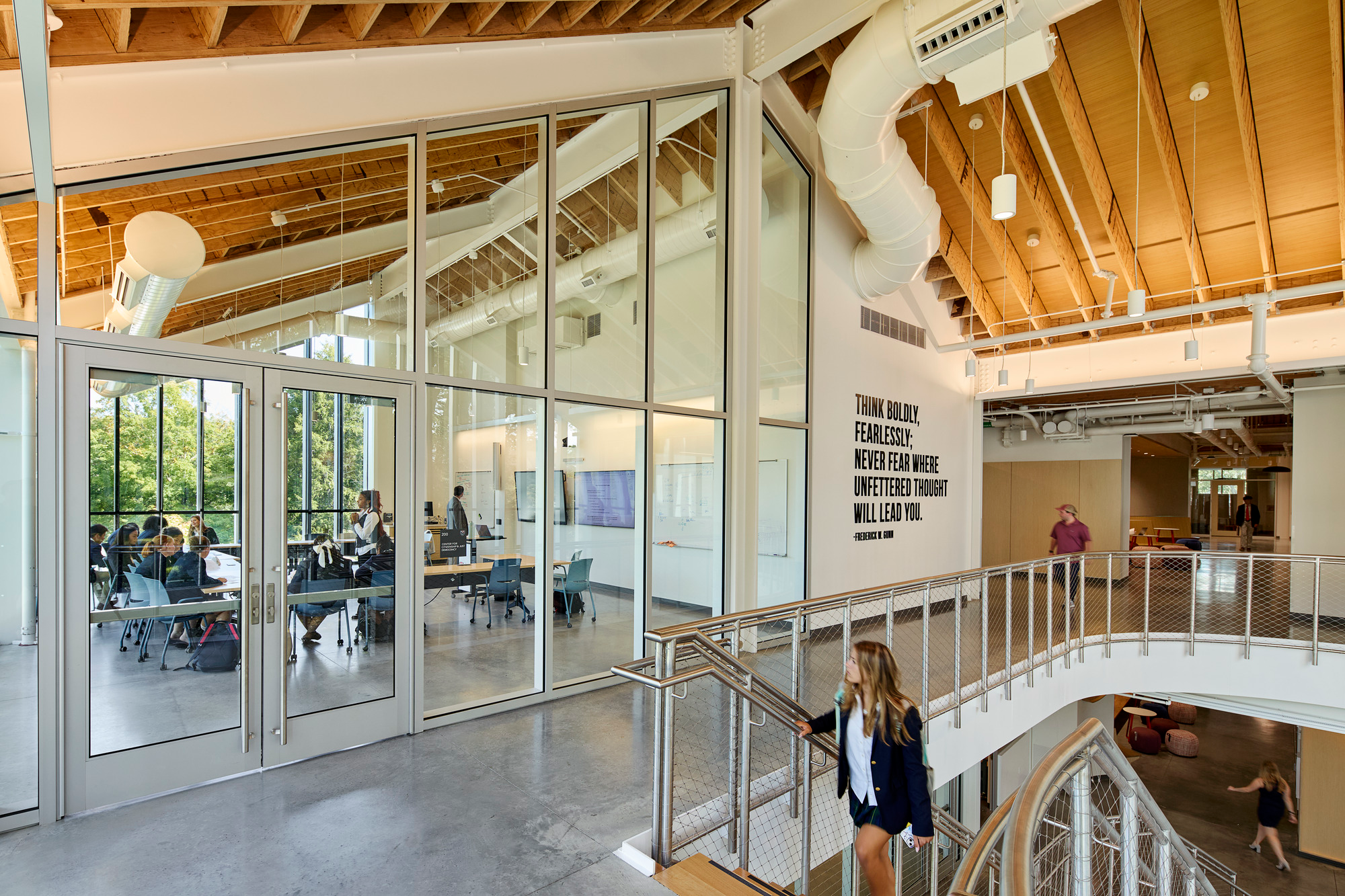
Replacing large institutional buildings on historic campuses can create a scale problem. Sasaki addressed this challenge in the design of the Lizzie and Jonathan Tisch Center for Innovation and Active Citizenship at the Frederick Gunn School. Instead of introducing a single large structure, the architects organized the building into three pavilion volumes, each with repetitive pitched roofs inspired by the region’s farmhouse typology. Sasaki arranged these pavilions along the campus edge and connected them internally to house labs, classrooms, and collaborative spaces. This strategy breaks the overall mass into smaller parts and allows the building to match the scale of surrounding campus structures.
Large civic buildings rarely escape the challenge of scale. Programs that require large spans and expansive interiors often produce buildings that feel heavy or difficult to read. Repetitive roof forms offer one way to address that condition. By dividing large structures into smaller roof units, architects can make complex buildings easier to understand while keeping the structure efficient.
Architects: Want to have your project featured? Showcase your work by uploading projects to Architizer and sign up for our inspirational newsletters.
The post The Power of the Pitch: 6 Civic Buildings That Multiply the Gable appeared first on Journal.