



















Form, Function, and Funding: The High-Tech Urbanism of San Francisco

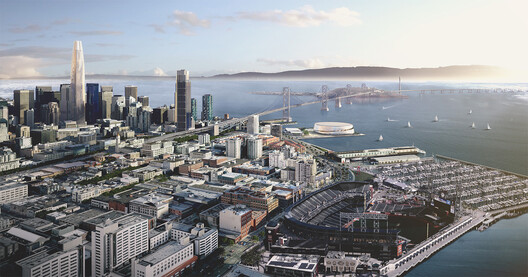
 Stadium Rendering, Version 2.0- Aerial; Rendering by steelblue.. Image Courtesy of Snohetta
San Francisco is a city that has always remade itself under pressure. Its Victorian streetscapes have survived seismic retrofits and glass towers, its neighborhoods defined as much by change as by its resistance to change. But no force in the city's history has reshaped the built environment as completely, or as quickly, as the technology economy. What began in the postwar sprawl of Silicon Valley migrated north and inscribed its logic onto the skyline and the lives of residents. The result of this logic is an architectural culture of considerable technical refinement and refined material palettes, yet one that remains largely indifferent to the existing population.
The cost of indifference is measurable and mounting. San Francisco must accommodate more than 82,000 additional housing units by 2031 under California's Regional Housing Needs Allocation framework, in a city where median rent already ranks among the highest of any American metropolitan area. Teachers, healthcare workers, and service employees are actively displaced by a real estate market calibrated to a single sector's income levels rather than the city's largest workforce.