
.jpg)








Casey Brown Architecture pitches Corten "tents" in Australia
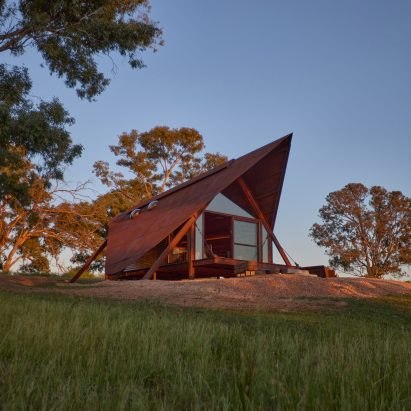
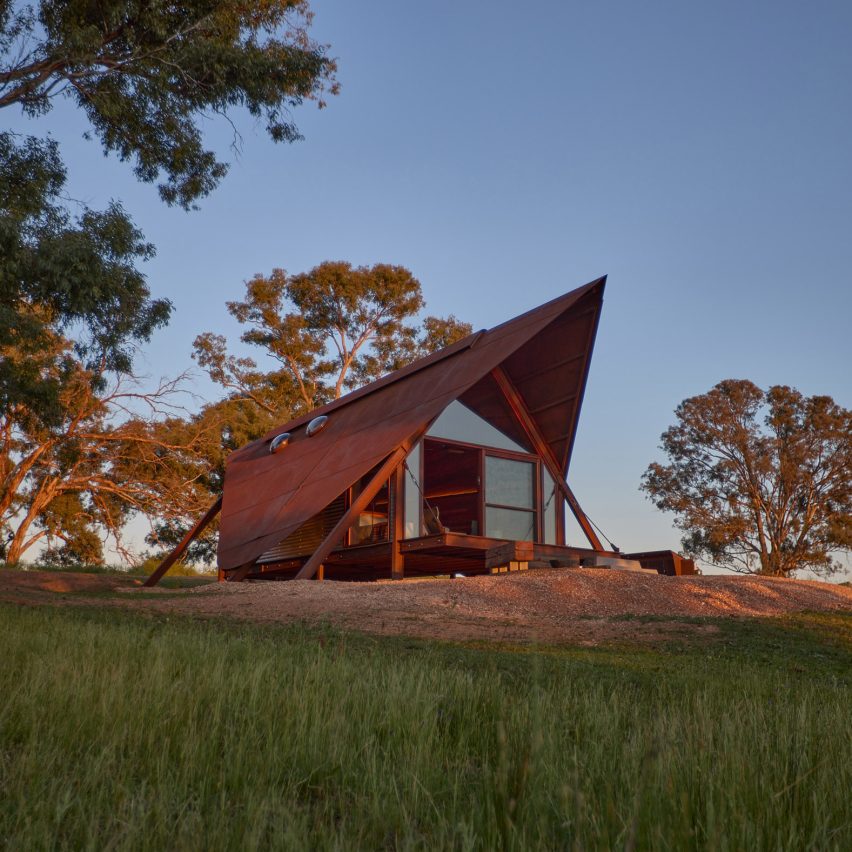
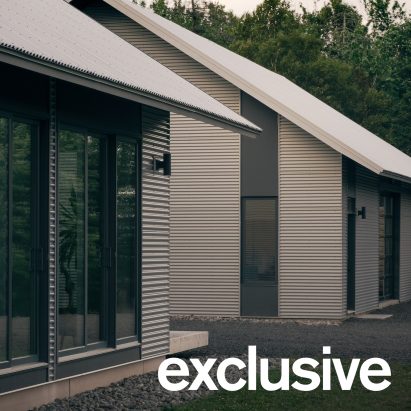
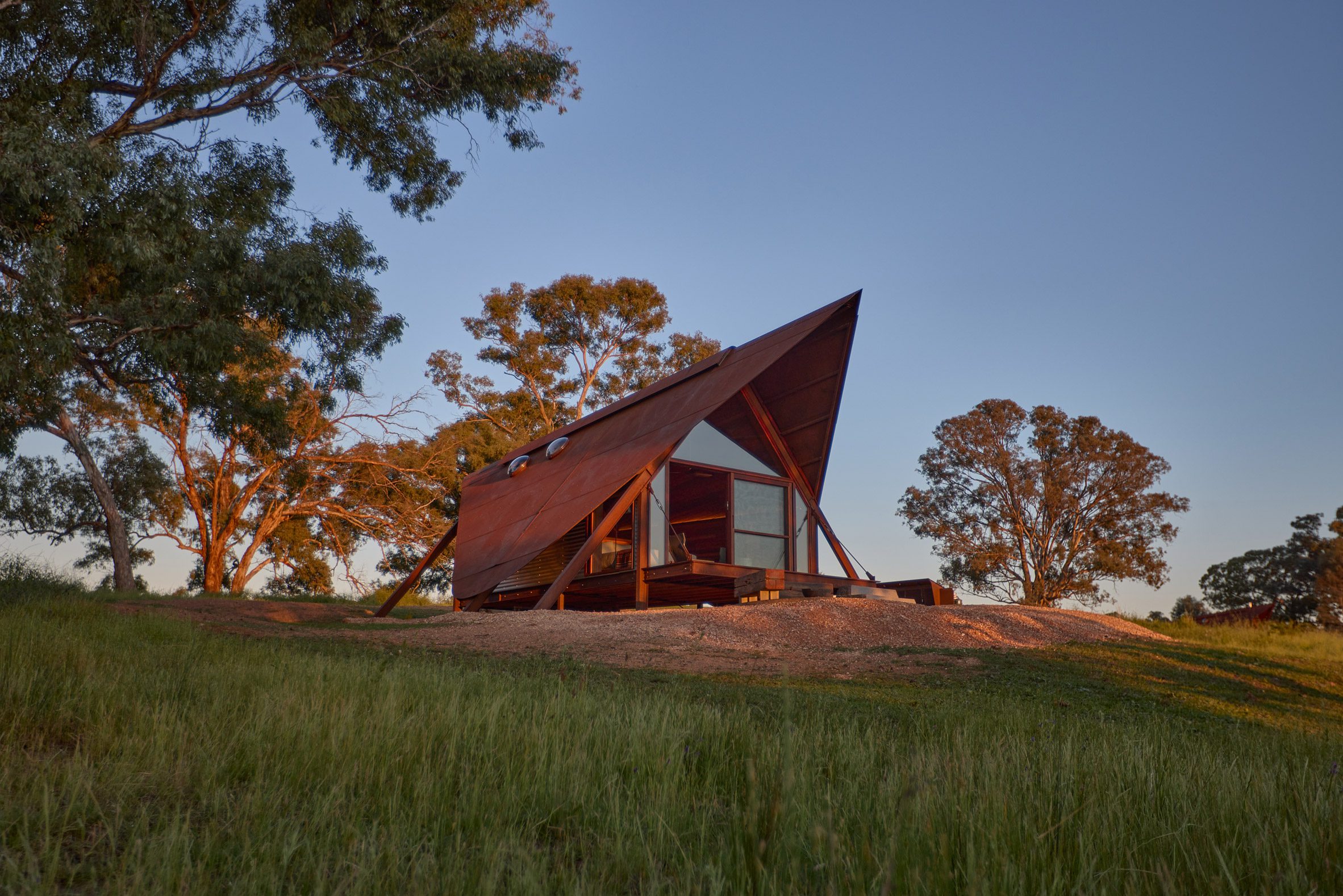
Australian studio Casey Brown Architecture has created two Corten cabins in New South Wales, that reference the silhouette of pitched tents.
Named Permanent Camping III (PC3), the short stay boutique accommodation is located on a working cattle farm near Orange on Wiradjuri Country, the largest Aboriginal nation in New South Wales.
The PC3 is the third iteration of the tent-like accommodation, and was conceived by Casey Brown Architecture as a structurally minimal shelter that engages with its environment.
"The PC3 is a transformation of the concept of a tent and minimalism of camping" Casey Brown Architecture principal Rob Brown told Dezeen.
"The cabins are the product of a long process of iterative design," he continued.
"Like its predecessors, PC3 was conceived as a distilled version of habitation providing only what is essential for comfort."
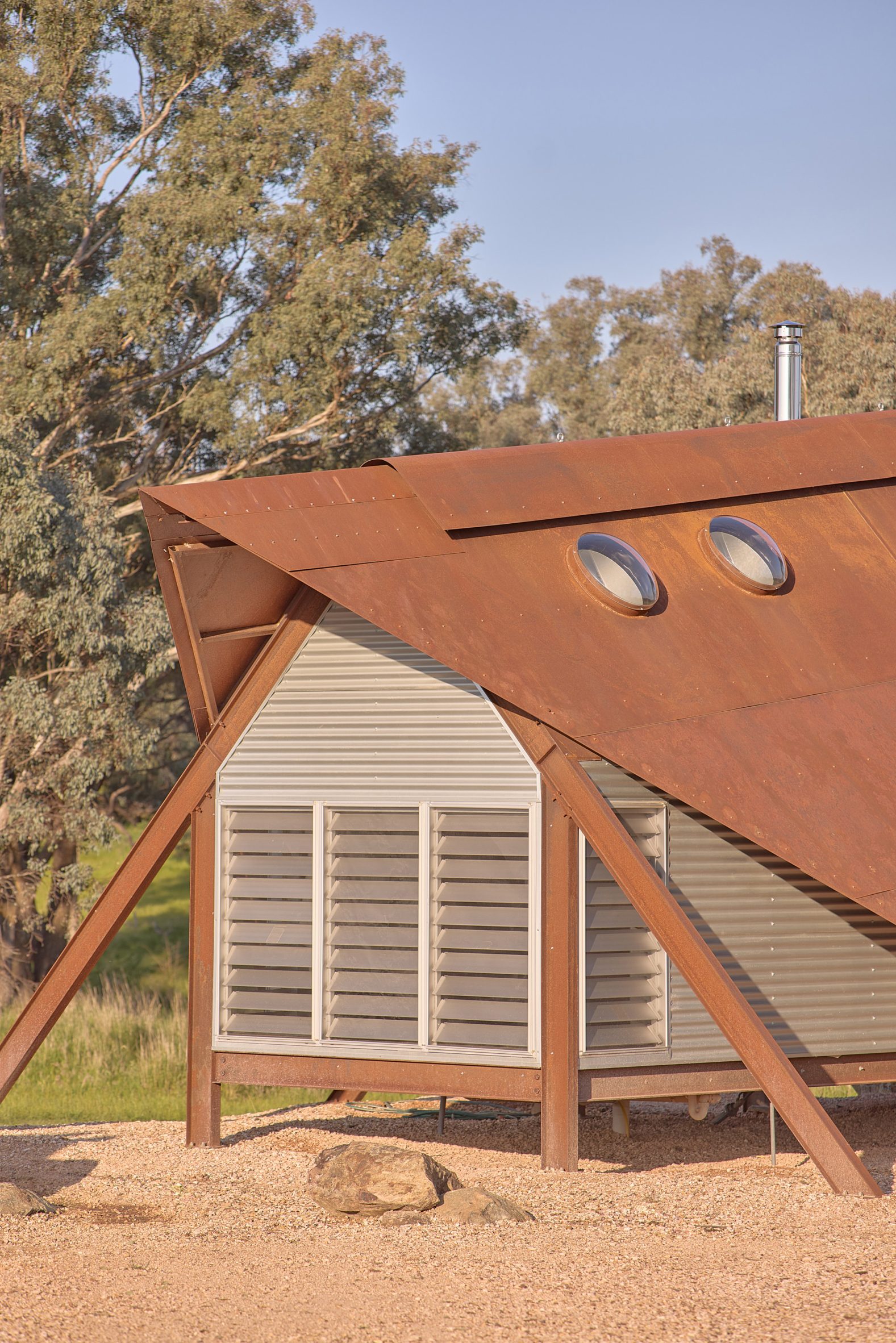
Both cabins were pre-fabricated off-site with the exterior constructed entirely of Corten steel, which will weather in the region's extreme weather.
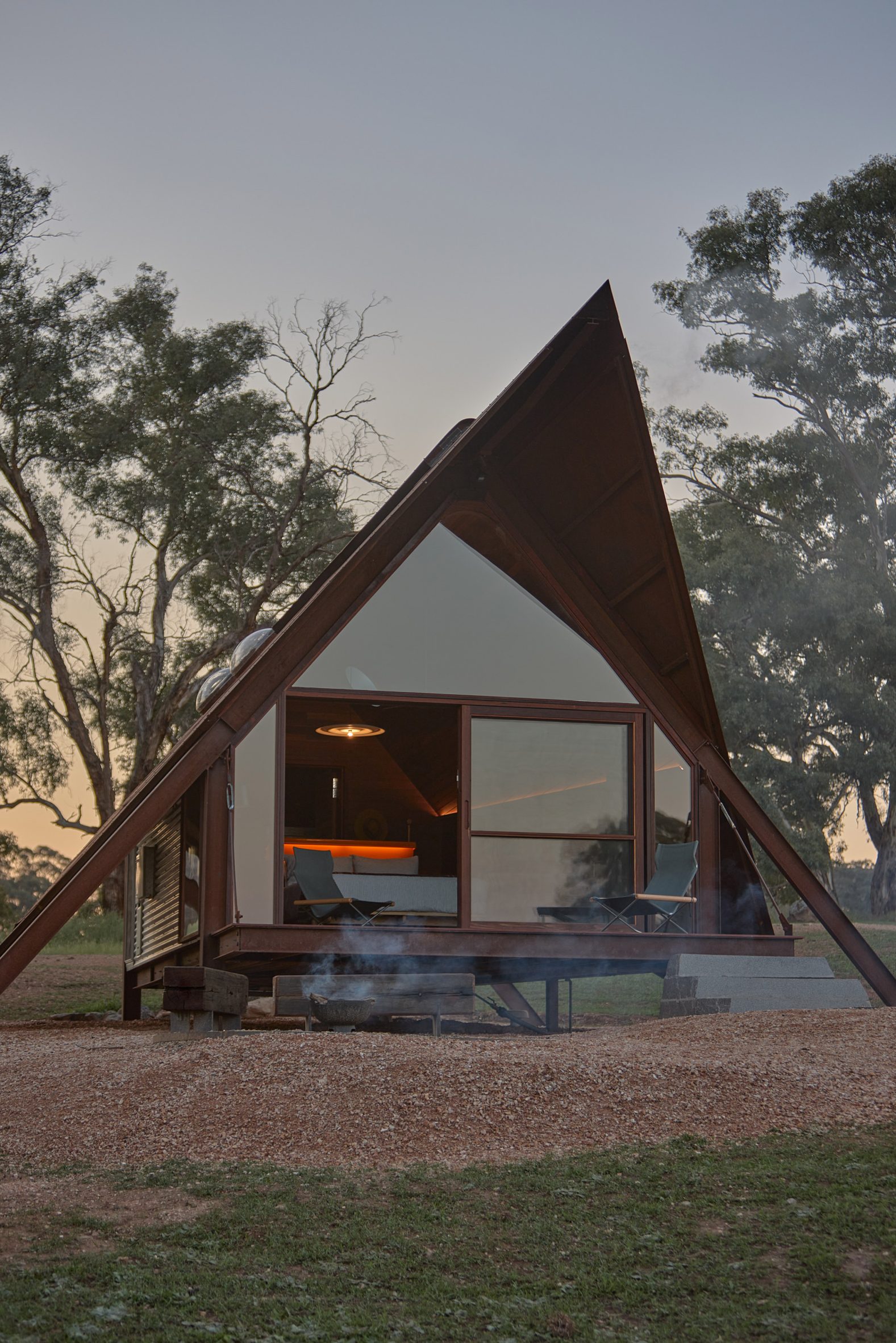
Each structure comprises of an angular A-frame that allows for a compact footprint with increased interior space.
They were elevated above ground, keeping the structure away from moisture and pests, while also encouraging air circulation.
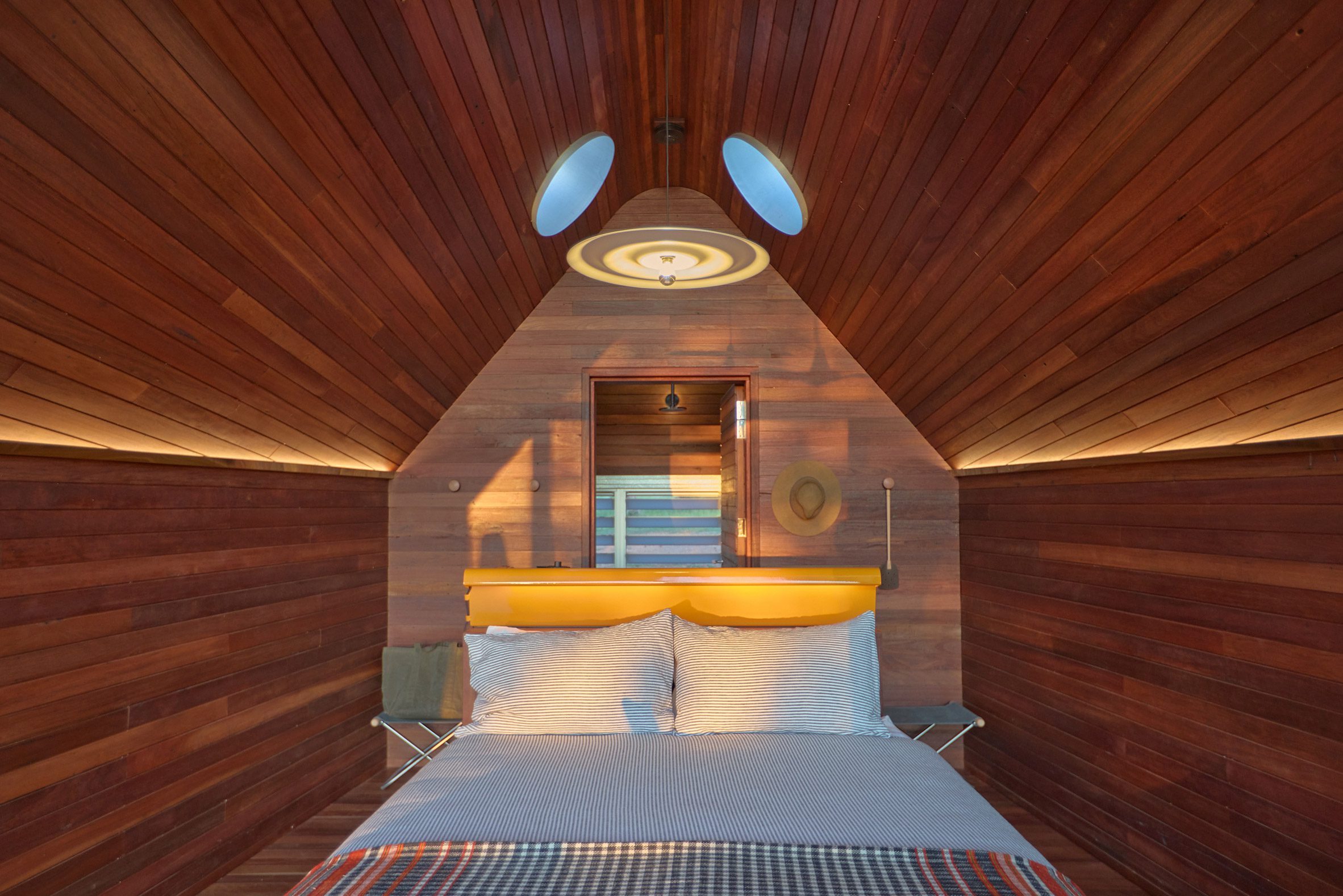
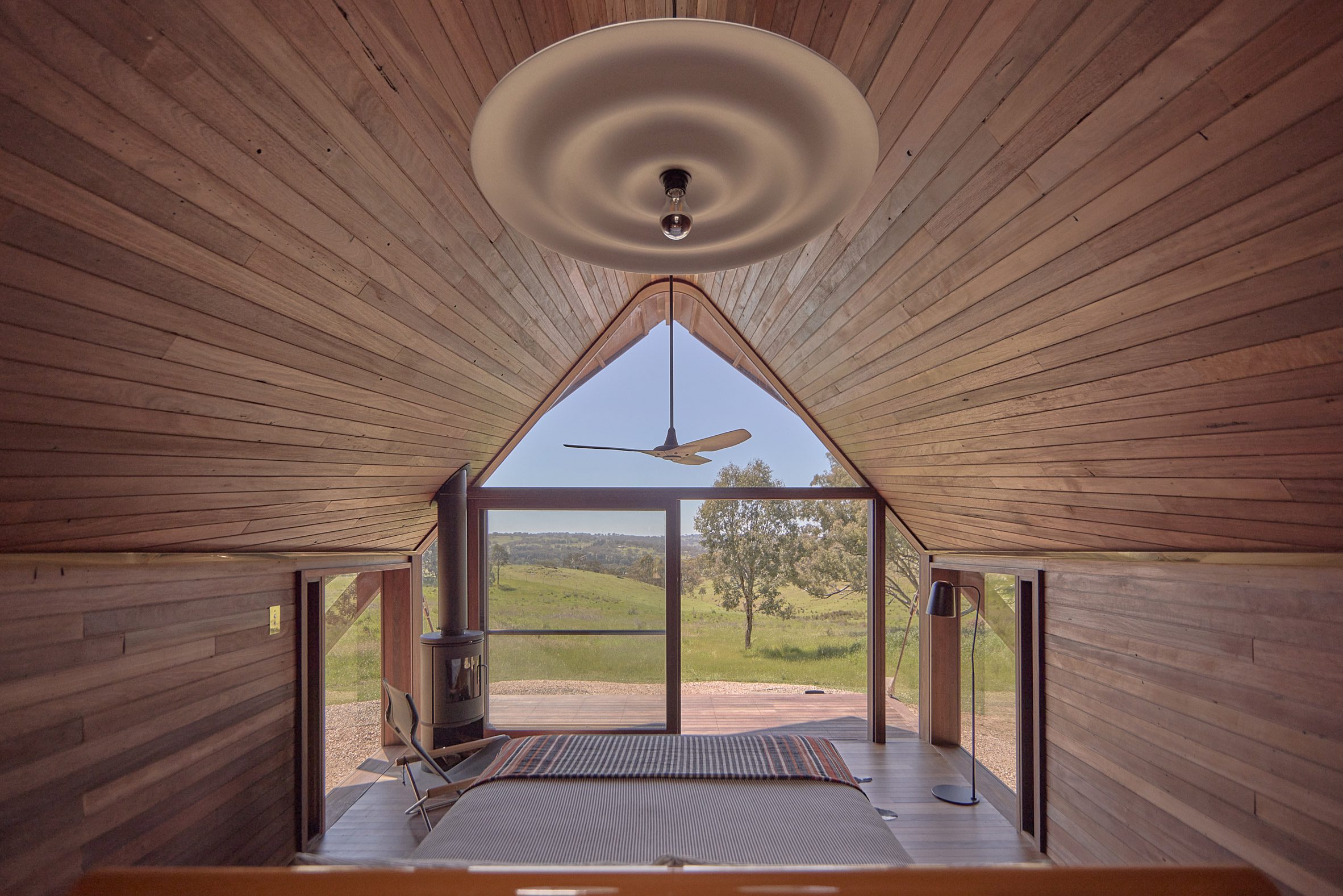
In contrast to the rough, rusted exterior, the inside walls were lined with oiled recycled ironbark. The interiors also feature bespoke brass lighting and custom steel details, painted bright orange.
Within the "tents", the main space contains a double bed, with a bathroom tucked behind at the rear of the space.
The slatted bathroom walls provide ventilation and immerse the space in the surrounding landscape, while maintaining privacy.
The surrounding environment is characterised by hills, old eucalyptus trees and tall grass, and the seasons are intense.
"The site's beauty comes with environmental challenges," noted Brown.
"Cold winters with enough snow to fell trees, hot summers prone to bushfire, strong winds sweeping across open paddocks and termites that ensure the longevity of timber structures is always in question."
As a result, the cabins have been adapted to endure the extreme temperatures.
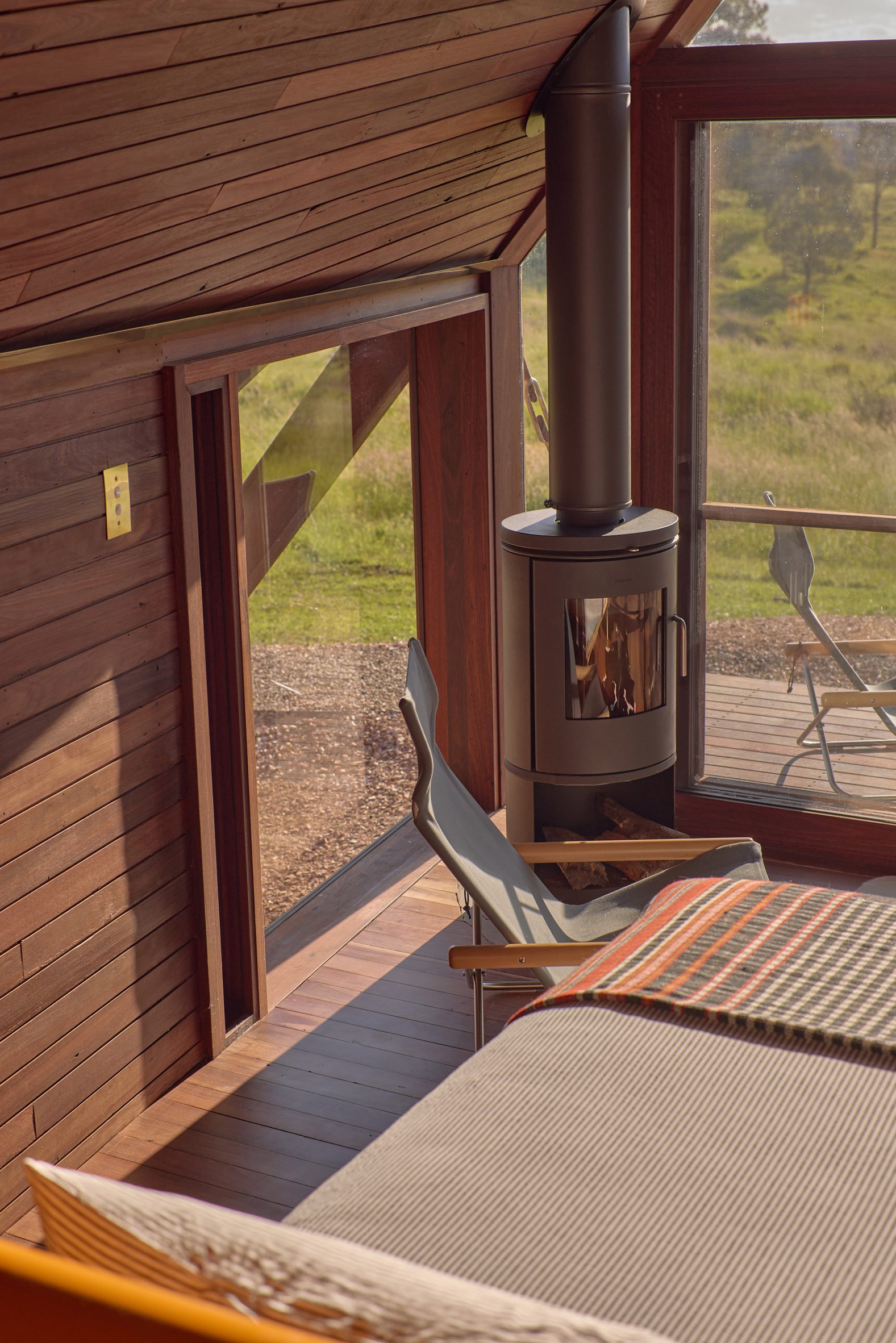
PC3 can be heated with a potbelly stove during the winters, and cooled easily due to its high, self-ventilating ridge and central fan during the summer.
The cabins are self-sufficient and are able to function entirely off-grid. On site, a service pod generates power with the help of solar panels, while also storing firewood, batteries and pumps.
A large farm shed up slope catches rain and gravity feeds the cabins, because of the Corten steel's unsuitability for rainwater collection.
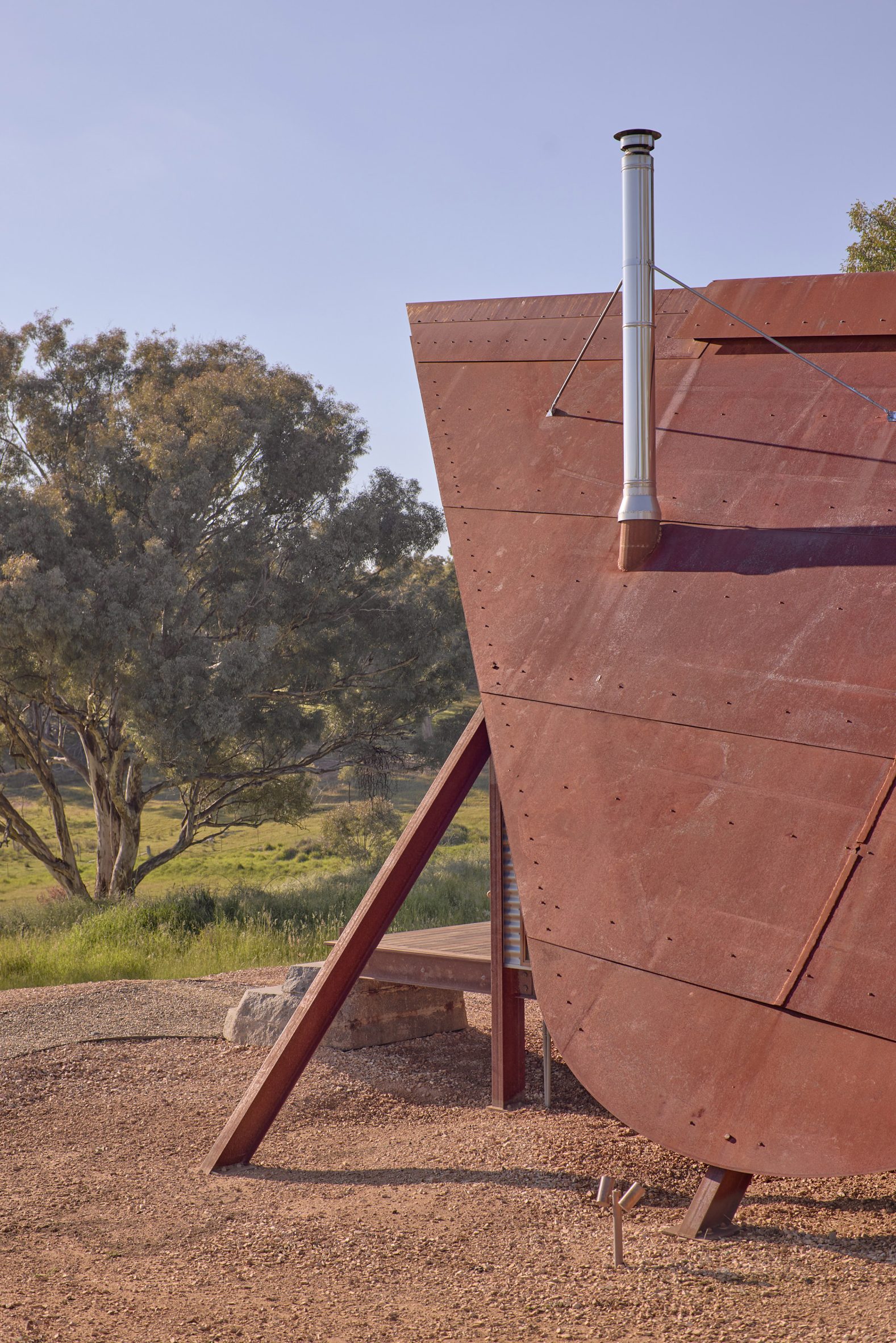
"This self-sufficiency is not an environmental gimmick but an essential requirement of the location," said Brown.
"The cabins have been designed to have everything you need for shelter and nothing else."
Other cabins recently featured on Dezeen are a gable-roofed building by Little Giant on Vancouver Island, a cabin informed by adjacent mountain peaks by Bricault Design in British Columbia and a prefabricated holiday cabin in Greece by Kasawoo.
The photography is by Zella Casey Brown.
The post Casey Brown Architecture pitches Corten "tents" in Australia appeared first on Dezeen.