










Mold Architects carves stepped retreat into rocky hillside overlooking the Aegean Sea
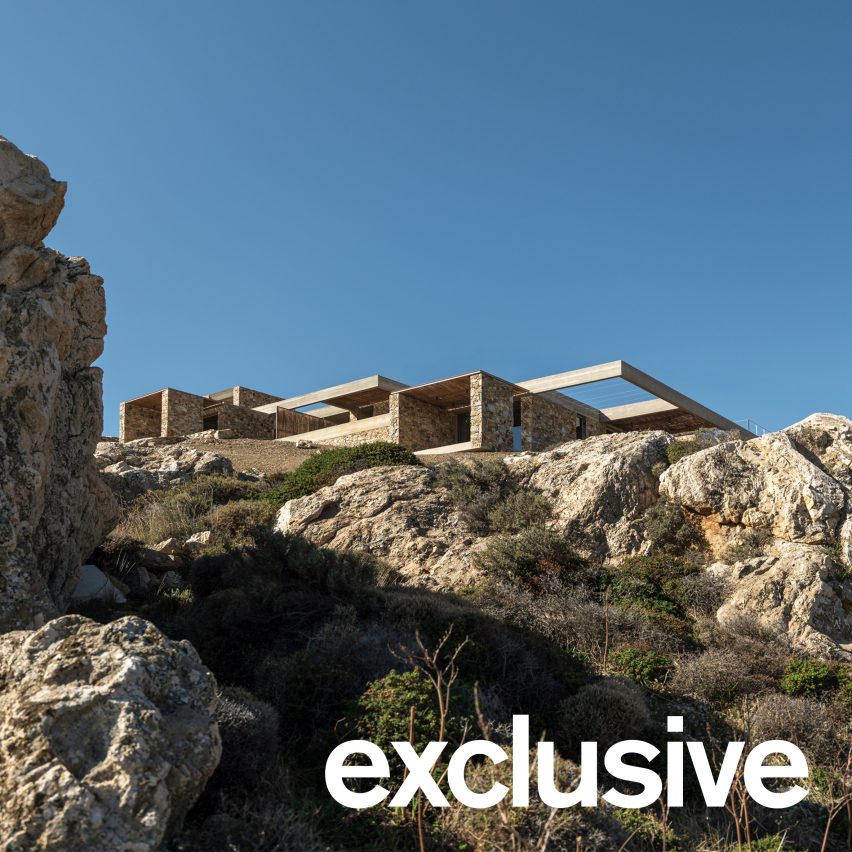
Greek studio Mold Architects has completed a hospitality retreat on the island of Serifos, using stone excavated from the rugged terrain to create five guest residences overlooking the Aegean Sea.
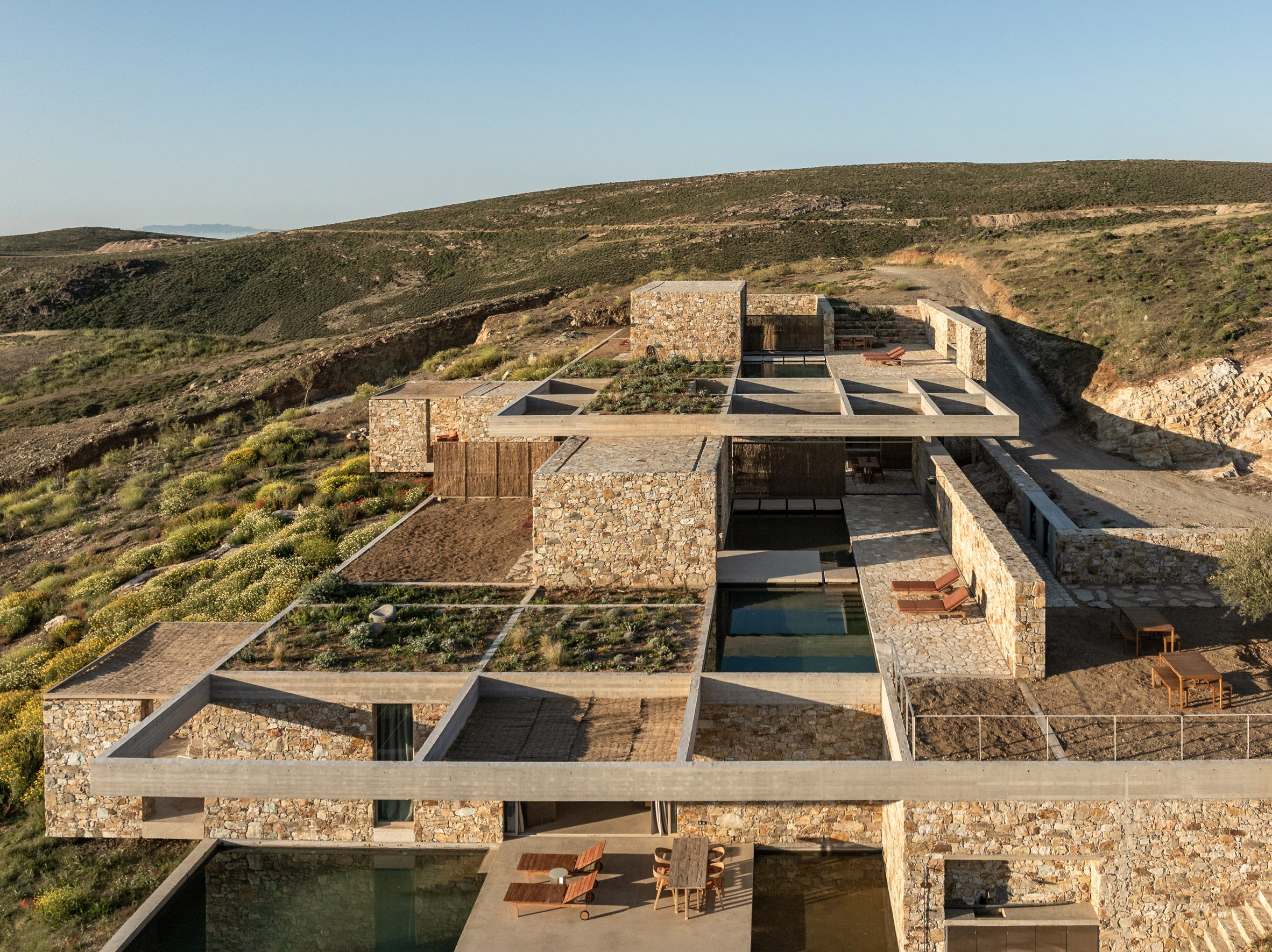
Named Perma, the project occupies a sloping coastal site facing the small island of Vous. Stone-clad accommodation units are arranged across a series of stepped terraces, with pools, planted roofs and water-filled courtyards woven between them.
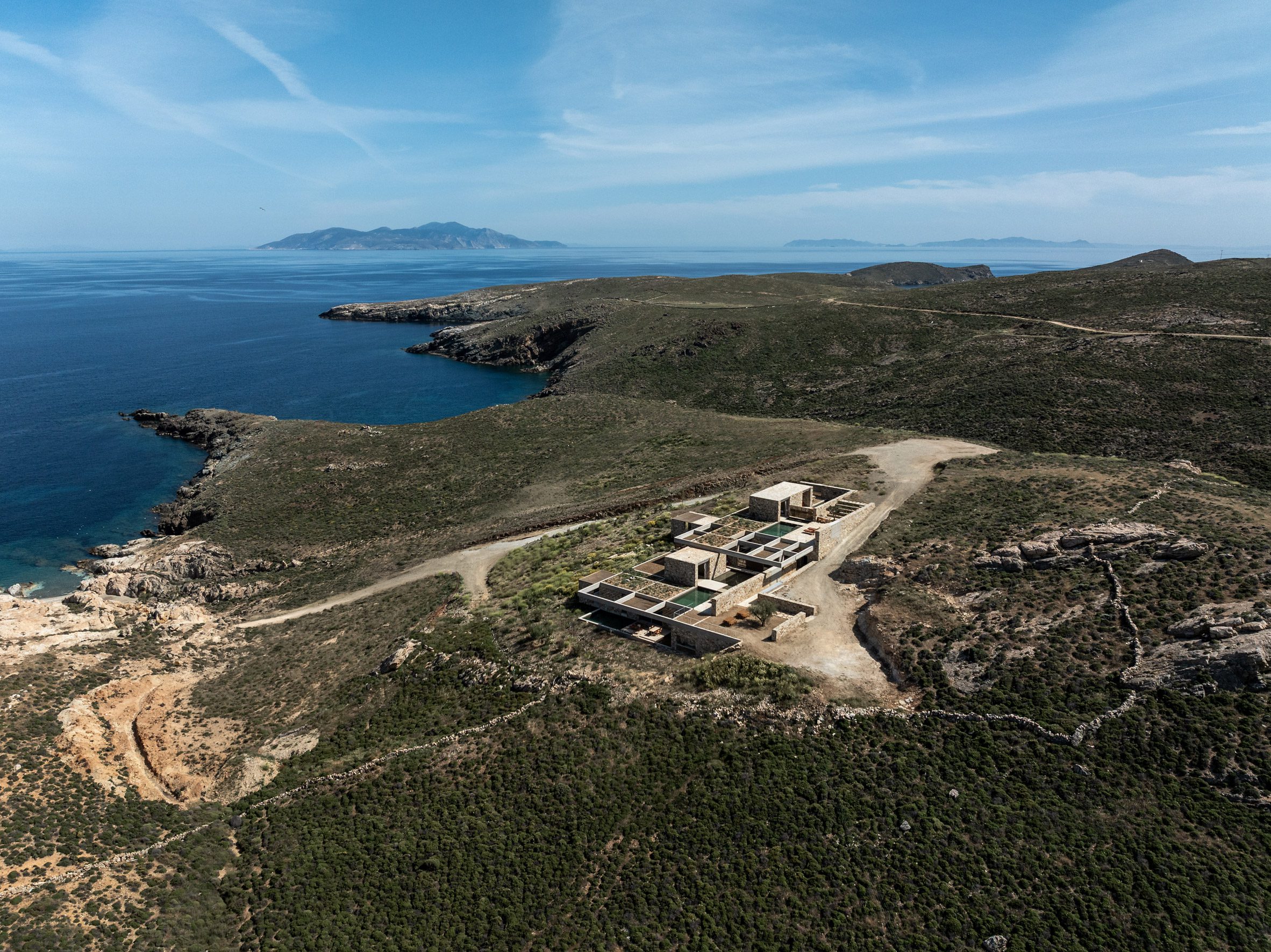
Instead of removing the hillside and building on top of it, the architects used material extracted during construction to build much of the retreat itself.
Stone excavated from the site was reused to construct retaining walls and clad the residences, while excavated earth was returned to the landscape in the form of planted roofs and terraces.
"Rather than treating the ground as something to be removed, the project uses it as one of its primary materials," Mold Architects founder Iliana Kerestetzi told Dezeen.
The retreat was conceived as an alternative to a conventional hotel, with guests accommodated in self-contained residences that prioritise privacy and outdoor living.
"The brief was to create a small hospitality retreat in Serifos," Kerestetzi said. "A place for withdrawal, quietness and reconnection with the natural conditions of the island."
Four stone volumes contain the five residences, comprising three larger, 60-square-metre units that occupy individual buildings and two smaller suites that are grouped within a shared volume.
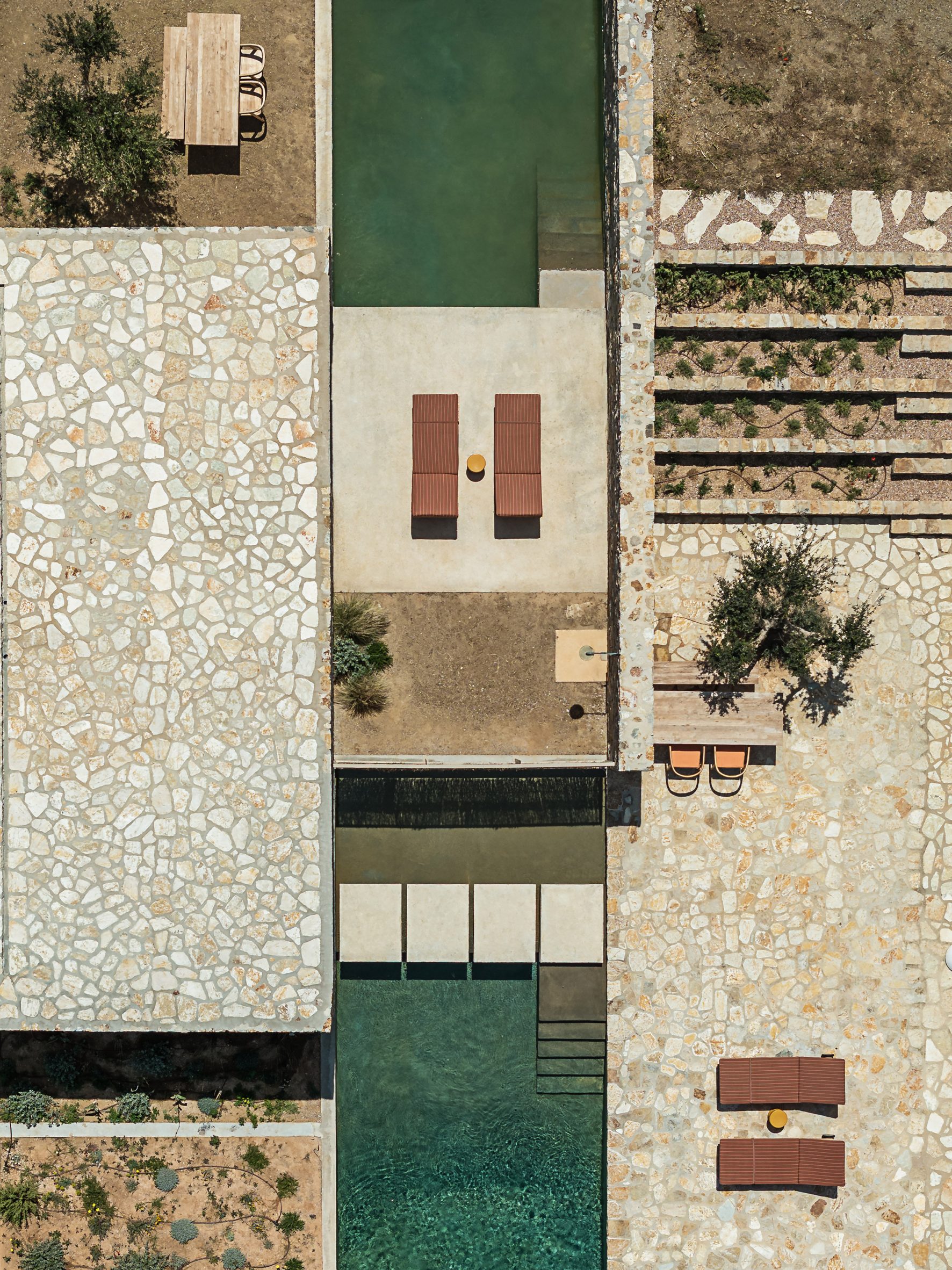
Each residence opens onto a private outdoor area featuring a swimming pool, outdoor kitchen, dining terrace and shallow water features, while a shared gathering space can host communal meals, workshops and events.
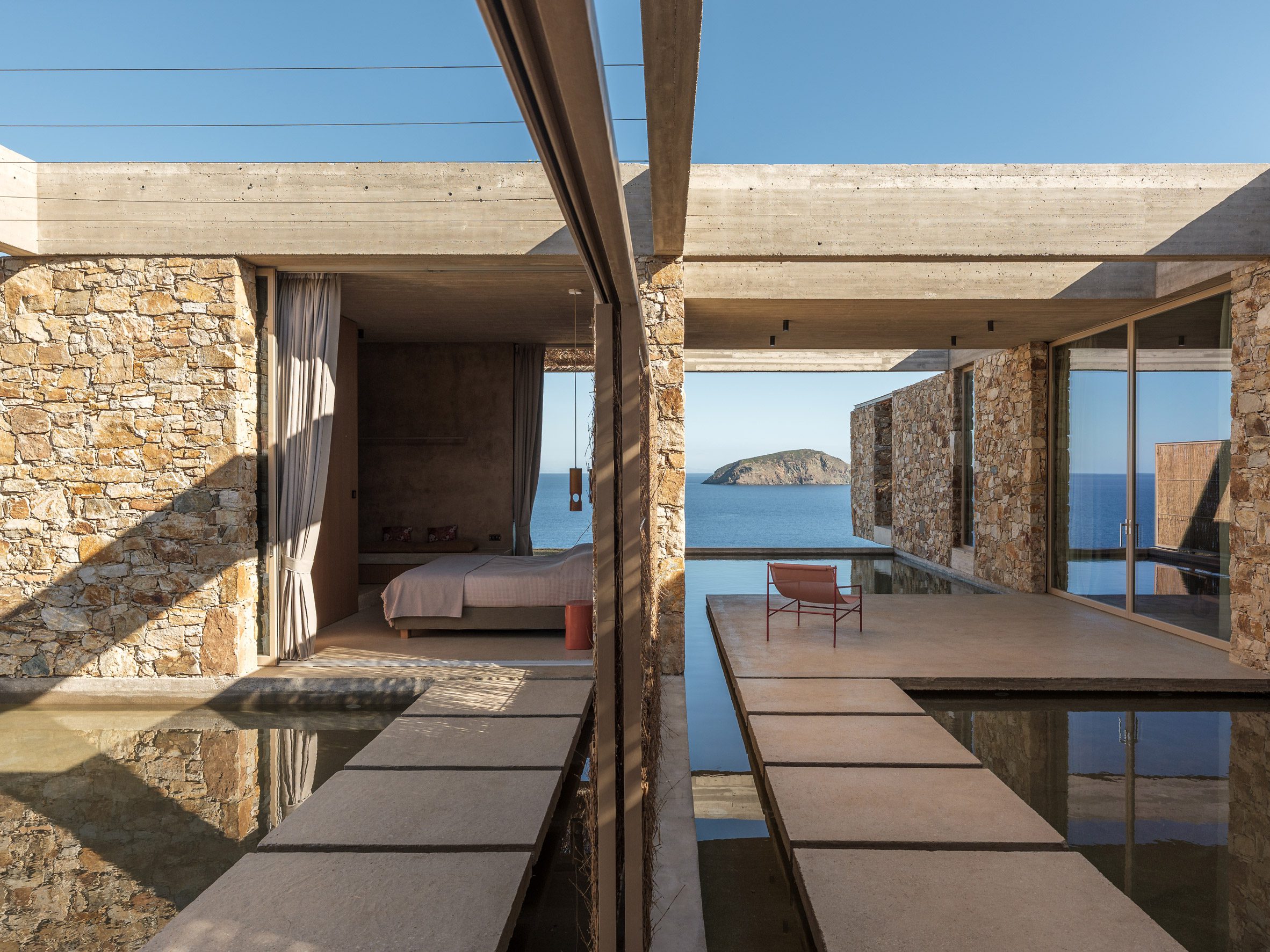
Large glazed openings slide away to connect bedrooms and living spaces with surrounding courtyards, shaded outdoor rooms and sea-facing terraces.
Inside, the larger residences contain a bedroom, kitchenette, living area and two bathrooms, while the smaller suites are reduced to the essentials of sleeping, bathing and cooking.
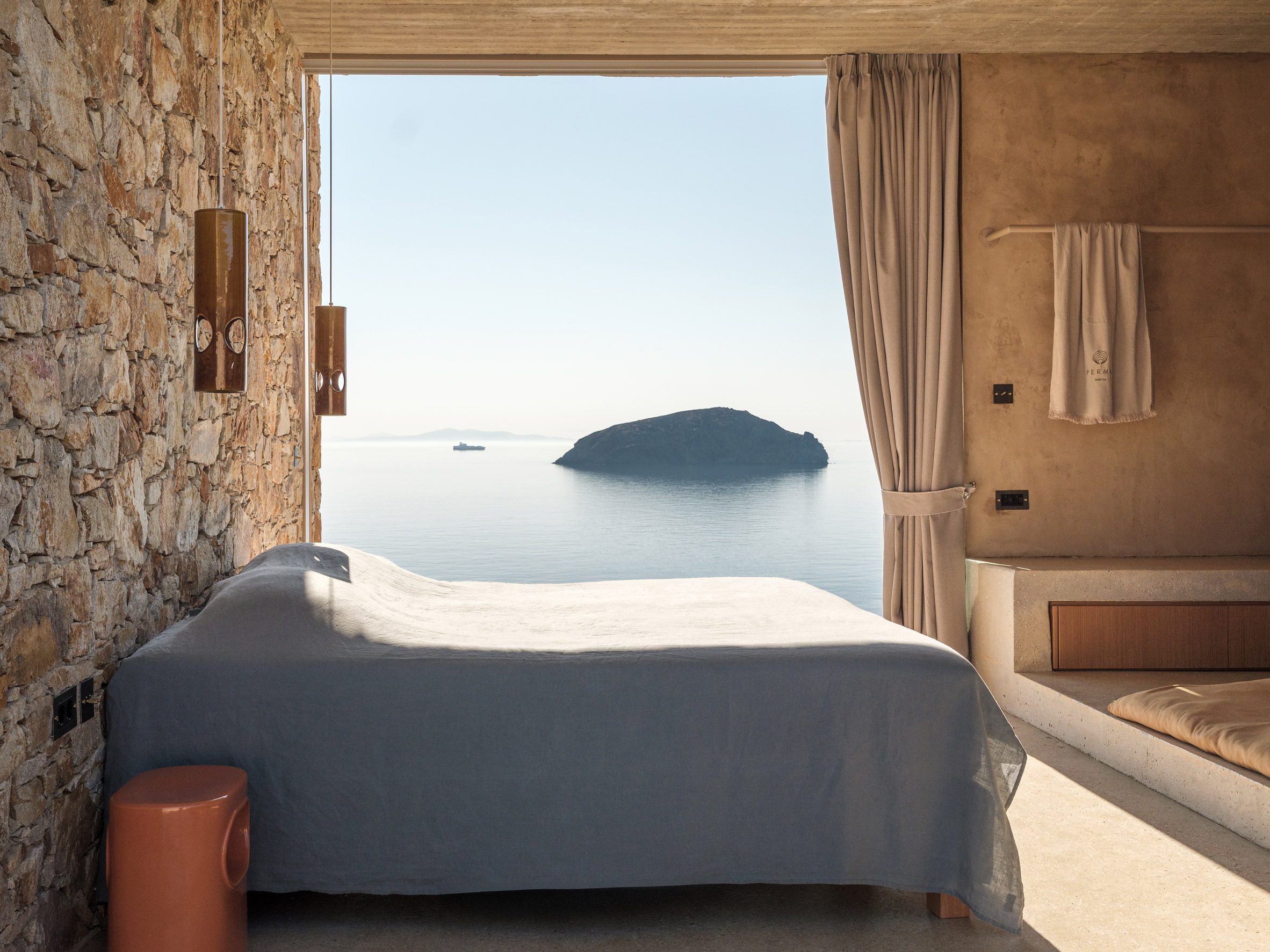
The interiors were deliberately restrained, with built-in furnishings, concrete floors and simple material finishes to keep attention focused on the surrounding landscape.
"The real sense of inhabitation unfolds through the relationship between the room and its surrounding courtyard, terrace, water, shade and view," Kerestetzi explained.
Guests arrive from the rear of the site and move through a sequence of paths, terraces and courtyards before reaching their accommodation.
According to the architects, the journey through the retreat was designed as a gradual transition from the wider landscape into more intimate spaces.
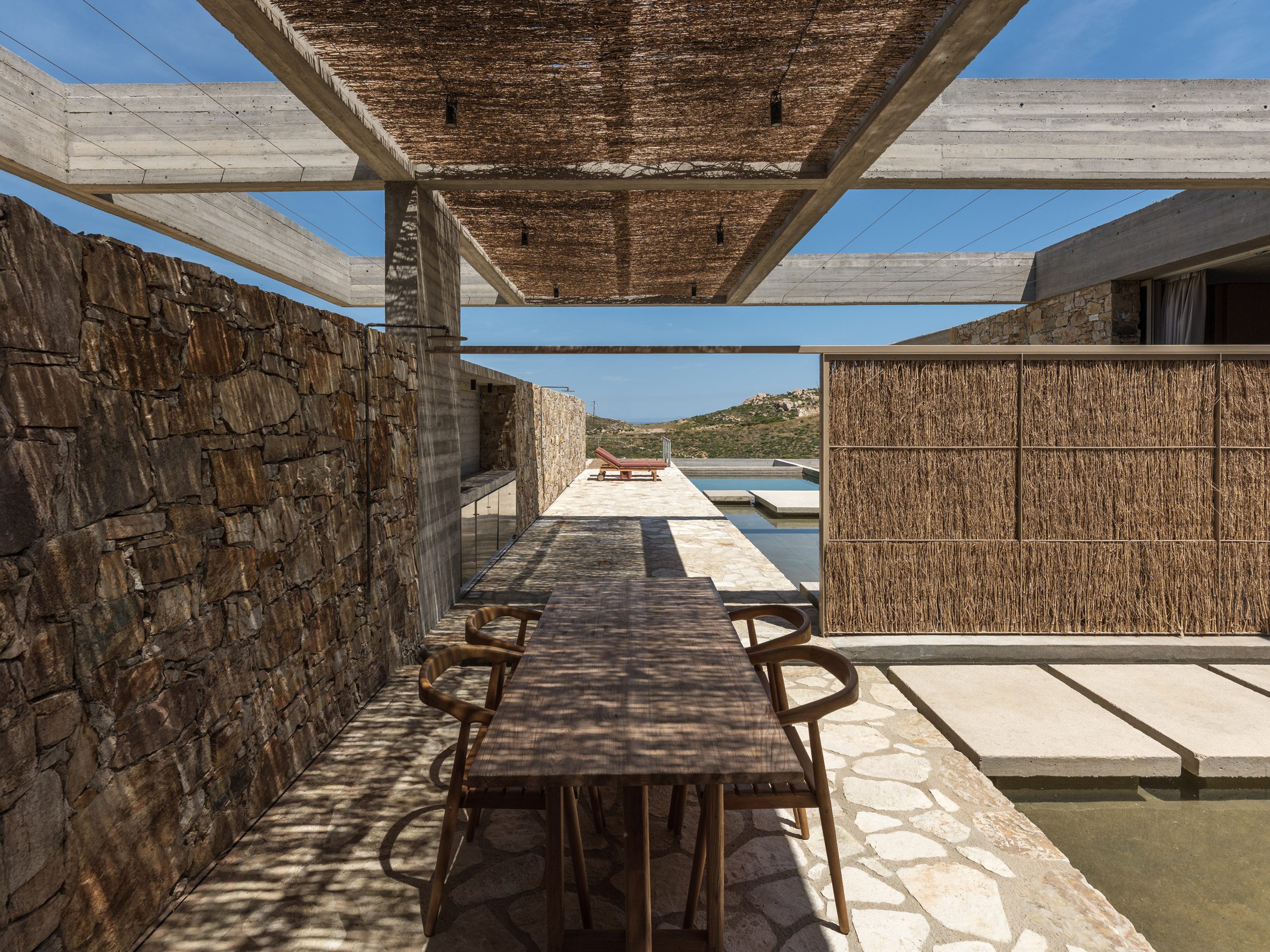
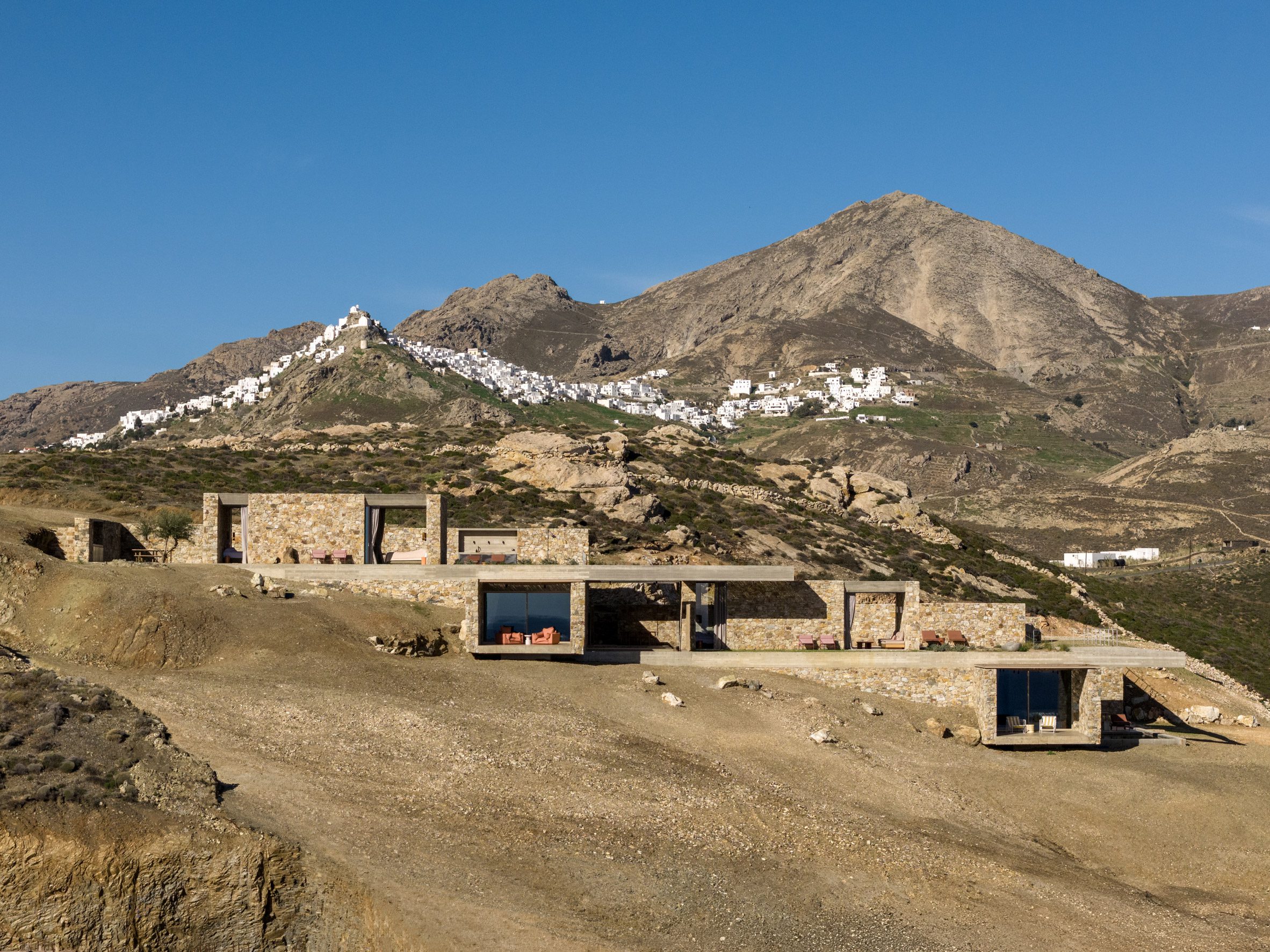
The retreat is organised across three levels that follow the natural descent of the terrain. While the hillside descends towards the coastline, the slope runs at an angle to the sea view rather than directly towards it.
To resolve this, the architects aligned the buildings with the natural contours of the land before rotating them towards the horizon, allowing the retreat to follow the terrain without sacrificing views across the Aegean.
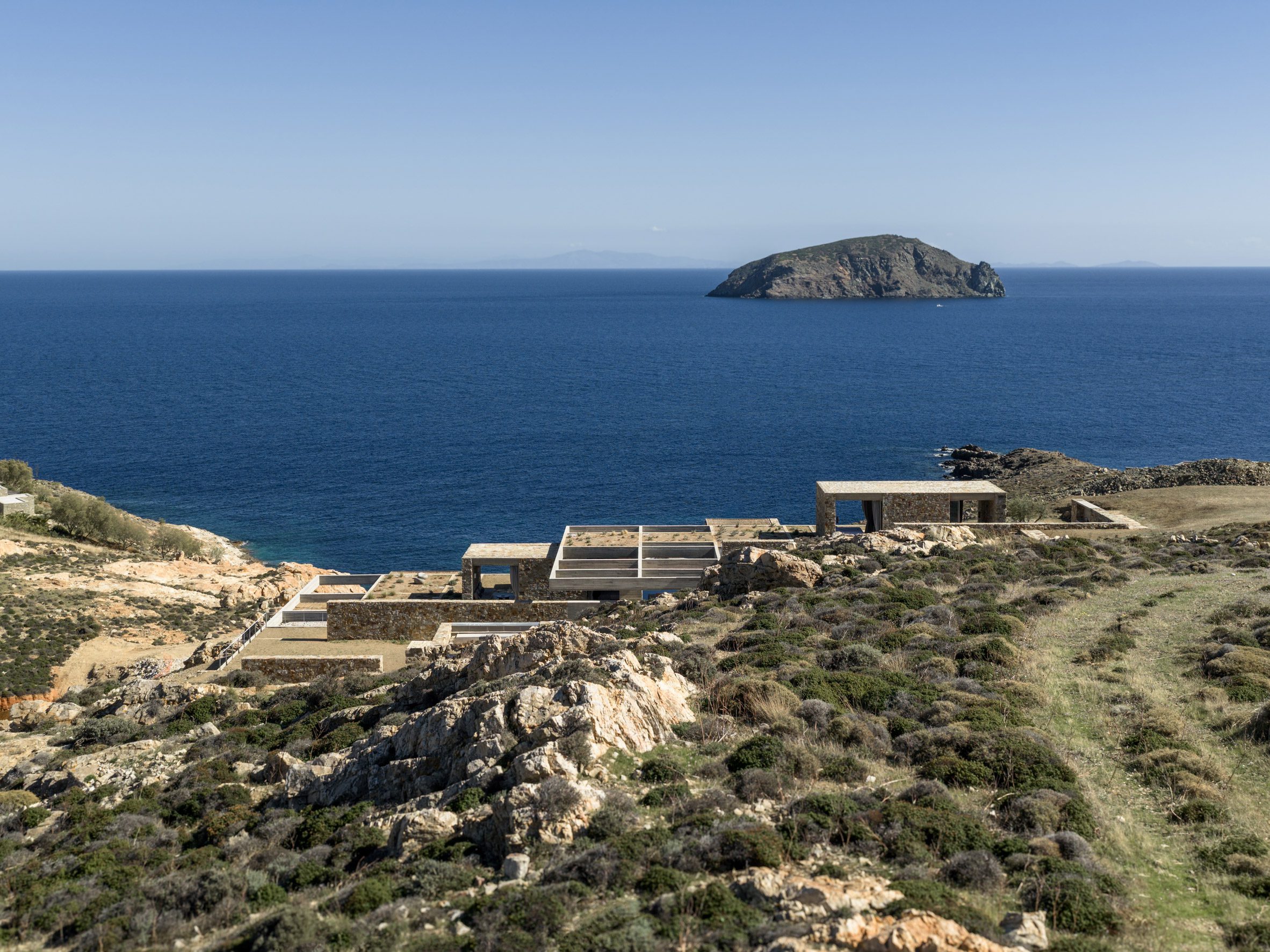
"The buildings were arranged almost like steps in the landscape, aligned with the movement of the slope, but carefully turned towards the sea," Kerestetzi said.
Exposed concrete beams extend across the site, forming a grid that frames courtyards, circulation routes, planted roofs and open-air rooms.
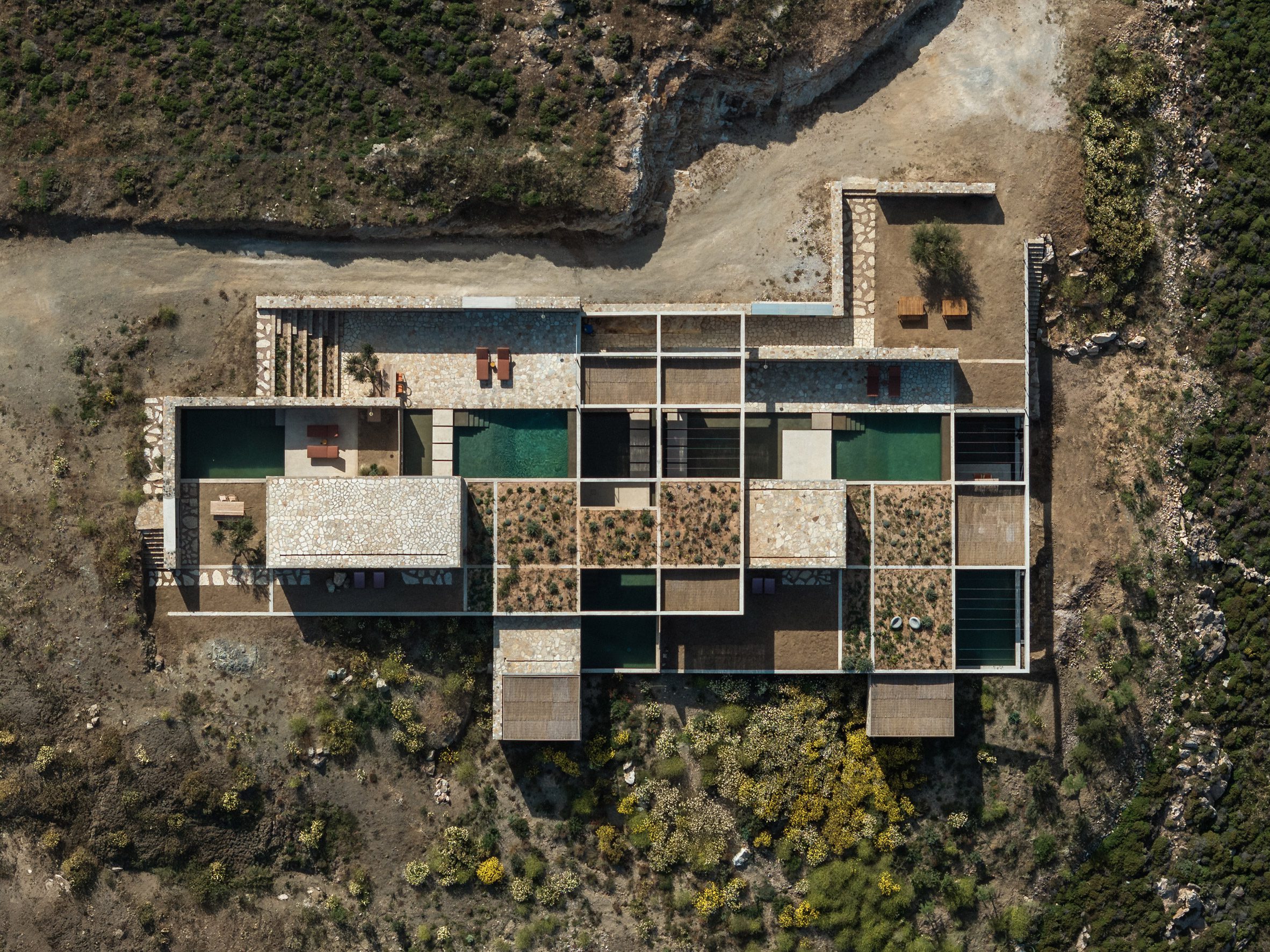
Reed screens filter sunlight, create sheltered outdoor spaces and allow sea breezes to pass through the development.
The grid continues across the retreat, creating openings that direct views towards the sea, surrounding hillsides and the island of Vous.
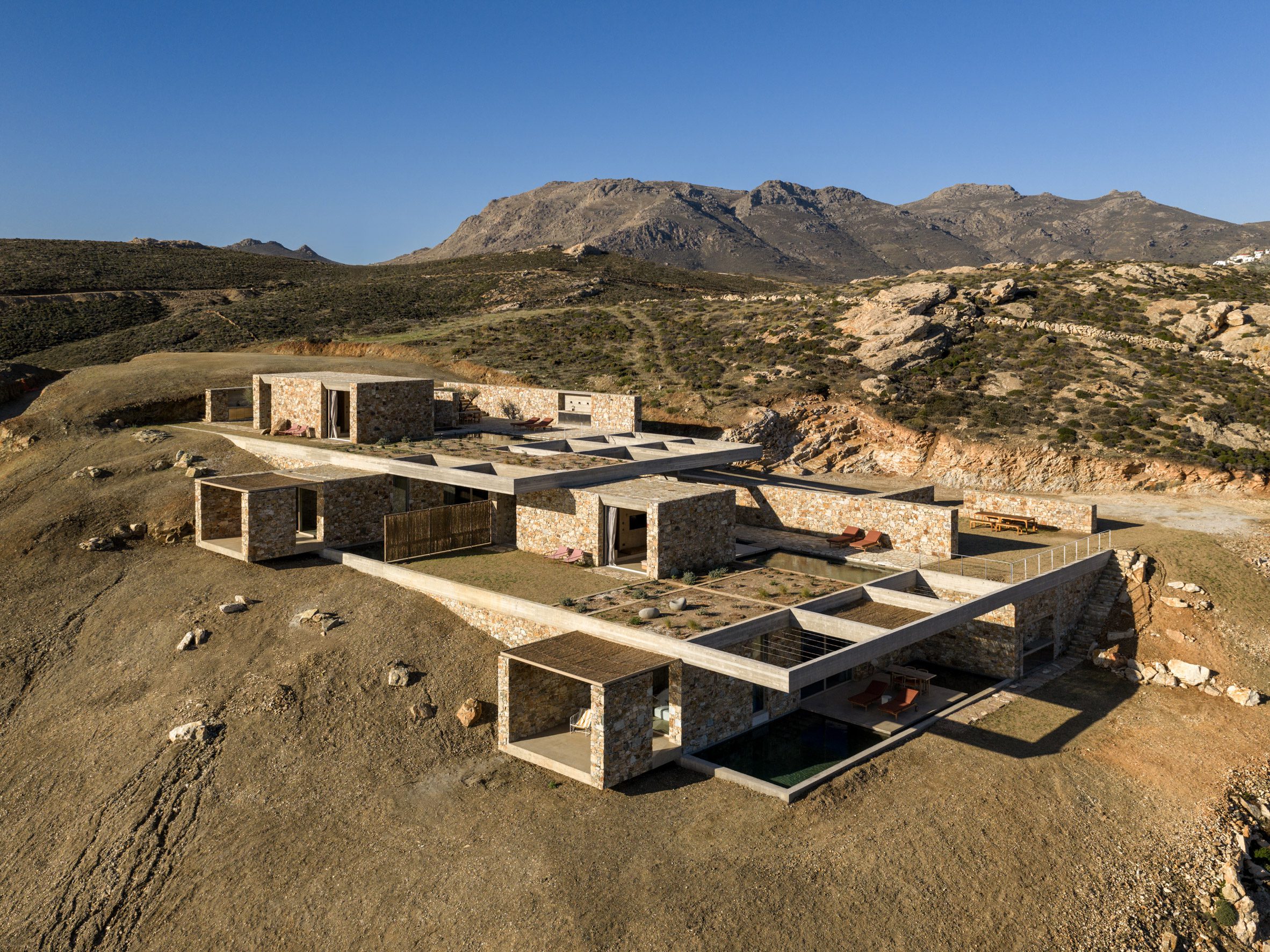
Passive cooling strategies suited to the Cycladic climate include shaded courtyards, pergolas and planted roofs, while rainwater is collected for irrigation.
The retreat also incorporates a biological wastewater treatment system that cleans and reuses water on site, alongside photovoltaic panels that generate renewable electricity.
Mold Architects was founded by Kerestetzi in Athens and works across residential, hospitality and cultural projects.
Previous projects by the studio featured on Dezeen include the partially submerged NCaved house on Serifos, which featured a sloping green roof punctured by a series of sheltered courtyards and open terraces.
The photography is by Giorgos Sfakianakis.
The post Mold Architects carves stepped retreat into rocky hillside overlooking the Aegean Sea appeared first on Dezeen.