
















"Huge gap in how everyone understands AI and how industries understand it" says Parsons School of Design


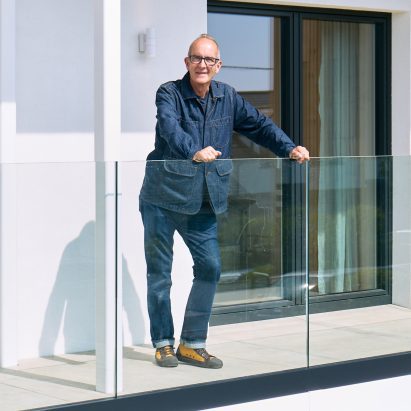
Encouraging critical thinking is a top priority at Parsons School of Design and "something machines and AI can lack," says the institution's Mark Gardner.
Gardner, associate professor of Architectural Practice and Society at Parsons, explained that the New York-based institution encourages students to approach AI as a tool for interaction rather than something that can "do the work for you".
According to Gardner, the curriculum at Parsons has also shifted to focus on material usage and bio-based design, in addition to neurodiversity, social interaction and accessible design.
Dezeen School Shows: Designing the Future examines the challenges universities are facing and how they're adapting their courses.
Dezeen spoke to Gardner about working with communities, climate-conscious design and the emergence of AI within the creative industry.

Ruby Betts: What is Parsons prioritising?
Mark Gardner: We've doubled down on bio-based design and thinking a lot about materials and energy. That's been a major shift.
Given the course of climate change, we've become serious about how these things affect making, adaptive reuse and the assessment of things we already have – the idea of repair.
With current technology, a lot of people are losing touch with the human factor – that's a value of design education we need to prioritise.

Ruby Betts: What impact is AI having?
Mark Gardner: It's been the biggest disruptor since, as far as technology goes, a personal computer.
One of the things I hear as a common concern among colleagues is technology disregarding the importance of human qualities – touch, emotional depth or even cultural nuance. AI doesn't have these.
We, as humans, must continue maintaining the cultural touch points and differences that operate outside the mainstream, as this is what AI gets its intelligence from.
If you want something that exceeds the average, you have to cultivate difference.

Ruby Betts: Are you encouraging AI use?
Mark Gardner: Things are changing so quickly. We understand what the tools are, but there's such a huge gap now between how everyone understands it and how different industries understand it.
There's a danger in using AI when necessary design tools are excluded. That could have a negative impact. It's something that we have to keep in the forefront of our minds as we interact with the technology industry.
As we navigate this with our students, it's incredibly important to maintain critical thinking in creative education, as this is something that machines and AI can lack.
We're encouraging students to approach it as a tool for interaction, rather than a one-way conversation or something that can be relied on to do the work for you.
Design is speculative – it's about the future, but is also informed by our present circumstances or conditions. It tries to make its best guess at what that future starts to look like. There are all kinds of ideas about what that future might look like, and that imagination still comes from the human imagination.

Ruby Betts: What issues – social, political, environmental, or otherwise – are your students exploring?
Mark Gardner: Being in an urban environment, like Parsons is in New York. We are immediately affected by issues around climate change.
We have studios, which look at things like flooding, water, resiliency – not just resiliency that's infrastructural – but a social resiliency of engaging with people and the places they live in.
This has become important for us to focus on before we begin designing. We encourage students to do deep research. Research-based design has always been a priority, but it's now become more important in design education that students have an understanding of all the tools that they have.
I also see students thinking more about neurodiversity, social interaction and accessible design, questioning how we design for different types of people all sharing the same space. Our environment can't be one size fits all.

Ruby Betts: Do you have any new courses you've recently developed?
Mark Gardner: Our design workshop works a lot around bio-based materials and how these can be applied to the built environment. The Healthy Materials Lab at Parsons has recently been looking at hemp and lime. We've been looking at different materials in our industrial design courses, like cork.
We make sure to emphasise where materials come from with life cycle assessments, building cycles, and adaptive reuse.
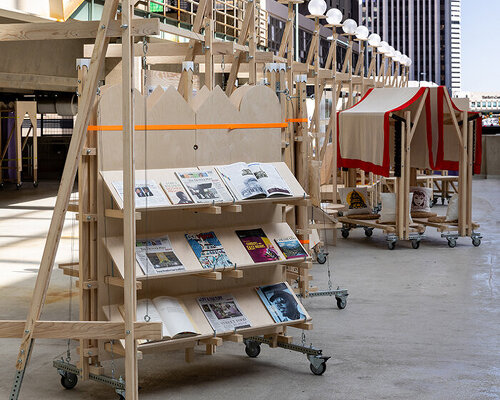
We ensure community engagement, working with communities and nonprofit community groups, and working with the city. We recently built structures using wood materials out on Governor's Island, working with a cork manufacturer to think about how we build on a community site like this.

Ruby Betts: How do you see creative education changing in the next 10 years?
Mark Gardner: There's an understanding that creative education is a lifelong endeavour. This is something that we’re consciously thinking about, and understanding that technology can provide a hyper-personalised learning experience that can be accessed in isolation.
Because of this isolation, students will continue to seek community, which is the power of universities and schools.
You get a critical mass of people studying the same thing, and that interaction is so important. As the role of technology continues to grow and evolve, community in creative education will become even more valuable.

Dezeen School Shows: Designing the Future
This article is part of Dezeen School Shows: Designing the Future, a series of interviews exploring design and architecture education.
The post "Huge gap in how everyone understands AI and how industries understand it" says Parsons School of Design appeared first on Dezeen.