










How parametricism changed architecture but not buildings


Our Parametricism series has explored the architectural theory controversially touted by Patrik Schumacher as the defining style of the 21st century. To round things off, Tom Ravenscroft measures the movement's impact.
Zaha Hadid Architects (ZHA) principal Schumacher coined the term parametricism in 2008, declaring that it will become a universal style of architecture. He doubled down on the prediction in 2016, and again in an interview with Dezeen as part of this series.
Clearly, this has not yet come to pass. Schumacher himself acknowledges that parametricism – basically the use of computational tools to design buildings based on a set of parameters, but usually associated with dramatic swooping curves – is still "a drop in the ocean".
But while Schumacher remains convinced that a parametricist future is on the horizon, others are not so sure.
Architectural historian Mario Carpo, who wrote the book The Digital Turn in Architecture: 1992-2012, pointed out that the idea is not looked on favourably among architects in the Western world.
"It is 'digital' style, but it's not the only one, and today is not even the most popular except in some parts of the world where it has taken over," he told Dezeen.
"In the West, parametricism – meaning the digital style a-la-Patrik Schumacher – is universally detested," he continued. "If you mention the term here at Columbia, at Yale, or in any of the Ivy Leagues, they shoot at you."
"I don't see it gaining critical mass"
Even Farshid Moussavi, who as one of the founders of Foreign Office Architects designed what Schumacher deemed the "first major" parametric building, is dubious about the idea that it will become a universal style.
"I am curious about it," she told Dezeen. "I don't want to dismiss it, but I don't see it gaining critical mass."
"There was a time when it was seen as a welcome thing, but now I think people are skeptical and one thing we've learned is that any kind of -ism that becomes implemented at kind of mass scale is not necessarily a good thing."
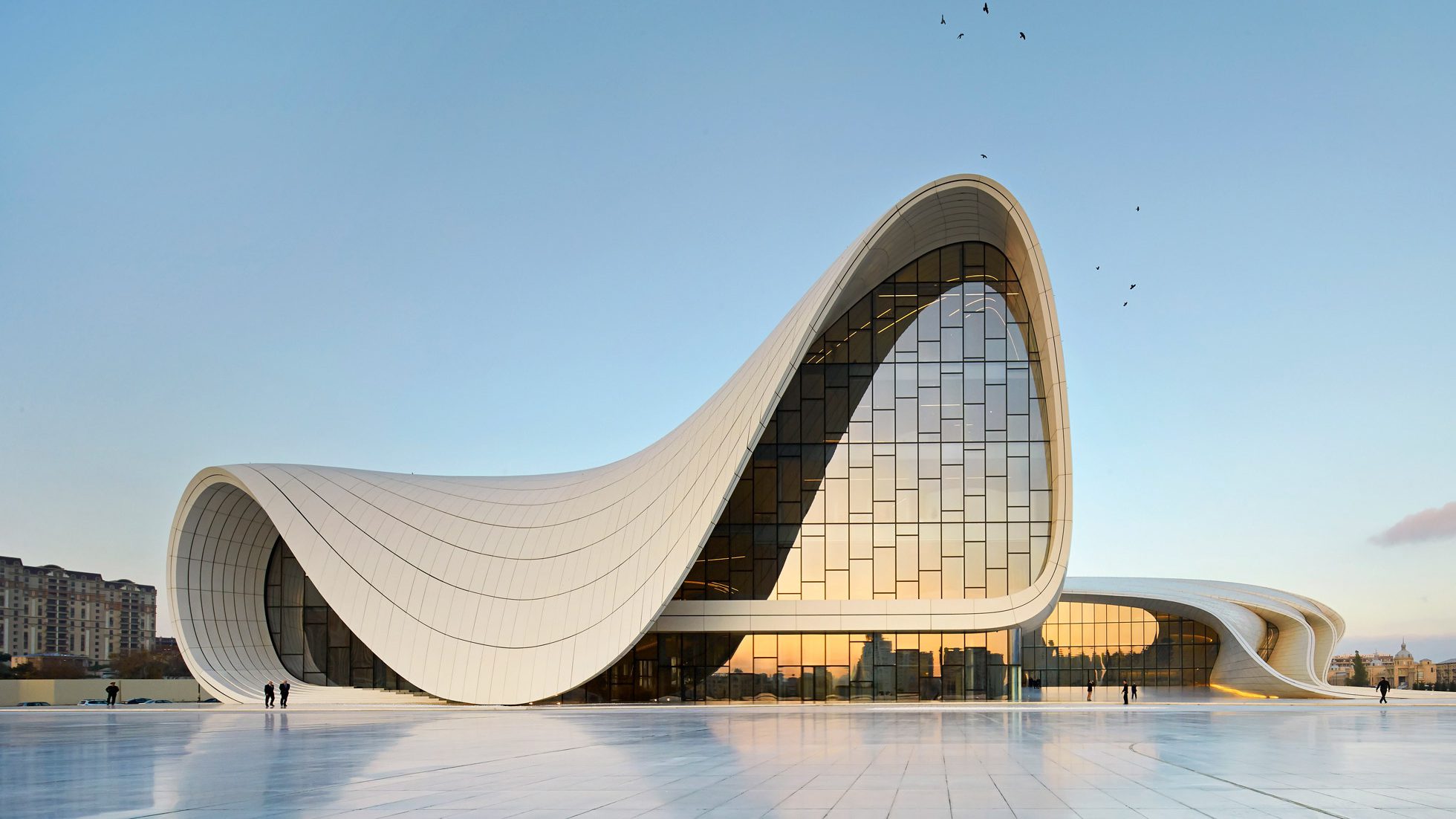
The idea of any single architecture style becoming universally adopted is anachronistic in today's world, she added.
"I think it's clear that when you discuss, say postmodernism or deconstruction and so on, that we were dealing with times when one style was embraced as the way to approach architecture," Moussavi said.
"We are no longer in that. Let's say we have a more plural understanding of architecture – there is room for different architecture approaches in different places."
"His association was, in many ways, the kiss of death"
Carpo suggests that parametricism's close association with Schumacher, whose outspoken political views have made him a controversial figure in architecture, only make its universal adoption less likely.
"He found a name that was so successful that we even apply it retroactively to define what I would call in purely architectural stylistic terms, 'digital streamlining'," said Carpo.
"It was branding himself," he added. "From that moment parametricism became first Zaha Hadid's and then Patrick Schumacher's view of digital streamlining."
"His association was, in many ways, the kiss of death, because it becomes the style of one person who is not universally liked. He is a friend, I like him very much, but when I introduce him to my students I say, 'be aware that this guy is a bit controversial'."
But even if Schumacher's envisioned future is unlikely to be realised, the tools and thinking that underpin parametricism have already had a major influence on contemporary architecture.
"Patrik Schumacher's fever dream of undulating white blobs cavorting in a world of libertarian private cities might not have come to pass," The Guardian's architecture and design critic Oliver Wainwright told Dezeen.
"But whether we like it or not, parametric computation has become a ubiquitous part of contemporary architectural production – as much as paper-thin brick cladding and poor doors."
Parametric design tools such as Rhino and Aurodesk Revit are now used in the majority of major architecture studios.
"You can't avoid them; parametric tools are incredibly important," said Moussavi. "But I do think it's important to distinguish between parametric tools and what you do with parametric tools and parametricism."
"Parametricism has a fundamental problem of definition"
This view is echoed by Martha Tsigkari, head of the applied research and development team at UK architecture studio Foster + Partners.
"Parametricism has a fundamental problem of definition," Tsigkari told Dezeen. "It describes a process – using computational algorithms and parameters to generate forms – rather than a coherent aesthetic philosophy or visual language."
"It sort of conflates tools with ends," she added.
Tsigkari explained that parametric tools can be used to create any type of architecture, and are in no way limited to the creation of the curved forms that define parametricism.
"We have been using parametric tools for the best part of the last 20 years that I have been in the office and the designs that we make can be quite different from the designs that other people who are using parametric tools make," she said.
"It is contemporary work using contemporary tools that can create very, very varied formal outputs. [Parametricism] feels a little bit like ideology dressed as theory."
The idea that parametric tools create curved forms also doesn't add up for Carpo.
"In purely technical terms, parametricism does not generate a style – a shoebox is parametric if you speak to an engineer or a mathematician," he said. "Parametricism is universally adopted for any form of digital notation – a shoebox is as parametric as a spline."
"The promised parametric revolution was administrative"
Tsigkari sums up what many others think, which is that the term is being misused.
"What proponents call parametricism might better be understood as late digital-era formalism, or simply as contemporary architecture using parametric tools," she said.
"The software was – and in some cases still is – revolutionary, but labelling its output as a unified style elevates technical methodology over architectural intent."
Wainwright added that the legacy of parametricism will not be in its curved landmarks, many of which were designed by Zaha Hadid Architects, but in how architectural design thinking has shifted.
"It might not have ushered in the promised style of sinuous forms, squirted from the screen like whipped cream, but it did lead to the BIM-ification of the world, with rule-based, relational modelling now underpinning almost every stage of design, documentation and delivery," he said.
"Ultimately, the promised parametric revolution was administrative, rather than aesthetic – less sci-fi than spreadsheet."
The main image shows the Yidan Center by Zaha Hadid Architects under construction in Shenzhen.
Parametricism
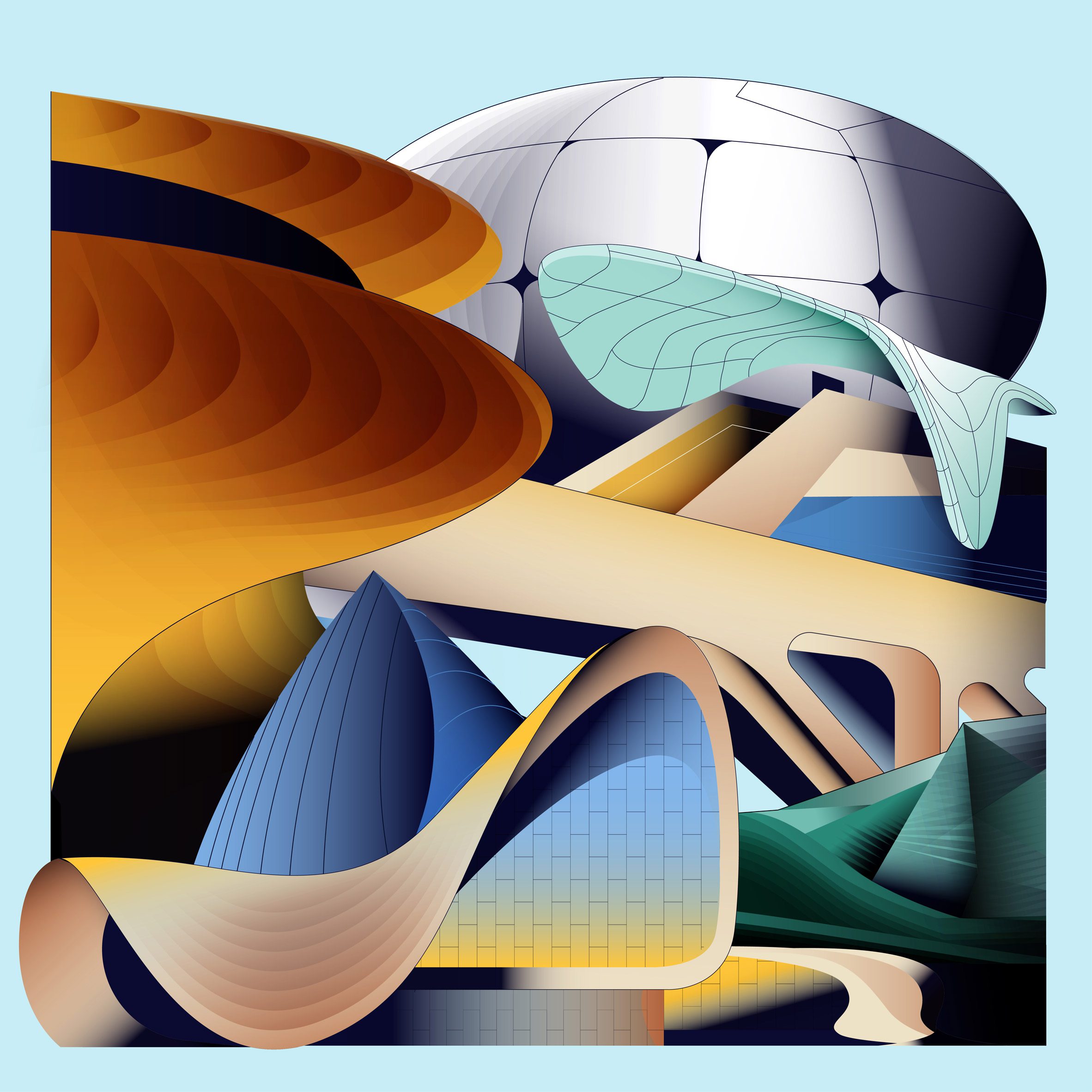
This article is part of our series on parametricism, the theory of architecture developed by Zaha Hadid Architects principal Patrik Schumacher that lays claim to becoming the 21st century's defining style.
The post How parametricism changed architecture but not buildings appeared first on Dezeen.