








Herzog & de Meuron designs own offices in Basel as a "repository of materials"
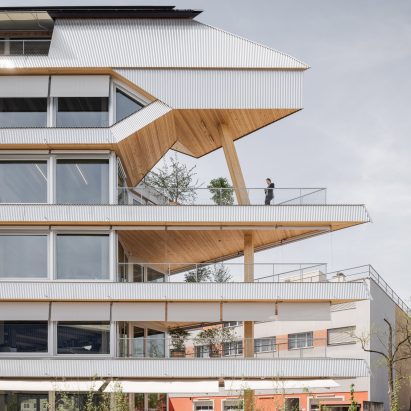
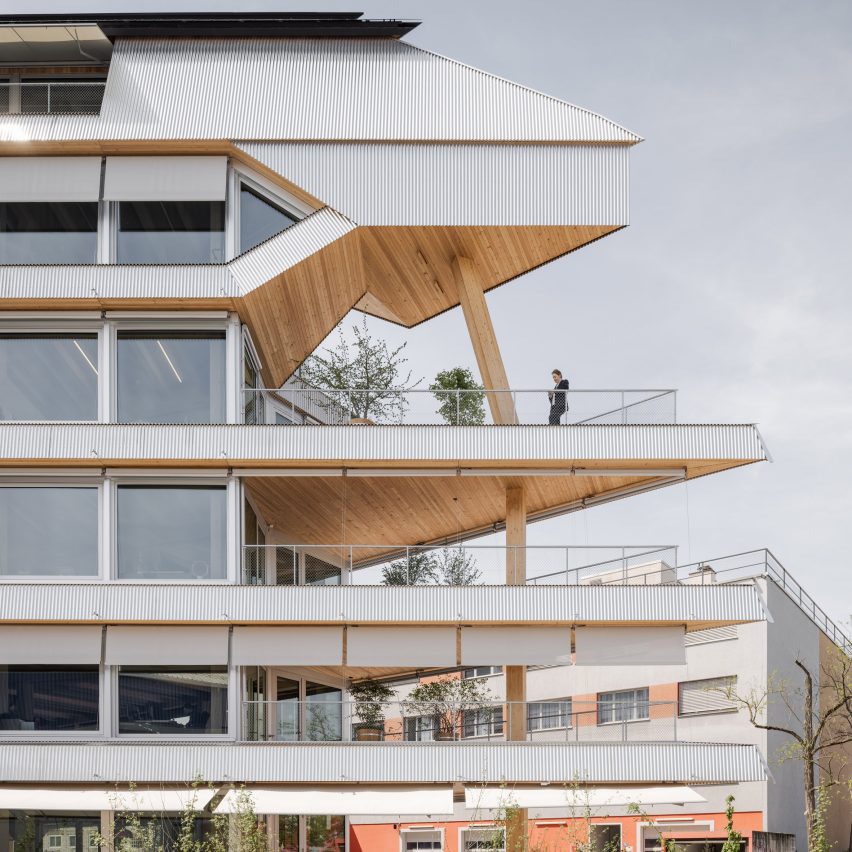
Architecture studio Herzog & de Meuron has completed Mailand-Strasse, a headquarters for its own teams in Basel built using a palette of exposed timber, concrete and metal informed by "logistics and infrastructure".
The 7,259-square-metre building gives Herzog & de Meuron a permanent base in Basel's Dreispitz quarter, a formerly industrial area that has been subject to development over the past two decades as part of the studio's masterplan, Vision Dreispitz.
While the studio's longstanding Rheinschanze Campus continues to operate, Mailand-Strasse provides space for over 300 staff.
According to Herzog & de Meuron, the building was designed to be a low-carbon "vertical campus" that would foster connection between teams via a series of double-height atria, open staircases and terraces.
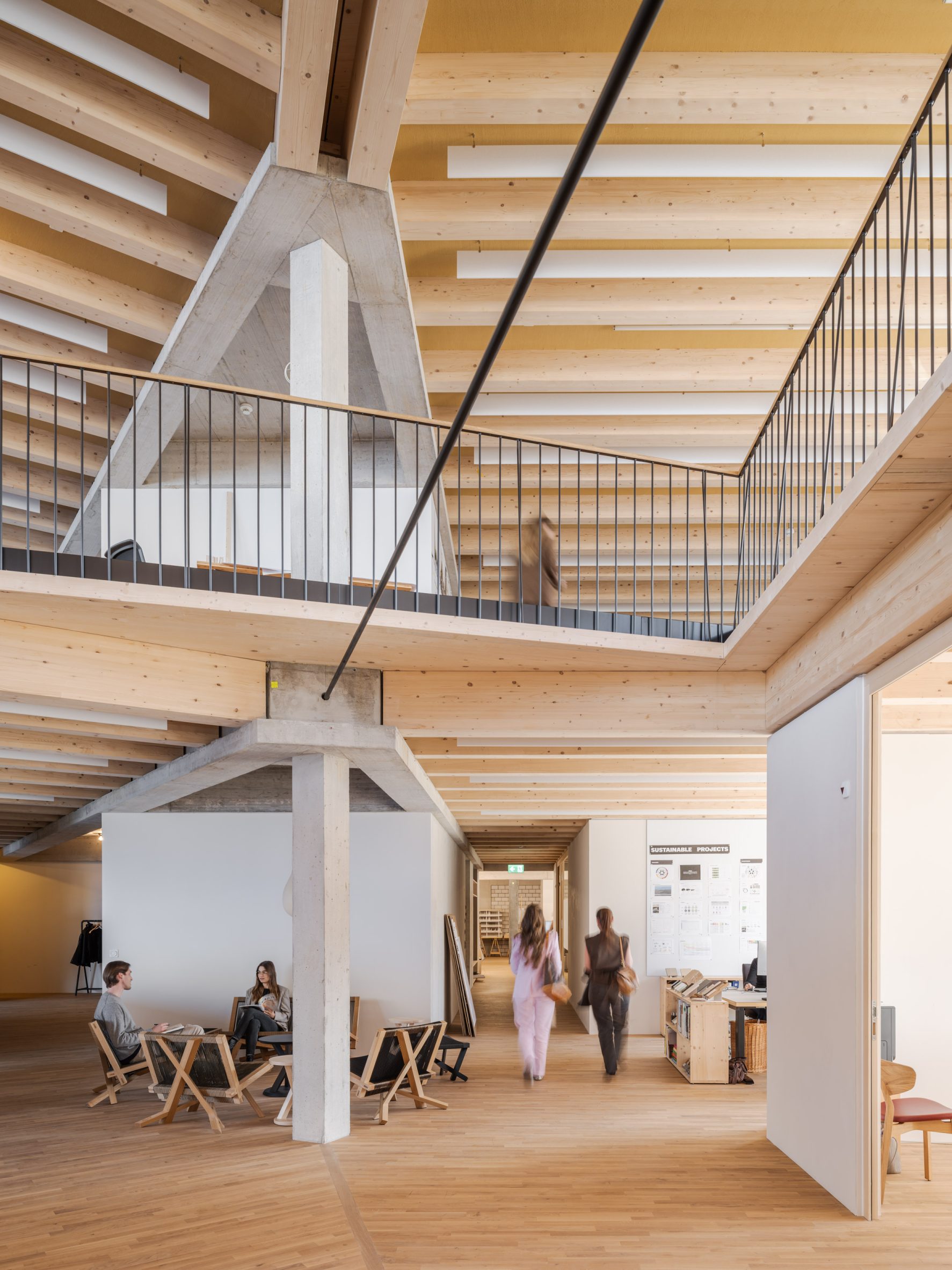
"We were interested in creating a house for us that feels spatially connected across different levels and encourages movement, encounters and interaction between teams," Santiago Espitia Berndt, partner at the studio, told Dezeen.
"Communications, business departments, legal, HR, workshops and architectural teams all coexist across different floors – more like a city that is not strictly subdivided by functions," he added.
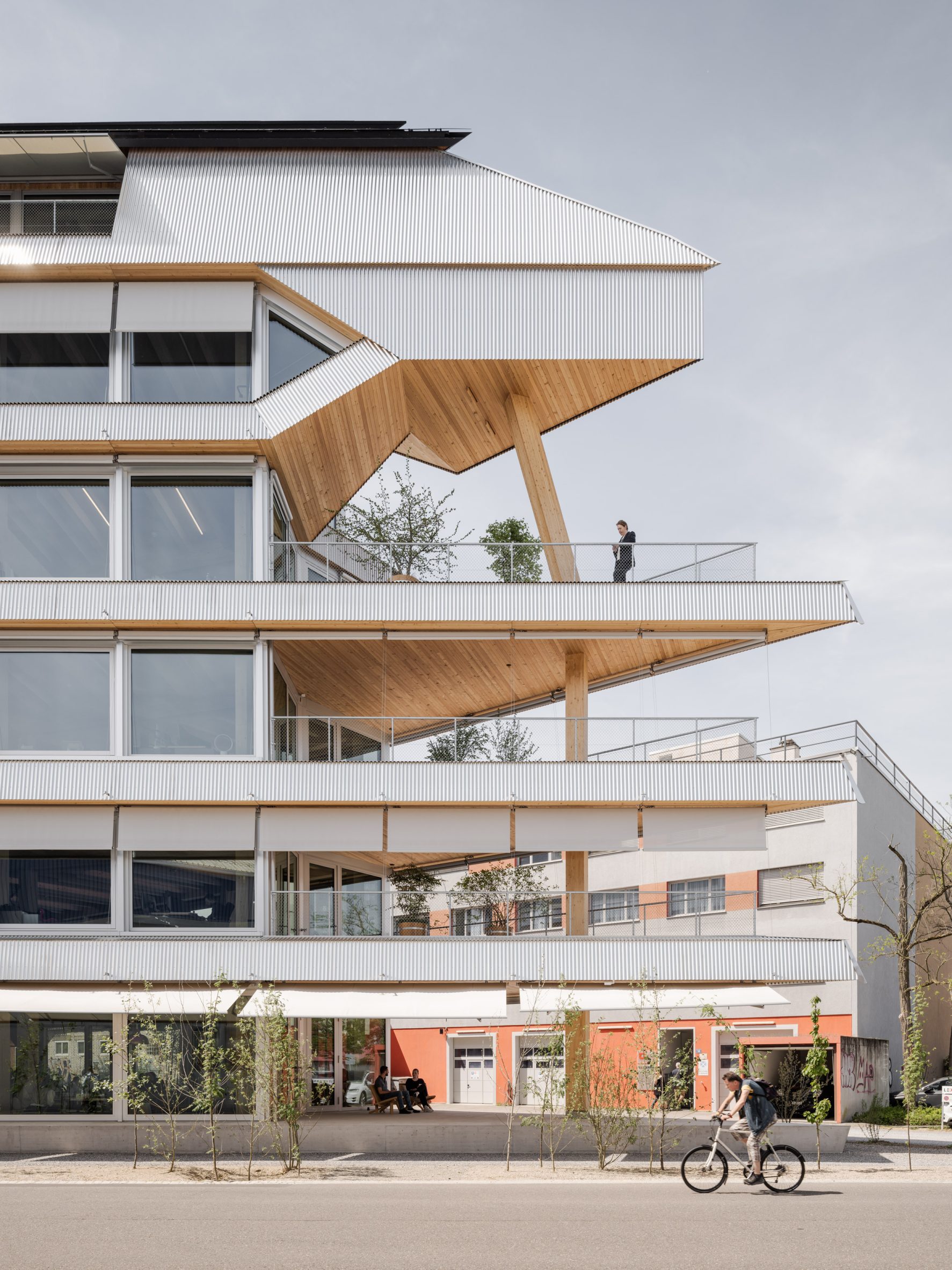
Mailand-Strasse fills the entire footprint of its triangular site, creating a stack of angular balconies to the north where each floor plate narrows to a prow-like point.
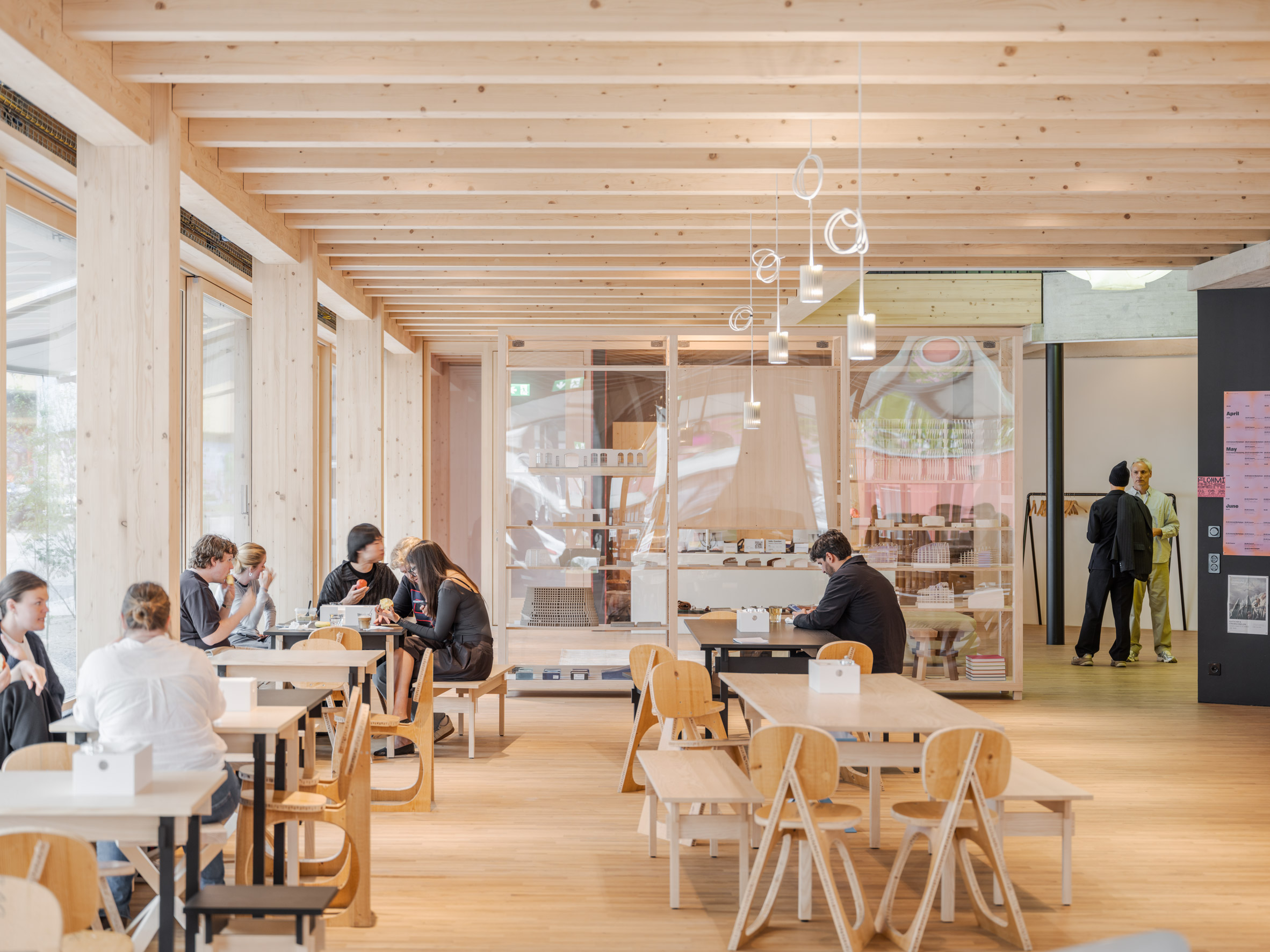
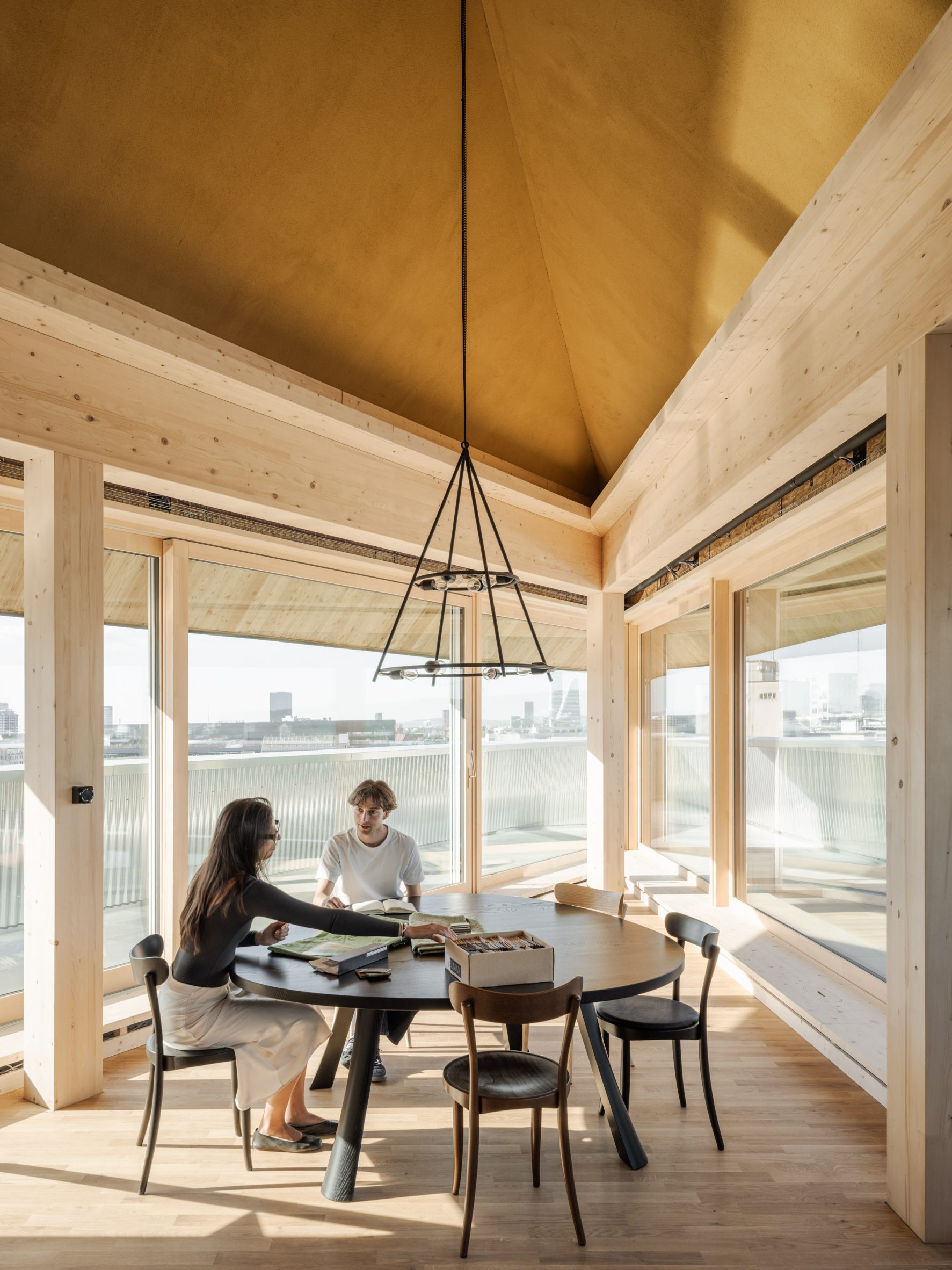
A central staircase connects all seven levels of the building, which includes a cafeteria and materials library and culminates in a boardroom wrapped by a rooftop terrace.
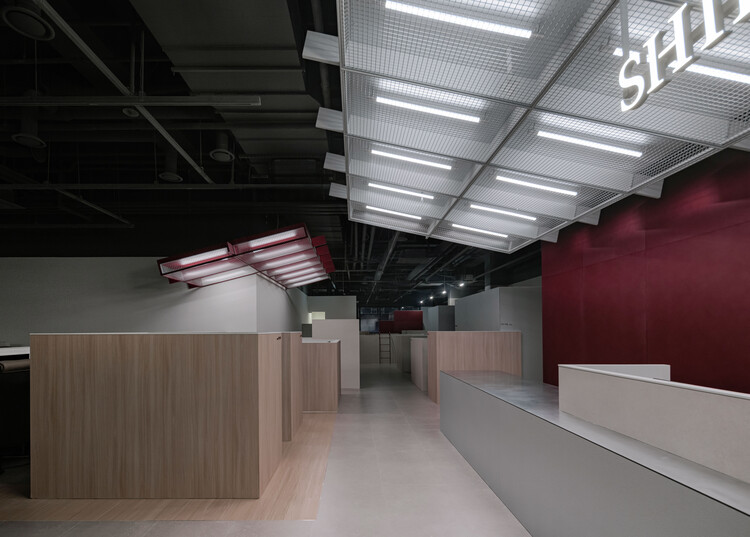
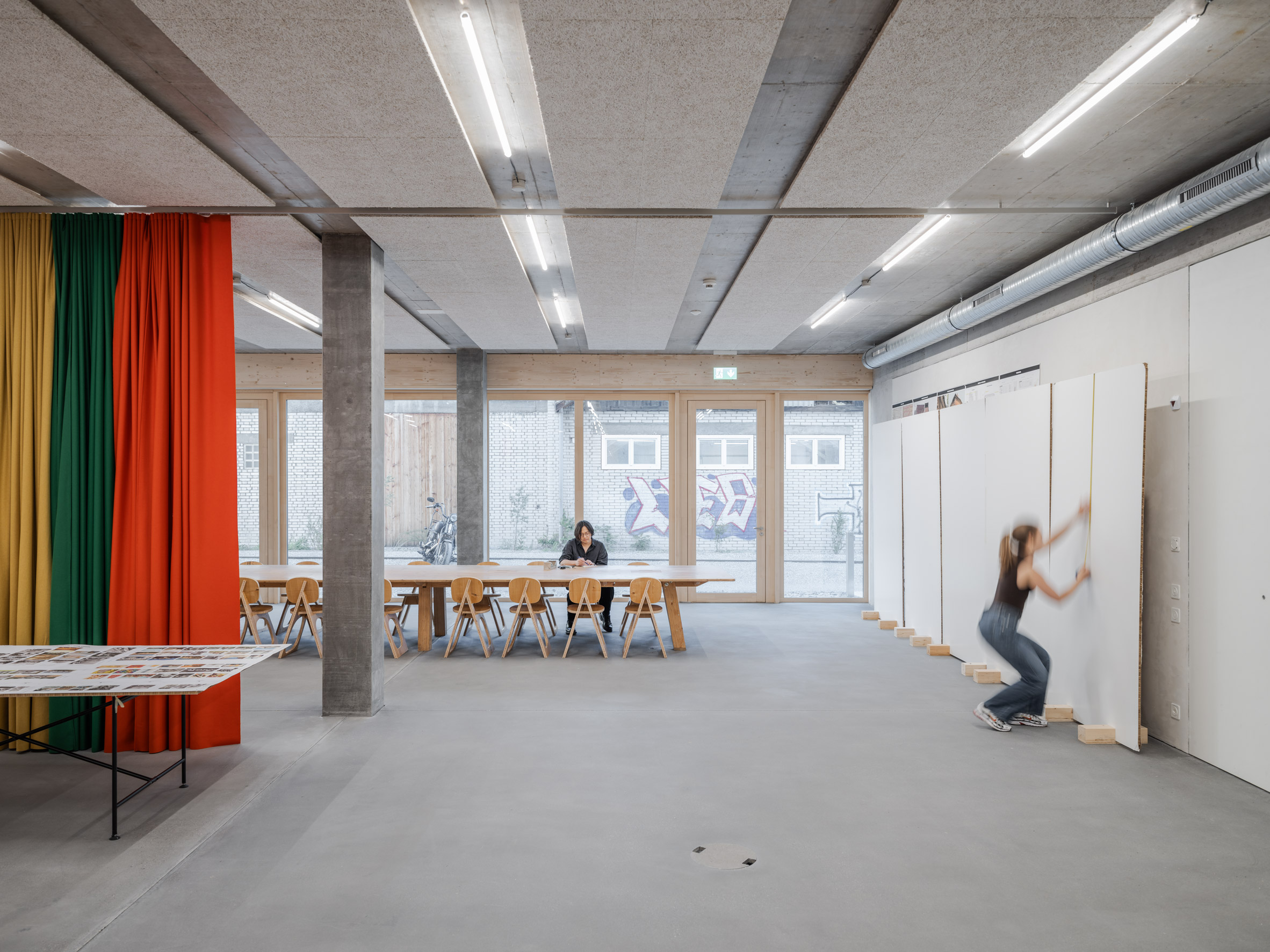
The formerly industrial character of Dreispitz informed what Berndt calls a "direct and pragmatic approach" to spaces and materials, with the structure – a timber frame around a series of concrete cores – and services like ducting and conduits left exposed throughout.
Externally, bands of corrugated metal cladding separate the block's large windows, terrace and balconies, which are shaded by retractable awnings and blinds.
"Many of the defining architectural moments of the project emerged almost naturally from functional, regulatory or constructive requirements rather than from a formal intention or singular architectural gesture," Berndt told Dezeen.
"The aim was to develop a building that, despite its new use as an open working environment, remains grounded in a context strongly defined by logistics and infrastructure."
"This creates a building that almost reads as a repository of materials. The additive logic allows parts of the building to evolve, be modified or potentially even disassembled in the future," he added.
Further north in Basel, Herzog & de Meuron recently completed a series of high-rise laboratories for pharmaceutical company Roche, informed by an historic 1930s office building on the site by Otto R Salvisberg.
It also recently turned a mountain antenna tower into a panoramic viewpoint.
The photography is courtesy of Herzog & de Meuron.
The post Herzog & de Meuron designs own offices in Basel as a "repository of materials" appeared first on Dezeen.