














"Glasgow's burning problem is a symptom of a greater failure"


It's no coincidence that so many of Glasgow's heritage buildings are succumbing to fire, writes conservation architect Matt Loader.
For supposedly the rainiest city in the UK, Glasgow has a pervasive issue with buildings catching fire.
Since I arrived in 2004, it feels the rate of buildings burning down has been accelerating. We lost the category A-listed Elgin Place Church (AKA the Shack) to fire within a month of my arrival, and then Glasgow's most famous building – Charles Rennie Mackintosh's School of Art has burned down not once, but twice.
These fires are not isolated, unfortunate incidents
Now, the Category B-listed Forsyth House on Union Street, adjacent to Glasgow Central Station, is the latest in a series of losses of our heritage.
All of this begs the question: why are so many historic buildings in Glasgow burning down? There has always been an undercurrent of suspicion swirling within our city whenever these fires occur; why is it that heritage buildings have been mysteriously catching fire?
These fires are not isolated, unfortunate incidents. They are the consequences of a system that lacks the teeth to protect buildings before fire, decay or neglect take their toll.
The common thread is not misfortune, it is the absence of meaningful accountability for owners who allow listed buildings to remain unoccupied and deteriorate. It's the absence of adequate policy that compels action before catastrophe strikes.
There is a heady concoction of Glasgow-specific problems that means we experience fires and collapse more than other cities. Our Victorian architecture is the legacy of immense wealth once generated by trading and shipbuilding, but the closure of the shipyards has resulted in a city looking to establish its purpose.
We don't have a cohesive vision of what Glasgow is. Without a clear direction, much of our built heritage has fallen into ownership of absent organisations and individuals, often without the skills, awareness of their perilous condition, or funds to renew them.
The fire has resulted in the need to spend significant sums
This, combined with the limited protective policies and a lack of investment in new industries, is a failure to secure the city's future and unlock the incredible potential these historic buildings have.
There are fundamental issues we have to face. In the aftermath of the Forsyth House fire, Glasgow City Council has rightly pointed out that it is the building owner's responsibility to maintain their building.
But who is enforcing that? And what if those owners are absent, or encased within legal complexity, ultimately meaning there is no obvious person to pursue?
We need a cohesive city centre vision (one that extends beyond the Golden Z) and incentives for people and institutions who want to bring these historic buildings back to life before the economics of doing so become unviable. Having tried to engage the council on the wider socio-economic plans for Union Street a couple of years ago only to be told "we don't really have one", it's hard not to feel like the horse has already bolted.
It is heartening to hear that a working group is being formed in the aftermath of this fire, but this is reactive. The Scottish Government has just pledged a £10 million recovery fund, with a further £1 million for the local council to assist in demolition.
The fire has resulted in the need to spend significant sums to take down the very architecture that gives Glasgow its character. What a loss this is – an ornate, historic architecture, a place that sustains people's livelihoods and the roots to our city's identity.
We must be better custodians of our beautiful and widely-lauded architecture
These lost buildings could have been adapted and saved, not to mention saving huge amounts of carbon and building material from landfill. Imagine what could be done if £1 million was pledged not to the demolition of, but to the procurement and preservation of each failing historic building across Glasgow before it happened?
Admittedly the city council would need a bigger budget or access to funds, and therein lies a big piece of the puzzle.
There is no one answer. This is a complex issue, but fundamentally we need better legislation to allow for the council to intervene when our heritage assets are at risk. Glasgow's burning problem is a symptom of a greater failure of those engaged with the built fabric of the city.
We must be better custodians of our beautiful and widely-lauded architecture. We must consider the economic benefits that come from conserving these buildings, and we need to protect the social and cultural memories they hold.
Historic buildings, not just in Glasgow but across the UK, are increasingly in need of restoration and repair for two fundamental reasons: firstly, because adapting the buildings we already have is essential to address the climate crisis (80 per cent of the buildings which have to achieve net zero already exist); and secondly, because we must preserve the social value imbued within these buildings to continue the rich and unique legacies of our historic towns and cities.
Once the buildings which truly define our city are gone, they are gone
Historic public, multi-use and cultural buildings in particular provide a very real physical connection to an architectural heritage worth conserving. Forsyth House and its infamous neighbour, Egyptian Halls, are examples of listed buildings that with a joined-up approach to operational viability and considered policy could be making a huge contribution to our local economy.
Instead, one is a burned, blistered scar on one of our busiest thoroughfares, and the other stands empty behind masses of scaffolding (and has done so for more than 30 years).
The buildings lost to fire are not just buildings. They are homes and workplaces, places to socialise and to pray. They are part of our cultural memory. Glasgow is a Victorian masterpiece in the north of the UK, and once the buildings which truly define our city are gone, they are gone.
No amount of funding, however generous, can restore the cultural loss fire erases. What we can control is whether we allow the next one to fall.
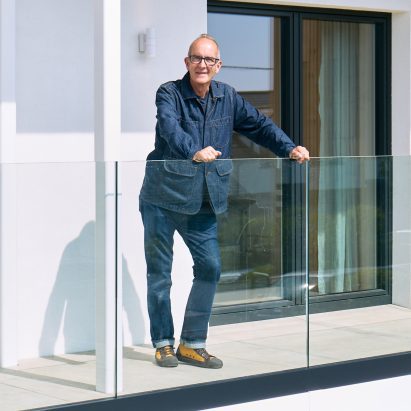
Matt Loader is a director at Glasgow-based architecture studio Loader Monteith. Its projects include the restoration of one of Britain's most significant modernist houses, High Sunderland, after fire damage in 2017.
The photo is by Kunal Tewari Photography via Shutterstock.
Dezeen In Depth
If you enjoy reading Dezeen's interviews, opinions and features, subscribe to Dezeen In Depth. Sent on the last Friday of each month, this newsletter provides a single place to read about the design and architecture stories behind the headlines.
The post "Glasgow's burning problem is a symptom of a greater failure" appeared first on Dezeen.