








"Even donkeys like" the Casa das Histórias museum says Eduardo Souto de Moura


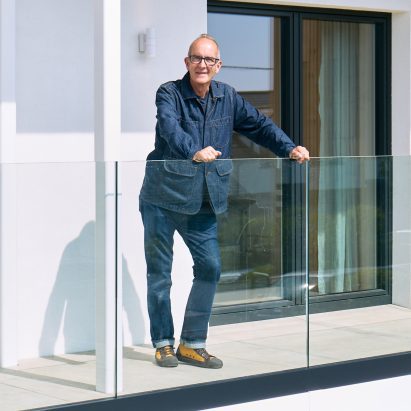
Architect Eduardo Souto de Moura describes how a letter from artist Paula Rego shaped the design of the Casa das Histórias museum in Cascais, Portugal, in the final instalment of a video series produced by Dezeen.
Souto de Moura said the project was driven by a concise and highly specific brief from Rego, who asked him to design "not a museum, but a house."

He added that the clarity of this request set the direction for the building, with the programme organised around the varying scale of her artworks.
Rather than imposing a uniform gallery layout, the Pritzker Architecture Prize-winning architect designed a sequence of rooms tailored to different formats, ranging from small lithographs to large-scale paintings.

At the heart of the building, he inserted an 11-metre-high gallery for temporary exhibitions, conceived to accommodate unpredictable contemporary works.
"You never know what will appear," he said in the video. "It could be trees or cars."
Located near Lisbon in Cascais, Portugal, the project was further defined by its wooded site, which once housed tennis courts for an aristocratic club frequented by the Portuguese royal family.

Souto de Moura chose to build around its dense cluster of trees, but faced the challenge of ensuring the building remained visible.
His solution was to introduce two striking pyramidal towers that rise above the treeline, giving the structure a distinct presence from the street.
The building's deep red concrete was chosen to contrast with the surrounding greenery and reference the work of Portuguese architect Raul Lino.

"I didn't want a building that hides with shame," Souto de Moura explained.
He added that the dark red tone was intended to weather over time, developing a richer patina through sun bleaching. Unlike painted surfaces, the pigment is integral to the concrete itself, ensuring the colour remains consistent even if the material is chipped or scraped.

Souto de Moura also drew on Lino's architectural language in subtler ways, incorporating diagonal corner elements, integrated seating and textured surfaces inspired by traditional tile patterns.
For the pyramids, the architect used wooden formwork arranged to replicate the herringbone motifs found in Lino's buildings, embedding historical references directly into the fabric of the structure.
He also emphasised the importance of visual connections to the surrounding landscape, introducing windows and benches that allow visitors to compare the artworks with the natural world outside.

Despite its critical acclaim, Souto de Moura expressed ambivalence about the building's universal praise.
"It is a mystery," he said. "I never heard a negative criticism of the building. Even donkeys like it."
"Which is bad, because with criticism we move forward," Souto de Moura added.
The video is the third in an exclusive series produced by Dezeen exploring Souto de Moura's work and design philosophy.
Previous instalments explored the "accidental beginnings" of his career and how he designed the Braga Municipal Stadium despite having no prior knowledge of football or stadiums.
The photography is by Luís Ferreira Alves.
The post "Even donkeys like" the Casa das Histórias museum says Eduardo Souto de Moura appeared first on Dezeen.