











Unknown Architects sinks timber cabin into dune-filled Dutch island
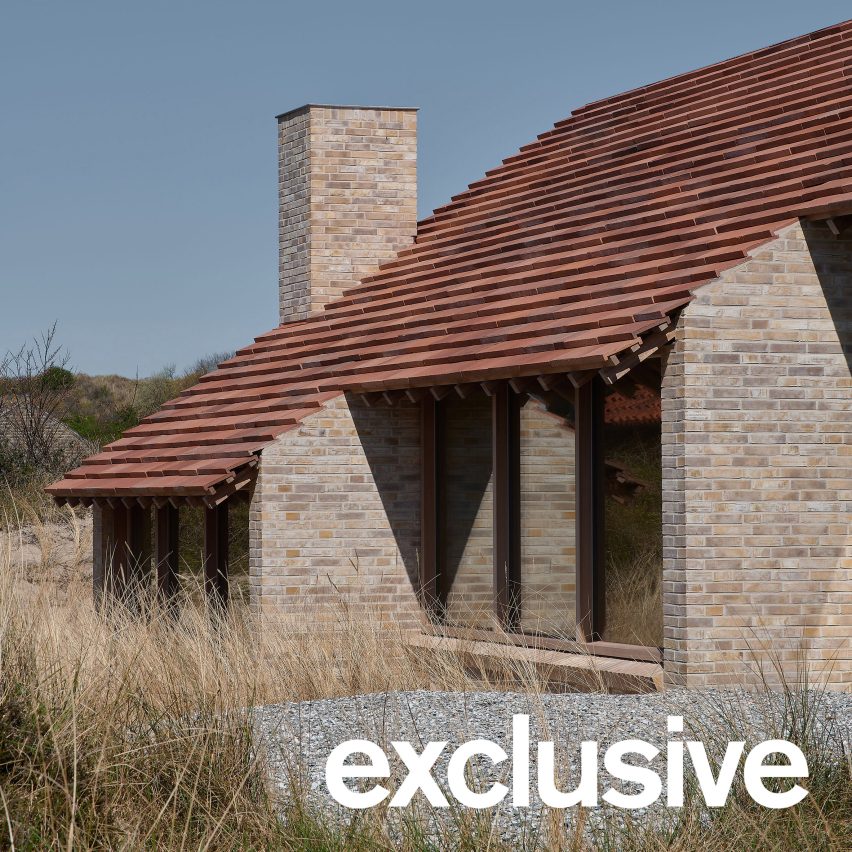
Dutch studio Unknown Architects has completed House on a Dune, a holiday cabin on the island of Terschelling with lofty, timber-lined interiors that frame panoramic views of the surrounding sand plains and scrubland.
The 180-square-metre holiday home is located in Midsland an Zee, a dune-backed village in Terschelling that is a popular spot for holiday homes, many of which date back to the 1960s.
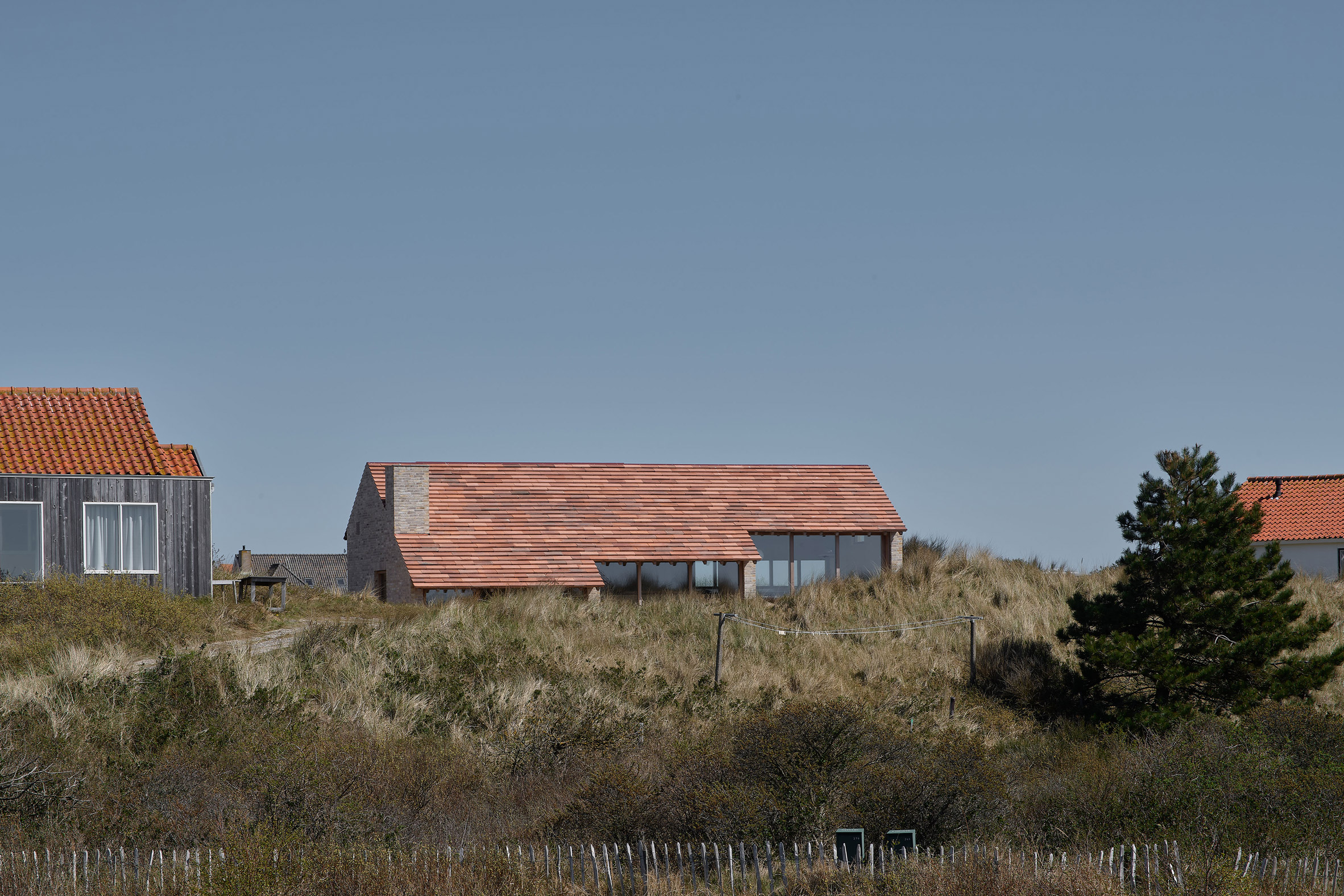
Unknown Architects drew on the form of these single-storey, gabled cabins for House on a Dune, expanding their volume by digging out a basement level and using a more contemporary palette of pale brick and cross-laminated timber (CLT).
It is the second holiday home on the island by the Amsterdam-based studio, which previously completed the nearby House in the Dunes.
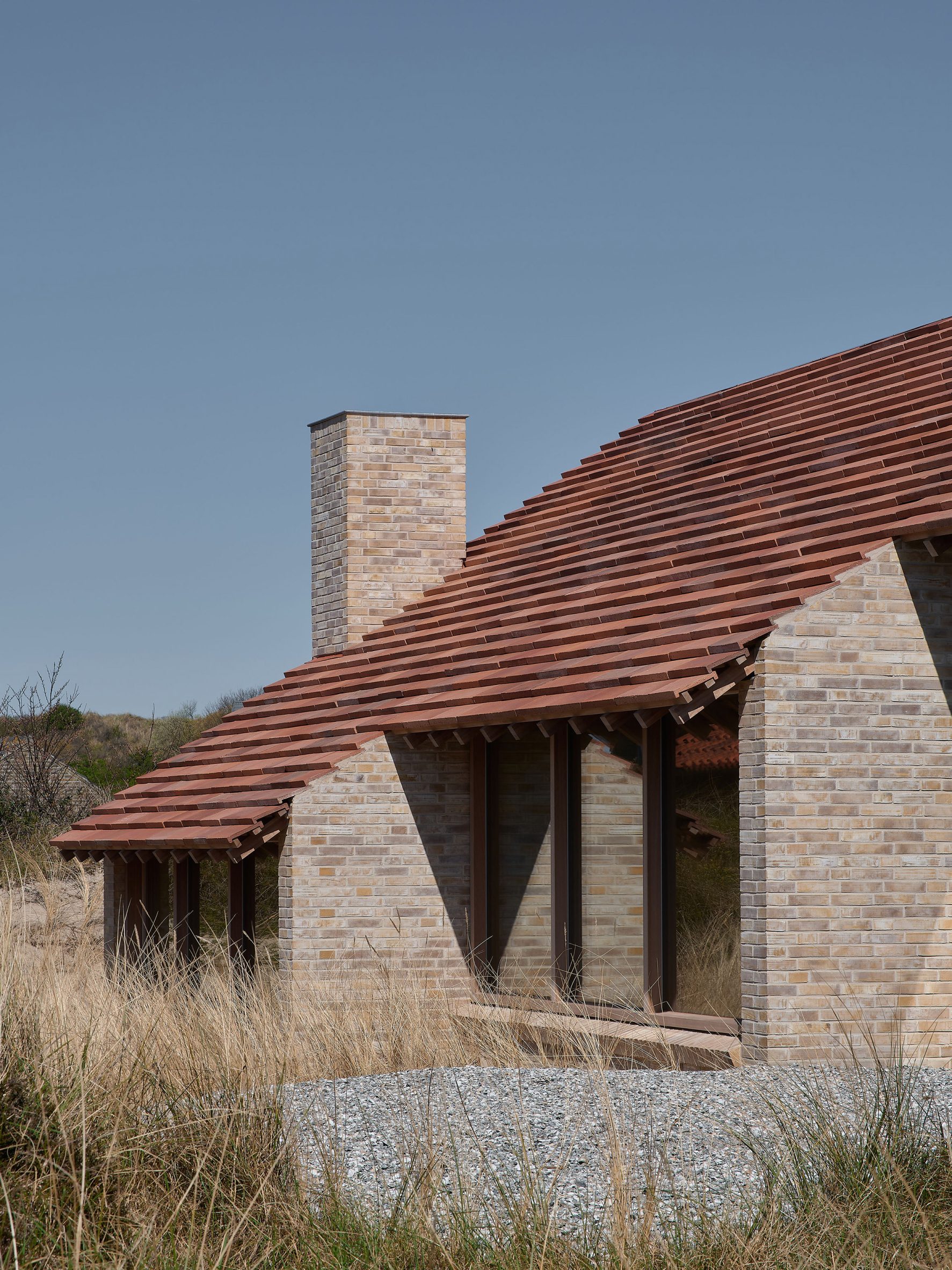
"Most important was to make the building fit within its context," founding partner Keimpke Zigterman told Dezeen.
"This means that it architecturally tries to relate to the existing original holiday homes from the 1960s – simple one-story buildings with a gabled roof, brickwork and red roof tiles," he added.
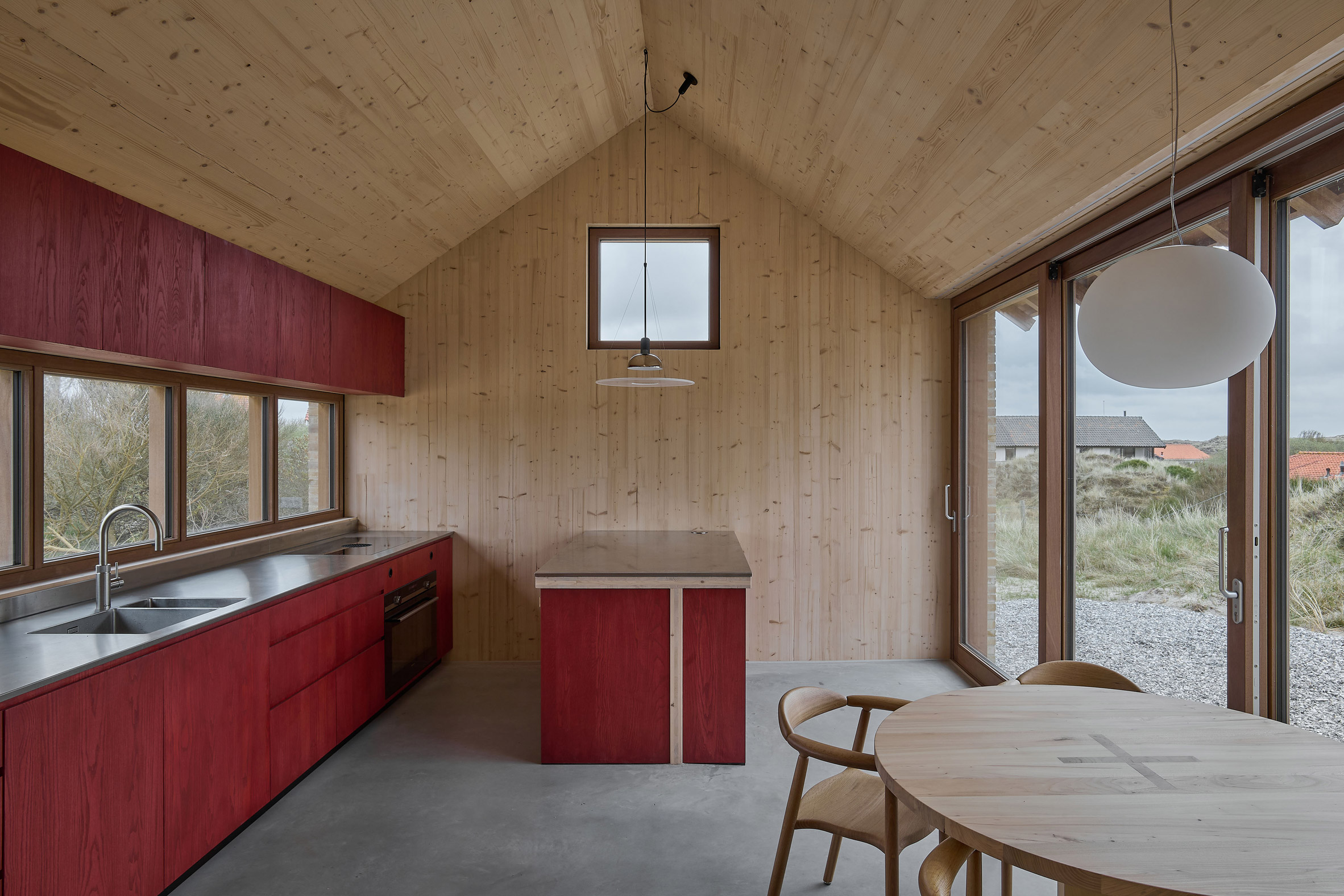
In order to create a sense of scale in the home while maintaining a low profile, a basement level was dug out to contain House on a Dune's bedrooms.
This allowed the ground floor of the cabin to be entirely given over to the living, kitchen and dining areas, which sit beneath sloping, CLT-lined ceilings punctured with skylights.
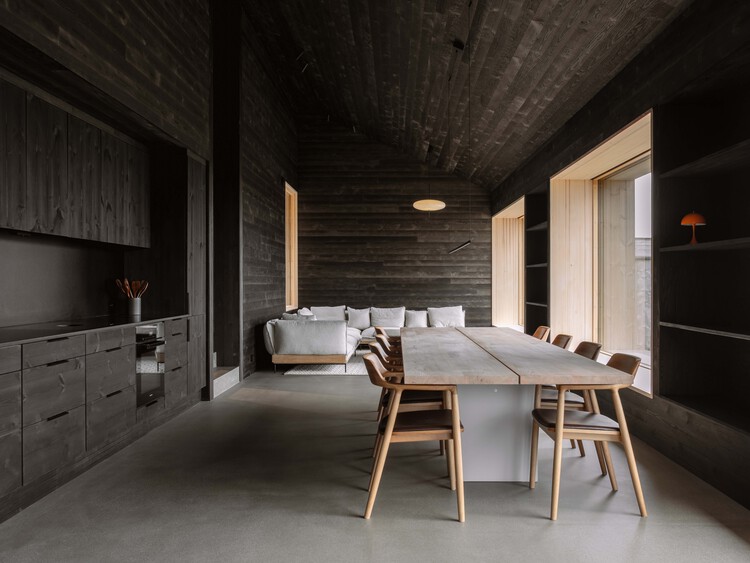
This exposed timber defines the interior of House on a Dune, alongside concrete floors and contrasting, bright red-stained plywood used for the kitchen units and counter.
Each of the ground floor spaces flows into one another, with a series of partition walls, changes in floor level and strategically placed windows controlling the views and atmospheres in each.
Large sliding doors open the dining and kitchen area to the outside, sheltered from the sun by the deep eaves of the timber roof.
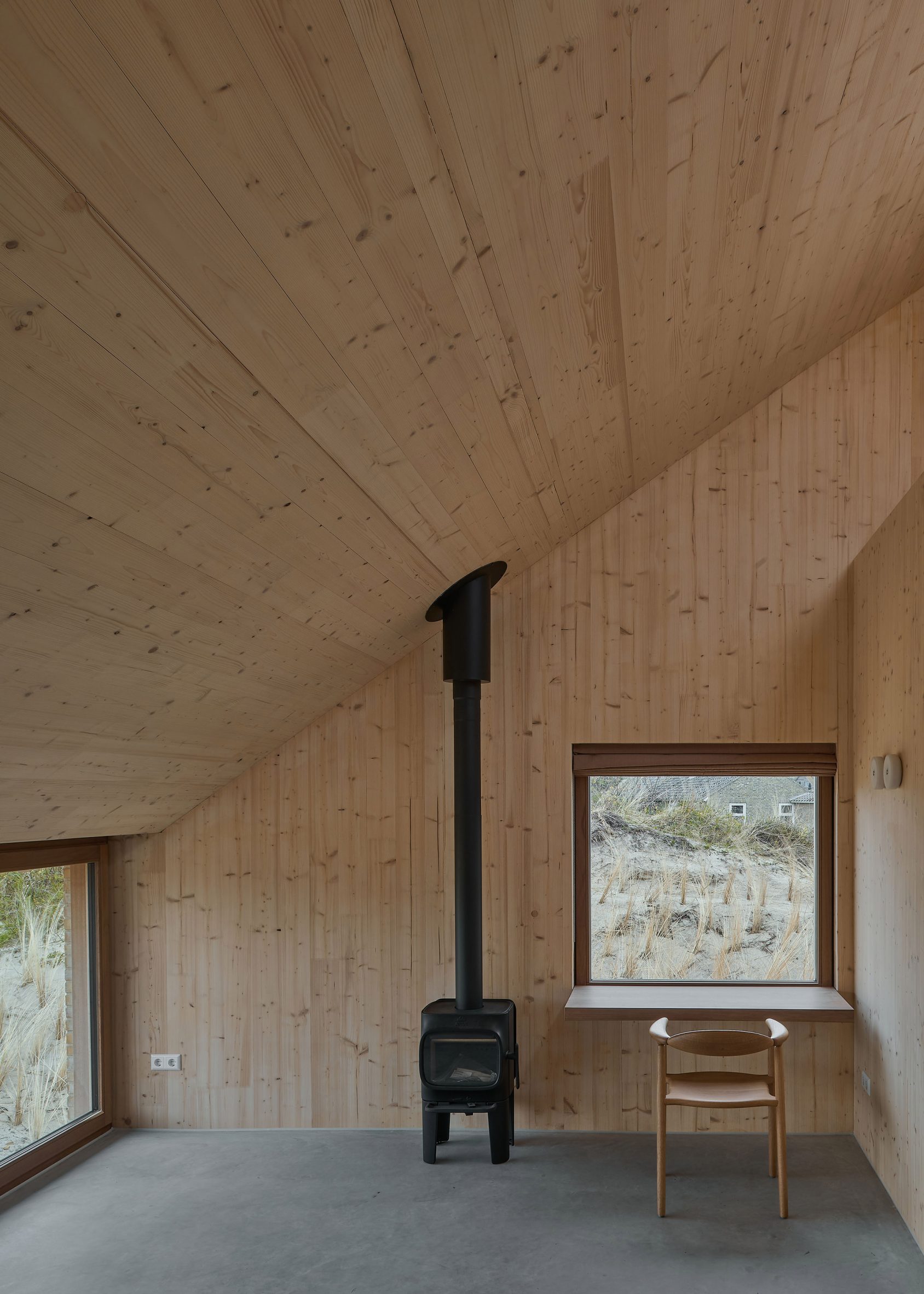
"The kitchen, where people spend time standing while cooking, has the highest windows and sliding doors focusing on the sky, dunes and the forest further away," explained Zigterman.
"The dining room has a slightly lower window where people spend most of their time sitting at the dining table. It offers a nice view to the dune landscape closer by."
"Then in the last room, the sitting room, the window is low, focusing on the view of people lounging on the sofa," he added.
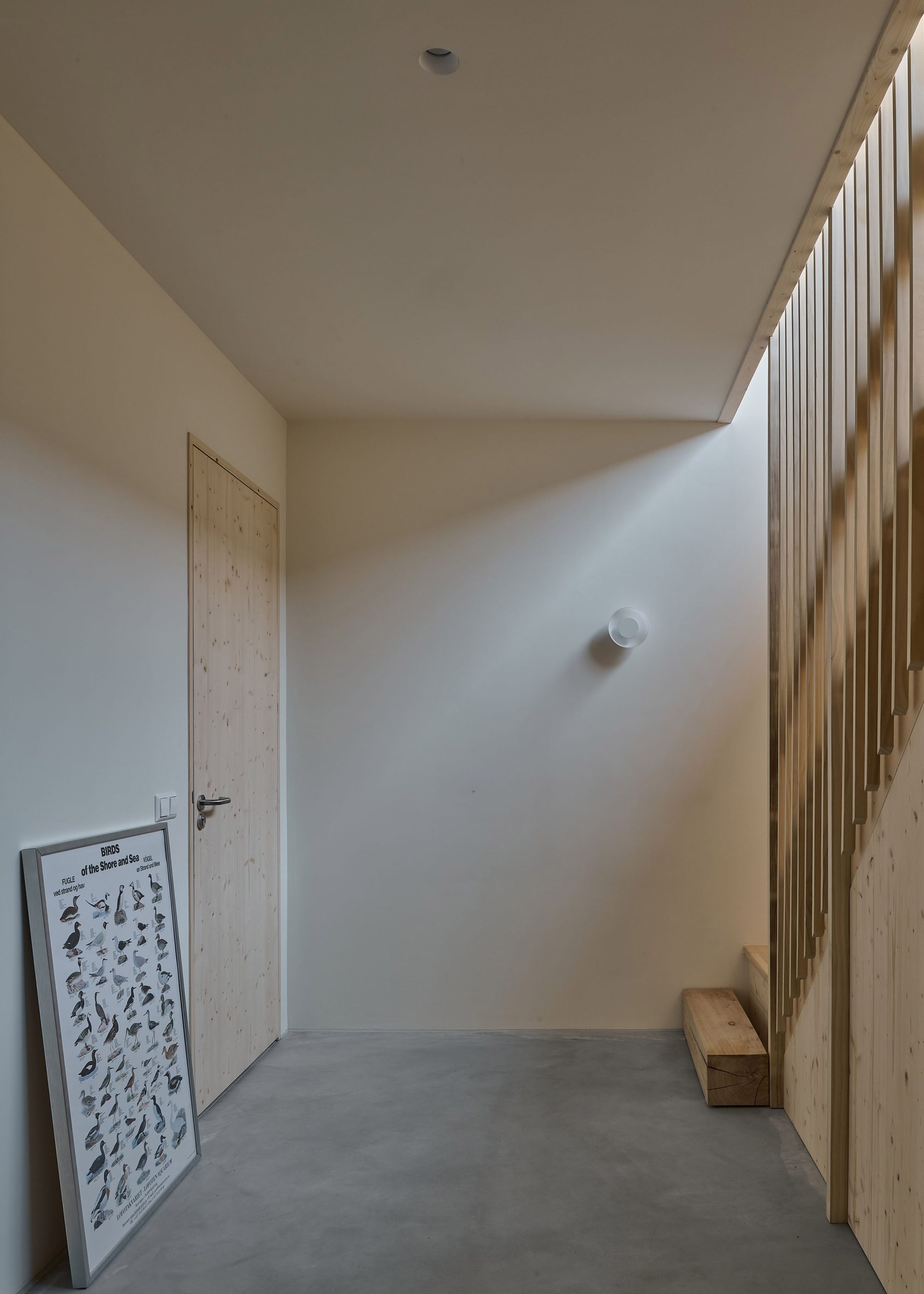
In the basement, the exposed CLT walls of the ground floor are swapped for plain, white-painted surfaces, and an existing 'dune dip' has been expanded and supported by a brick retaining wall to provide each bedroom with natural light.
Other homes that sit embedded in sand dunes include another cabin in Terschelling by Marc Koehler Architects with an angled form to deflect sea winds and a home on the East Sussex coast by RX Architects finished with pink pigmented concrete.
The photography is by Max Hart Nibbrig.
The post Unknown Architects sinks timber cabin into dune-filled Dutch island appeared first on Dezeen.