






Public Architecture in the Baltics: Small Nations, Strategic Civic Design
Architects: Want to have your project featured? Showcase your work by uploading projects to Architizer and sign up for our inspirational newsletters.
The Baltic States are often discussed in geopolitical terms, occasionally in economic ones, but rarely as architectural protagonists. Estonia, Latvia and Lithuania tend to sit in the shadow of their Nordic neighbors, despite producing a body of contemporary work that is confident, precise and distinctly regional.
In the decades following renewed independence, public buildings have taken on particular weight. Museums, concert halls, municipal offices, plazas and even modest infrastructural projects have become ways of expressing identity and long-term direction. Rather than leaning on spectacle, many of these works rely on material clarity, landscape awareness and a measured dialogue with history.
From timber pavilions in small island towns to copper-clad concert halls and carefully inserted museum spaces within centuries-old walls, this collection looks at how the Baltics are shaping their public realm today and why it deserves far more attention.
Kärdla City Pavilion
By Olsson Lyckefors Arkitektur, Estonia
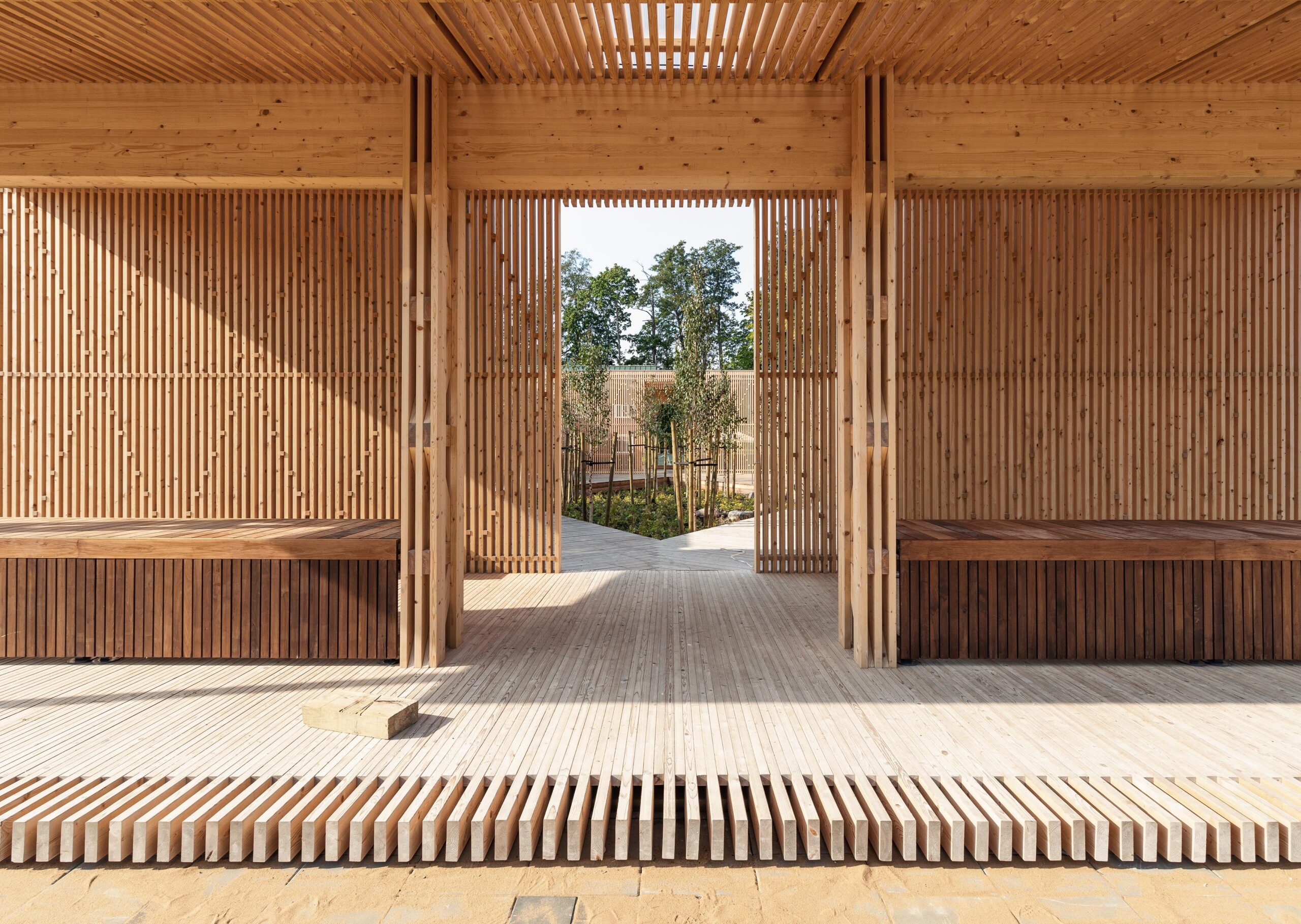
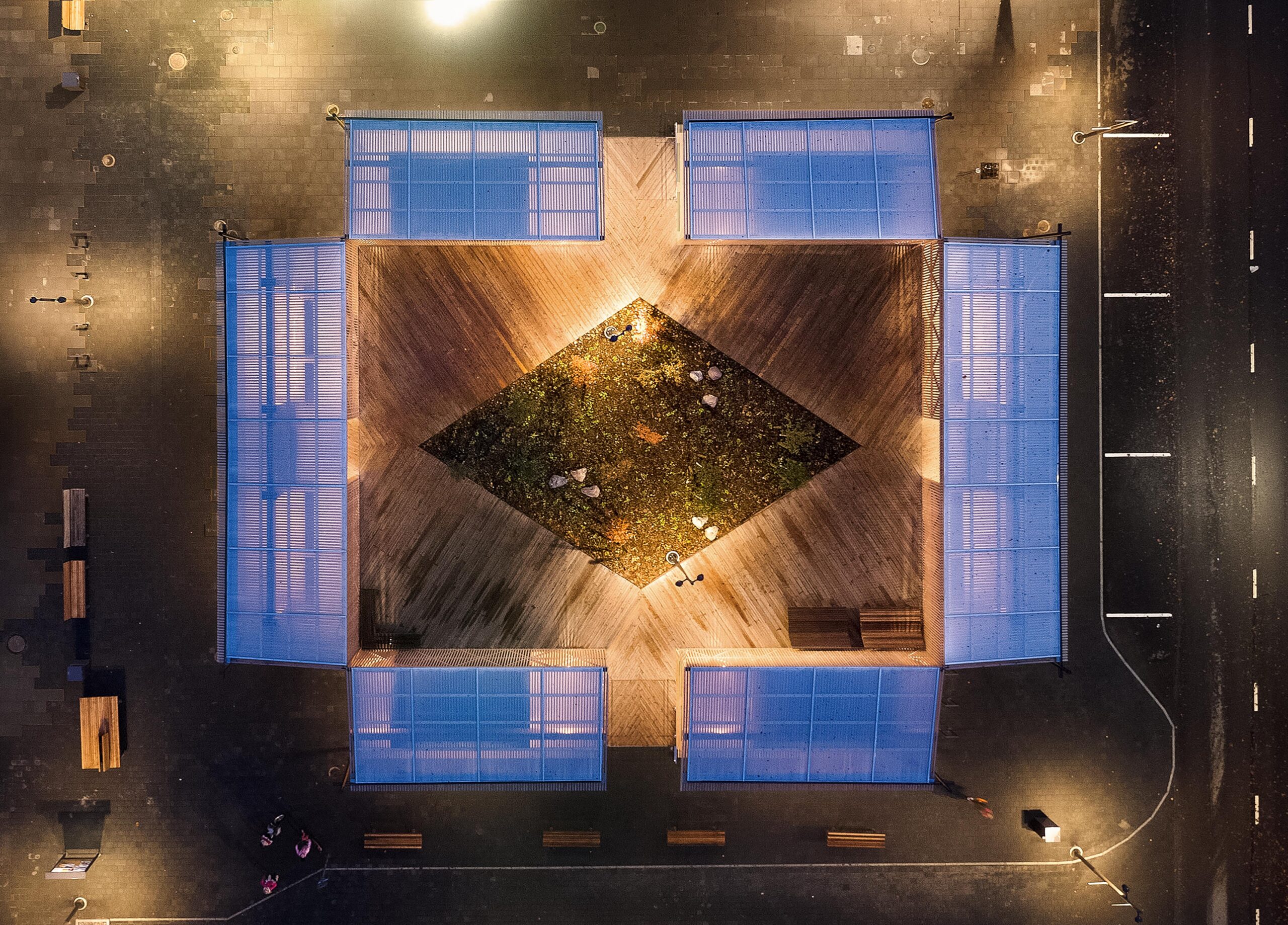 Every small town needs a room of its own. In Kärdla, that room now stands at the center of the square. Built to mark Estonia’s centenary, the pavilion gathers daily life that once felt dispersed. The concept draws on Hortus Conclusus, the enclosed garden. Timber walls define a sheltered courtyard within the open townscape.
The interior is calm and largely open, while activity lines the edges. Market stalls, a small stage and an info center face outward toward the square. Slender wooden slats filter light, with spacers referencing patterns from Kärdla’s textile past. A glass roof admits sky and weather. Over time, the timber will weather, and the garden will grow denser, giving the square a steady civic presence.
Biotoop Cultural Center
By McKinley Studios, Tartu, Estonia
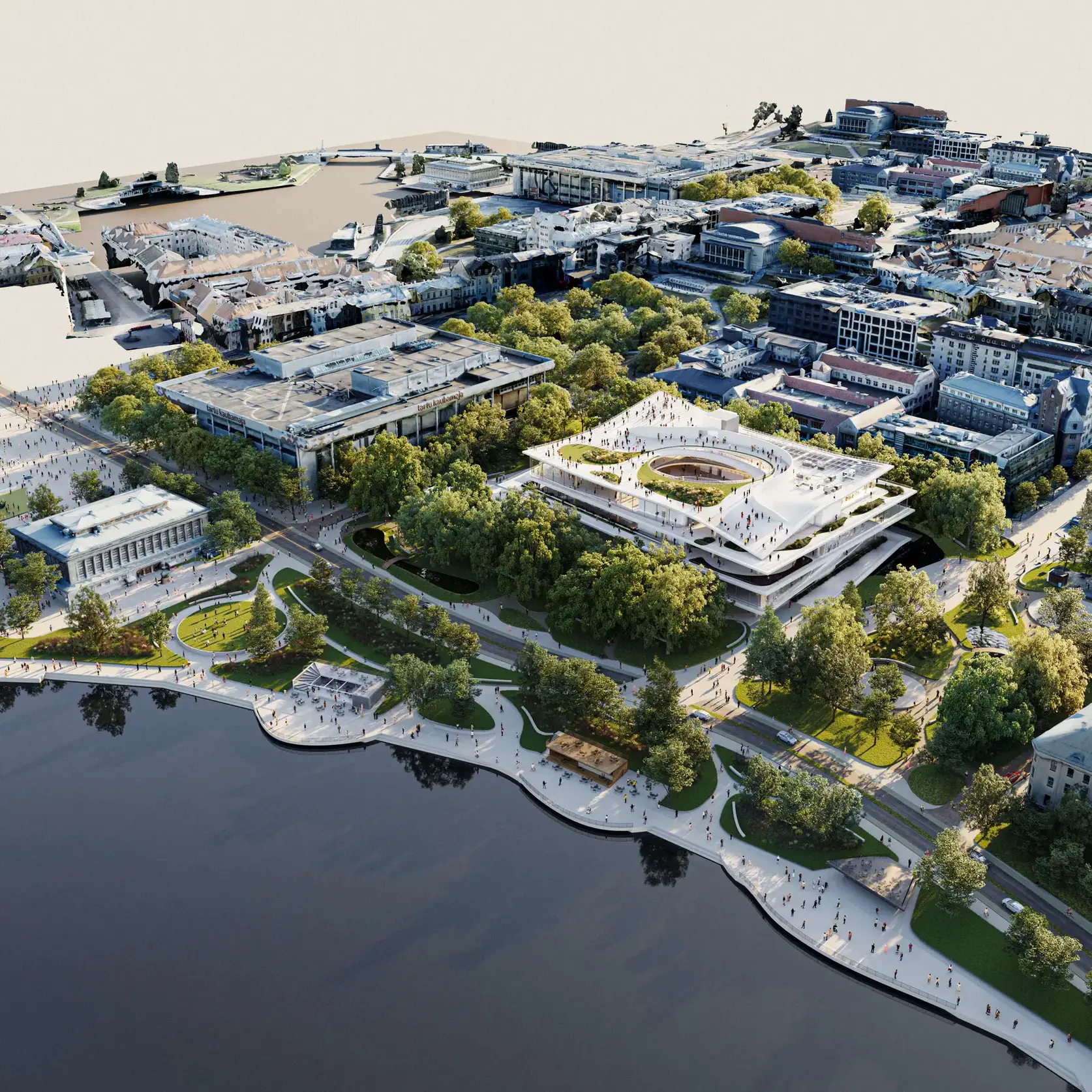
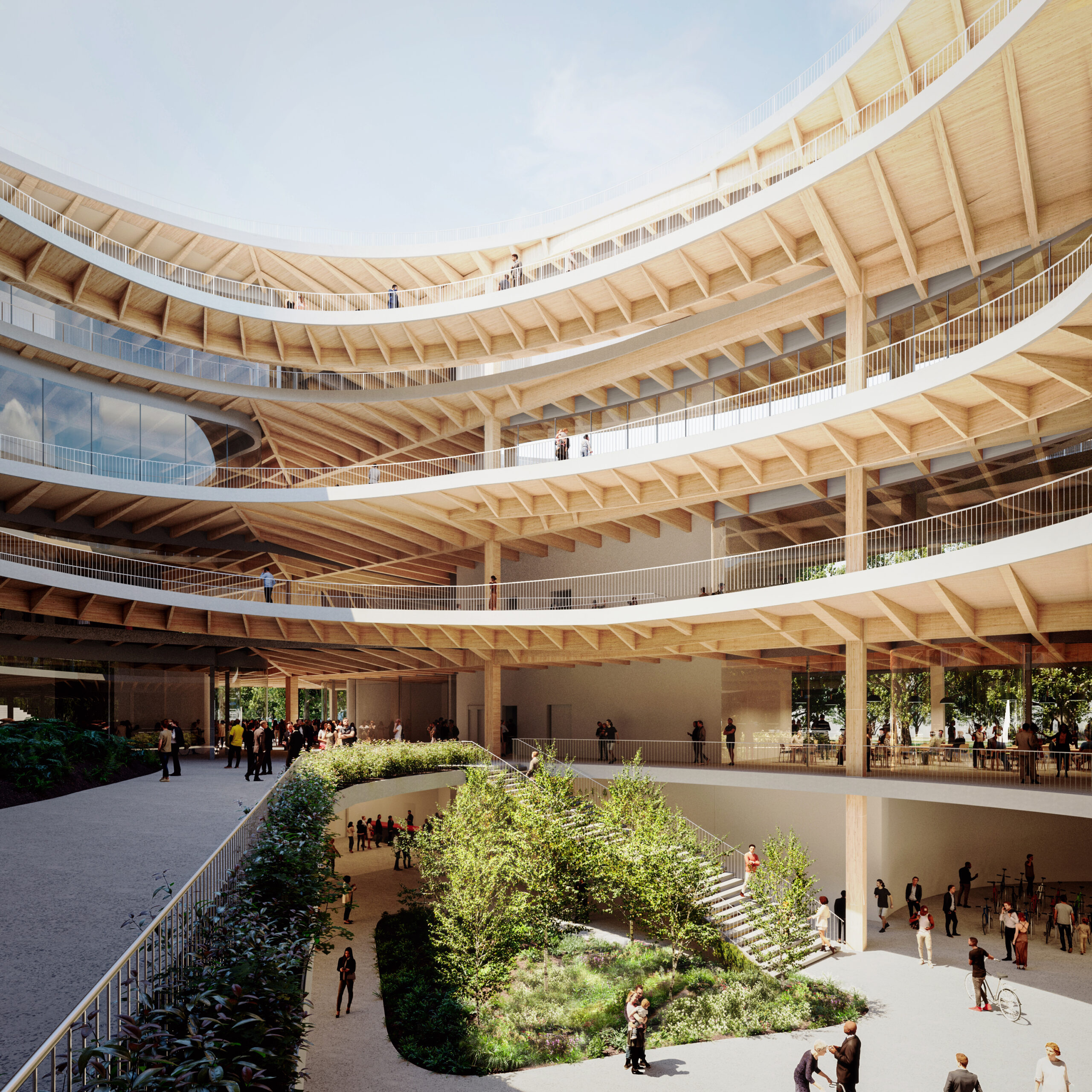 Proposed for a riverside site along the Emajõgi in Tartu, Biotoop Cultural Centre imagines a compact cultural building embedded within parkland. The concept limits its footprint so that the surrounding landscape remains dominant, organizing the program across six levels, with two placed below ground to reduce visual impact.
Each level is conceived as a spatial interpretation of one of Estonia’s five national park landscapes. Undulating floor plates circle an open courtyard and connect through a continuous ramp, guiding visitors upward through museum spaces, a library, a cinema, and restaurants. A rooftop park would frame views over the city, completing a gradual ascent from river to skyline.
Rural Municipality Building in Saue
By molumba, Saue, Estonia
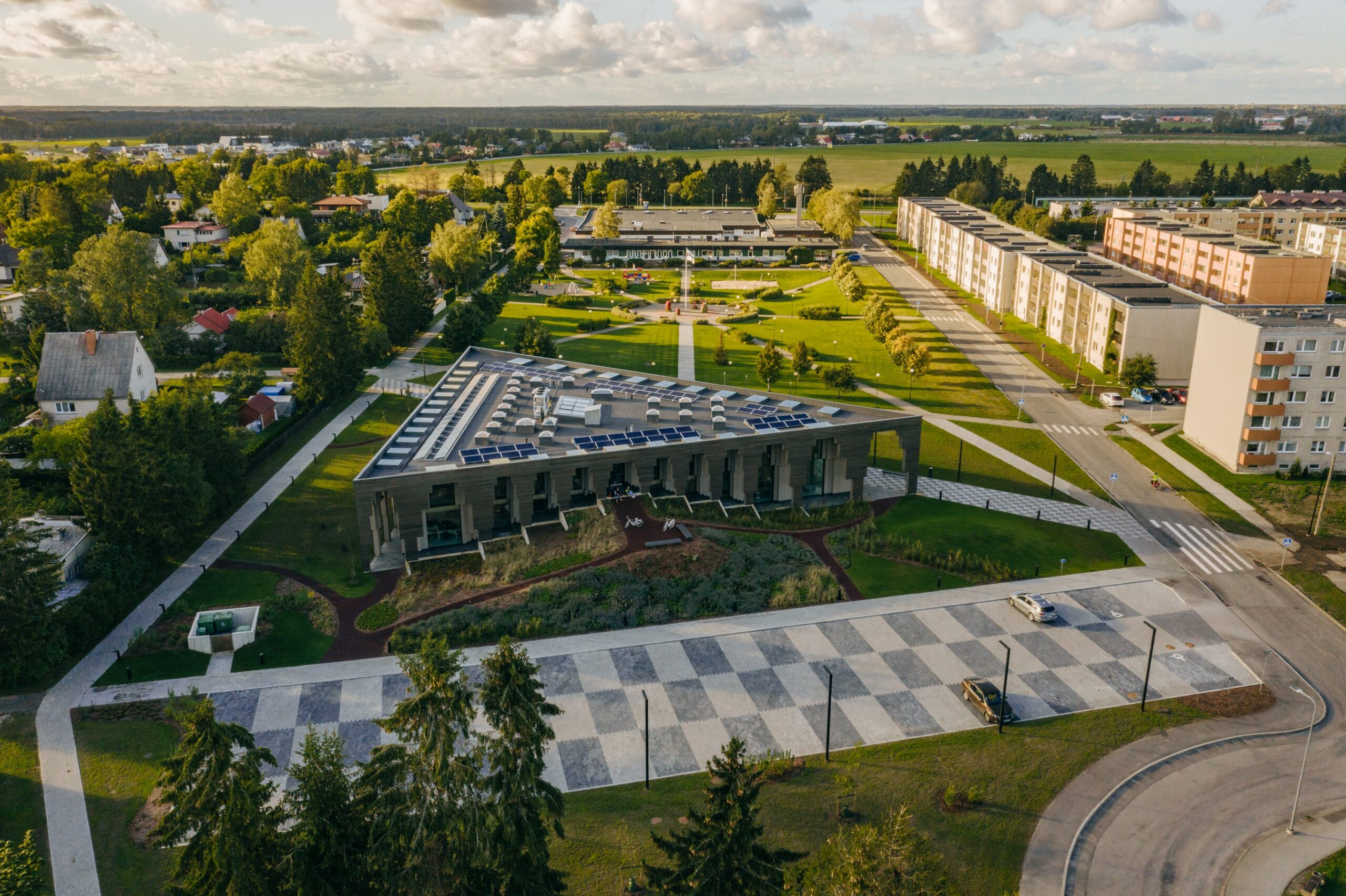
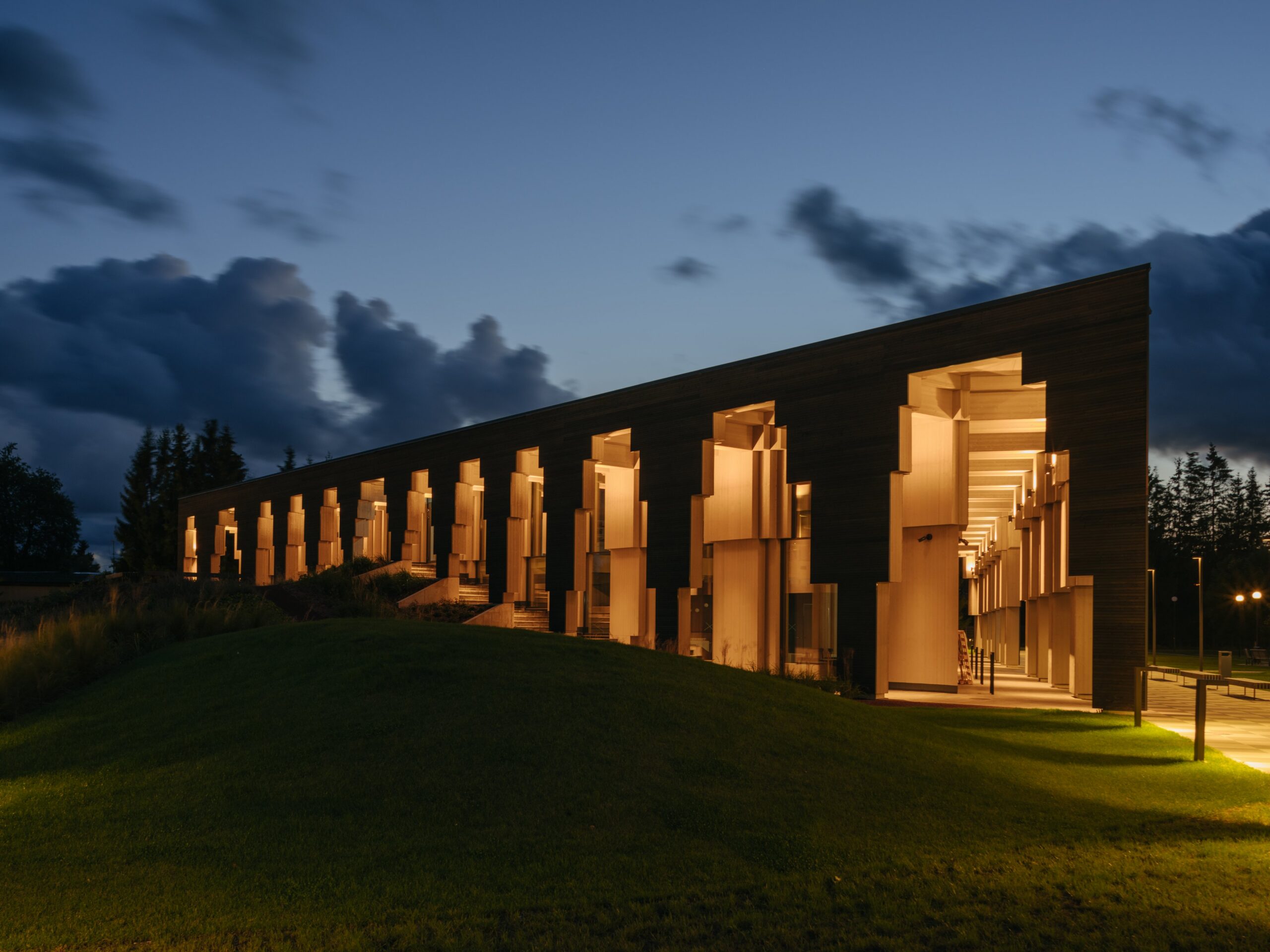 Set at the edge of Saue’s central park, the rural municipal building closes the green space with quiet authority. From a distance, it reads as a pavilion. A carved archway cuts through the triangular volume, marking the entrance while offering shelter to passersby. A double-skin façade protects the workspaces within, balancing openness and privacy.
The plan follows a clear structure. Public services occupy the outer ring. A compact core contains council chambers and meeting rooms. The building is constructed entirely from CLT. Timber surfaces remain visible inside, their texture left raw. Systems are concealed beneath raised floors, keeping ceilings clear. The result is efficient, durable and grounded in material honesty.
V- Plaza Urban Development
By 3deluxe, Kaunas, Lithuania
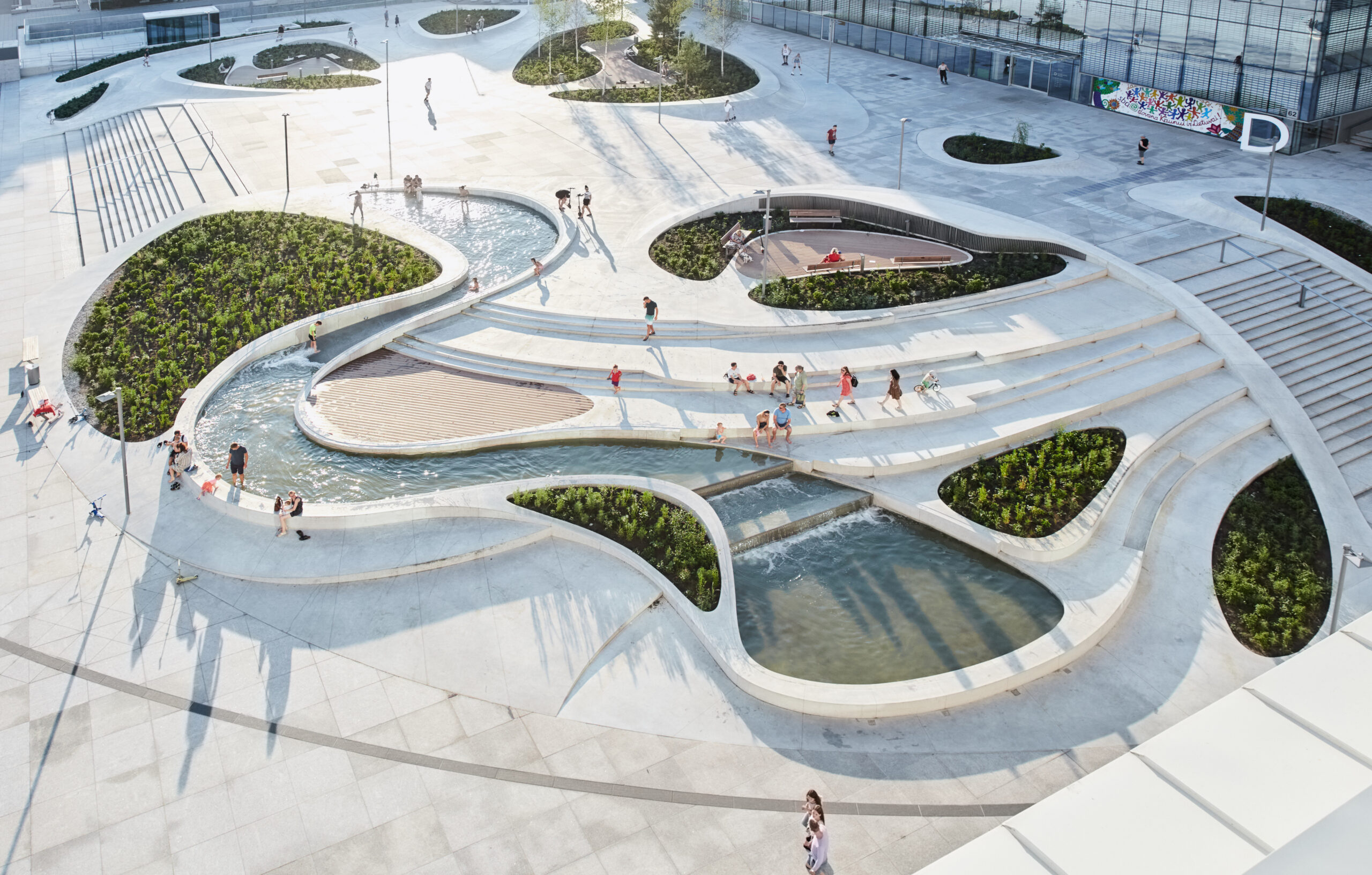
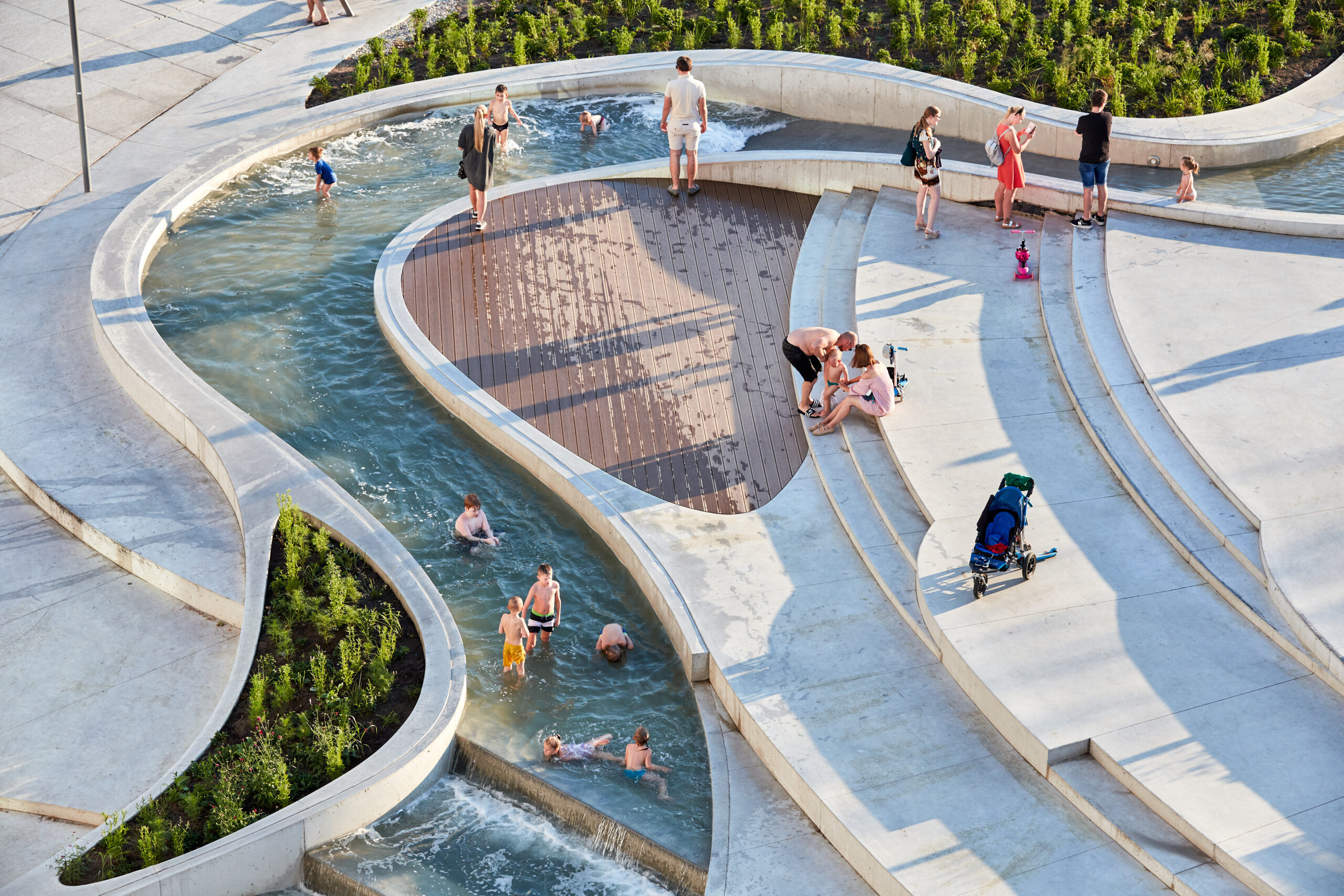 In Kaunas, a former traffic-dominated square has been given back to people. V-Plaza replaces asphalt with movement shaped by cyclists, skaters and pedestrians. Two ground logics guide the design. A linear grid respects historic sightlines. Curved paths follow natural routes across the site.
Light granite, timber and sculpted white concrete define the terrain. Sloped lawns, stepped seating and skateable forms create an active surface. Water features cool the open plane and invite play. An underground garage keeps cars out of view. Surrounding buildings were renovated and extended, unified by white façades and open interiors. The result supports everyday use, public events and new patterns of urban mobility.
Kaunas City Museum
By Processoffice, Kaunas, Lithuania
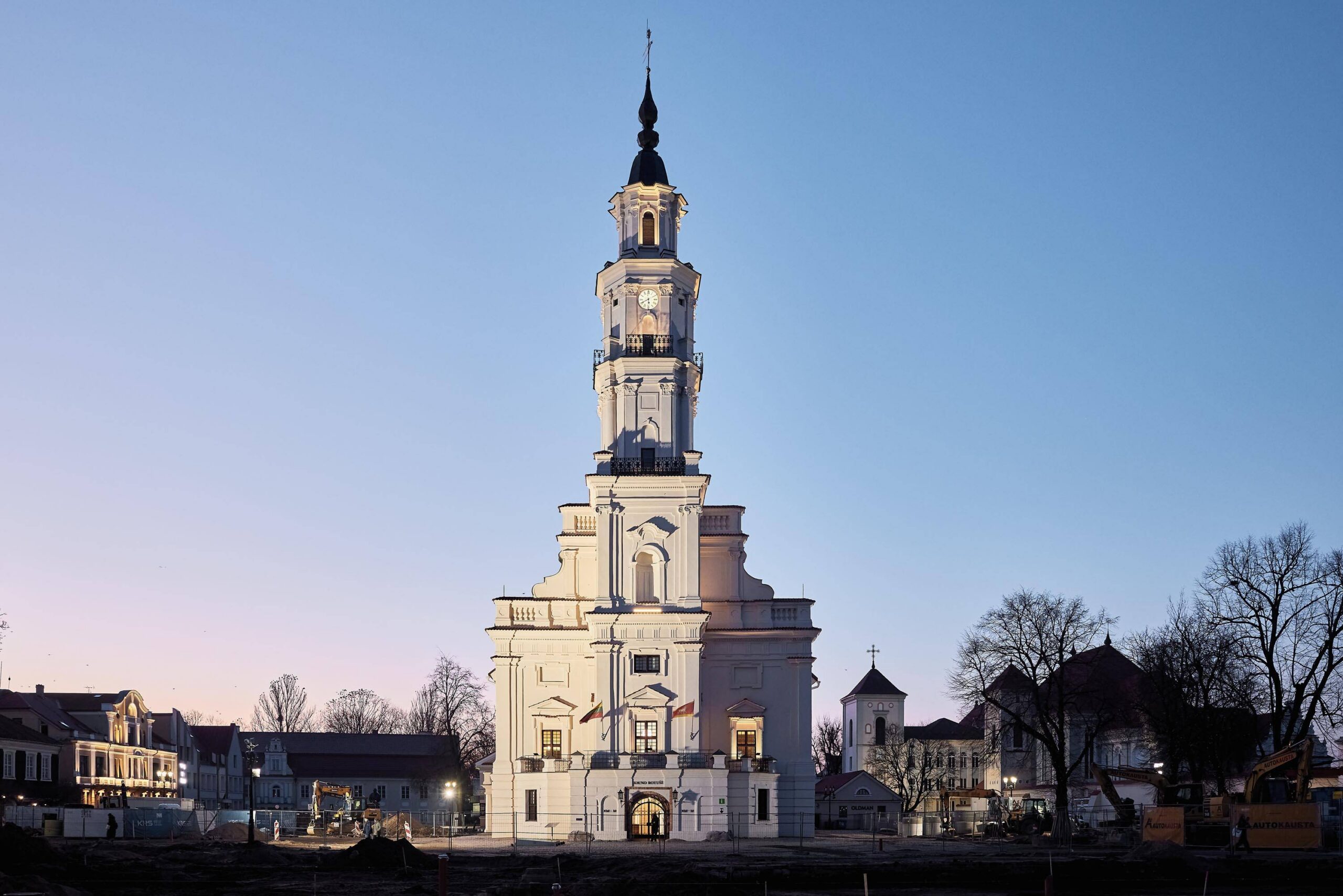
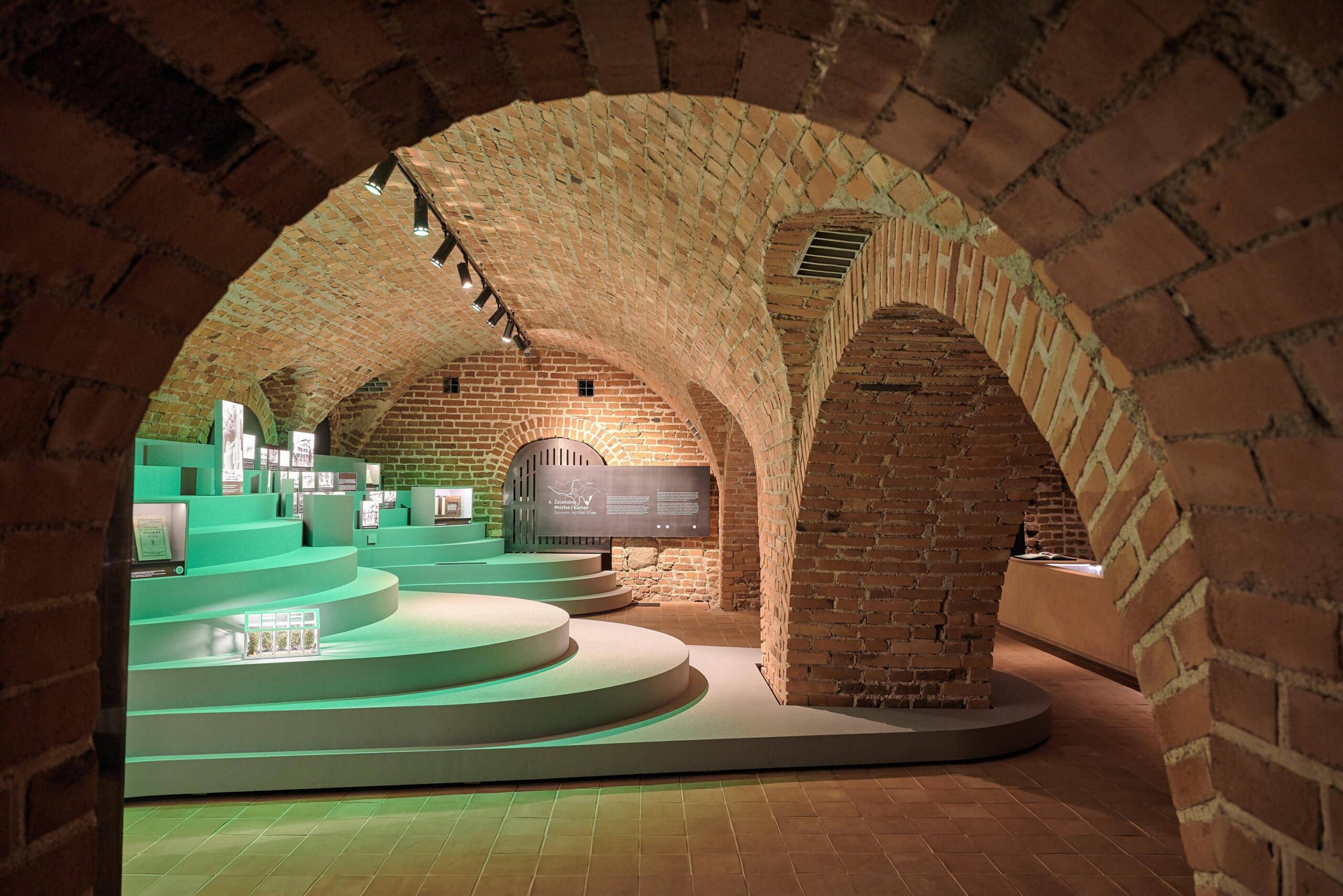 Kaunas Town Hall has stood since 1542. Its latest transformation turns the historic structure into a contemporary museum while keeping its layered character visible. The design follows a clear principle: new elements must read as new. A “box-in-box” strategy inserts modern structures within the old fabric without erasing it.
Vaulted basements were cleaned and conserved. The unused attic now holds a suspended glass-and-steel pavilion, set within the timber roof frame. A sculptural copper staircase links the levels and signals the present moment. Original masonry, clay tiles and wood surfaces remain exposed. The result supports exhibitions, events and daily visitors without diluting the building’s past.
Lithuania House of Basketball
By Architectural bureau G.Natkevicius and partners, Kaunas, Lithuania
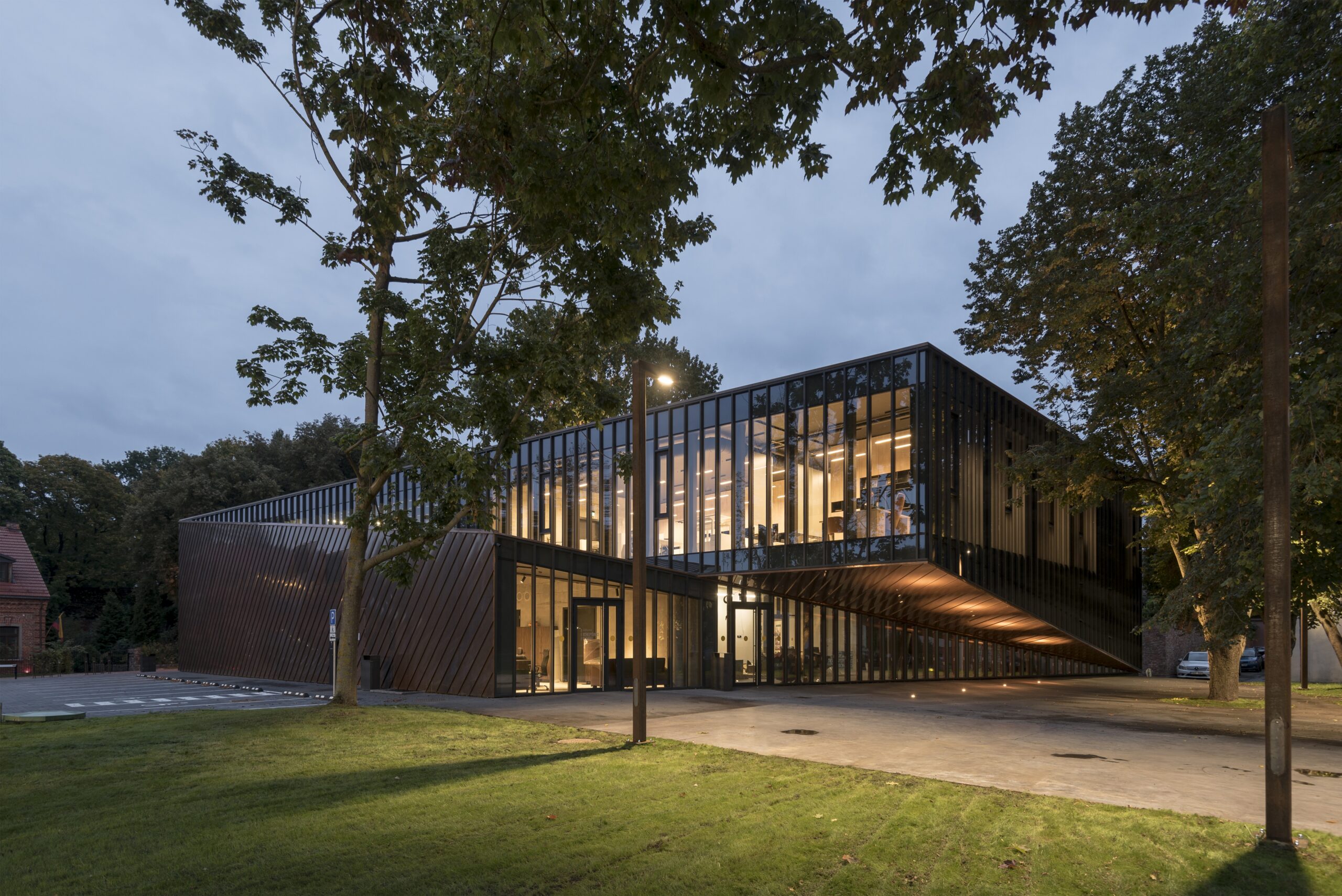
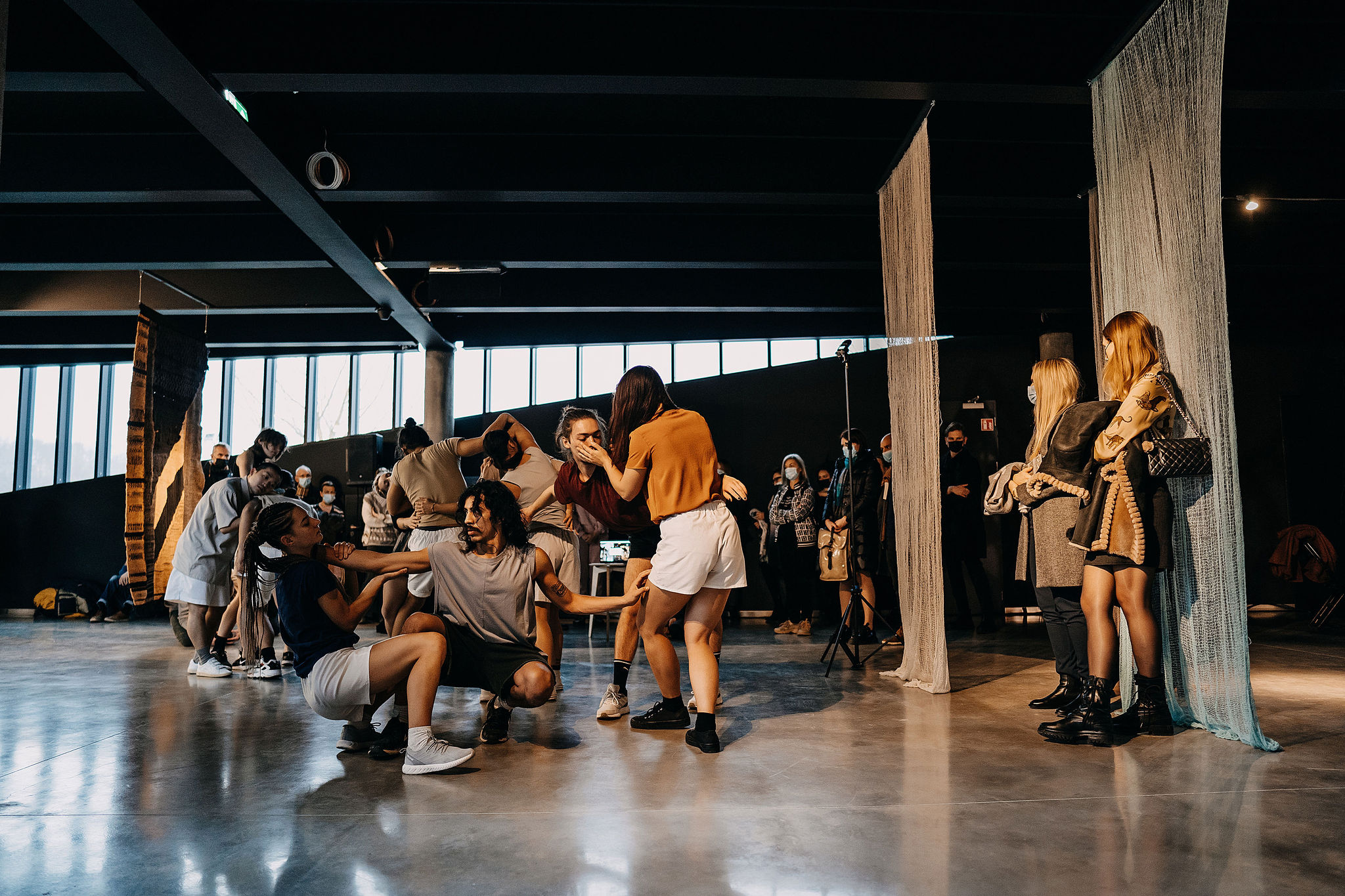 A museum dedicated to Lithuania’s most celebrated sport, the House of Basketball, stands at the meeting point of Kaunas Old Town and Santaka Park. The building marks the edge of the historic quarter while presenting a clear contemporary form. Its curved volume wraps around a century-old oak tree, which becomes the spatial anchor of the project. A small courtyard forms at this center, guiding visitors toward the entrance.
The façade is composed of aluminum framing, glass and copper plates. Over time, the copper will darken, aligning with the surrounding brick context. Inside, exposed concrete and restrained tones provide a neutral setting for the exhibition story.
More than just a public restroom
By Open Architecture Design, Riga, Latvia
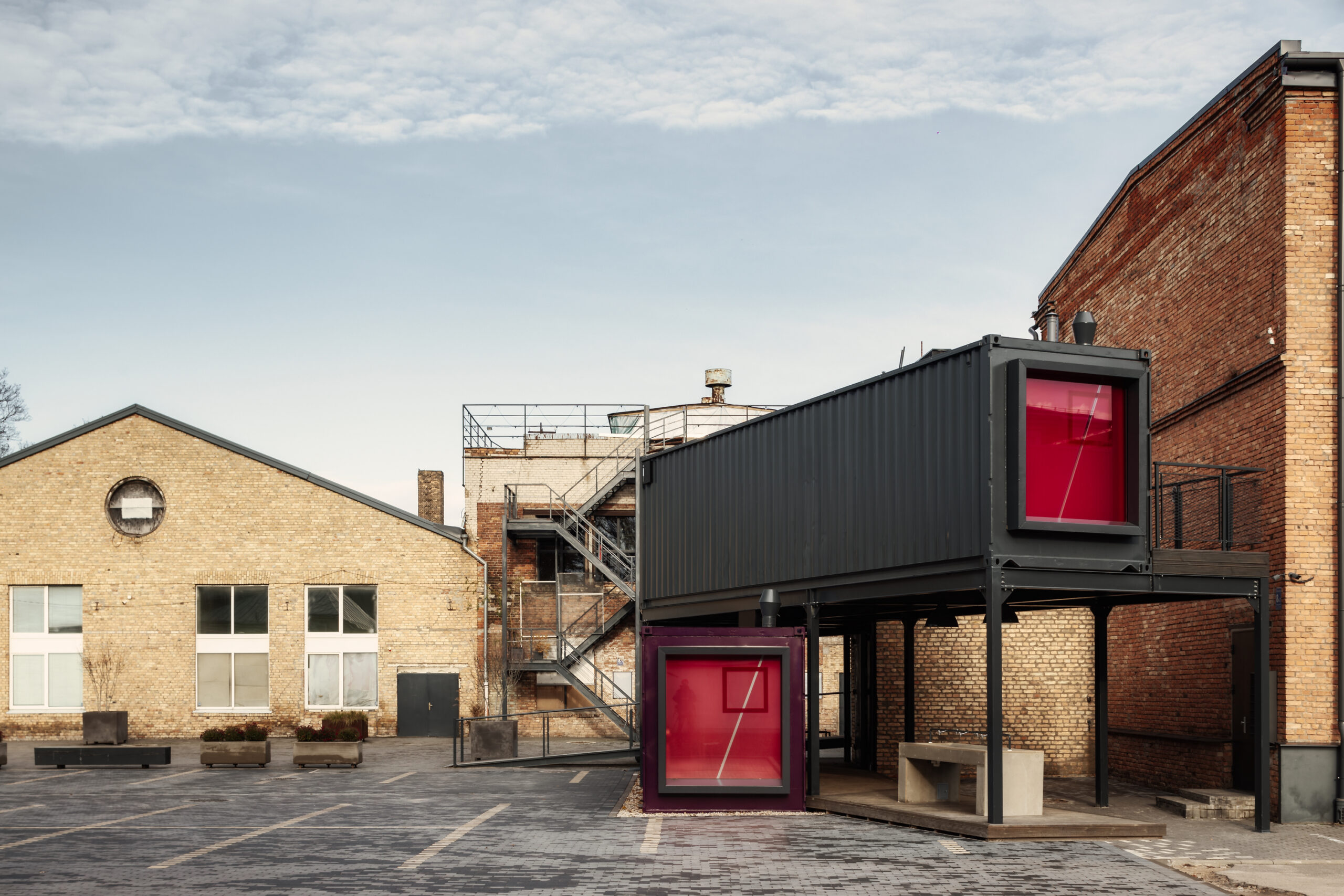
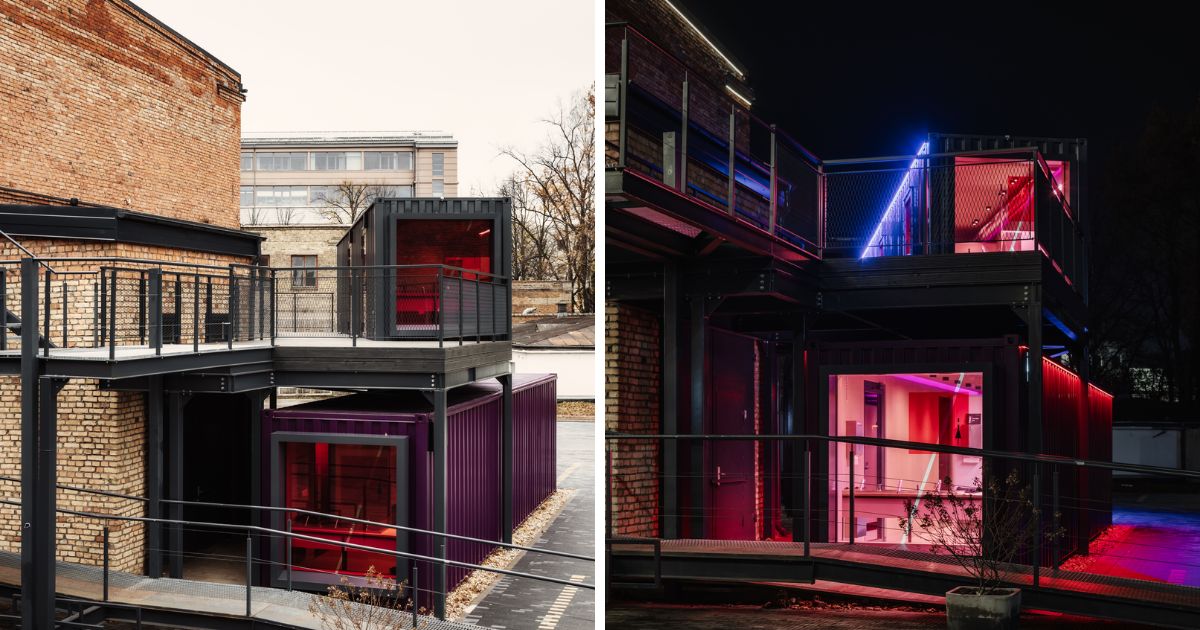
Public restrooms rarely get architectural attention. In this project, however, they are treated as a deliberate urban gesture. Repurposed shipping containers form a compact sanitation block placed beside an existing staircase. The intervention is straightforward and visible, turning basic infrastructure into part of the spatial identity.
The containers are adapted for durability and efficient use. Bright light fixtures define the façade and support orientation after dark. Outdoor sinks help manage crowds during events. Drinking water stations and a small relaxation area respond to seasonal demand. Practical needs are addressed with clarity, giving everyday services a defined presence within the public realm.
Pedestrian Path and View Terrace
By DJA, Valmiera, Latvia
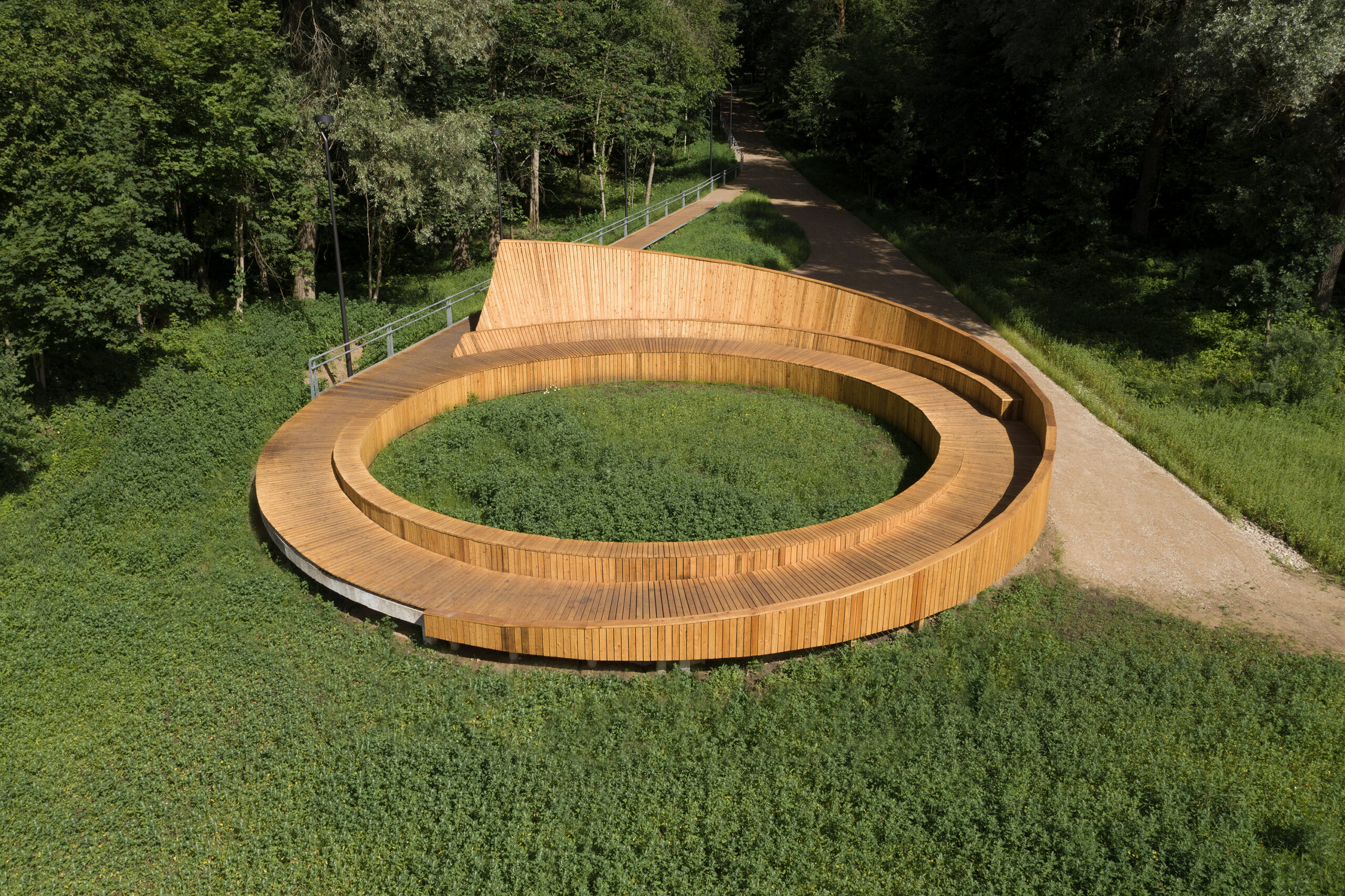
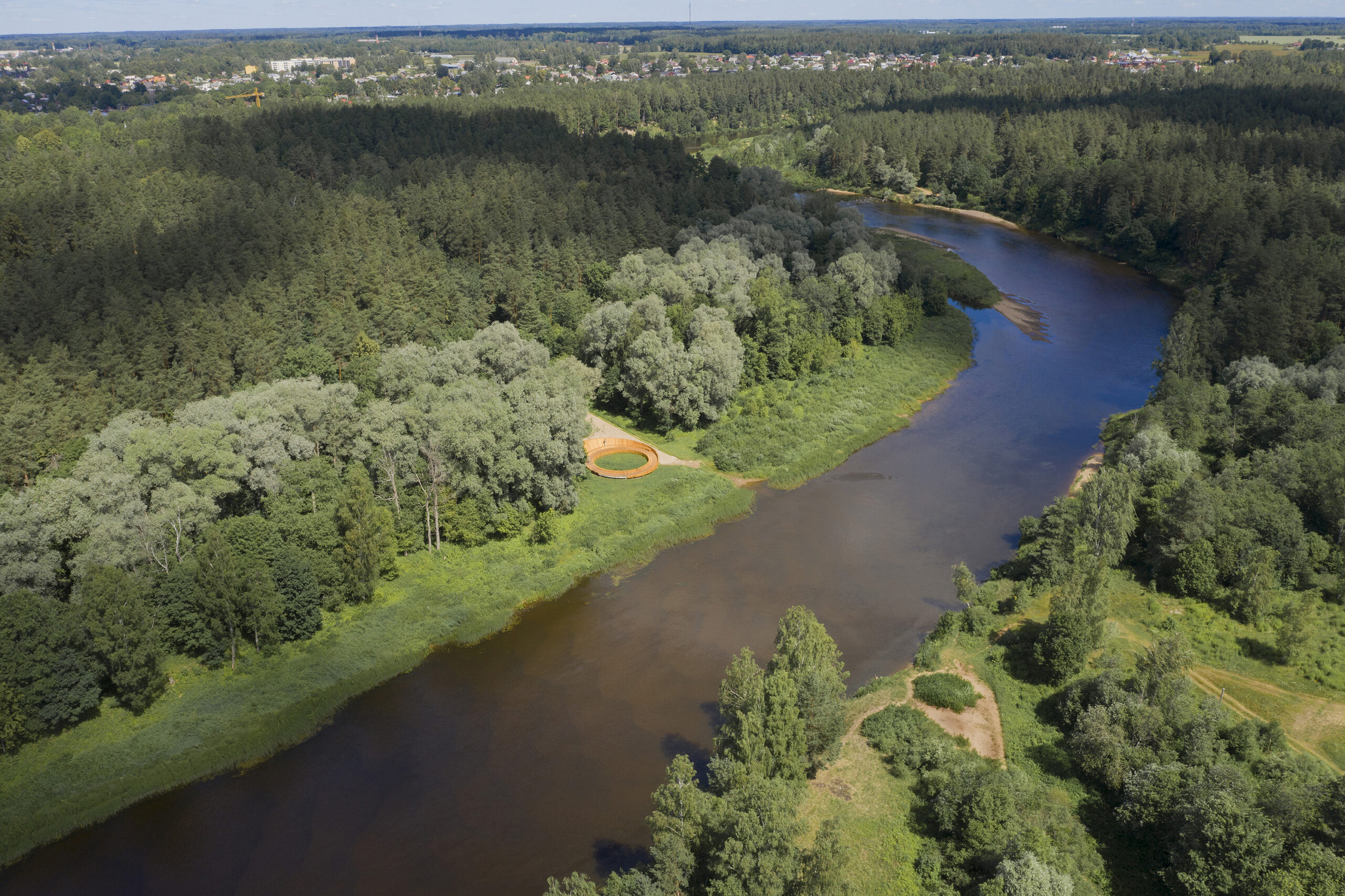 In Valmiera, this pedestrian path and viewing terrace turn a simple walk into a gradual approach toward the Gauja. A gravel track branches from the asphalt road and shifts into a timber walkway. It ends in a circular platform that meets the water with restraint.
The terrace stands above ground, as the site floods roughly once a decade. Its curved outline allows emergency vehicle access. The structure rests on pine timber frames, with concrete slabs used where utilities pass below. Larch planks with an anti-slip milling finish the surface. Seating rises from the deck, offering places to pause and face the river.
Great Amber – Concert Hall Liepaja
By Volker Giencke & Company, Latvia
Popular Choice Winner, Hall/Theater, 4th Annual A+Awards
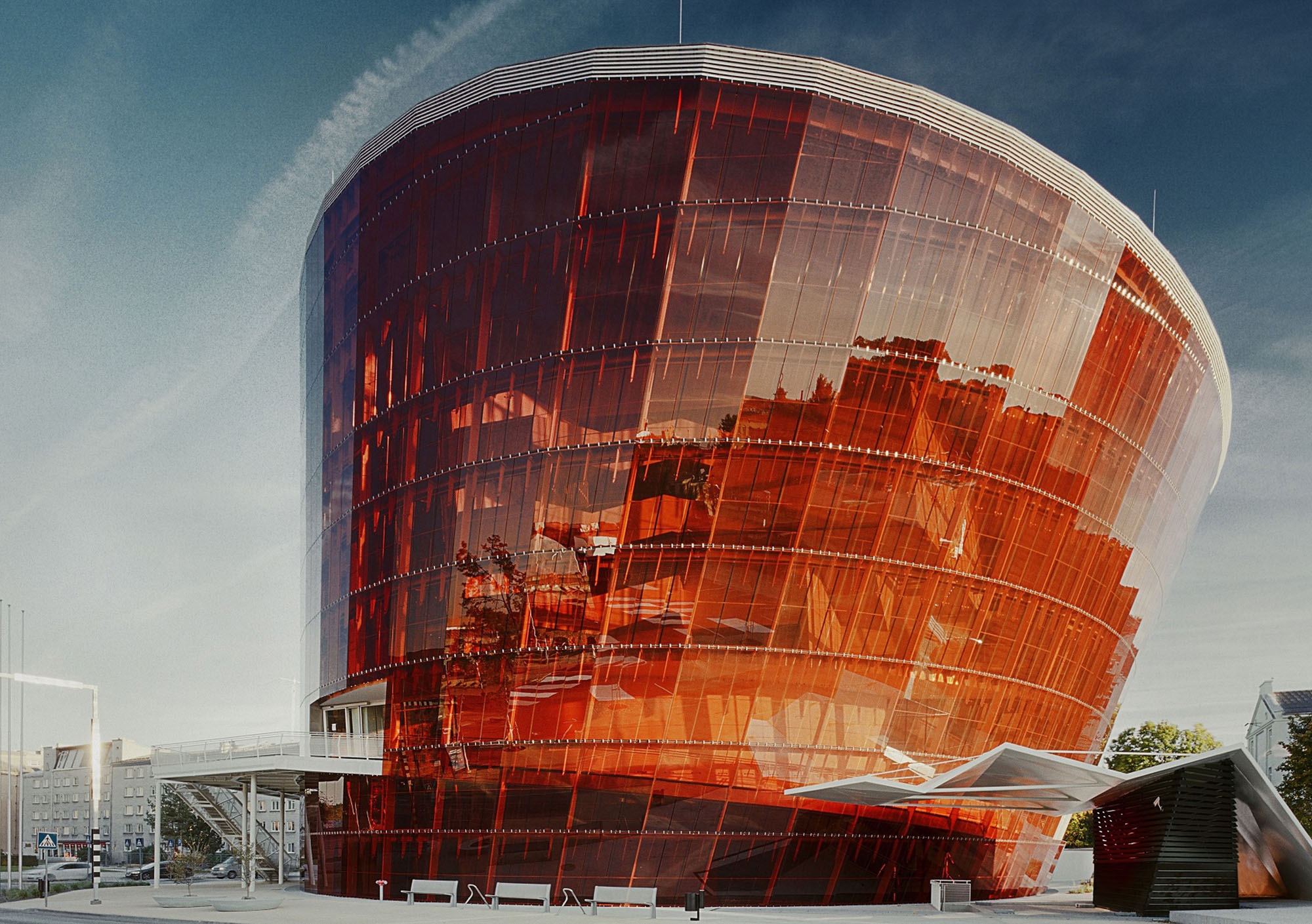
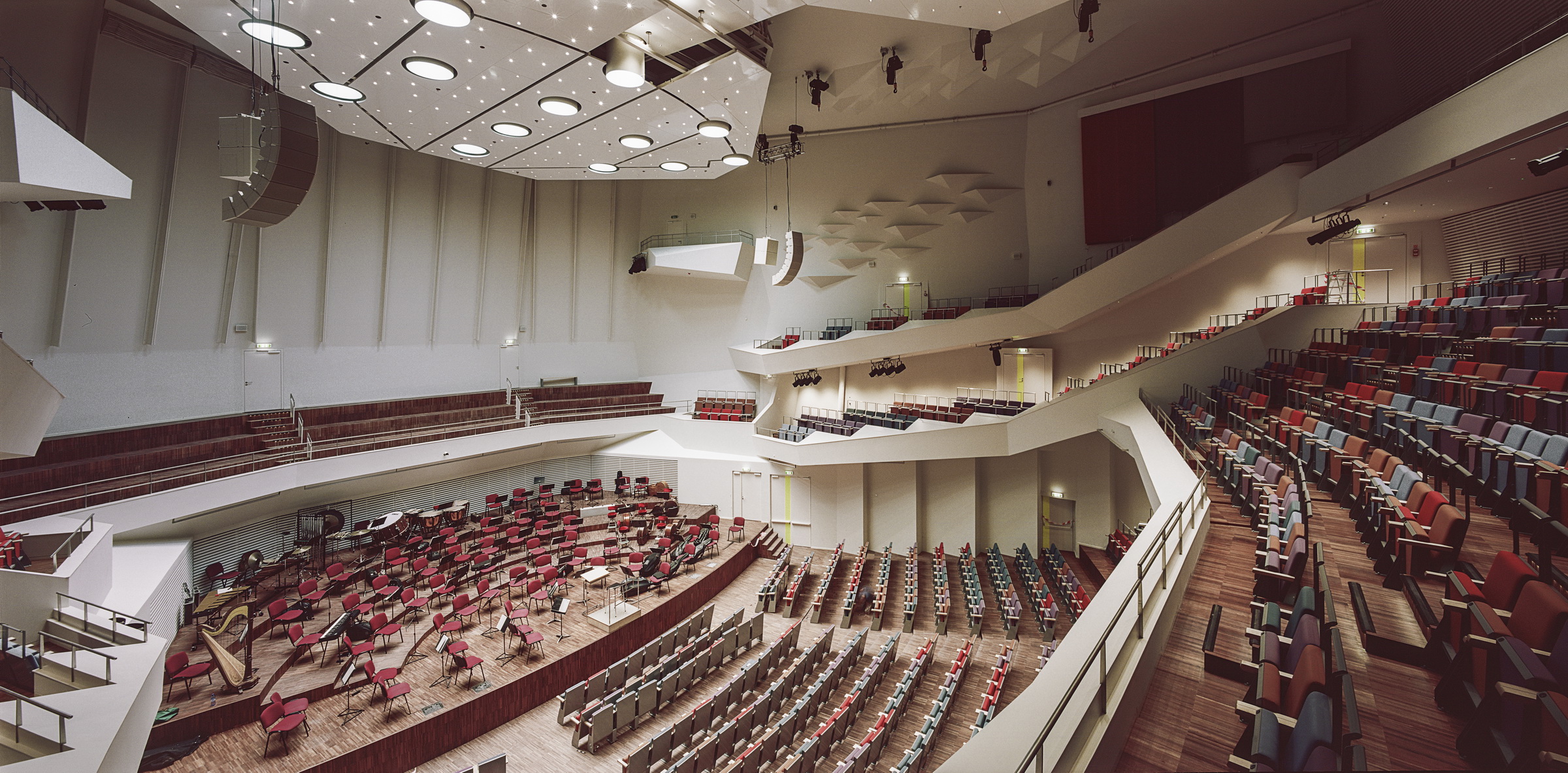 A concert hall more than a century in the making, Great Amber finally opened in Liepāja in 2015. The monolithic, cone-shaped volume leans slightly, conceived as a response to the city known as the birthplace of wind. Its translucent amber façade wraps an irregular concrete structure, forming a protective envelope around the performance spaces within.
Inside, the main hall follows an oval vineyard layout to achieve precise acoustics, developed with Müller BBM. Helmholtz resonators and an adjustable reflector fine-tune the sound. Fourteen reflective tubes draw daylight deep into the interior. The building houses multiple stages and music education spaces, establishing a new cultural anchor for the city.
Pavilion and Workshops for Nature Concert Hall
By DJA, Sigulda, Latvia
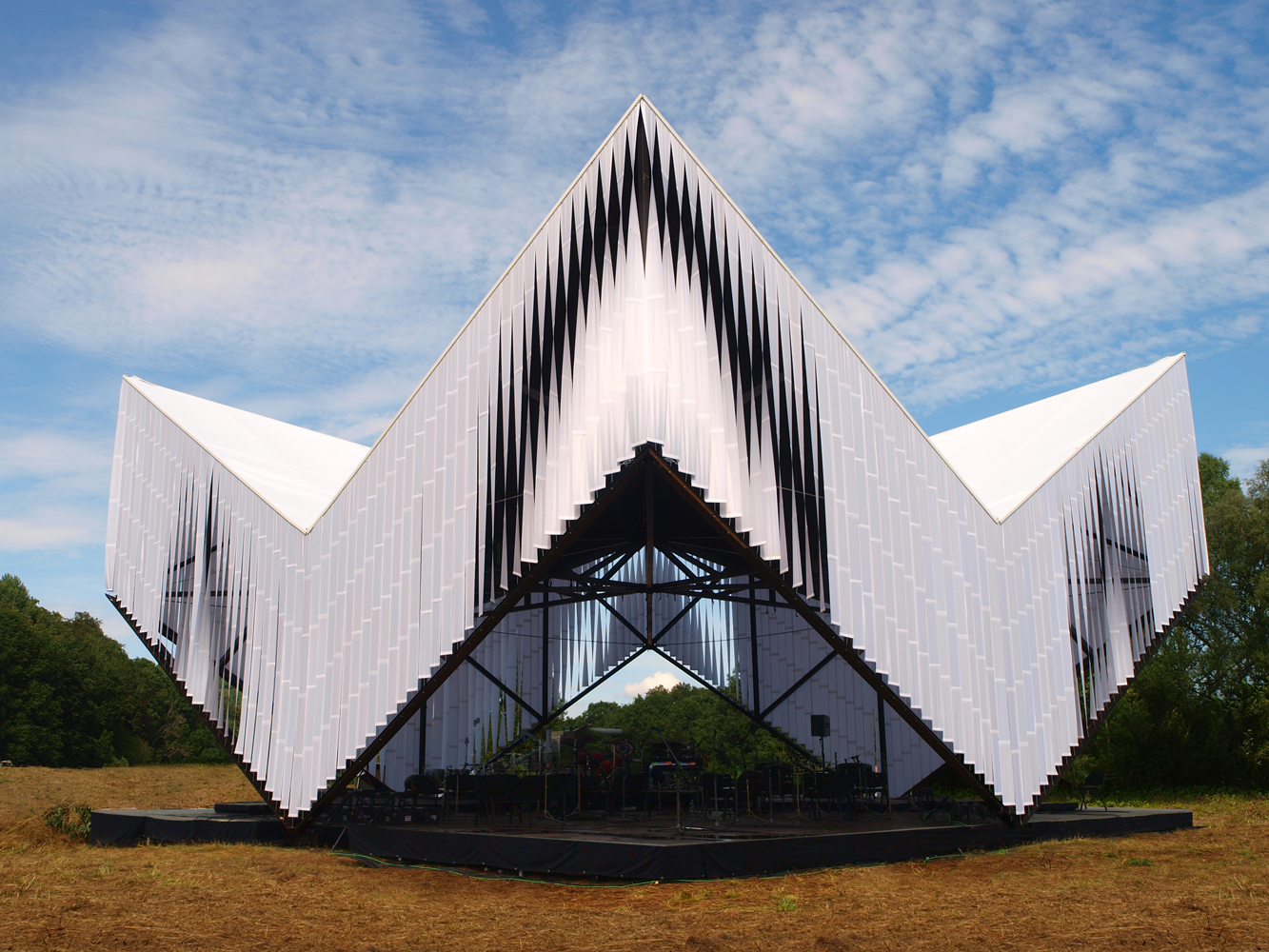
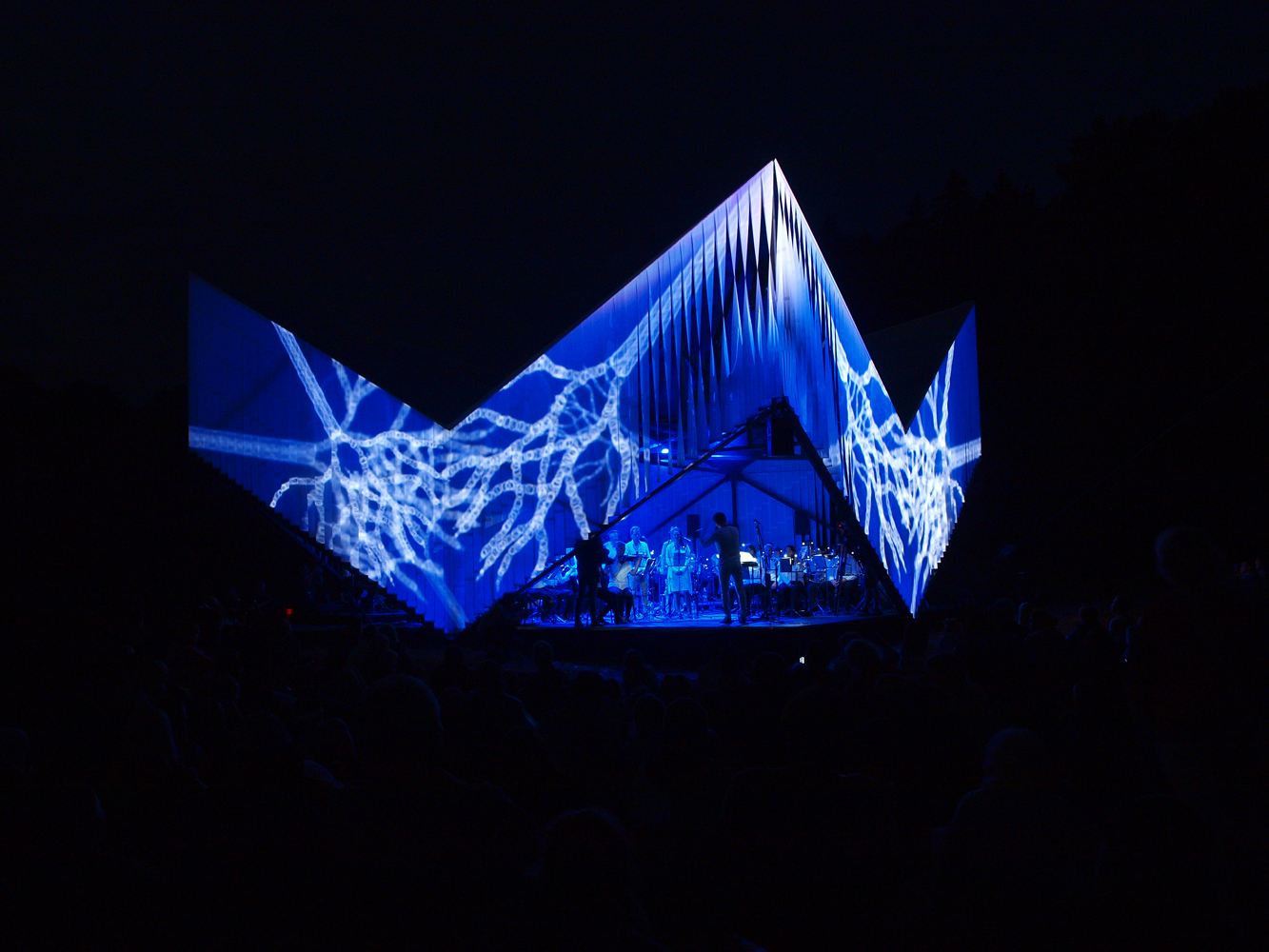
Designed for the Nature Concert Hall in Gauja National Park, this pavilion serves as a stage, screen and spatial frame for a multimedia event that unites science and music. A chamber orchestra and band perform beneath its roof, while the façades carry light and video projections.
The volumes echo forms found in the landscape. The structure limits ground contact to protect the meadow. Nearby workshops use modular units that can be rearranged and carefully positioned. Vertical fabric bars wrap both pavilion and modules, rotating to adjust transparency and light. The project turns performance into a dialogue with nature.
Architects: Want to have your project featured? Showcase your work by uploading projects to Architizer and sign up for our inspirational newsletters.
The post Public Architecture in the Baltics: Small Nations, Strategic Civic Design appeared first on Journal.