








Pliskin Architecture creates "welcoming threshold" at brick-clad Brooklyn rowhouse
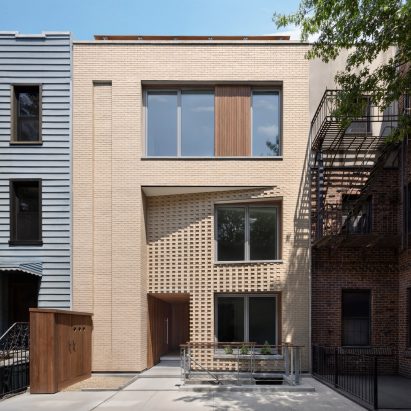
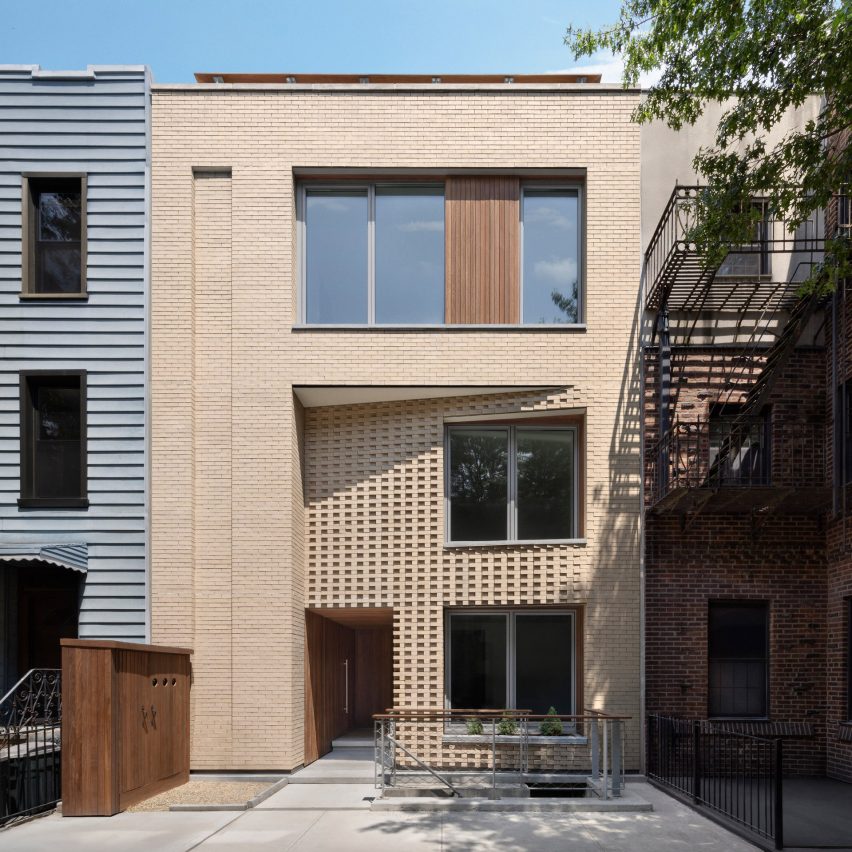
Local studio Pliskin Architecture has updated a rowhouse with an interlocking brick entry programme to create a two-family home that fits into the context of a Brooklyn street.
The Leonard Street Rowhouse was completed in 2025 and measures 6,000 square feet (557 square metres) on an infill lot in Greenpoint.
Pliskin Architecture nested a townhouse and a penthouse behind a unified brick facade with a slanted, corbeled depression facing the street, drawing on the context while iterating.
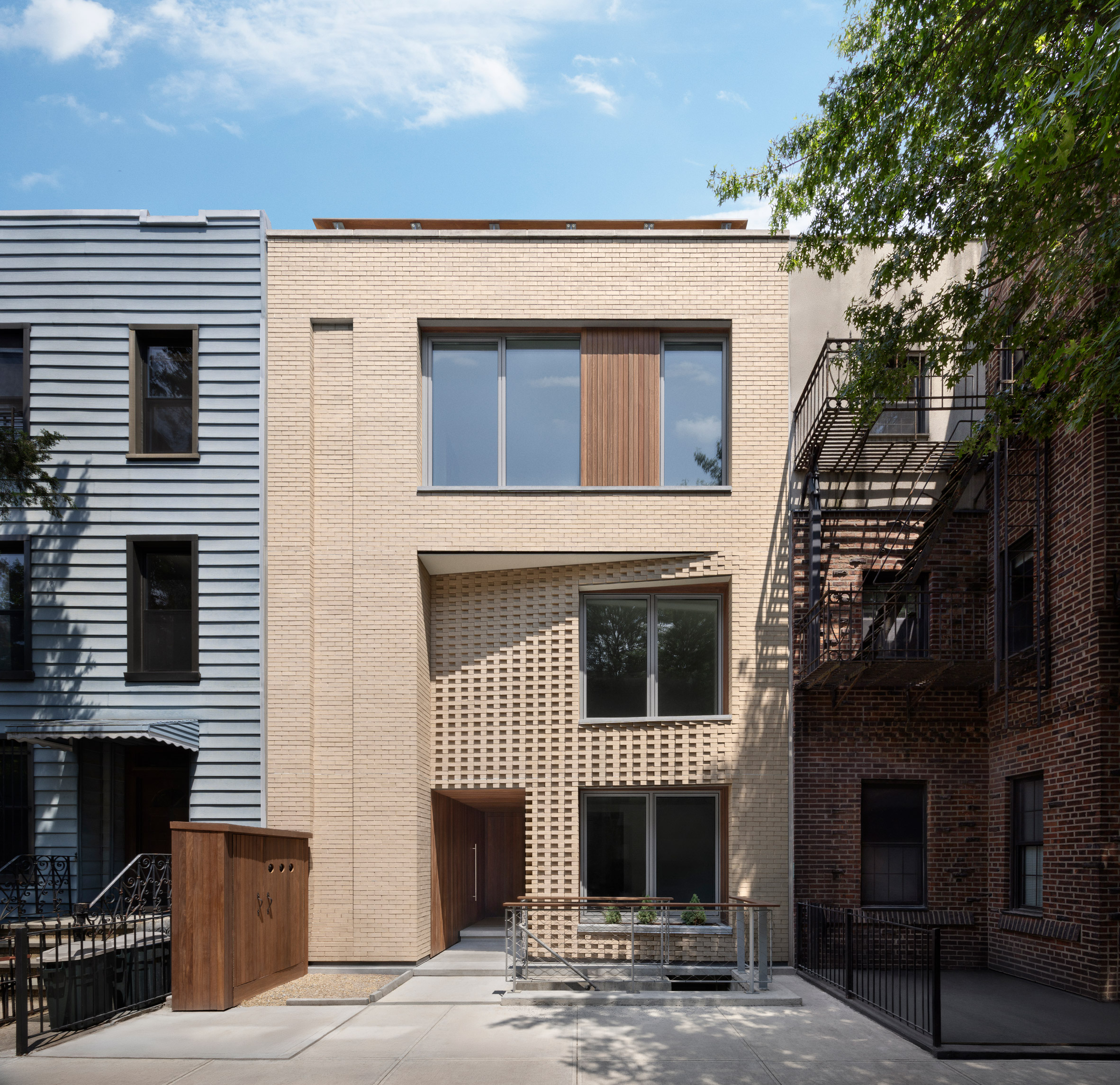
"We drew from recognizable elements of Brooklyn rowhouses – masonry facades, punched openings and shared stoops – to create a building that feels familiar yet brand new," founder Barak Pliskin told Dezeen.
The studio noted that the surrounding buildings feature a mix of building materials and types, reflecting the different eras of the Brooklyn neighbourhood.
On one side, a home features blue siding, while the house on the other side is clad in red brick.
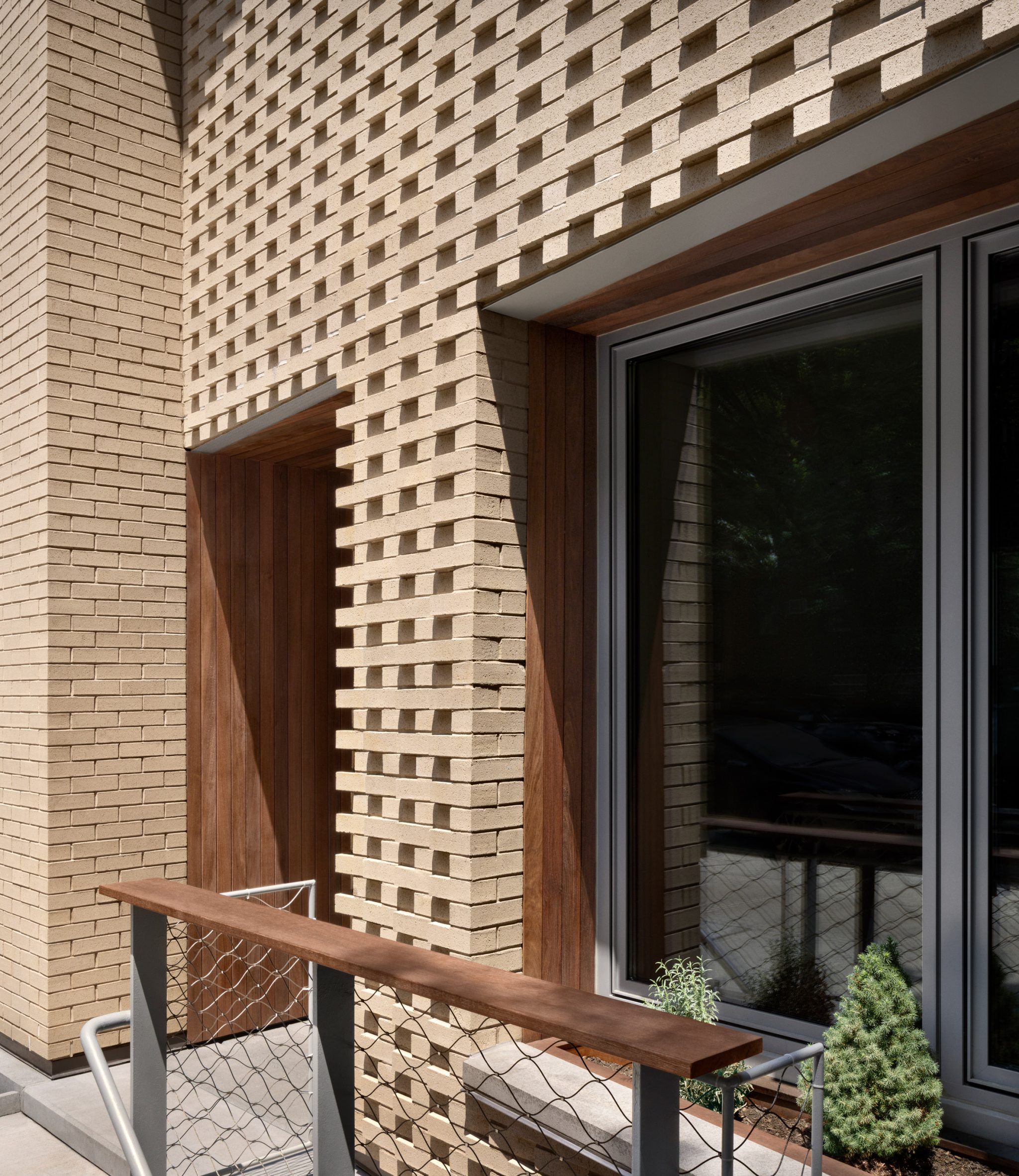
"Our project aimed to fill this gap with a new facade that pays tribute to the block's original brick facades, while gently pushing and pulling the brick to define two homes while creating a shared and welcoming threshold for both," the studio said.
Set atop an existing foundation and reusing much of the site's masonry, the light sand-coloured brick facade system uses a custom attachment system to limit thermal bridging across the continuous exterior insulation.
Together with Ipe wood accents, high-performance aluminium windows, precast concrete sills and coping stones, the envelope exceeds energy codes and reduces operating energy and costs.
The arrangement of the facade subtly defines the two homes within, using a picture window and a recessed glass top to direct the penthouse to the sky and the brick detail to root the townhouse to the ground.
The two units link together while maintaining independence and private outdoor spaces for each.
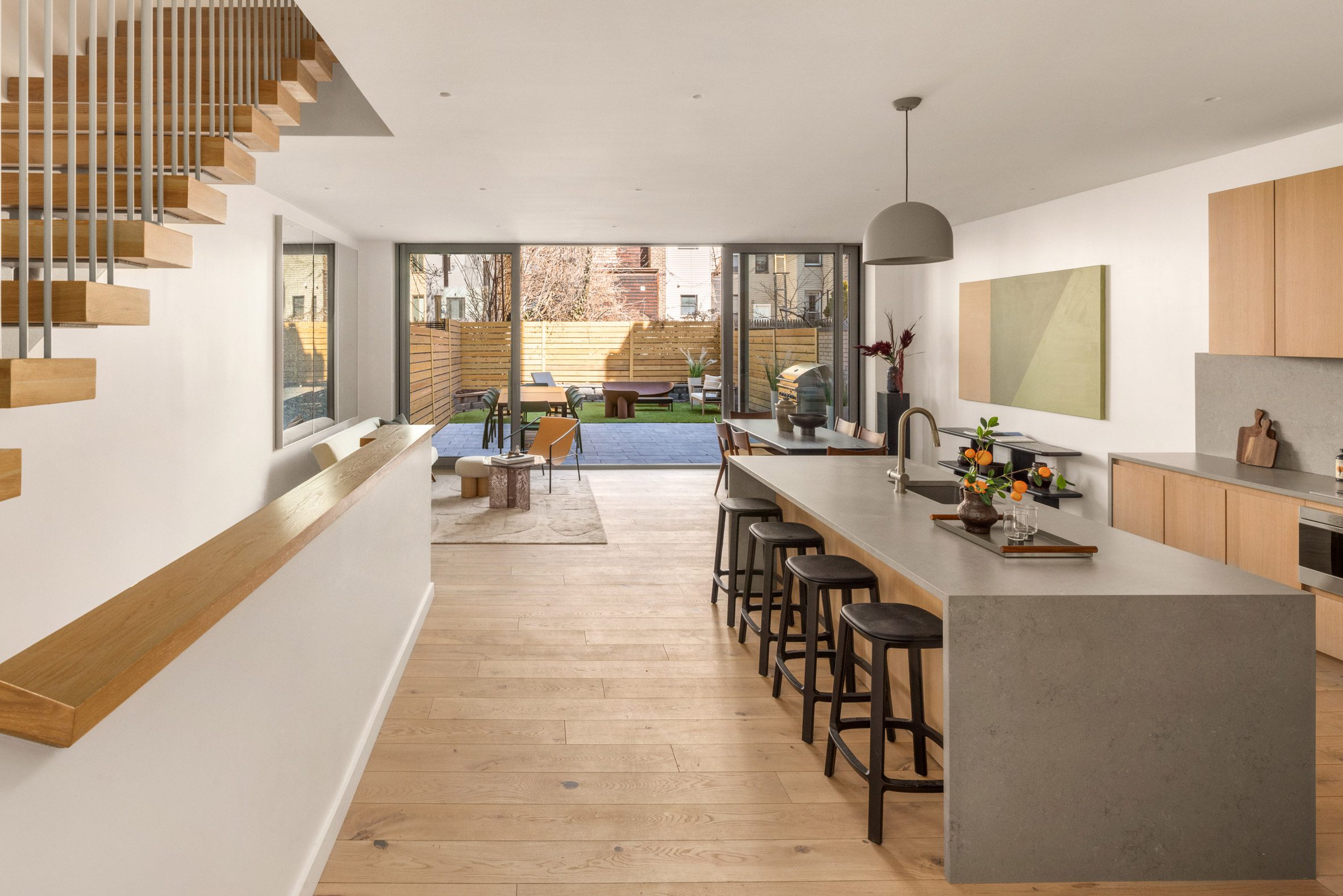
The main street level of the townhouse holds a bedroom that can be cordoned off as an office or in-law suite, a combined kitchen, dining and living room that extends out to a private backyard through a wall of sliding glass doors.
The floor above holds three bedrooms, two bathrooms and a family area, while the below-grade level serves as a large multi-use space.
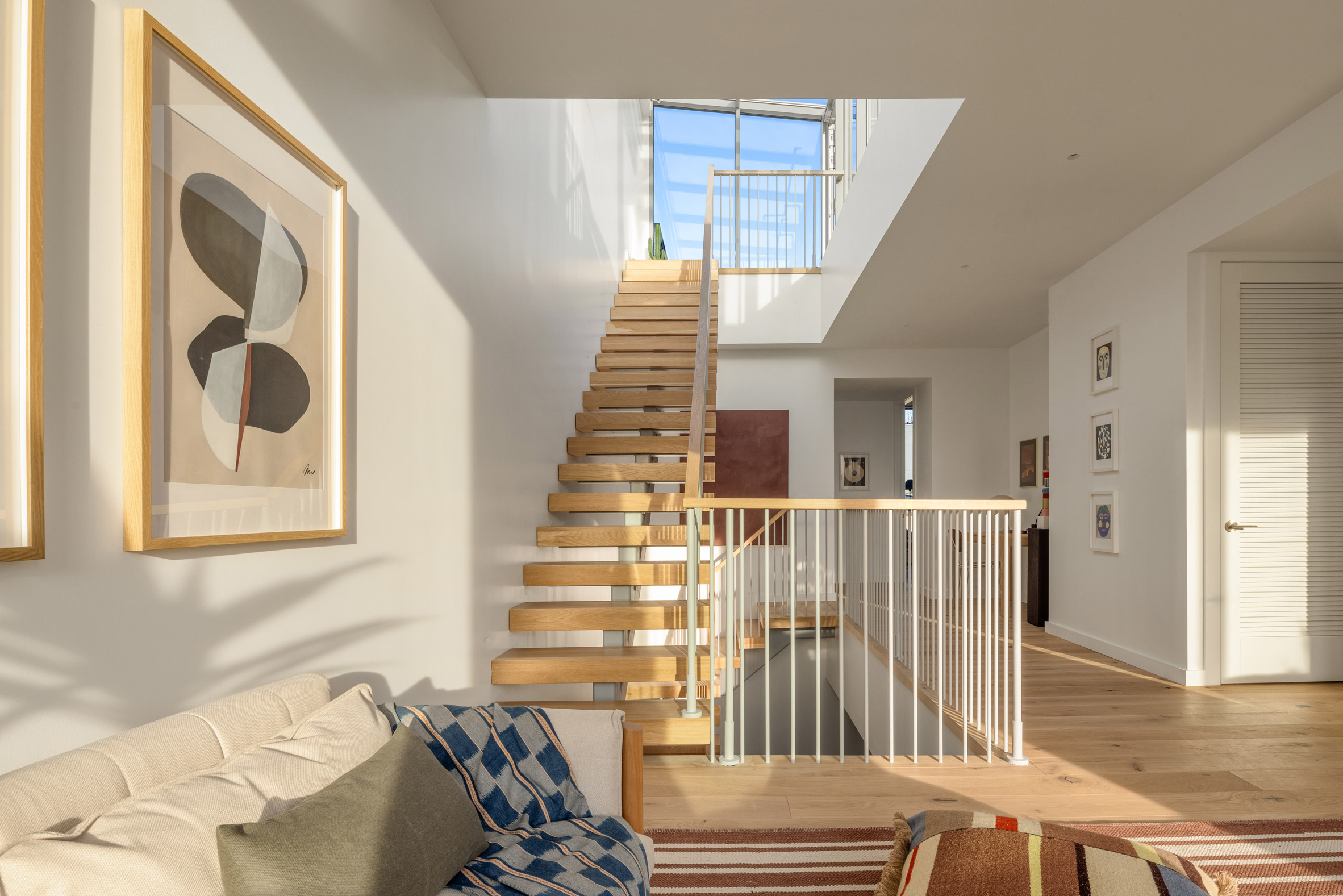
Accessed by a private elevator, the penthouse comprises the third, fourth and roof levels with a skylight that casts natural light through the long-run staircase and down into each level.
The kitchen, living and dining area look out to the tree-lined street, while the primary suite overlooks the backyard.
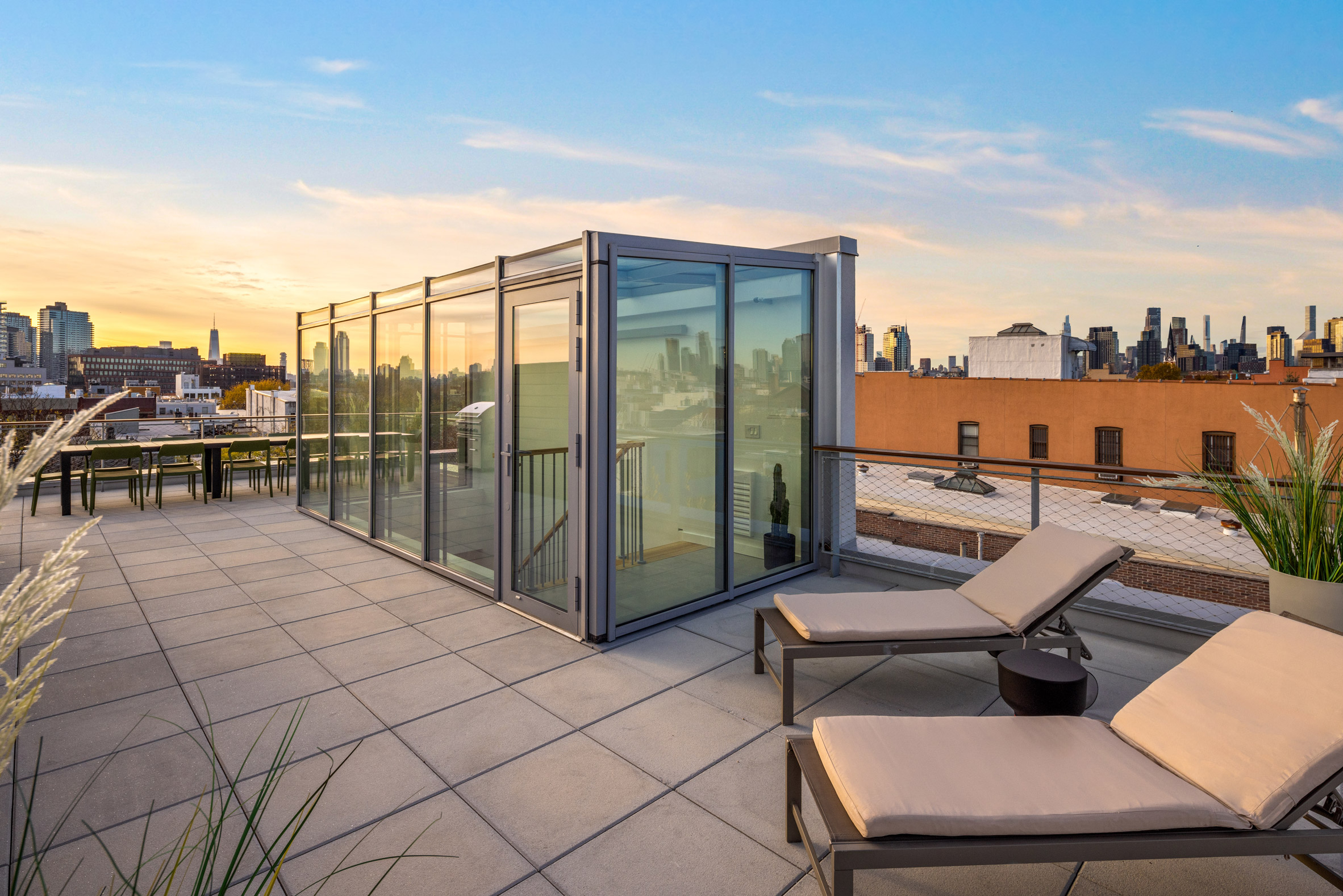
Above, three bedrooms, a family room and a terrace connect up to a private roof deck with an outdoor kitchen, from which residents can see lower Manhattan.
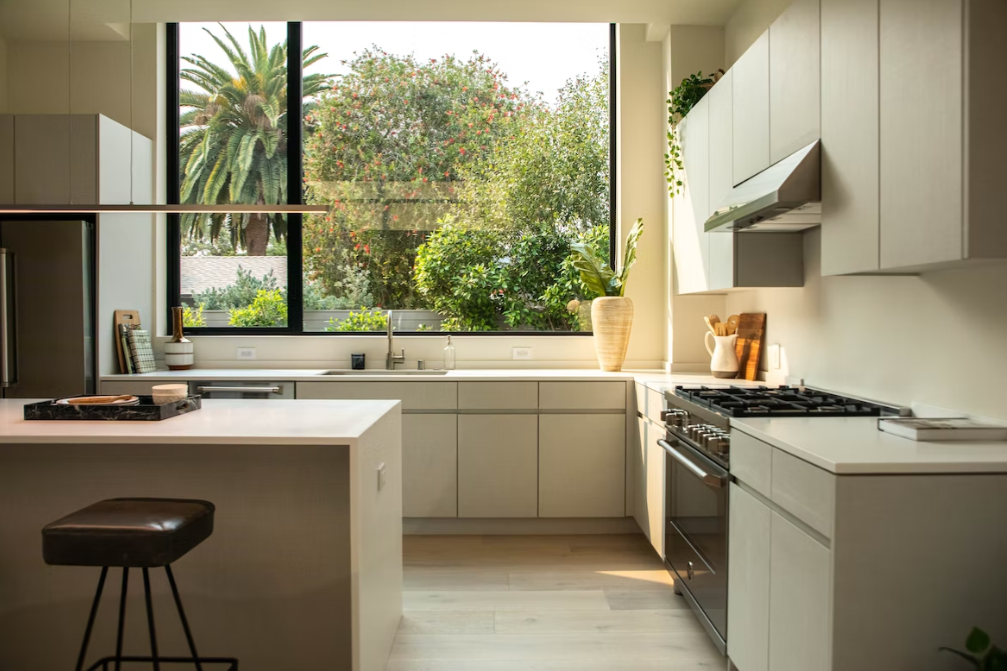
European oak flooring, light oak millwork, terrazzo and subway tiles carry throughout the interiors of both units.
"The program pushed towards bespoke and contrasting apartment layouts, while the design sought to unify the apartments into a single legible structure," the studio said.
"It was an intricate and delicate puzzle to ensure structure, systems and program aligned elegantly to create a seamless experience from the street to each individual space."
Other recent designs for Brooklyn townhouses include a Williamsburg building that cantilevers over its neighbour by Commoncraft, a metal tower that expands a Carroll Gardens residence with passive strategies by Modu, and a Clifton Hill home renovated with a central atrium by Light and Air.
The top photo is by David Mitchell.
Project credits:
Architecture: Pliskin Architecture, Barak Pliskin, Nishant Jacob, Samuel Warden-Hertz
Styling: Monomid Design Studio
Client: LTNG
Structural engineering/MEP engineering: Sharon Engineering
Expediter: KM Associates
The post Pliskin Architecture creates "welcoming threshold" at brick-clad Brooklyn rowhouse appeared first on Dezeen.