









"Parametricism is a technophile triumph of fetishised process over outcome"


Parametricism is not what humanity needs from architecture in the 21st century, writes Catherine Slessor as part of our series on the style.
Because this felt like the perfect AI assignment, I asked ChatGPT what it thought about parametricism. Within a nano-second, the Chatster had spewed out 700 words of add-water-and-stir prose, a simmering pot noodle (bot noodle?) of carefully sifted facts and opinions.
"Parametricism," it cogitated, "is a contemporary architectural style and design paradigm that emerged in the late 20th and early 21st centuries, defined by fluid forms, continuous variation, and digitally driven processes. The term was popularised by architect and theorist Patrik Schumacher of Zaha Hadid Architects, who described parametricism as the successor to modernism and postmodernism. At its core, parametricism represents a shift from rigid geometries and standardised repetition toward dynamic systems of interrelated elements governed by parameters and algorithms."
From the get-go, parametricism came cloaked in clunking verbiage
In other words, things fall apart; the centre cannot hold. Current architecture isn't up to the task; what the "developed" world really needs is to scrap everything (notably, orthogonality and other messy stylistic distractions) and start again in sunnier, more progressive uplands, determinedly exploiting the technology of the day.
Rather like Corb gazing at Canadian grain elevators and exclaiming "This is the future!", parametricism seems like an implausibly bold stroke, an epic purging of the past, upending all we thought we knew. No more tedious 20th-century stasis; instead, algorithmically powered 21st-century flux.
"What used to be ineffable and intuitive becomes finally more scientifically tractable and computationally modellable," asserted parametricism's high priest and gatekeeper Schumacher, in a 2016 interview with Rowan Moore. Moore, however, was more sceptical. "The style's grand non sequitur is the assumption that, just because computers have the ability both to process complex information and to conceive complex shapes, one should lead to the other," he opined.
From the get-go, parametricism came cloaked in clunking verbiage, the tell-tale flashy new clothes of an aspiring emperor. I used to teach a "how to avoid opaque writing" seminar with students in which we dissected an impenetrable piece of Schumacher prose and attempted to fathom the meaning of phrases such as "the geometric transcoding of parameter variations into differentiated geometries".
An entirely new style deserves an entirely new appellation – an entirely new language, in fact. Schumacher, the imperator of polysyllables, wrote the book on parametricism: the two volume Autopoiesis of Architecture, an impenetrable thicket of a manifesto, which it's doubtful any of his Rhino-wrangling acolytes have actually read.
Yet all this insistent intellectual posturing generates critical heft and momentum. Assailed by a parametric barrage of books, papers, theoretical tracts, seminars and social media posts, punctuated by the occasional statement building, you feel like Dorothy confronted by the Wizard of Oz in full imperious flow.
While the parametric picture is patchy in terms of paradigm dominance, it still has a cult following
But as we know, the Wiz came unstuck in the end. ("Pay no attention to that man behind the curtain!") And, as it turned out, Corb had doctored the images of his grain elevators with gouache to make them appear more modernistically streamlined. You just can't trust proselytisers.
As Philip Larkin famously postulated, sexual intercourse began in 1963. After a period of post-millennial loin-girding, parametric intercourse began in 2016.
Three things happened that year. First, Zaha Hadid died, leaving Schumacher at the helm of her practice. Second, Architectural Design published a seminal issue (guest-edited by Schumacher) on the "emerging phenomenon" of parametricism. "The style has an international following and is currently progressing beyond its experimental roots to make an impact on a broader scale," it trilled excitedly.
And third, Schumacher delivered his infamously contrarian "keynote" at the World Architecture Festival in Berlin, in which he ramped up his antipathy to social housing and the undeserving poor, to the dismay of most of the audience and Hadid's firm, which felt compelled to issue an apologetic "this is not who were are" retraction.
Ten years on, where are we now? Whither the parametric equivalent of the Acropolis, or even a decent local hospital? What's become of its "international following"? Has it become, as its proponents predicted, the dominant paradigm?
Arguably, while the parametric picture is patchy in terms of paradigm dominance, it still has a cult following, based on a licence to generate formal preposterousness. Like its predecessor, deconstructivism, nothing succeeds like excess. But just because you can, doesn't mean that you should.
It's the equivalent of a haute-couture creation worn once by the consort of an arms dealer
Parametricism does formal preposterousness with a vengeance, to the point of not caring how it gets built or maintained, as long as it looks seductive on the renders. These are calculated to appeal to its capitalist sponsors, intent on smearing a gleaming, gloopy mulch across large tracts of the Gulf, China and Russia.
Ultimately, it's the equivalent of a haute-couture creation worn once by the consort of an arms dealer. It doesn't do, and never did, what you might call "human relatability". Its favourite building types are airports, office blocks, the odd opera house and other sanitised milieux for the swanking rich. It disdains anything more quotidian and is pretty much irrelevant in respect of it.
Undaunted, ChatGPT perkily concludes: "In essence, parametricism is not only about curves and complexity; it is about redefining architecture as a responsive, adaptive system – one capable of evolving alongside the societies it serves."
But (as ChatGPT demonstrates), if you put garbage in, you get garbage out. And as the balance of human life veers from the physical to the virtual, architecture is increasingly forced into a state of disconnection from people, culture, climate and place.
Ceding control to the algorithm, parametricism is even more disconnected, a reductivist, technophile triumph of fetishised process over outcome. Perhaps it will quietly atrophy, as decon did, and be superseded by the next big thing.
Or perhaps, after over two millennia, this is the way the Western architectural world ends. Not with a bang, but a parametric whimper.
Catherine Slessor is an architecture editor, writer and critic. She is currently acting architecture critic for The Guardian and is a former editor of The Architectural Review and the former president of architectural charity the Twentieth Century Society.
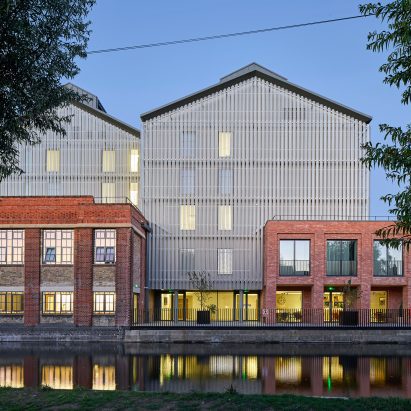
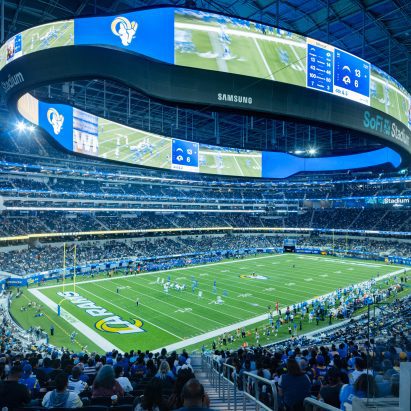
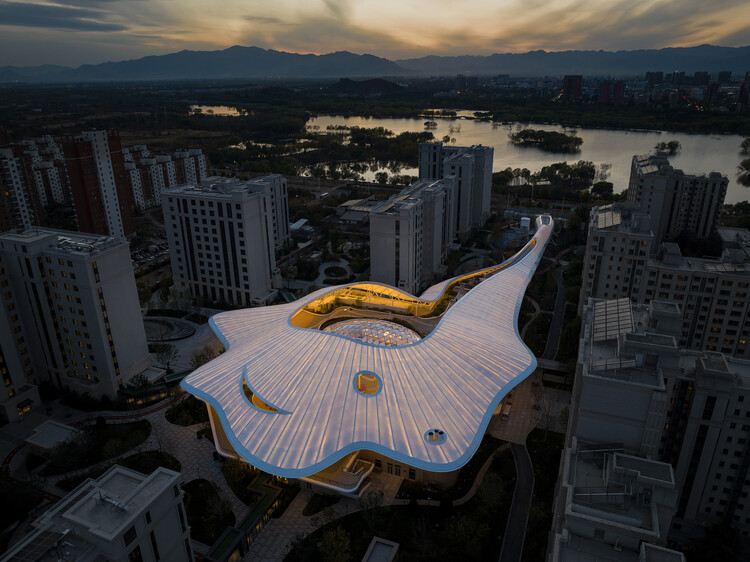
The photo is by Hufton + Crow.
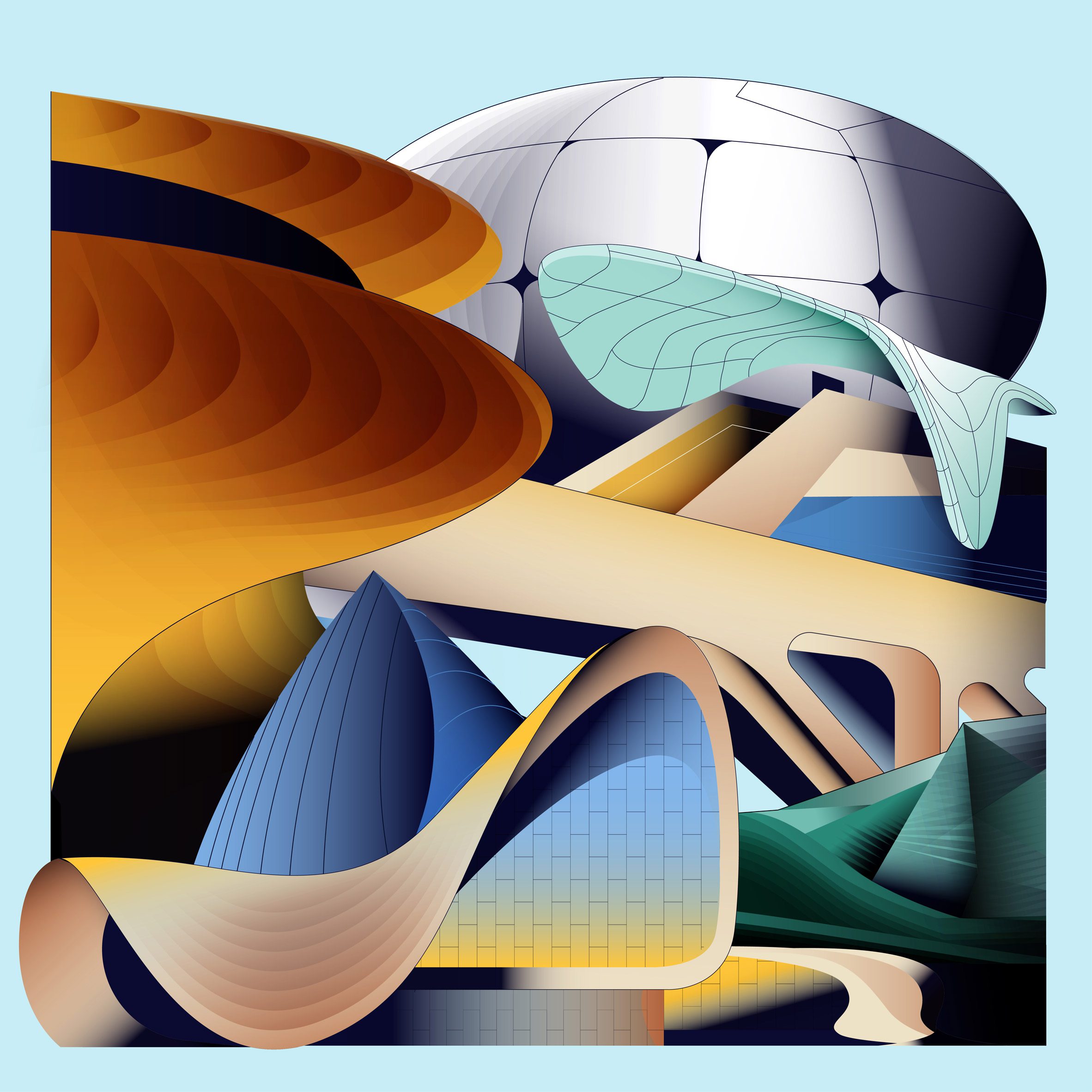
Parametricism
This article is part of our series on parametricism, the theory of architecture developed by Zaha Hadid Architects principal Patrik Schumacher that lays claim to becoming the 21st century's defining style.
The post "Parametricism is a technophile triumph of fetishised process over outcome" appeared first on Dezeen.