





Five Antoni Gaudí furniture pieces that reveal the designer behind the architect

The undulating architecture of Antoni Gaudí is lauded around the world, but less known is his distinctive furniture. For our Gaudí Centenary series, we look at five of these striking pieces.
Although globally celebrated as an architect, it would be remiss to consider Gaudí's legacy without mentioning his furniture, which is characterised by the same strikingly organic forms as his buildings.
The well-documented fascination with geometry and nature that informed Gaudí's architecture projects is matched in the smaller-scale pieces he designed specifically to reflect the spaces they inhabited.
Gaudí's original residential furniture collections were created for two of his most famous houses, Casa Batlló and Casa Calvet. Rooted in baroque and surreal design, replicas of these varnished oak pieces are still manufactured by Spanish brand BD Barcelona today.
"To understand Gaudí's furniture, one must first understand that he never separated architecture from life," BD Barcelona brand director Max D'Huart told Dezeen.
"Furniture was not conceived as an isolated object, but as part of a complete ecosystem designed to reconnect human beings with nature," he added. "Gaudí understood that while architecture shapes the way we perceive space, furniture shapes the way we experience it."
Architect Òscar Tusquets spearheaded the reissuing of Gaudí's furniture for BD Barcelona in 1975. He considers the pieces to be "just as authentic as the furniture preserved in museums", because they follow the minutiae of Gaudí's original designs.
"Gaudí didn't work directly on Gaudí did not simply design furniture for homes. Over his lifetime, he conceived pieces for myriad other settings, including decorative prayer benches for a church, as well as the interior of a particularly intricate pharmacy.
Here, we've rounded up five of Gaudí's furniture pieces that demonstrate the breadth of his creativity:
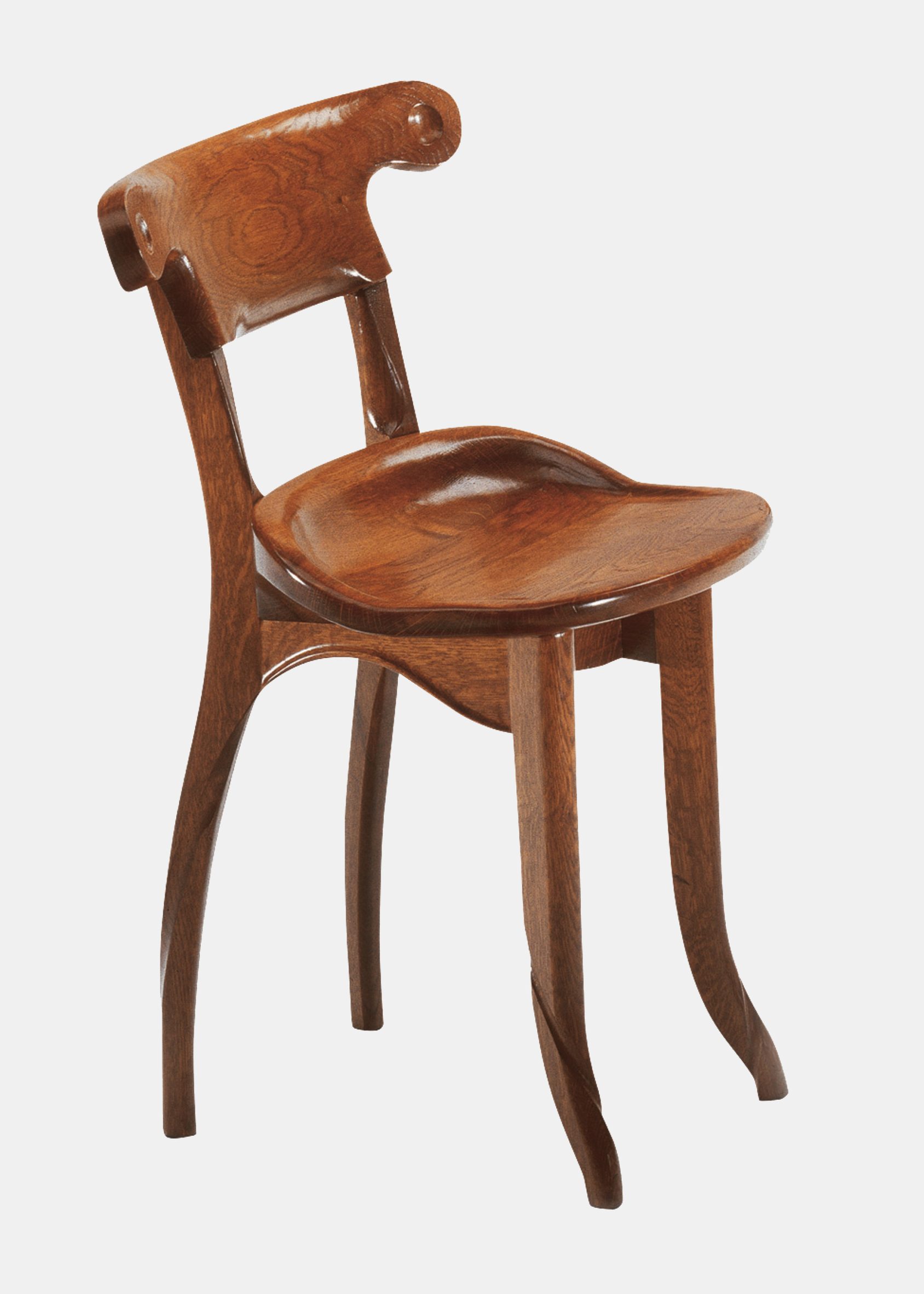
Battló Chair, 1906
One of Gaudí's most famous furniture designs, this chair was created for the dining room at Casa Batlló.
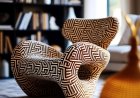
The solid oak seating stands out for its lack of straight lines, selected to echo the house's swollen balconies and undulating ceiling conceived as an ode to the Mediterranean sea.
It features a curved seat as well as an outstretched backrest with circular indents, which offer decoration and flexibility of movement. Finished with a layer of varnish, the chair was designed to adapt to the human body.
"Gaudí worked with his hands," explained Tusquets. "He would have someone sit in a chair and then adjust the design accordingly. You can see this very clearly in his metalwork, which feels shaped by hand. The same is true of his chairs and benches."
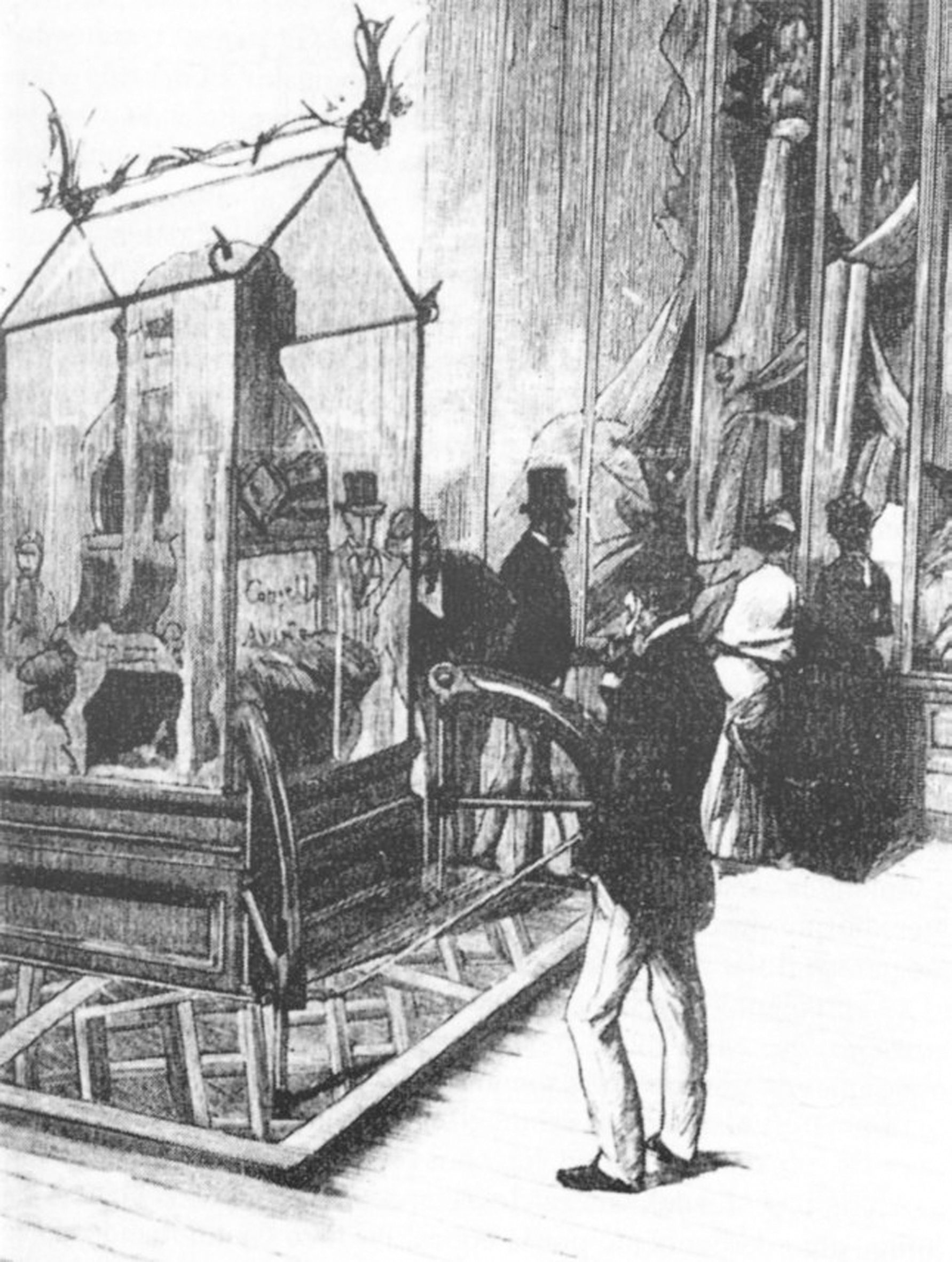
Esteban Comella cabinet, 1878
In 1878, the year Gaudí graduated as an architect, the young creative earned a commission from glove retailer Esteban Comella that would change the course of his career.
The brand tasked Gaudí with designing a cabinet for the Spanish Pavilion at the Paris Universal Exposition, which piqued the interest of Spanish industrialist Eusebi Güell.
Impressed with Gaudí's craftsmanship, Güell went on to commission the architect to conceive the furniture for the pantheon chapel at the Palacio de Sobrellano in Comillas.
The project marked the start of a collaborative relationship that saw Gaudí name five building's after the industrialist – Park Güell, Palau Güell, Colònia Güell, Bodegas Güell and Pabellones Güell de Pedrables.
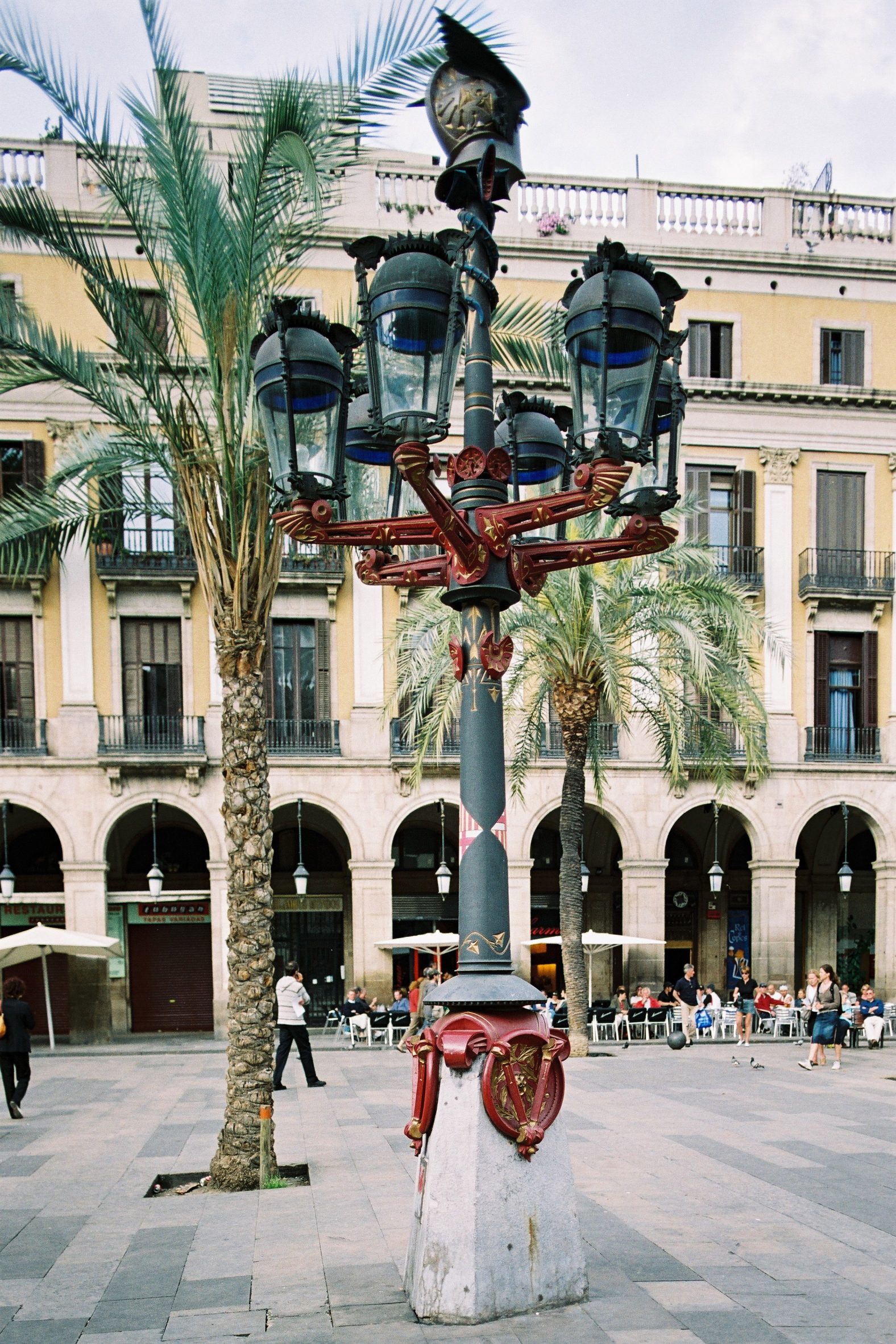
Plaça Reia lampposts, 1879
Shortly after graduating, Gaudí caught the attention of the Barcelona City Council, which commissioned him to create street lights for two of the city's squares – Plaça Reia and Pla de Palau.
The first pair of cast iron lampposts Gaudí created for Plaça Reia are characterised by six crimson arms, which jut out to support decorative glass lanterns.
Gaudí crowned the lampposts with distinctive caduceuses wrapped with two snakes and topped by winged helmets. The symbols represent Mercury, the Roman god of commerce, selected as a nod to Barcelona's enduring reputation as a thriving port city.
When explaining its decision to accept Gaudí's design proposal, Barcelona City Council said the following:
"Creating a candelabra of noble simplicity, without weakness, giving each part the importance it requires, and strictly complying with the requirements for which it has been created: the greatest frankness has been followed with due formality in the use of the materials, leaving their structure and layout completely visible."
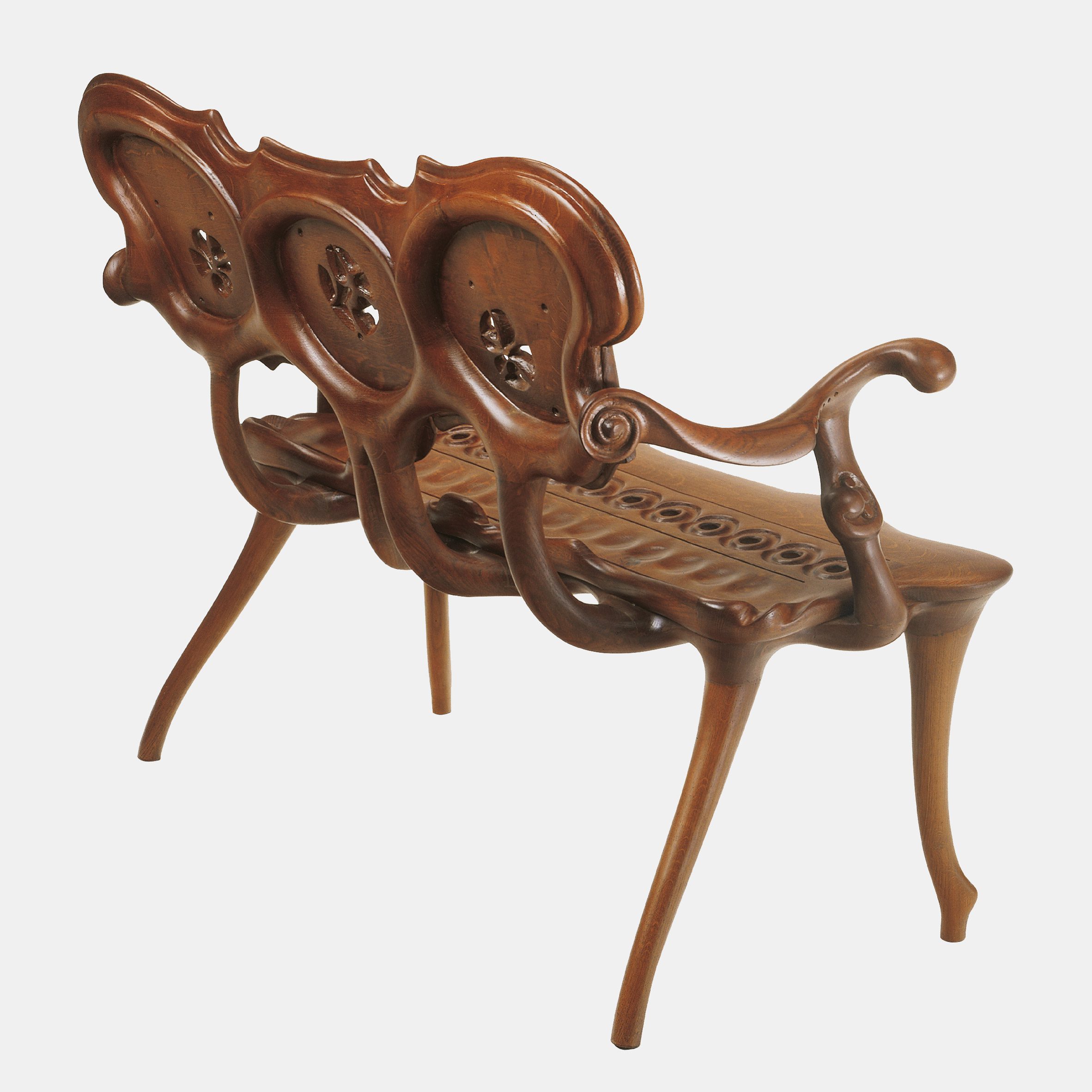
Calvet Bench, 1902
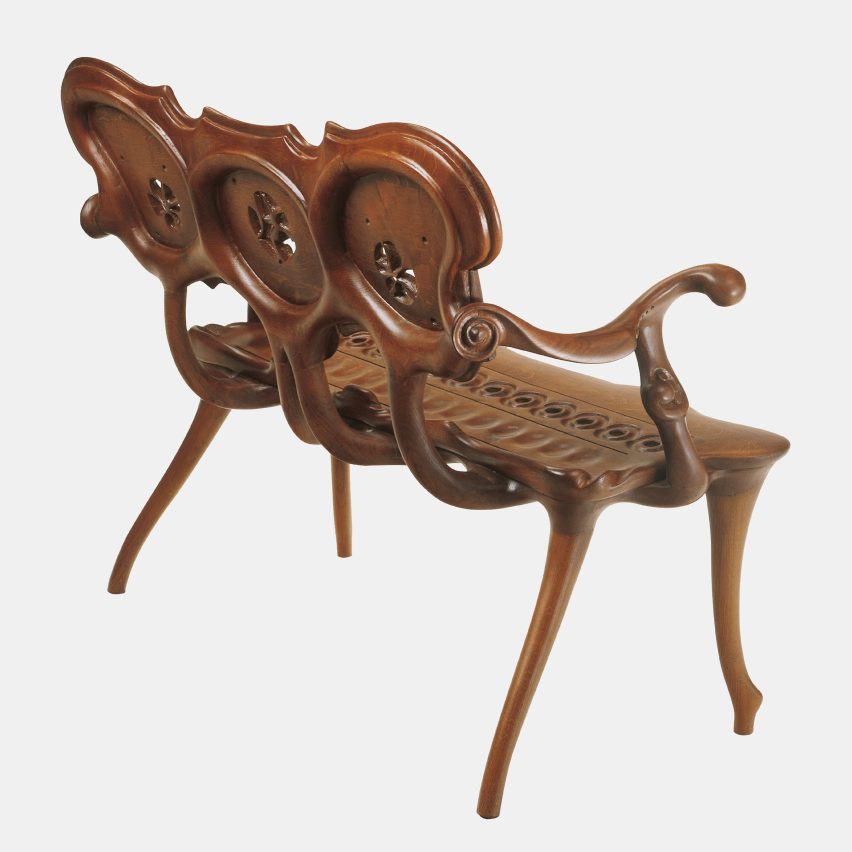
This three-seater bench was one of the varnished oak furniture pieces Gaudí originally designed for the board room of Casa Calvet. Widely considered to be Gaudí's most conventional building, the house won a Best Building Award from Barcelona City Council.
In true Gaudí style, the handcrafted bench was created to reflect the architecture it inhabited. Four delicately tapered legs support an ornate frame, which is characterised by a trio of symmetrical floral carvings.
The bench's arms were joined to the backrest using a cantilever structure, highlighting the delicacy of the design despite the size of the seating.
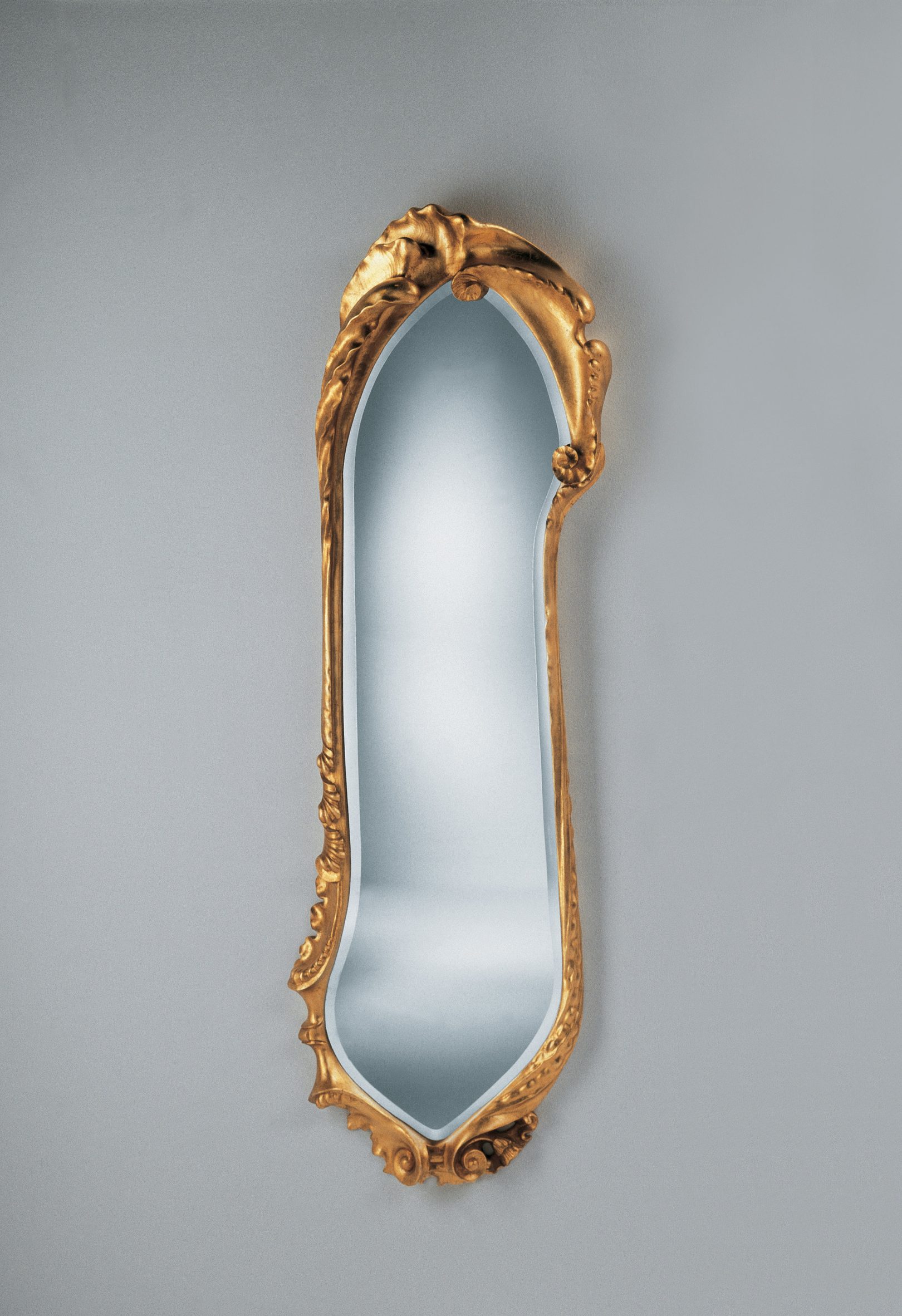
Calvet mirror, 1902
Fine golden brass and gold leaf gilding characterise this solid oak mirror, which Gaudí crafted for Casa Calvet.
The designer shaped the mirror by hand, crafting an amorphous piece that was intended as a sculpture as much as a functional object.
For Tusquets, even Gaudí's smallest pieces of homeware highlight "a remarkable coherence throughout his work".
"Gaudí never stopped designing," concluded Tusquets. "He could move seamlessly from the scale of an entire building to the smallest detail, such as the door handles of La Pedrera. Every problem became an opportunity to create art."
Gaudí Centenary
This article is part of Gaudí Centenary, our editorial series profiling the Catalan architect and designer Antoni Gaudí, marking 100 years since his death.
The post Five Antoni Gaudí furniture pieces that reveal the designer behind the architect appeared first on Dezeen.