










Clase Azul's La Hacienda complex in Jalisco features "ceramic horizon"
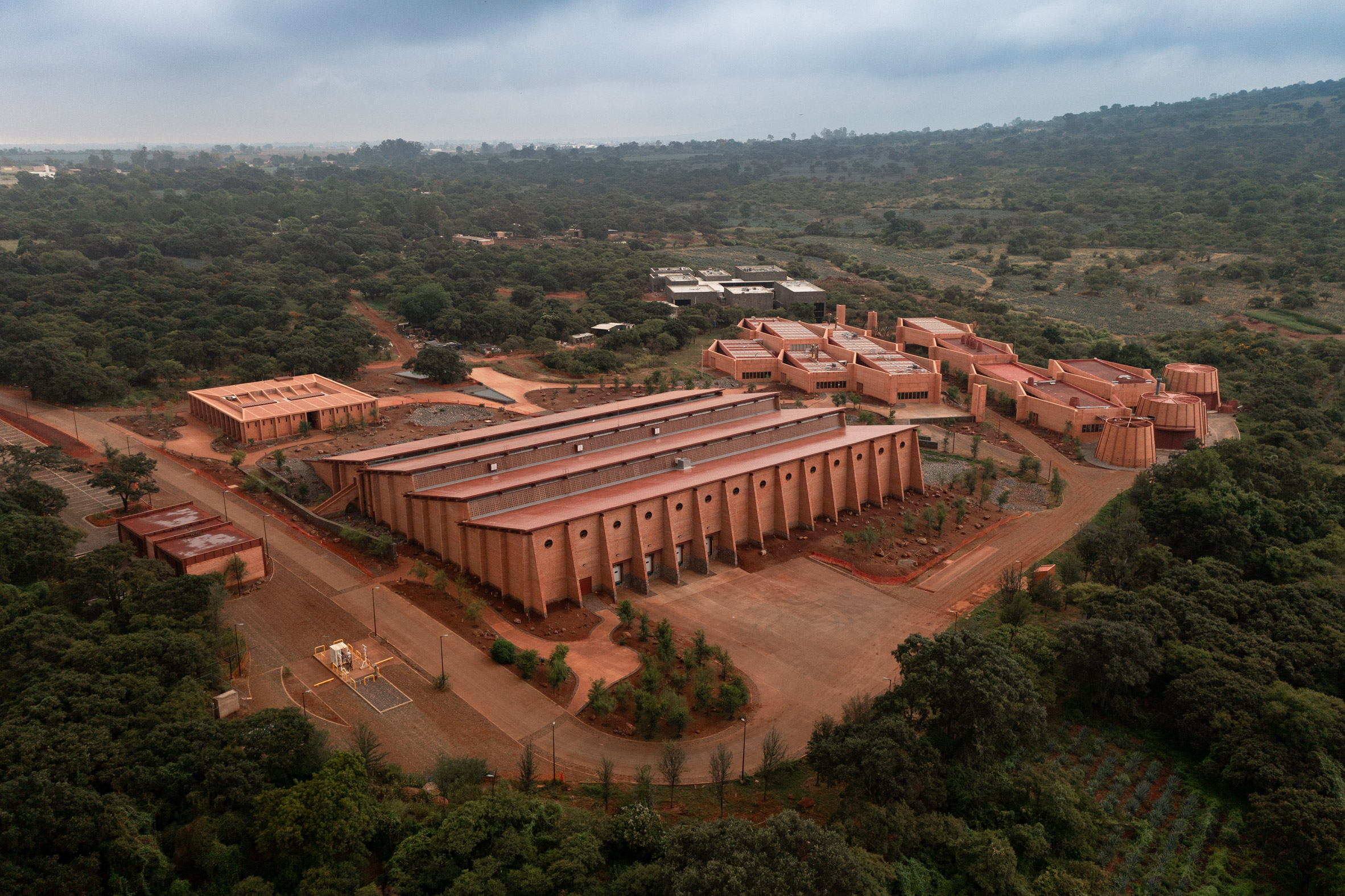
A team of architects has produced a multi-building complex called La Hacienda for tequila brand Clase Azul in Jalisco, Mexico, integrating artisanal building practices at an industrial scale for its red-hued structures.
After securing 22 hectares in the highlands of Jalisco, Clase Azul founder Arturo Lomelí commissioned five architects to submit proposals for a complex that would integrate production, storage and cultural activities for his global tequila brand.
The goal was to create a space to support production and operations, while educating the public on both Mexican craft and the art of tequila production.
Seeing the complexity of the project, local studios Atelier ARS, Elías Rizo Arquitectos, Estudio Macías Peredo, Tacher Arquitectos and Huber Design Studio proposed a collaboration, with Atelier ARS master planning the complex and each studio taking on a specific building.
The project, which began construction in 2017, features several clusters of buildings, the majority clad in red materials, from brick to pigmented concrete and red metal.
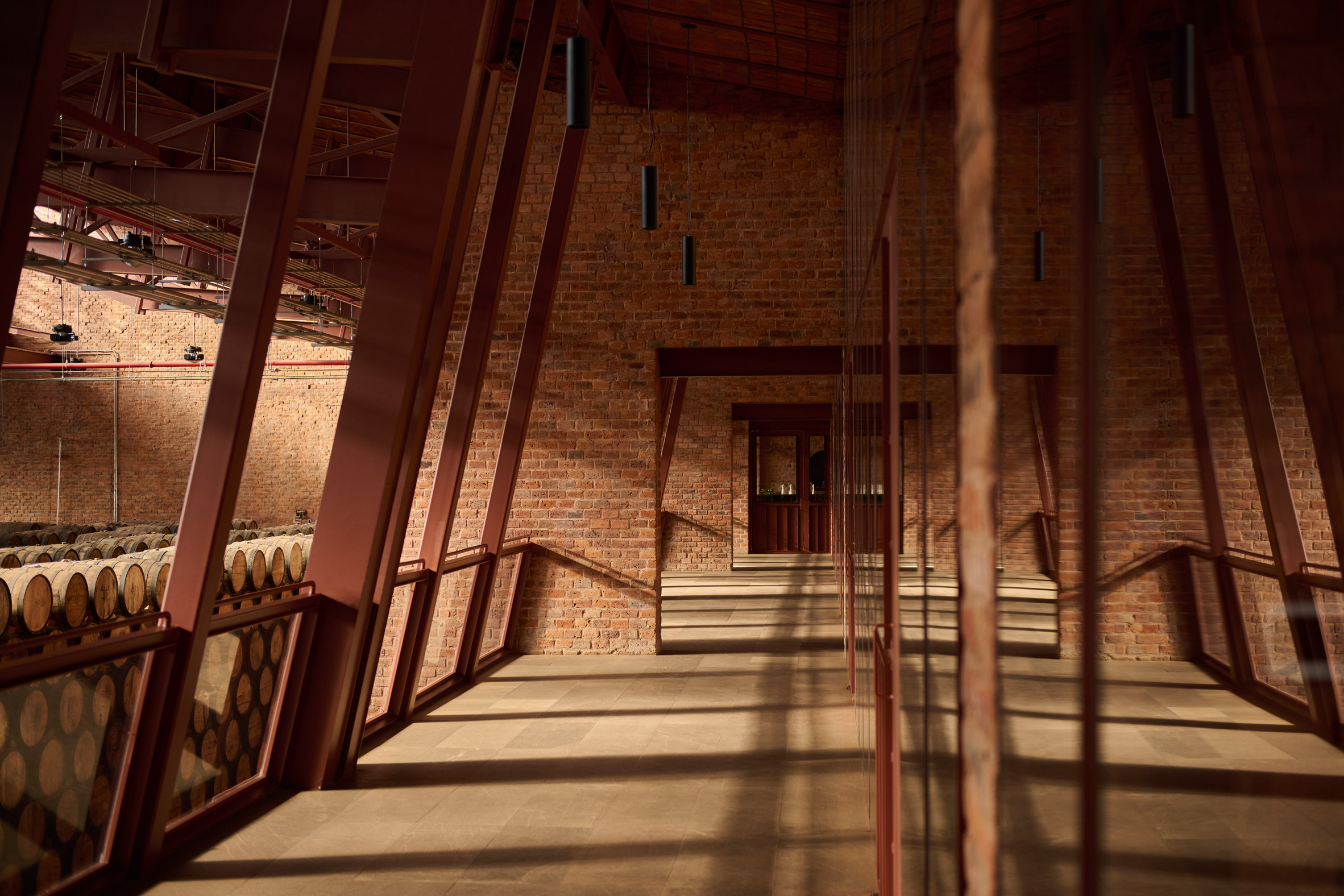
The goal was to highlight Mexican artisanal practices, in the brickwork, the ceiling work and elsewhere, while still having buildings with a scale large enough to support tequila storage and production.
"In order to make it on that scale, we had to bring a lot of metal to support certain techniques," Lomelí told Dezeen.
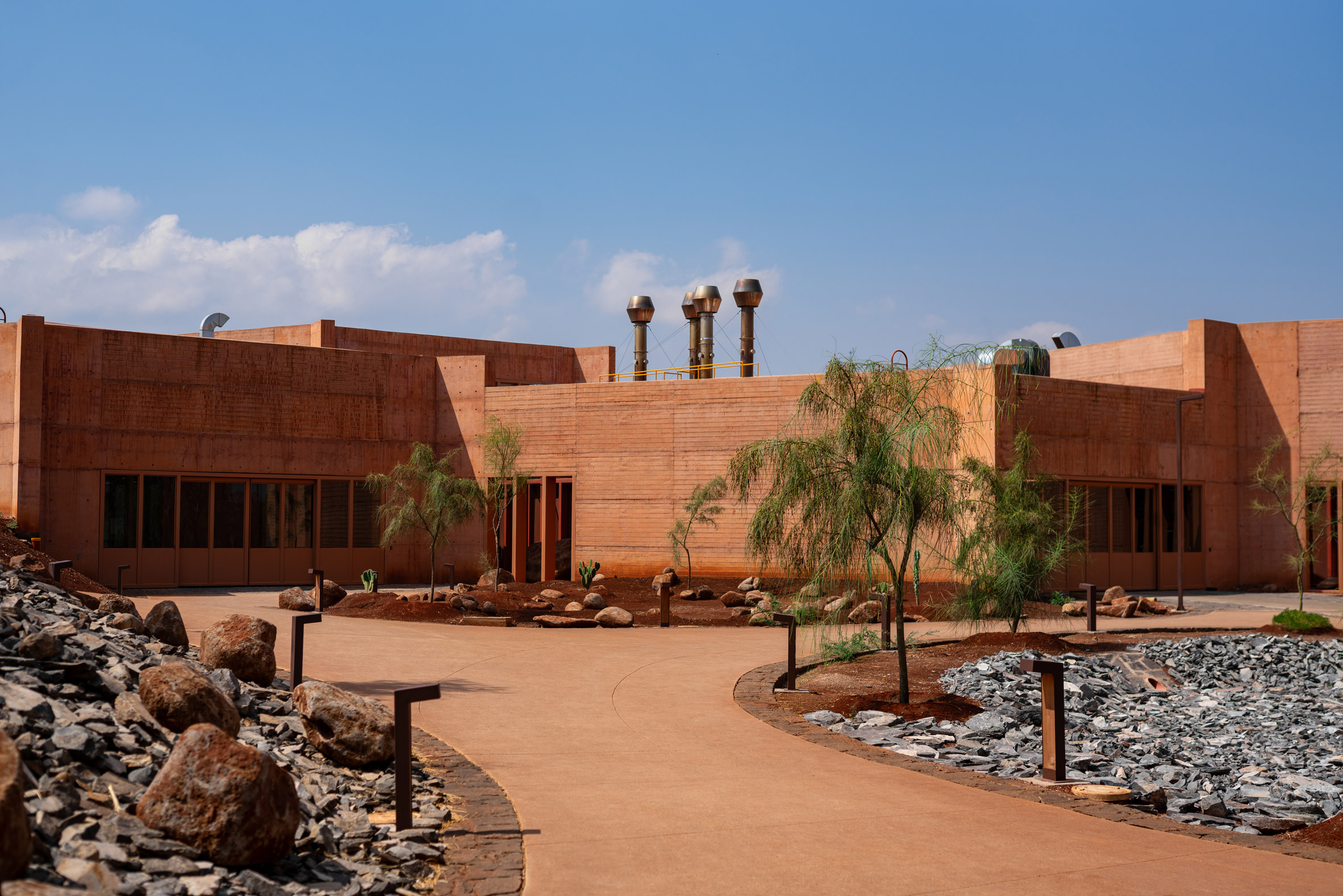
"For example, the ceramic and tequila factory are built with cement, but they've been able to bring the red colour of the land, because all the highlands of the state of Jalisco have a lot of iron in the soil, making it red."
Hemmed in by oak groves and tequila fields, the complex has a series of pathways that snake between and even through some of the buildings.
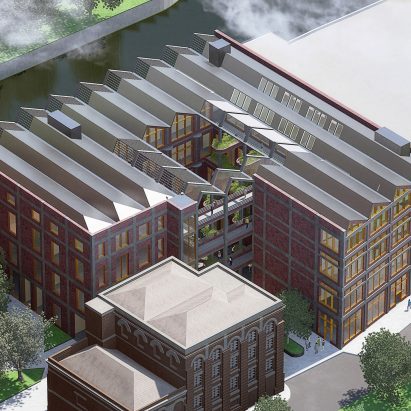
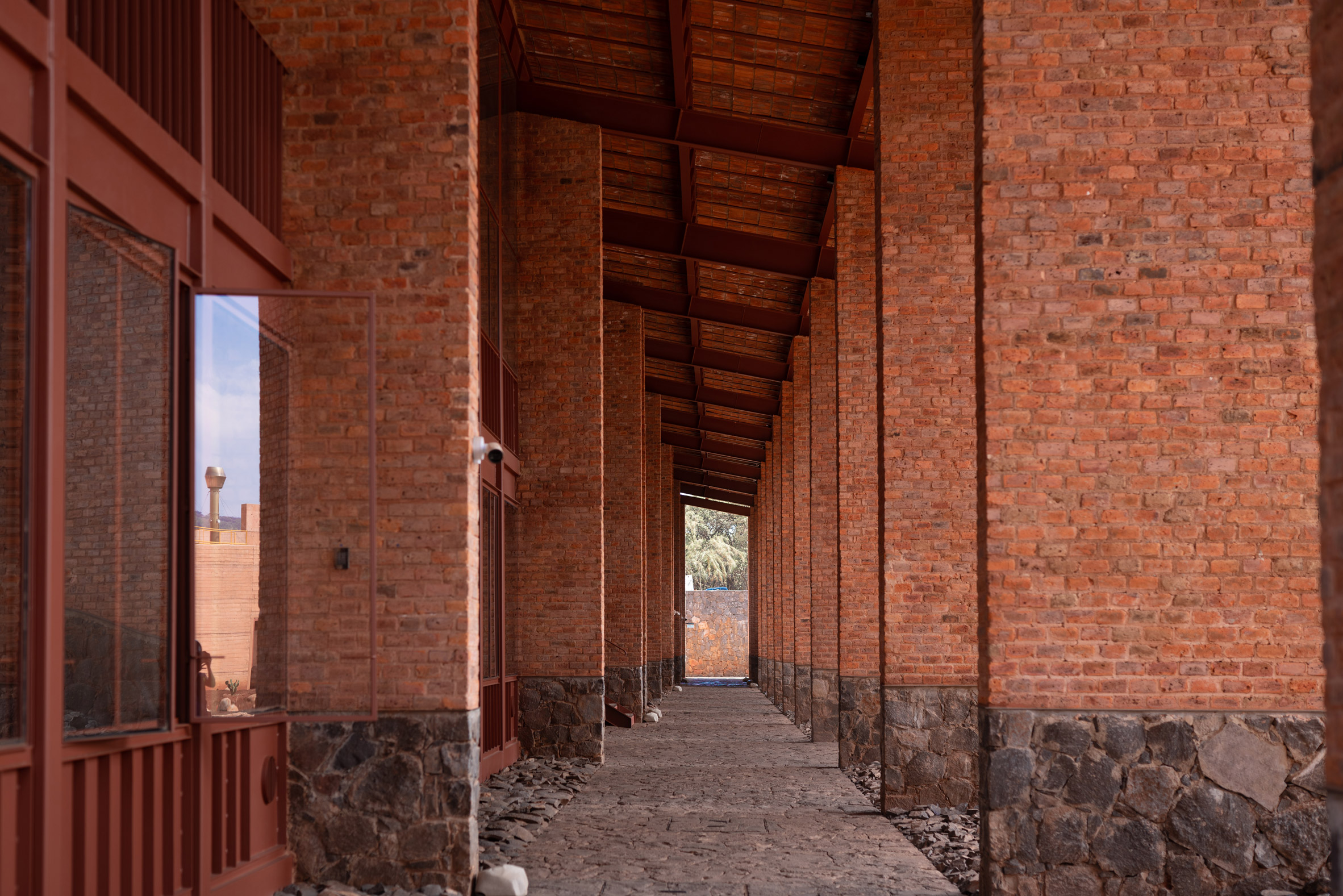
Most immediately apparent is the massive bottling nave, warehouse and office building, designed by Atelier ARS. The structure features a sawtooth roof supported by load-bearing bricks and Catalan vaults. At one end, the structure meets the ground and submerges.
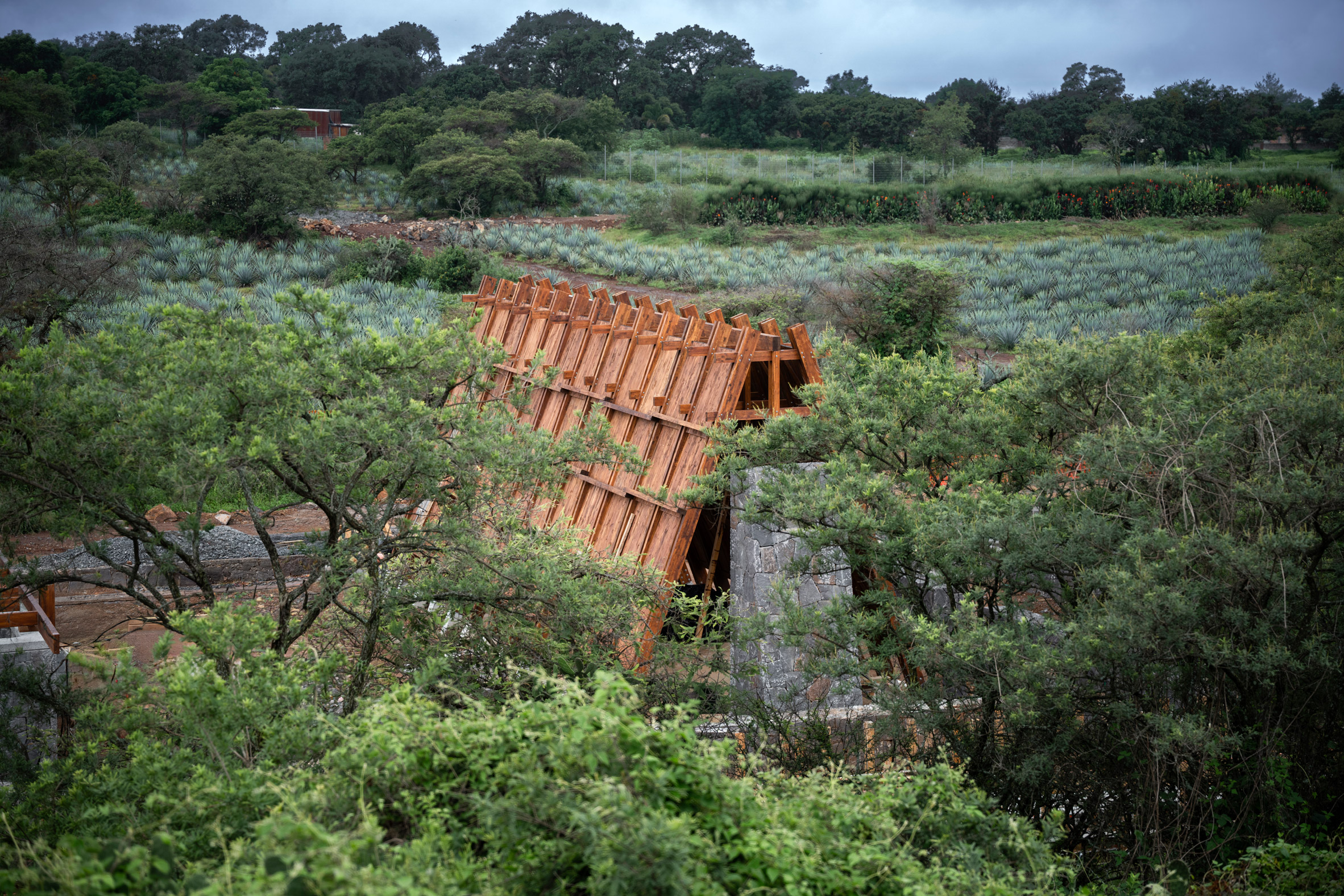
"Because the warehouse was a large building, but we didn't want to obstruct the distant views from the site, we decided to partially bury it and leave its uppermost roof against the natural topography, creating what we call a ceramic horizon," Atelier ARS co-founder Alejandro Guerrero told Dezeen.
The local material used in the building presented a chance to bring on local producers, according to Guerrero.
"We knew beforehand that the building's material choice could benefit a significant number of local producers and provide work for local artisans," he said. "It was a fact that we couldn't ignore."
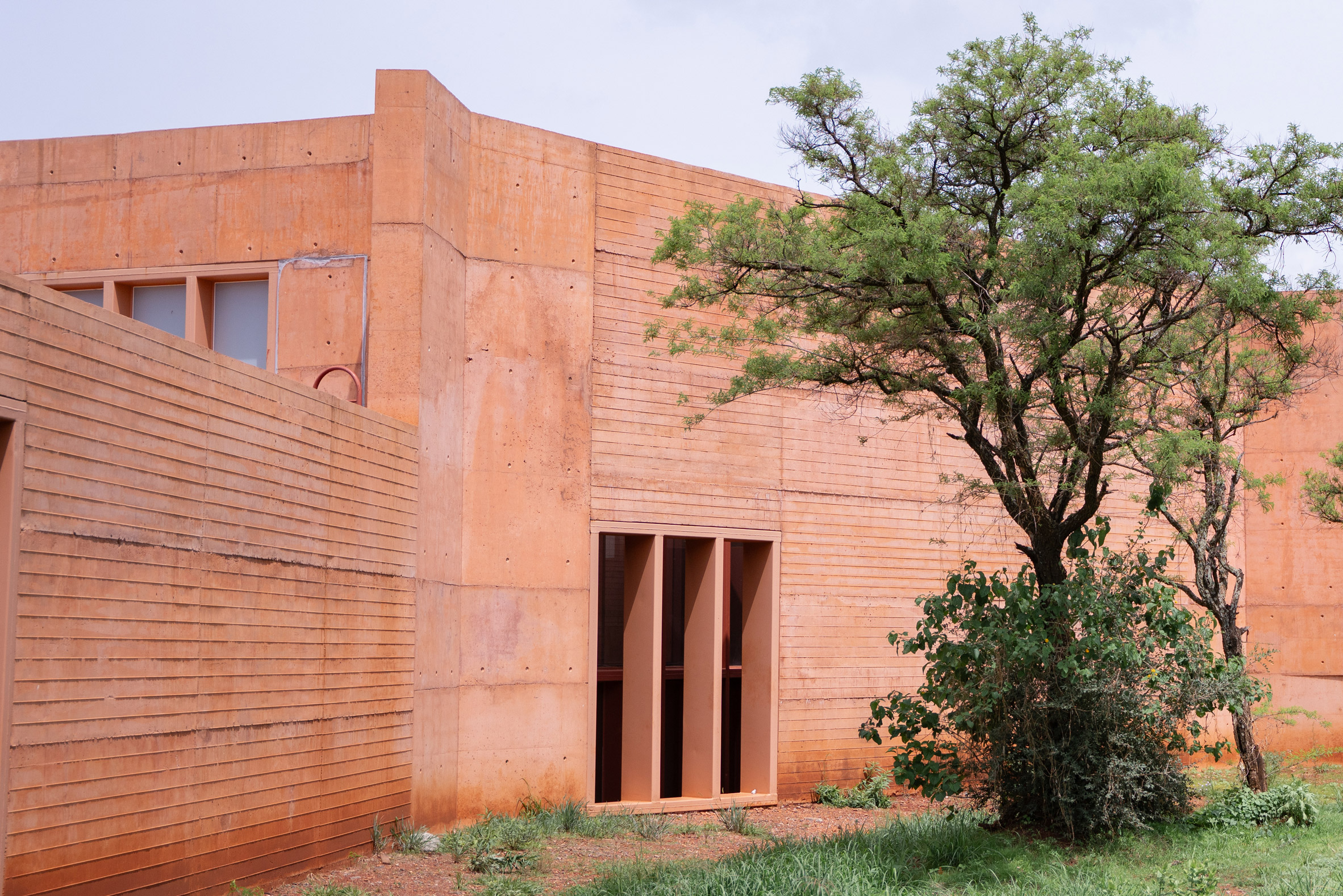
Guerrero also emphasised the mix of industrial and artisanal techniques in the construction.
"More than a branding exercise, our goal was to demonstrate interest in the artisanal nature of Clase Azul within an industrial-type building, which is something very uncommon," he continued.
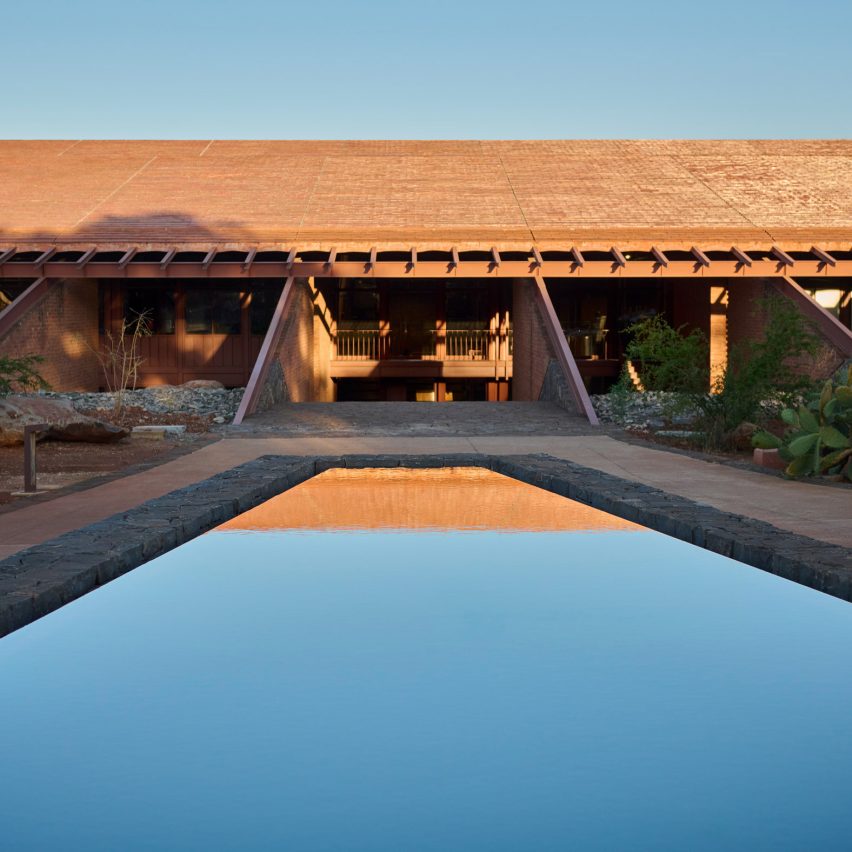
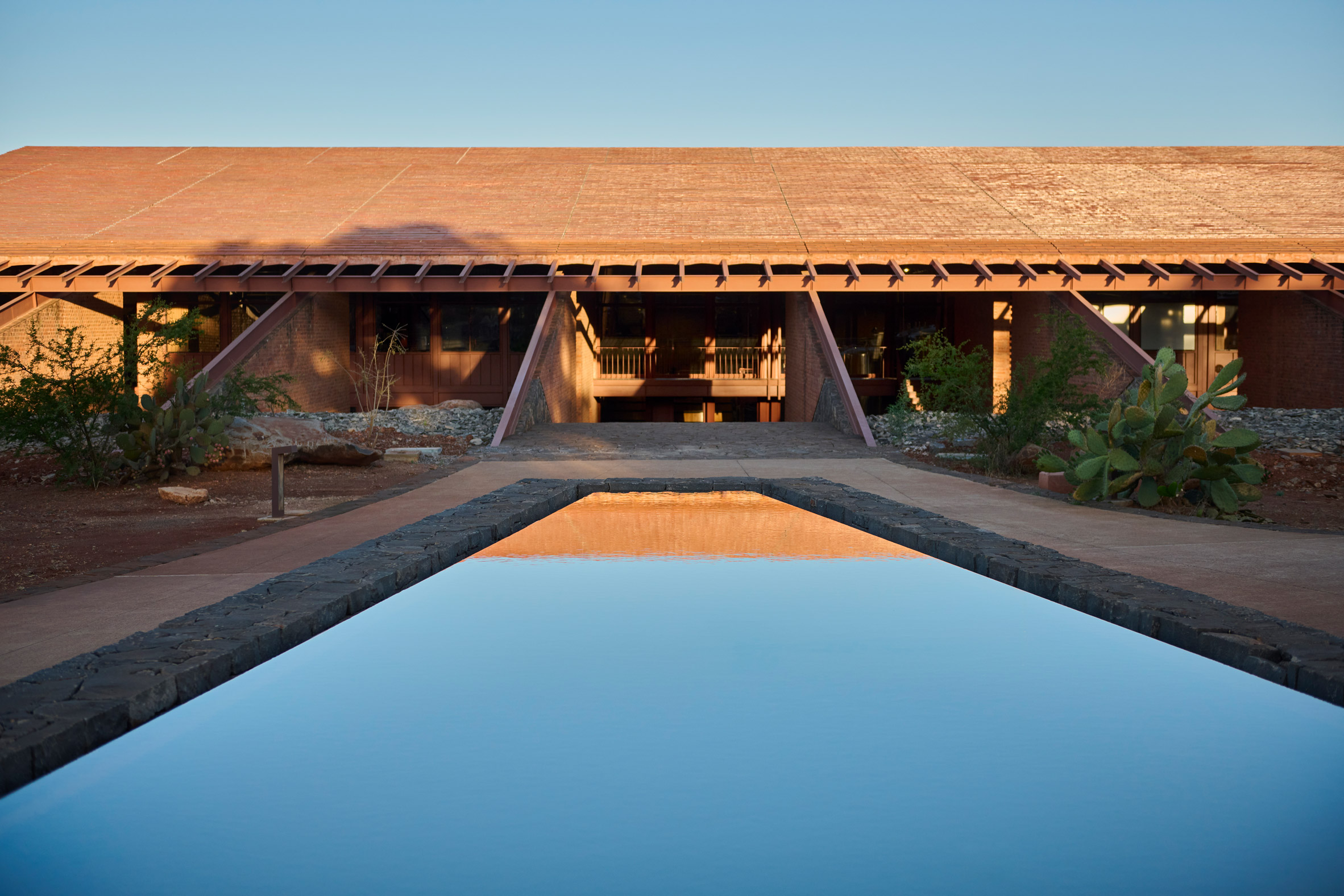
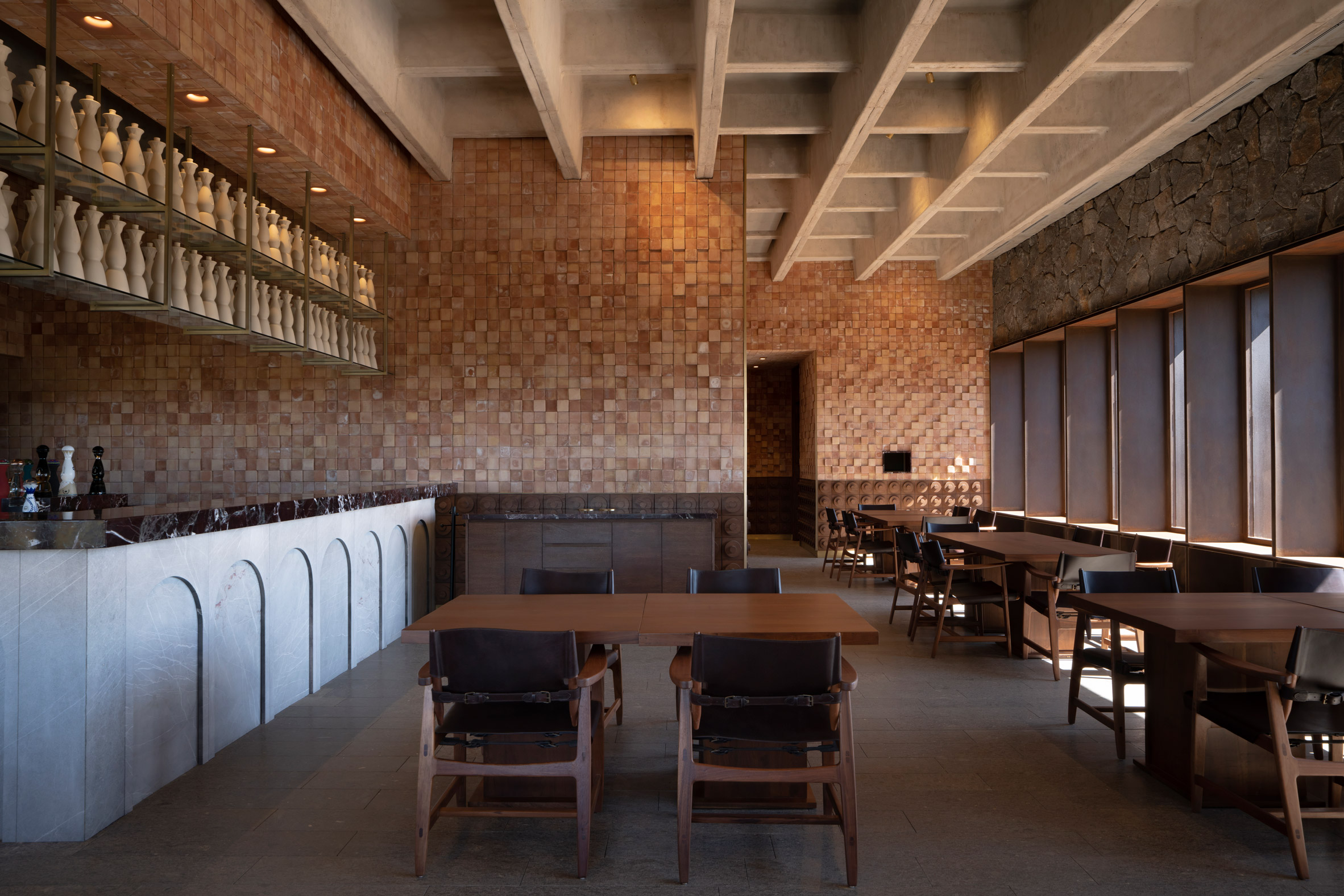
Behind the nave, the paths that characterise the whole of the complex begin, with a plaza and reflecting pool, an enclosed pavilion and a restaurant, OYA, with a rigorously geometric exterior and loggia by Tacher Arquitectos and Huber Design Studio, the latter studio also led technical and production systems for the overall project.
A small boutique also sits next to the reflecting pool.
From here, the paths lead to a ceramics and tequila factory by Estudio Macías Peredo, which has a hive-like set of exterior walls rendered in red-pigmented concrete that create exterior courtyards with the rectangular structures within.
The interplay of the interior passageways, smoke stacks and a set of brick-clad circular buildings gives the cluster the structure and appearance of a temple complex, as well as an industrial character.
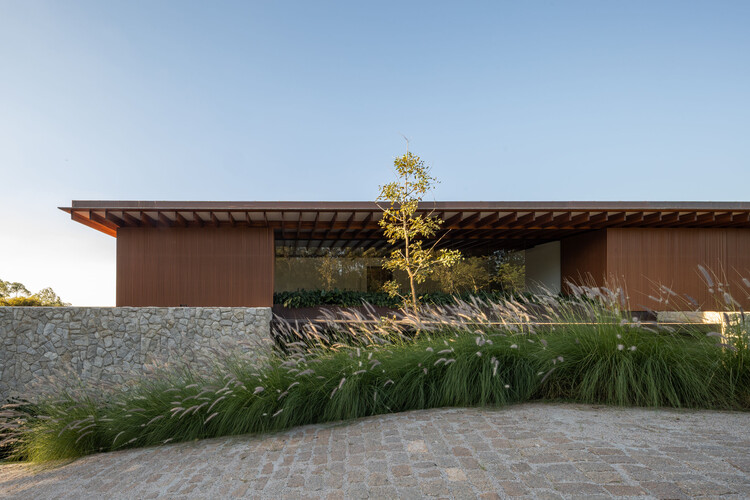
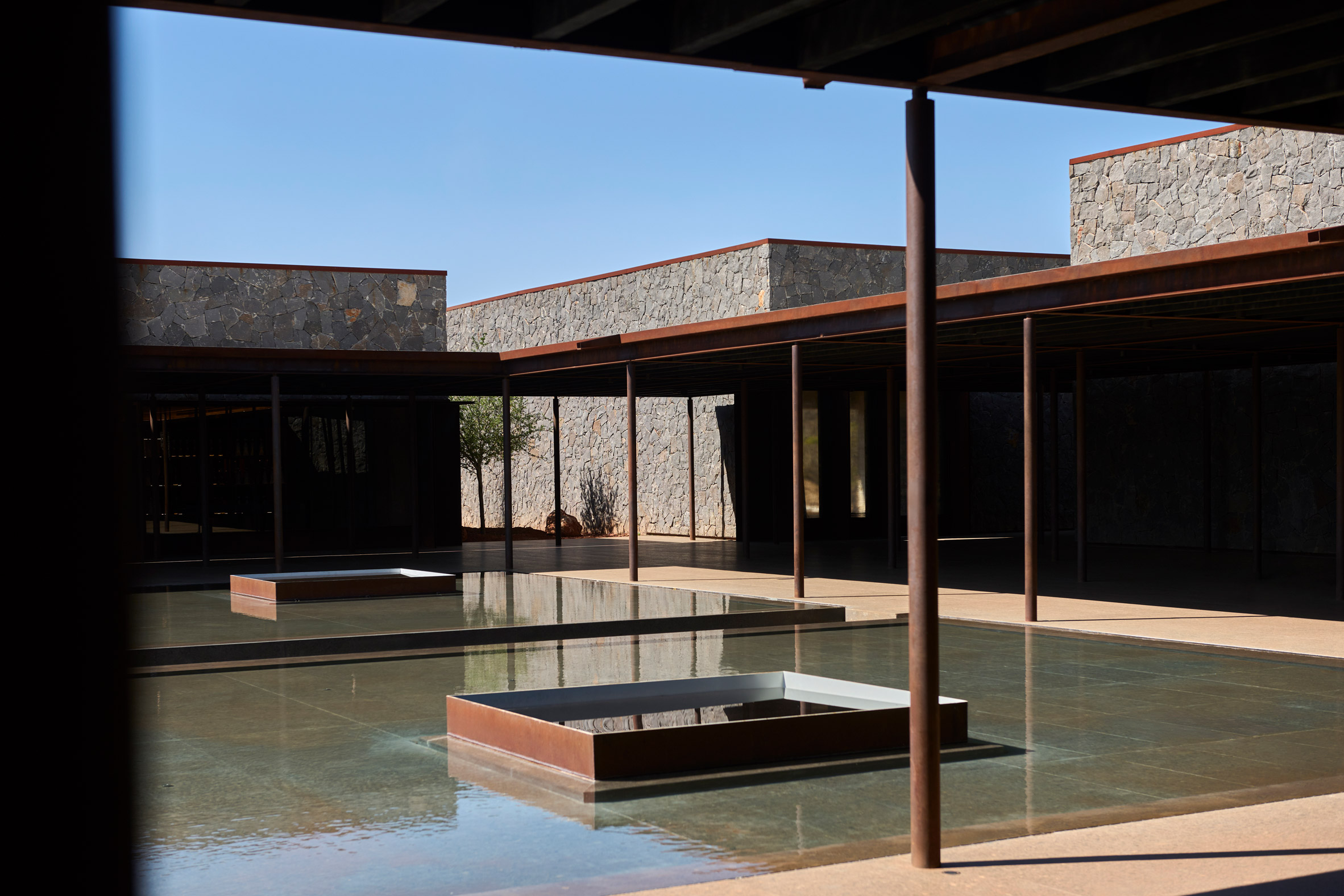
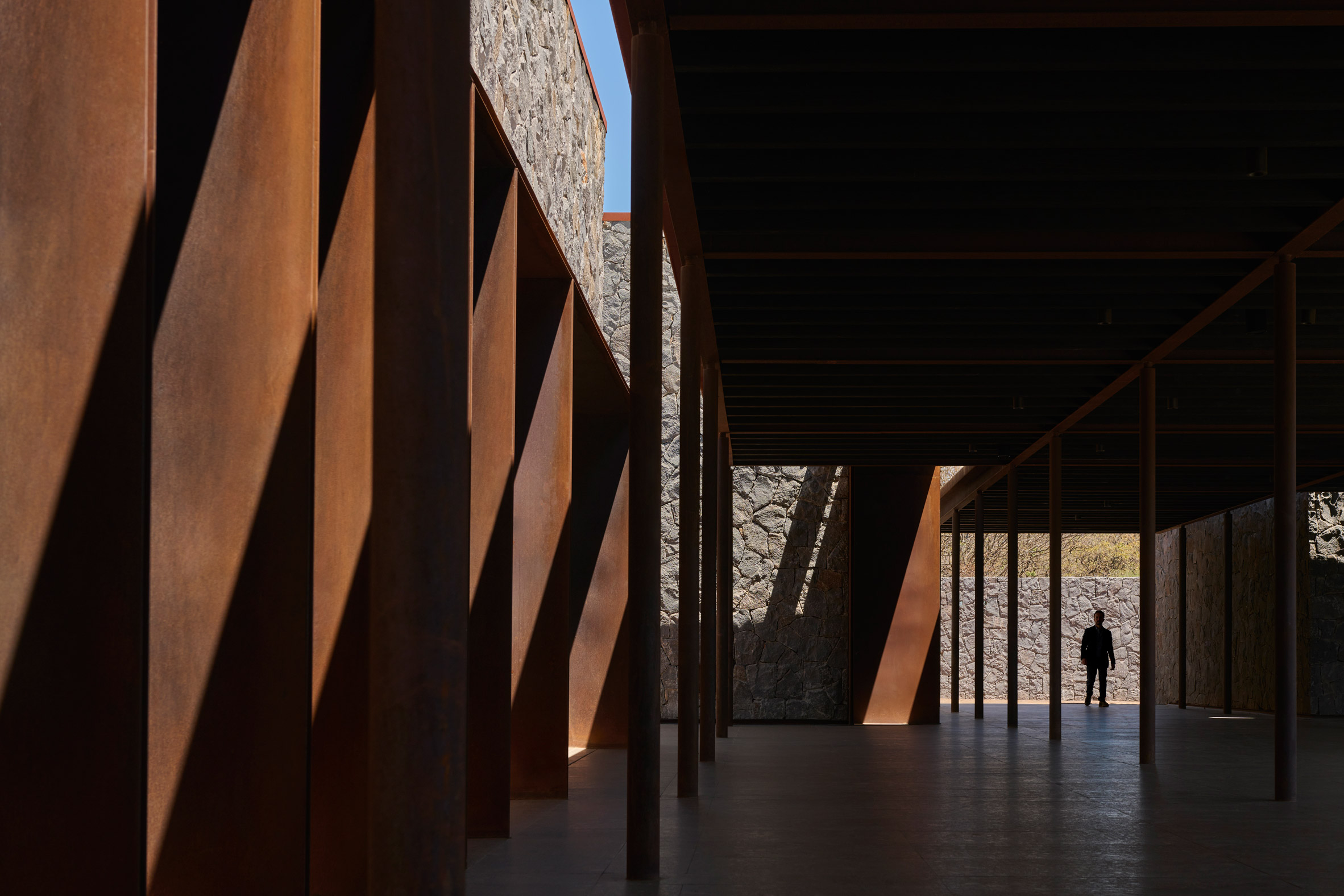
At the back of the property is the visitor centre, which was clad in smoky volcanic stone.
Designed by Elías Rizo Arquitectos, the structure comprises a series of pavilions of various heights connected by a central courtyard with a reflecting pool and loggia made with oxidised metal piloti and overhangs.
Much of the stone was pulled from the property and was laid in ways meant to mimic organic patterns.
In front of this structure is a garden and an agave plant collection, as well as a Clase Azul garden.
Overall, the complex was designed to showcase Mexican culture and to monumentalise the work of tequila production. Many of the structures have exhibition spaces, and the complex also features the aforementioned restaurant to showcase Mexican cuisine.
"We are rooted in our Mexican culture, so that's why we decided to build something to remain longer than us, that transcends," said Lomelí.
"La Hacienda is going to keep going after all of us are gone and come back again."
Other structures devoted to alcoholic beverage production and its promotion include a wooden winery in Portugal and a distillery with a flower-covered roof in Scotland.
The photography is courtesy of Clase Azul.
The post Clase Azul's La Hacienda complex in Jalisco features "ceramic horizon" appeared first on Dezeen.