









Between Forest and Form: Explore an Art-Inspired Courtyard House Evoking Stillness in the Hudson Valley
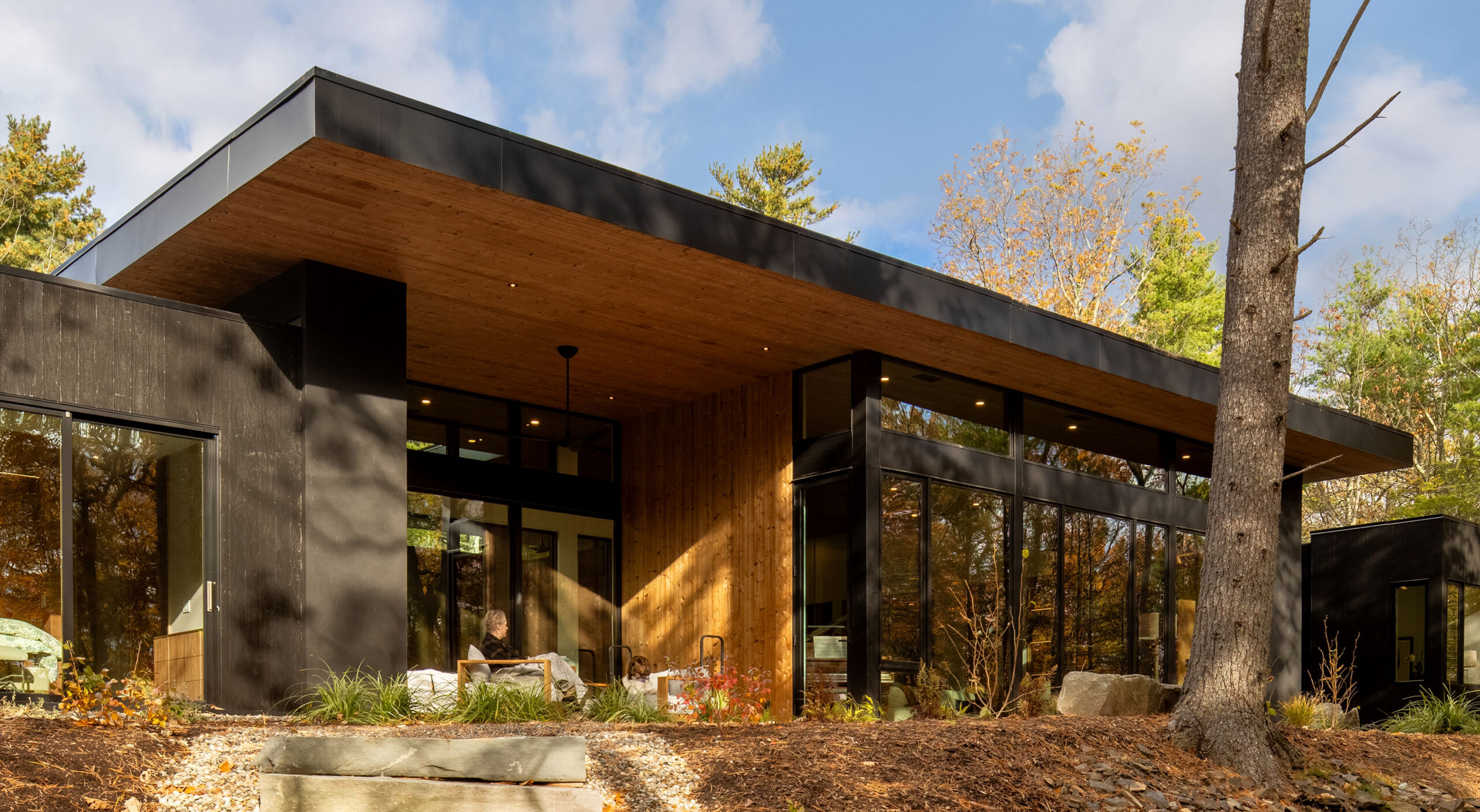
On a rocky terrace in Saugerties, New York, Fermata sits quietly among the trees. Designed by Studio MM and completed in 2025, the single-story residence translates a client’s devotion to art, gardening and calm rituals into built form. Its name comes from a musical term indicating a held note of indefinite duration, and that idea of suspended time shapes the layout, form and material expression of the house.
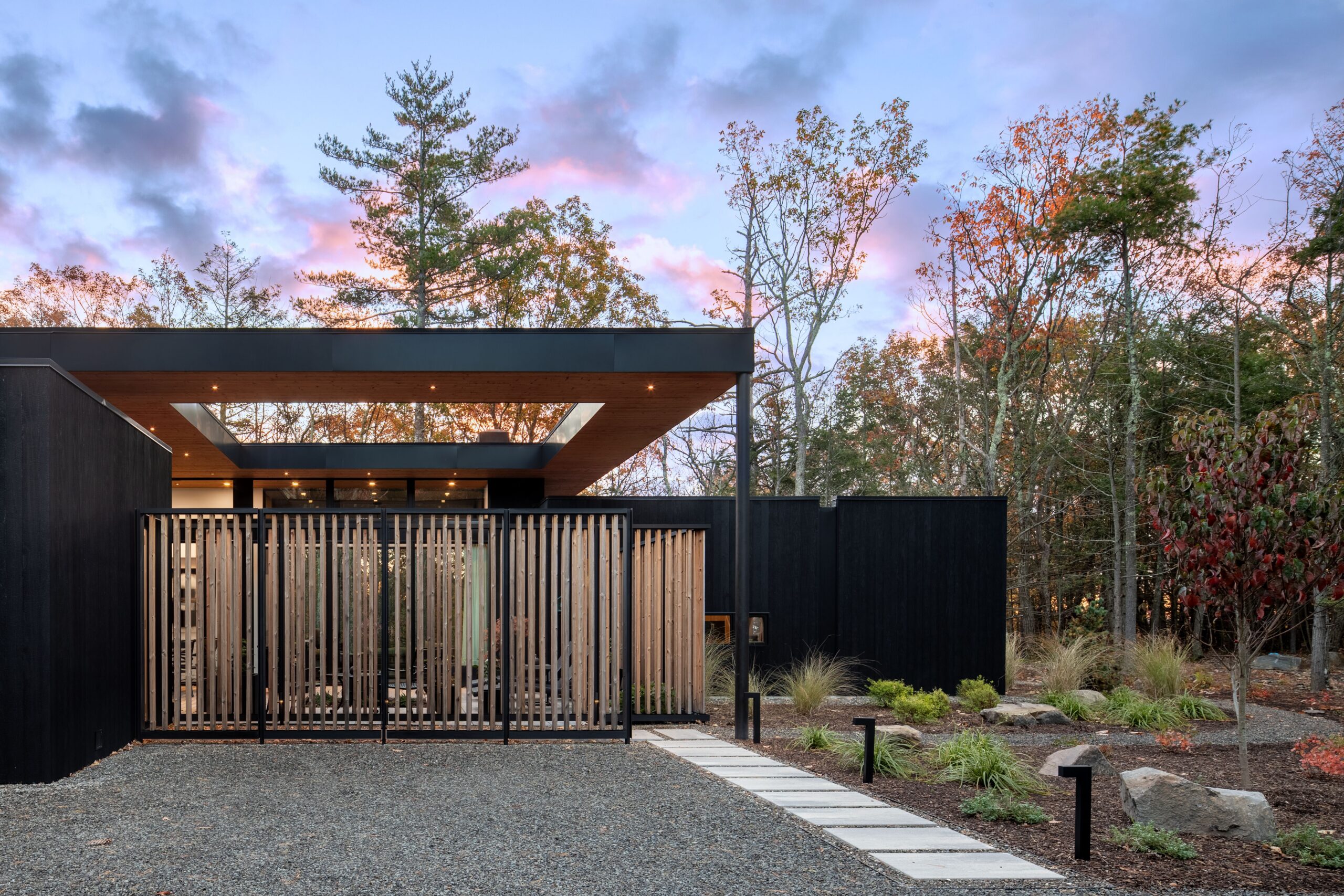
Photo © Brad Feinknopf
Rather than chasing distant views, the design focuses on the immediate landscape: the texture of stone underfoot, the shifting light through branches, the intimacy of a wooded clearing. The house orients itself to the east, capturing morning light and framing glimpses of forest and rock. It rests low on the terrace, extending horizontally across the site and wrapping around a central courtyard that anchors daily life for its inhabitants.
Daylight, energy performance and material warmth were central to the design from the outset. Large panes of Marvin Ultimate glazing define the character of the living spaces, drawing light deep into the plan while maintaining the thermal control required in the Hudson Valley climate. The windows and doors are not secondary elements — they are pivotal to how the house breathes and connects to its stunning surroundings.
Sequencing Serenity
The plan originates in a single, clear gesture: a linear axis inspired by one of the client’s artworks. This “line” cuts through the floor plan, linking entry, living spaces, courtyard and primary suite. Along its length, the architecture creates moments of compression and release, encouraging a measured pace through the house.
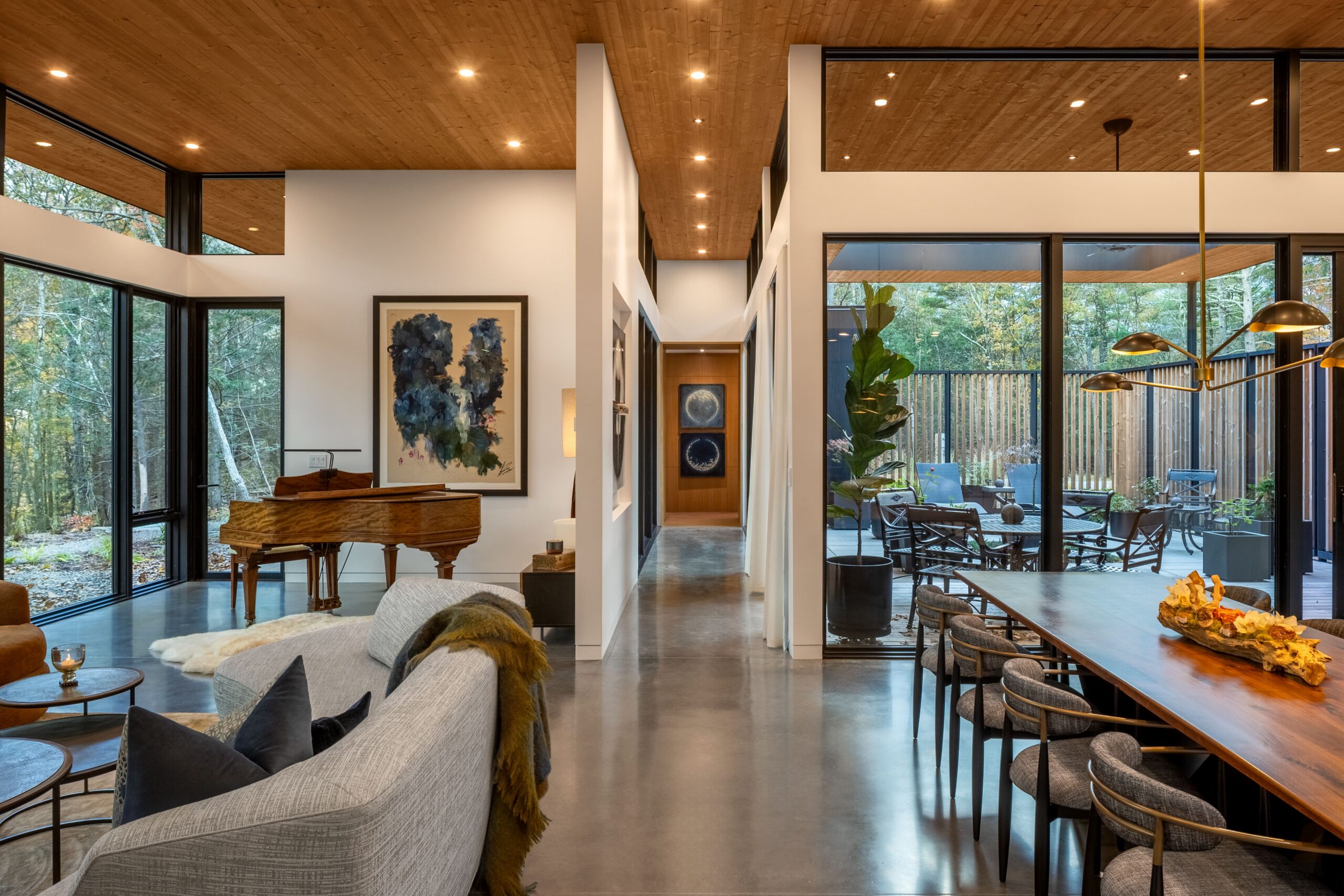
Photo © Brad Feinknopf
A double-walled screen of steel and thermally modified radiata pine defines the approach. As one nears the entry, glimpses of the courtyard appear through the textured surface. Inside, the courtyard reveals itself more fully, becoming the light-filled center of the home. Nearly every major room acknowledges this space, reinforcing its role as both a visual anchor and a source of natural illumination.
As Marica McKeel, Principal of Studio MM, explains, the glazing strategy was critical to achieving this effect: “We chose Marvin Ultimate for the project because we were looking for excellent energy ratings combined with larger panes of fixed glass and minimal frame profiles.” The desire for expansive openings without visual clutter aligned with the disciplined geometry of the plan.
Warmth, Contrast and Crafted Surfaces
Fermata’s material palette is restrained yet richly layered. The exterior is clad in charred timber, its deep black surface absorbing light and helping the structure recede into the wooded context. Radiata pine appears in soffits and decks, introducing warmth that will evolve over time as the wood weathers.
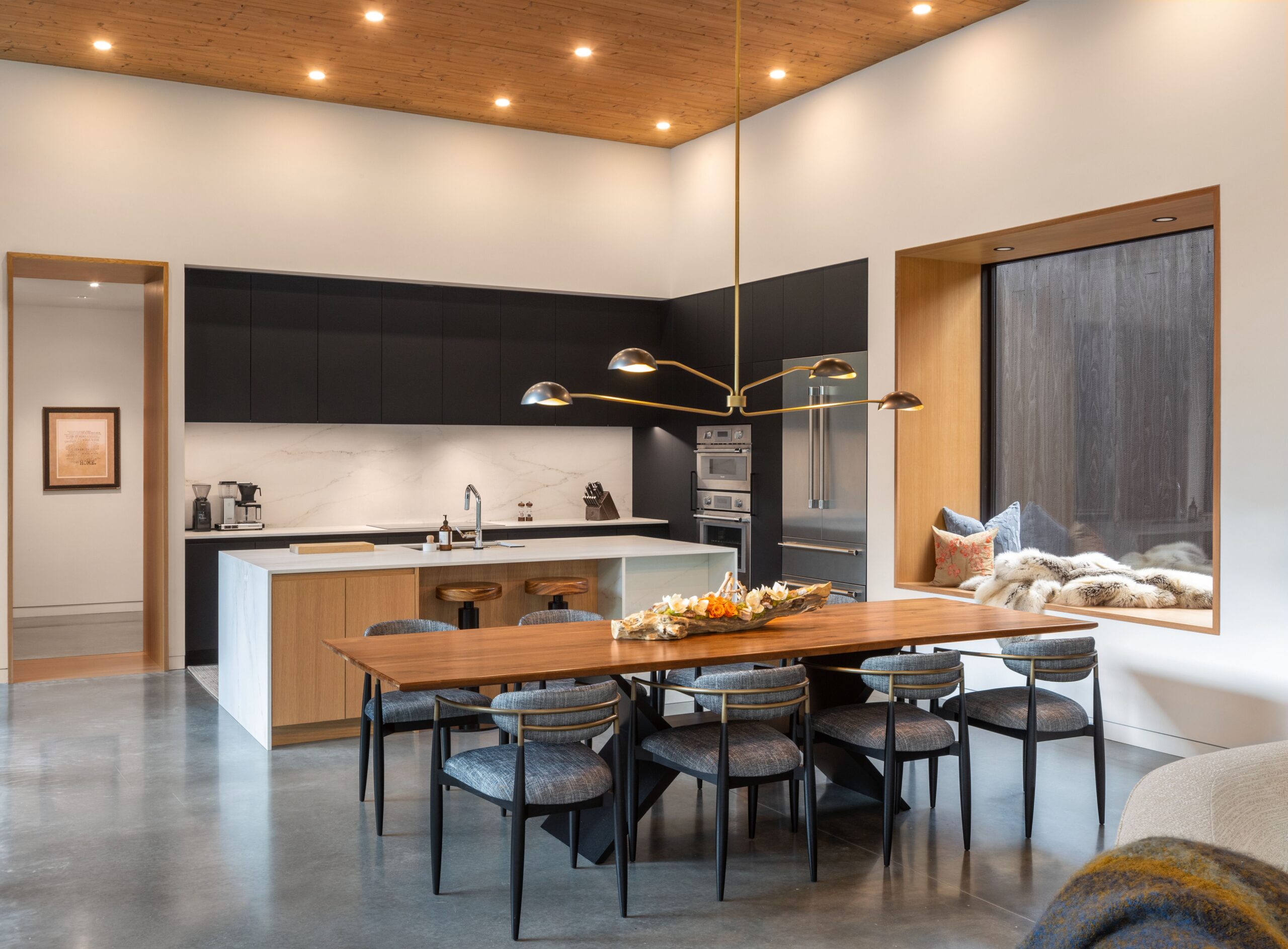
Photo © Brad Feinknopf
Inside, white oak wraps ceilings, built-ins and three substantial thresholds that mark the transition from the main living area into the private wings. These nearly three-foot-deep passages create tactile moments between zones, inviting pause before entering each new space.
The choice of glazing helped to reinforce a sense of change between rooms. “In the three wings of the house, we wanted the windows to have a pine wood interior, which provided the spaces with an additional warmth,” McKeel explains. In contrast, the primary living area adopts a darker interior expression: “In the primary living area, we used a factory-finished black stain, creating a sharp contrast for the interiors and allowing wood built-ins to remain the focus.”
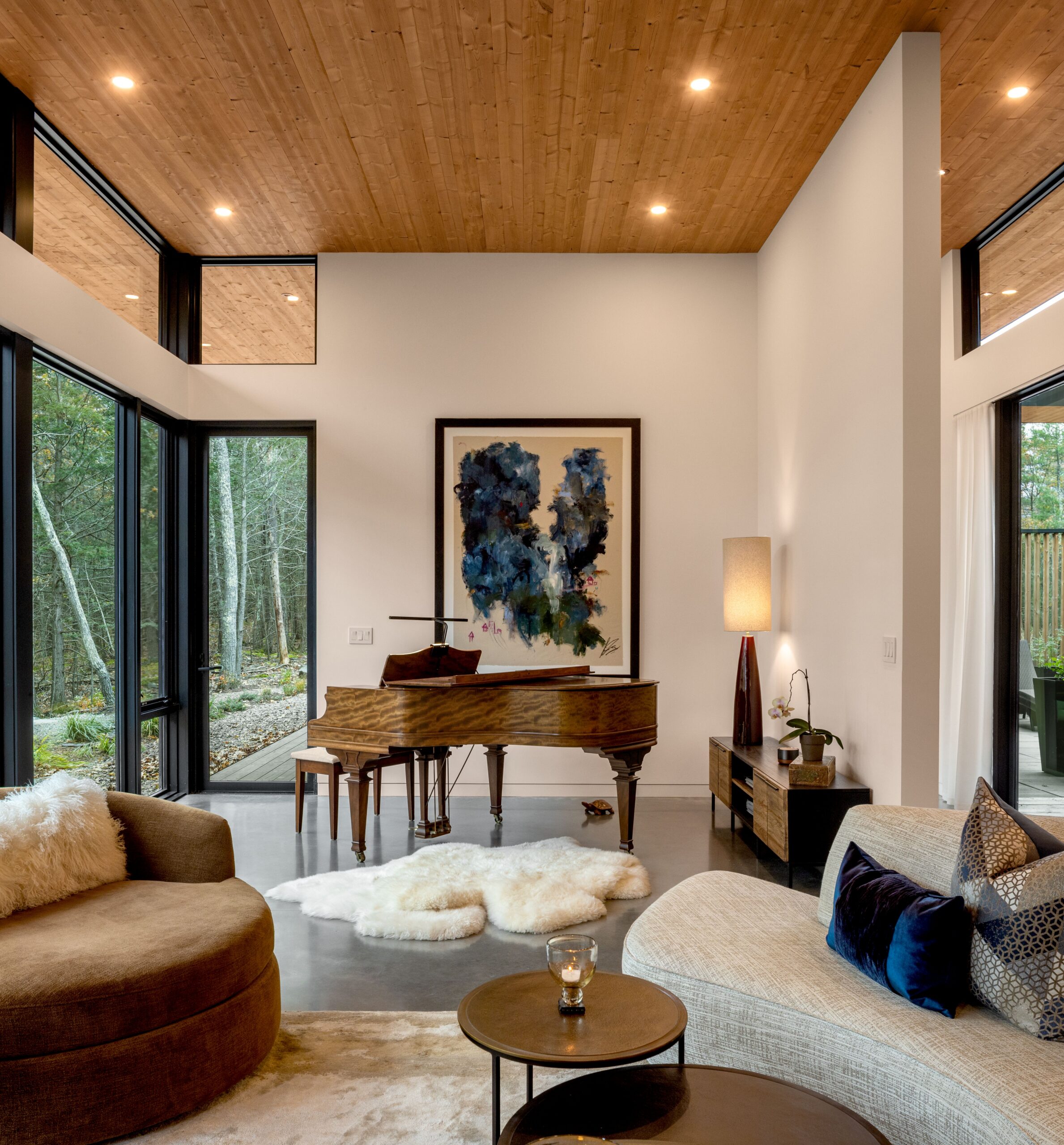
Photo © Brad Feinknopf
Doors are used strategically to further shape the infiltration of light and aid seamless circulation. “We used the Ultimate Swinging Doors in three locations,” says McKeel, “allowing us to bring light into a guest hallway, creating a ‘corner’ condition in the living area while retaining access to the east-facing deck, and, most critically, creating a view axis in the main entry, extending the entry pathway to the interior of the home.”
The glass hallway leading to the main bedroom reads as a luminous bridge between volumes, extending the axis and carrying light through the house. “In the main glass hallway that leads to the primary bedroom suite, we used a series of direct glaze windows,” explains McKeel. “The high level of precision possible within the Ultimate line was critical in achieving the glass hallway effect.”
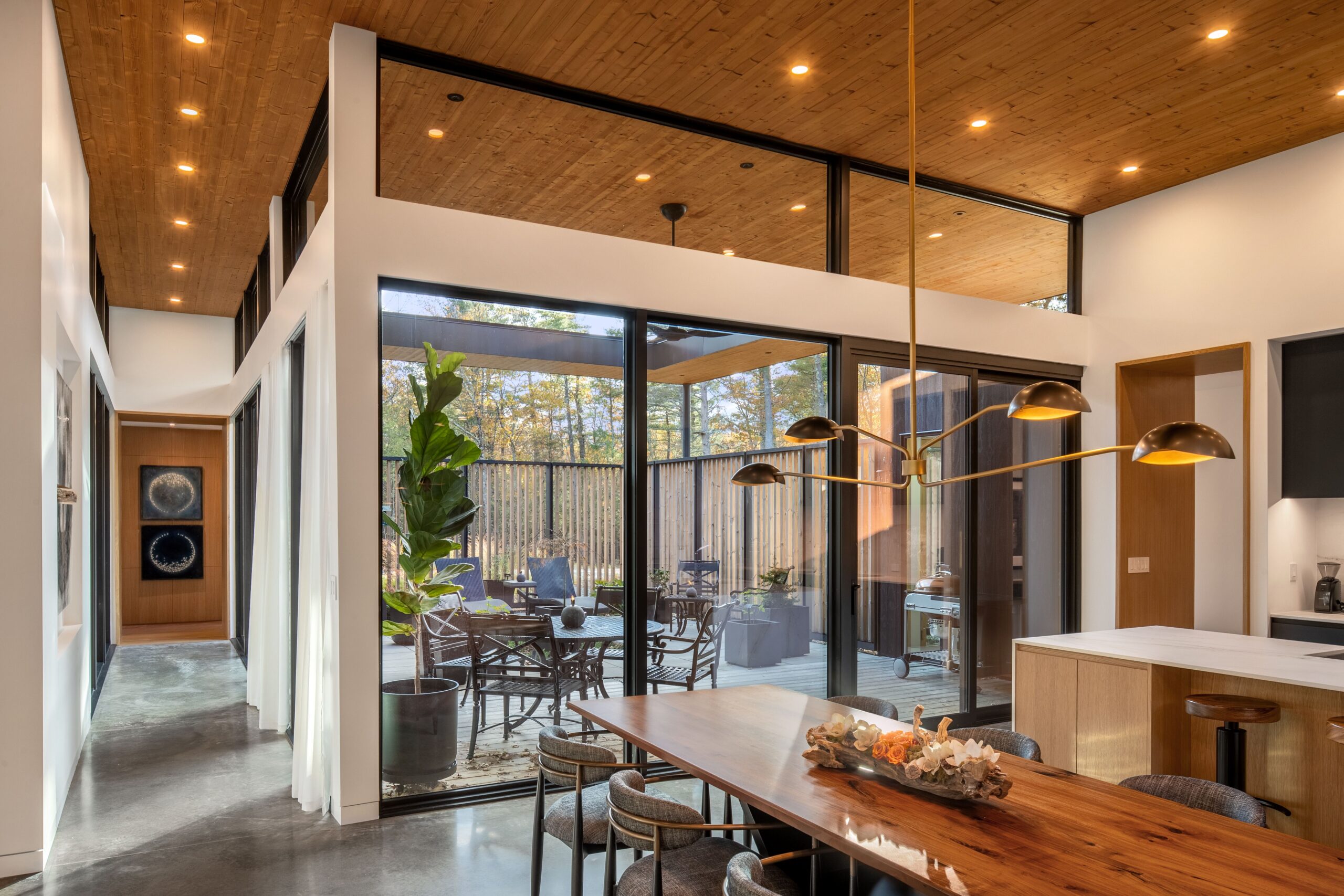
Photo © Brad Feinknopf
Performance needs also shaped the building envelope. McKeel continues: “The combination of operable casements, direct glaze windows and sliding glass doors in the main bedroom and in the open plan living area and kitchen facilitates cross-ventilation while maximizing daylight and views out to the eastern Hudson Valley and the central courtyard.”
A House That Holds Time
Fermata offers a carefully tuned environment where art, landscape and daily ritual intersect. The courtyard gathers light at the center, thresholds slow movement and materials shift subtly from charred black to warm wood. Through the integration of high-performance Marvin Ultimate glazing, the house balances comfort with a strong connection to its surroundings.
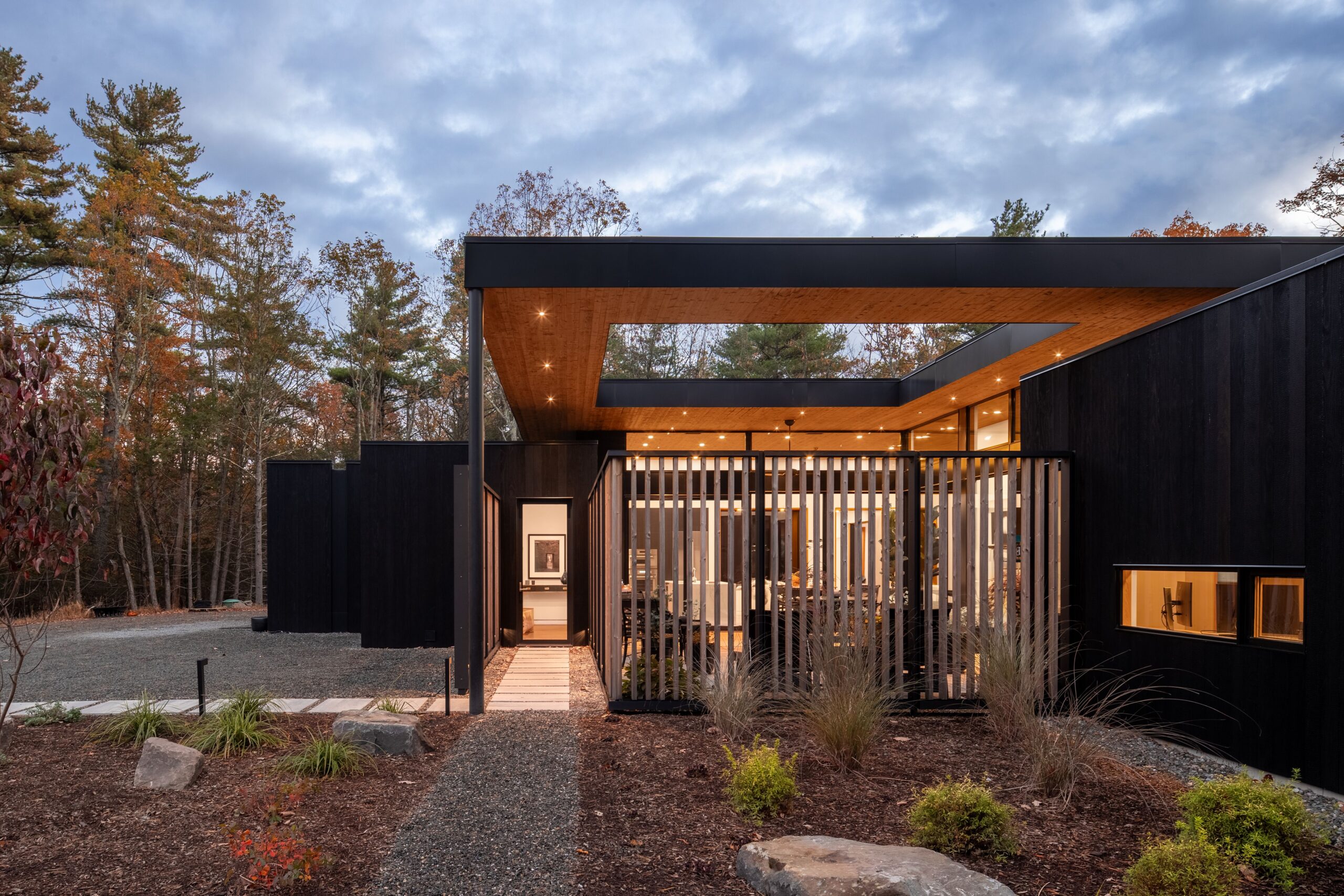
Photo © Brad Feinknopf
For architects crafting homes with refined detailing and rigorous performance, discover how the Marvin Ultimate collection can support similar ambitions at Marvin.com.
The post Between Forest and Form: Explore an Art-Inspired Courtyard House Evoking Stillness in the Hudson Valley appeared first on Journal.