.jpg)











Architect’s Guide to Shenzhen: 30 Must-See Buildings and Designs
Call for entries: The 14th Architizer A+Awards celebrates architecture's new era of craft. For early bird pricing, submit by October 31st.
Once a small fishing village on the Pearl River Delta, Shenzhen has transformed into one of the world’s most innovative urban laboratories — a city where architecture operates at an almost unimaginable scale and speed. As China’s first Special Economic Zone, it became a testing ground for modern urbanization and technology-driven growth, evolving into a metropolis of more than 17 million residents in just four decades. Today, it anchors the Greater Bay Area — a vast economic and cultural hub linking Hong Kong, Macau, Zhuhai, Guangzhou and other southern Chinese cities — where the boundaries between architecture, infrastructure, and landscape are continually redrawn.
The city’s built environment reflects a remarkable range — from monumental cultural centers and elevated parks to delicate timber bridges and community-scale projects that reinterpret tradition for a new generation. For architects visiting Shenzhen, the experience extends far beyond the city limits. The Greater Bay Area offers access to some of China’s most compelling architectural works, from parametric airport terminals and ecological waterfronts to adaptive reuse projects that revive industrial heritage.
This guide highlights must-see landmarks across Shenzhen and its neighboring cities, offering insight into the spatial strategies and material realities driving one of the most dynamic architectural regions in the world.
Hengqin Culture and Art Complex
By Yunchao Xu Atelier Apeiron, Xiangzhou, Zhuhai, China
Jury Winner, Gallery & Exhibition Space | Finalist, Cultural & Expo Center, Architecture +Glass, 13th Architizer A+Awards
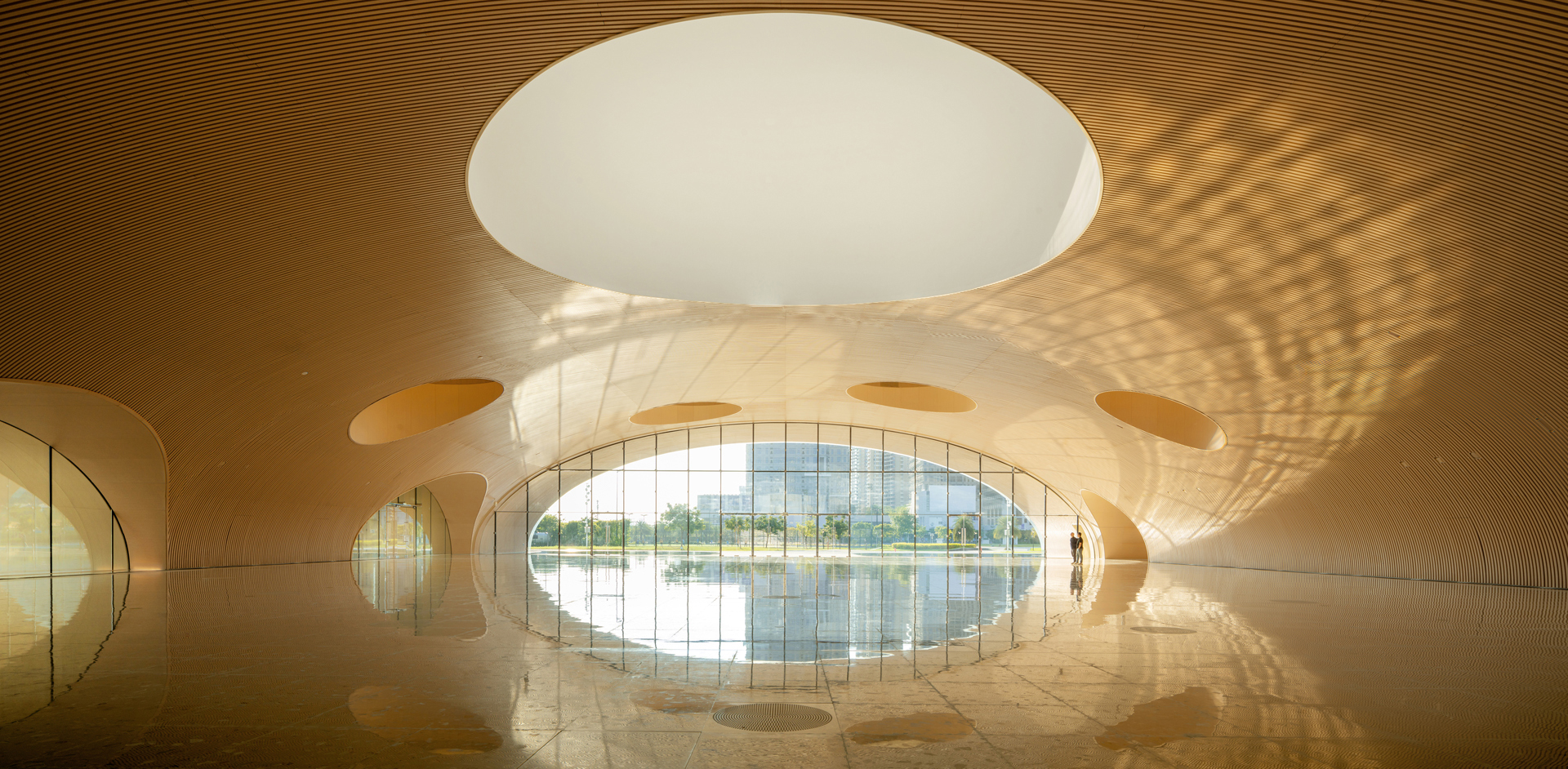
 Framed between residential towers and an urban park, this vast cultural complex redefines density through a strategy of “void,” carving monumental arched spaces that invite public life and daylight deep within. Three inverted catenary halls — for knowledge, performance, and exhibition — anchor the building’s porous base, their wood-lined vaults glowing like lanterns across the park at night.
Architect’s Detail: A curved skyline and cascading green terraces host rooftop gardens and event platforms, while the operable skylight system and rainwater-harvesting roofs exemplify a climate-responsive approach to large-scale civic design.
Overland’s Headquarters Showroom for the New Earthism Series
By AD ARCHITECTURE, Foshan, China
Jury Winner, Architecture +Branding, 13th Architizer A+Awards
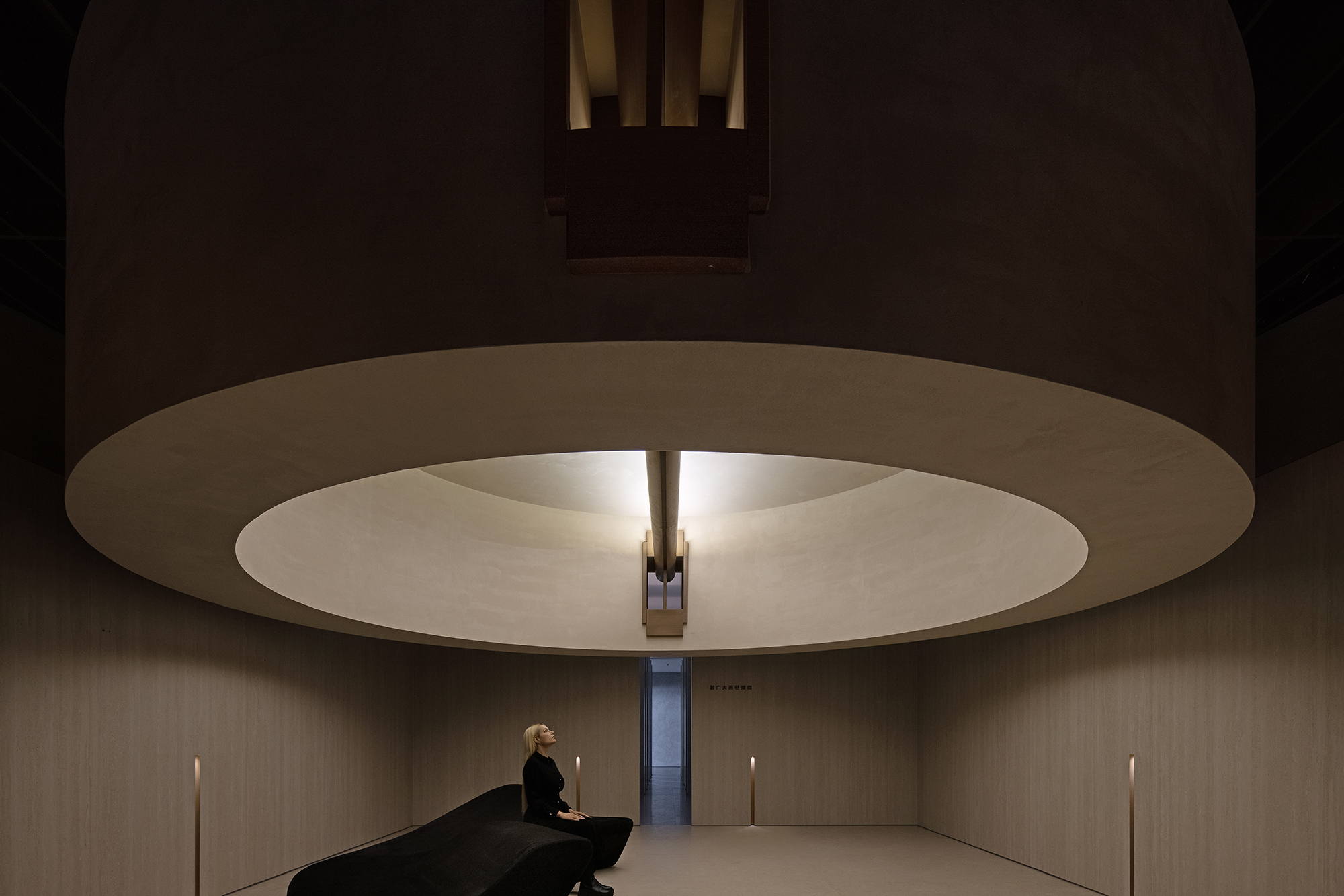 Designed as a luminous runway for material and form, this 9,150-square-foot (850-square-meter) showroom reinterprets the tile gallery as a spatial narrative of light. Sintered stone surfaces, mirrored planes, and wood-grille ceilings create an atmosphere that merges precision with serenity, celebrating the tactile and visual essence of Overland’s new Earthism Series.
Architect’s Detail: Cross-shaped display structures frame the products as sculptural focal points, while diffused light, mirrored floors, and rhythmic symmetry evoke the interplay between earth, architecture, and perception.
The Vessel of Light and Nature —Public Toilet at Shenzhen Garden Expo Park
By REFORM, Shenzhen, China
Special Mention, Government & Civic Buildings, 13th Architizer A+Awards
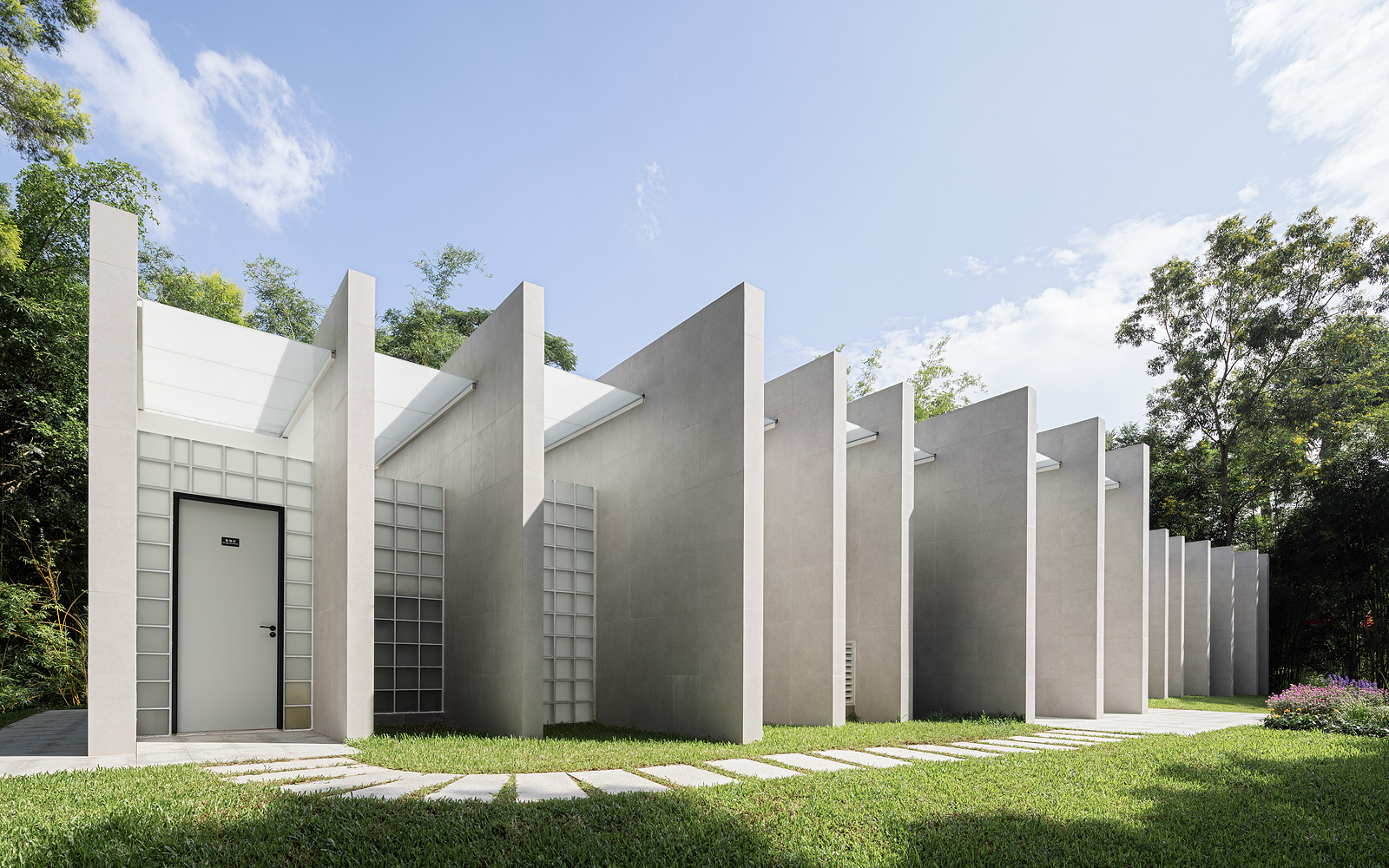 Set amid bamboo groves and sloping terrain, this sculptural restroom is unlike any public amenity you’ve ever seen. A rhythmic composition of 19 staggered walls weaves around existing trees, with arched openings and frosted glass bricks that introduce filtered light and cross-ventilation, transforming the space into a calm, gallery-like retreat within the park.
Architect’s Detail: Each wall subtly shifts to preserve mature trees, while skylights and open joints promote natural airflow and daylighting — an elegant model for Shenzhen’s ongoing “Toilet Revolution.”
Qiaochengbei Park Visitor Center
By Atelier XI, Shenzhen, China
Finalist, Architecture +Metal, 13th Architizer A+Awards
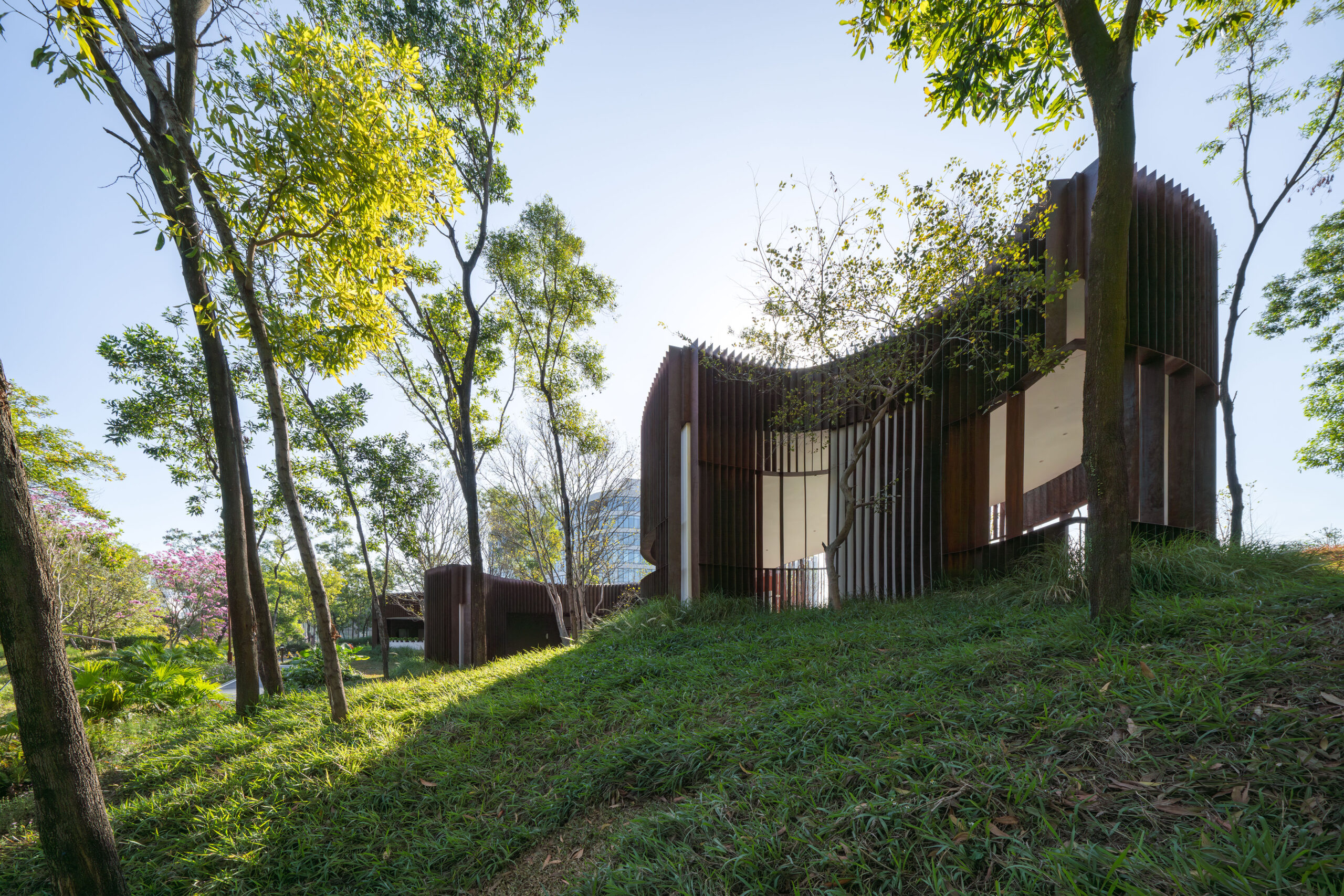 Embedded within a dense urban forest, the Qiaochengbei Park Visitor Center integrates two low-slung buildings that weave through existing trees with minimal disruption. The east pavilion curves gently between trunks, while the west structure’s trapezoidal volumes anchor the landscape like sculptural “metal henges,” forming a village-like ensemble for rest and refreshment.
Architect’s Detail: Clad in weathering steel and shaded by perforated louvers, the naturally ventilated buildings employ passive cooling, green roofs, and earth sheltering to harmonize architecture and ecology.
Pavilion of Pastel Shadows at the Shiyaling Park
By Studio 10, Shenzhen, China
Special Mention, Pavilions, 13th Architizer A+Awards
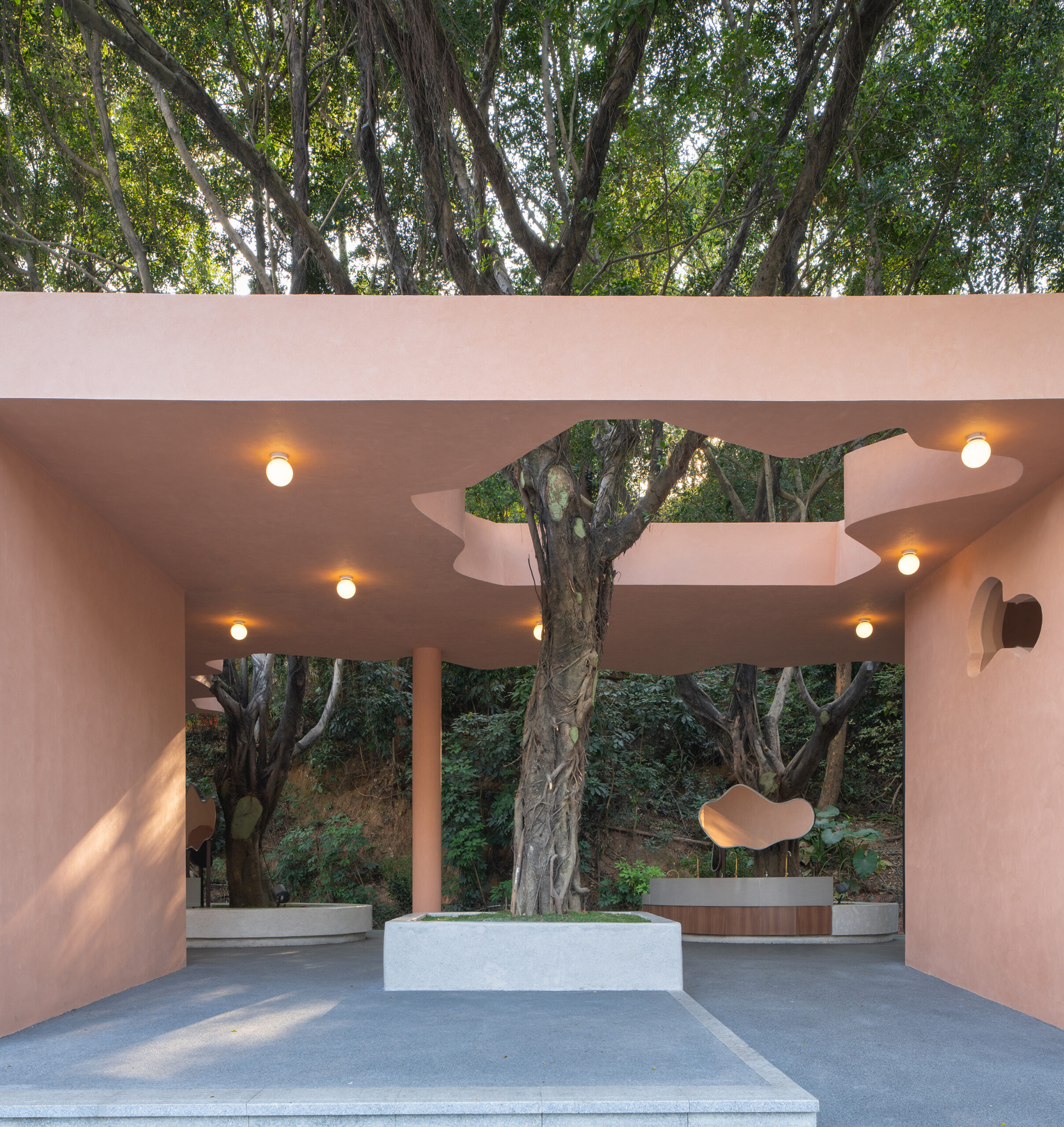 Situated between Shiyaling Mountain and Dafen Oil Painting Village, this pavilion transforms a utilitarian restroom into a poetic resting place for hikers and athletes. Its canopy and clustered volumes weave around six preserved trees, creating tranquil spaces dappled with filtered light and natural ventilation.
Architect’s Detail: The pastel-toned façades and perforated roofs reinterpret the shifting shadows of the forest, blending art and ecology while maintaining the delicate balance between structure and landscape.
FW JI·Covered Bridge on Aqueduct
By IARA, Huangshan, China
Popular Choice Winner, Architecture +Small Projects, 12th Architizer A+Awards
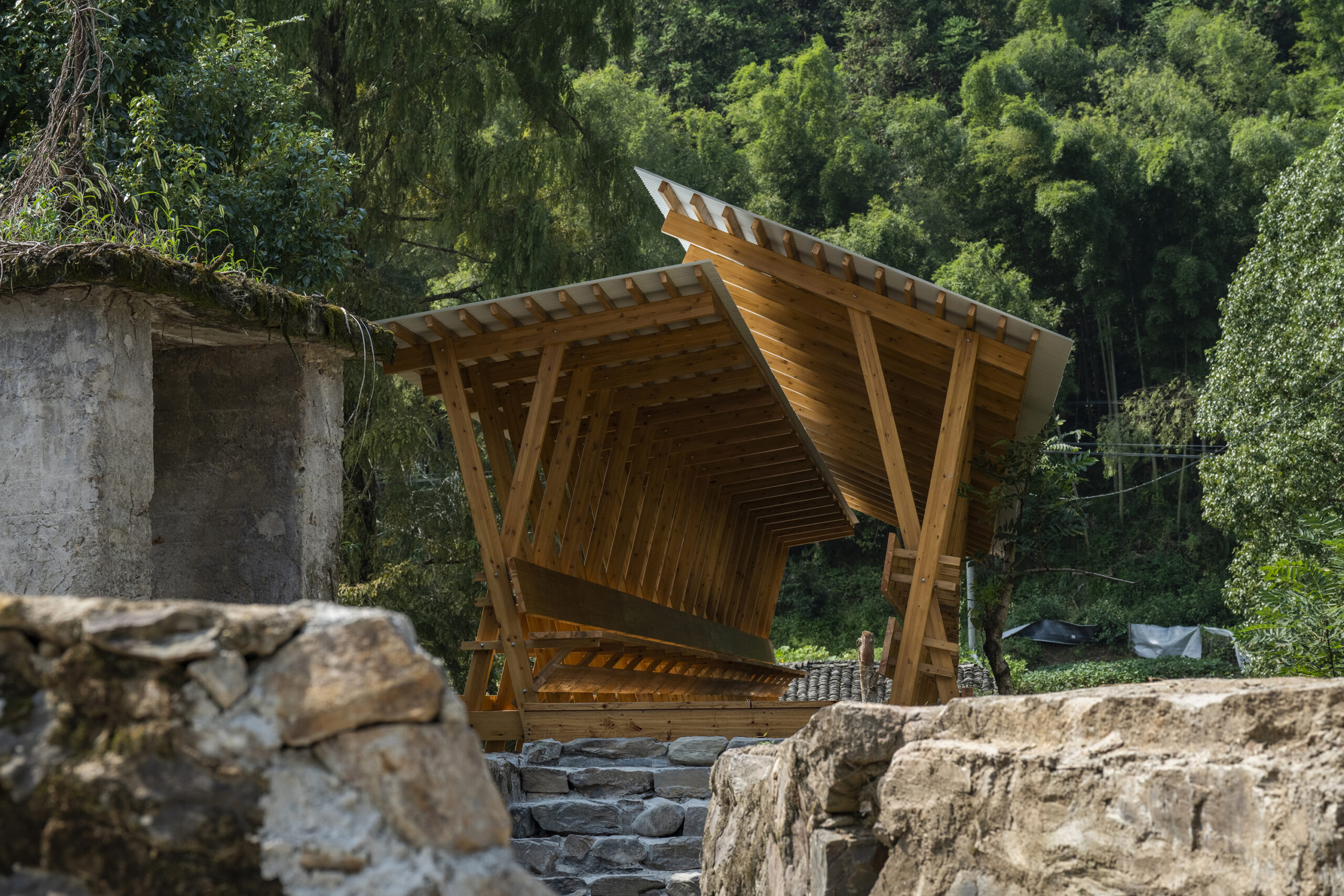 Transforming an abandoned 1960s aqueduct into a communal covered bridge, this project breathes new life into the fading rural fabric of Fengwu Village. Lightweight timber construction overlays the existing concrete structure, preserving its moss-covered patina while providing villagers with a shaded, ventilated gathering space overlooking the river.
Architect’s Detail: The bridge’s X-frame structure is built from prefabricated cross-laminated timber (CLT), assembled entirely by hand without heavy machinery, merging traditional craftsmanship with contemporary sustainable engineering.
Marisfrolg Fashion Campus
By Architecture van Brandenburg, Shenzhen, China
Popular Choice Winner, Mixed Use (L>25,000 sq ft), 12th Architizer A+Awards
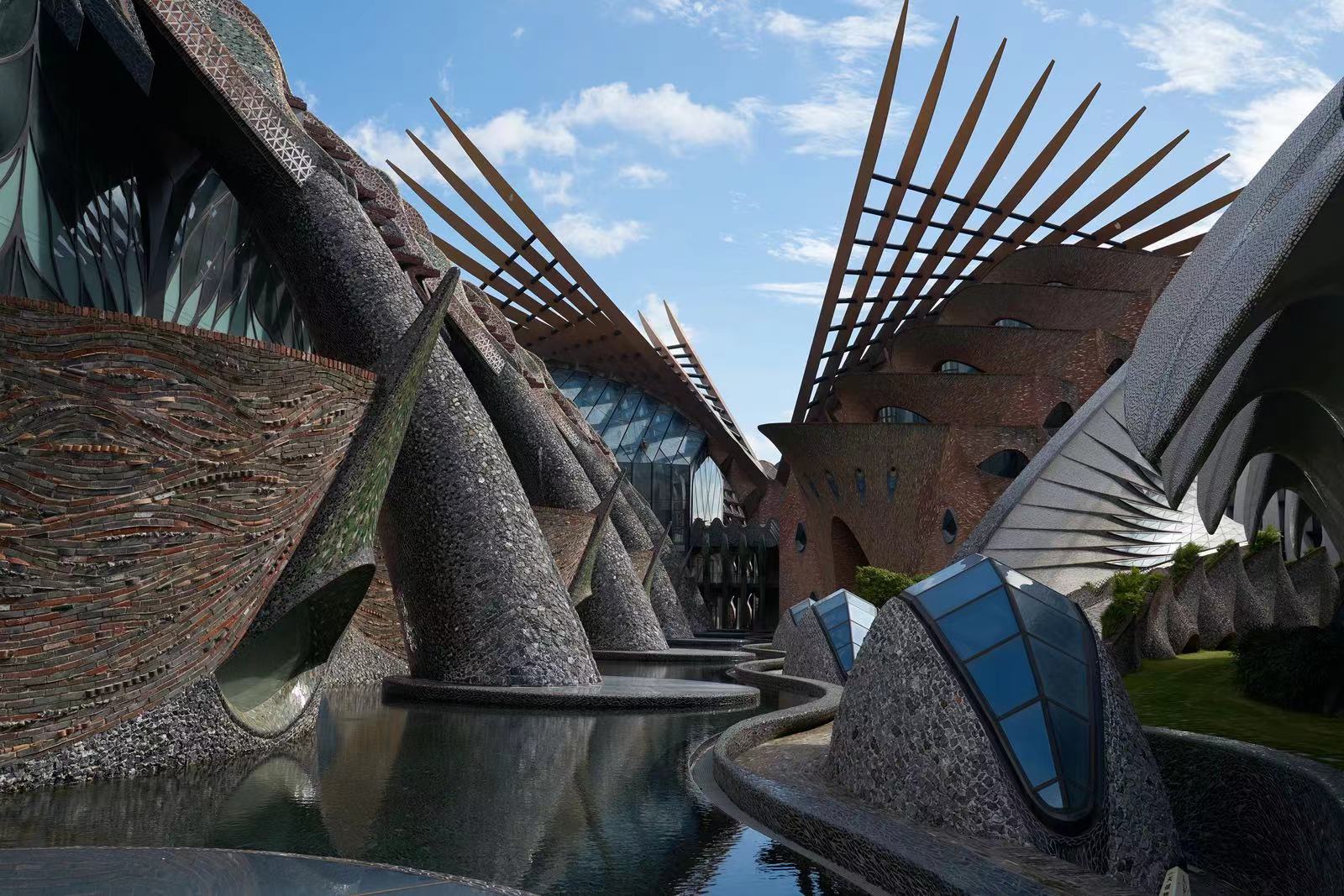 Commissioned by Marisfrolg Fashion Apparel founders Ms. Zhu Chongyun and Mr. Yao Jianhua, this 47-acre (19-hectare) campus merges architectural craft with nature into a sculptural form resembling a bird in flight. Double-curvature geometries unify structure and façade, creating a fluid composition that houses design studios, production facilities, a boutique hotel, and exhibition spaces.
Architect’s Detail: Constructed over 14 years, the headquarters incorporates 80% recycled materials in its exterior cladding, including discarded ceramics, marble offcuts, recycled brick and glass slag.
Marisfrolg Showroom
By Zaha Hadid Architects, Shenzhen, China
Special Mention, Showrooms, 13th Architizer A+Awards
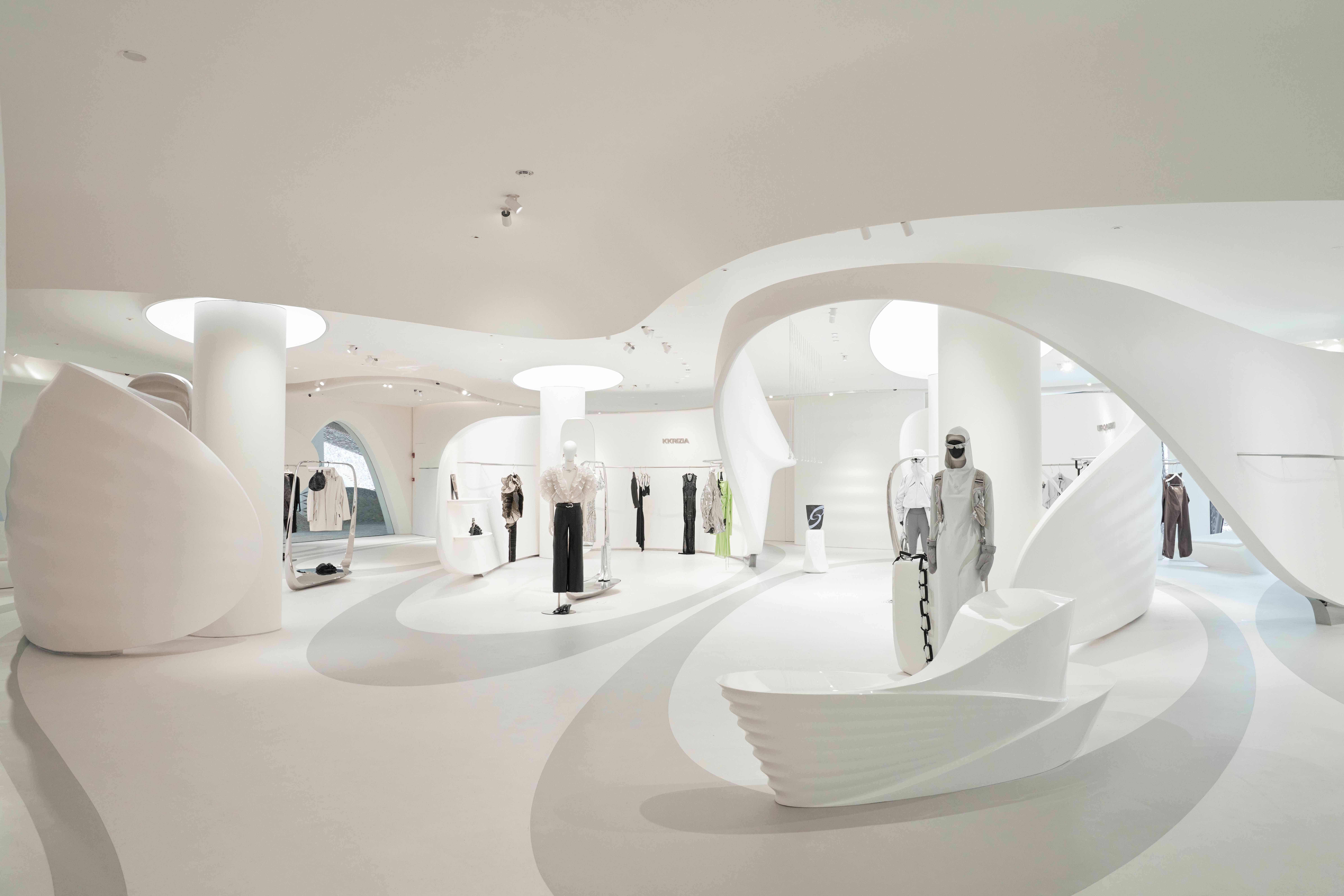 At the center of Marisfrolg Fashion Group’s Shenzhen campus, ZHA’s showroom translates the brand’s precision tailoring into fluid, material-rich interiors crafted from recycled aggregates. The flowing layout links fashion, art, and architecture through sculptural partitions and custom furniture.
Architect’s Detail: Floors of crushed glass and quartz and GRG walls molded from recyclable wax highlight ZHA’s commitment to craft, and a nod towards circular design.
Jiulongfeng Children’s Learning Center for Conservation
By LUO studio, Huangshan, China
Popular Choice Winner, Architecture +Joy, 12th Architizer A+Awards
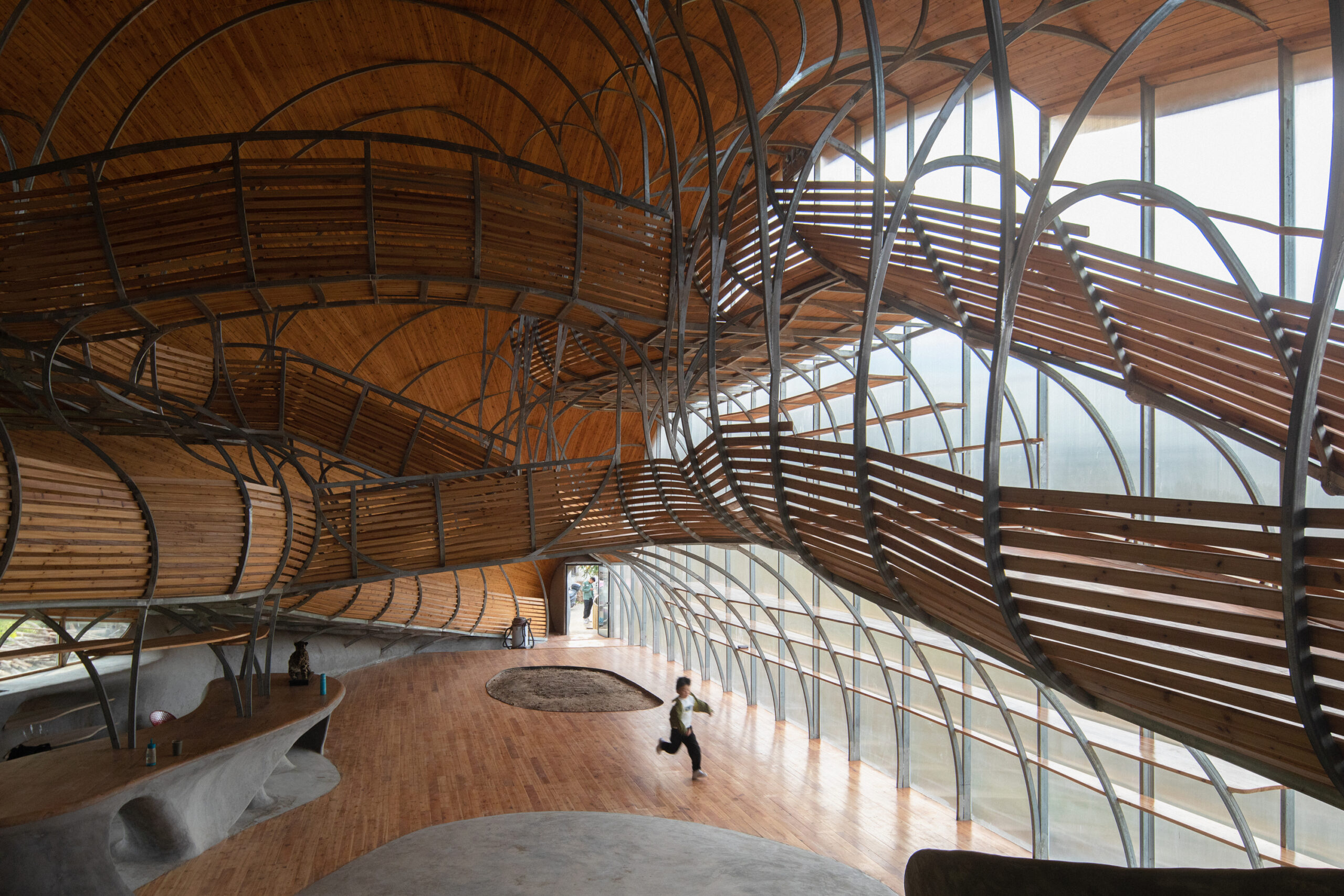 Nestled at the foot of Jiulongfeng Nature Reserve, this learning center reinvigorates rural life through architecture that fuses education with heritage. Renovated from a simple longhouse using traditional Huizhou carpentry, the timber-framed structure was rebuilt by local master craftsmen with fir wood sourced from the surrounding forests. At its heart, a cabin-like play pavilion introduces a sculptural, contemporary counterpoint — a fluid timber form entirely constructed by villagers. The project exemplifies cooperative design, where builders, designers, and residents work side by side to sustain local traditions while fostering a nurturing environment for children.
Architect’s Detail: Traditional mortise-and-tenon carpentry techniques were preserved throughout the renovation, ensuring that each joint, beam, and roof form expresses the craft of Huizhou’s architectural heritage.
New Life for Old Village – Huizhou Lanmen Village Renovation Project
By REDe Architects, Huizhou, China
Popular Choice Winner, Architecture +Renovation, 12th Architizer A+Awards
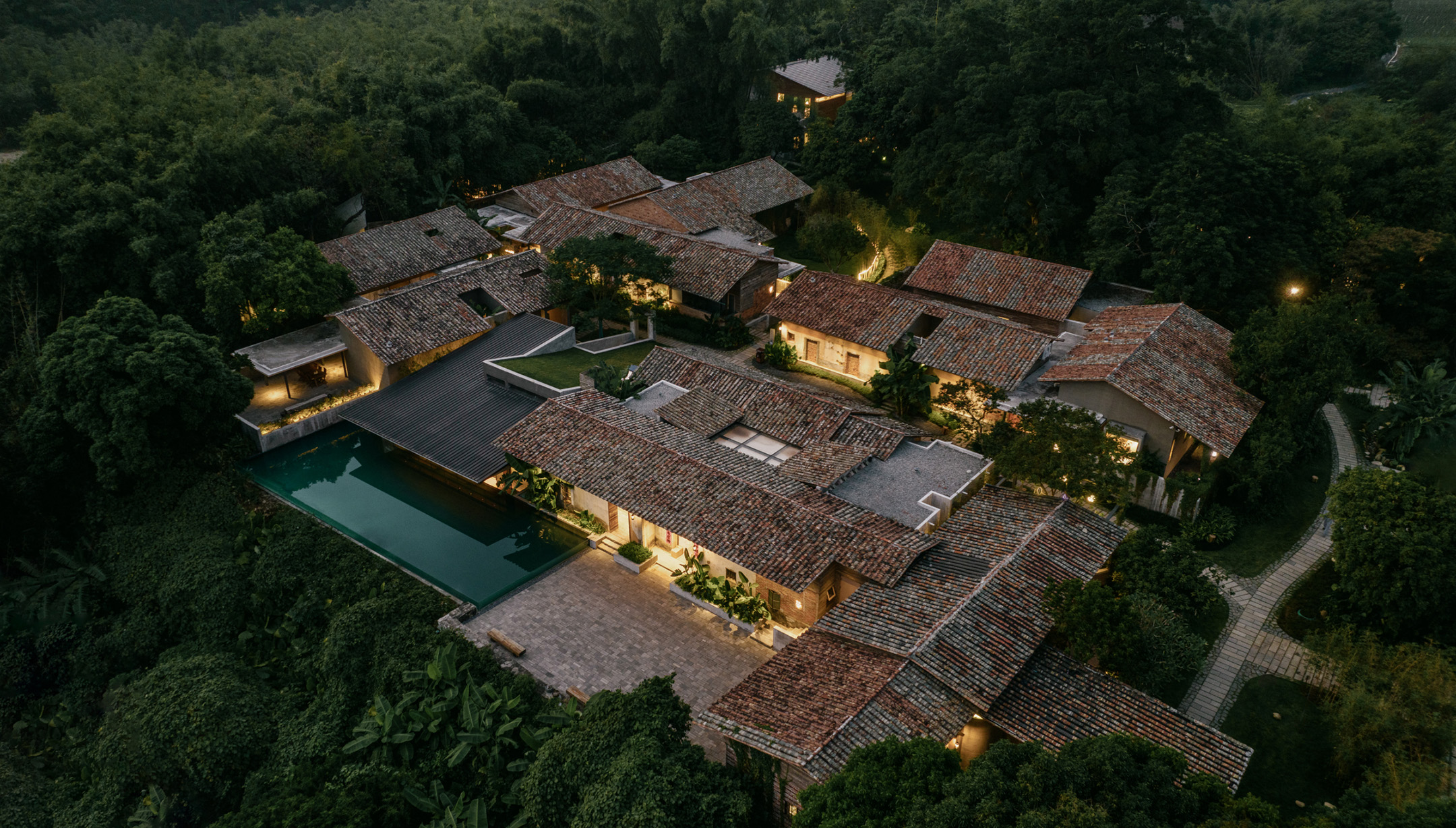 Set amid the mountains, this revitalization project transforms a historic settlement into a rural cultural and tourism complex. Divided into four zones — restored village dwellings, gardens, riverfront activity areas and agricultural terraces — the plan integrates hospitality and community spaces with landscape design, putting forth an attractive model for future rural living. Old stone walls and timber structures are carefully preserved and interwoven with new, energy-efficient additions, including roofs fitted with photovoltaic tiles. Elevated steel walkways trace the course of the stream below, while courtyards and gardens invite guests to experience the rhythms of rural life in harmony with nature.
Architect’s Detail: Adaptive reuse merges with passive design — reused masonry and solar roofs reduce embodied energy while maintaining the tactile authenticity of the village’s heritage fabric.
Zhuhai Jinwan Civic Art Centre
By Zaha Hadid Architects, Zhuhai, China
Finalist, Cultural & Expo Centers, 12th Architizer A+Awards
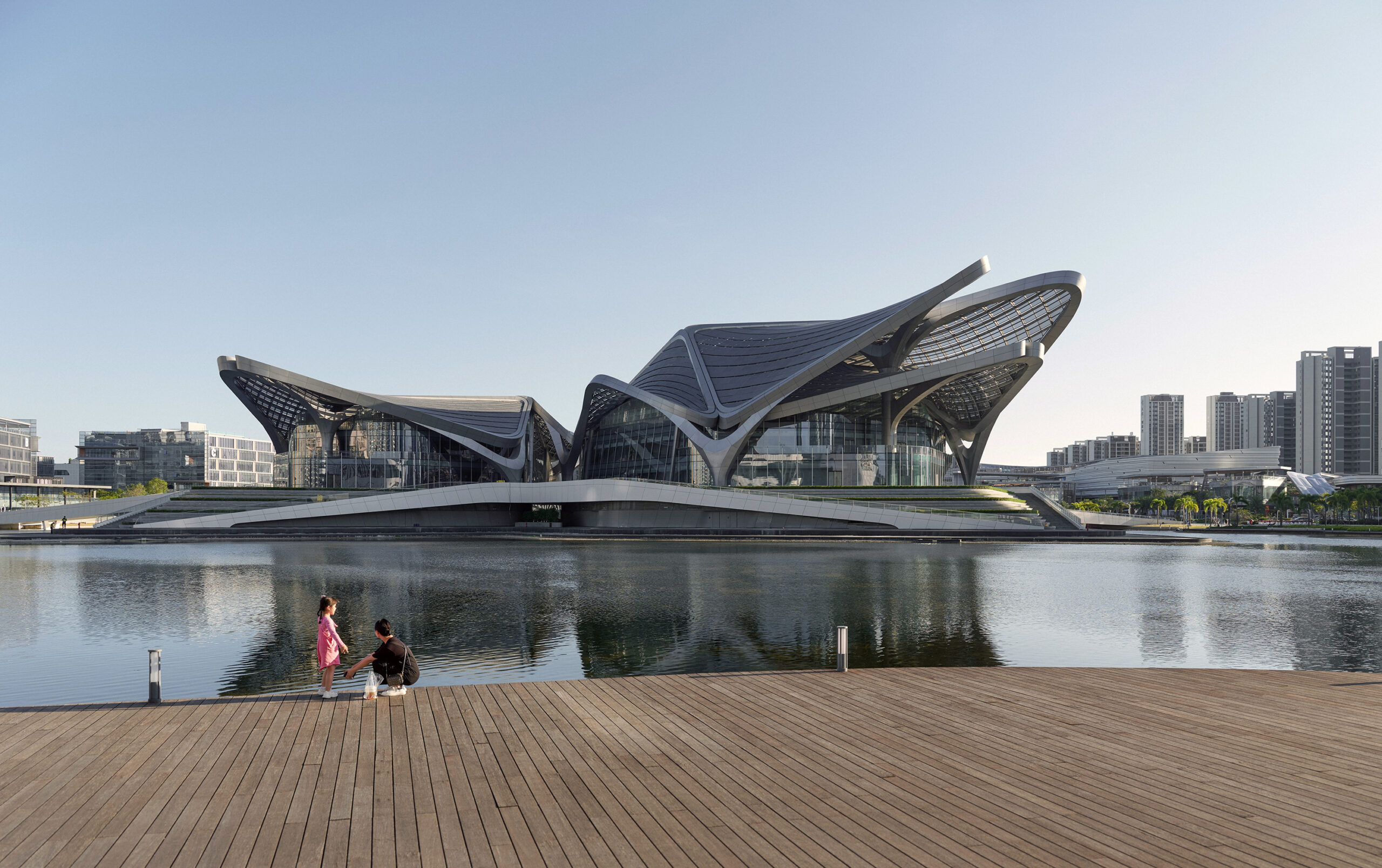 Anchoring Zhuhai’s Aviation New City, the Zhuhai Jinwan Civic Art Centre unites a performing arts venue, science centre and art museum beneath a sculptural steel canopy inspired by migratory flight. The modular, latticed roofs filter daylight across interconnected plazas and bridges that link the four wings over ZhongXin Lake. Combining prefabricated construction, sponge-city landscaping and intelligent energy systems, the complex reflects a regional shift toward sustainable cultural infrastructure.
Architect’s Detail: The soaring roof canopy, composed of modular steel shells supported by just 22 columns, unifies the distinct cultural venues in a single fluid composition.
Shenzhen Metro Line 16
By Vantree Design, Shenzhen, China
Finalist, Transportation Interiors, 12th Architizer A+Awards
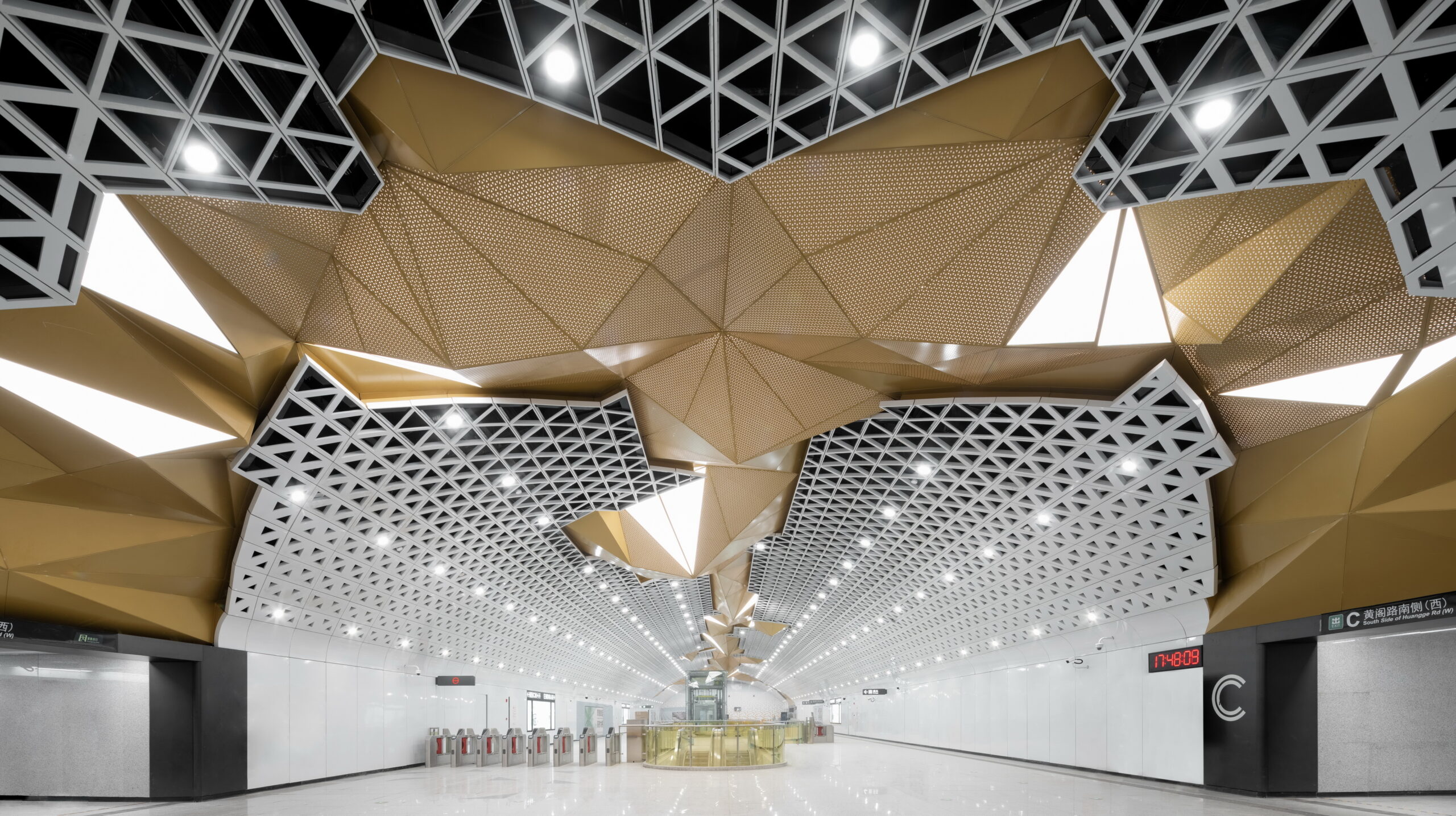 Extending 18 miles (29 kilometers) across the city, Shenzhen Metro Line 16 reimagines public transit as a cultural and civic experience rooted in the region’s Hakka heritage. Each station interprets the overarching theme of “Sunshine + Home” through unique spatial expressions that fuse natural light, local materials, and social gathering spaces. Vantree Design’s concept transforms the network into a living museum of regional identity — a series of luminous thresholds connecting Shenzhen’s modernity with its ancestral culture.
Architect’s Detail: Inspired by Hakka dwellings, vaulted canopies and warm, earth-toned materials evoke communal courtyards, making each station both a transit hub and a civic sanctuary.
Kingway Brewery Renovation
By URBANUS, Shenzhen, China
Finalist, Architecture +Adaptive Reuse, 12th Architizer A+Awards
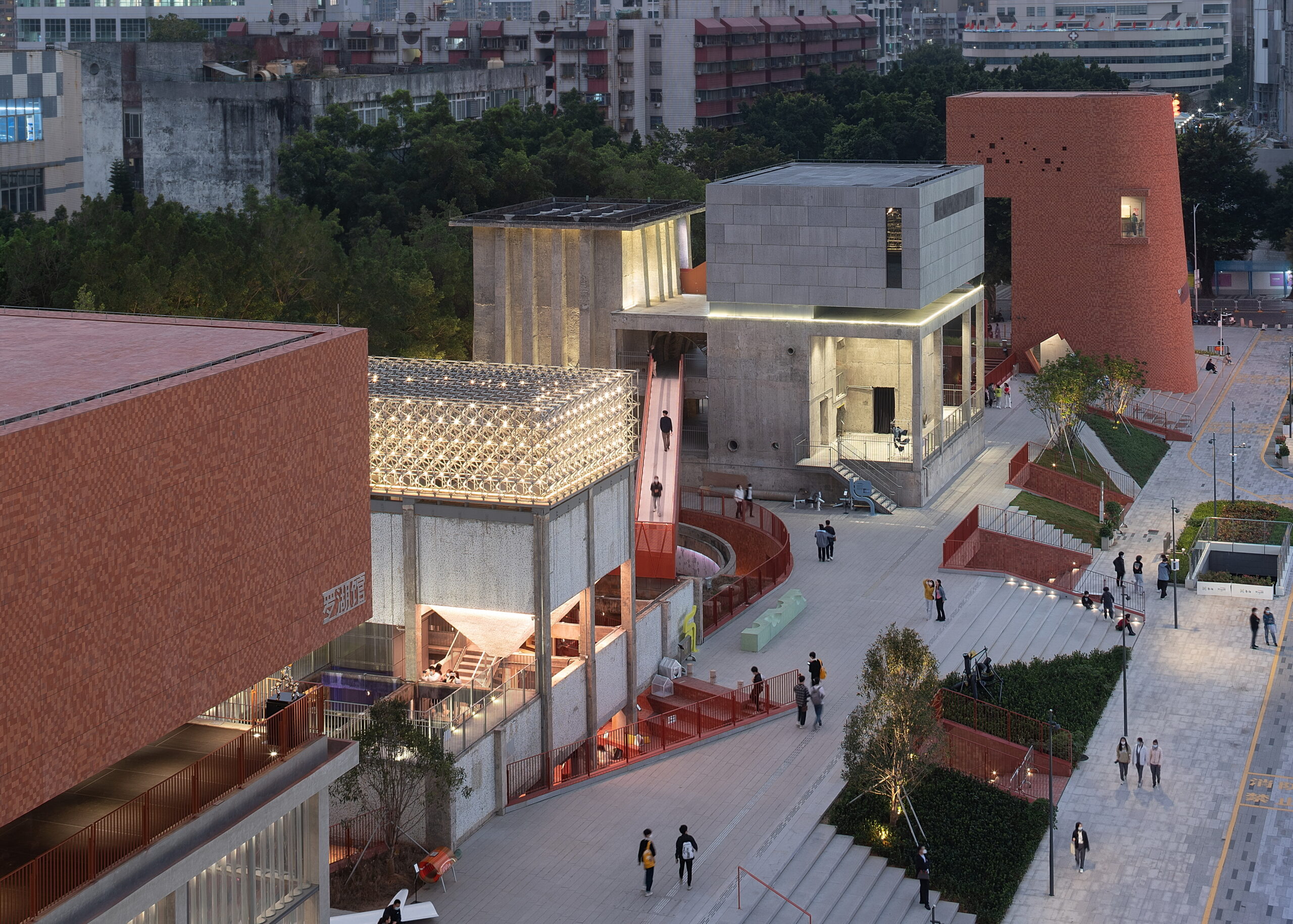 URBANUS transforms Shenzhen’s historic Kingway Brewery into a cultural campus that fuses industrial memory with contemporary creativity. Once a hub of production for the city’s most beloved beer, the 28.6-acre (11.6-hectare) complex now serves as a public platform for art, exhibition, and community life. Intervening with a “plug-in” strategy, the architects reactivated scattered industrial remnants — from fermentation tanks to wastewater pools — into stages for new urban experiences. The resulting sequence of courtyards, galleries and elevated walkways reveals the tactile history of industry while opening it to public imagination.
Architect’s Detail: The renovation preserves 33 stainless steel fermentation tanks, transforming them into sculptural elements framing auditoriums, bars and rooftop theaters — a powerful expression of Shenzhen’s evolving urban identity.
Shenzhen Reef Library
By Wildurban Architects, Shenzhen, China
Finalist, Libraries, 12th Architizer A+Awards
 Tucked within the dense seaside village of Jiaochangwei, the Shenzhen Reef Library reclaims a fragment of coastline from overdevelopment, creating a calm civic refuge inspired by local geology. Formed from red volcanic reef stone, its thick walls and carved arches evoke a sculpted monolith, while a luminous white book tower contrasts with the mass below. The building’s recessed courtyards and shifting geometries create layered thresholds between the street, reading rooms, and sea views — a choreography of retreat and revelation.
Architect’s Detail: The red volcanic stone used throughout the structure roots the project in Dapeng Peninsula’s geology.
Shenzhen Lotus Water Culture Base: Landscape Design for Honghu Park Water Purification Station
By NODE Architecture & Urbanism, Shenzhen, China
Jury Winner, Public Parks & Green Space, 11th A+Awards
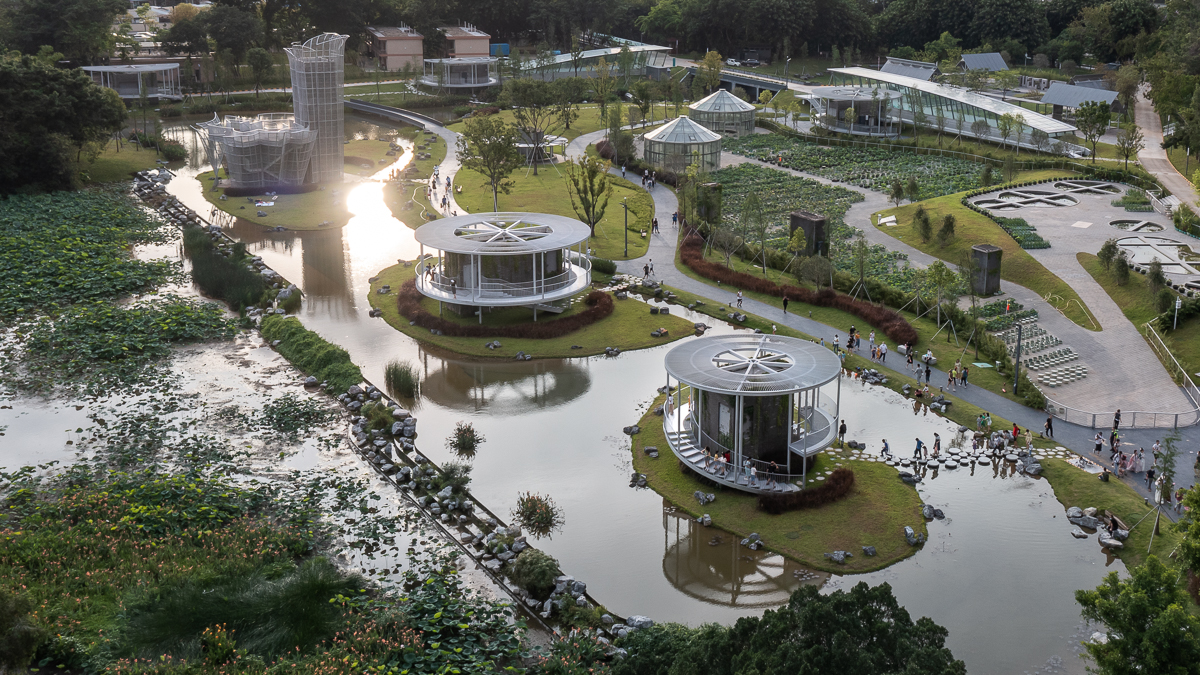 Beneath a lotus-filled park in Luohu District, the Honghu Water Purification Plant hides a vast infrastructural system beneath a civic landscape. NODE transformed the facility’s surface into a public garden that merges cultural heritage with ecological design, drawing from Lingnan garden typologies — pagodas, pavilions and corridors — reinterpreted in contemporary materials. Ventilation shafts double as walkable landmarks, including a birdwatching tower and lotus viewing pavilion, turning engineering constraints into opportunities for community engagement.
Architect’s Detail: The project pioneers the “publicization of infrastructure,” fusing buried purification systems with public space to reveal water’s essential role in Shenzhen’s urban life.
Qianhai’s Guiwan Park
By Field Operations, Shenzhen, China
Jury Winner, Architecture +Urban Transformation | Finalist, Public Parks & Green Space, 11th Architizer A+Awards
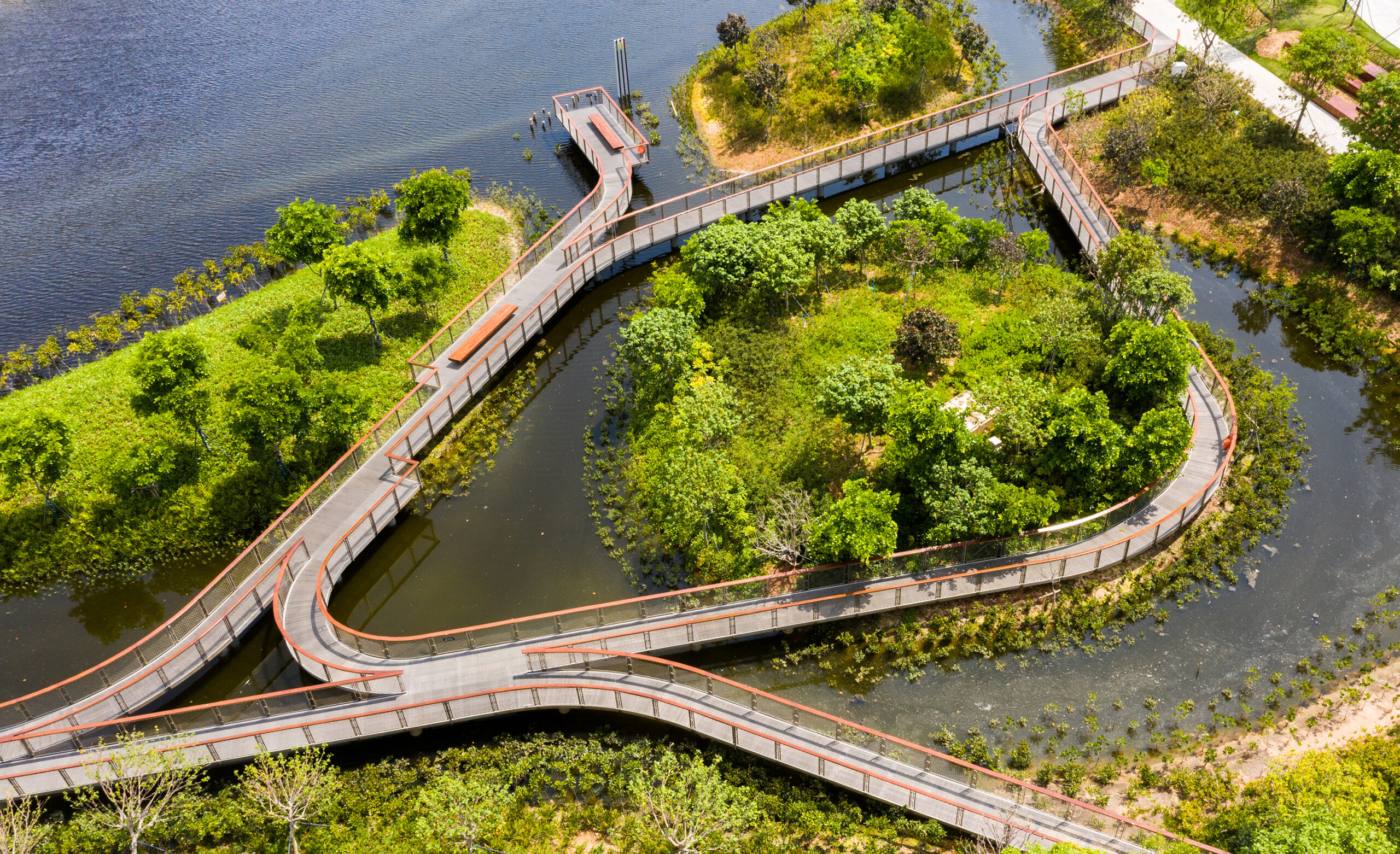 Anchoring Qianhai Water City, Guiwan Park transforms coastal infrastructure into a living ecosystem. Designed as the district’s central “water finger,” the park merges stormwater management (flood control) with habitat restoration with a medley of mangrove forests, wetland and tidal corridors. Its layered landscape weaves recreation and ecology together, redefining the urban park as both civic and environmental infrastructure.
Architect’s Detail: The park integrates 12.6 acres (5.1 hectares) of mangroves and 4.4 acres (1.8 hectares) of freshwater wetlands, turning flood resilience into a daily, walkable experience of nature in the city.
OCT Bao’an OH BAY
By LAGUARDA.LOW ARCHITECTS, Shenzhen, China
Popular Choice Winner, Urban & Masterplan, 11th Architizer A+Awards
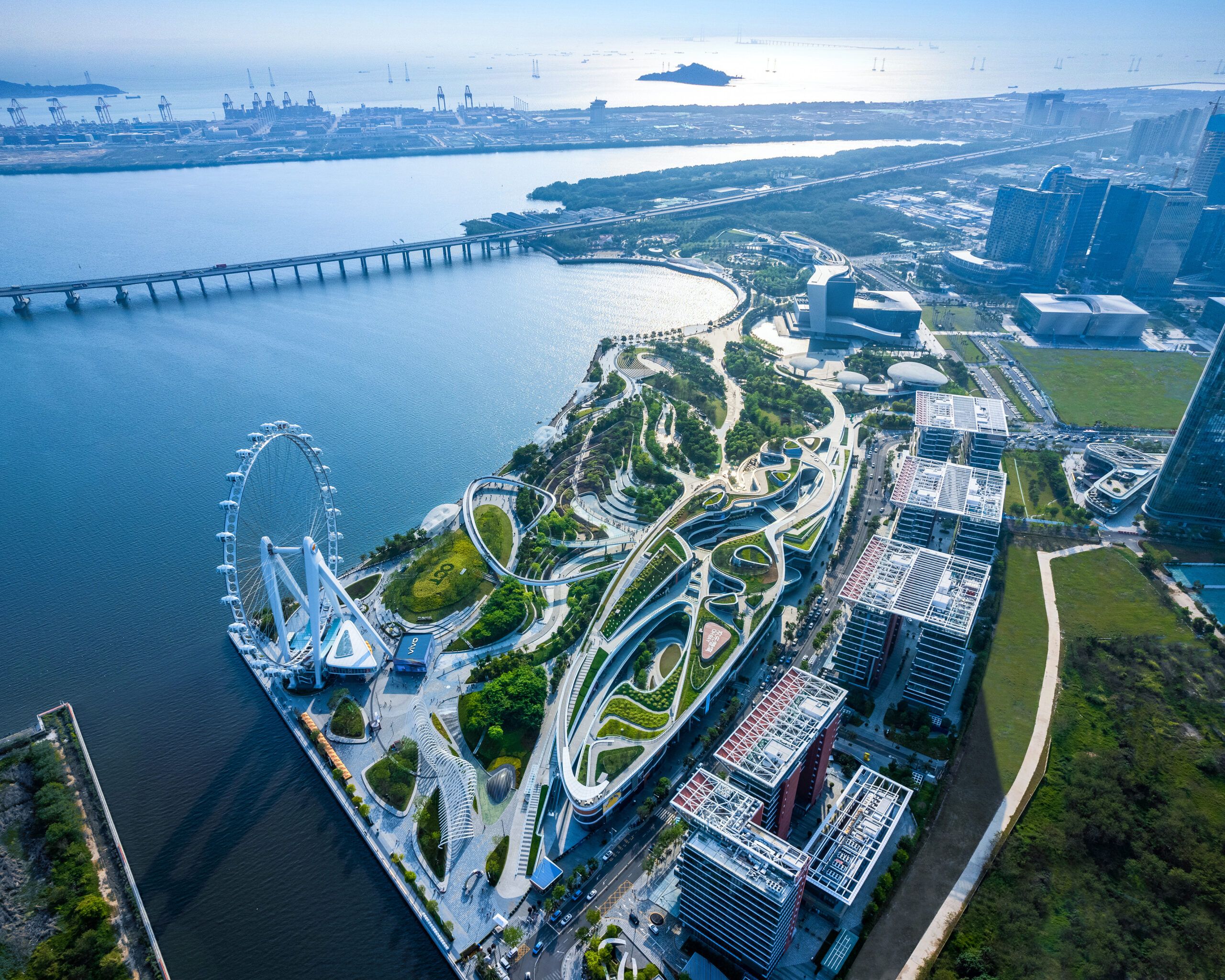 Transforming 128 acres (51.7 hectares) in Bao’an District, OCT Central District Park reimagines urban life around the landscape. The park’s network of promenades, bridges and wetlands connects cultural and recreational urban elements to commercial hubs, merging ecological restoration with civic vitality. Acting as Shenzhen’s new “green heart,” it fuses water systems, plazas, and gardens into a living framework for community and biodiversity.
Architect’s Detail: The park’s design integrates advanced stormwater filtration and renewable energy systems, positioning landscape infrastructure as both a civic amenity and a model for sustainable urban growth.
B3
By RooMoo Design Studio, Shenzhen, China
Finalist, Restaurants (S<1000 sq ft), 11th Architizer A+Awards
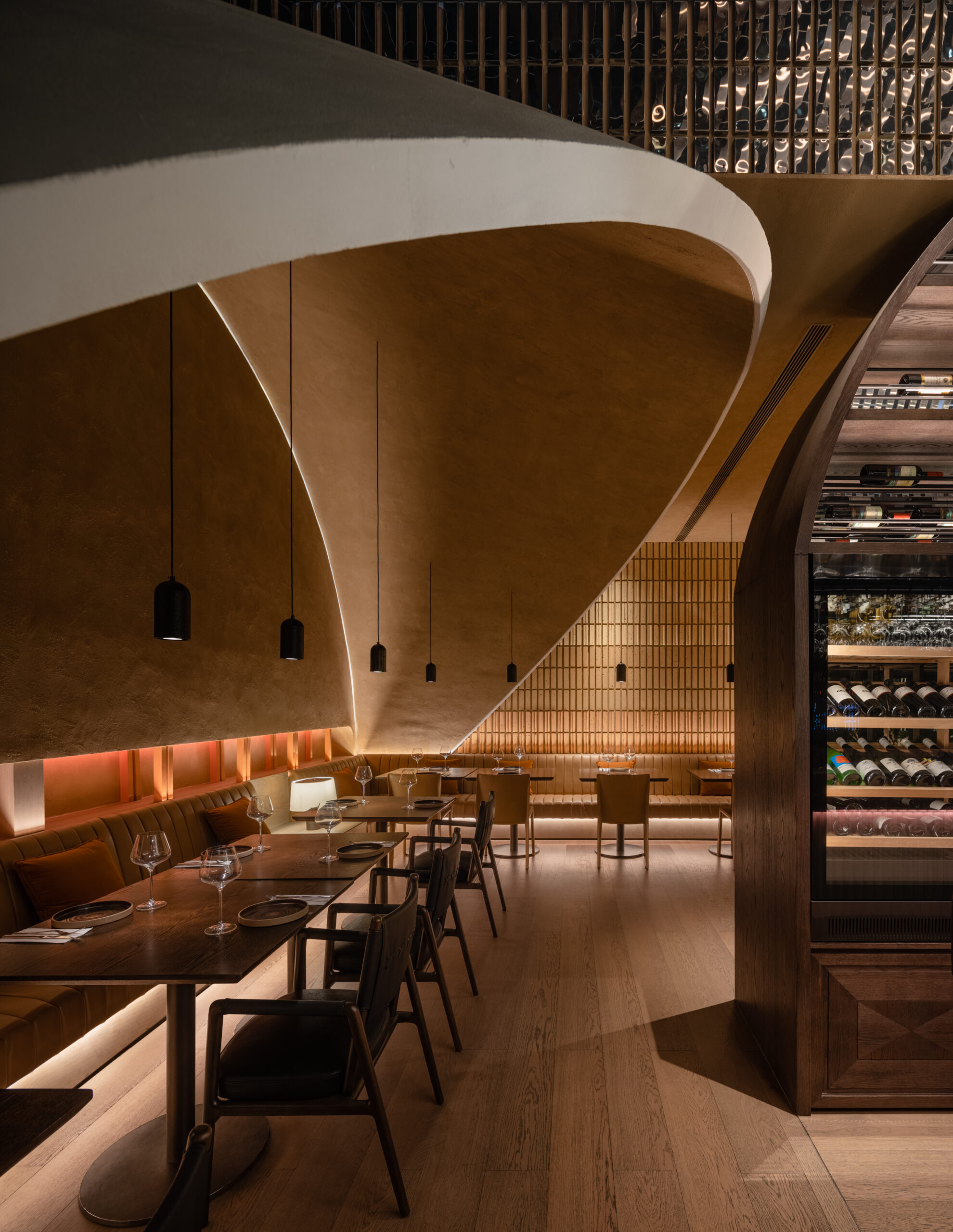 In the heart of Coco Park, B3 Bistro translates the passage of time into form, texture, and light. Three “waves” — of metal, mirror and motion — define the space, transforming ceiling, façade, and atmosphere into a choreography of reflection. Rough brick walls evoke geological strata, while polished steel and LED-lit surfaces bring a contemporary rhythm to the dining experience.
Architect’s Detail: Each stainless-steel “wave” references one of the brand’s three namesakes — brunch, bistro, bar — fusing temporal metaphor with material craft to create a dining environment that evolves over time.
The Water Drop Library
By He Wei Studio/3andwich Design, Huizhou, China
Special Mention, Libraries, 11th Architizer A+Awards
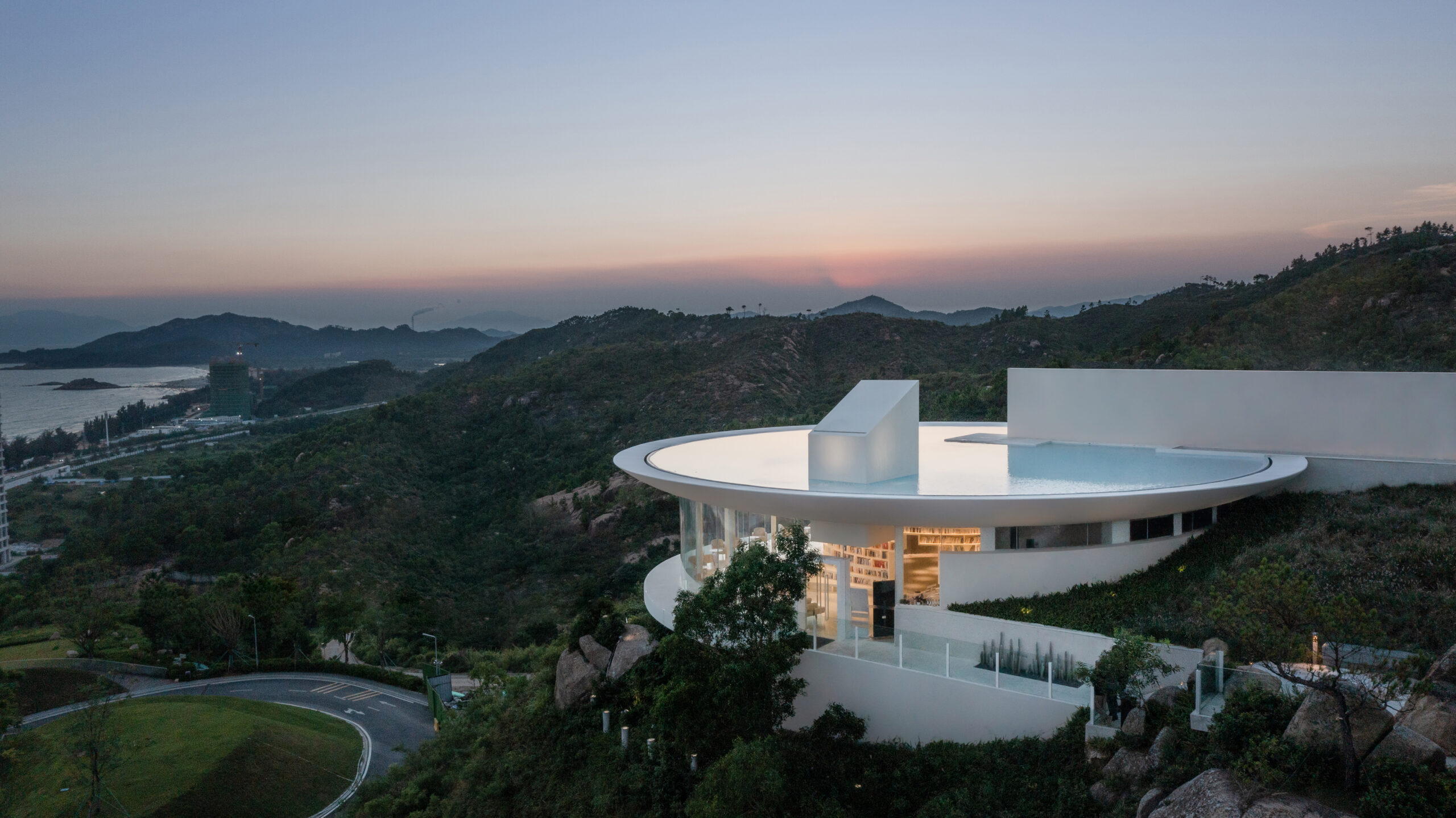 Perched on a hill overlooking the South China Sea, this 4,843-square-foot (450-square-meter) library redefines the typology as a transparent, community-oriented landmark. Its bowl-shaped roof forms a reflecting pool that merges sky, water, and sea, while the reading spaces below alternate between dark, enclosed corridors and luminous rooms that open back to the horizon.
Architect’s Detail: The circular roof pool creates a meditative “inverted sea,” allowing visitors to walk on water while glimpsing the real shoreline beyond — a poetic dialogue between architecture and landscape.
Intercity Bar
By Vermilion Zhou Design Group, Shenzhen, China
Special Mention, Bars & Wineries, 11th Architizer A+Awards
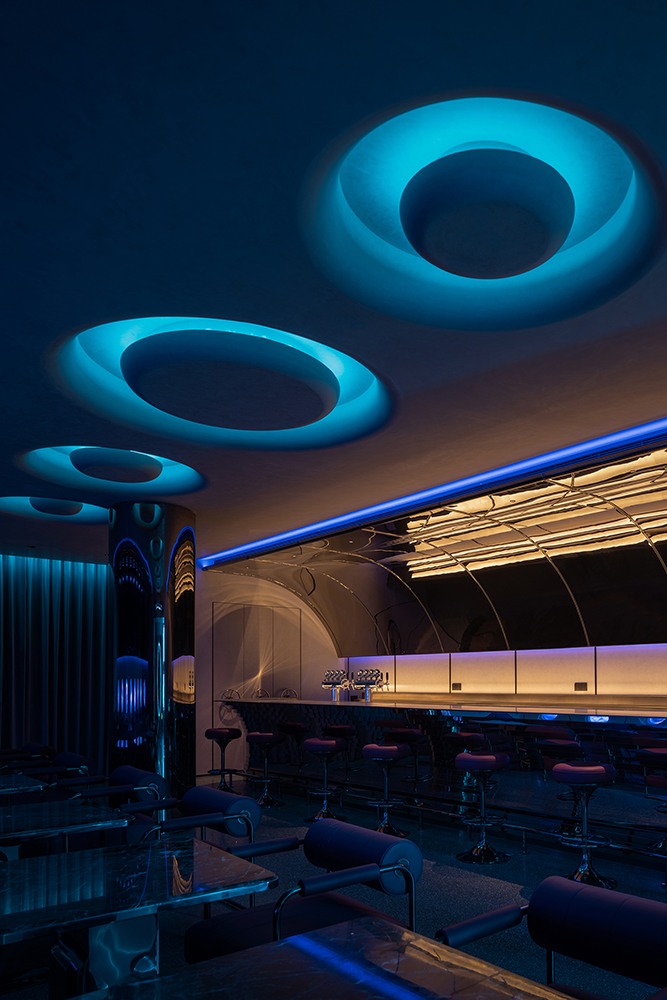 Built as part of OCT’s rural revitalization initiative, this arched timber bridge reconnects the fishing villages of Gulou through both craft and continuity. Combining prefabricated precision with hand assembly, its covered walkway honors southern China’s carpentry traditions while serving as a ceremonial threshold between the resort’s commercial and recreational districts.
Architect’s Detail: Three curved glulam beams, each spanning 82 feet (25 meters), form the bridge’s primary structure — a modern reinterpretation of ancient covered bridges designed to keep timber dry and endure the subtropical rains of the Pearl River Delta.
Timber Bridge in Gulou Waterfront
By LUO studio, Jiangmen, China
Jury Winner, Architecture +Wood, 10th Architizer A+Awards
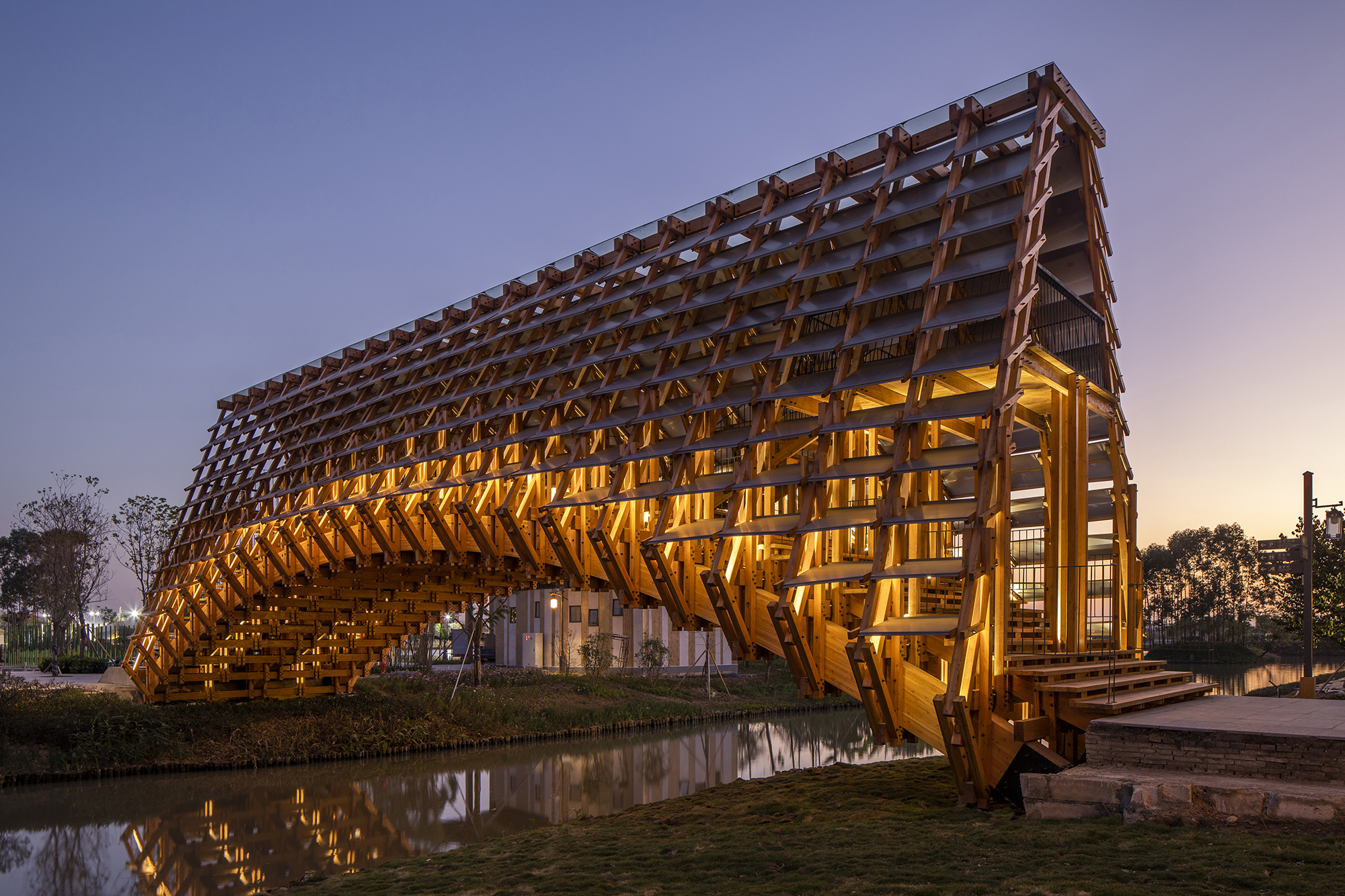 Built as part of OCT’s rural revitalization initiative, this arched timber bridge reconnects the fishing villages of Gulou through both craft and continuity. Combining prefabricated precision with hand assembly, its covered walkway honors southern China’s carpentry traditions while serving as a ceremonial threshold between the resort’s commercial and recreational districts.
Architect’s Detail: Three curved glulam beams, each spanning 82 feet (25 meters), form the bridge’s primary structure — a modern reinterpretation of ancient covered bridges designed to keep timber dry and endure the subtropical rains of the Pearl River Delta.
Yantian 19.5km Waterfront Boardwalk
By eLandscript, Shenzhen, China
Finalist, Urban & Masterplan, 10th Architizer A+Awards
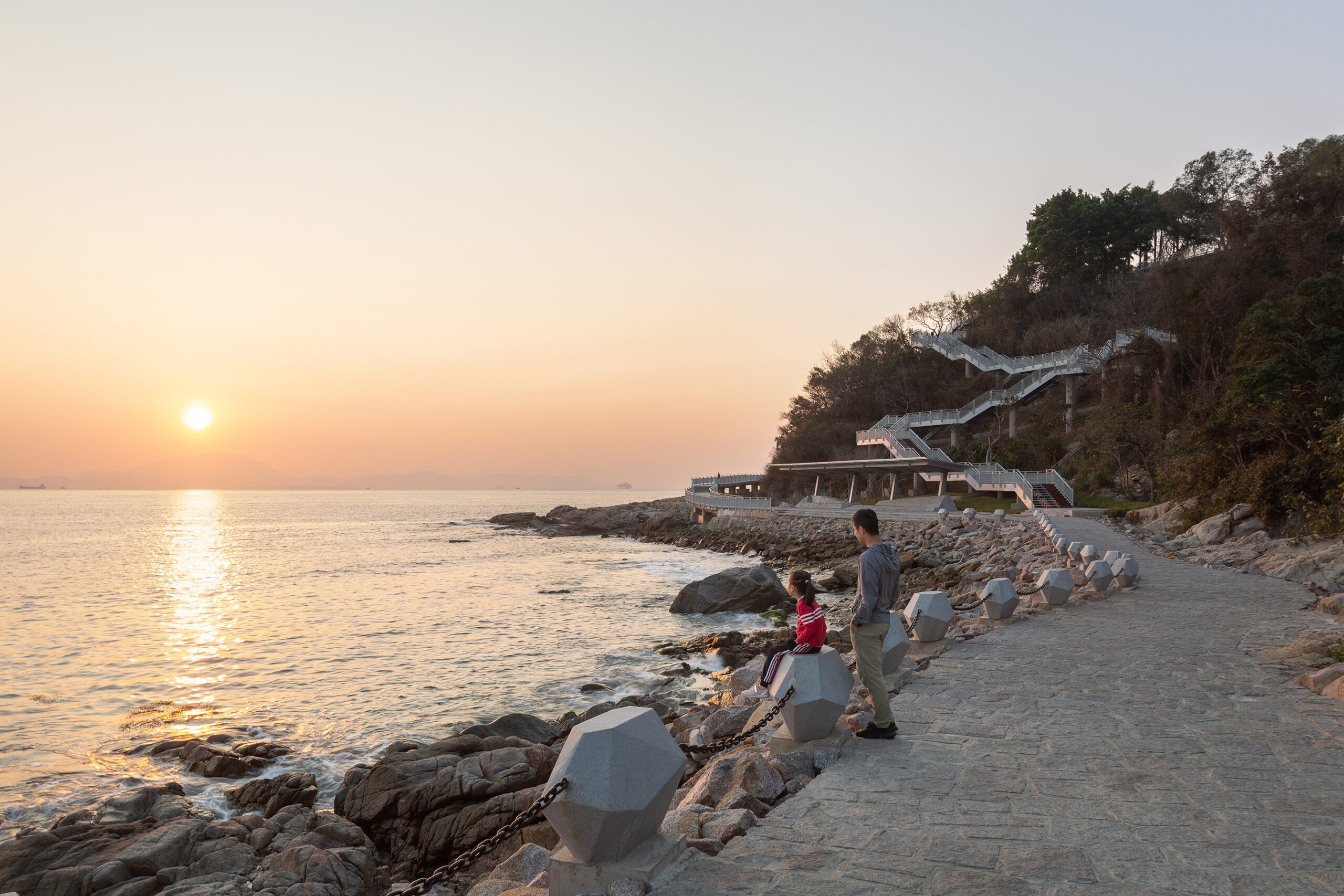 Stretching 15.5 miles (19.5 kilometers) along Shenzhen’s eastern coast, the Yantian Waterfront Boardwalk reconnects city and sea in the wake of Typhoon Mangkhut. The redesigned promenade links beaches and seafood markets through resilient infrastructure that doubles as public realm — a continuous, climate-conscious thread binding daily life to the rhythms of the ocean.
Architect’s Detail: Elevated pathways and adaptive landscape detailing mitigate storm surges, transforming disaster recovery into a model of coastal resilience and urban renewal.
‘Towards Nature, Towards You’ XLXN Lifestyle Art Space
By XIANGLIN, Guangzhou, China
Special Mention, Gallery & Exhibition Spaces, 10th Architizer A+Awards
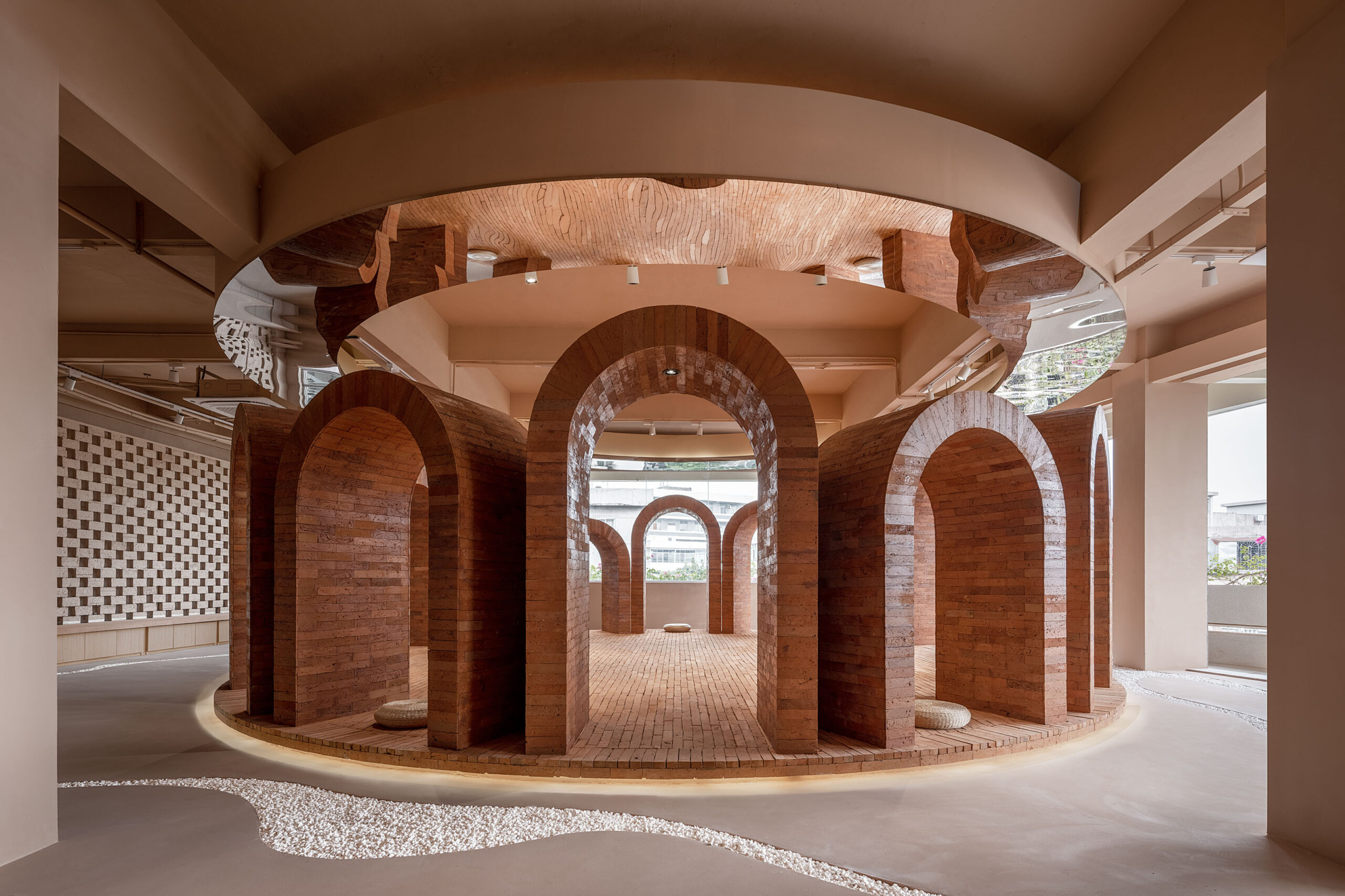 Located in Panyu, a cradle of Lingnan culture, XLXN Lifestyle Art Space reinterprets local heritage through a series of flowing arches and dry-garden “rivers.” Designed as a living, adaptable interior, the project transforms recycled brick, wood, and cement into a tactile environment that invites visitors to move, rest, and become part of the art itself.
Architect’s Detail: The arches vary in height and span to frame different sensory experiences — a spatial rhythm echoing the meandering waterways of Panyu’s historic landscape.
He Art Museum
By Tadao Ando Architect & Associates, Foshan, China
Popular Choice Winner, Museum; Finalist, Architecture +Concrete, Architecture +Stairs, 9th Architizer A+Awards | Finalist, Museum, Architecture +Stairs, 8th Architizer A+Awards
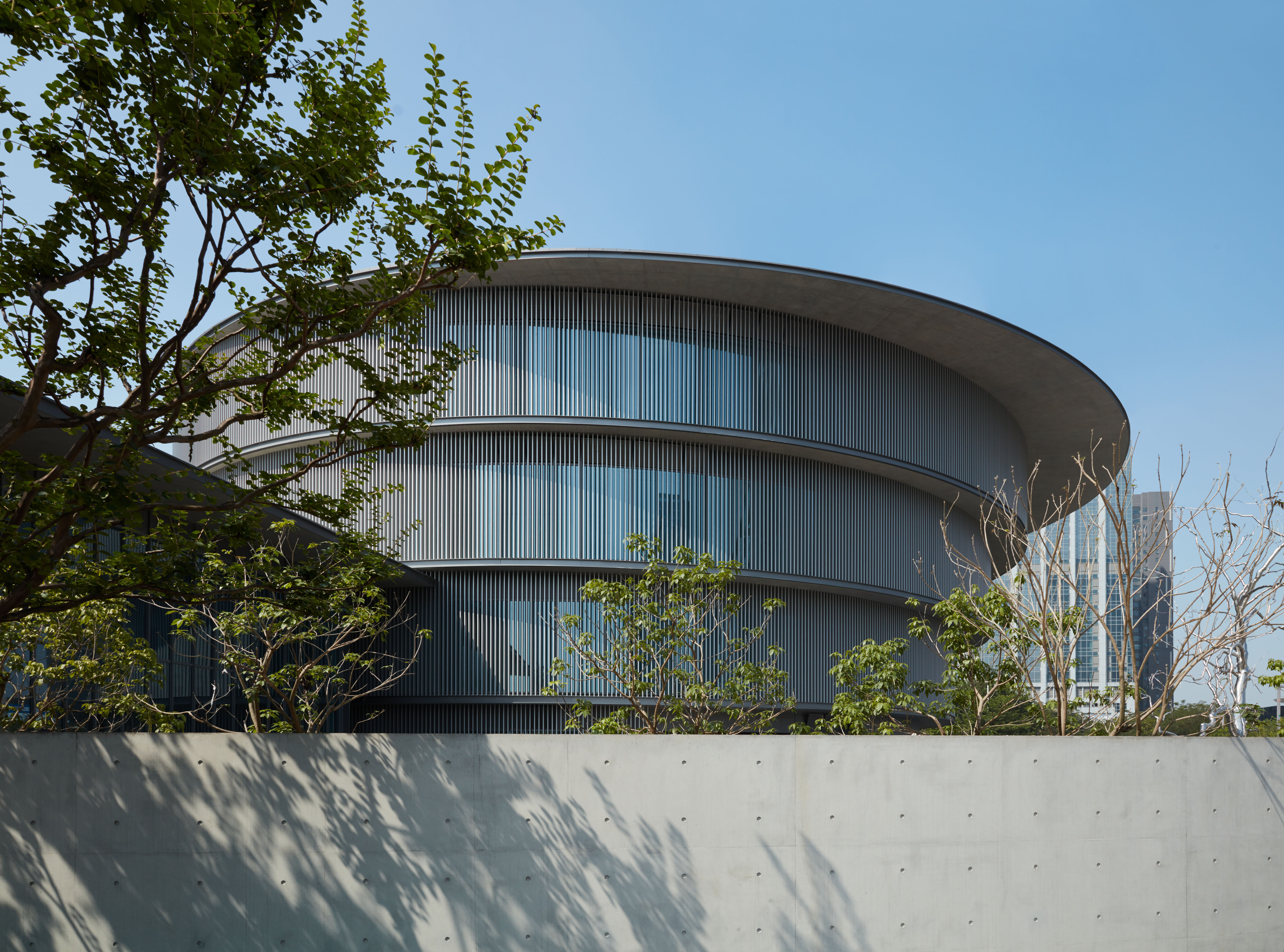 Carved from light and concrete, the He Art Museum embodies Tadao Ando’s pursuit of “dynamic geometry.” Four overlapping circular volumes ripple outward, housing luminous galleries centered around the world’s only double-helix concrete staircase — a sculptural core that defines the visitor’s journey through space and time.
Architect’s Detail: Each of the staircase’s 45 steps differs subtly in width and form, a feat of precision casting that transforms concrete into a meditative choreography of movement and craft.
Nankun Mystery Village Art restaurant
By Wildurban Architects, Guangzhou, China
Finalist, Restaurants (L>1,000 sq ft), 9th Architizer A+Awards
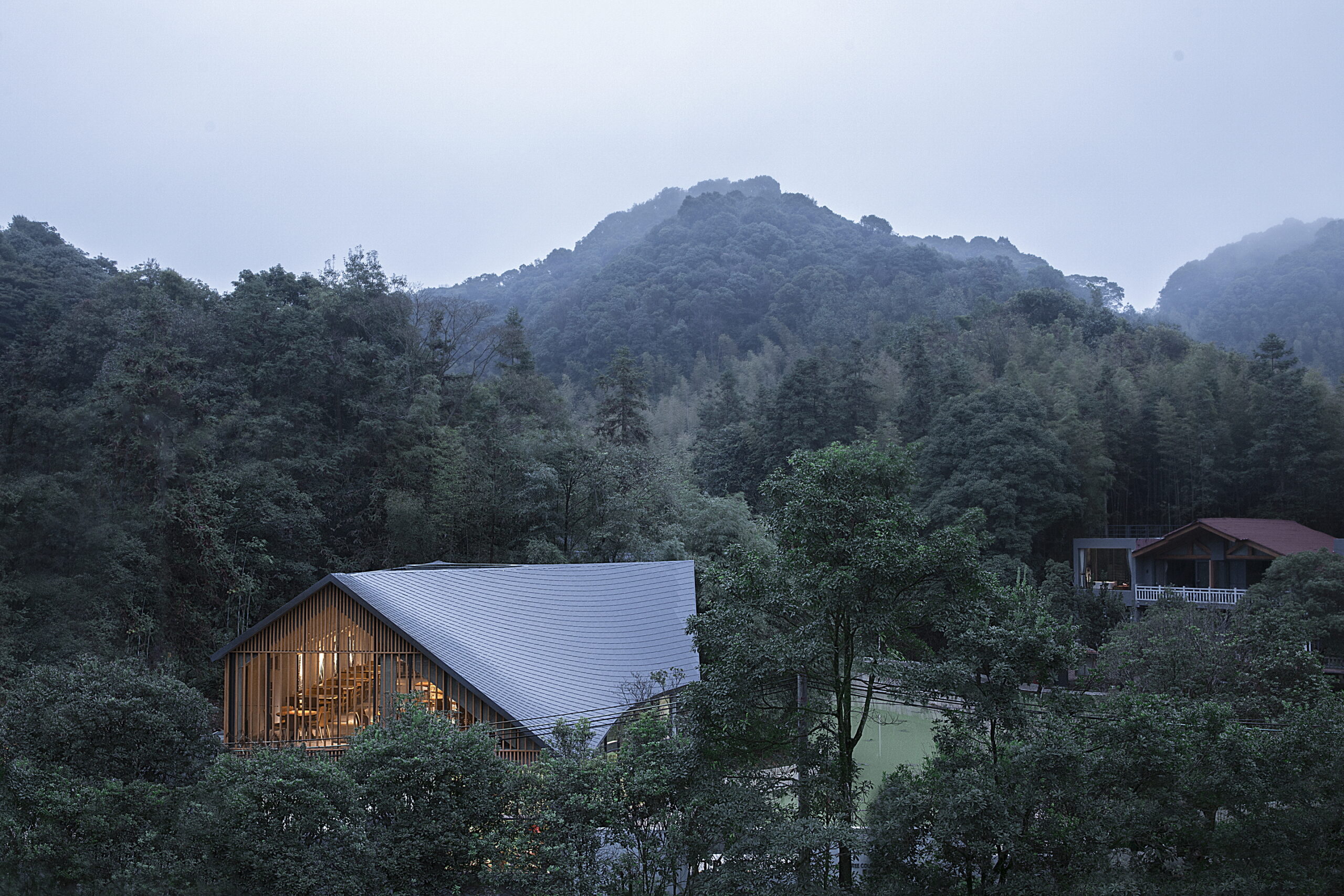 Nestled in a forested valley 2,625 feet (800 meters) above sea level, this new pavilion reactivates a cluster of 1990s brick-and-wood villas in Nankun Mountain National Forest Park. Designed as a flexible cultural hub, the structure hosts exhibitions, brand events, and gatherings while maintaining the site’s delicate balance between architecture and landscape.
Architect’s Detail: Elevated slightly above the ground plane, the building’s glass-and-timber volume mirrors the surrounding canopy, creating the sensation of floating within the forest.
YAO Concept Restaurant
By AAN Architects, Shenzhen, China
Finalist, Restaurants (S<1000 sq ft), 9th Architizer A+Awards
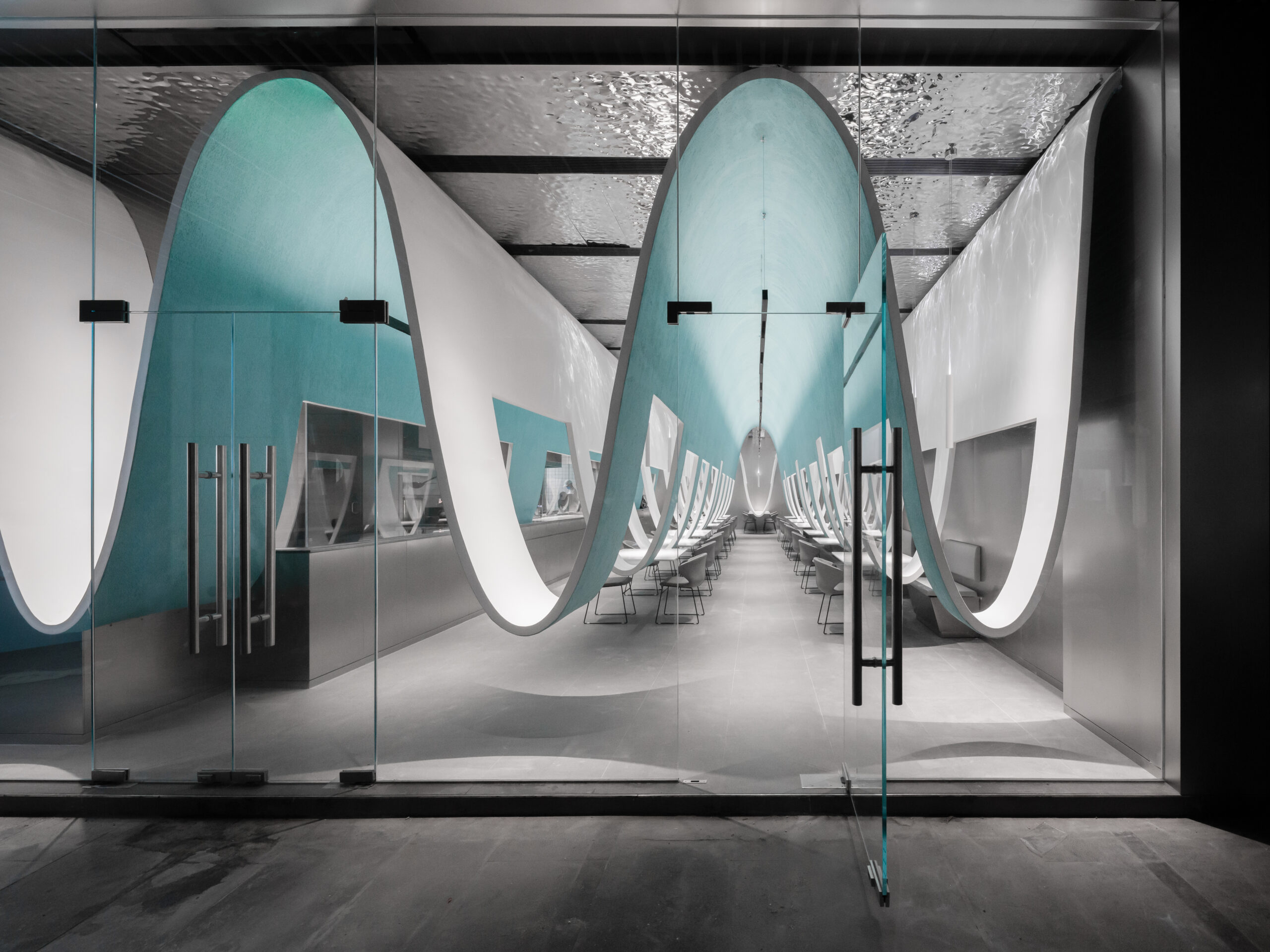 Suspended like a vast fishing net, the undulating ceiling of YAO Concept Restaurant redefines the relationship between intimacy and openness in dining. The continuous curvilinear structure descends to form subtle partitions, transforming the room into a dynamic landscape of movement, laughter, and shared experience.
Architect’s Detail: Crafted from flowing fiberglass panels, the “net” merges lighting, structure and sculpture — a single continuous surface that turns spatial separation into a performance of connection.
Longgang Slow-Traffic System: Nine Rising City Bridges
By FCHA, Shenzhen, China
Finalist, Transportation Infrastructure, 9th Architizer A+Awards
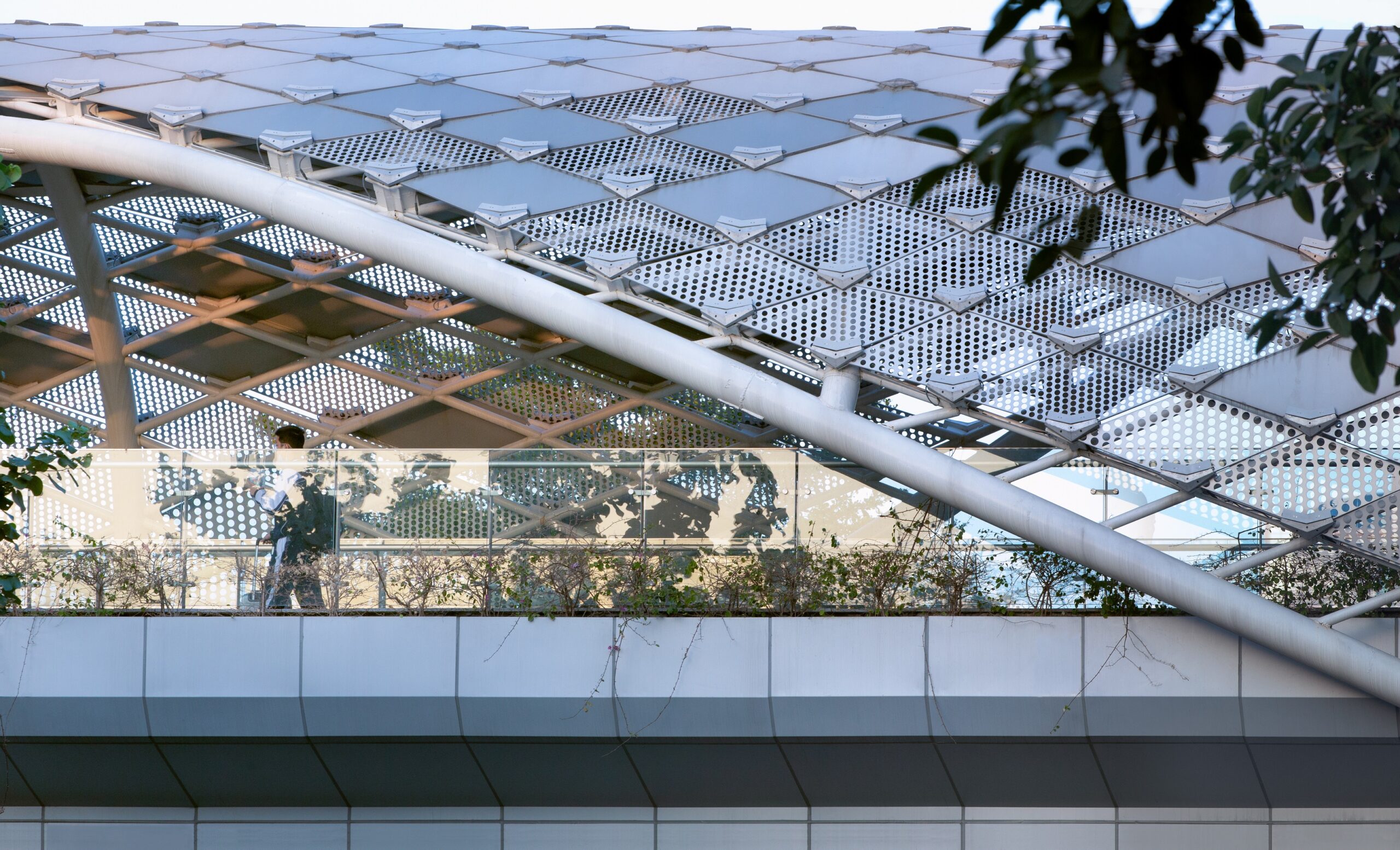 Conceived as a “Nine Dragons” network weaving through the city, this system of nine elevated walkways and weatherproof corridors reconnects Shenzhen’s Longgang district in three dimensions. Linking transit hubs, residential zones, and commercial centers, the bridges twist, dip and extend with sculptural agility, transforming infrastructure into urban choreography.
Architect’s Detail: Each bridge type adapts its form to site conditions — some spiraling around intersections, others gliding above plazas — all sharing a continuous steel logic inspired by the dragon’s sinuous movement.
UABB Longgang Exhibition Hall
By Atelier XI, Shenzhen, China
Finalist, Pop Ups & Temporary | Finalist, Architecture +Light, 9th Architizer A+Awards
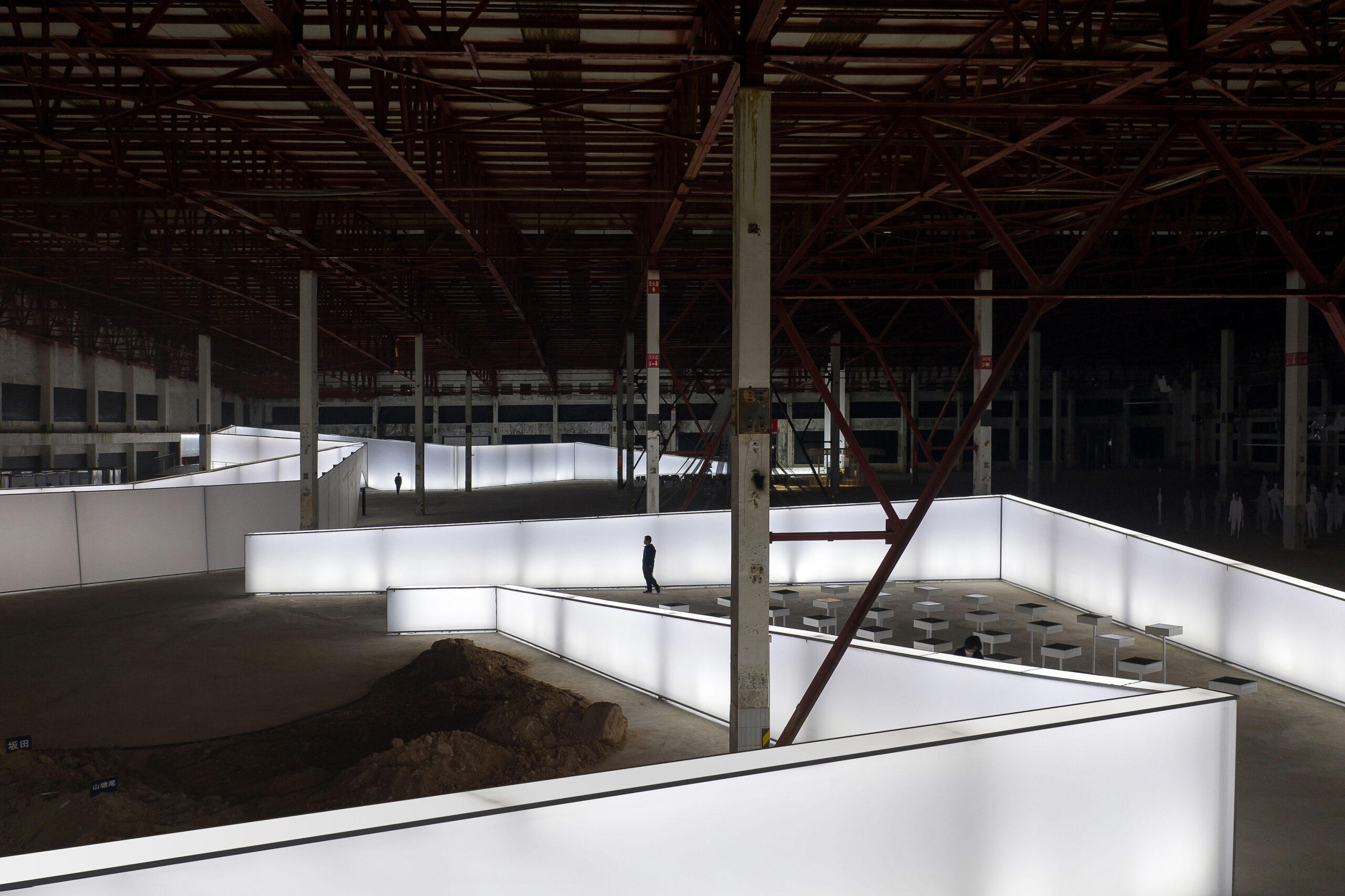
Photo by Chao Zhang
Commissioned just three months before opening, this adaptive reuse project transformed a vast, disused air-conditioner factory into a luminous exhibition space chronicling Shenzhen’s urban growth. A 820-foot (250-meter) translucent membrane wall — conceived as a “Folded Time-Light-Line” — cuts through the industrial hall, creating a glowing chronological promenade that bridges the city’s manufacturing past with its cultural present.
Architect’s Detail: Made from affordable tensile membrane material, the light wall was fabricated and installed in under 20 days, its diaphanous surface turning the relics of industry into a living canvas of illumination.
Financial City Community Center
By Lacime Architect, Suzhou, China
Finalist, Architecture +Community, 8th Architizer A+Awards
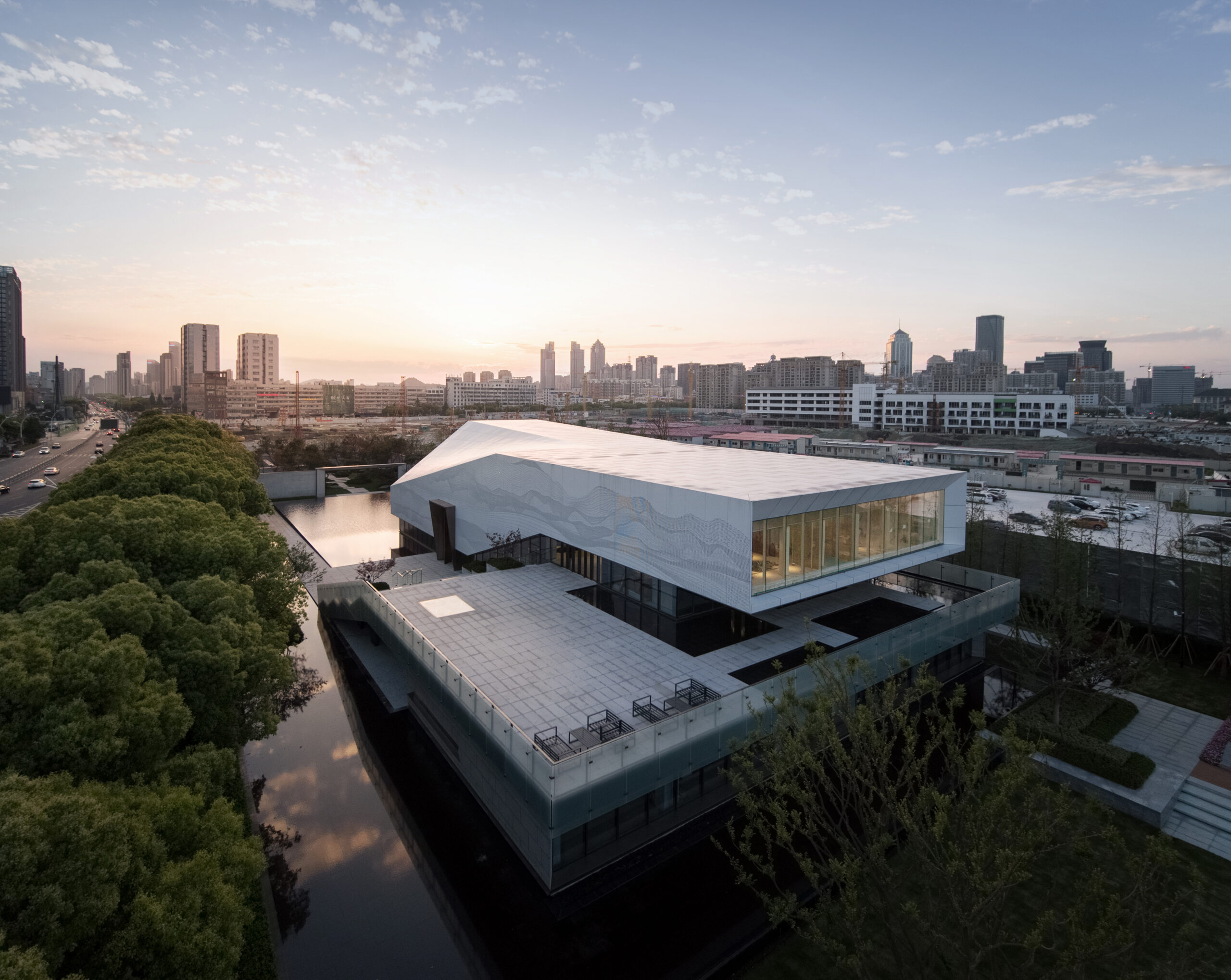
Photo by Schran Images
Set beside the Suzhou Canal, this cultural landmark reinterprets the city’s poetic garden tradition through a contemporary lens, transforming the Taihu stone into architecture. Its twisting steel structure and layered façades evoke the misty abstraction of Jiangnan landscapes, creating a civic space that blurs boundaries between past and present, solid and void.
Architect’s Detail: The double-skin façade — a parametric lattice suspended before the curtain wall — filters daylight like silk, recalling Suzhou’s heritage of weaving and water.
Shenzhen Bao’an International Airport, Terminal 3
By Massimiliano and Doriana Fuksas, Shenzhen, China
Jury & Popular Choice Winner, Airports, 2nd Architizer A+Awards
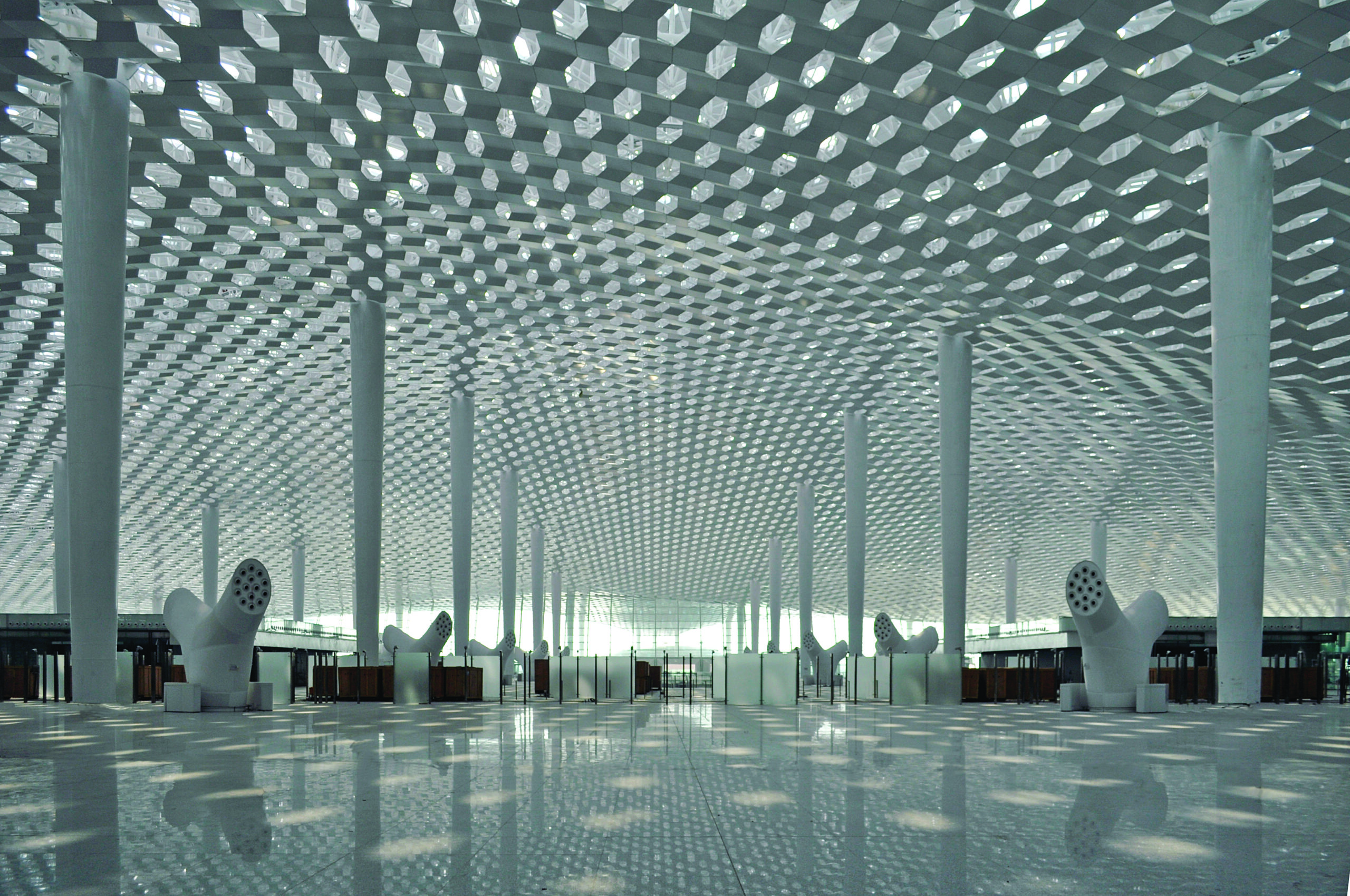 Conceived as a vast, living organism, Terminal 3 evokes the sinuous form of a manta ray in motion — a sculptural, aerodynamic body that captures the dynamism of flight. Its double-layered honeycomb skin floods the mile-long interior with daylight, dissolving the boundary between structure and atmosphere while symbolizing Shenzhen’s fusion of nature and technology.
Architect’s Detail: The terminal’s stainless-steel “trees” serve as both air diffusers and visual anchors, transforming essential infrastructure into monumental interior sculpture that channels the logic of natural forms.
Call for entries: The 14th Architizer A+Awards celebrates architecture's new era of craft. For early bird pricing, submit by October 31st.
The post Architect’s Guide to Shenzhen: 30 Must-See Buildings and Designs appeared first on Journal.