










Ghosts of Designs Past: Rendering the Afterlife of Infrastructure
The votes for the 2025 Vision Awards have been counted! Discover this year's cohort of top architectural representations and sign up for the program newsletter for future updates.
If you’ve never visited the Cumbrian coast, the very edge of North West England, then there’s a good chance of missing the point. This region is one of Europe’s most beautiful, and certainly up there in the list of untamed areas, given how much of England’s countryside is strictly divided and delineated on the grounds of ownership — rigid, albeit not necessarily straight, lines betraying how little wilderness remains beyond the reaches of agriculture and acres owned by the aging aristocracy.
But there’s a flip side to the stunning landscapes that lead to Scotland’s border. One that speaks not to remoteness, but isolation and planned inaccessibility. It’s a place where depopulation has been a very real response to the collapse of industry and ignorance of policymakers and corridors of power, geographically and culturally removed from local realities. Towns like Workington, where a decaying monolithic defunct steelworks casts huge shadows over streets that struggle to provide the employment needed to overcome closures and sector collapse.
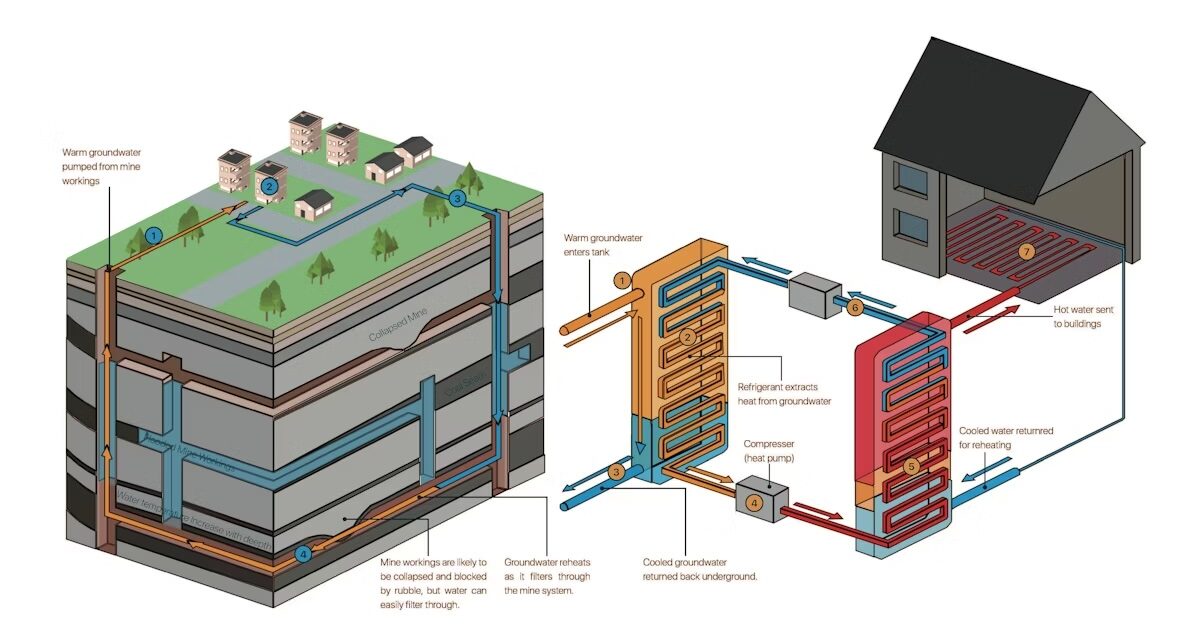
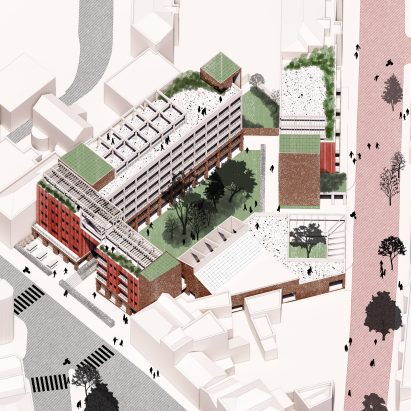
A former coal mine in Whitehaven, Cumbria, becomes a museum and geothermal energy facility in Coal To Core by Wei Feng | Editor’s Choice Winner, Vision for Renewal, 2025 Vision Awards
Whitehaven is another, albeit less extreme example, and the proposed site of the UK’s first deep mine in 30 years. Plans now abandoned due to environmental opposition, Whitehaven Coal still operates the last of the original facilities, which, amid rapid energy transition, are running on numbered days. Unlike the North East industrial hubs, now a hotbed for renewable projects, no similar blueprints have — at the time of writing at least — been tabled for the area.
Architecture is usually taught to imagine beginnings: new programs, new forms, new futures. Yet some of the most revealing architectural questions emerge at the other end of the timeline, when buildings, systems and infrastructures outlive their original purpose. As climate pressure accelerates and industrial landscapes age in plain sight, designers are increasingly turning to speculation as a way to interrogate what remains. In this context, architectural visualization becomes less about selling a proposal and more about exposing latent realities — rendering not what could be built, but what already exists, transformed.
This is precisely why Wei Feng’s From Coal To Core resonates. Editor’s Choice Winner in the 2025 Archizer Vision Awards Vision For Renewal Category, this imagined project is positioned as a potential catalyst for wider transformation of the town and its workforce. Centered on Haig Pit, the last remaining source of coal in Cumbria, the colliery becomes a museum — one part preserving local industrial heritage, another showcasing the potential of geothermal energy.
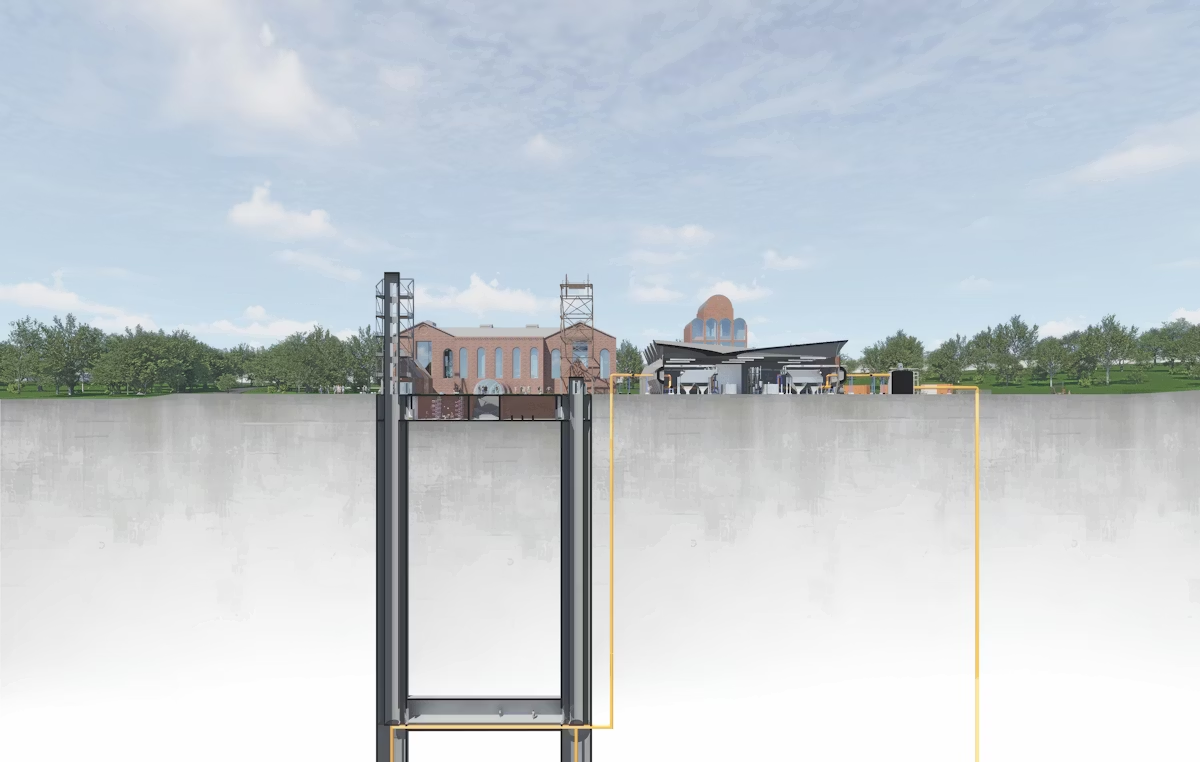
Geothermal energy production at the Coal To Core renewable facility and mining museum by Wei Feng | Editor’s Choice Winner, Vision for Renewal, 2025 Vision Awards
An established approach to producing electricity in many parts of Europe, which unlocks the heat naturally trapped underground, Britain is only just beginning to embrace the necessary technologies, and Whitehaven could realistically prove an effective case study given its history of tapping into what lies beneath.
Re-appropriation on an industrial scale it’s a fantasy example of a rapidly emerging need to rethink what we have created to suit different wants and requirements. Just like Freeway Carpools, Greg Tate’s Jury Winner in the AI-assisted Rendering category. Moving from the wilds of Cumbria to the dense urbanization of Los Angeles, the idea here is based on what could happen if the second-largest city in the US, and one of its worst-served by public transport, were allowed to break free of its car-first design.
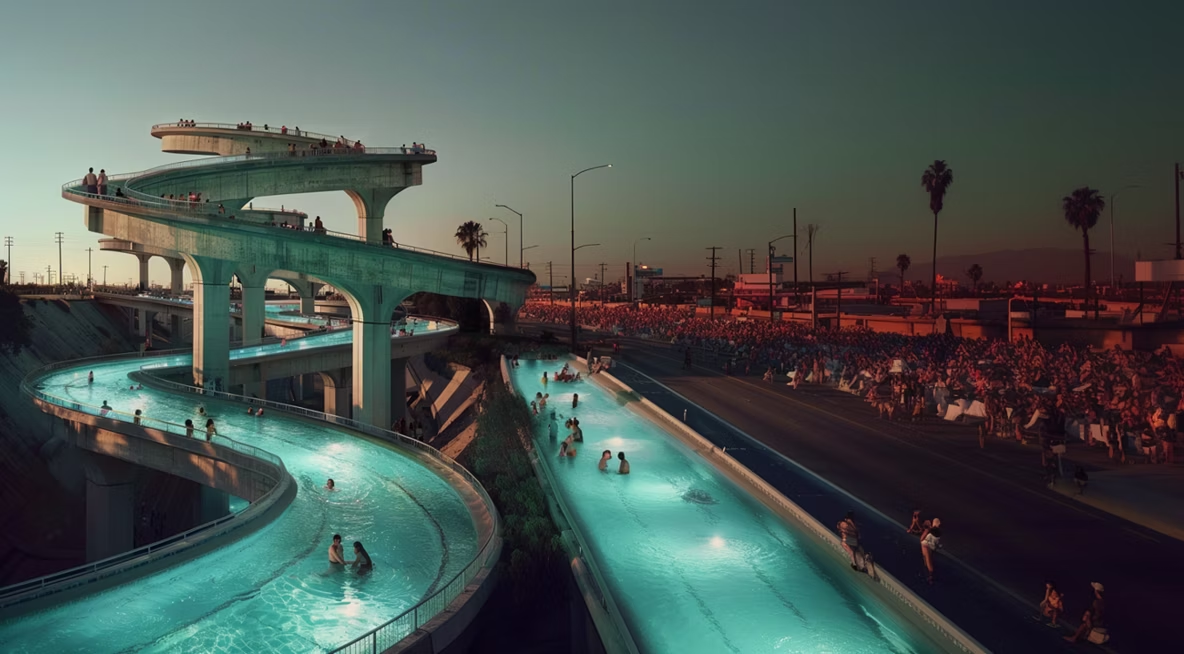
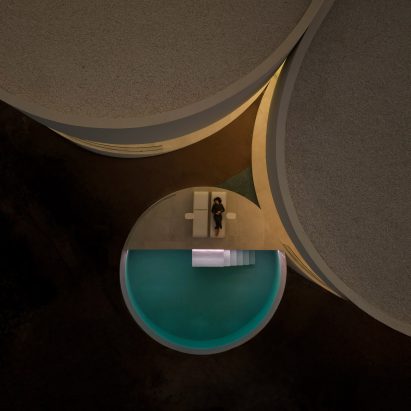
Rethinking the car city in the name of fun, Freeway Carpools by Greg Tate | Jury Winner, AI-Assisted Rendering, 2025 Vision Awards
The freeway project is, for all intents and purposes, no longer fit for purpose — hence the relentless traffic jams — and completely at odds with a society that must move away from individual vehicle ownership for the sake of its planet. So what if we took the term ‘carpool’ to the nth degree, filling elevated lanes with turquoise water, if not completely replacing the automobile infrastructure, but disrupting it to “ease the monotony of traffic and congestion, allowing drivers a moment of serenity amid the rush.”
If Coal to Core was feasible, Freeway Carpools is quite the opposite, but nonetheless forces us to think about the ways in which we could have made very different choices in terms of how a city functions. More so, how an economy functions, and how humans might actually prefer to live.
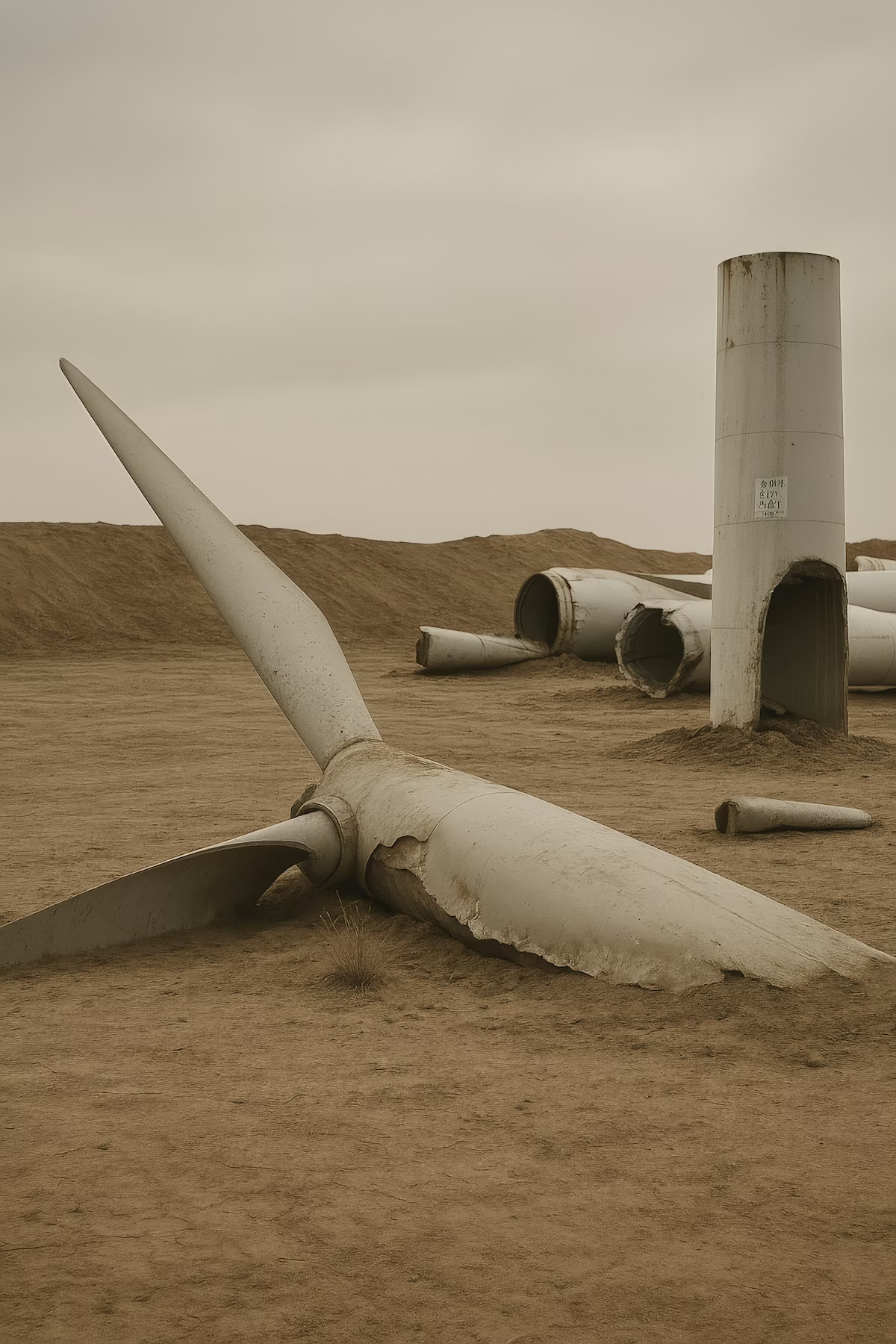
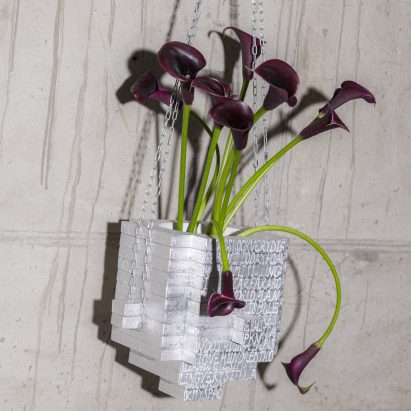
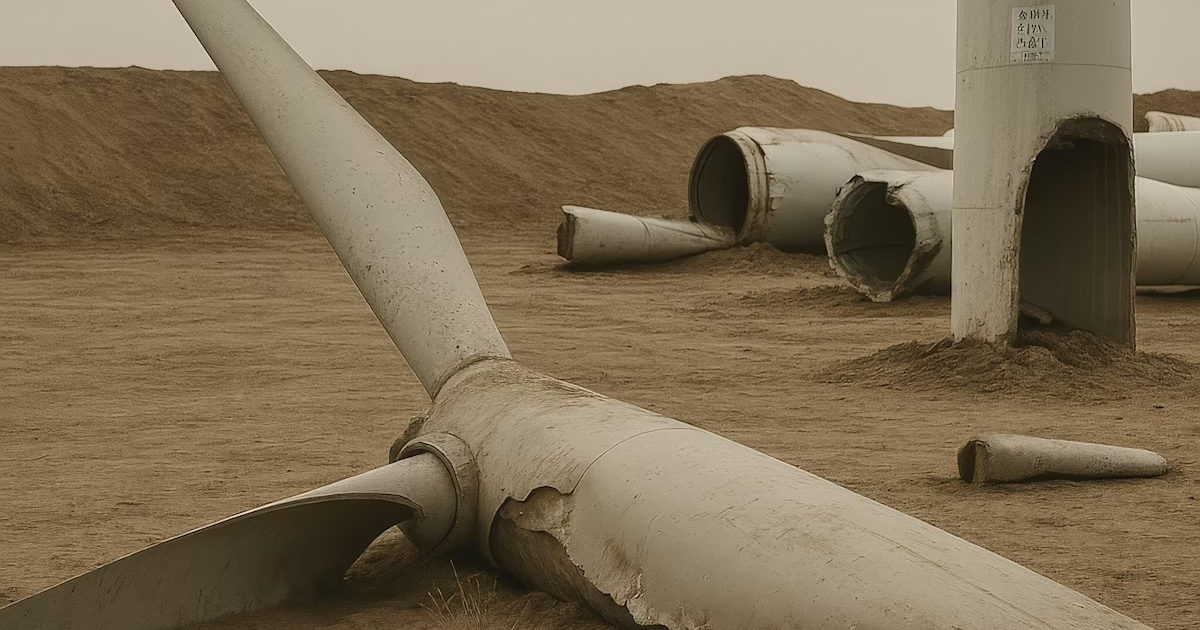
Decaying turbines are re-purposed in Second Wind by Mohannad Khalaf | Editor’s Choice Winner, Vision for Reuse and Renovation, 2025 Vision Awards
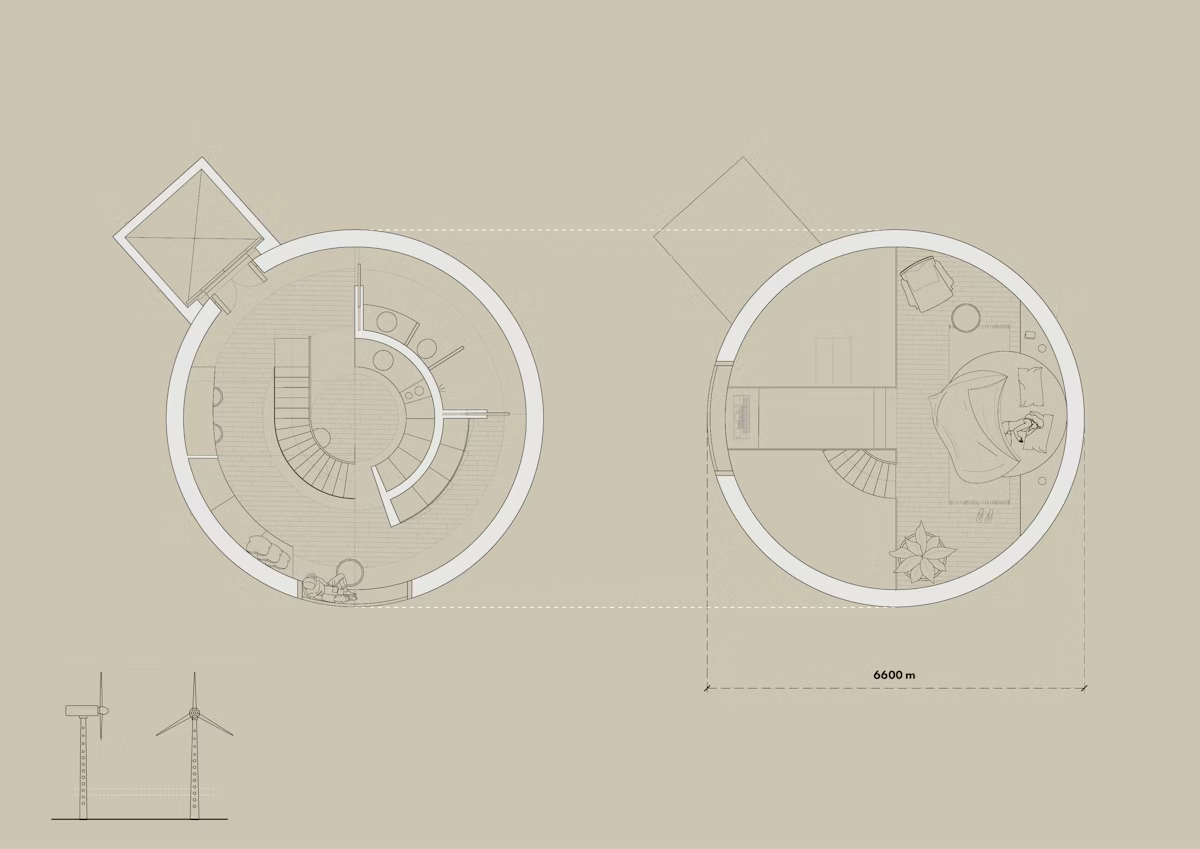
Floorplan of the wind turbine home in Second Wind by Mohannad Khalaf | Editor’s Choice Winner, Vision for Reuse and Renovation, 2025 Vision Awards
If both these concepts look to a brighter tomorrow, the Vision Awards have also provided darker readings of the re-reading. Second Wind by Mohannad Khalaf presents decommissioned windmills as potential dwellings, which is fascinating and troubling. These towering monuments to the renewable age are no less suited to providing shelter than a shipping container — already a proven case study.
But as much as the compact, self-contained, vertical homes answer the issue of the 43 million tonnes of turbine material waste we’re expecting to accumulate by 2050, they also spotlight an uncomfortable truth: we cannot invent and tech our way out of this crisis, because even the solutions to clean energy come with a huge, mounting cost, and the more we plug in the more of cast offs we will need to deal with.
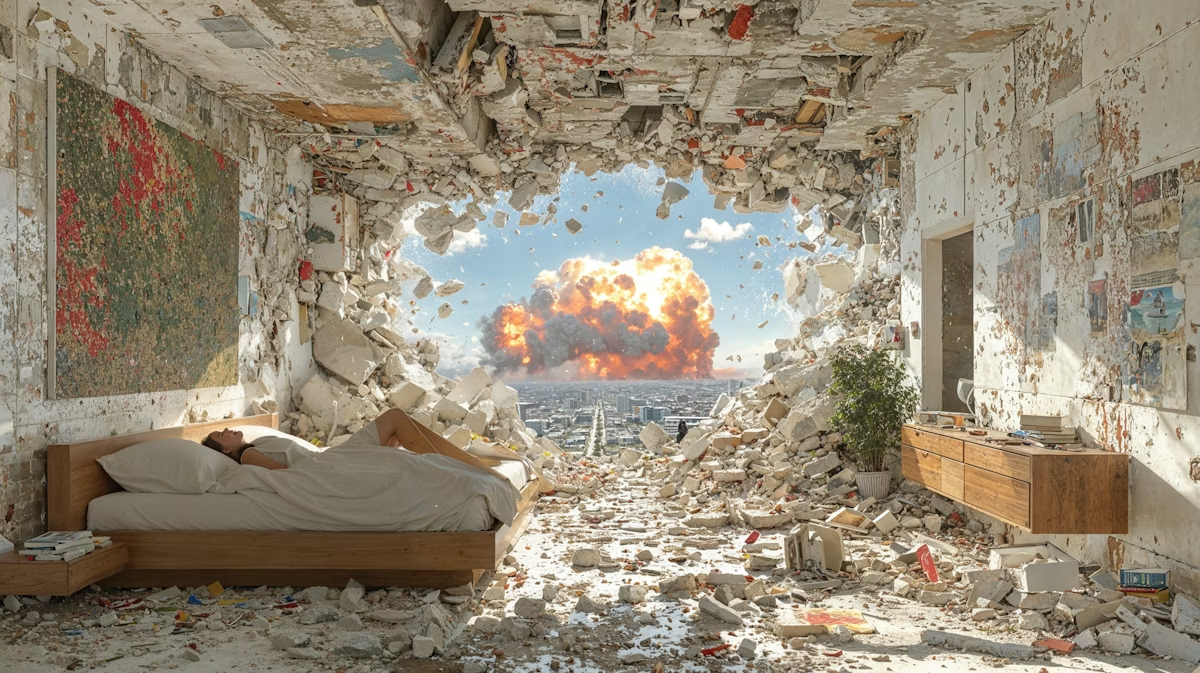
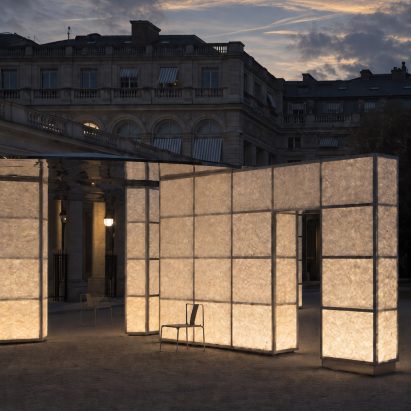
The home as a machine of war in Shelter/Weapon by Maryam Liaghatjoo | Editor’s Choice Winner, AI-Assisted Rendering, 2025 Vision Awards
Taking us further from the reassuring sanctuary we long to believe in, Maryam Liaghatjoo destroys our belief in a place to live as a place of protection. Like Carpools, Shelter/Weapon also picked up a prize for AI-Assisted Rendering, although we would not have to look far to find this in our reality. Wars are so ingrained in everyday only those with the greatest consequences to the Western powers manage to make the headlines, and often have to compete for column inches even then.
Here, we see a bedroom — the most intimate of private spaces within the private residence, blown open to the city outside. Suddenly made vulnerable thanks to the devastating impact of conflict, we are told, as if it really needed to be said, that this is an act that turns architecture itself into a participant in the fighting. Structure becomes a sinister threat, materials the arsenal of weapons that could implode, topple, or collapse. Every moment spent in a situation that was supposed to make us feel safe becomes more dangerous. A silencing way of using tools of architecture to send home a message, while we are still lucky enough to have a home.
Taken together, these projects suggest that representation has become a critical architectural tool for confronting uncomfortable truths. By visualizing infrastructure in states of reuse, collapse or mutation, architects are no longer smoothing over contradictions — they are amplifying them. These renderings do not offer solutions so much as reckonings, asking viewers to confront the afterlives of systems we once believed were permanent. In doing so, they reposition architecture as a discipline capable of looking backward with precision, forward with skepticism, and outward with renewed responsibility.
The votes for the 2025 Vision Awards have been counted! Discover this year's cohort of top architectural representations and sign up for the program newsletter for future updates.
The post Ghosts of Designs Past: Rendering the Afterlife of Infrastructure appeared first on Journal.