


















Algae "biocells" powered by photosynthesis could replace disposable batteries

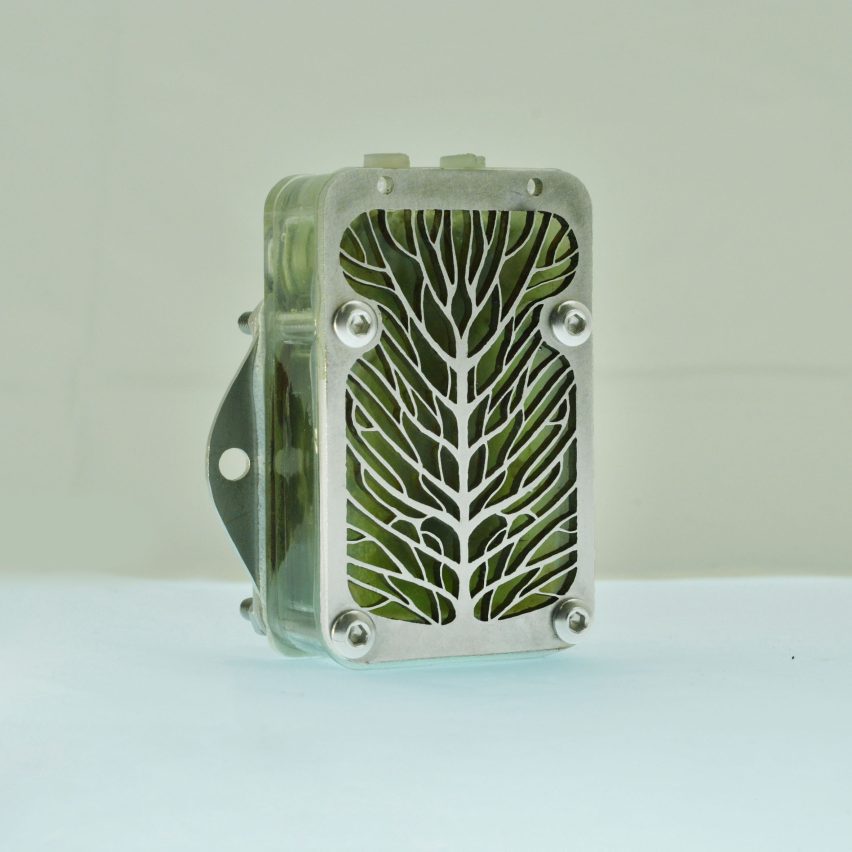
Bio-designer Lucia Giron has worked with the University of Cambridge's Department of Biochemistry to develop prototypes of an algae-based battery alternative, which harnesses the power of photosynthesis for electricity.
The University of Cambridge is one of the pioneers of biophotovoltaics, which work like biological solar panels, converting light into electrical current through the natural processes of living microorganisms.
In the Cambridge team's "biocells", the microorganisms are cyanobacteria, also known as blue-green algae, and the electricity is generated continuously as they carry out photosynthesis, taking energy from sunlight and feeding on carbon dioxide to grow.
The researchers believe these low-powered biocells could one day eliminate the need for the small chemical batteries that power many everyday devices like remote controls and smoke alarms, causing ecological damage through their mining and disposal.
"Our technology could replace millions of small disposable batteries with a much cleaner source of energy – that's a huge environmental benefit and a really exciting prospect," said University of Cambridge professor Chris Howe.
Howe and his team have been working with Giron, a 2023 graduate of the Biodesign masters at London school Central Saint Martins, for the last two and a half years. Along with engineer Lifu Tan, she has been helping the scientists turn their research into prototypes that demonstrate the technology in action.
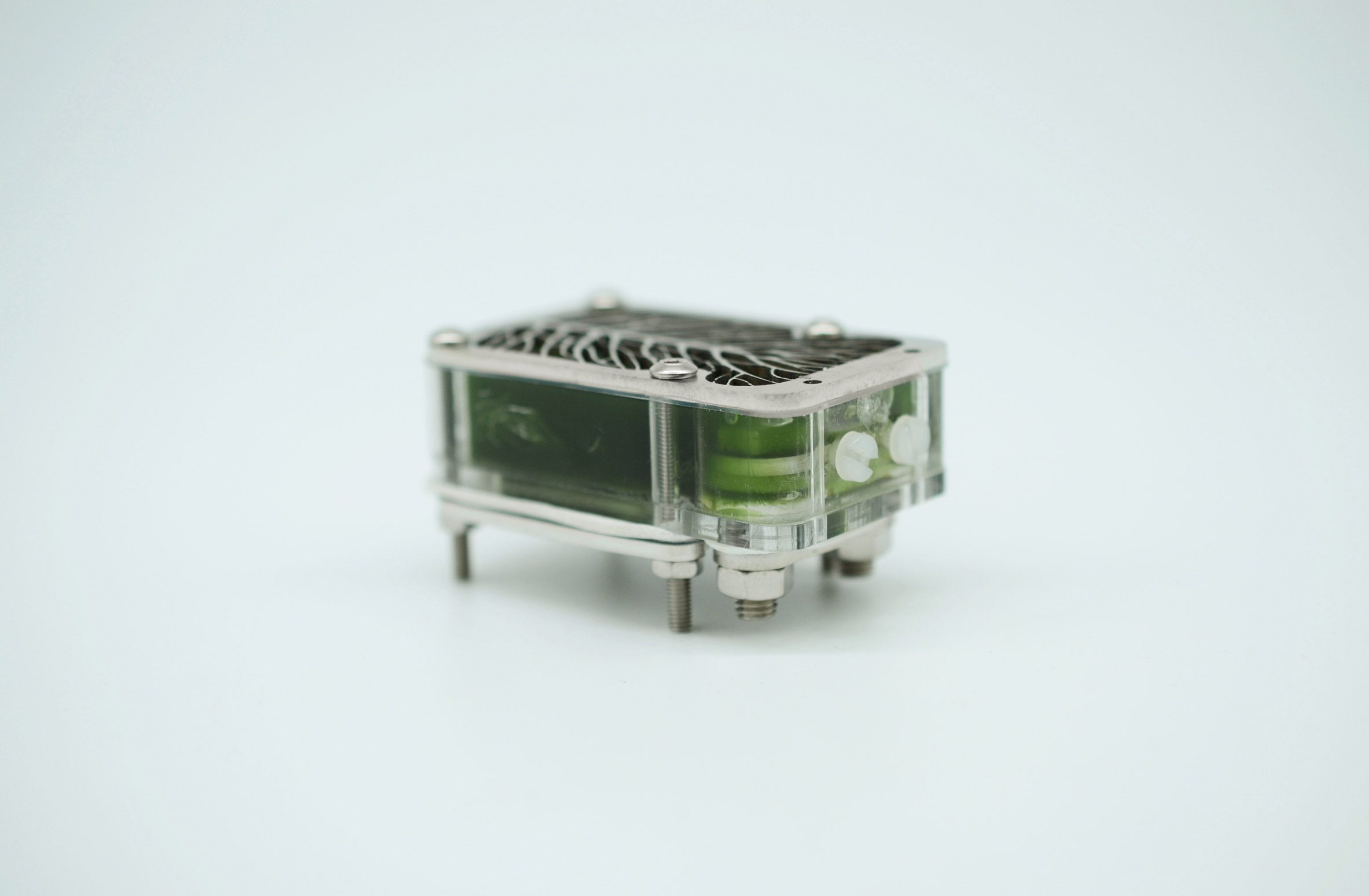
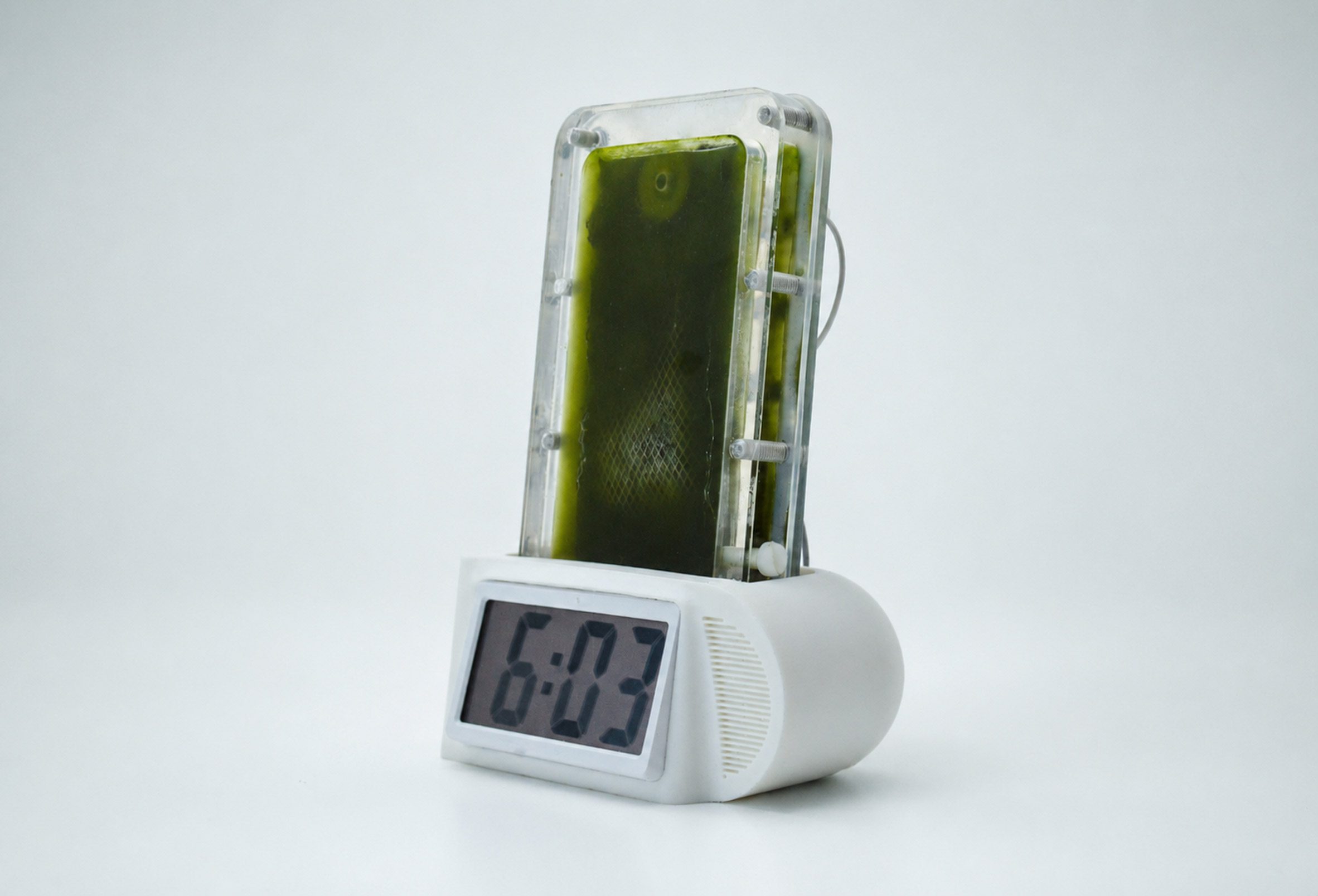
Their creations include a demonstrator cell – which presents the technology in a compact, attractive and recognisable package – as well as a clock radio and a temperature sensor powered by biophotovoltaic (BPV) panels.
The demonstrator cell was designed to communicate what biophotovoltaics are to a new audience, Giron told Dezeen, while catering to the needs of the algae.
"One of the interesting tensions with designing a biocell is that you're trying to create something that behaves like a piece of technology while also accommodating a living organism – in other words, designing the conditions for the organism to interact with the device," she said.
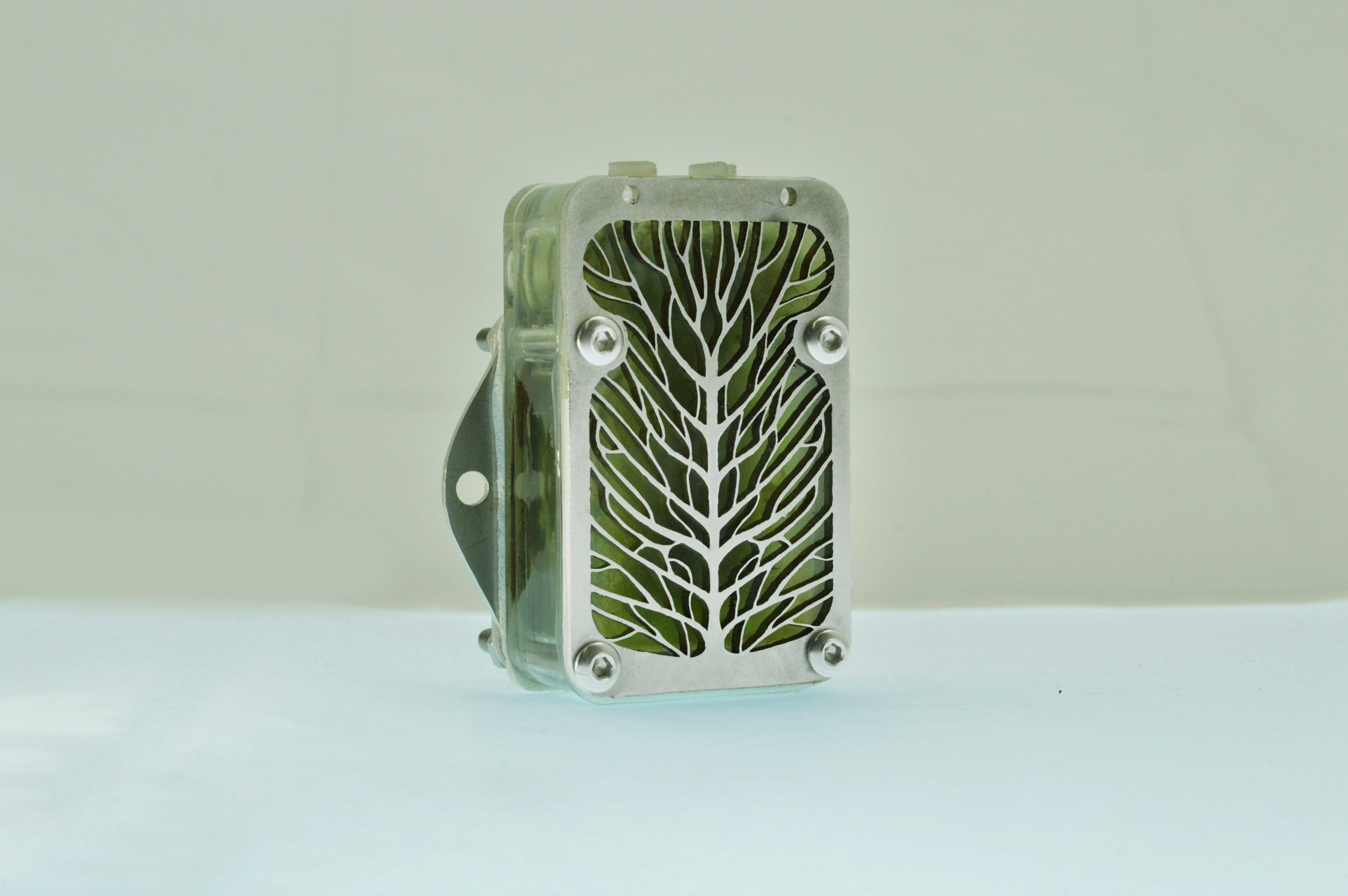
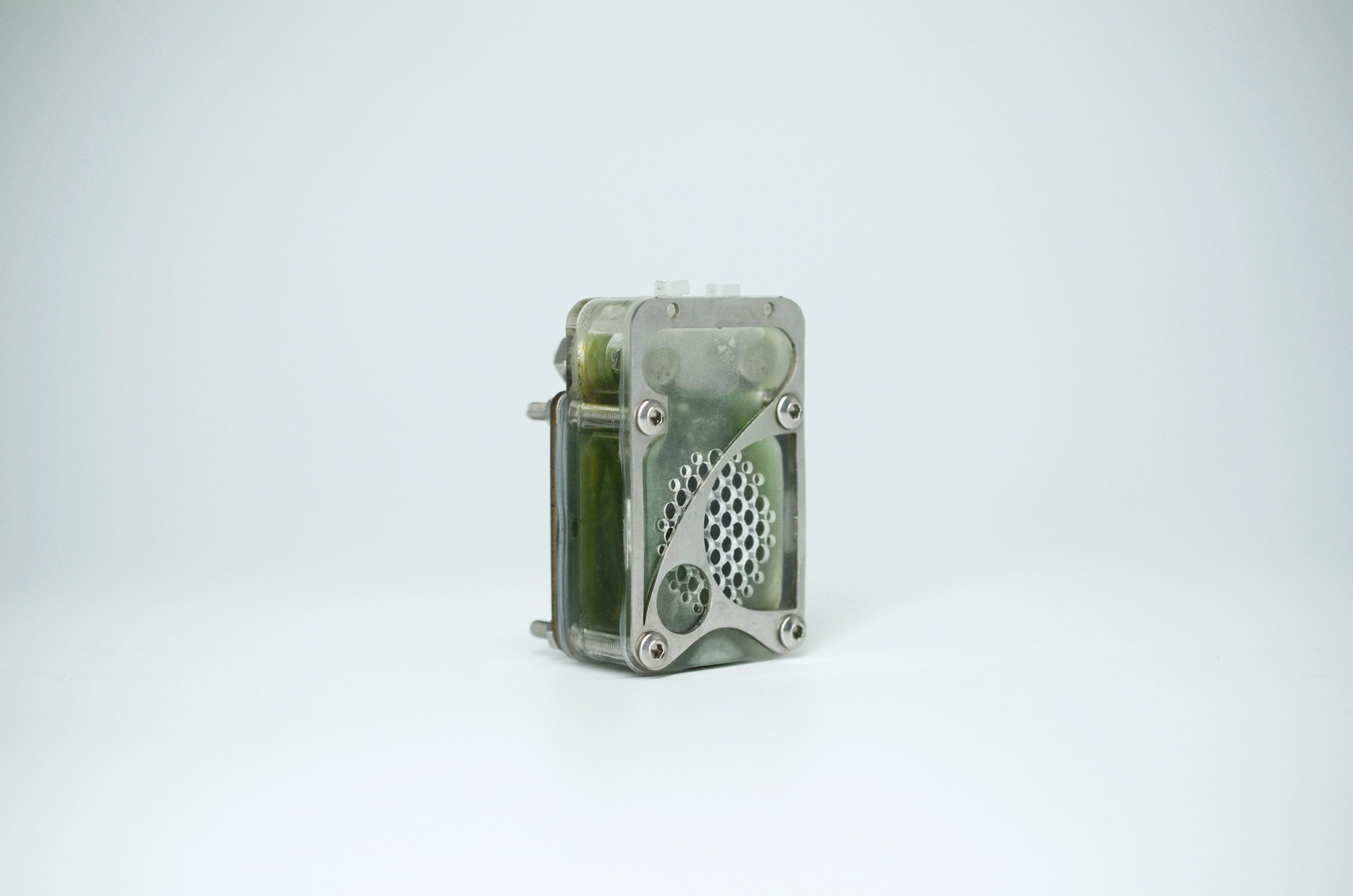
Within this context, the biocell's contained algae is exposed within a transparent casing, which serves a dual functional and aesthetic purpose.
"The algae need access to light in order to photosynthesise," said Giron. "The transparency [also] allows people to see the living system inside, which hopefully creates a sense of curiosity and connection with the process happening within the cell."
A special semi-permeable membrane allows gas exchange while preventing evaporation, and the electrode inside has a filamentous structure that provides a textured surface for the algae to integrate with, allowing the biological and electrical parts of the system to interact more closely.
The decorative leaf-vein design on the front plate serves as an easily recognisable symbol of photosynthesis. This front plate can be removed and the system disassembled so its components can be reused or recycled.
The algae are not harmed in the creation or use of the cell and keep producing electricity for the duration of their lives. In the Cambridge scientists' lab, this is six years and counting.
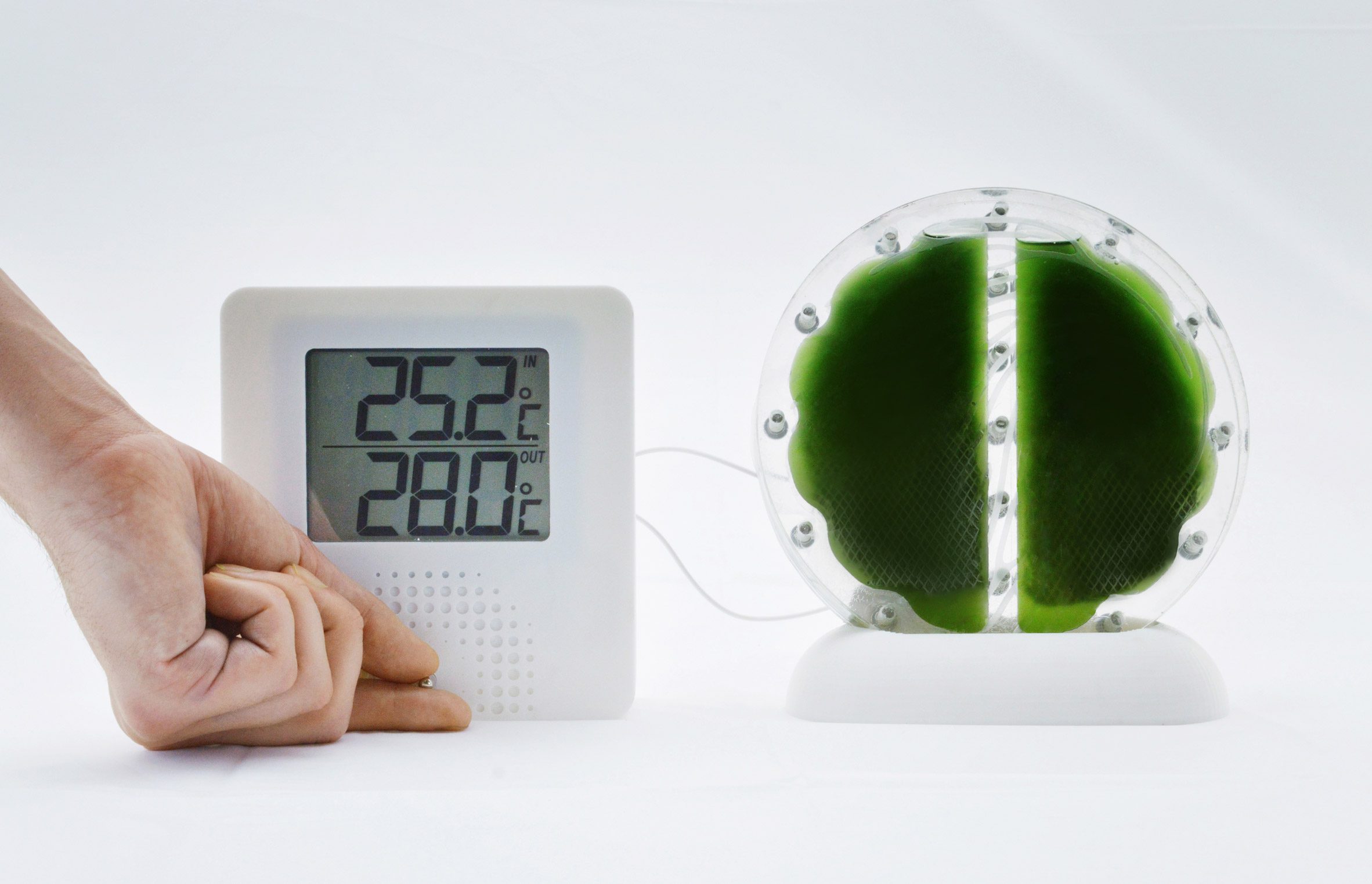
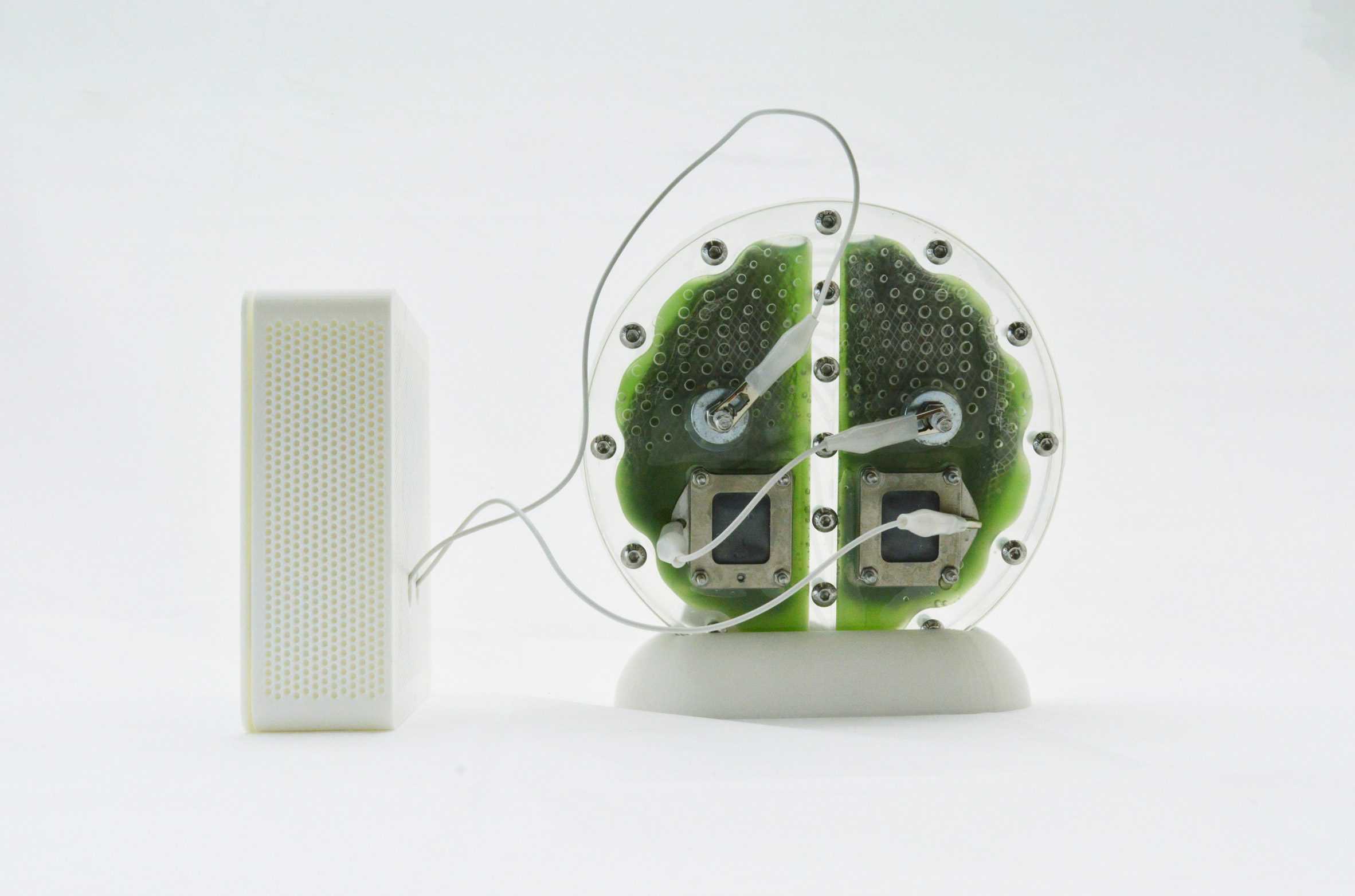
This is also the case in the two BPV panels: a disc-shaped one that Giron and the team designed to plug into a temperature sensor, and a rectangular slab that slots into the top of a clock radio. These show how the technology might exist in everyday life.
Currently, the BPV panels are much larger than standard disposable batteries, matching or even exceeding the size of the demonstrator devices they power. But they will likely get smaller as the scientists commercialise their technology through their new spin-out company, e-Pho.
"I think there are probably two directions this technology could move in," said Giron. "There is definitely potential for the systems to become more compact as we continue to understand and optimise them, but I also think there's something interesting about not hiding the technology away."
"Biocells rely on a living process, so they need access to light (whether that's sunlight or indoor light), which means they may always have a slightly different relationship to the spaces they inhabit," she continued.
"Many of the energy technologies we interact with every day are designed to be invisible, but with biocells, part of the opportunity is that they make energy production more visible and create a relationship between people and the living systems generating it."
Size and portability will be crucial for some applications, but for contexts like education, public spaces and architecture, "helping people understand how [energy] is produced could actually be part of its value", Giron argued.
Other recent appearances of cyanobacteria in design include the Canadian pavilion of the 2025 Venice Architecture Biennale, where the microorganisms coated a lattice structure to sequester carbon, and in Studio Swine's Invisible Worlds sculpture, which celebrated their status as the world's first oxygen-producing photosynthesizers.
The post Algae "biocells" powered by photosynthesis could replace disposable batteries appeared first on Dezeen.