







When Architecture Draws the Line: 8 Projects Where Material Contrast Is the Concept
Architizer's 14th A+Awards judging is live! Subscribe to our Awards Newsletter for updates on Public Voting and the big winner reveal later this spring.
While cohesion is often the safe route, we architects have always had a soft spot for material contrasts that, on paper, shouldn’t quite work, and yet somehow do. But when the line is clear, the result can feel sharper and more intentional than any carefully matched palette.
And at a time when add-ons and adaptive reuse are quite common and a renewed interest in honoring what already exists, these material splits have become even more visible. Extensions declare themselves. Insertions refuse to imitate. But the strategy isn’t limited to just renovations. Even new builds are embracing deliberate divides to clarify structure, signal function or simply establish identity.
This collection spotlights eight projects that draw that line with confidence. Projects where contrast isn’t an unplanned side effect, but the organizing idea.
Virunga Mountain Spirits Distillery
By BE_Design, Musanze, Rwanda
Jury Winner, Architecture +Low Cost Design, 13th Annual A+Awards
Popular Choice Winner, Architecture +Low Cost Design, 13th Annual A+Awards
Special Mention, Factories & Warehouses, 13th Annual A+Awards
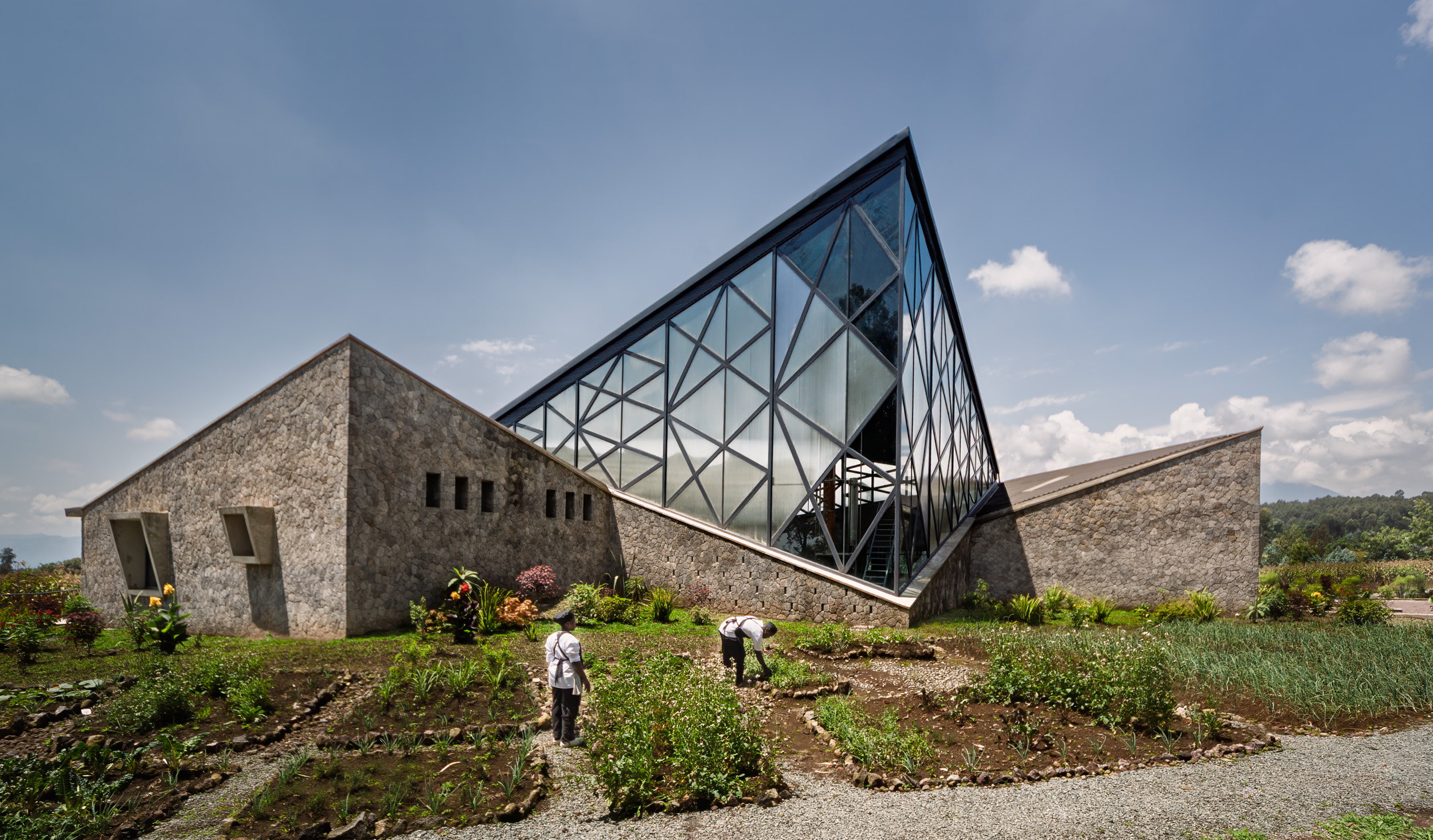
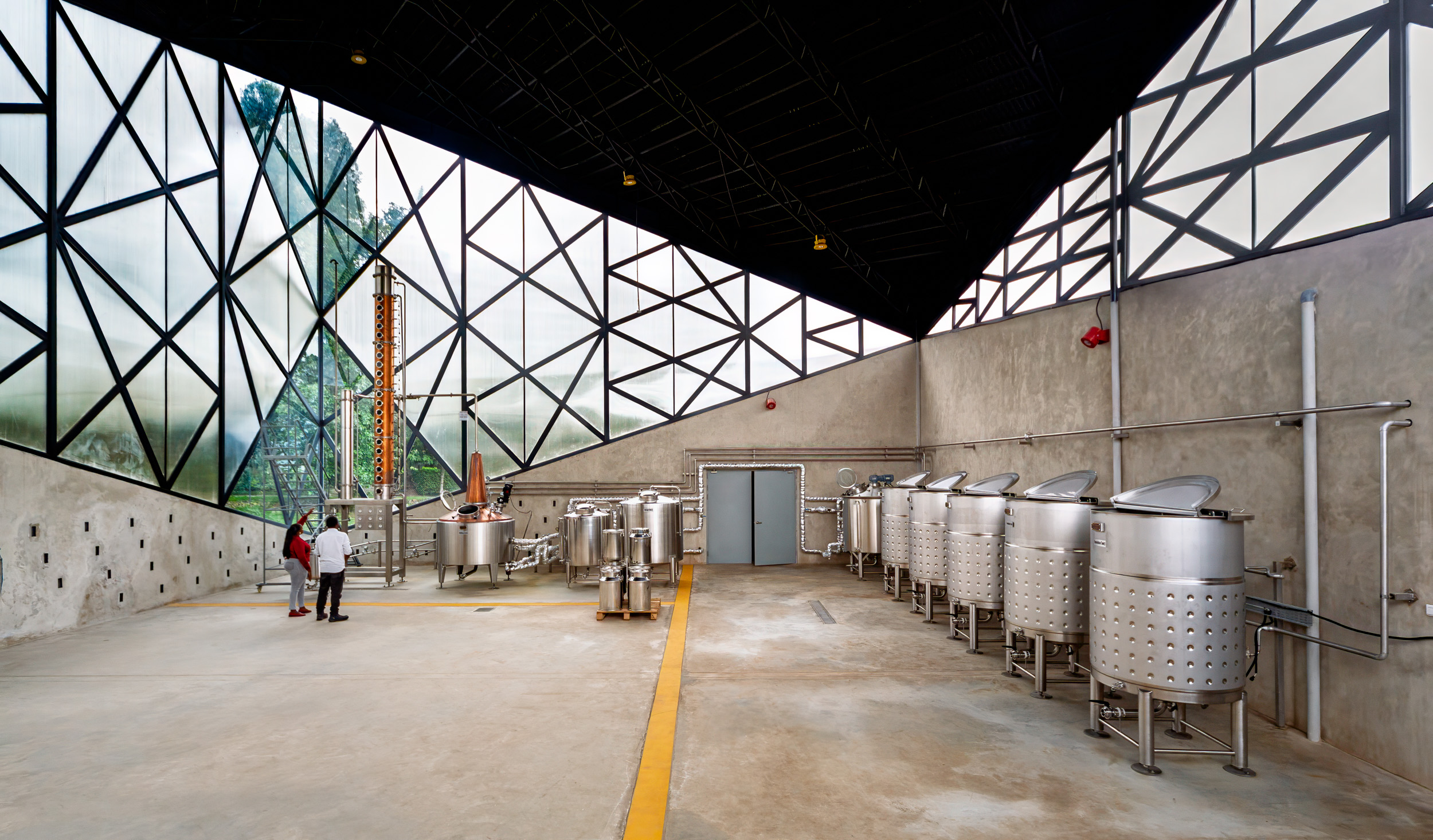 At the foot of the Virunga Mountains, this 1,100 square meters distillery is organized around a clear material divide. Designed for Virunga Mountain Spirits, a women-led Rwandan company, the building places production at its center and wraps it with a thick inhabitable wall.
The distillery room occupies a transparent and semi-transparent volume that exposes the full height of a 10-meter copper and stainless steel still. Daylight enters freely, turning the technical process into something visible and shared. Surrounding this luminous core, hand-shaped volcanic rock walls form a dense outer ring that contains offices, tasting areas and storage.
The Refinery at Domino
By Practice for Architecture & Urbanism | PAU, Brooklyn, New York
Jury Winner, Commercial Adaptive Reuse Projects, 12th Annual A+Awards
Popular Choice Winner, Commercial Adaptive Reuse Projects, 12th Annual A+Awards
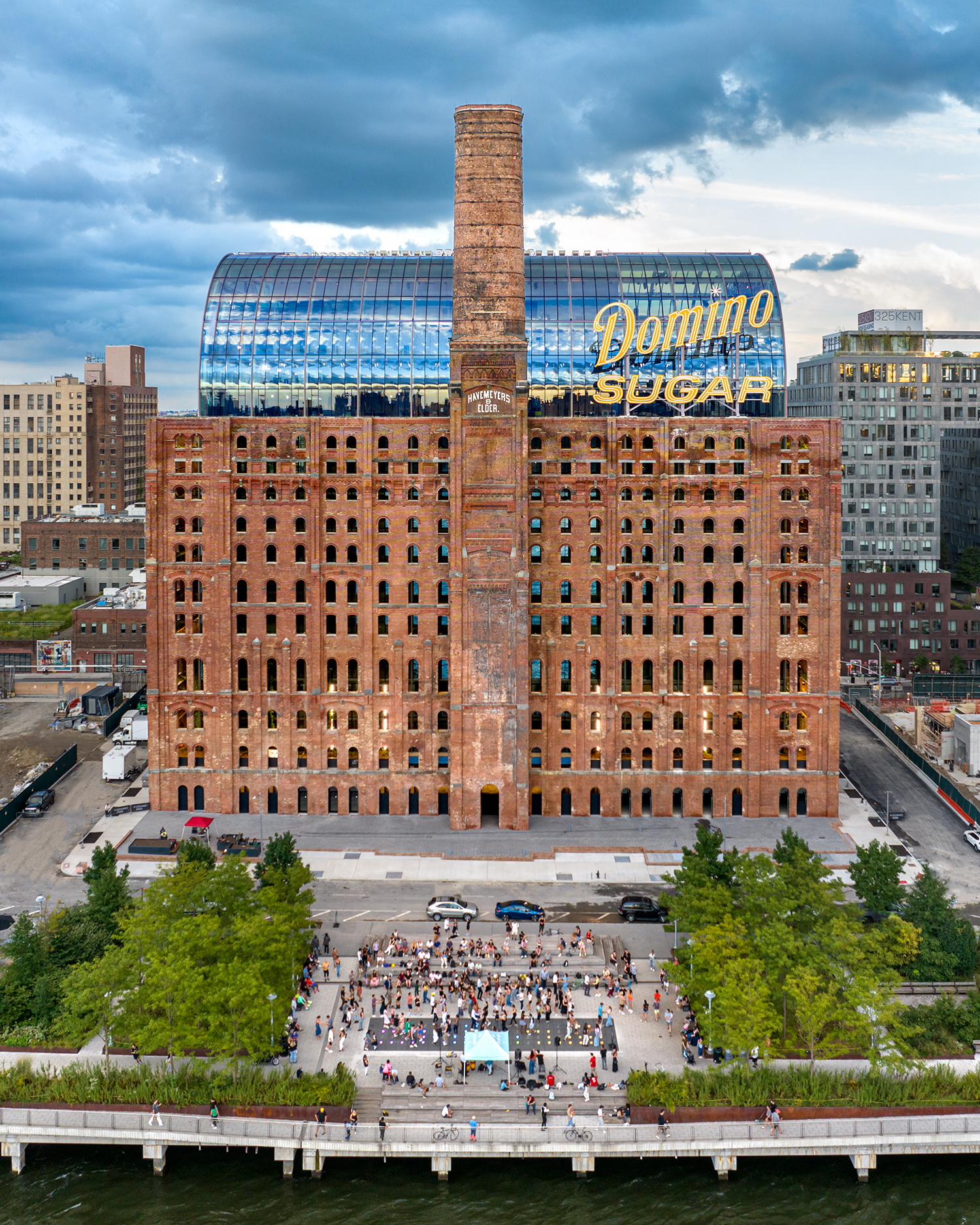
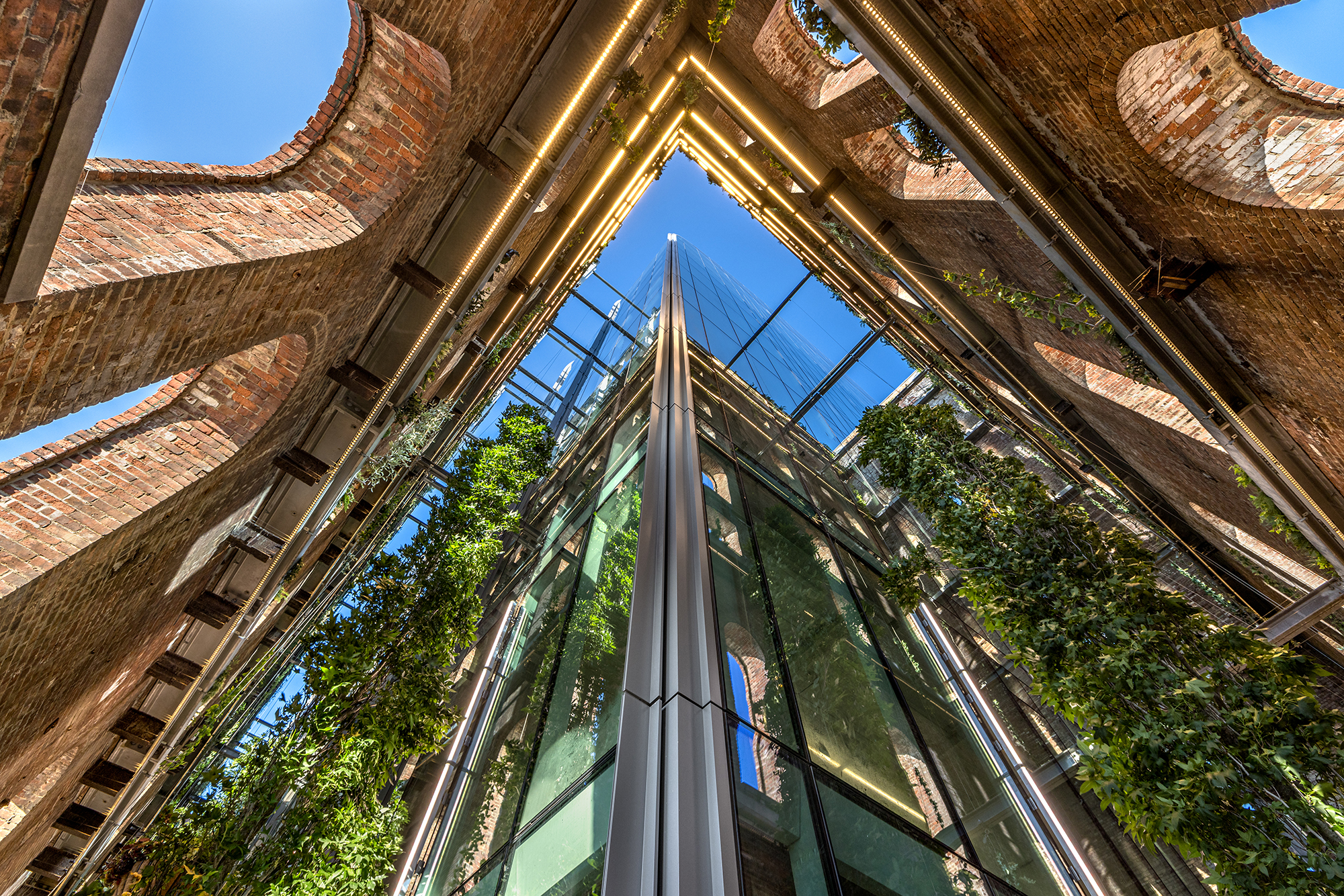 Few industrial conversions have been as closely watched as the transformation of the former Domino Sugar Factory Refinery. Once built for sugar production, the landmark structure has been reworked into contemporary offices through a clear architectural incision: a new building inserted within the old masonry shell.
The original brick remains heavy and scarred, its small windows recalling a time of controlled light and intense labor. Set back from this envelope, a freestanding glass and steel vault introduces tall, accessible floor plates and daylight-filled atria. The contrast is intentional and sharp. Weathered masonry holds memory and mass, while the new interior form reads as light, precise and openly modern, establishing a firm line between preservation and present use.
A TOUCH OF NEW
By ARISTIDES DALLAS ARCHITECTS, Tinos Regional Unit, Greece
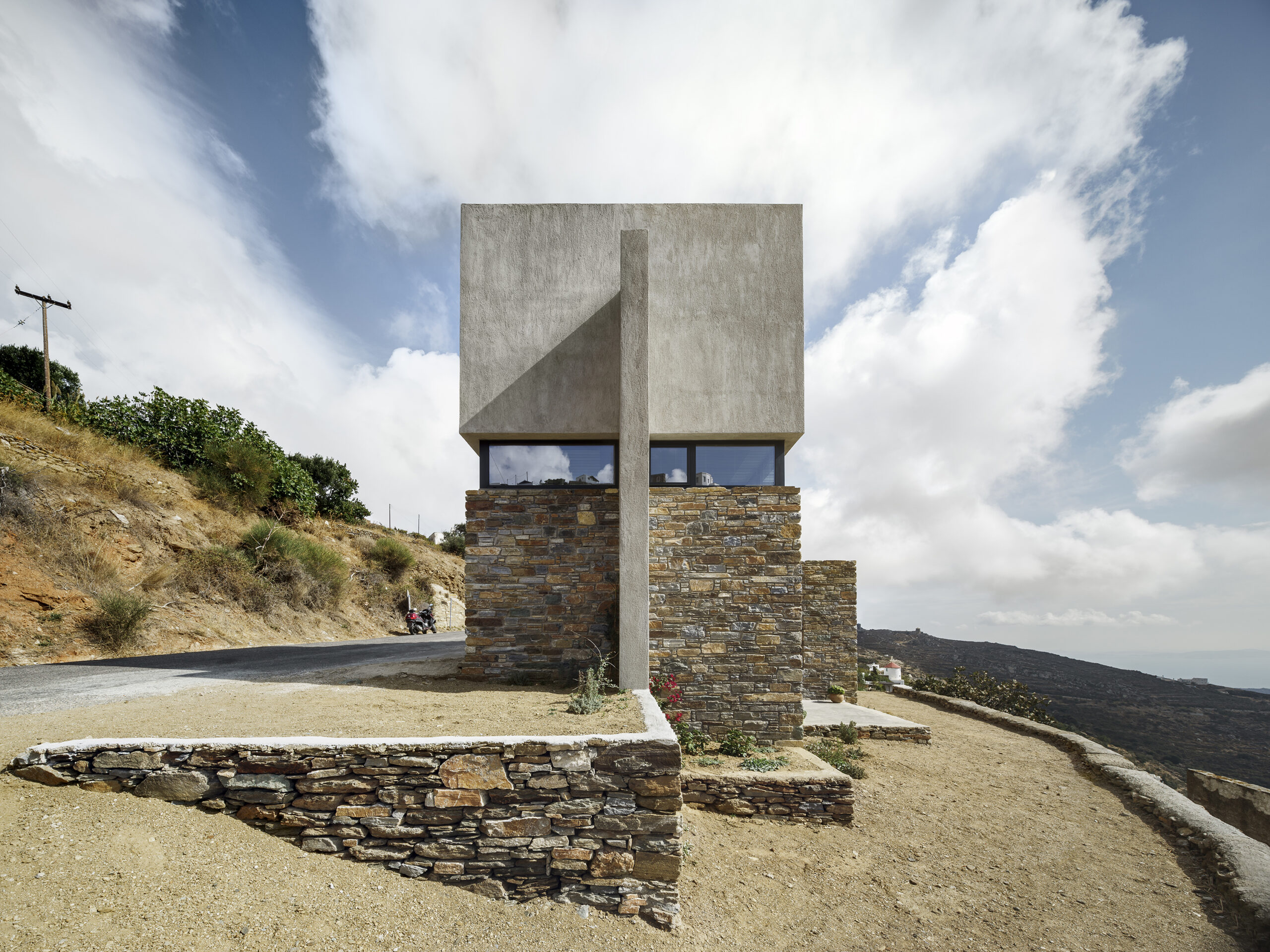
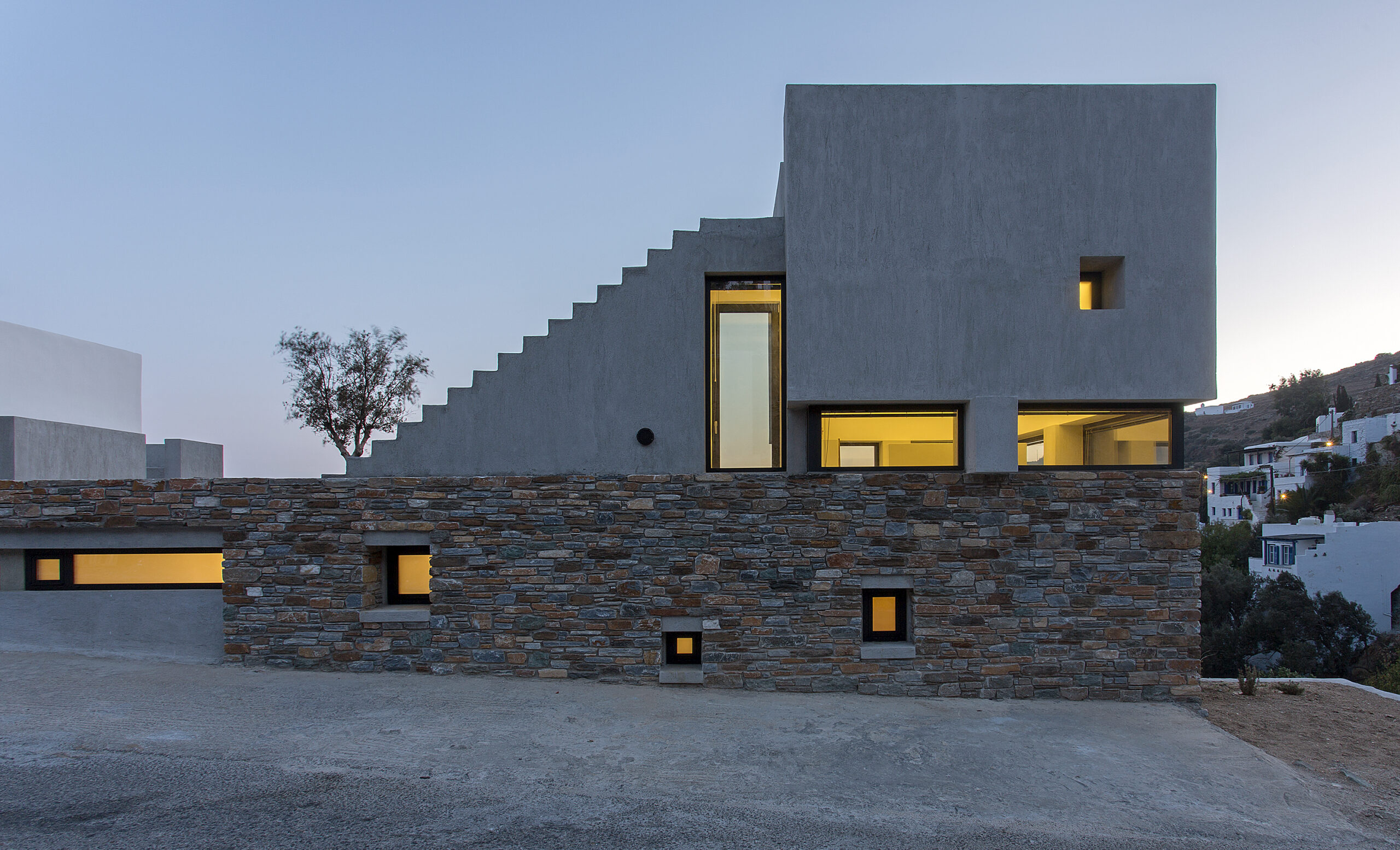 In the village of Triantaros, where houses have grown gradually through careful additions, this residence follows the same logic while making the moment of change explicit. The project begins with an existing Tinian stone structure, which is retained as the grounded base of the house. Instead of extending it in stone, a fair-face concrete volume is placed above, held apart by a continuous horizontal slit that marks the junction between eras.
This gap, filled with glazing, brings light into the depth of the plan and frames distant views, while making the construction sequence legible. The rough, load-bearing stone speaks of local building traditions and accumulated labor, while the smooth concrete sitting above reads as intentional and contemporary. The house tells its story through this measured separation, allowing old and new to coexist without imitation.
Arghavan (Cercis) Commercial Project
By 13 Degrees Architecture Studio, Yazd, Iran
Popular Choice Winner, Architecture +Innovation, 13th Annual A+Awards
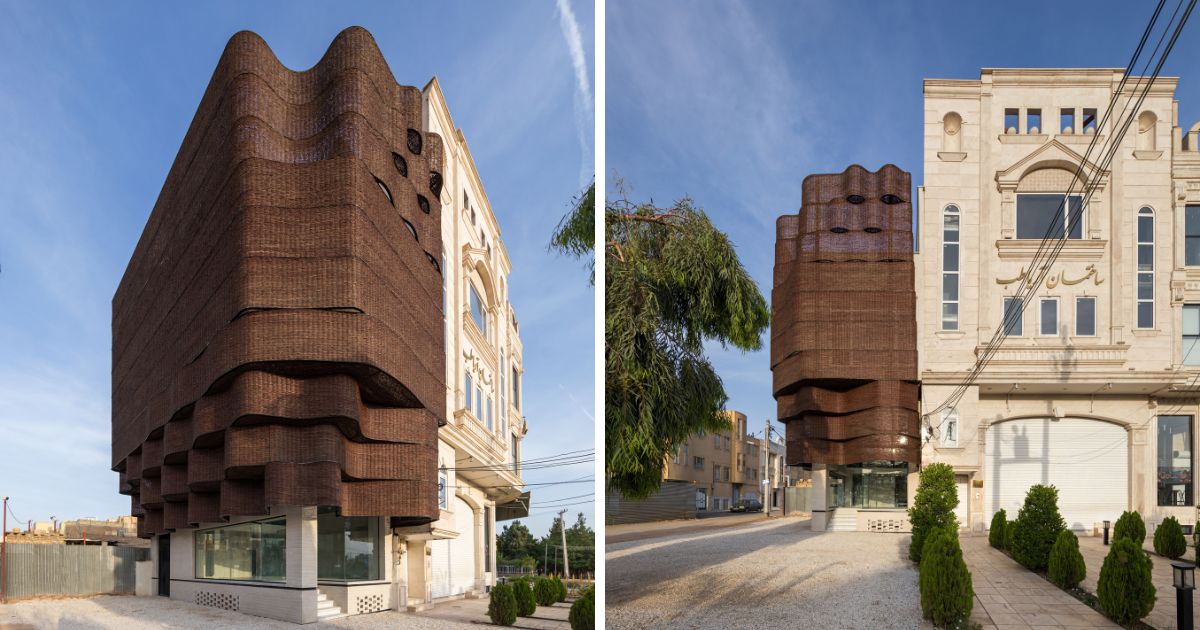
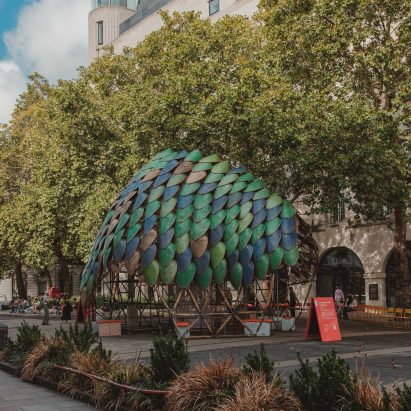
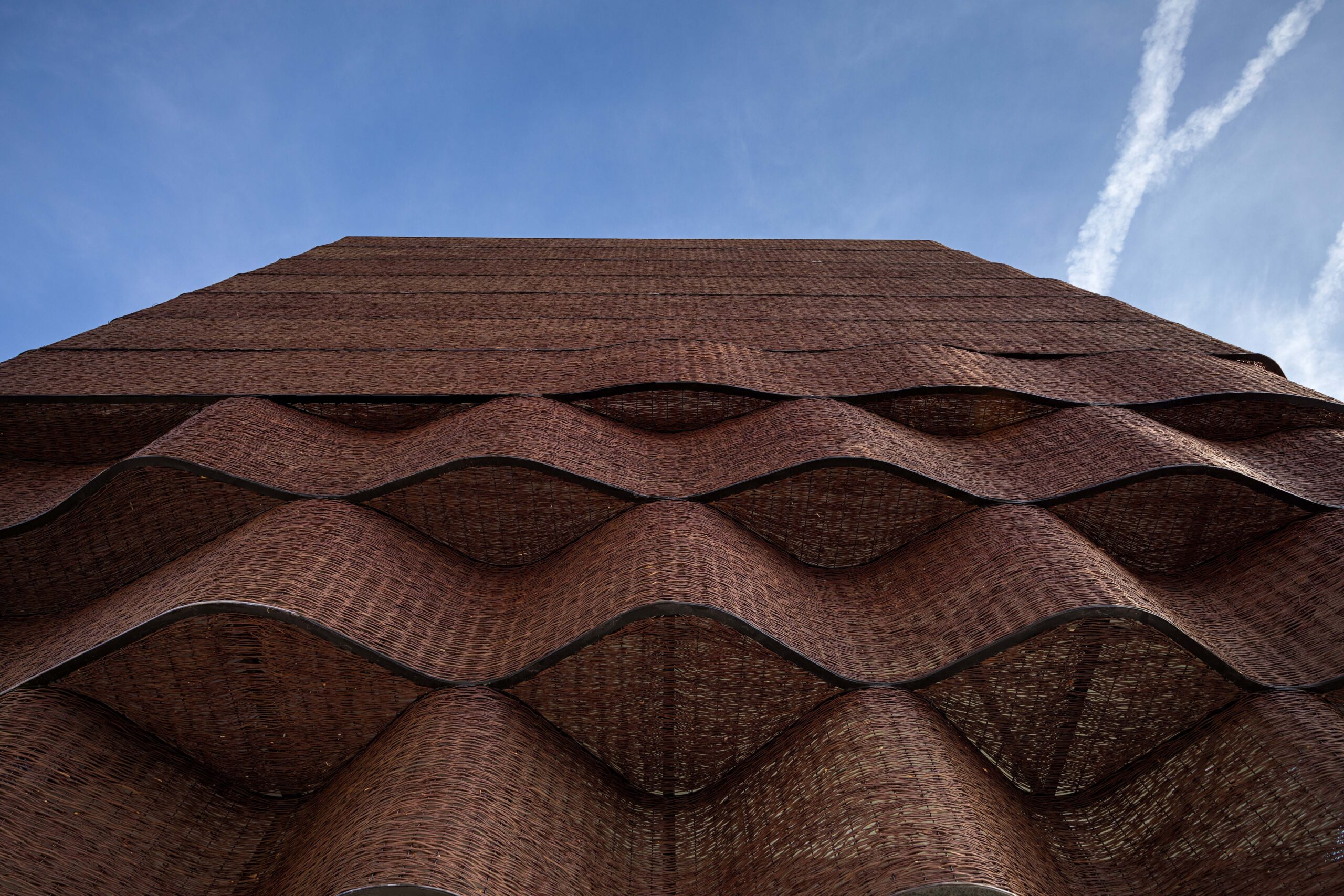 This project elevates wicker weaving from a rural technique to an architectural system, using branches of the Cercis tree to form a full building shell. What is usually temporary and lightweight is here organized, detailed and fixed in place.
The woven screen stands before a conventional structural frame, creating a clear separation between load-bearing construction and climatic envelope. Its porous surface filters Yazd’s intense sun and moderates heat, acting as a breathable membrane rather than a sealed wall. The contrast lies in the meeting of scales and values: fragile branches assembled by hand set against urban mass and standard building methods, transforming low-cost organic material into a permanent civic façade.
VJC Iporaga House
By Marina Salles Arquitetura e Interiores, Guarujá, Brazil
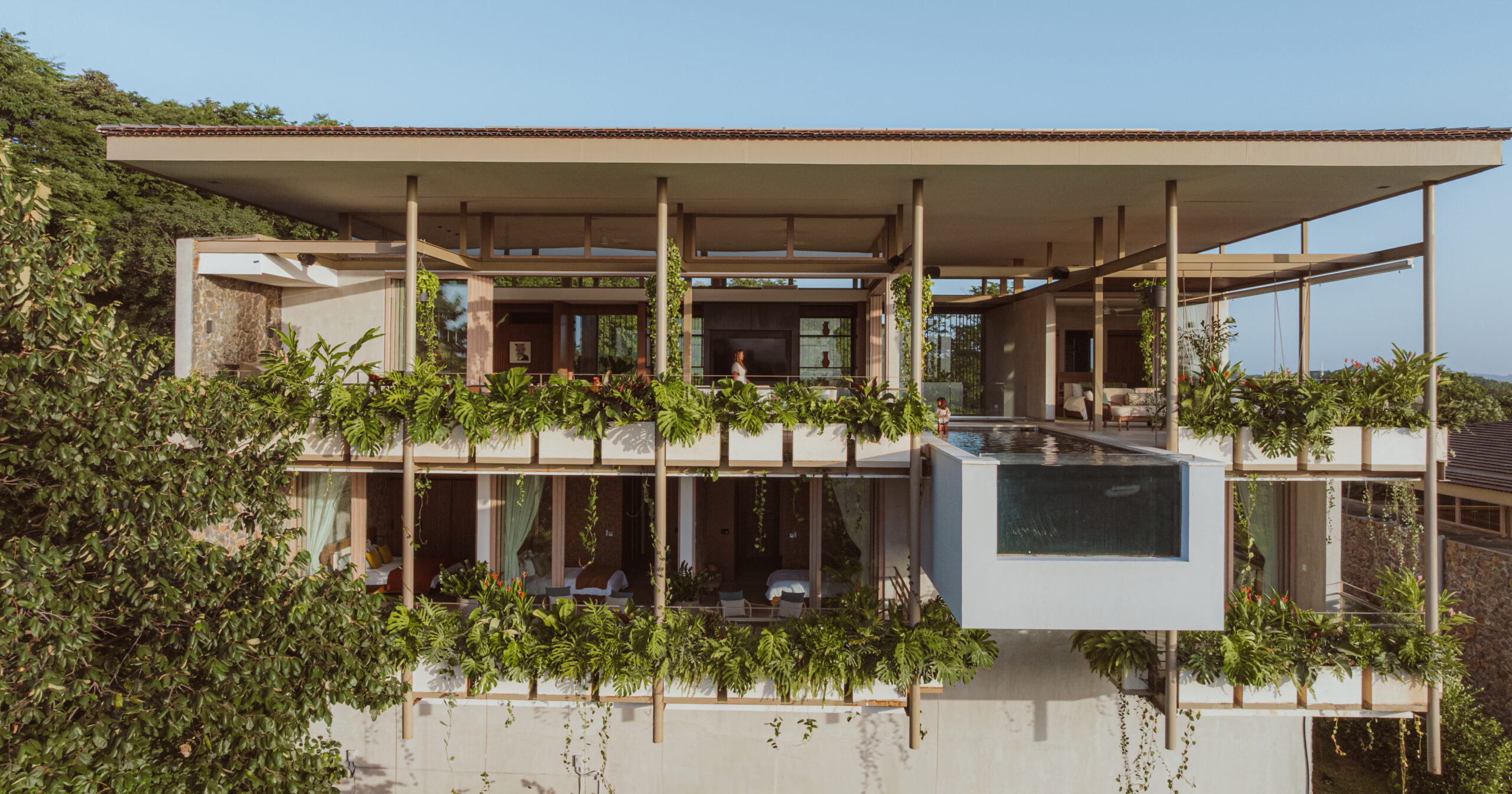
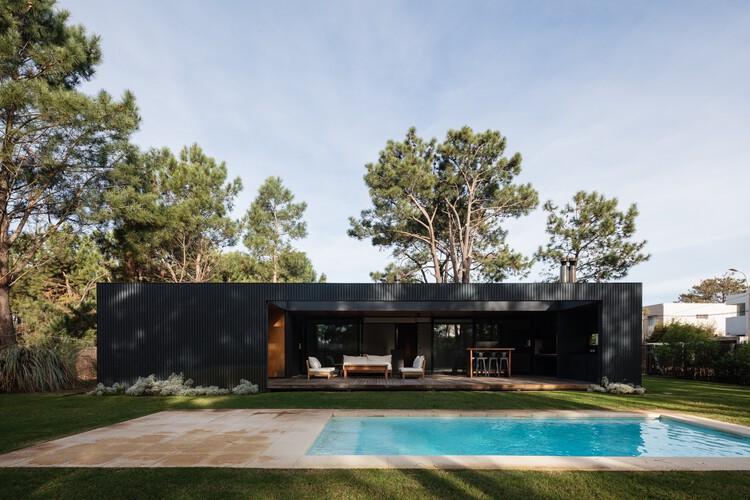
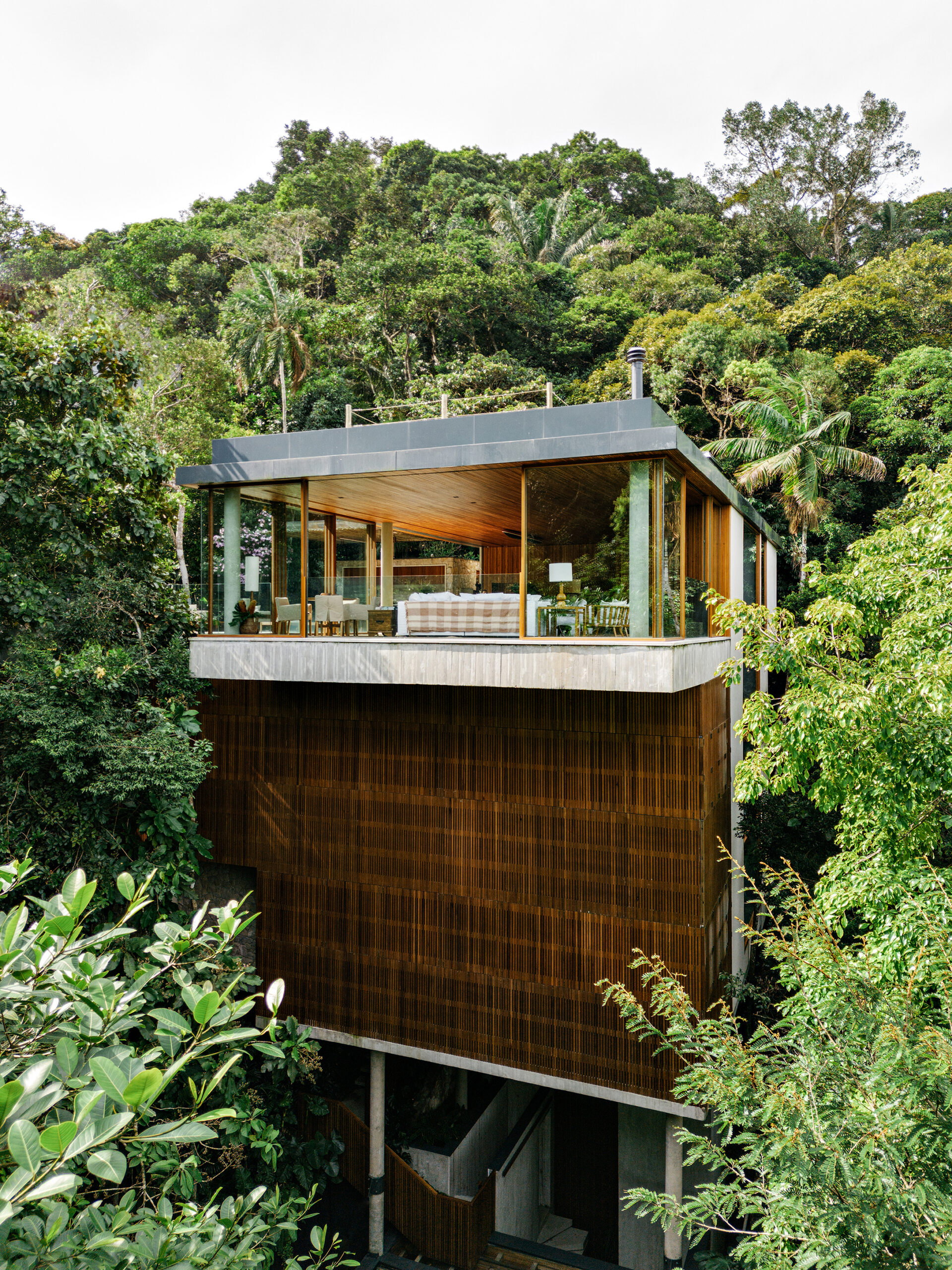 Set on a steep, forested site in Guarujá, VJC House is organized as a vertical sequence of platforms stepping down the terrain. The lower levels are partially embedded in the slope and contain the private rooms, while the upper floor opens toward the canopy and distant sea.
A concrete structure establishes the main slabs and roof plane, giving the house a clear geometric outline. Within this frame, wide glass panels and slatted timber screens define the living spaces. The wood wraps the middle levels as a permeable layer, filtering light and air, while granite floors extend from interior rooms to the pool deck, anchoring the house to the ground.
Thirty75 Tech
By Verse Design LA, Santa Clara, California
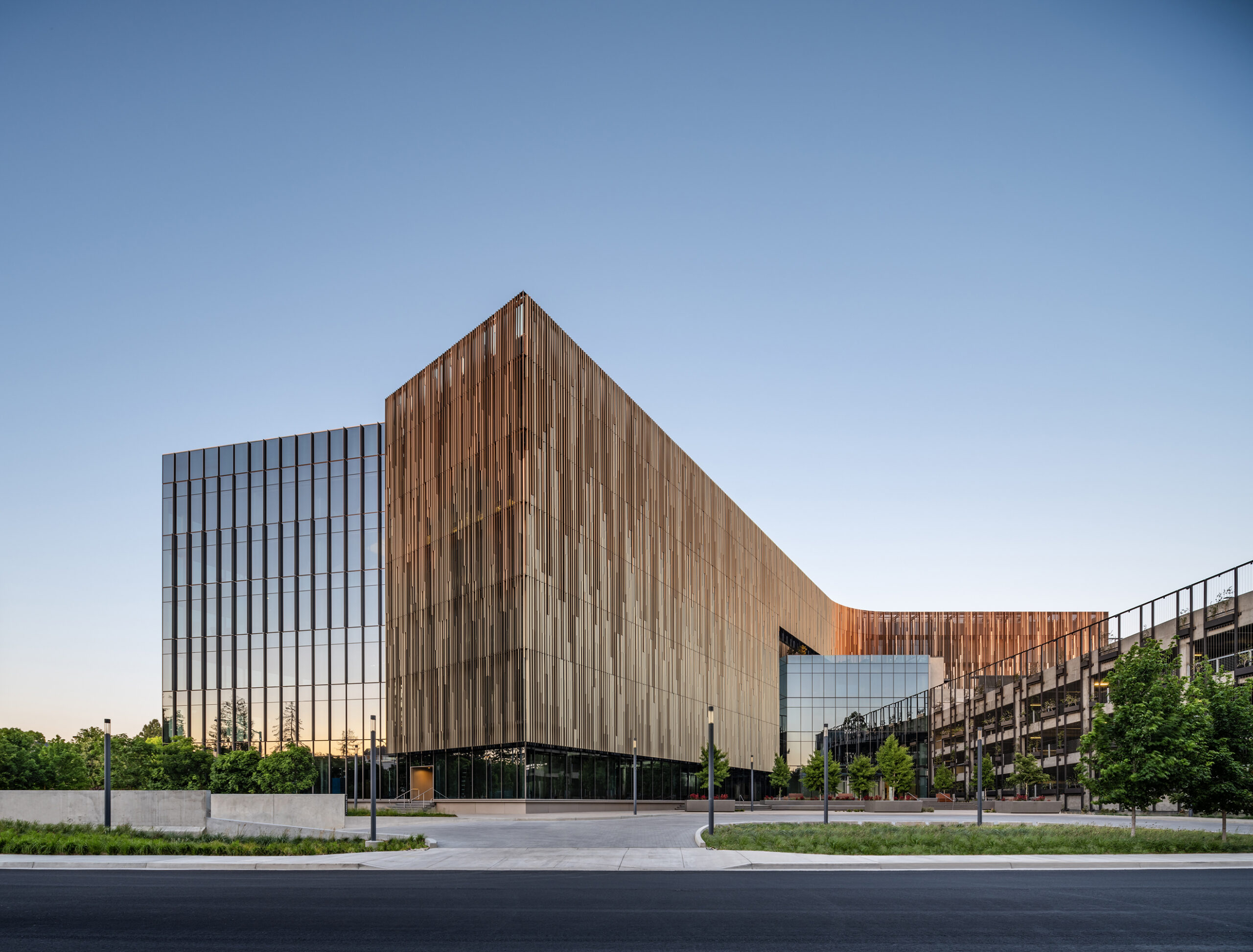
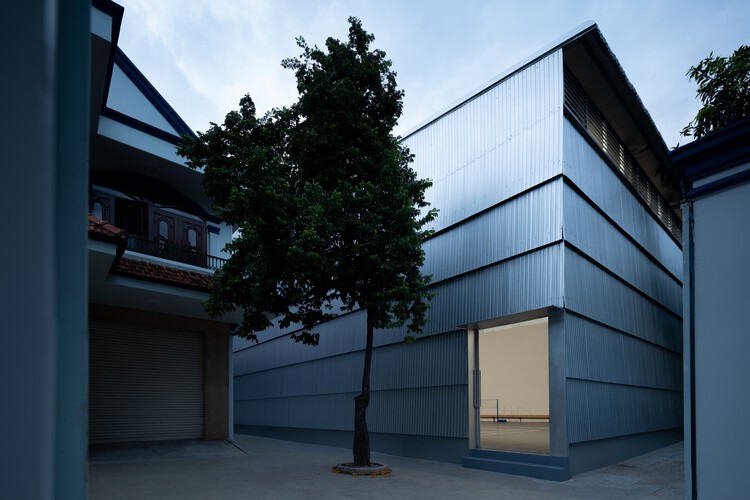
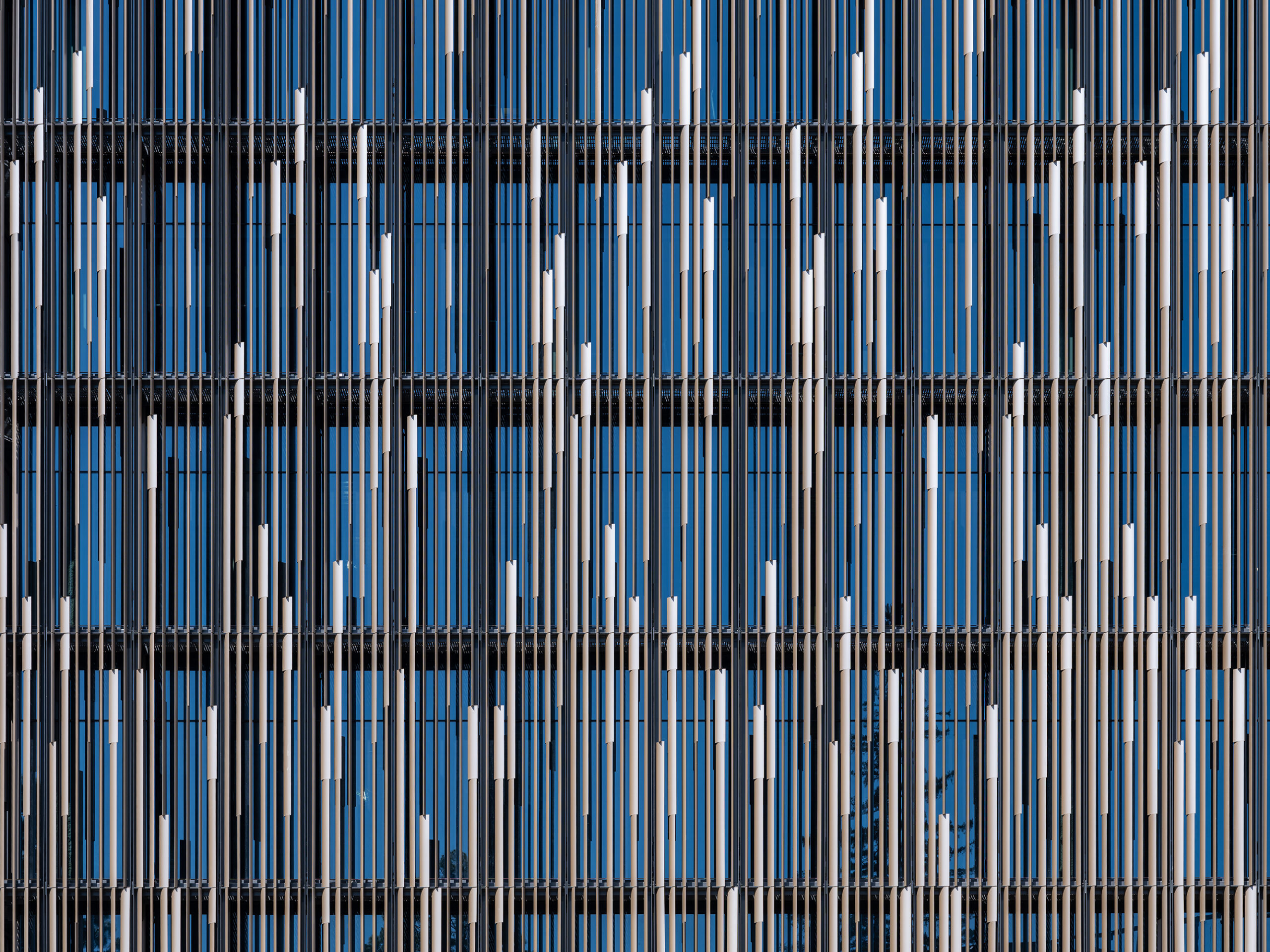 From across the intersection, Thirty75 Tech appears as two separate volumes placed side by side. A clear glass corner exposes the office floors directly to the street, while the rest of the building reads as a dense metallic mass.
As you approach, that reading shifts. The seemingly solid volume is, in fact, wrapped in a continuous layer of vertical aluminum louvers set in front of a curtain wall. What first feels opaque begins to reveal depth and spacing. The fins are precisely angled to meet solar shading targets, turning the façade into a performative screen that contrasts with the unfiltered transparency of the glass corner.
Lagar Oliq Complex
By Play Arquitetura, São Bento do Sapucaí, Brazil
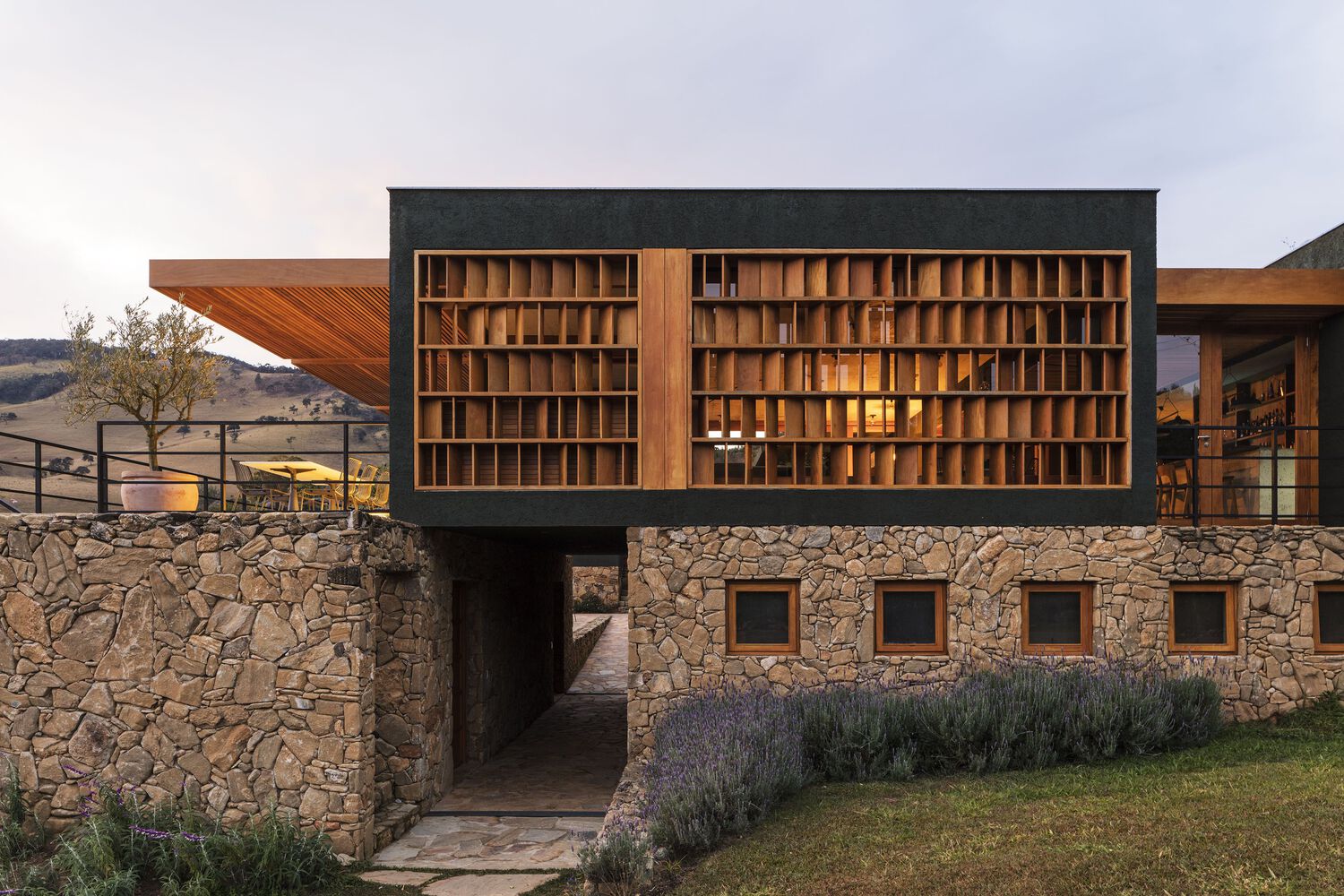
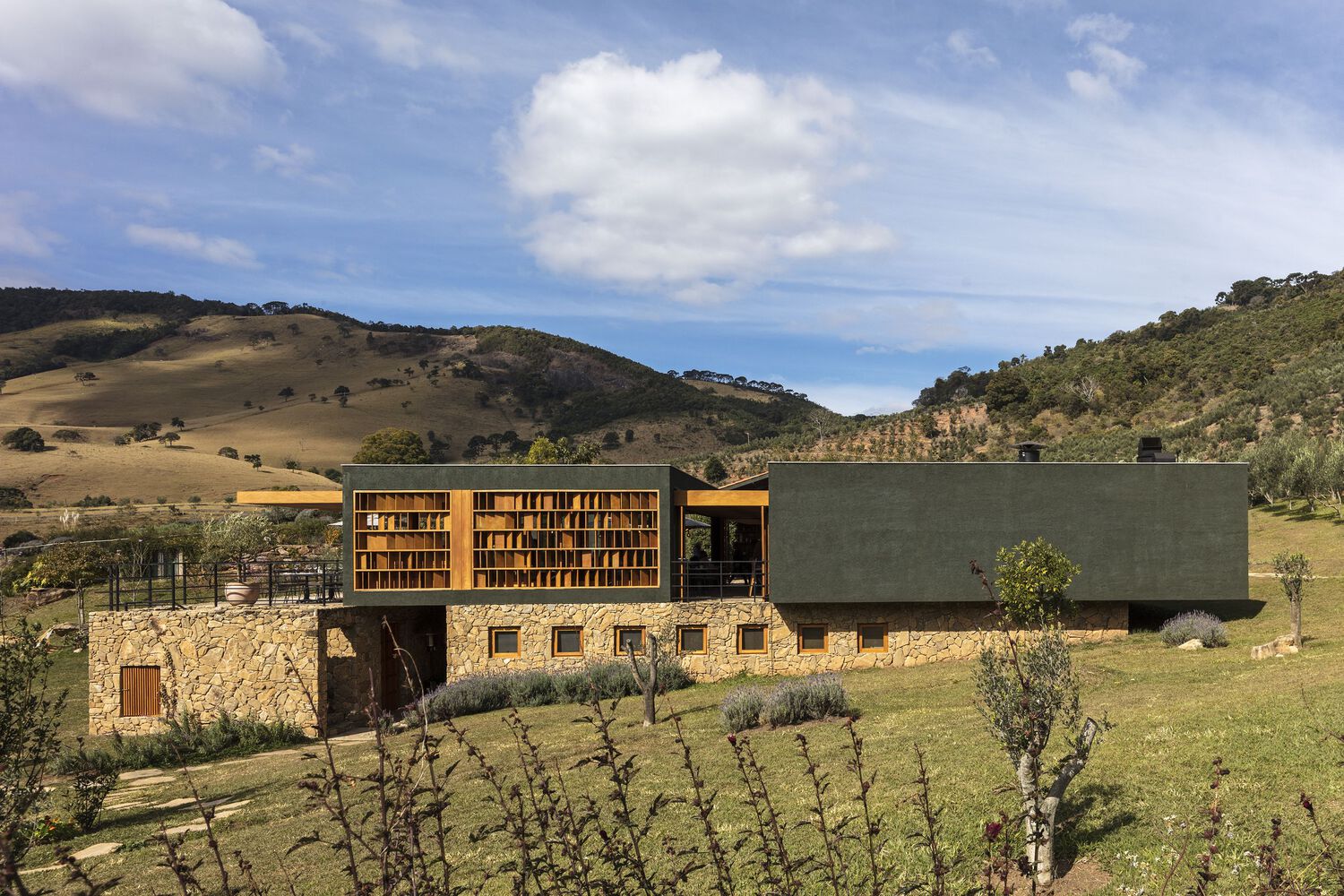 Oliq Restaurant completes a small architectural ensemble built over nearly a decade around an olive oil production facility in rural Minas Gerais. What began as a simple shed for processing olives gradually expanded into an annex and, finally, a restaurant positioned at the front of the site overlooking the valley. Each phase is marked by a material shift. The original mill is defined by a broad wooden roof sheltering a timber box. The annex introduces concrete and masonry, partially embedded in the slope. The restaurant continues the progression with a stone-clad base and plastered upper volumes painted dark green. The project does not disguise its evolution. Wood, concrete and stone record different moments of growth, giving the ensemble a layered but legible identity.
Fire Station in Straubenhardt
By wulf architekten, Straubenhardt, Germany
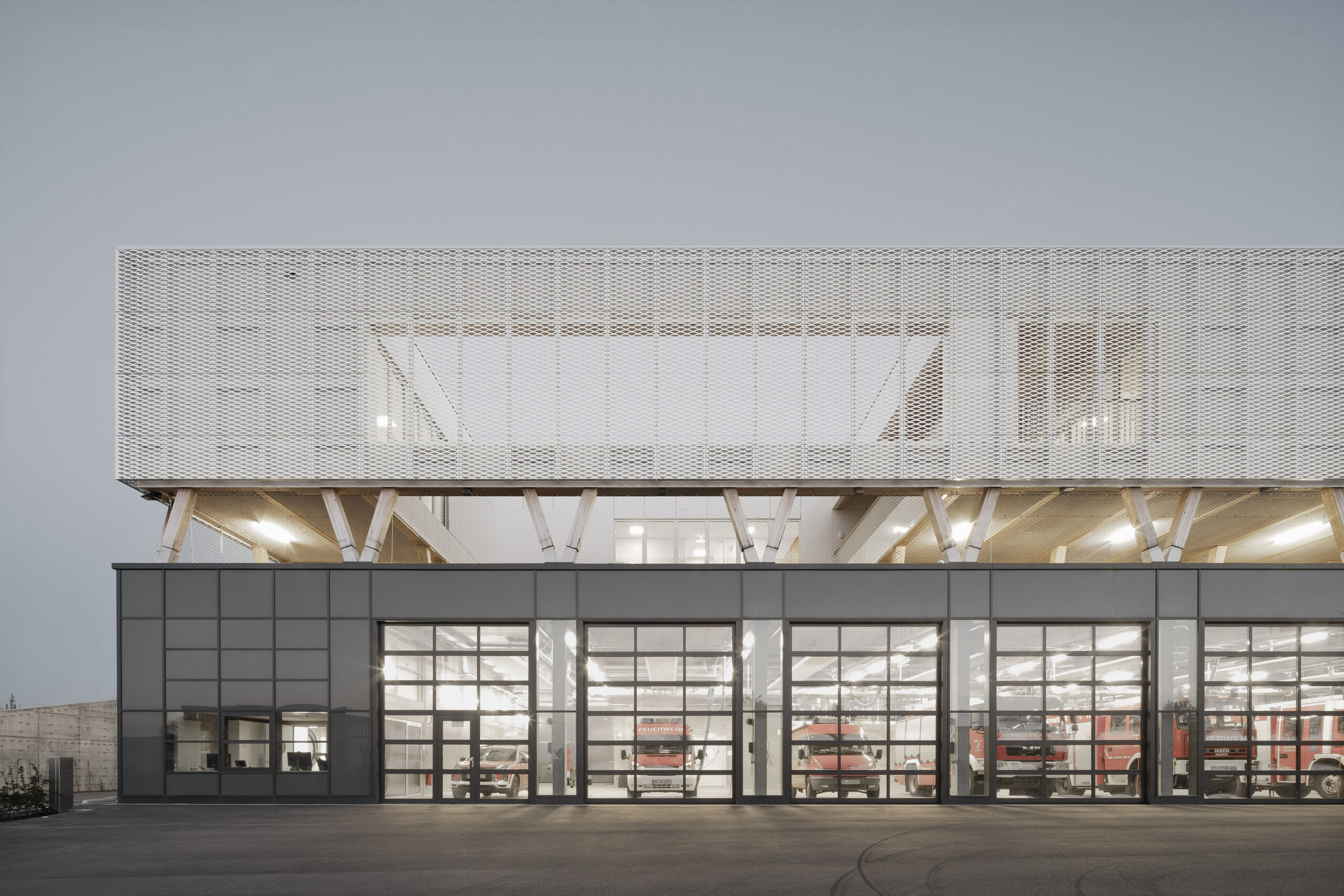
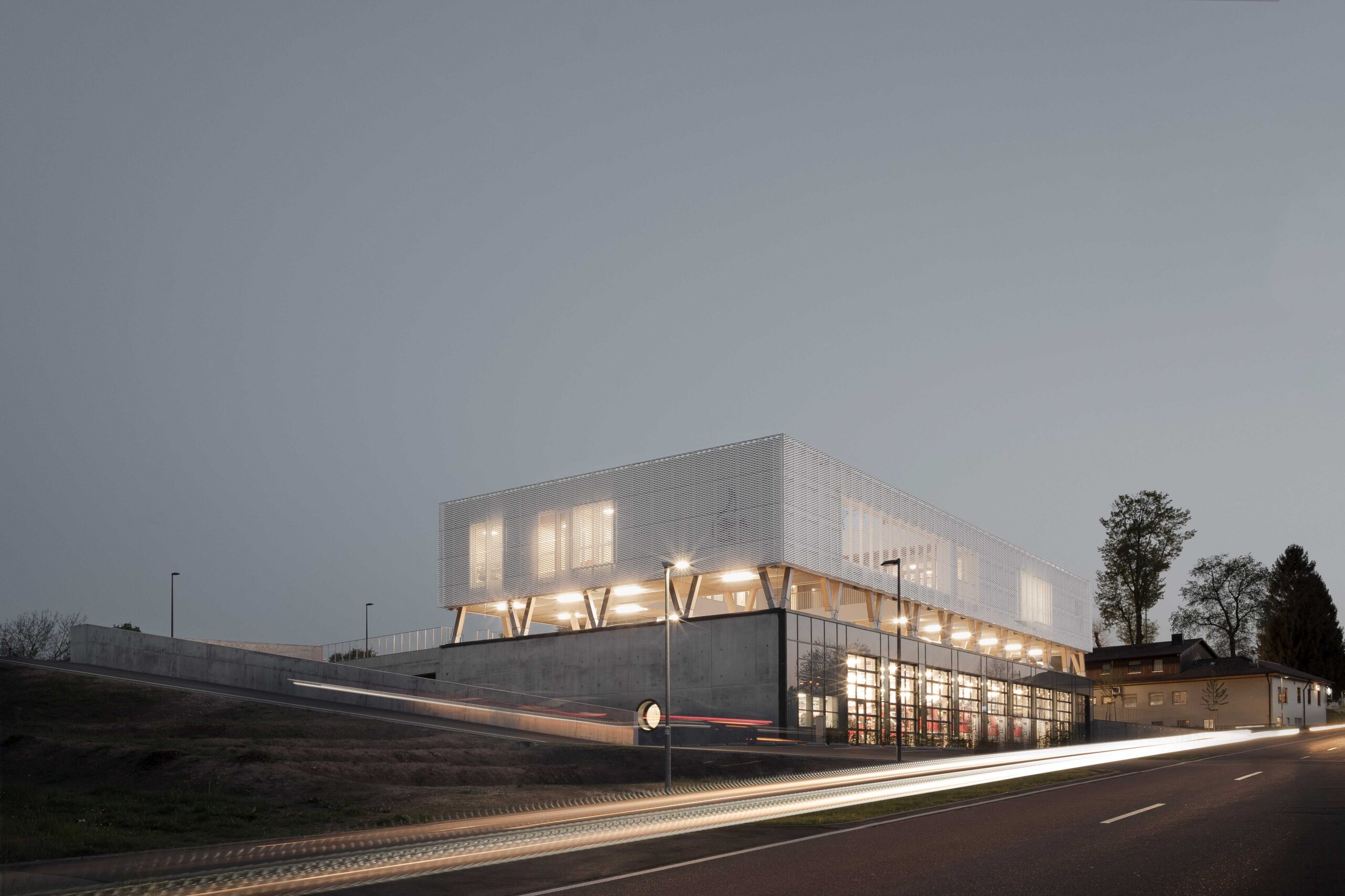 This fire station brings together six previously independent firefighting units on a single, strategically located site. It was conceived according to the »Cradle to Cradle« principle, an approach to circular construction in which materials are selected, detailed and assembled so they can be disassembled and reused at the end of the building’s life.
The project organizes its operational, public and administrative spaces through a clear vertical stacking that is legible from the outside.
A concrete base is cut into the slope, containing the vehicle garage, storage and all essential operational facilities, with the north façade opening directly to the street for rapid deployment. Above it, an open-air deck functions as parking and event space. The top level is built in timber and wrapped in a continuous white expanded metal façade, housing classrooms and offices.
Architizer's 14th A+Awards judging is live! Subscribe to our Awards Newsletter for updates on Public Voting and the big winner reveal later this spring.
The post When Architecture Draws the Line: 8 Projects Where Material Contrast Is the Concept appeared first on Journal.