








Herzog & de Meuron transforms mountain antenna tower into "iconic sculpture"
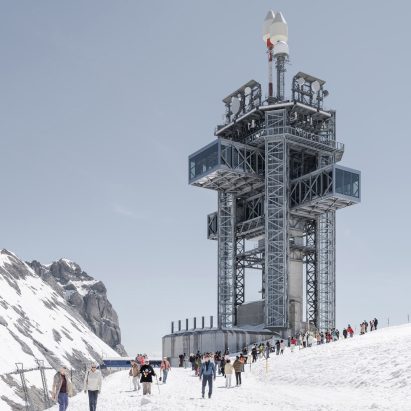
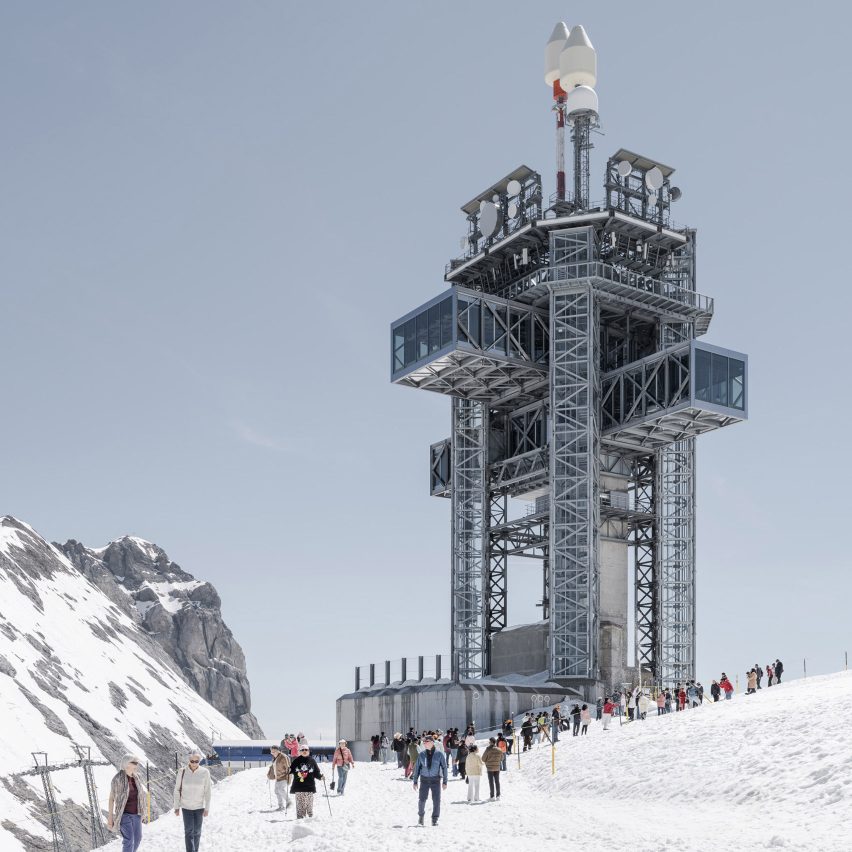
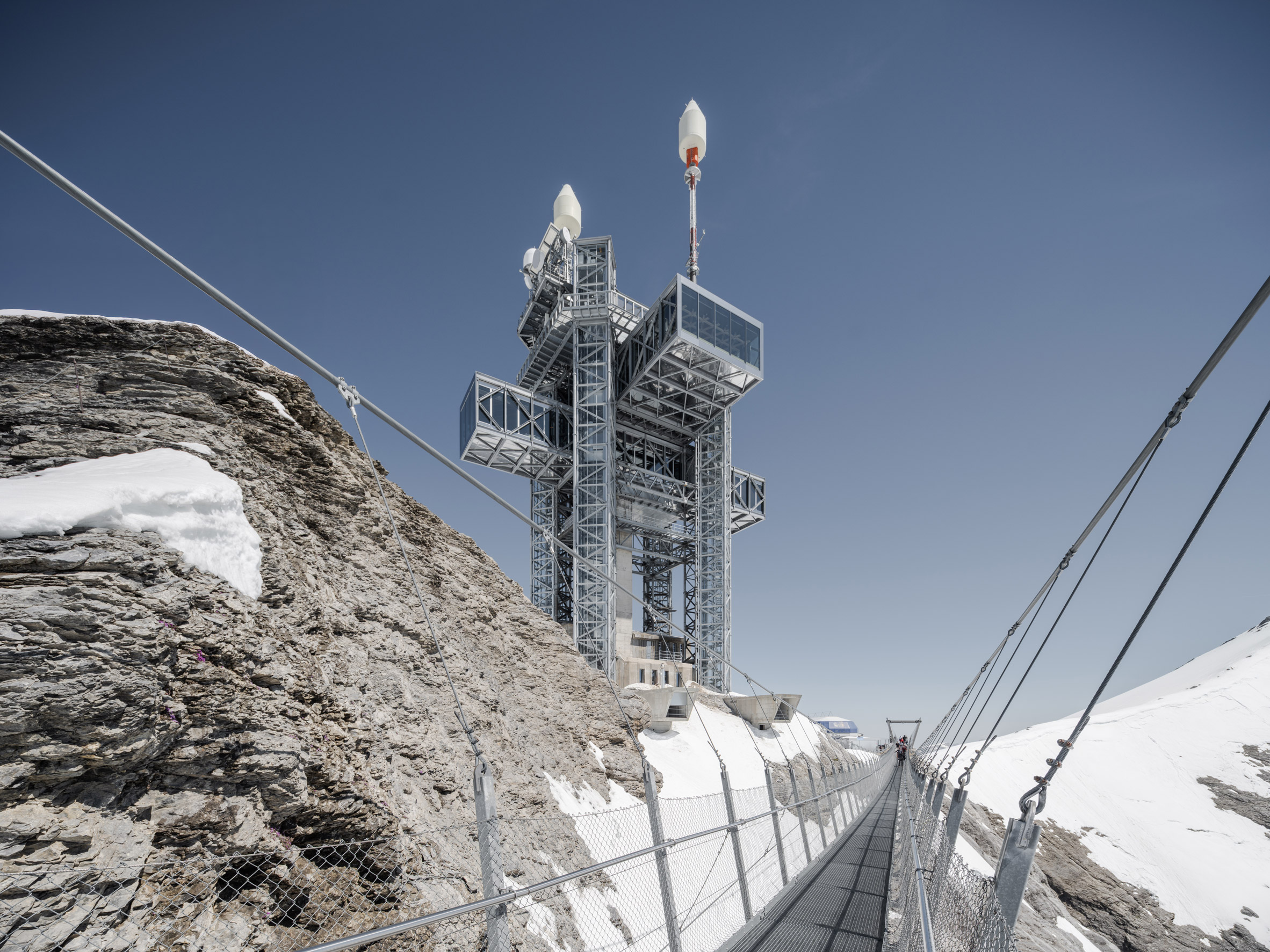
Architecture studio Herzog & de Meuron has transformed the industrial structure of the Titlis Tower in the Swiss Alps into a sculptural tourist destination with dramatic cantilevers and a panoramic viewpoint.
Built in the mid-1980s, the former telecommunications tower sits over 3,000 metres above sea level on Mount Titlis, one of Switzerland's most popular mountain destinations, with approximately 1.1 million visitors per year.
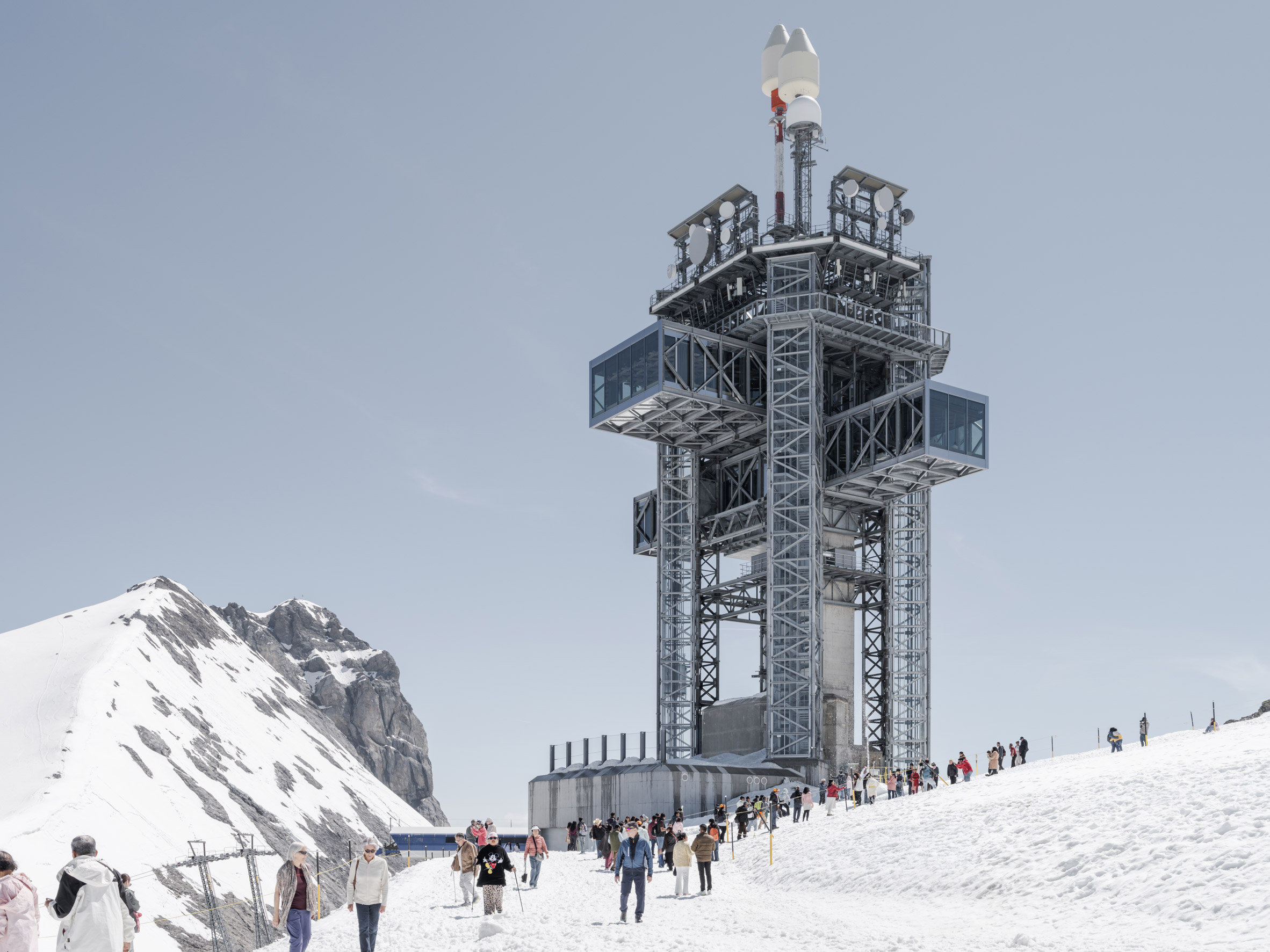
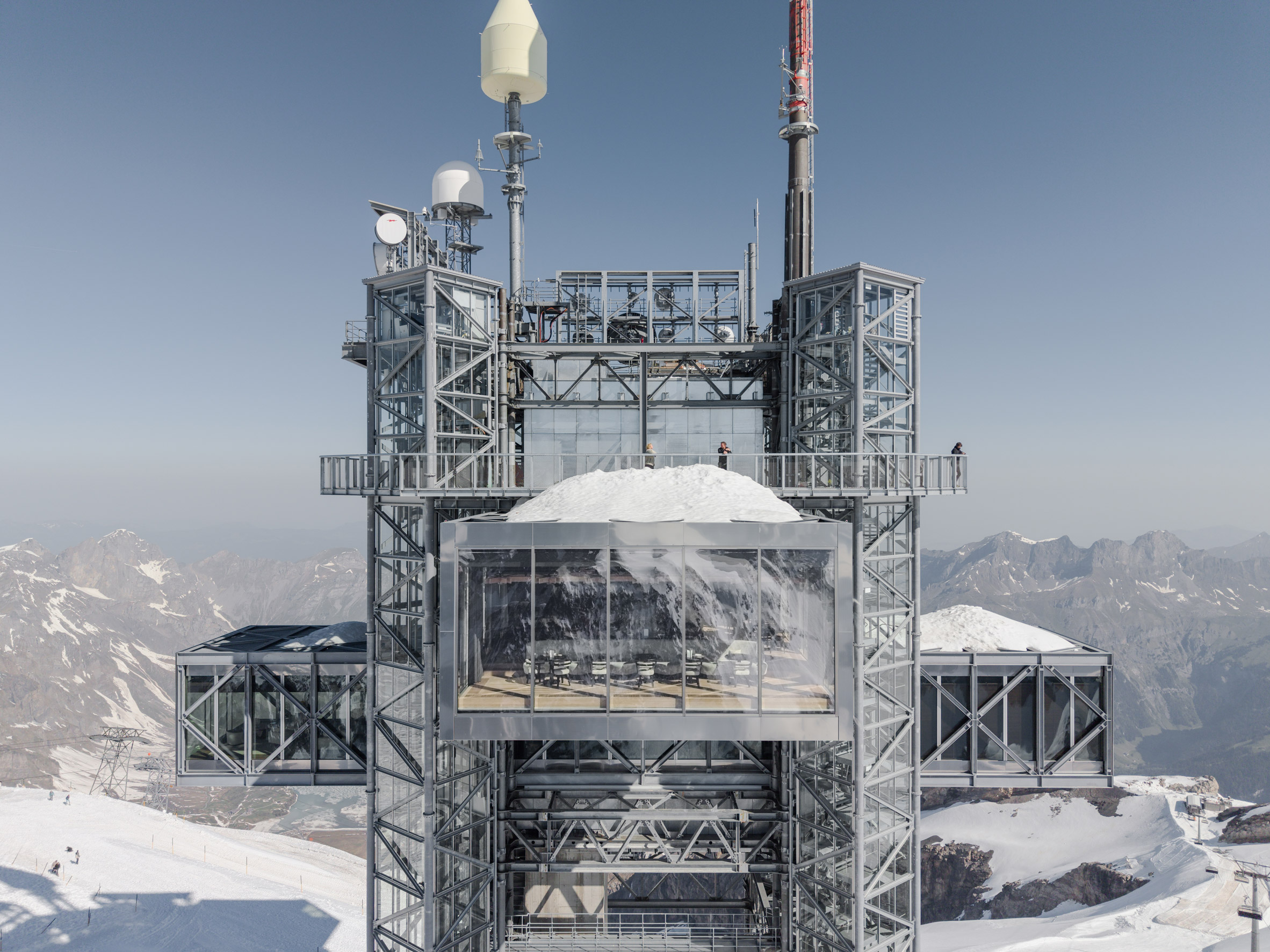
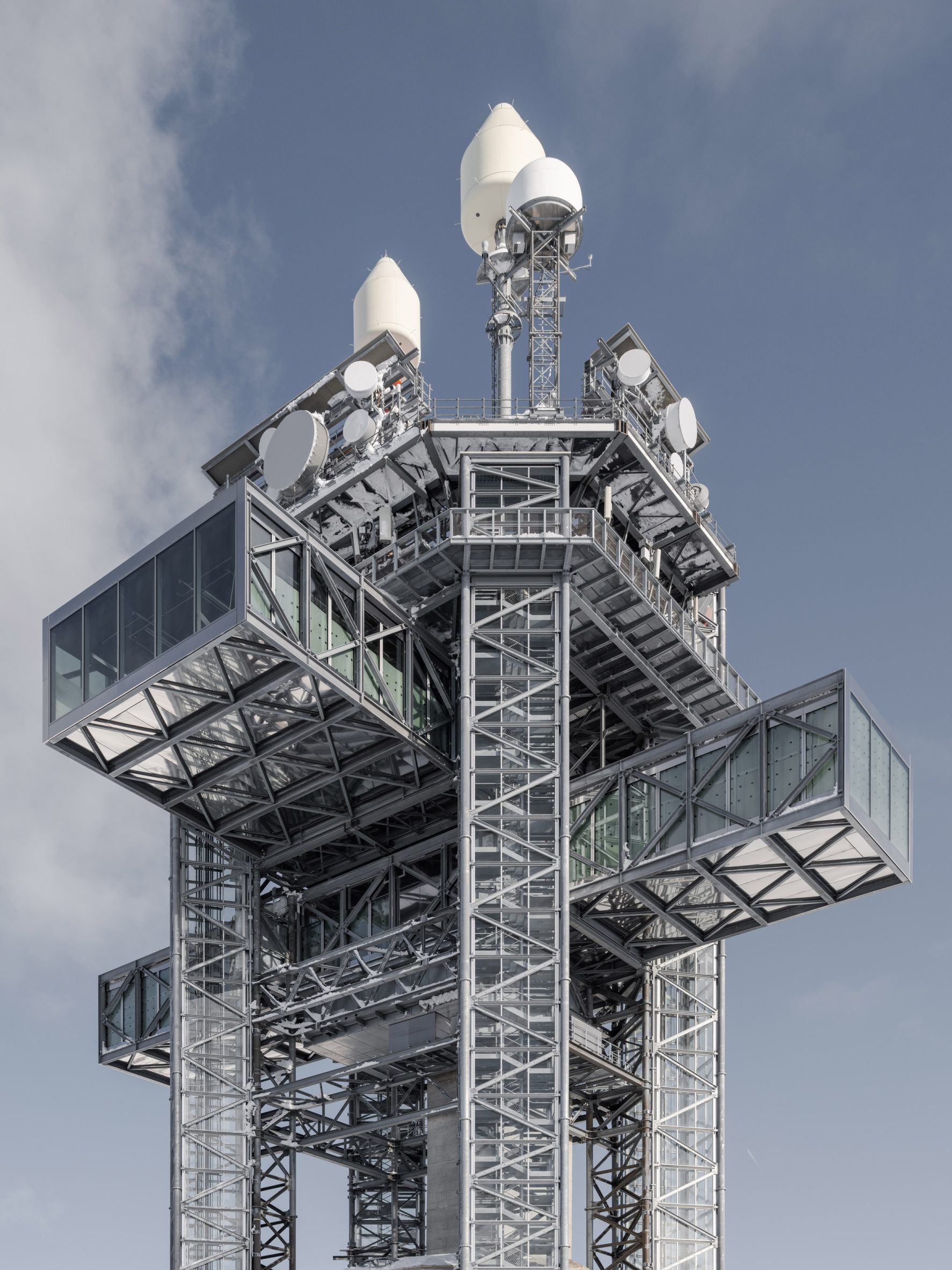
Herzog & de Meuron transformed the tower into a visitor attraction and viewpoint through the addition of two cantilevered blocks inserted crosswise into the antenna tower, alongside four vertical circulation volumes.
According to the studio, its design was part of a wider masterplan for the mountain summit, where it has also overhauled the cable car station.
"In 2017, Herzog & de Meuron was commissioned to renew the mountain station and to transform the existing antenna tower into part of the tourist offering," said studio co-founder Pierre de Meuron.
"A central aspect of the concept is the resource-conscious development of the existing infrastructure. As the first element to be implemented within this overall concept, the tower symbolises the shift from purely functional structures towards a new generation of Alpine architecture."
"The first impression of Titlis is more James Bond than mountain hut," added co-founder Jacques Herzog. "But this image, too, is part of Switzerland's alpine landscape.
"It is rare that we encounter something that already has so much quality, where our main task was to bring those existing qualities even more strongly to the fore: the expressive steel structure, which we complemented with two horizontal steel beams, transforming it into an iconic sculpture. A kind of signpost rising into the sky above Titlis," he continued.
Titlis Tower is anchored to the limestone mountain with concrete foundations, which have been extended as part of the project to create an entrance and "orientation level".
This space provides visitor access, as well as technical areas and a garage.
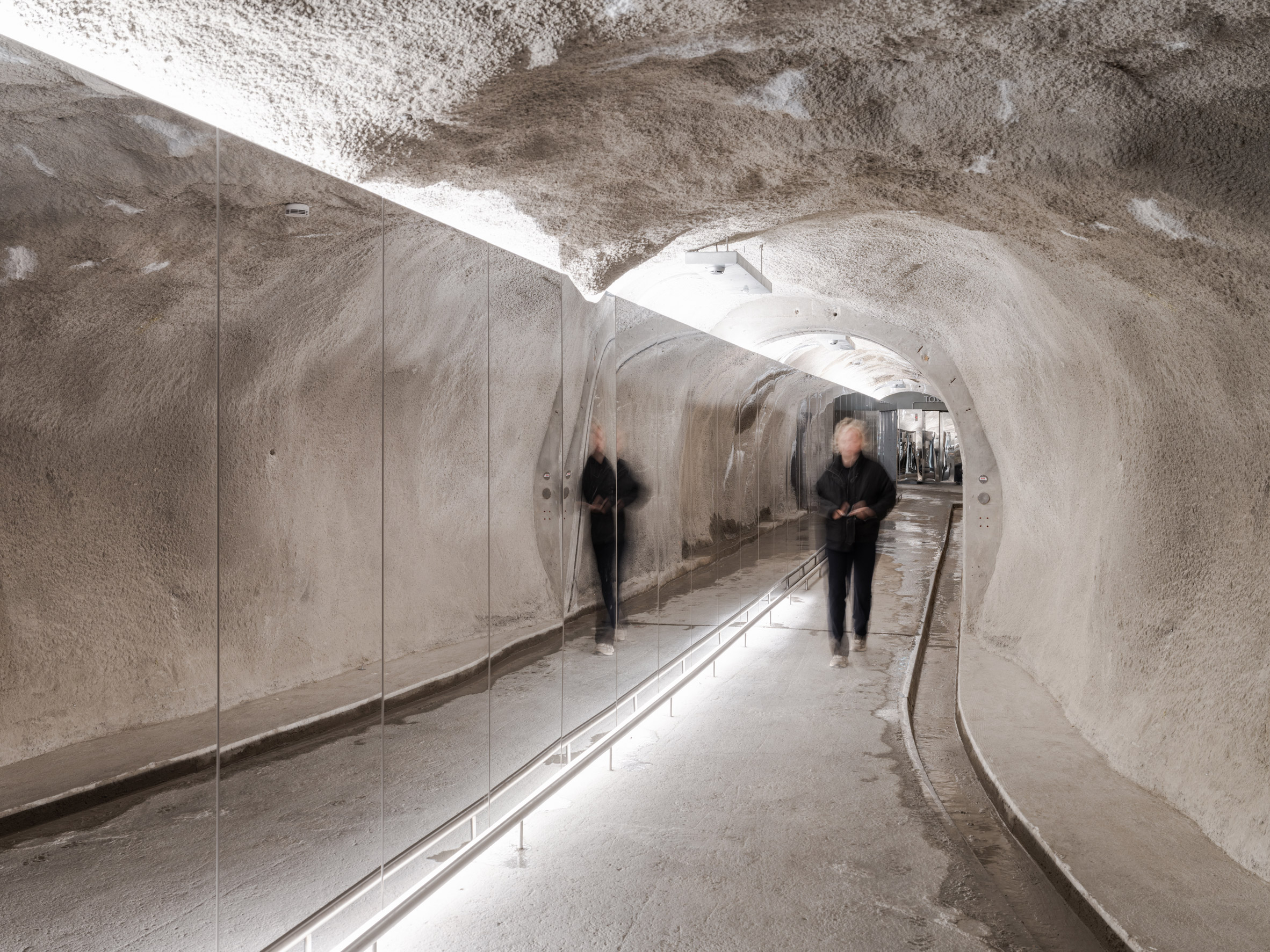
An existing underground tunnel, described by Herzog & de Meuron as "an infrastructural umbilical cord", was updated to provide sheltered access between the cable car station and tower, as well as a glacier cave.
At the end of the tunnel where it meets the tower, visitors are greeted by a cavernous hall with large screens providing information about the landscape.
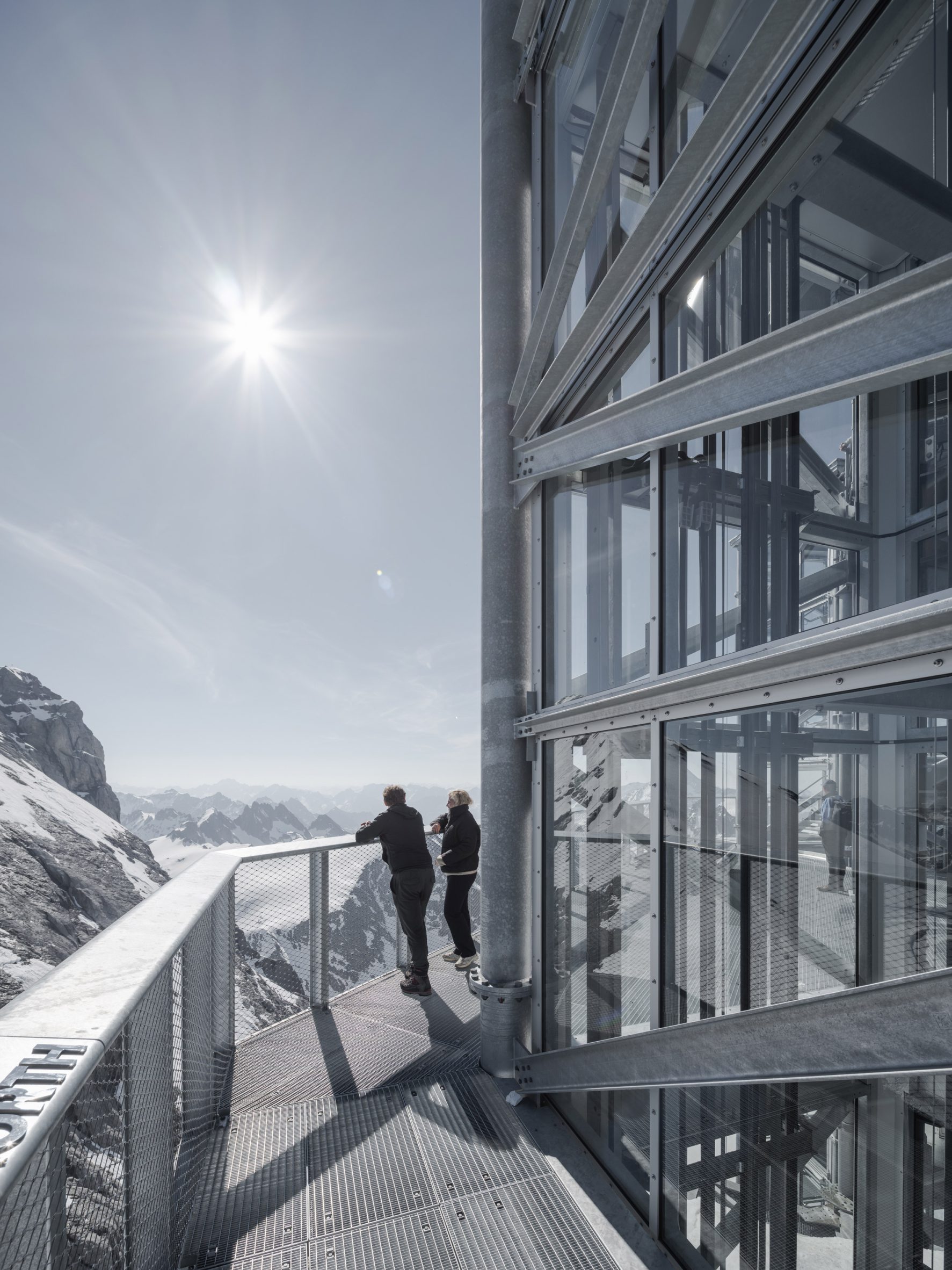
From here, visitors can ascend the tower to the viewpoint, which has 360-degree views of the mountain landscape.
It is accessed via the four vertical circulation volumes, which were placed on each corner of the existing steel structure. Two of these vertical elements contain stairwells, while the others have lifts.
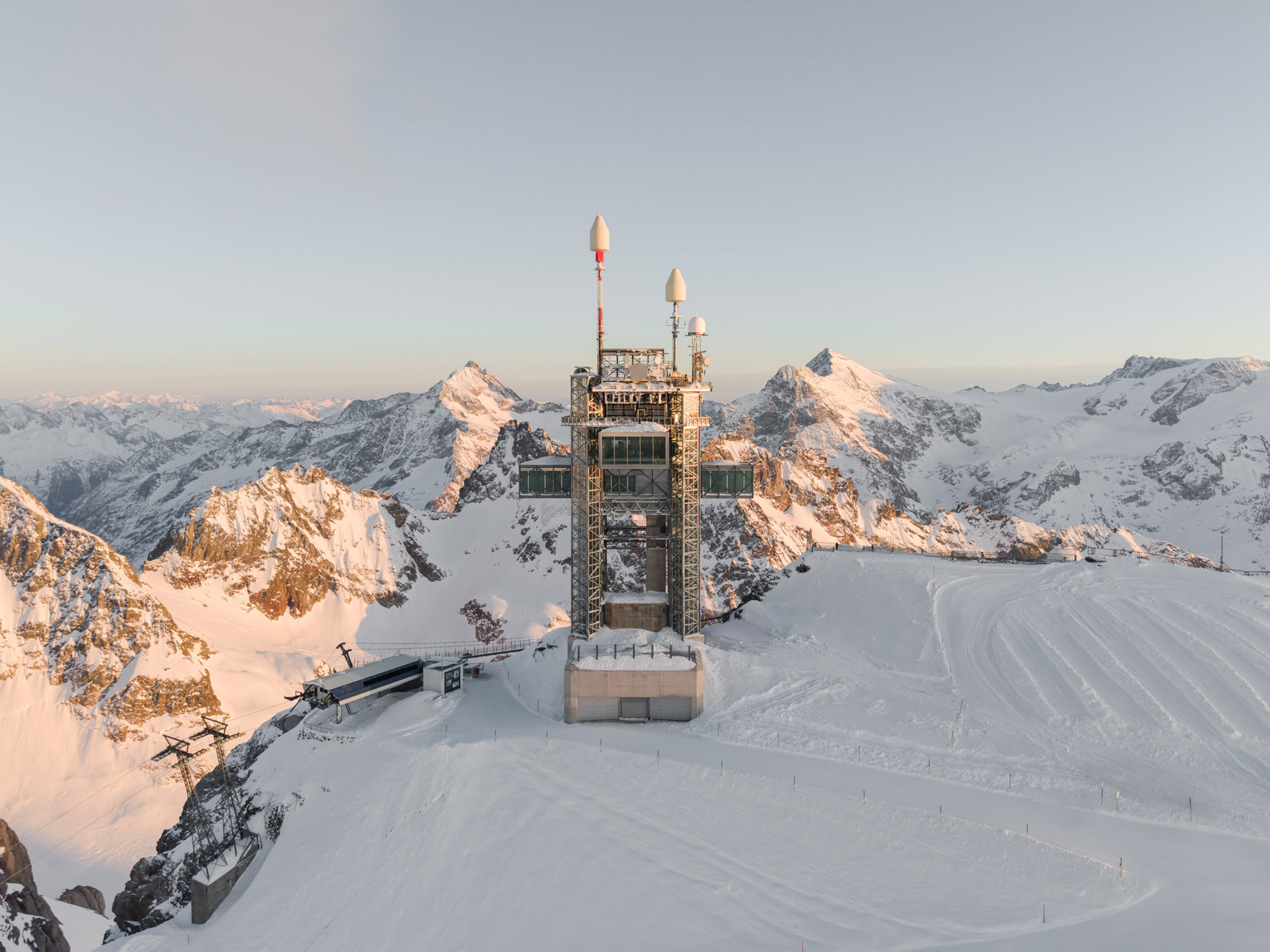
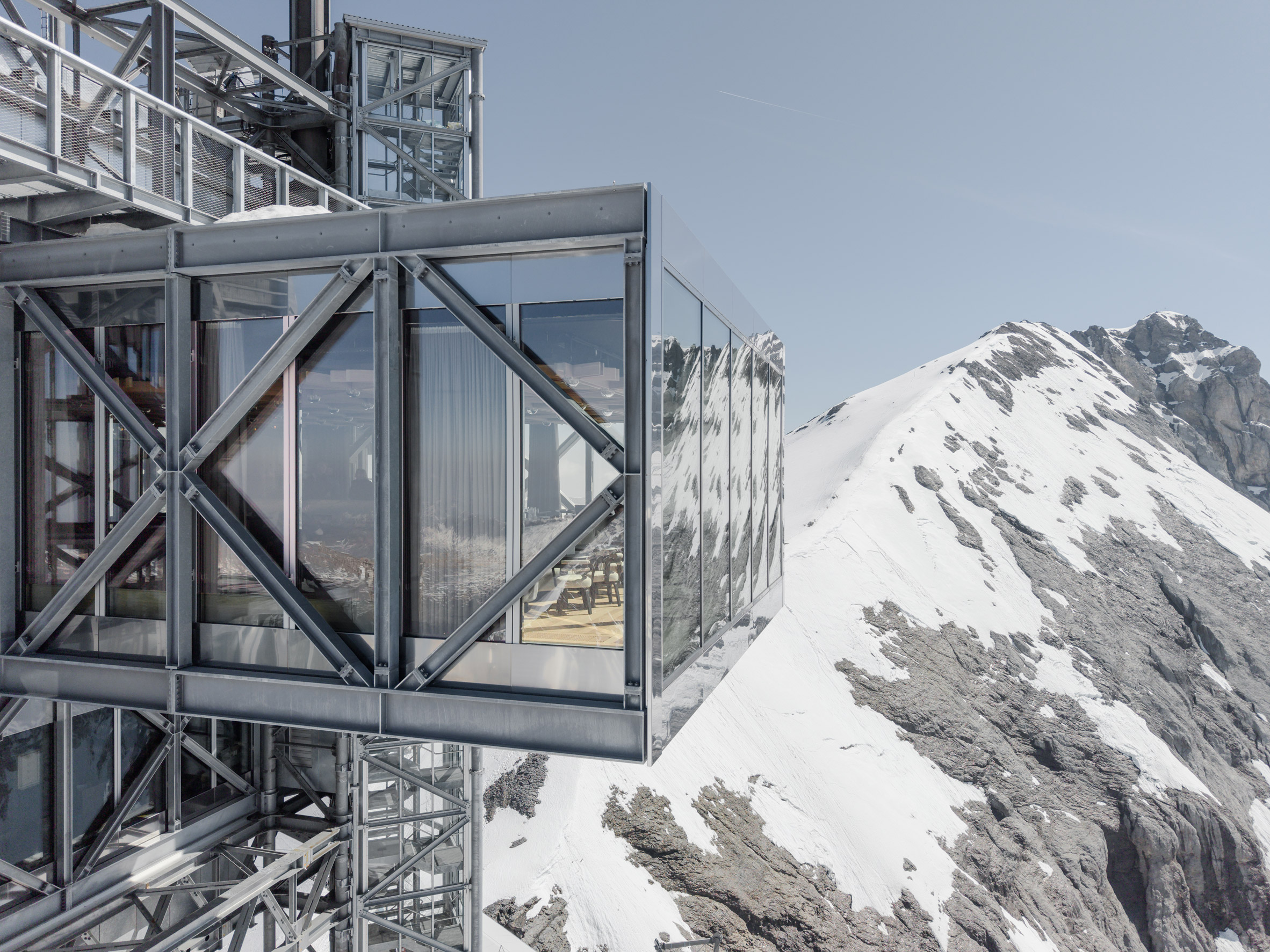
The new horizontal volumes have steel frames to complement the existing structure, and are wrapped in large expanses of glass.
They cantilever outwards, forming a cross shape that ensures "a striking figure visible from afar while offering impressive panoramic views of the alpine landscape from within", the studio said.
Inside, the horizontal volumes are deliberately column-free, made possible by their exposed load-bearing steel structure.
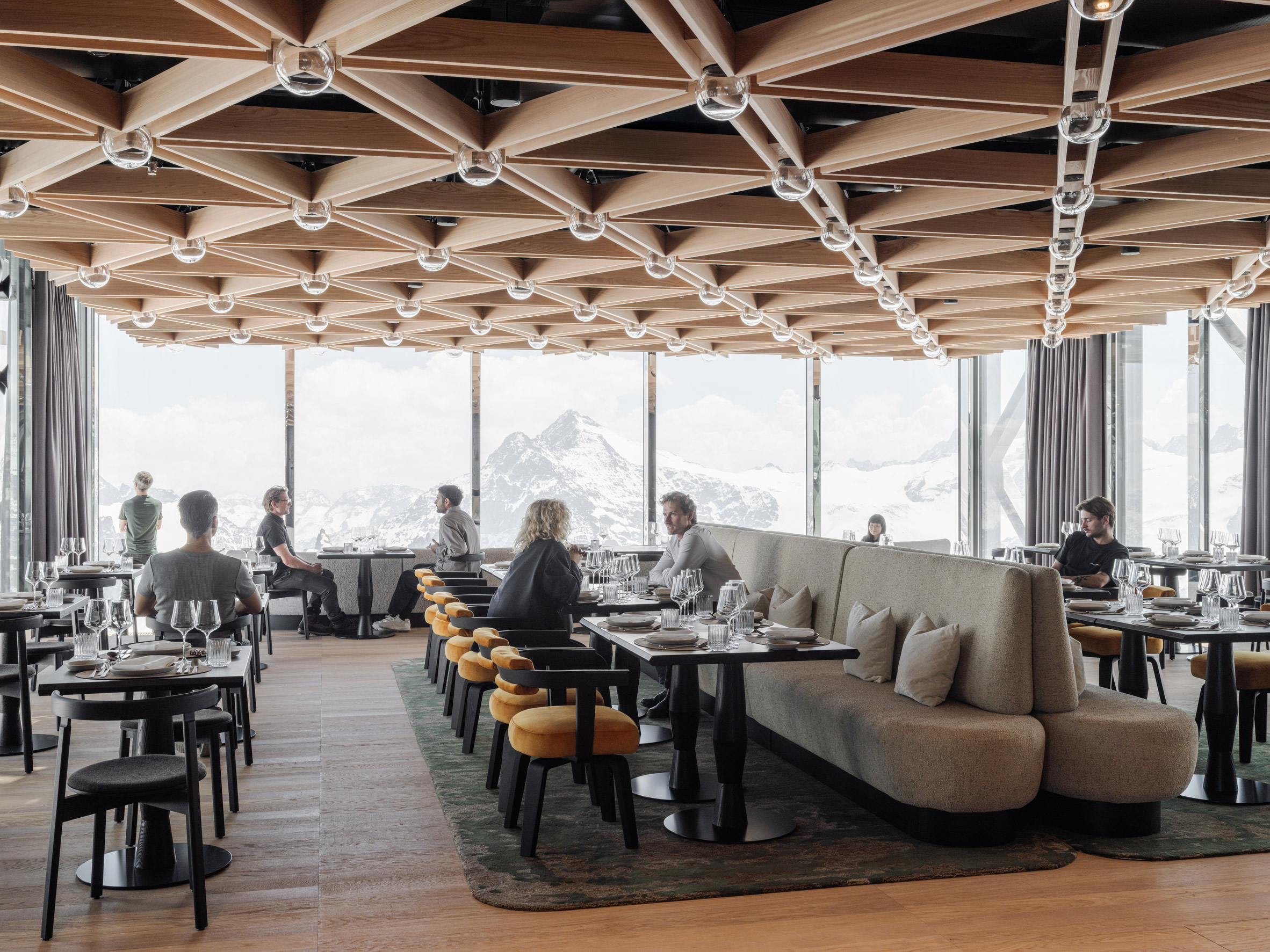
The lower of the two volumes contains shops, while the higher one contains a 140-seat restaurant.
Herzog & de Meuron's material palette for the project draws on both the existing structure and the harsh weather conditions of the site.
It is dominated by a mix of galvanised steel and stainless steel, as well as concrete and glass. These materials are deliberately left visible throughout, apart from in the restaurant, where wooden finishes are introduced to add warmth.
As part of the project, Herzog & de Meuron extended the existing cable car station after an assessment of the existing building found that a conversion "would not be able to sufficiently resolve the fundamental issues of circulation, orientation, and capacity", the studio said.
While a large proportion of the original structure was retained, others have been replaced and extended.
Other mountain architecture featured on Dezeen include Snøhetta's proposal for a hikers' refuge in the Pyrenees mountains with a swooping grass roof and Senoner Tammerle Architekten's places mountain shelter in the Italian Alps.
The photography is courtesy of Herzog & de Meuron.
The post Herzog & de Meuron transforms mountain antenna tower into "iconic sculpture" appeared first on Dezeen.