

.jpg)


















Four products that Dyson successfully revolutionised, and four it didn't
As Dyson seeks to disrupt the toothbrush market with its CameraJet, we look back at how the technology company has fared in its attempts to transform other product categories over the years.
Founded in Britain but now controversially headquartered in Singapore, Dyson is one of the world's most innovative companies.
Its mission-statement is to identify product categories overdue for a shake-up and leverage its extensive engineering and design capabilities to deliver something that works better for consumers.
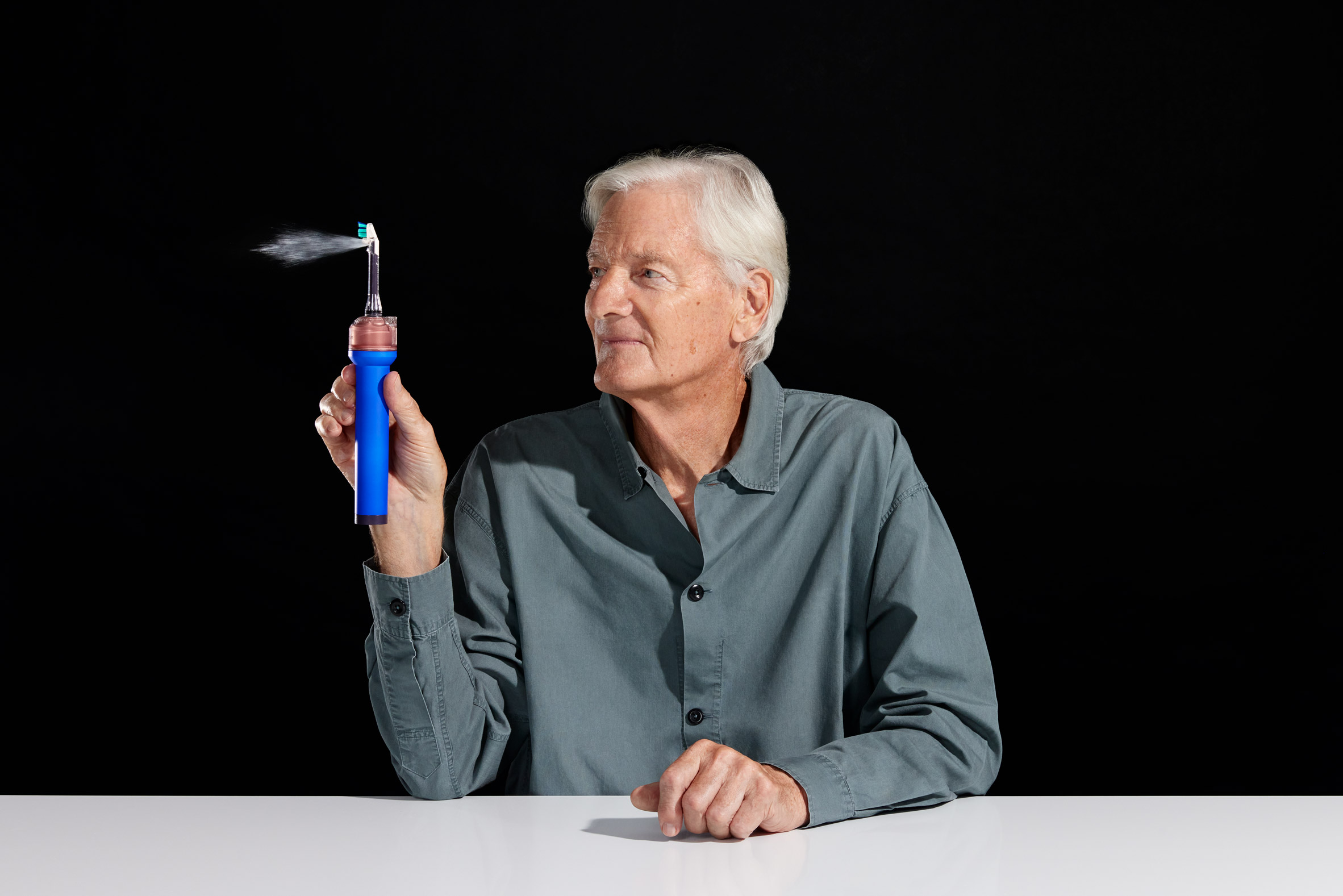
The firm has had a string of enormous successes, as well as projects that have crashed and burned. Company founder James Dyson often casts failure as an occupational hazard of innovation, and a valuable source of learning.
Dyson's latest product – a toothbrush that flosses your teeth with mouthwash while you brush – has been met with some scepticism. Much of the criticism comes down to its hefty price tag, though the company has an undeniable track record of making high-end everyday appliances mainstream.
So, while we wait to see if Dyson can do it again with the CameraJet, here are four product types the company has previously revolutionised, as well as four it hasn't.
Four it did:
Vacuum cleaners
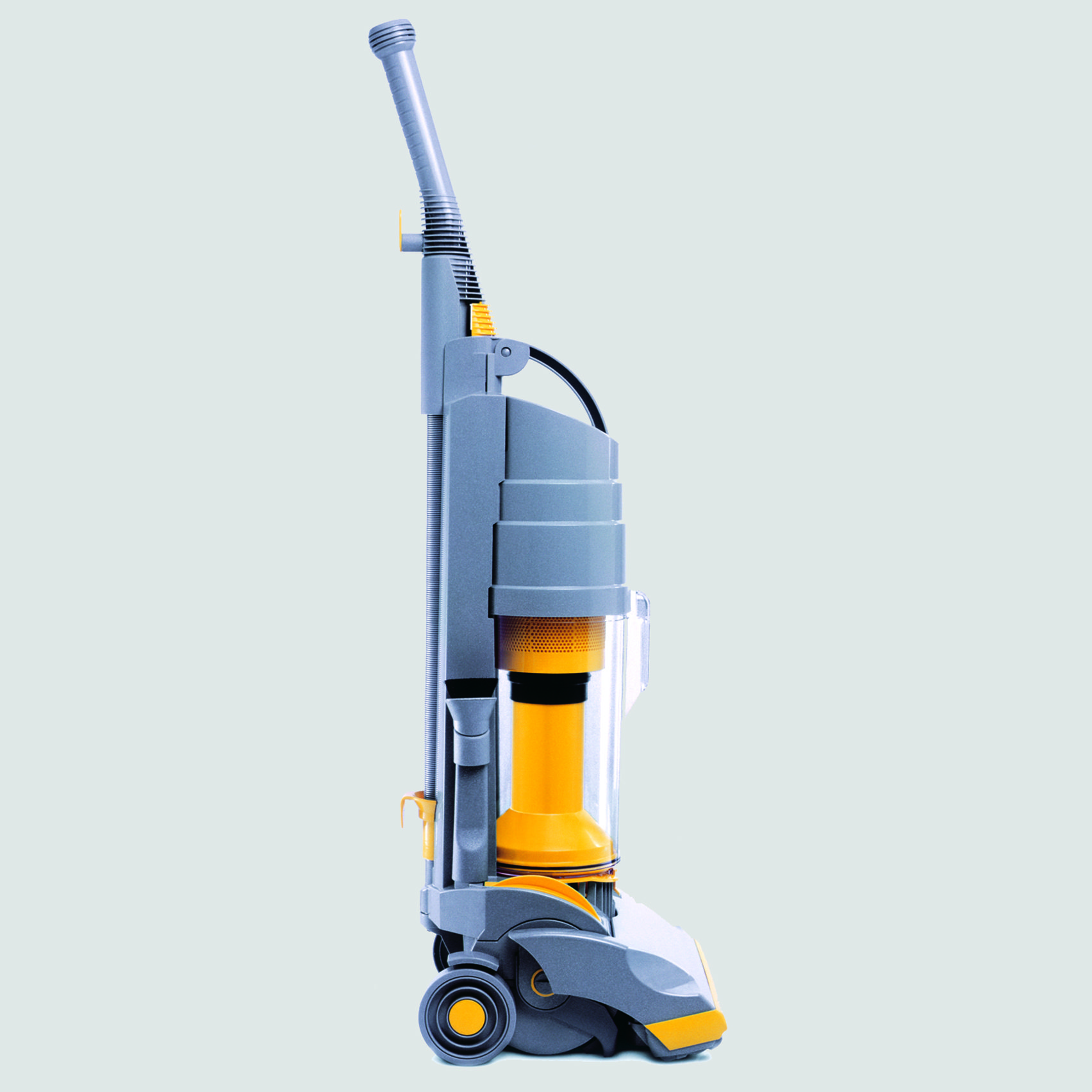
The story of James Dyson's invention of the bagless vacuum cleaner in 1978 is well-known.
His cyclone-based design was first licensed by the Japanese company Apex in 1986 and after some success, Dyson was able to start manufacturing through his own company in the UK.
The DC01 (pictured) launched in 1993, and looked completely different to anything else on the market. Despite the high price-point it became a runaway bestseller, and bagless vacuums are now the norm.
Dyson has continued to innovate in the years since across nearly 100 vacuum models, notably with cordless technology and a ball system for steering.
Its most recent release in the category is the PencilVac, which the company claims is the world's slimmest vacuum cleaner.
Hand dryers
Until around the turn of the millennium, the only hand dryers available in public bathrooms left a lot to be desired.
In theory, they worked by blowing warm air onto the user's hands to evaporate moisture. In practice, they seemed to do barely any drying at all, and were highly unreliable – often blasting at scorching temperatures or failing to operate entirely.
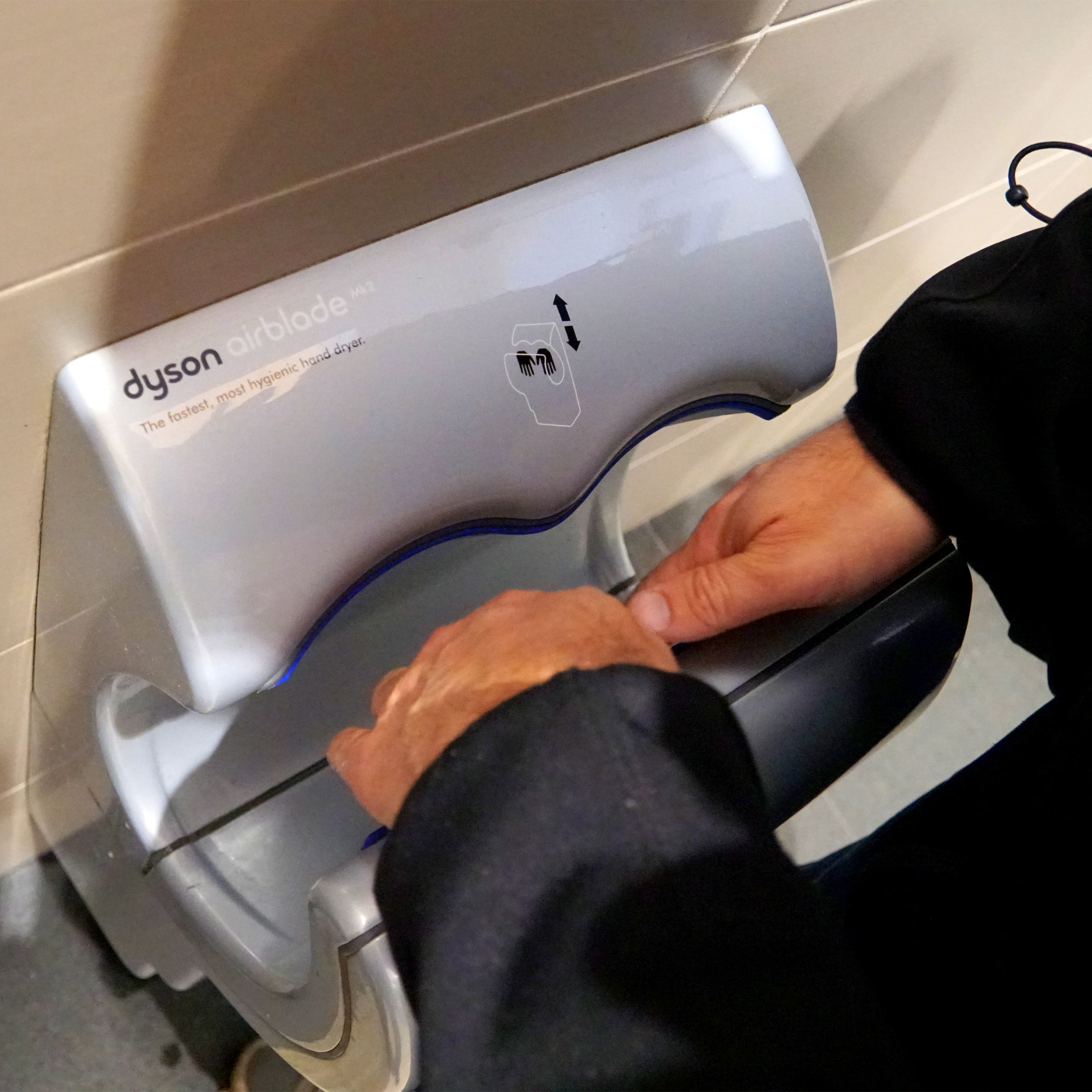
The Dyson Airblade, released in 2006, used a different system. Powered by a compact digital motor, it fired a sheet of filtered cool air at more than 400 miles per hour over hands inserted into its maw, gently stripping water off the skin.
It was not the first high-speed hand dryer – Mitsubishi's Jet Towel had become common in Japan during the 1990s, for example – but the Dyson's futuristic design and clever marketing helped it and subsequent versions to become a common fixture in restrooms across the world.
Not everyone is a fan, however. Design critic Mark Lamster even declared the Airblade "the most abhorrent work of design in recent memory".
And, as detailed in a Guardian long-read in 2019, the paper towel industry has backed a series of studies claiming that jet hand dryers like the Airblade spread more germs, which Dyson contests.
Fans
Having tackled vacuum cleaners and hand dryers, Dyson turned its attention to electric fans. It decided that the spinning blades on conventional fans – technology that dates back to 1880 – produce an unsatisfactorily uneven airflow, are tricky to clean, and dangerous to fingers.
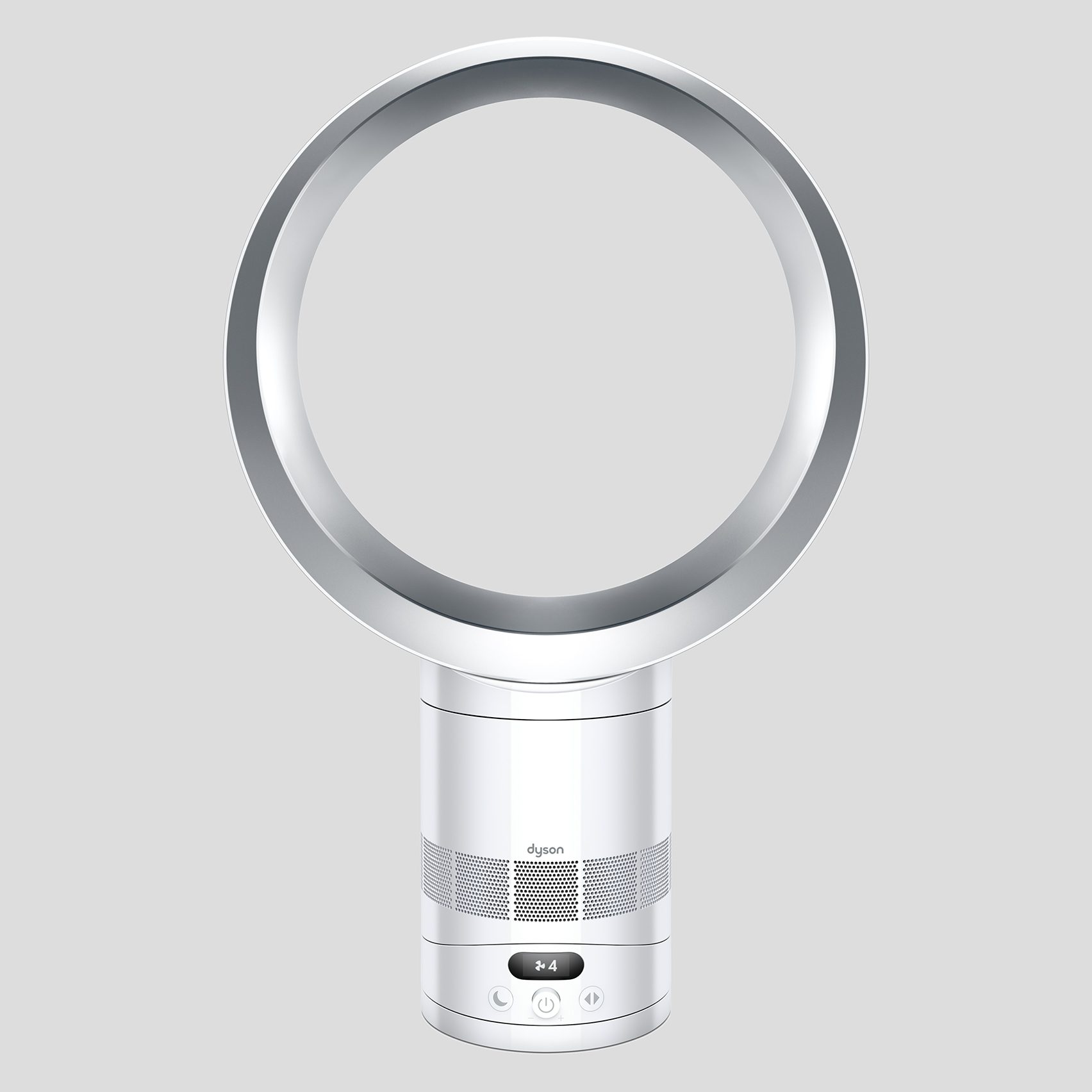
In response, in 2009 the company unveiled the Air Multiplier, which it declared the world's first bladeless fan. With a cylindrical base containing a motor and a ring perched on top, it used a similar system to the Airblade to smoothly blow 405 litres of air per second.
Subsequent models have incorporated heating, cooling, humidifying and purifying capabilities and are a significant part of Dyson's product lineup – but have not had the same industry-wide impact as some of its other innovations, with bladed fans still a more common choice for consumers.
Hair care
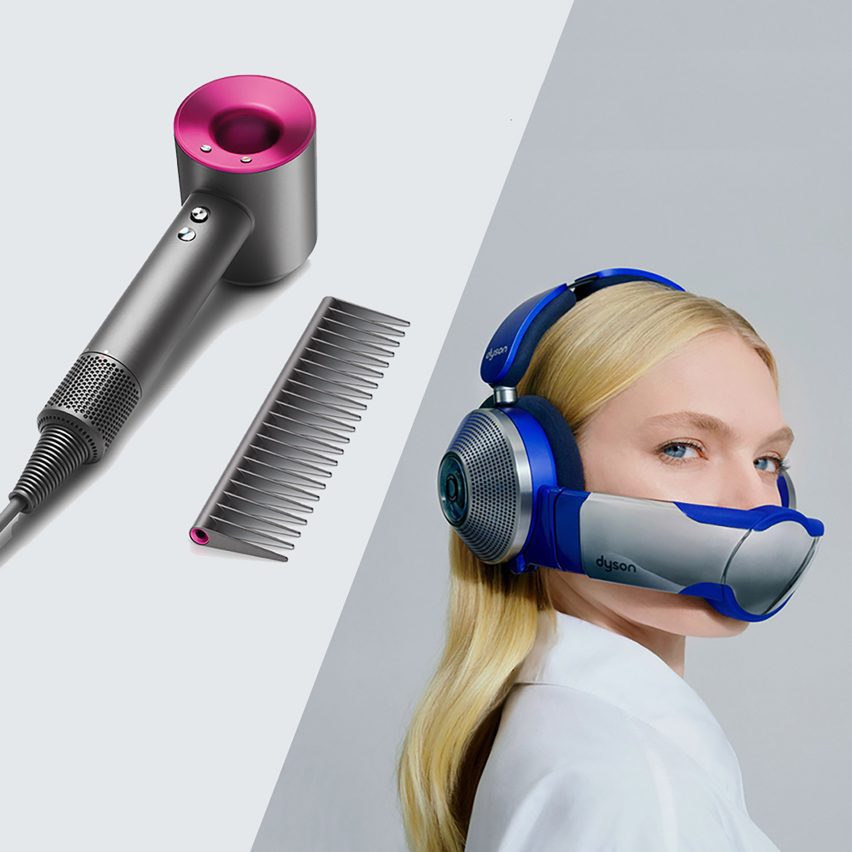
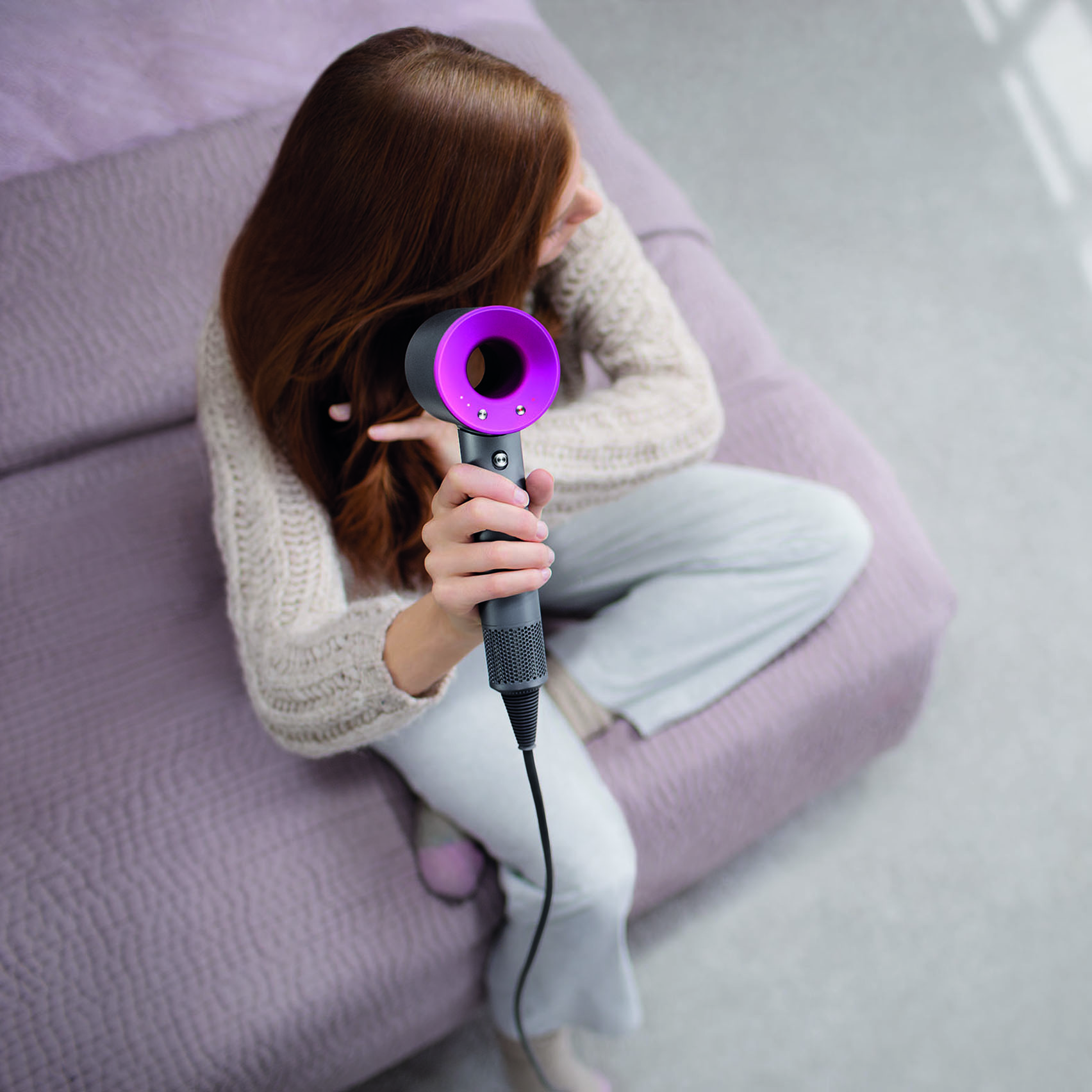
With the launch of its Supersonic hair dryer in 2016, Dyson triggered a transformation of the hair-care industry.
Like the DC01, the Airblade and the Air Multiplier, the Supersonic looked markedly different to other products in its category, with a large hole in the middle.
The Supersonic is significantly lighter, quieter, quicker and gentler on hair than conventional dryers, thanks to a series of innovations developed over four years with £100 million of investment. The process even involved sending engineers to beauty school to learn how to blow-dry like professionals.
As with other Dyson products, the Supersonic was much more expensive than many competitors, but that didn't stop it from becoming the best-selling hair dryer in the UK within a month of launching.
Dyson has since followed up with multiple other hair-styling tools, while other brands have raced to develop high-performance products marketed as beneficial for hair and scalp health.
In 2020, British Vogue called the Supersonic "an industry game-changer that has sent a shockwave through the hair industry".
Four it didn't:
Washing machines
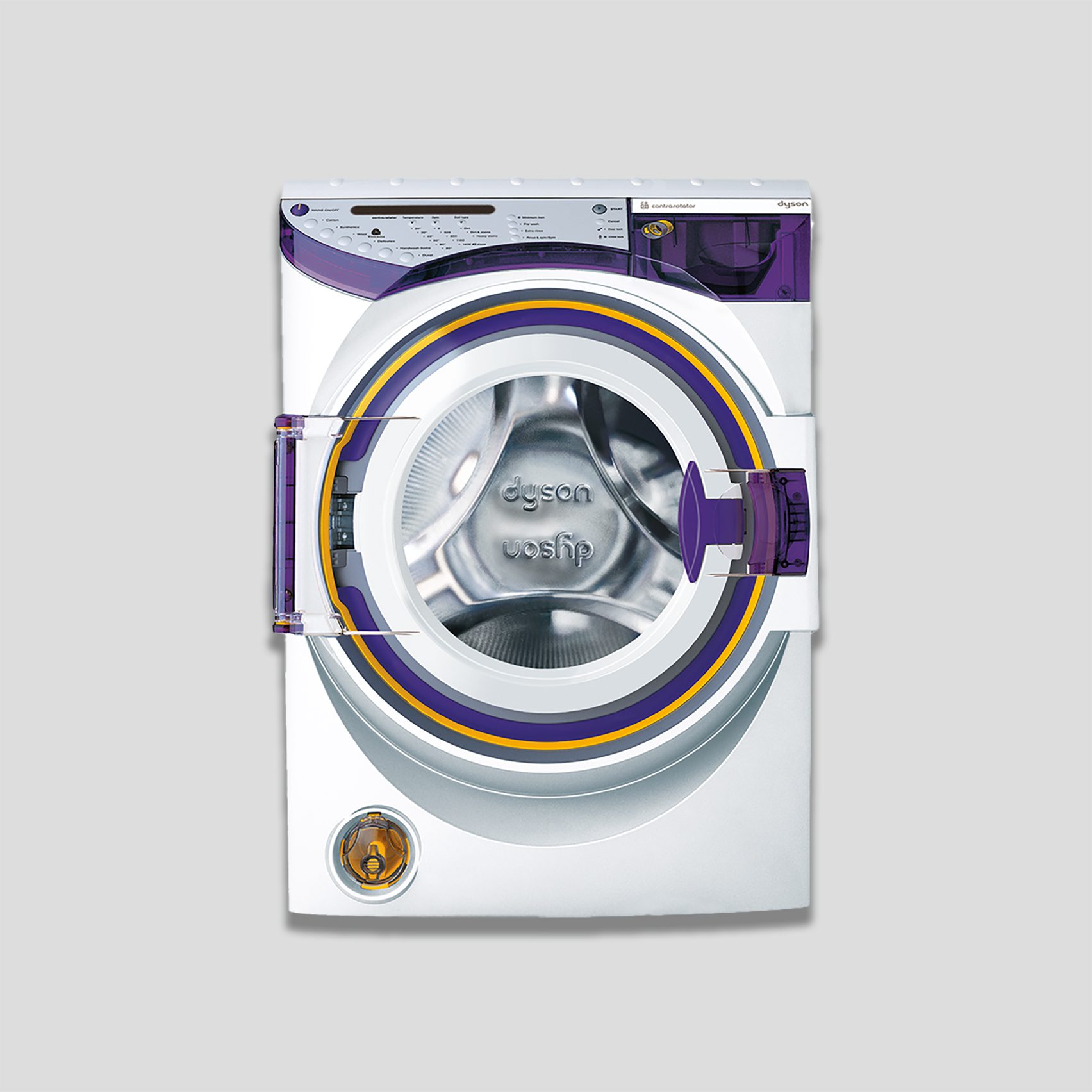
Dyson's first failure came in the early 2000s. After its engineers discovered that a two-hour cycle in a conventional washing machine removed less dirt than 15 minutes of hand-washing, they set about developing a new kind of mechanism.
Released in 2000, the CR01 Contrarotator used two counter-rotating drums designed to replicate hand-washing, and was followed by a second model in 2004.
Dyson maintains that its washing machines were more energy efficient than competitors and capable of dealing with bigger loads, but in 2005 the line was discontinued due to high manufacturing costs, which meant they were selling at a loss. Dyson himself would later tell Bloomberg he should have set a higher price point for the product.
Headphones
Towards the back end of the Covid pandemic, Dyson unveiled a product that was met with widespread bemusement.
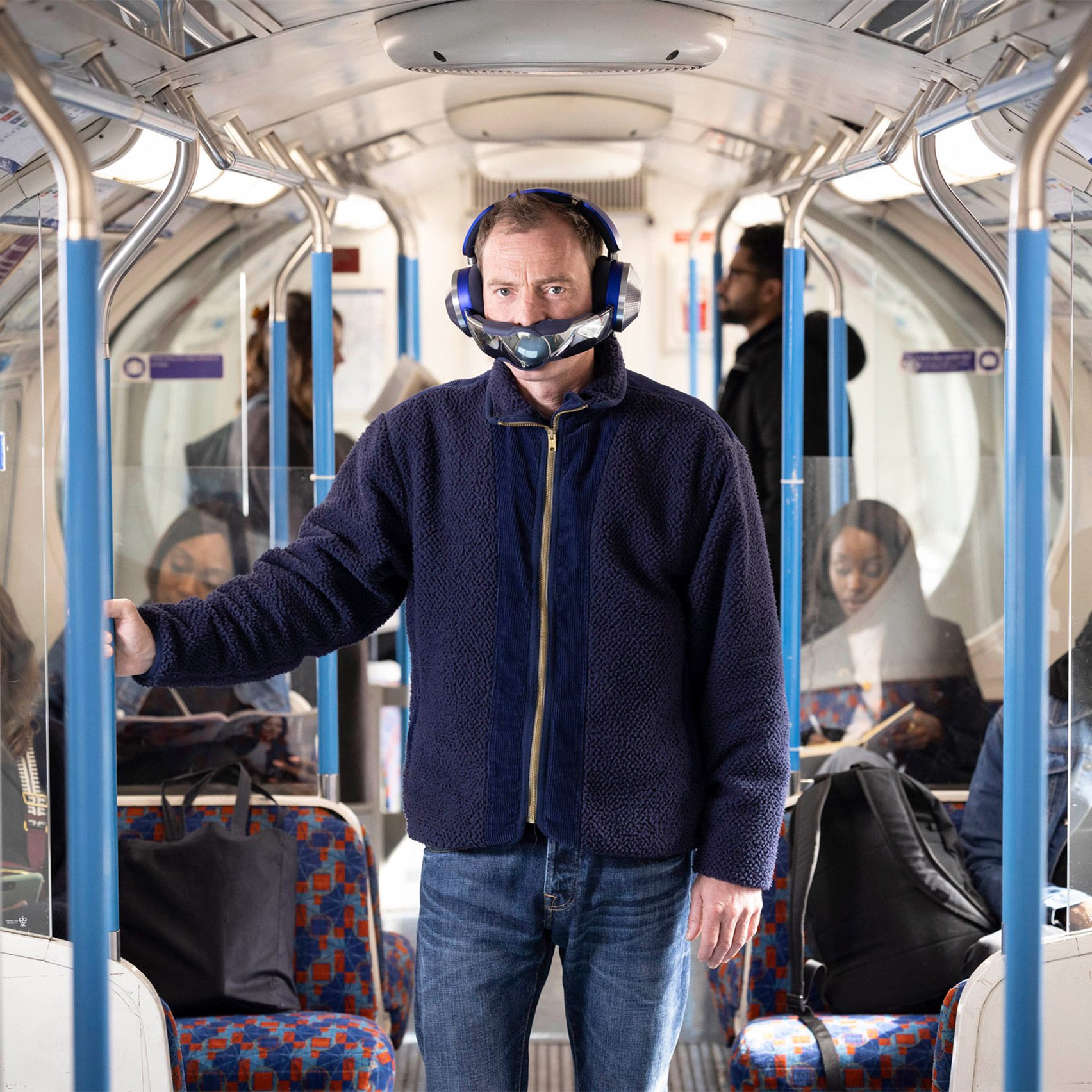
The Dyson Zone combined a set of noise-cancelling headphones with a detachable air-filtering visor. The company said its first wearable product had been six years in the making, but in the context of the global health crisis, the marketing images of people wearing the device on the London Underground carried unhappy connotations.
Dyson withdrew the Zone from sale in mid-2025, with Dyson chief engineer Jake Dyson (James's son) telling Wired the product was "completely ahead of its time".
"We have sold thousands," he said. "And we still have the tooling – but we've stopped manufacturing it. We haven't thrown the tools away. It's something we believe will come around in the future. It's a brilliant product."
The company hasn't abandoned the headphones category entirely, releasing the much more conventional OnTrac in 2024. The product received favourable reviews and has reportedly had some commercial success, although it hasn't triggered a significant shift in a crowded market.
Ventilators
Dyson had another disappointing episode early in the pandemic, though in very different circumstances.
As the coronavirus spread across Europe in March 2020, demand for ventilators exploded, leading to widespread shortages of the mechanical breathing aids.
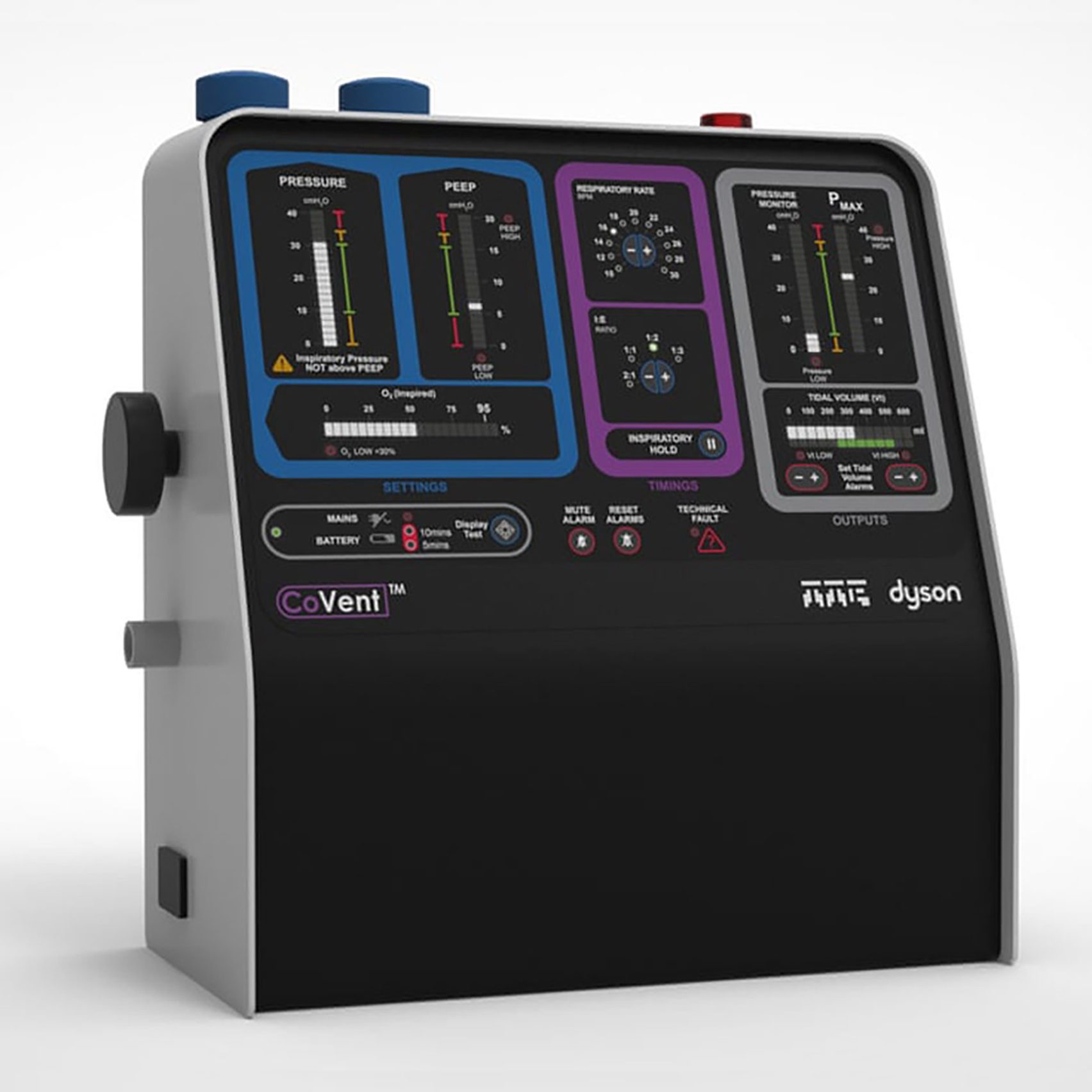
Over just 30 days, Dyson worked with medical device company The Technology Partnership to develop the CoVent ventilator, having been called on to help bolster supplies by then-UK prime minister Boris Johnson.
The design utilised Dyson's proprietary digital motor and air-filtration technology, and was portable and easy to mount on a patient's bed. It was also designed to be simple to manufacture at volume, with plans to produce 15,000 units including 10,000 for the UK's National Health Service.
However, in late April the government told Dyson its ventilators were no longer required amid a realisation that the country's need was less than previously estimated. James Dyson said at the time that the company "don't regret our contribution to the national effort for one moment".
At the public inquiry into the UK Government's handling of the Covid pandemic, former minister Michael Gove said that the CoVent failed to pass regulatory tests.
Electric cars
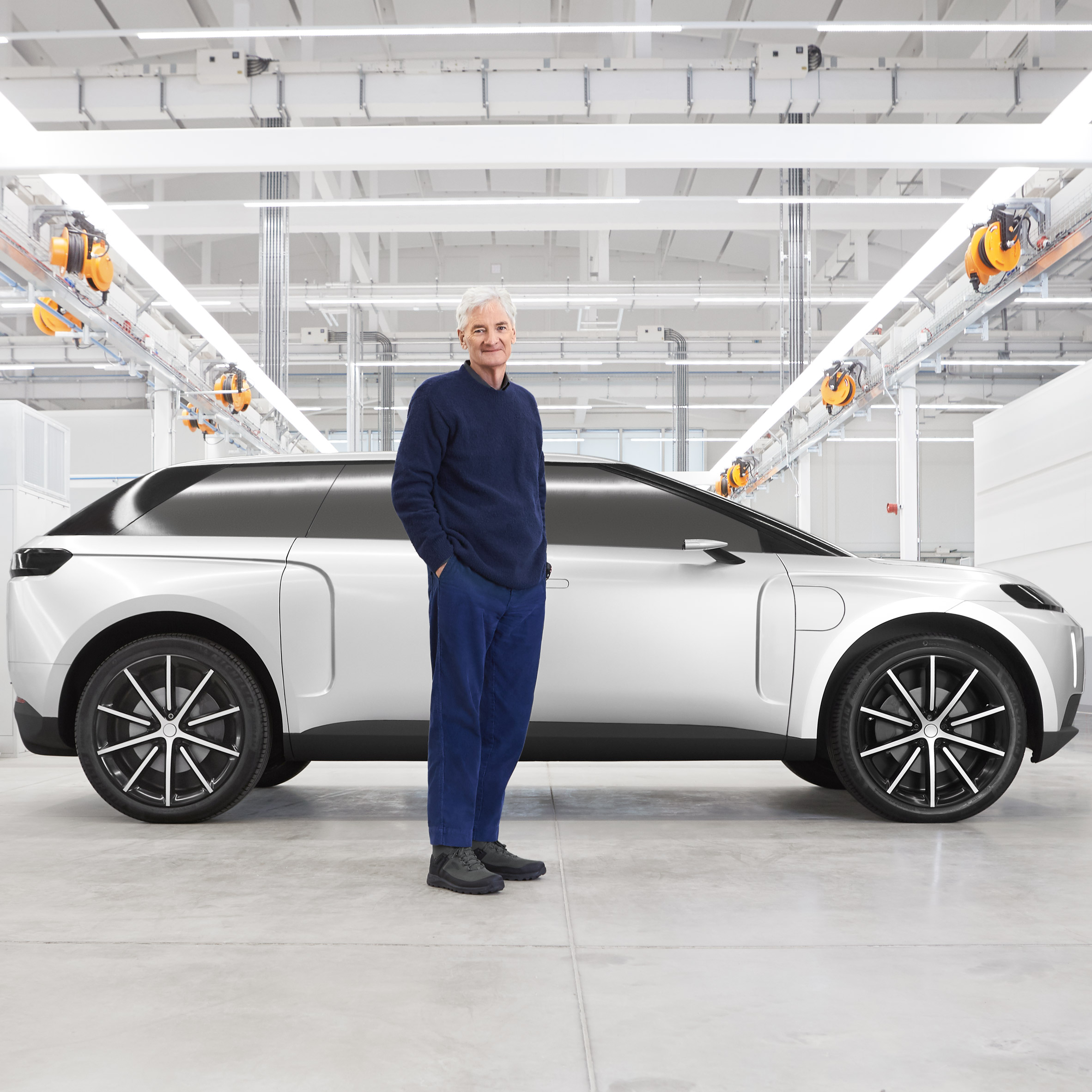
In 2017, Dyson announced that it was developing an electric car. But two years and £500 million later, the project was ultimately scrapped before the first prototype could be road-tested.
"The Dyson automotive team has developed a fantastic electric car, but unfortunately it is not commercially viable," the company said at the time.
Details of the N526, as it was called, were later revealed to the Times. The car was a sporty-looking seven-seater SUV with an aluminium body, huge wheels and a sharply raking windscreen. Dashboard information would have been projected like a hologram in front of the driver, while the seats were reminiscent of Ludwig Mies van der Rohe's MR Chaise.
Each car would have had to sell for £150,000 to break even, James Dyson told the paper. He said it would have been impossible to compete with other electric cars, claiming that car companies were selling electric vehicles at a loss subsidised by combustion-engine models.
"There's huge sadness and disappointment," he said. "Ours is a life of risk and of failure. We try things and they fail. Life isn't easy."
The post Four products that Dyson successfully revolutionised, and four it didn't appeared first on Dezeen.