


























Five anti-AI designs that give an element of control back to humans


With artificial intelligence encroaching on more and more aspects of daily life, there is a rising trend of fatigue and cynicism around the technology. Here, we round up five designs that push back on the AI boom.
Artificial intelligence (AI) has sparked headlines around the world for its controversial use in mass video surveillance, data scraping and deepfake scams. In response, designers are coming up with innovative ways to protect people from some of the more sinister sides of AI.
While some of the designs may have been developed to encourage conversation around uses of AI, the increasing advancement of the technology might make them highly sought-after designs in the near future.
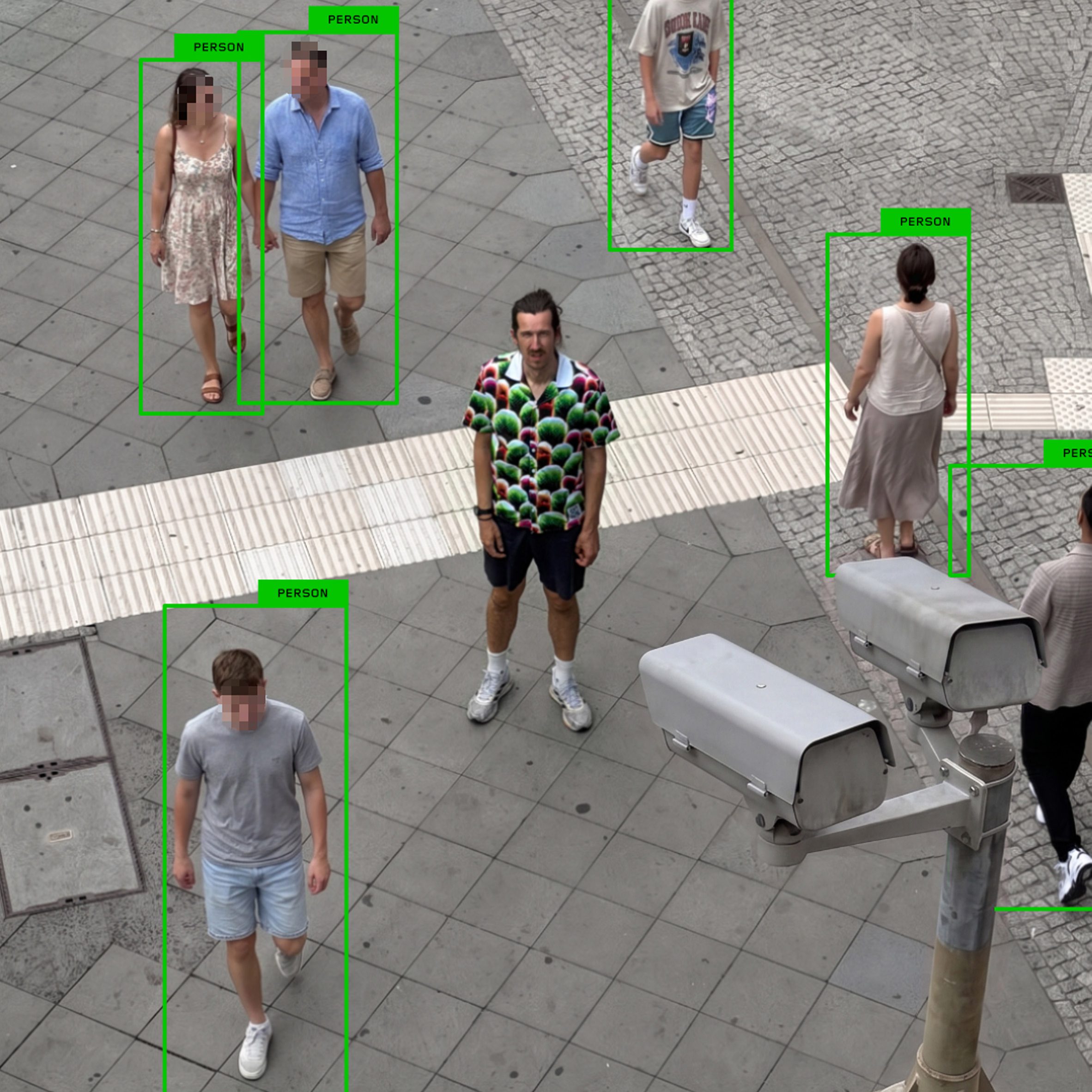
Digital Camouflage by Simon Weckert
Designer Simon Weckert created a colourful patterned shirt that acts as camouflage against AI video systems by subverting what they recognise as a person.
The Digital Camouflage shirt was developed in response to a pilot project to use AI video surveillance at Berlin's Kottbusser Tor station, providing a way for its wearer to be undetectable. Its bold patterns were developed using an AI trial-and-error workflow known as an "adversarial loop".
"This was necessary because a machine's blind spots are not intuitive to humans; you cannot design against machine perception by eye, only the machine can tell you what it fails to see," said Weckert.
Find out more about Digital Camouflage ›
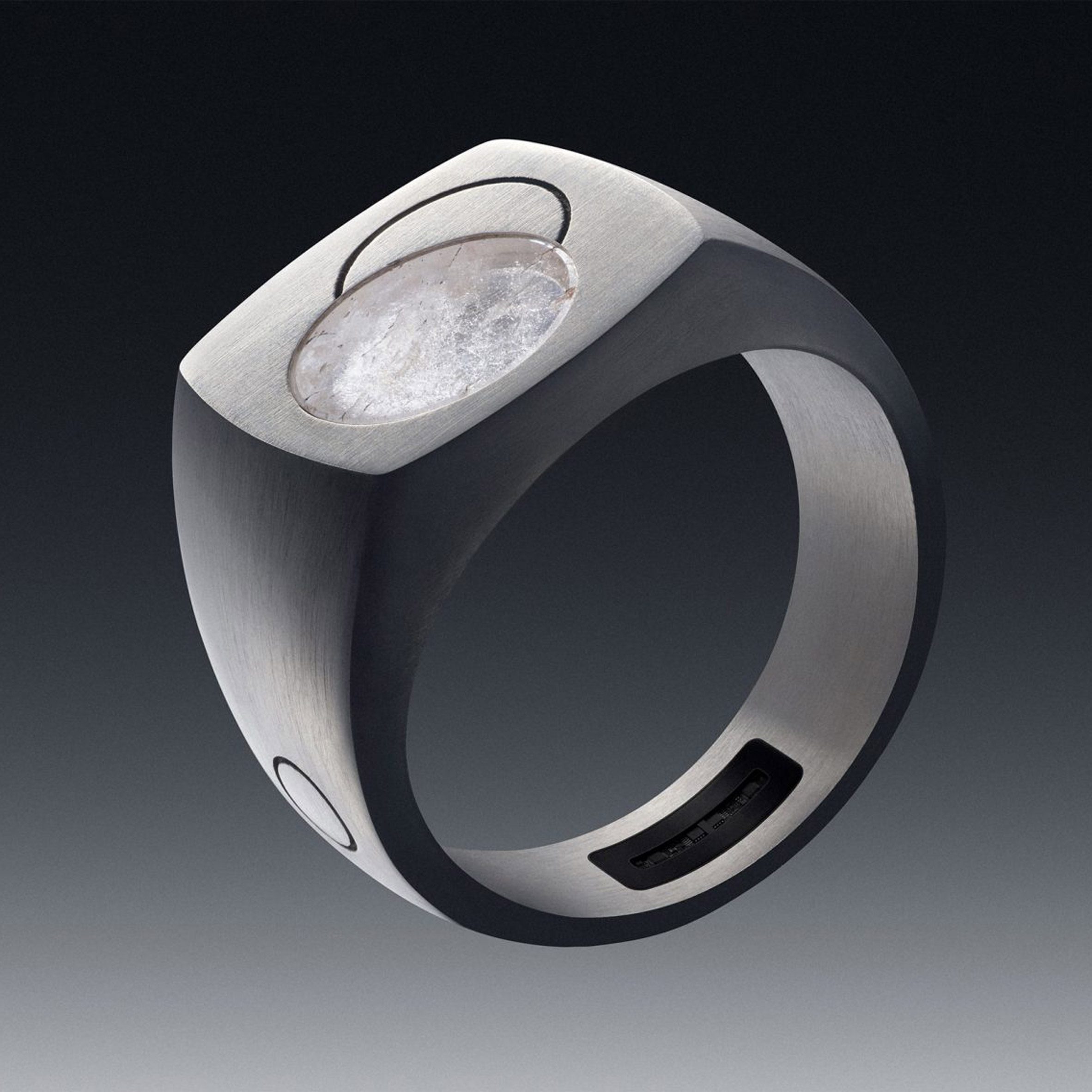
Quartz is a concept for a ring that acts as a human identity verification method, developed by design studios Modem and Retinaa to counteract scammers using AI deepfakes to impersonate people.
In the design, two people bring their Quartz rings to touch in a handshake, establishing an encrypted bond that proves their identity when they later interact online or over the phone.
The Quartz concept incorporates technologies that exist today – finger-vein biometrics to identify the wearer, near-field communication to create a connection between rings, and cryptography to later confirm both parties' identities during remote interactions – but would need to be miniaturised and power-optimised to fit into a wearable ring.

Optical illusion is at play in Decoy Font, which displays two overlapping messages readable by humans, while AI chatbots and large language models such as ChatGPT can only read one.
The font was designed by the company Mixfont for people who want to avoid having their data scraped and as a conversation starter concerning issues of AI and public trust.
"It started as an exploration of how AI and typography intersect, but it was also meant to raise awareness of the growing reach and capabilities of AI," Mixfont founder Eric Lu told Dezeen. "I think the reaction to the font shows that there are many folks who feel strong AI fatigue, and want a way to defend themselves against the presence of AI in their lives."
Find out more about Decoy Font ›
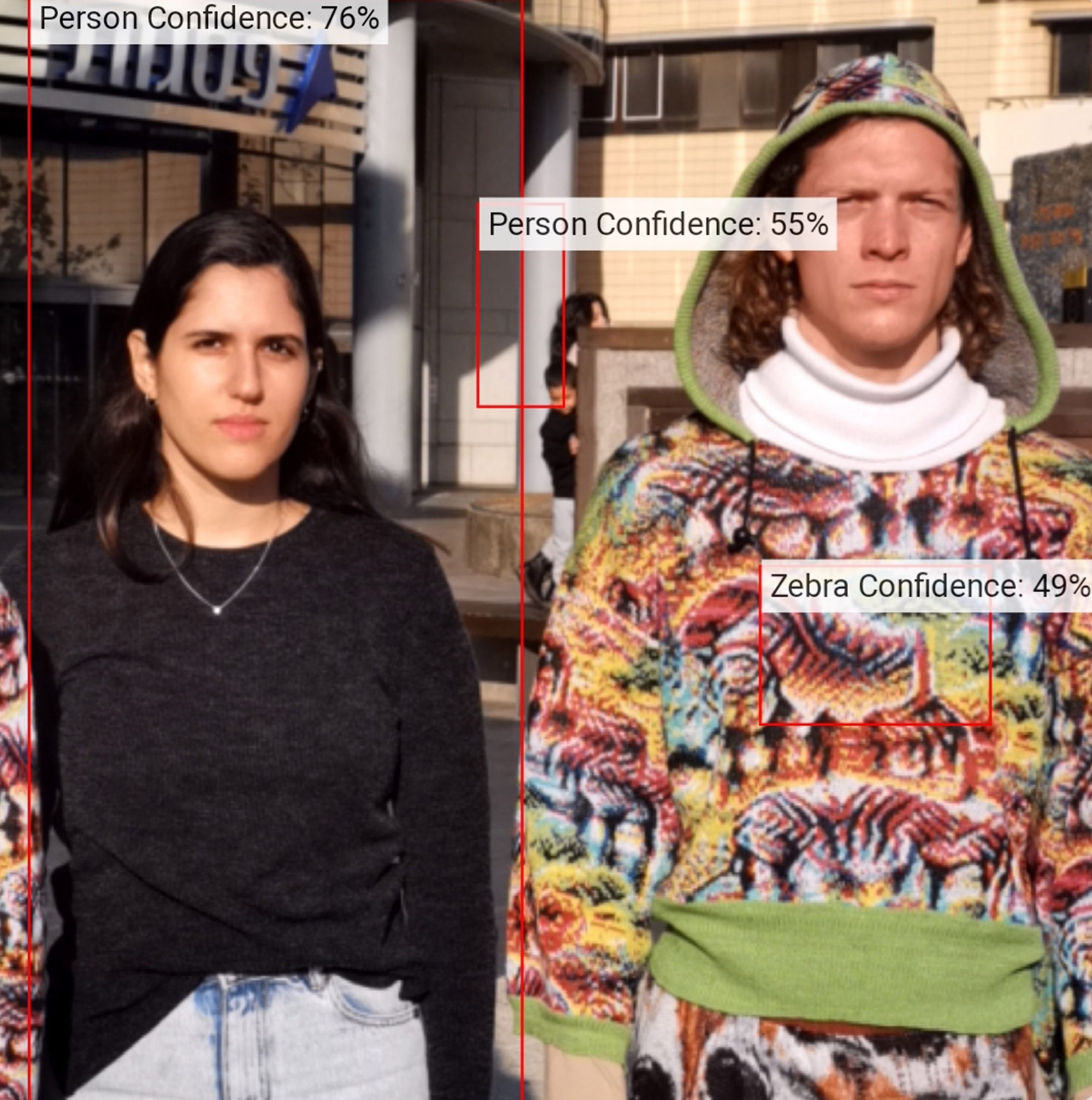
Manifesto Collection by Cap_able
Created by Italian fashion start-up Cap_able, Manifesto Collection is a series of knitted clothes adorned in colourful patterns designed to deceive facial recognition software in real-time.
Tested using the YOLO object detection system, people wearing Manifesto Collection jumpers, t-shirts, trousers and dresses were either undetectable by the AI software or identified as animals whose patterns feature on the clothing, such as dogs, zebras, or giraffes.
"In a world where data is the new oil, Cap_able addresses the issue of privacy, opening the discussion on the importance of protecting against the misuse of biometric recognition cameras: a problem if neglected, could freeze the rights of the individual, including freedom of expression, association and free movement in public spaces," Cap_able co-founder Rachele Didero told Dezeen.
Find out more about Manifesto Collection ›
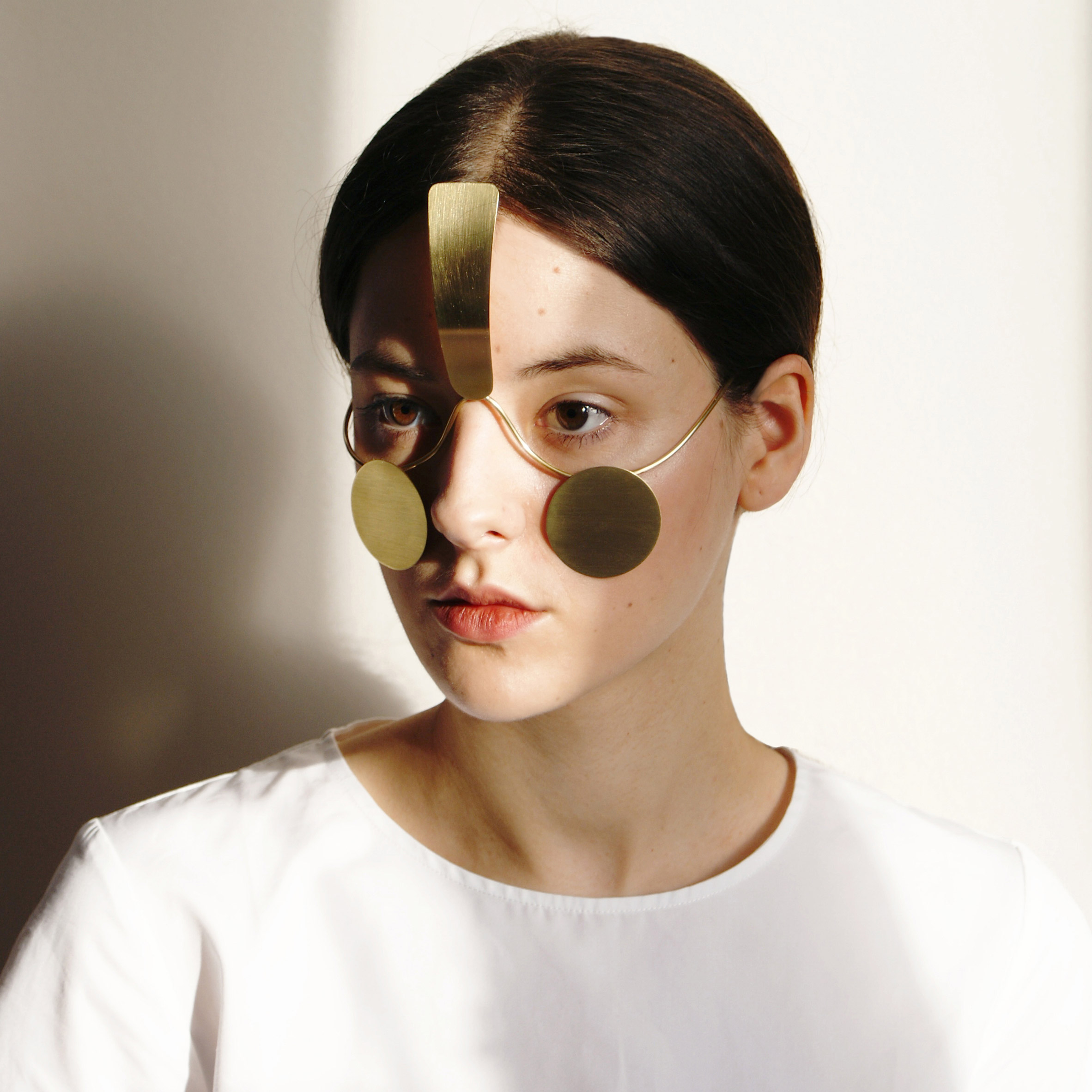
Another wearable item designed in protest of facial recognition technology is Incognito, a mask designed by Polish designer Ewa Nowak to make the wearer's face unrecognisable to cameras and AI systems, as well as an aesthetic piece of facial jewellery.
Comprising geometric brass shapes fixed to a long wire moulded to the contours of the face, Nowak created the mask in an effort to reclaim the anonymity that they feel has been lost to face-detecting cameras installed in public spaces.
"Cameras are able to recognise our age, mood, or sex and precisely match us to the database – the concept of disappearing in the crowd ceases to exist," said Nowak. "This has a huge value in the form of increased security and detection of dangerous units. On the other hand, in which direction will the surveillance of society develop?"
Find out more about Incognito ›
The post Five anti-AI designs that give an element of control back to humans appeared first on Dezeen.