









Drawing as Argument: Annotation Returns as Architecture’s Sharpest Tool
The votes for the 2025 Vision Awards have been counted! Discover this year's cohort of top architectural representations and sign up for the program newsletter for future updates.
For many years now, it seemed like architects had forgotten the drawing. It is true, we are living in an image-first culture, where creative professionals are counting on a single image to gain popularity, credit, and ultimately sell their work. The eye-catching render, the well-lit photograph, and the AI-generated perspective have all been taking center stage, with drawing becoming the silent workhorse of architectural communication.
And yet, in this year’s Vision Awards, the winning practices quietly subvert that trend, bringing the drawing back to the forefront. Across all categories, architects are choosing to pair their impressive imagery with equally striking drawing sets to communicate intent, narrative or speculation. And their weapon of choice? Annotation. This article showcases seven projects that use annotation in some of the most imaginative ways possible, reminding us that explaining a project is so much more than a built project; architectural innovation is embedded in the design itself.
Community 2.0
By UArchitects / Misak Terzibasiyan
Editor’s Choice Winner, Vision For Community, 2025 Vision Awards
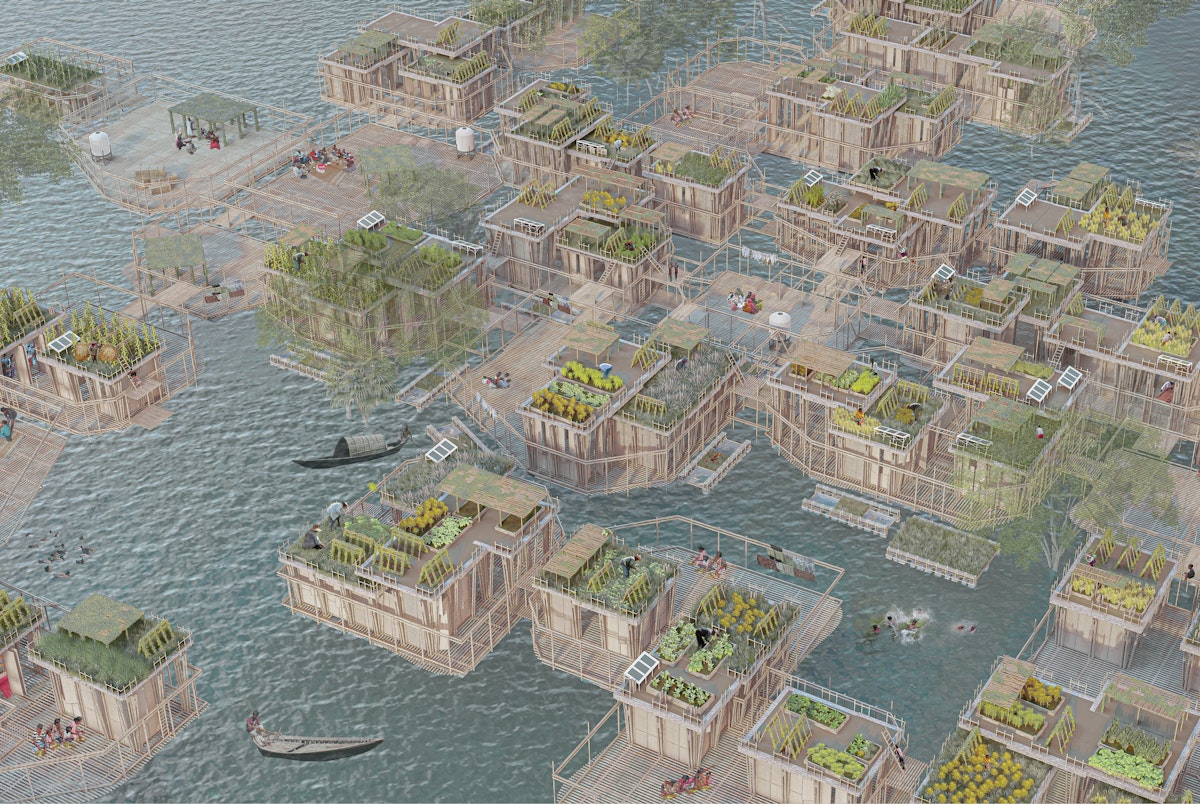
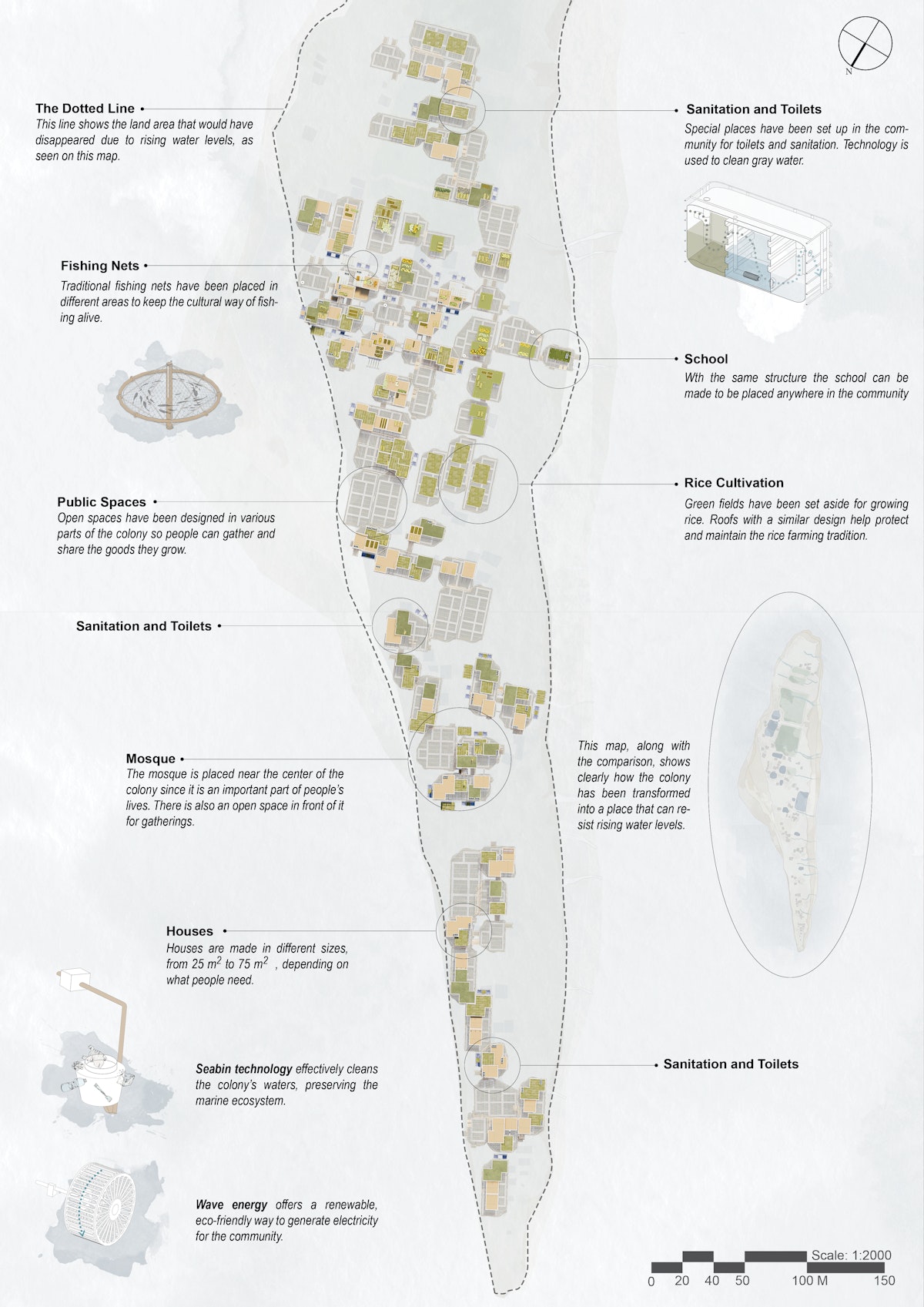 The project’s aim was to create a self-sustaining, floating and adaptable community to address rising water levels in Bangladesh, specifically in the delta region of Khulna. The drawing is a site plan/map that breaks down the different elements of the design. It pairs scale-specific roof plans with small axonometrics that further explain the sustainability systems present in the proposal. In parallel, discrete annotations such as a dotted line mark the area that would survive the flooding, while a series of texts explain the different uses of this new colony.
Slovenian Pavilion for EXPO Osaka 2025
By Dekleva Gregoric Architects
Jury Winner, Vision For Materials, 2025 Vision Awards
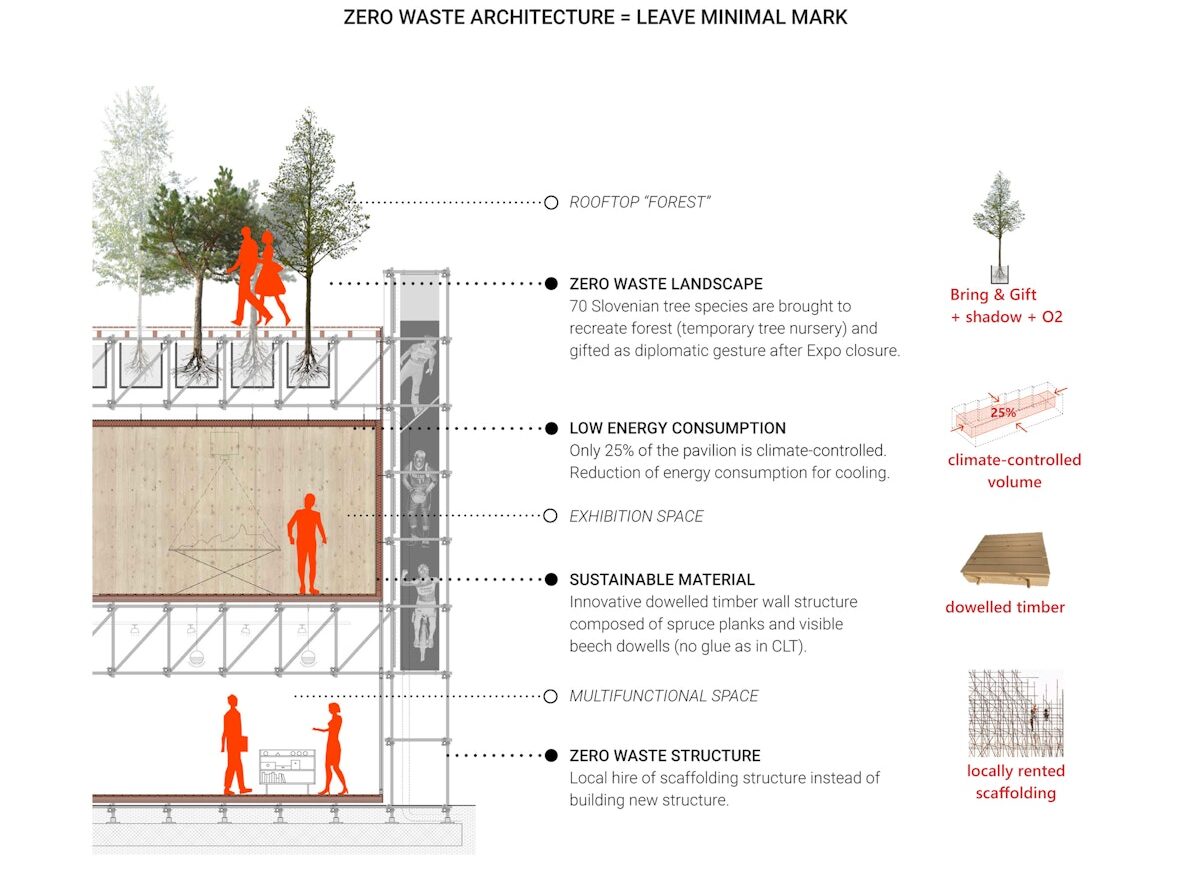 The project posed a single question: How can we create a universal and uniquely memorable experience for every EXPO visitor while significantly reducing our carbon footprint? In response, the architects rented local materials such as scaffolding to use them as the primary structure for the pavilion. In order to communicate their intent and carbon reduction practices, they produced a detailed section showing the assembly of the different materials they used. Additionally, the drawing is marked with clear annotations, where different fonts and text colors explain the multiple uses of the pavilion, the strategic “moves” for creating a sustainable structure, as well as the different design components.
Baghere Nutritional Center
By Kyle MertensMeyer
Editor’s Choice Winner, Vision For Localism, , 2025 Vision Awards
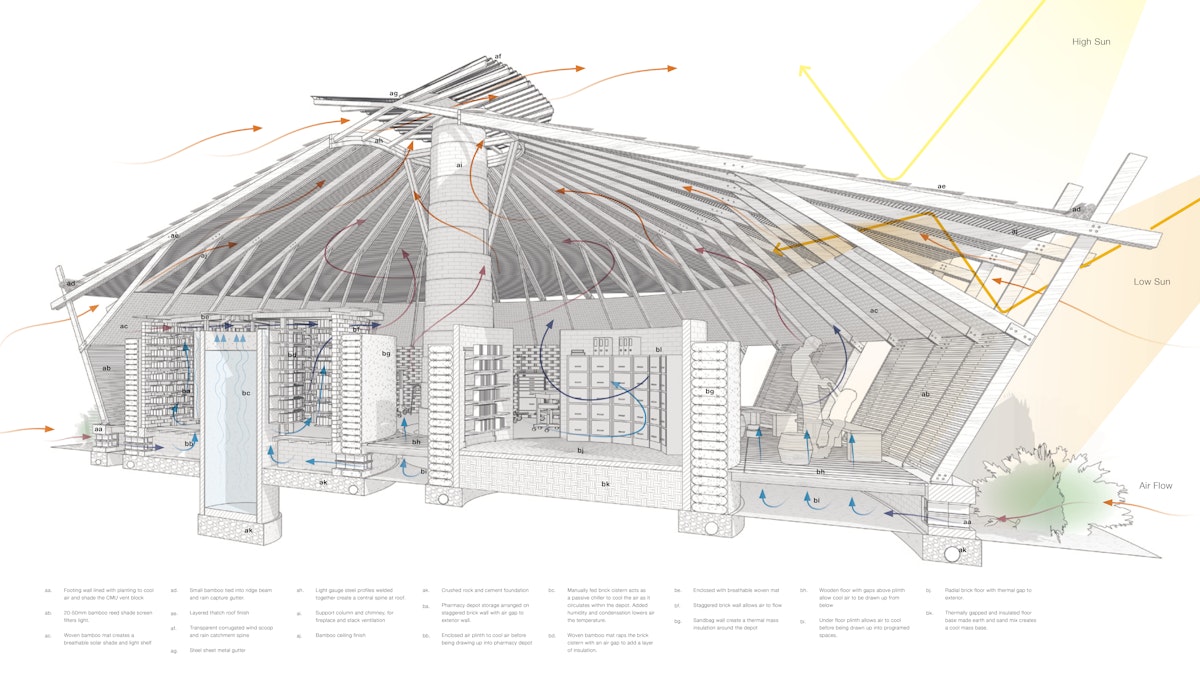 Examining a second pavilion with environmental sustainability as its primary goal, the Baghere Nutritional Center is designed to address malnutrition and food insecurity, acting as a center for healthcare, play, and education. The architects chose to communicate the pavilion’s function as well as its passive design strategies through a sectional perspective. The drawing shows in great detail the various materials used to construct the structure via hatches and tags – all corresponding to specific components.
Furthermore, carefully positioned, colored arrows explain how the roof is designed to generate airflow while annually capturing 274,323 gallons of rainwater funneled into deep cisterns holding up to 76,000 gallons for dry season use. Finally, additional arrows showcase how woven bamboo mats act as light shelves, shading interiors while bouncing daylight and allowing airflow.
City Of 1000 Gardens
By Nidum
Finalist, Vision For Cities, , 2025 Vision Awards
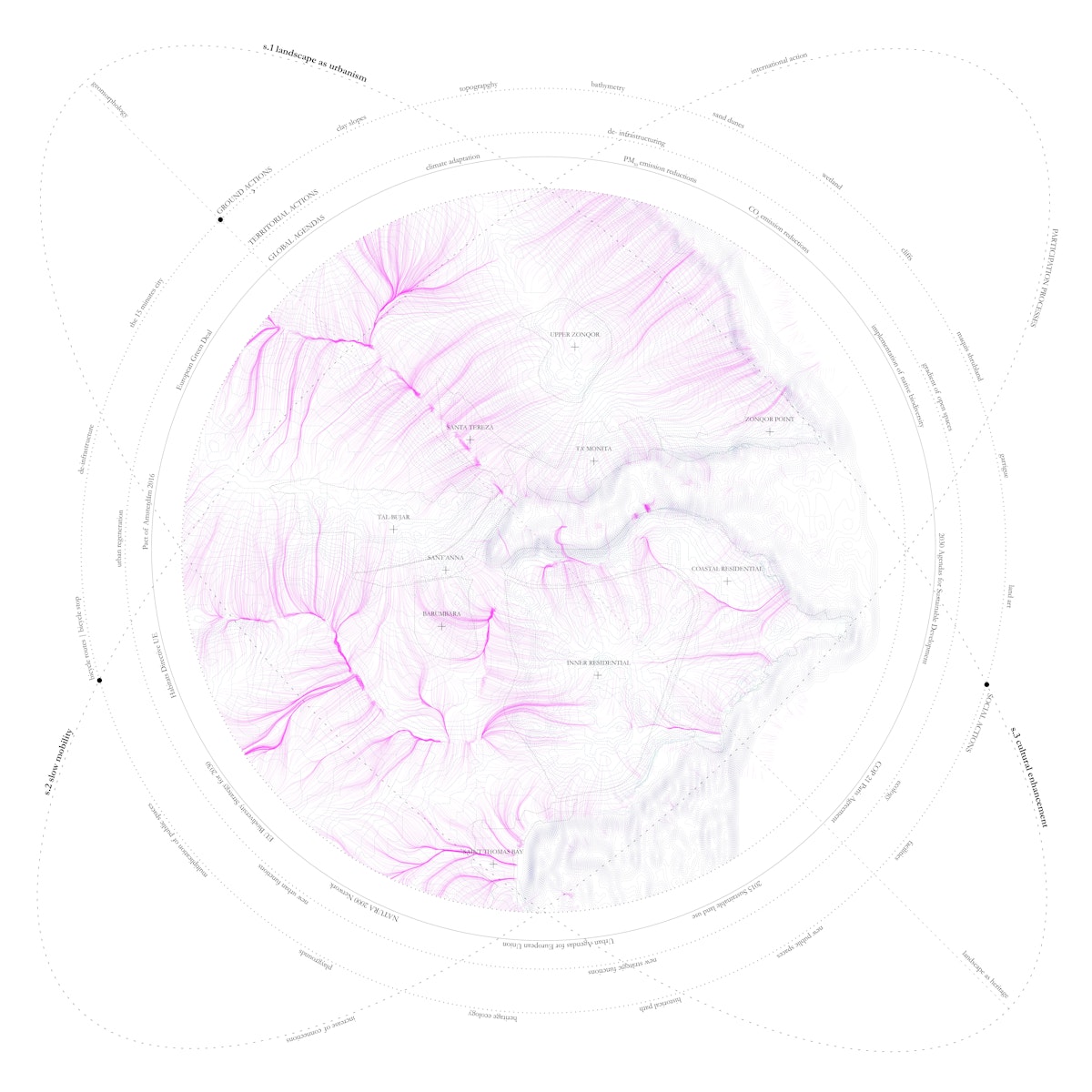 The aim of the proposal is the regeneration of Marsaskala, a rapidly growing, former fishing village on a bay along the north-eastern coast. This redevelopment strategy focuses on reconnecting with the town’s ecological capital, rebuilding community by reinforcing the identity of historic quarters and encouraging public participation.
Due to the proposal’s complexity, the architects created a diagram that combined a topographic drawing with a very distinct annotation style. Three concentric circles surround the map, each one drawn in a different line type. In parallel, two ellipses cross the center of the circle, dividing it into four equal parts. Text follows the annotation lines in order to sort the different proposal scopes and give direction to the various strategies at play.
Autonomous Urbanism: Towards a New Transitopia
By Evan Shieh,
Editor’s Choice Winner, Vision For Transport, 2025 Vision Awards
 This concept (and speculative critique) uses annotation in the most playful way possible. The proposal is communicated solely through a published book monograph and architectural graphic novel that envisions a future city integrating autonomous vehicles into its mobility systems and built environments. The book uses text as a device for narration as well as dialogue between the characters in the story, while in the corner of each page, a discrete, minimal map marked with navigation symbols and circulation routes is guiding the readers through the speculative city.
Polybotes’ Atlantis
By Nam-Y Nguyen
Finalist, Computer Aided Drawing, 2025 Vision Awards
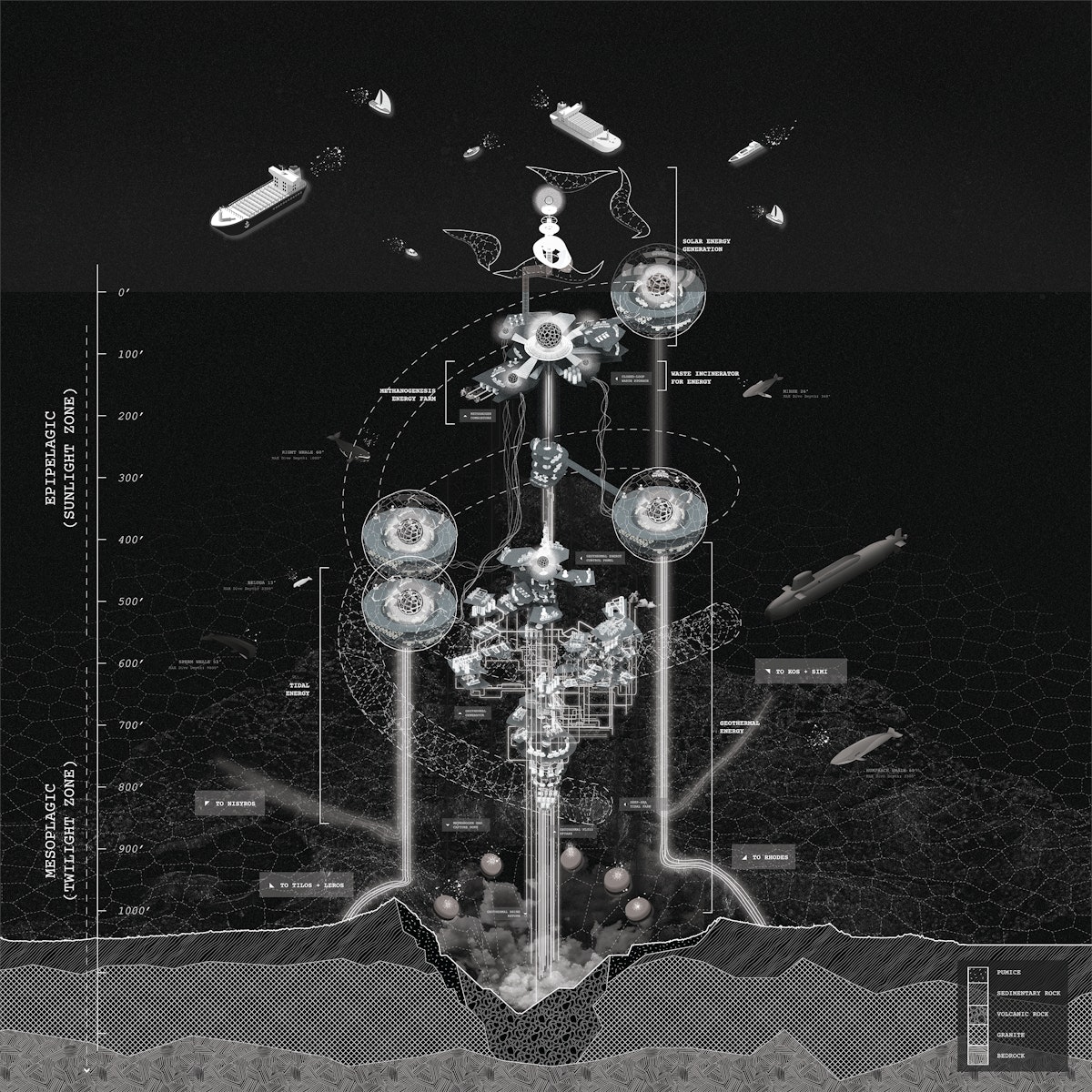 Polybotes’ Atlantis is a speculative floating research and energy extraction center anchored south of Nisyros, above an active hydrogeothermal vent. Its wider connotation is to propose a radical view of energy world-building: decentralized, submerged, and scalable, merging mythology and machine. The drawing is not particularly architectural in the traditional sense, rather more reminiscent of a maritime section chart. Annotation is used primarily as a navigation device, situating the structure in the Aegean sea, while a depth scale positions it vertically in relation to the seabed. Finally, wide brackets explain the energy transfer throughout the structure.
Flatiron & NoMad Streetscape Plan
By OSD (Office of Strategy + Design)
Jury Winner, Vision For Cities, 2025 Vision Awards
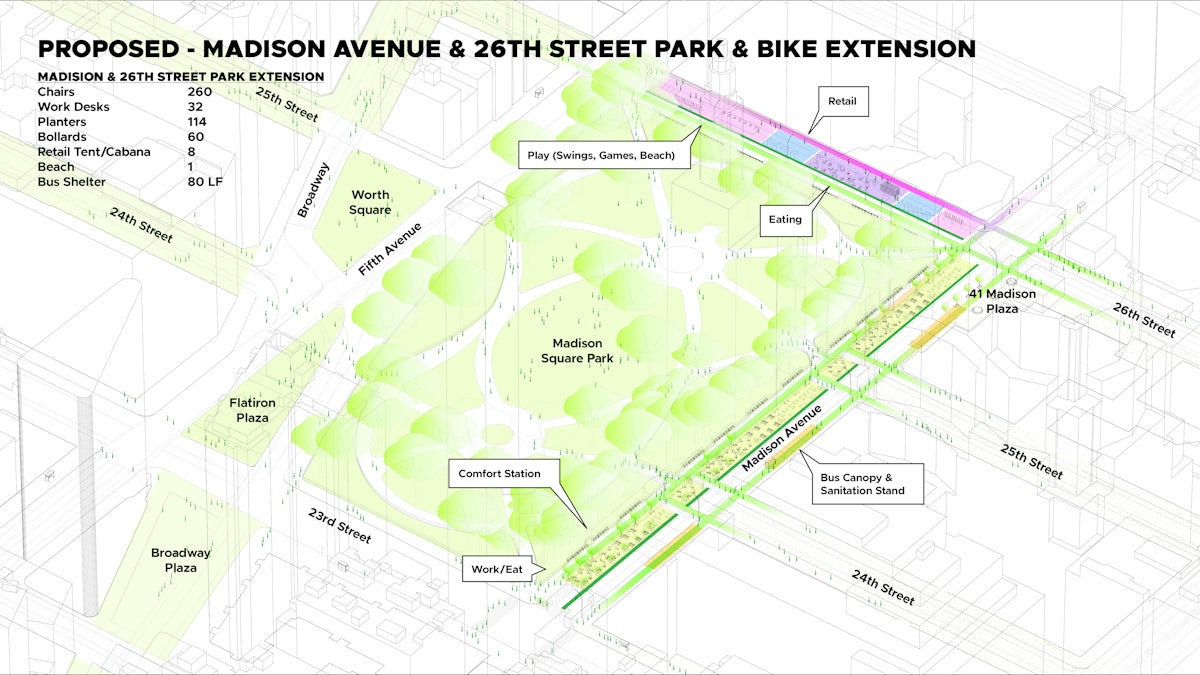 Finally, the Flatiron & NoMad Streetscape Plan is a holistic plan that promoted pedestrian activity and offered a lifeline for businesses and residents for 110 acres of commercial, public, and residential space in New York post the Covid-19 pandemic. The project is successfully communicated with diagrammatic isometrics that convey the overall circulation and functional positioning strategies of the proposal, using text to mark the various programs, furniture and infrastructure interventions.
The votes for the 2025 Vision Awards have been counted! Discover this year's cohort of top architectural representations and sign up for the program newsletter for future updates.
Featured Image: Community 2.0 by UArchitects / Misak Terzibasiyan, Vision Awards, 2025, Editor’s Choice Winner, Architectural Concept – Vision For Community
The post Drawing as Argument: Annotation Returns as Architecture’s Sharpest Tool appeared first on Journal.