







The Subtraction Problem: How MDF Italia and Snøhetta Designed a Sofa From the Inside Out
Architizer is thrilled to announce that the 2026 A+Product Awards is officially open for submissions! Get your products in front of the AEC industry’s most renowned designers by submitting today.
There is a particular kind of minimalism that refuses to explain itself. You encounter it in certain Italian design objects — a table that appears to have no visible means of support, a bookcase whose shelves seem to float independent of structure — and the immediate response is not understanding but disbelief. How is that standing up? Where did everything go?
This is not minimalism as a style, the stripped-back aesthetic you can apply to anything. It is minimalism as a method: a process of removal so rigorous that what remains feels close to impossible. The object works, but you can’t quite see how. MDF Italia has been practicing this discipline since 1992, when founder Bruno Fattorini established the company on principles of formal simplicity and what they now describe as ‘subtraction’ — the elimination of the superfluous to reveal the meaning and soul of objects. The Tense table, reaching up to 13 feet (4 meters) in length, maintains a perfect balance between form and function. The Random bookcase, a design icon in its own right, whose apparent disorder conceals a precise modular logic. The Minima shelving system, an exercise in making structure disappear.
But here is the tension that defines contemporary furniture design: sustainability tends to add. It adds recycled content, which behaves differently in manufacturing. It adds disassembly mechanisms, so components can be separated at the end of life. It adds modularity, so parts can be replaced rather than entire objects discarded. It adds complexity to supply chains, certifications, and traceability. All of this is necessary and good. Yet for a company whose identity is built on taking things away, it poses an interesting problem. How do you make something more — more repairable, more circular, more adaptable — while staying true to a philosophy of less?
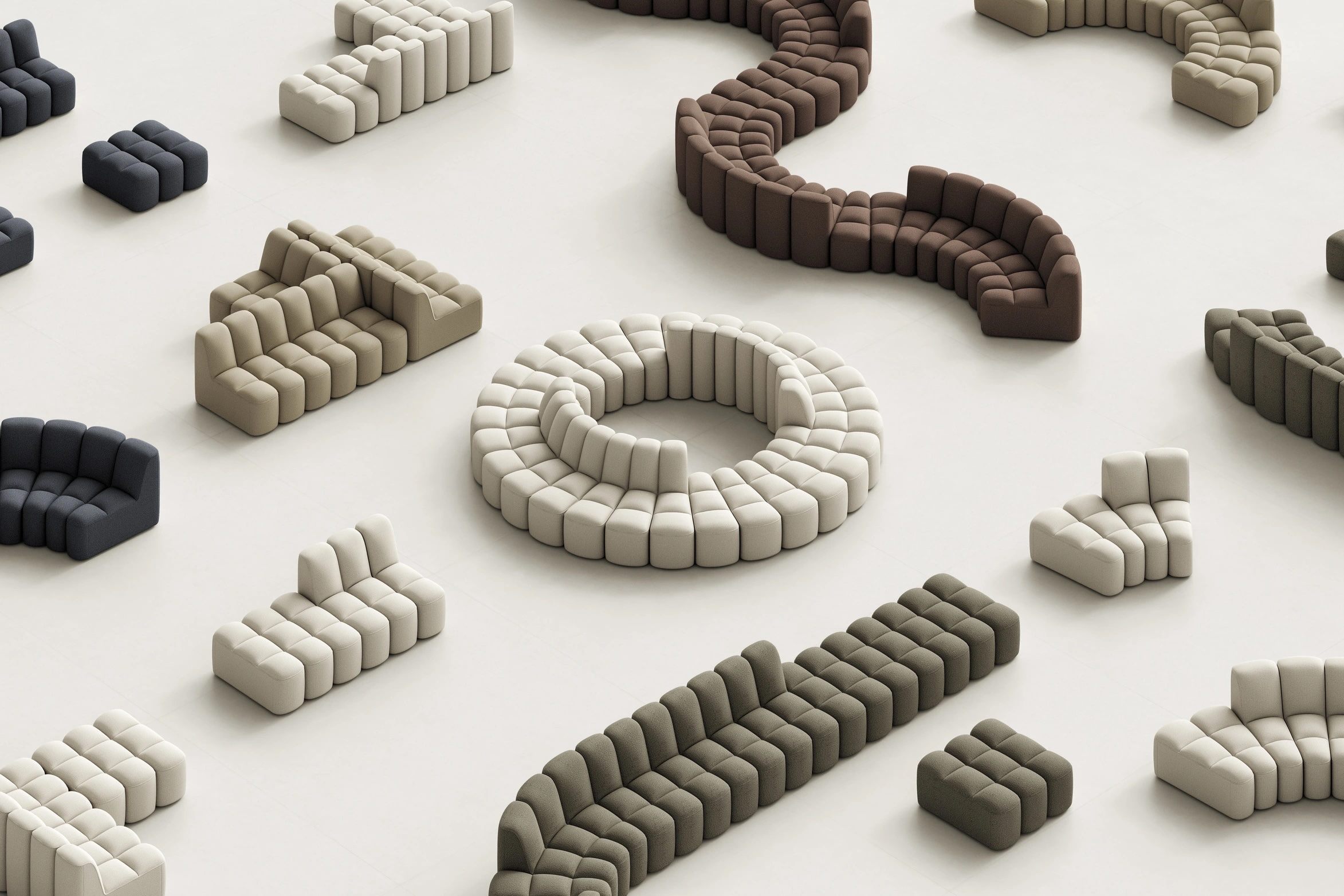
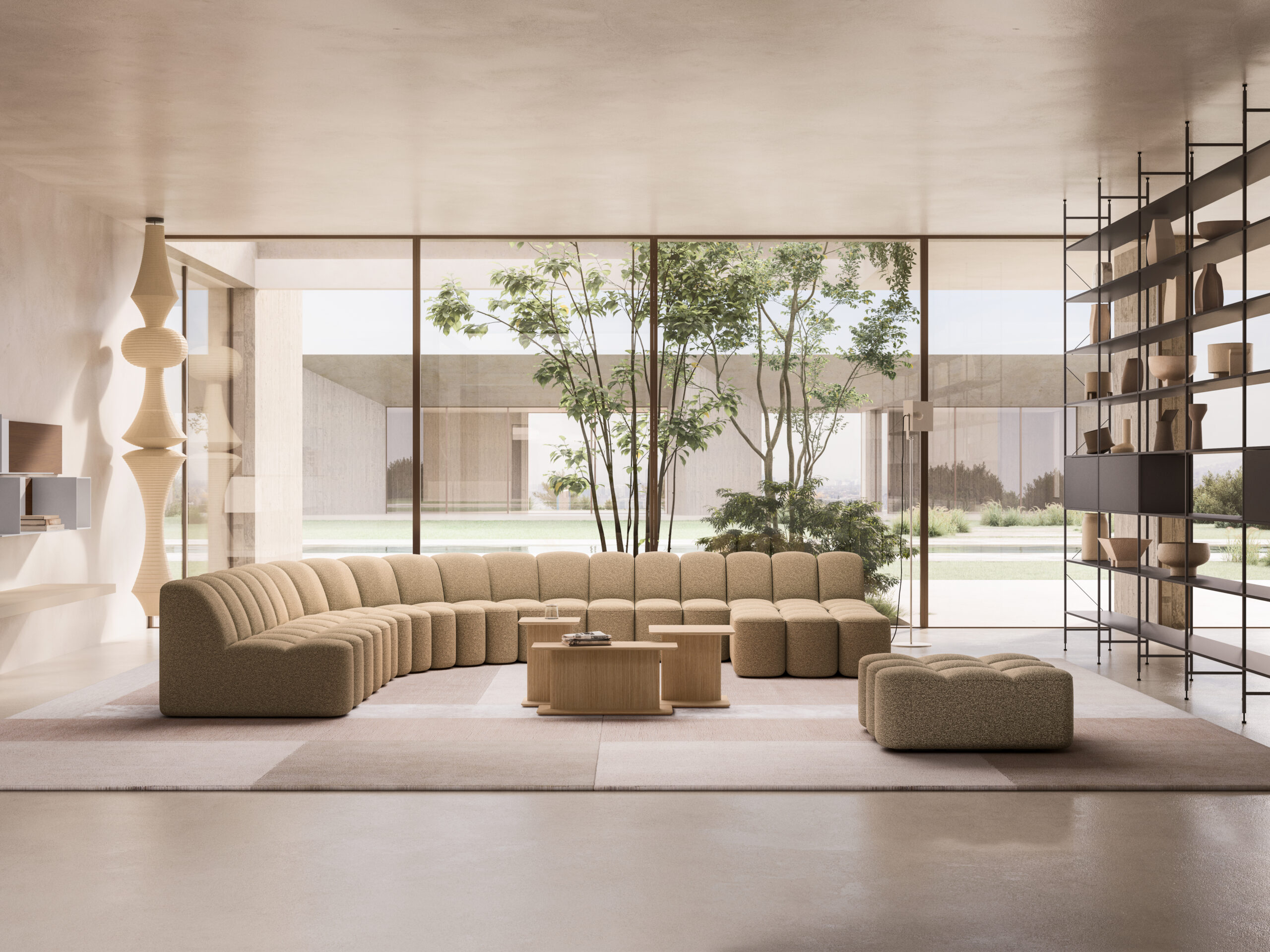
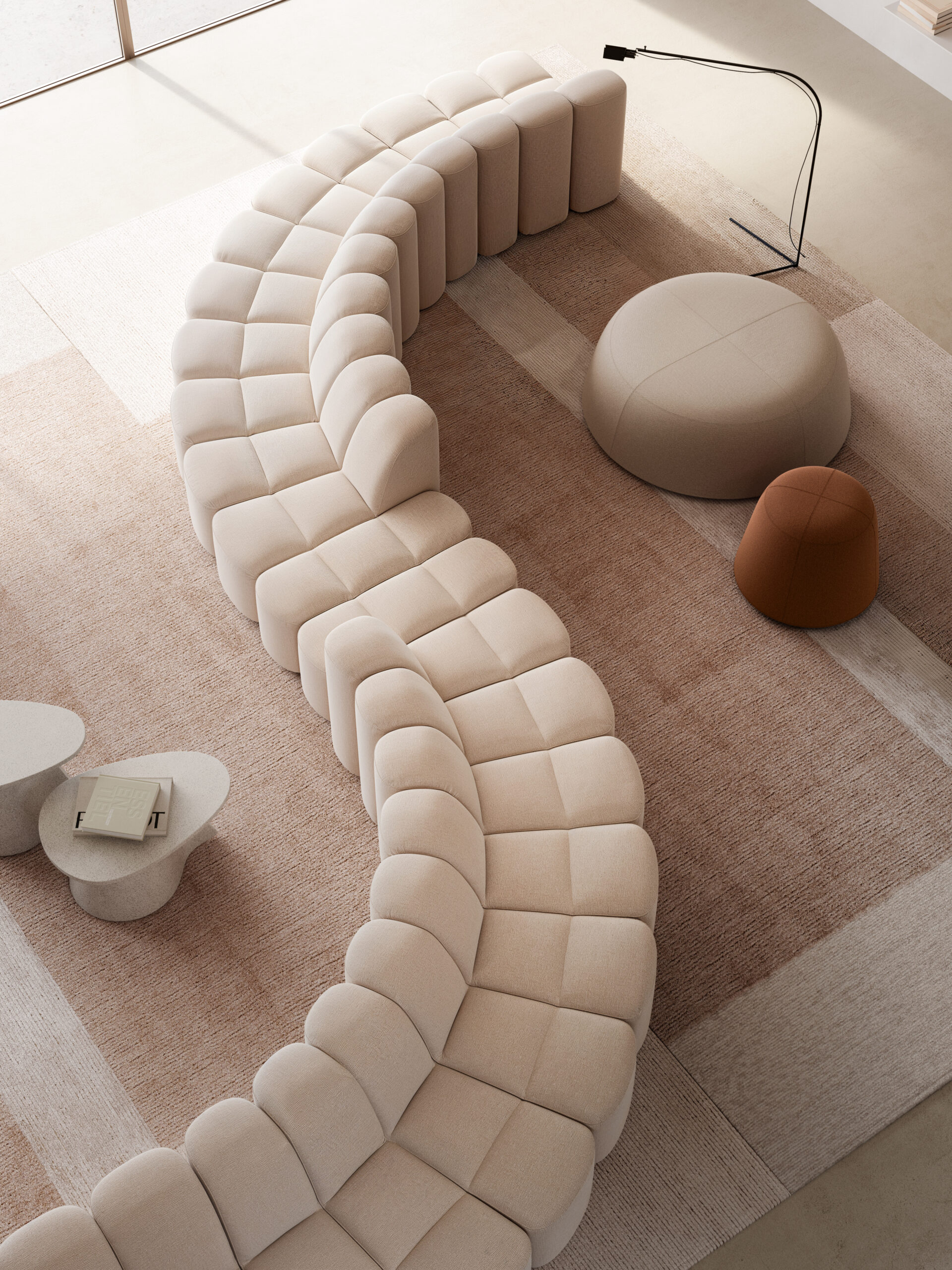
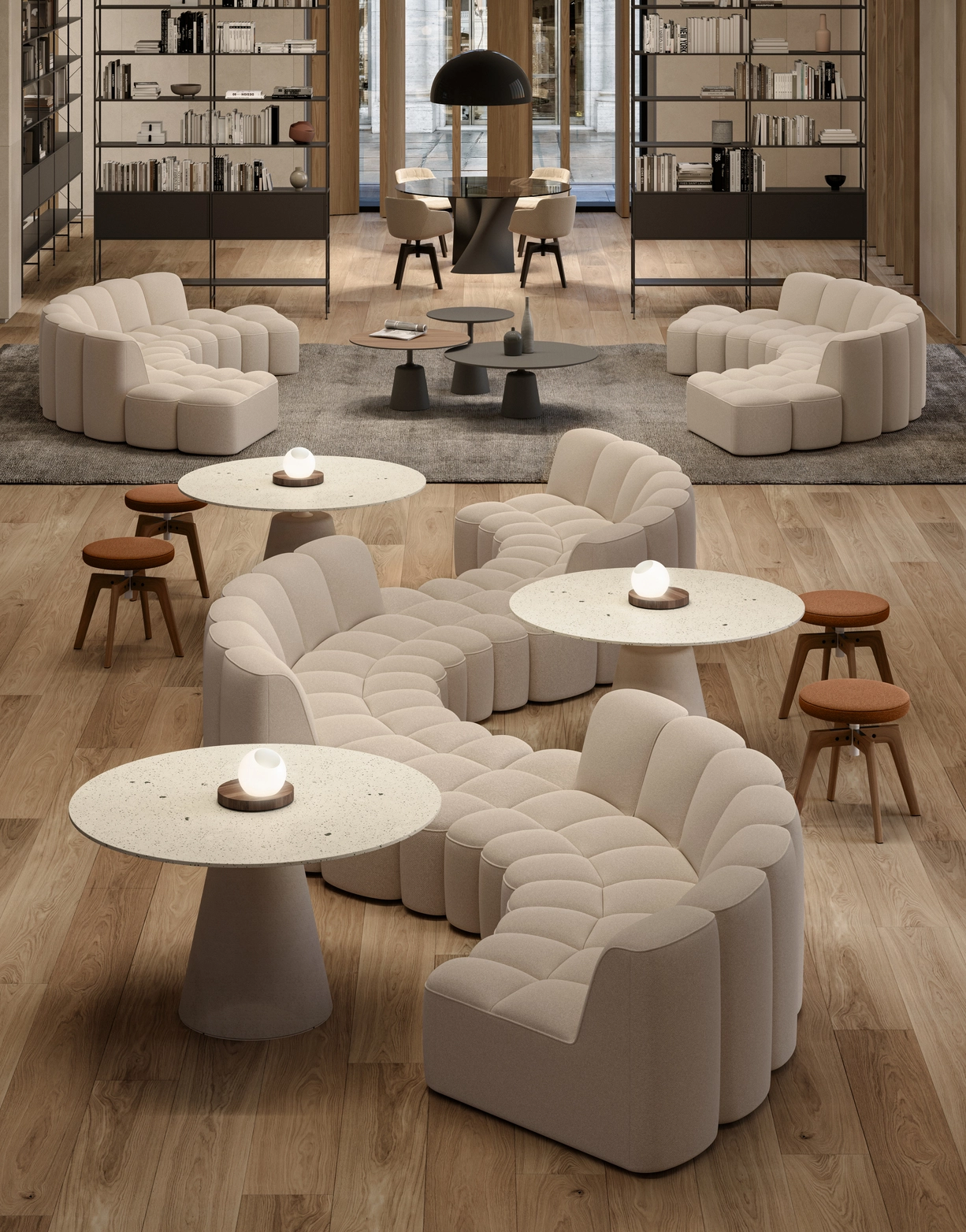 Array, the modular sofa system developed with Norwegian architecture studio Snøhetta and winner of a Jury Award at the 2025 Architizer A+Product Awards in the Furniture Systems category, is MDF Italia’s answer. And the solution, it turns out, is not to add to the surface but to build sustainability into the core — so deeply embedded that it becomes invisible.
The collaboration itself signals a shift in how MDF Italia approaches product development. Snøhetta is not a furniture designer. It is a transdisciplinary architecture practice with over 350 employees across nine studios, responsible for buildings like the Norwegian National Opera in Oslo, the Bibliotheca Alexandrina in Egypt, and the San Francisco Museum of Modern Art expansion. Their product design division, established in 2017 under director Marius Myking, brings an architectural sensibility to objects — a concern not just with form but with how things occupy and interact with space over time.
Architizer spoke with MDF Italia’s Marco Cassina about why a minimalist furniture company sought out architects for its most ambitious sustainability project, what happens when you design a sofa from the inside out, and whether flexibility and purity can coexist in the same object.
 Sam Frew: What prompted MDF Italia to initiate the Array project, and what was the original brief you brought to Snøhetta?
Marco Cassina: The Array project was born from the ambition to go beyond the traditional canons of the sofa, introducing a vision that combines sustainability and innovation with comfort. The initial brief was focused on developing a flexible system, designed to last over time and capable of adapting to different contexts, from residential to contract.
Snøhetta is known for its work across architecture, landscape and product design. What drew you to collaborate with them specifically, and how did their approach align with MDF Italia’s design values?
In recent years, MDF Italia has embarked on a path that has led to collaborations not only with designers but also with major architecture studios. We believe that architects provide a distinctive insight into how an object fits into and interacts with space, opening up perspectives that go beyond the purely formal dimension. In this sense, Snøhetta was a natural choice. Their multidisciplinary approach — ranging from architecture to landscape and product design — mirrors the openness that guides MDF Italia. What attracted us was their holistic and experimental mindset, capable of exploring new aesthetic and technical boundaries without ever losing the formal purity and essentiality that are at the core of our identity.
 How does Array fit into the wider design philosophy and product offering at MDF Italia? What gap or opportunity does it respond to?
At MDF Italia, research and innovation clearly emerge as fundamental elements of the company’s philosophy. Array fits into this journey as a concrete expression of design that preserves the purity of form while opening itself up to multiple interpretations. It responds to the growing need for flexibility, offering a system that adapts to ever-evolving lifestyles while also providing architects and designers with versatile solutions.
What makes Array distinct from other modular sofa systems currently on the market, and how important was flexibility to the final concept?
Each module is conceived as an independent cell within a broader organism. What distinguishes Array is the ease of assembly, the intuitive disassembly, and the possibility of replacing the upholstery — all of which guarantee durability and adaptability. Flexibility was central to the concept: Array is not just a system that adapts, but one that evolves together with those who use it.
From the injection-moulded recycled polypropylene base to the bio-polyurethane foam and hidden fastening system, sustainability is embedded throughout. How did these decisions come together technically, and what challenges did they pose in production?
The project required more than two years of intensive research and engineering. The objective was twofold: to use as little material as possible and to integrate recycled components wherever feasible — such as the recycled polypropylene base and polyurethane foams made with up to 51% recycled content. The real challenge was bringing these elements into industrial production, ensuring an accessible cost while making no compromises on performance or durability.
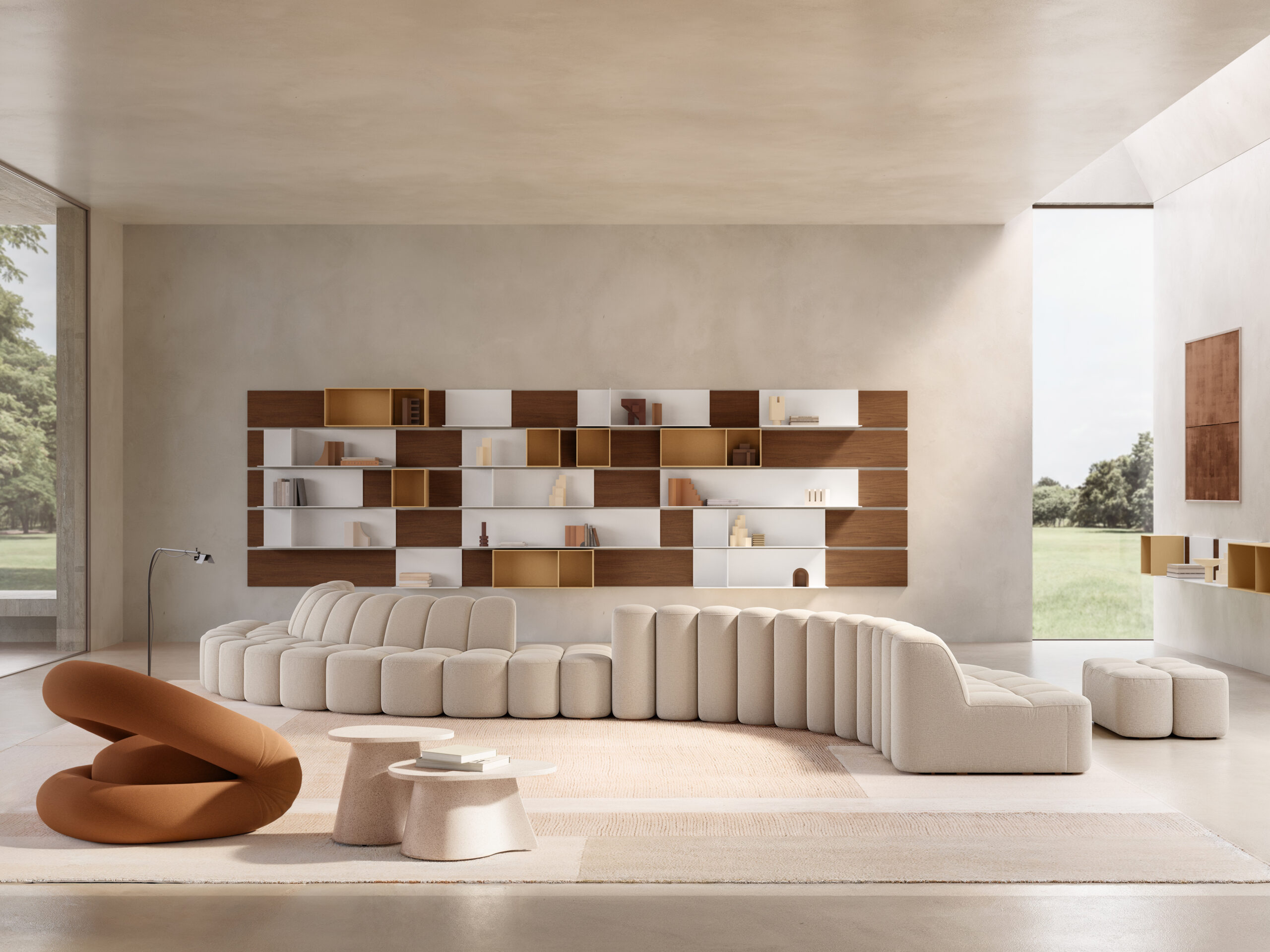 Was the hollow-core structure a functional decision, an environmental one, or both?
Both. On the one hand, the hollow-core structure reduces material usage and therefore environmental impact. On the other hand, it ensures lightness and long-term strength, while also facilitating transport, storage, and assembly.
Array challenges conventional ideas of comfort. How do you define comfort as a manufacturer today, and how did that influence this design?
For MDF Italia, comfort today has a 360-degree dimension. It is not only about ergonomics but involves all the actors in the process: from design to production, through logistics and installation. With Array, this vision translated into a system that is comfortable not only in use but throughout all phases of the process, from transportation through to installation.
What aspects of working with Snøhetta helped push the boundaries of what was possible with this system — creatively or technically?
Working with Snøhetta allowed us to adopt a completely different approach to product design. We did not start from a form, but from a concept, from a sociological reflection on how furniture can impact and interact with people’s lives. For MDF Italia, this was an entirely new design modality, capable of pushing boundaries both creatively and technically.
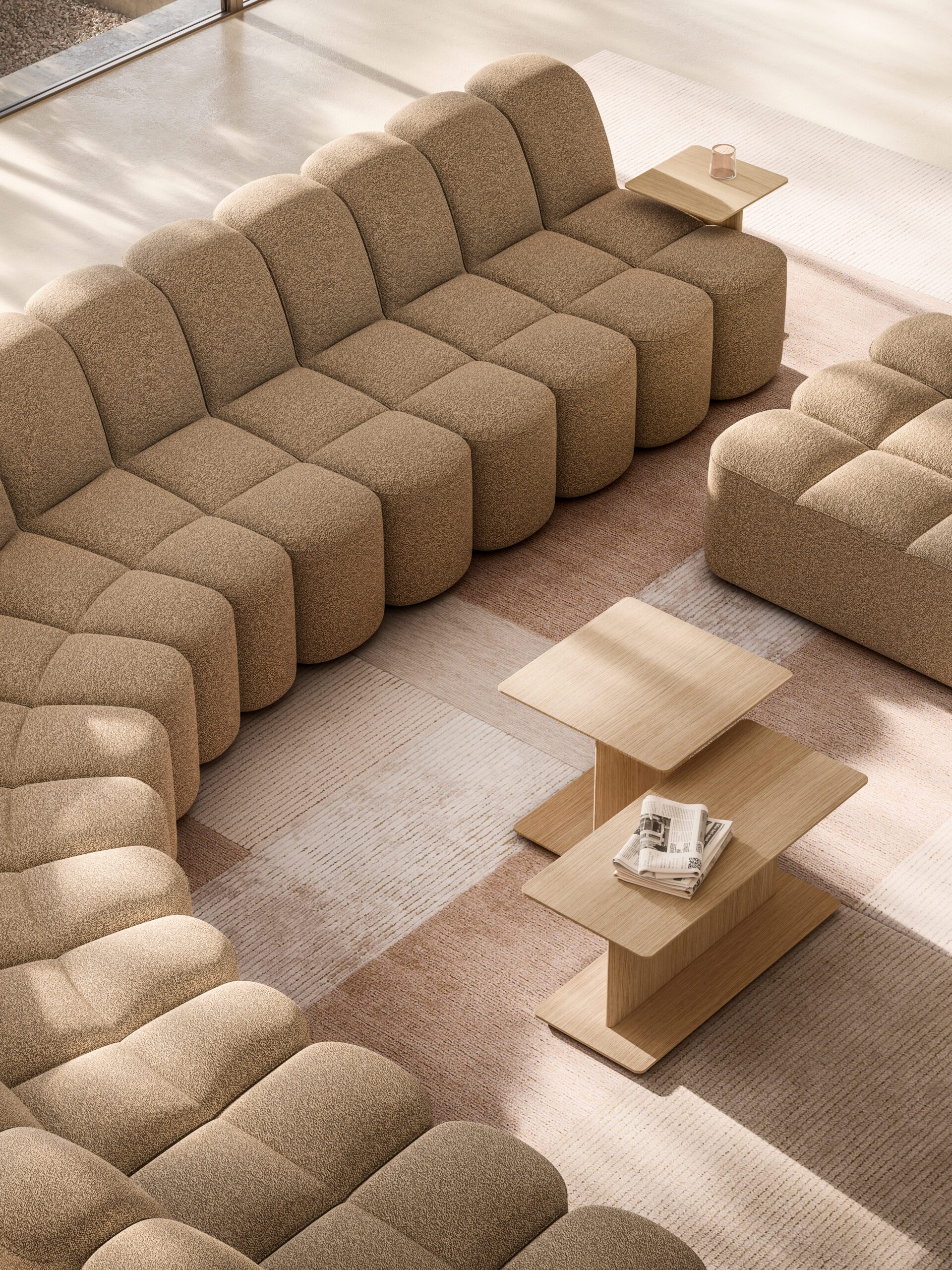 How do you see Array evolving over time? Do you imagine additional modules or adaptations in response to market demand?
Array was conceived as an open system, destined to expand and evolve over time. Together with Snøhetta, we are already considering future developments of the project.
Has the system changed the way you think about future product development, especially with regard to environmental responsibility and end-of-life design?
Yes, it has reinforced the importance of considering the entire product life cycle from the earliest design stages. Array stands as a reference point for a future where aesthetics, functionality, and environmental responsibility are inseparable.
What did recognition at the Architizer A+Product Awards mean to you, and what would you say to other manufacturers considering participating?
It was a significant confirmation: Array was recognized as an innovative project not only by the public but also by industry professionals. The award gave the system additional visibility, enhancing its journey. For other manufacturers, it is an opportunity to gain exposure, strengthen brand identity, and open up to new collaborations.
Architizer is thrilled to announce that the 2026 A+Product Awards is officially open for submissions! Get your products in front of the AEC industry’s most renowned designers by submitting today.
The post The Subtraction Problem: How MDF Italia and Snøhetta Designed a Sofa From the Inside Out appeared first on Journal.