













The Anatomy of an Outstanding AI-Assisted Rendering
The votes for the 2025 Vision Awards have been counted! Discover this year's cohort of top architectural representations and sign up for the program newsletter for future updates.
Since the AI bloom, AI-assisted rendering has been at the forefront of architectural discussions, debating its immense — and oftentimes dangerous — impact on architectural practice. Meanwhile, architects and designers have been experimenting with countless AI rendering tools, producing both exceptional imagery rooted in architectural thinking and work that is merely eye-catching, visually seductive and ultimately shallow.
Using Architizer’s Vision Awards winners as a lens, this article reflects on the architectural process behind the images, “dissecting” the qualities that elevate an AI-assisted rendering from a mere algorithmic output to a work that truly stands out. Without further ado, here are the five best practices that architects should follow to produce exceptional results.
1. Start with a Strong Architectural Premise (Not a Prompt Gimmick)
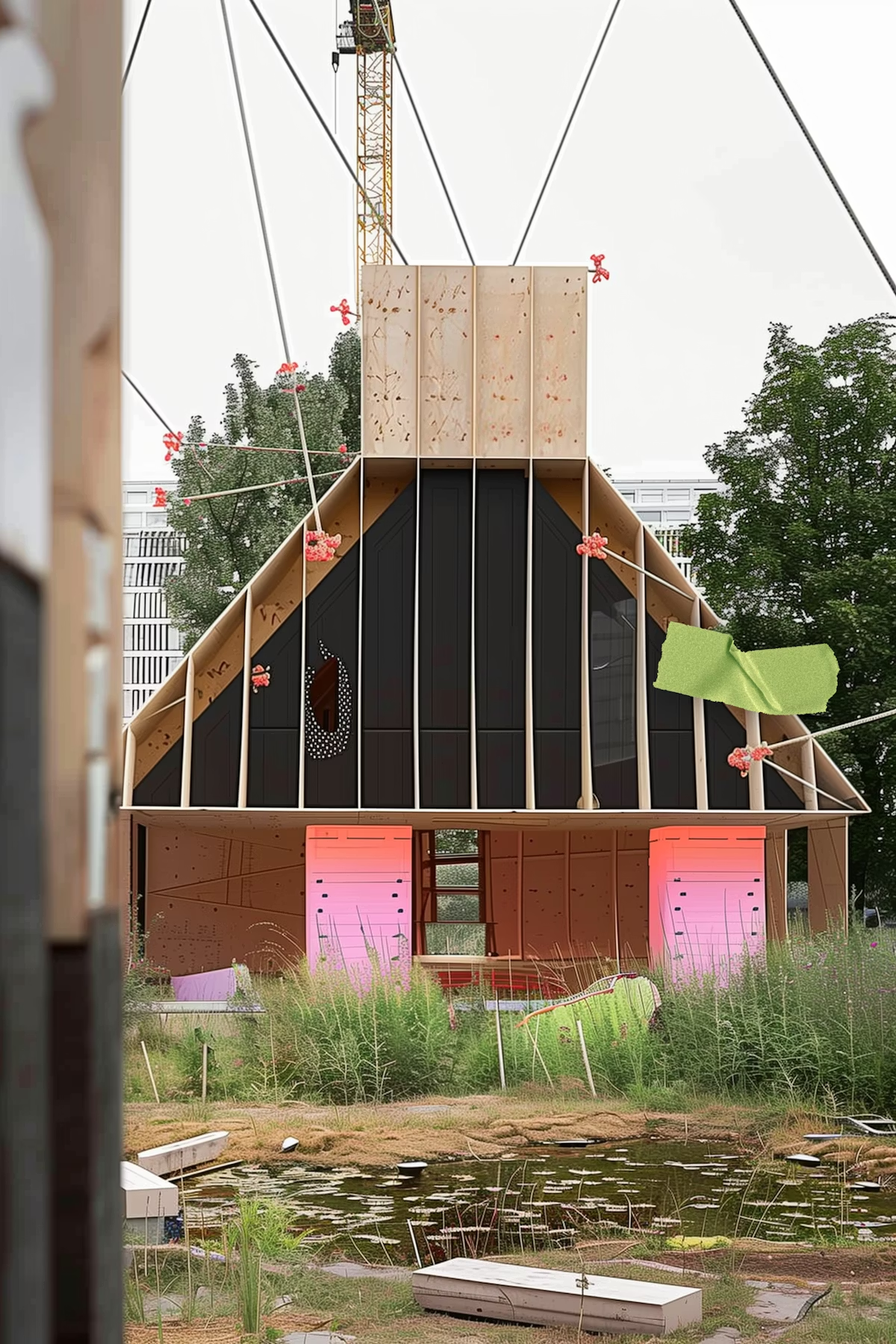
Gifting, ghosting, and giga-waste by Eilís Finnegan, 2025 Vision Awards, Finalist, AI-Assisted Rendering
Ideas and a clear premise are everything. Prior to writing any sort of prompt, constructing a strong narrative describing the space, the program, the structure, or the inhabitation is key in producing images that are driven by architectural thinking rather than the desire to simply provoke or impress.
One good practice could be to pose the simple question of what the design is trying to achieve. Is it reimagining an existing infrastructure or perhaps revealing the tension between public and private space in a specific city? Regardless, what matters is that the image is answering a design question and that architects use AI tools to accelerate or sharpen the spatial intent and not substitute the design authorship. Finally, taking it a step further, AI renderings can become the perfect lenses through which architecture can tackle the bigger questions — about society, climate, infrastructure and so forth — resonating beyond the immediate design.
Best practice: Use AI to develop and articulate a concept, not to replace the act of having one.
2. Anchor Surrealism in Physical Logic
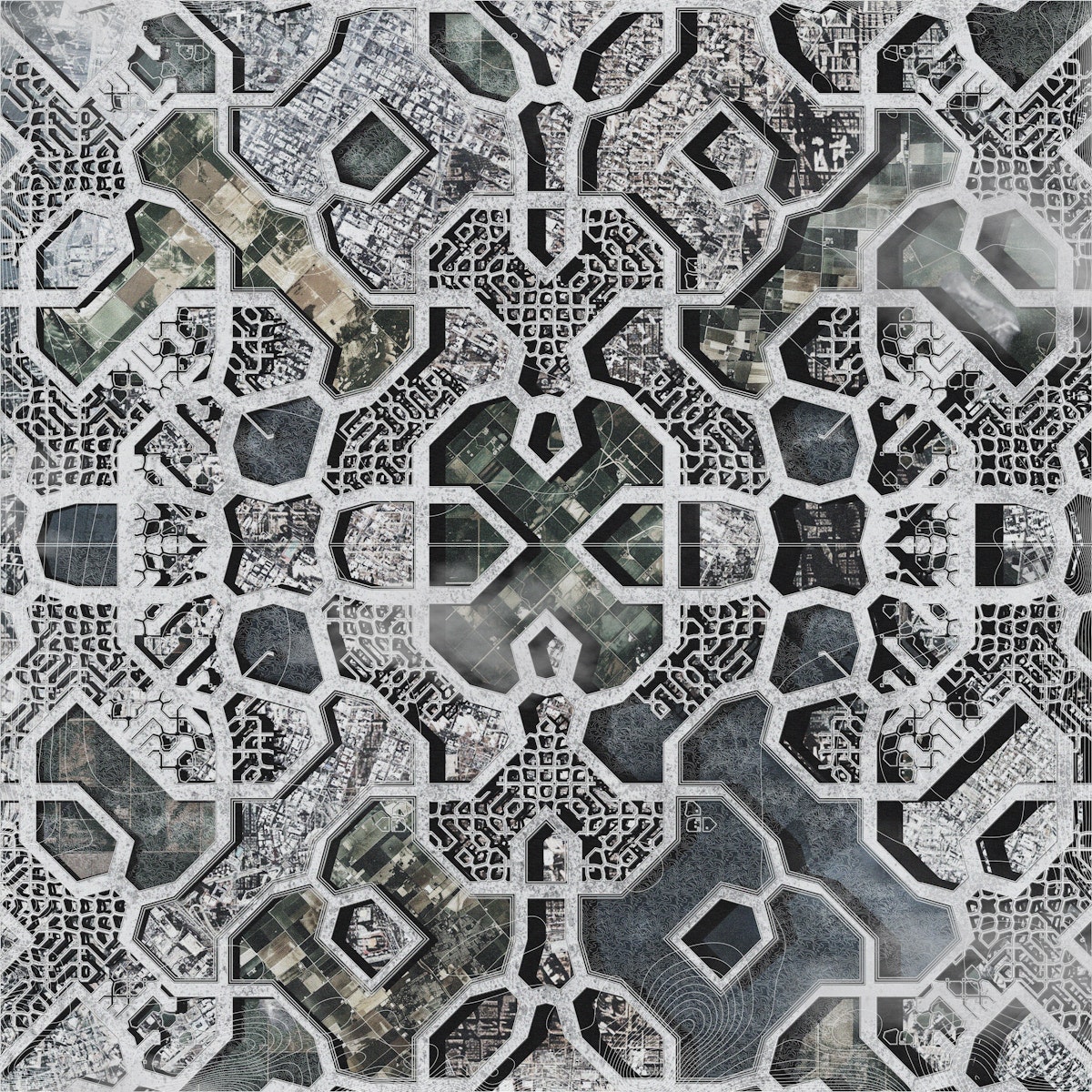
Disruptive Peri-scapes: An Exploration of Phantom Futures by Shelby Lewis, 2025 Vision Awards, Finalist, AI-Assisted Rendering
With AI, the possibilities are endless. Architects can make structures fly, bend and twist in any way they want. Albeit these tools allow them to explore morphologies and possibilities without considering real-world constraints, this mode of production holds a very dangerous trap: creating images that are visually seductive but ultimately stray far from any plausible or structural logic, making it hard for people to inhabit them.
In contrast, by constructing an image where the physics feel plausible, the viewer can accept and therefore identify the emerging scenario. Water that follows gravity, objects moving in directions that seem possible, and even using the right amount of daylight in specific scenes, can turn a half-coherent rendering into an image that resonates with real-world logic
Best practice: Let AI bend reality, but only after you’ve grounded it in structural, material and environmental logic.
3. Compose Like a Photographer, Not an Algorithm
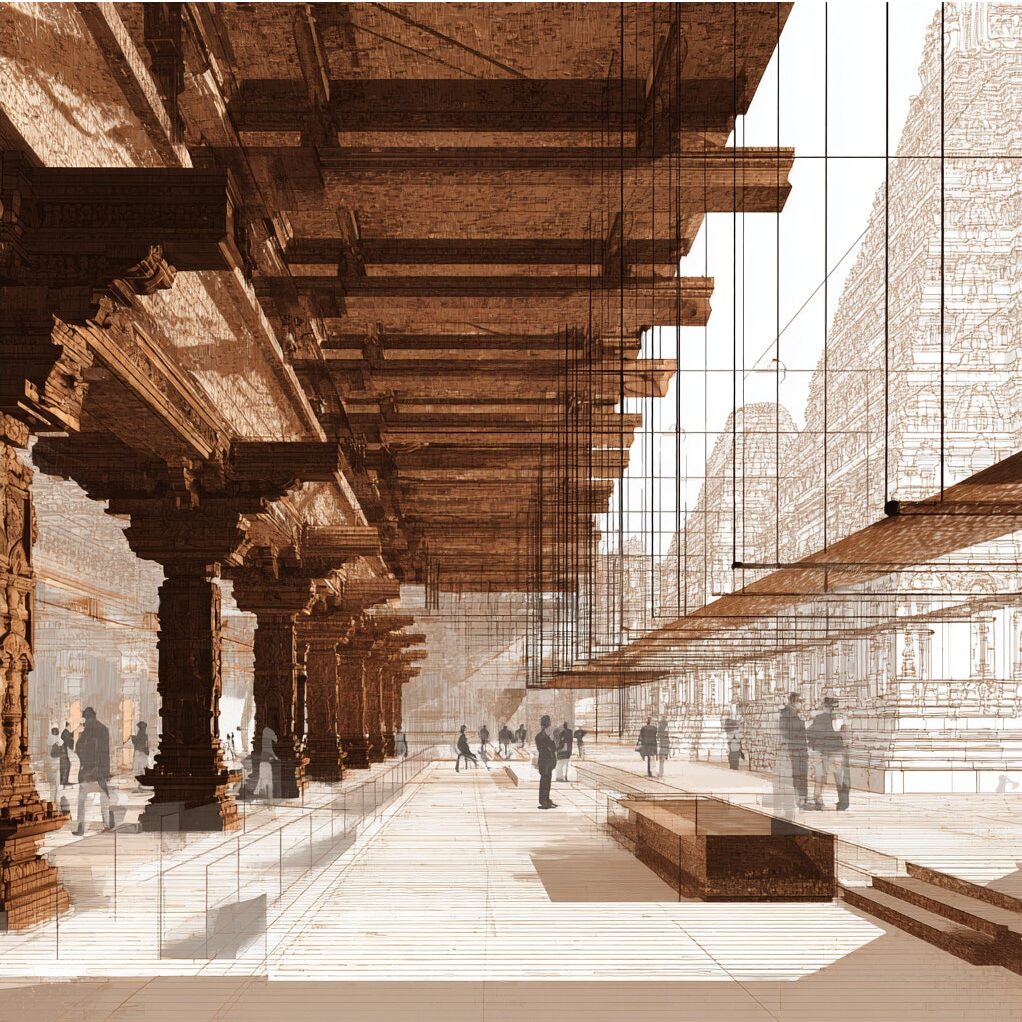
Unraveled Texts: A Museum of Tamil Literature and Living Memory Thanjavur, Tamil Nadu, India by Madhubala Ayyamperumal, 2025 Vision Awards, Special Mention, AI-Assisted Rendering
Naturally, like any traditional rendering, the composition should follow common photographic principles. Images should be composed in very human ways. For instance, it is important to form a clear foreground-midground-background layering, balance exposure and silhouettes and create points of view that allow the viewer to “enter” the image. In doing so, architects can use specific framings to communicate their narrative and intent more deliberately, rather than allowing AI to dictate arbitrary views and perspectives.
Best practice: Treat AI outputs as raw photographic material, i.e., frame, crop, and curate aggressively.
4. Populate Space with Meaningful Human Presence

Freeway_Carpools by Greg Tate, 2025 Vision Awards, Jury Winner, AI-Assisted Rendering
Placing human figures in renderings has always been a pain point for architects. It is usually a last-minute addition, frantically searching for “interesting .png files” that could populate a rendering or a drawing. However, with AI, architects can generate any type of figure they want. If the design is situated on an extraterrestrial planet, then the figures populating it could be alien beings. If the structure sits underwater, then perhaps mermaids could be the figure of choice. Regardless, AI enables architects to populate their renderings strategically by not being merely an afterthought but instruments that convey narrative, tension and emotion.
Best practice: Use people to communicate use, mood, and stakes – not just scale.
5. Use Lighting and Color to Control Emotion
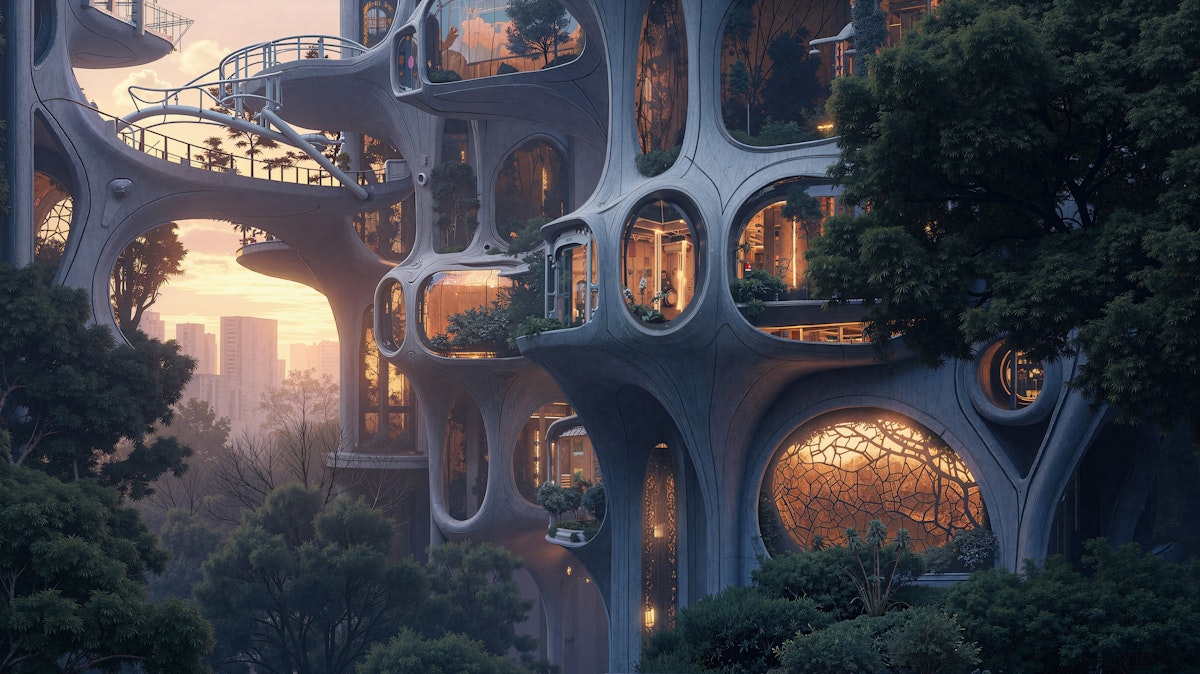
Symbiotic Aesthetics by FTG Studio, 2025 Vision Awards, Special Mention, AI-Assisted Rendering
In traditional rendering workflows, color-grading and lighting come after, in post-production. On the other hand, AI tools can easily integrate lighting settings and filters, not by tweaking numbers and changing lumen values but by communicating the intended mood or atmosphere. Throughout all the Vision Awards Winners, the lighting complements the narrative. Warm, soft hues are used to convey calmness, while sharper colors are equated with chaos or intensity. The result is a reminder that “setting up the mood” in AI is not accidental; it is a deliberate choice that can either elevate or undermine the overall architectural narrative.
Best practice: AI is exceptionally good at lighting, but only when guided. Decide the emotional tone first, then push AI lighting and color toward that singular goal.
In the end, excellence in AI-assisted rendering has little to do with how well and sophisticated architects can use the tool, but has everything to do with their intention. Using AI as a catalyst rather than a shortcut is the key to maintaining authorship and also expanding a design’s reach – and these five best practices could be the start for achieving this.
The votes for the 2025 Vision Awards have been counted! Discover this year's cohort of top architectural representations and sign up for the program newsletter for future updates.
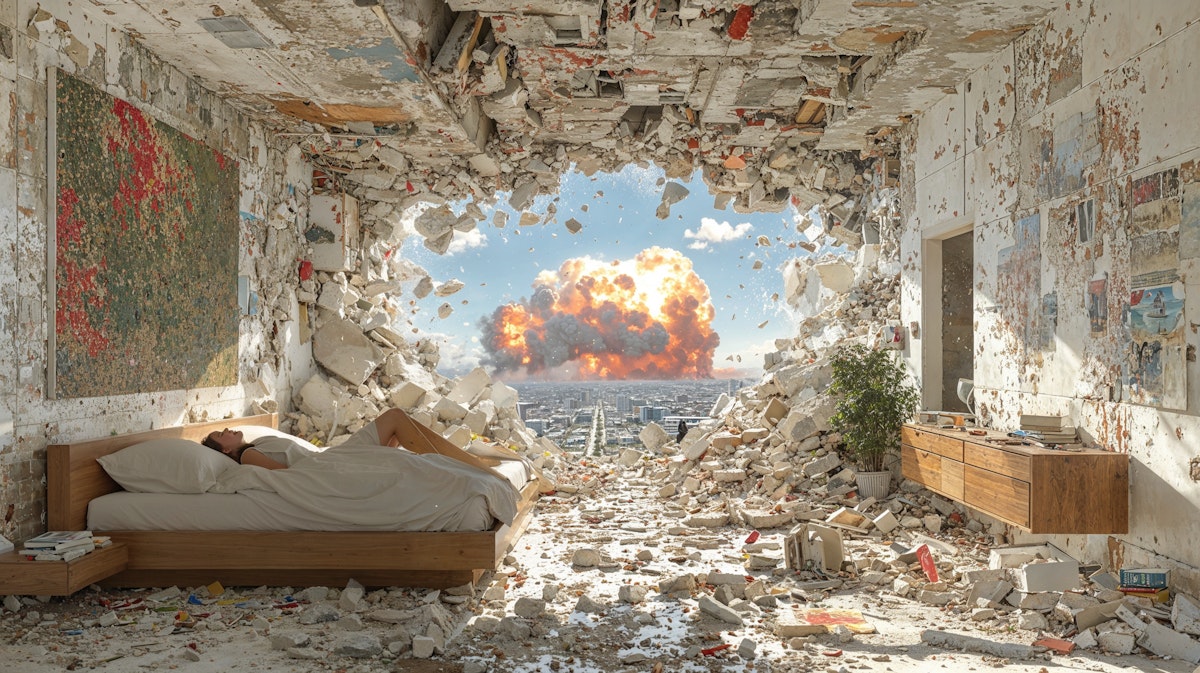
Featured Image: Shelter/Weapon by Maryam Liaghatjoo, 2025 Vision Awards, Editor’s Choice Winner, AI-Assisted Rendering
The post The Anatomy of an Outstanding AI-Assisted Rendering appeared first on Journal.