
















Local Knowledge and Ecological Context: City Making Lessons from Chicago’s Wild Mile

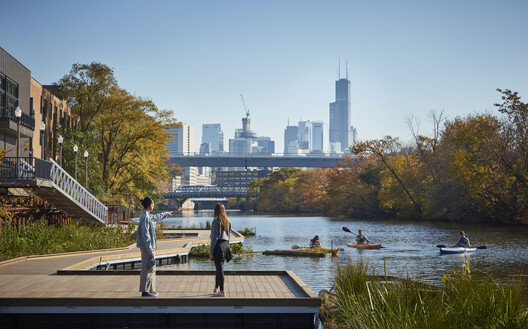
 Wild Mile / Skidmore, Owings & Merrill + Urban Rivers. Image © Dave Burk | SOM
For more than a century, residents of growing American cities reshaped their rivers to serve industrial and manufacturing needs. Waterways were straightened, deepened, paved, or buried to support shipping routes and to move materials efficiently across regions. These transformations created an urban landscape in which rivers were treated as productive infrastructure rather than as living ecological systems.
This approach left a lasting imprint. Riparian habitats disappeared, water quality declined, regional biodiversity grew vulnerable, and communities grew accustomed to river corridors dominated by steel walls and concrete channels. The industrial reshaping of rivers in places such as Chicago, Los Angeles, and the Mississippi basin created durable patterns of development that still influence how cities function today.