






Lighting made from Chinese medicine waste among projects from Politecnico di Milano
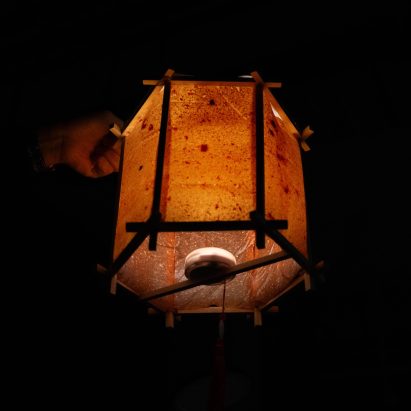
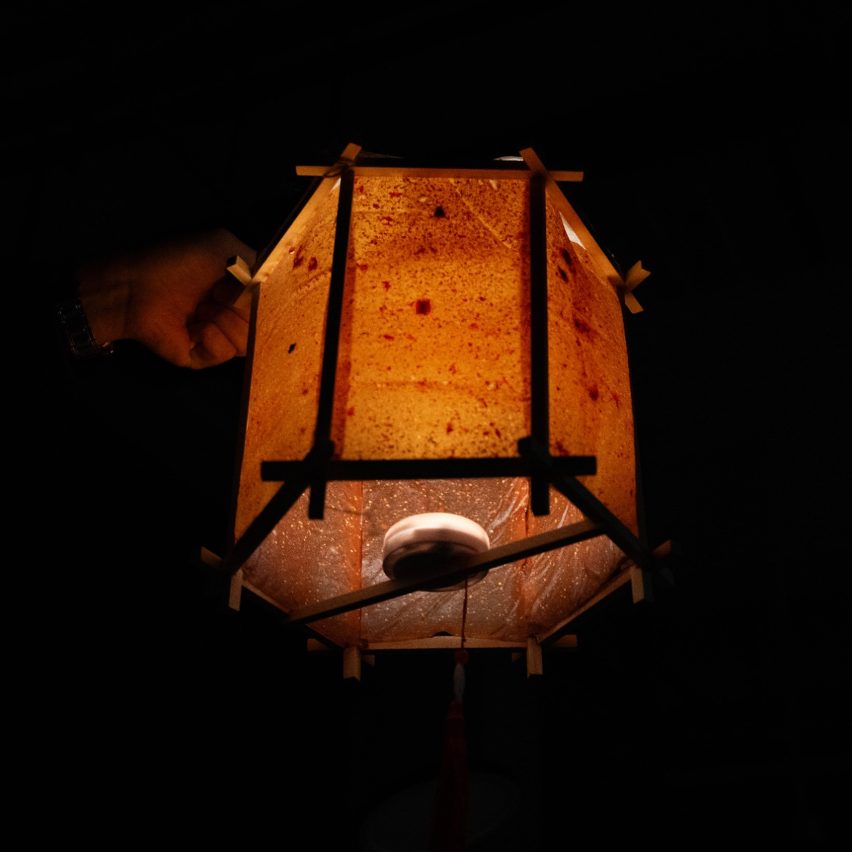
Dezeen School Shows: a light made from organic waste from traditional Chinese medicine is among the projects by students at Politecnico di Milano.
Also featured is a modular mycelium habitat for sparrows, and materials made from salmon bones, skin and scales sourced from Japanese restaurants.
Politecnico di Milano
Institution: Politecnico di Milano, Design Department – Poli.Design
Course: Materials Design for Transition
Tutors: Valentina Rognoli, Sofia Soledad Duarte Poblete, Chengjun Li, Ziqian Yu, Malu Luecking and Francesco Cianfano, with the support of the Madetrans research group
School statement:
"Materials Design for Transition (Madetrans) is a research group based at the Department of Design of Politecnico di Milano.
"Founded in 2015 around the DIY-materials approach and led by Valentina Rognoli, the group investigates materials design as a central design practice, positioning its work at the intersection of sustainability, ecology, biodesign and regeneration.
"Its activities are also supported by the Biodesign Lab (B.Lab), the first laboratory dedicated to biodesign within the department of design.
"Through materials-driven and material-centred approaches, Madetrans develops theoretical frameworks, educational methods and hands-on experiments that foster new cultures of materiality.
"The group encourages designers to move beyond exclusively human-centred perspectives towards more-than-human and multispecies approaches, recognising ecosystems, living organisms and their interdependencies as active participants in design processes.
"Its interdisciplinary team brings together industrial and product designers, design engineers and fashion-system specialists, contributing diverse perspectives on material intelligence and its role in sustainable and regenerative futures.
"This selection presents ten student projects developed across courses in materials-driven design and biodesign. Through experimentation, speculation and applied proposals, they embody Madetrans' vision of materials design for transition and highlight an emerging field rooted in interdisciplinary collaboration, ecological thinking, biodesign and nature-driven innovation for broader systemic impact."
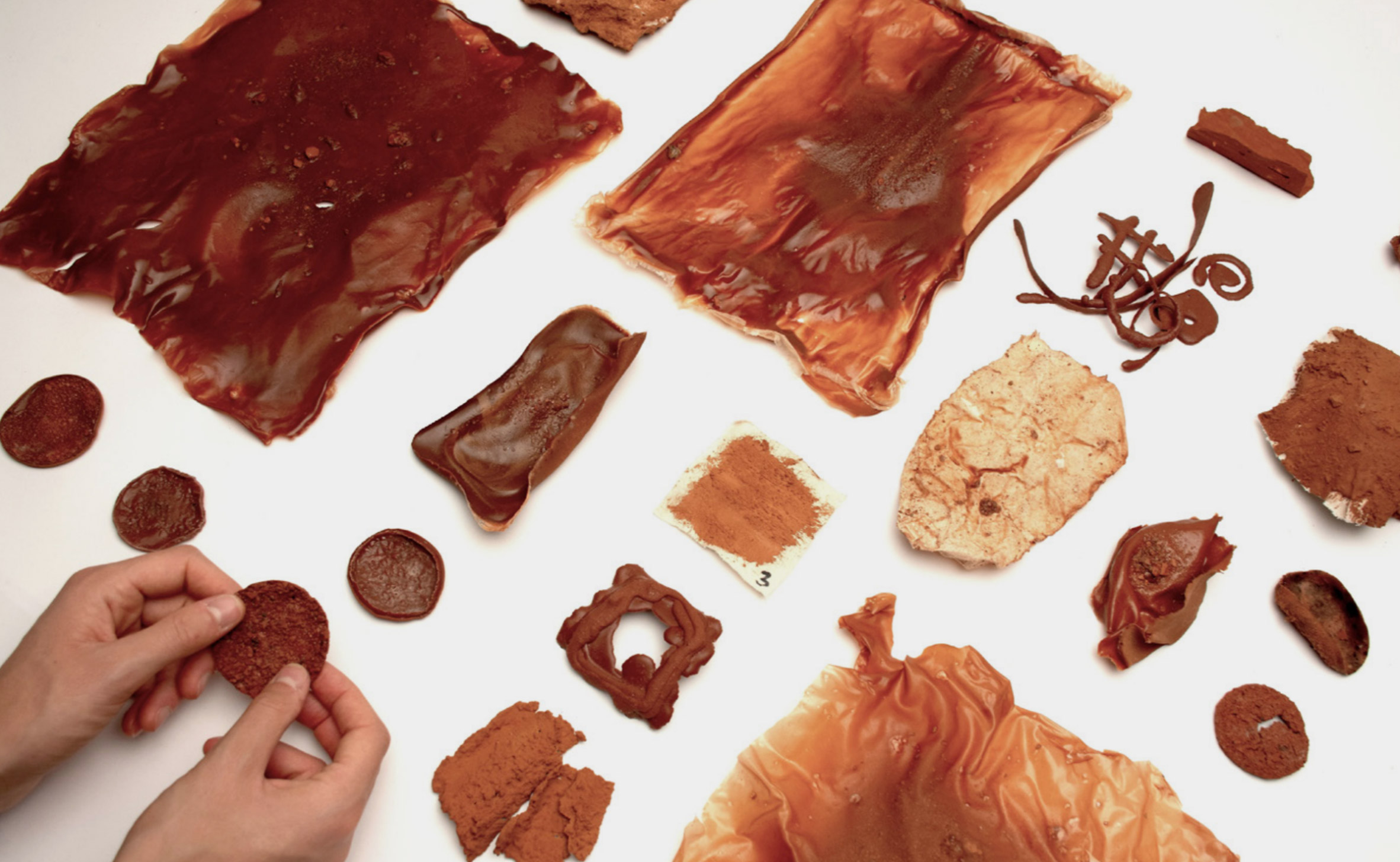
Reclaym by Anastasia Prozorova, Ivanna Harulia, Giulia Fabro and Marta Figueiredo
"Reclaym transforms discarded brick waste into a versatile material that combines structural resilience with tactile and aesthetic expression.
"Reclaimed bricks are pulverised into fine powder and mixed with different binders and aggregates to explore new formulations, textures and sensory qualities.
"The resulting samples retain the strength and memory of the original material while appearing unexpectedly soft, light or fragile.
"By inviting touch and challenging visual assumptions, the project reframes construction waste as a medium for creativity rather than merely a sustainable substitute.
"Reclaym demonstrates how reclaimed brick can bridge functionality, material experience and artistic experimentation in contemporary design and architecture."
Students: Anastasia Prozorova, Ivanna Harulia, Giulia Fabro and Marta Figueiredo
Course: Towards Regenerative Materials Driven Futures: Biodesign and Nature-Inspired Solutions
Tutors: Valentina Rognoli, Sofia Soledad Duarte Poblete, Malu Luecking and Francesco Cianfano
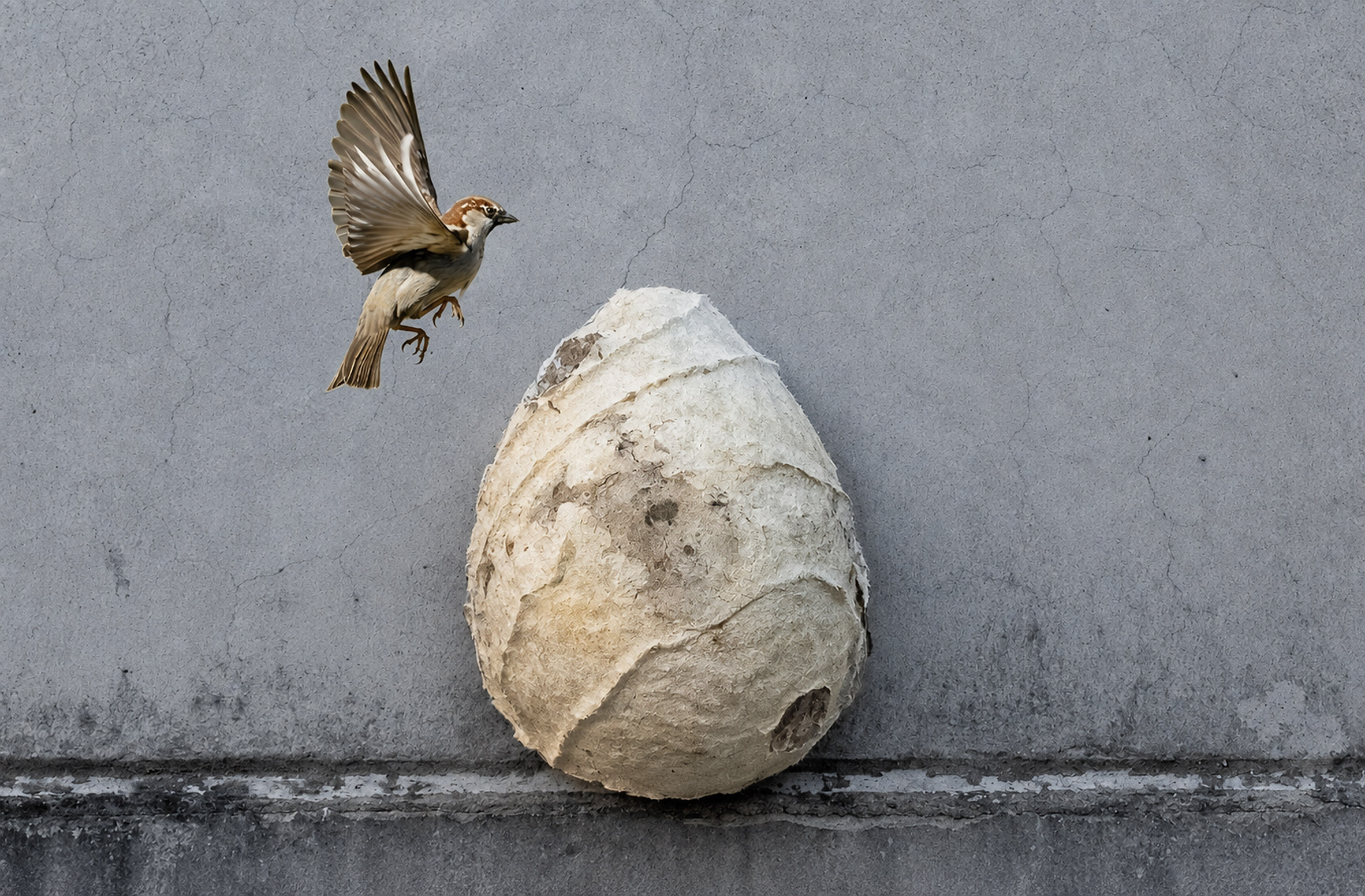
Mycelli by Golab Aminialiabadi, Rocco Carraro, Brigitte Guarneri, Keren Karsa, Shyam KS and Elena Pellegrini
"Mycelli explores mycelium as a responsive living material and a temporary interface for urban regeneration.
"Developed through observation, experimentation and material-led decision-making, the project embraces growth, unpredictability and multispecies interaction rather than imposing predetermined forms.
"It proposes a modular mycelium habitat integrated into architectural facades to support declining Italian sparrow populations in Milan.
"Designed for a six-month lifespan, the structure provides nesting space before gradually decomposing, after which its fibrous material can be reused by birds.
"By combining thermal, acoustic and electromagnetic performance with ecological function, Mycelli reframes architecture as a temporary mediator within regenerative urban ecosystems and multispecies coexistence."
Students: Golab Aminialiabadi, Rocco Carraro, Brigitte Guarneri, Keren Karsa, Shyam KS and Elena Pellegrin
Course: Towards Regenerative Materials Driven Futures: Biodesign and Nature-Inspired Solutions
Tutors: Valentina Rognoli, Sofia Soledad Duarte Poblete, Malu Luecking and Francesco Cianfano
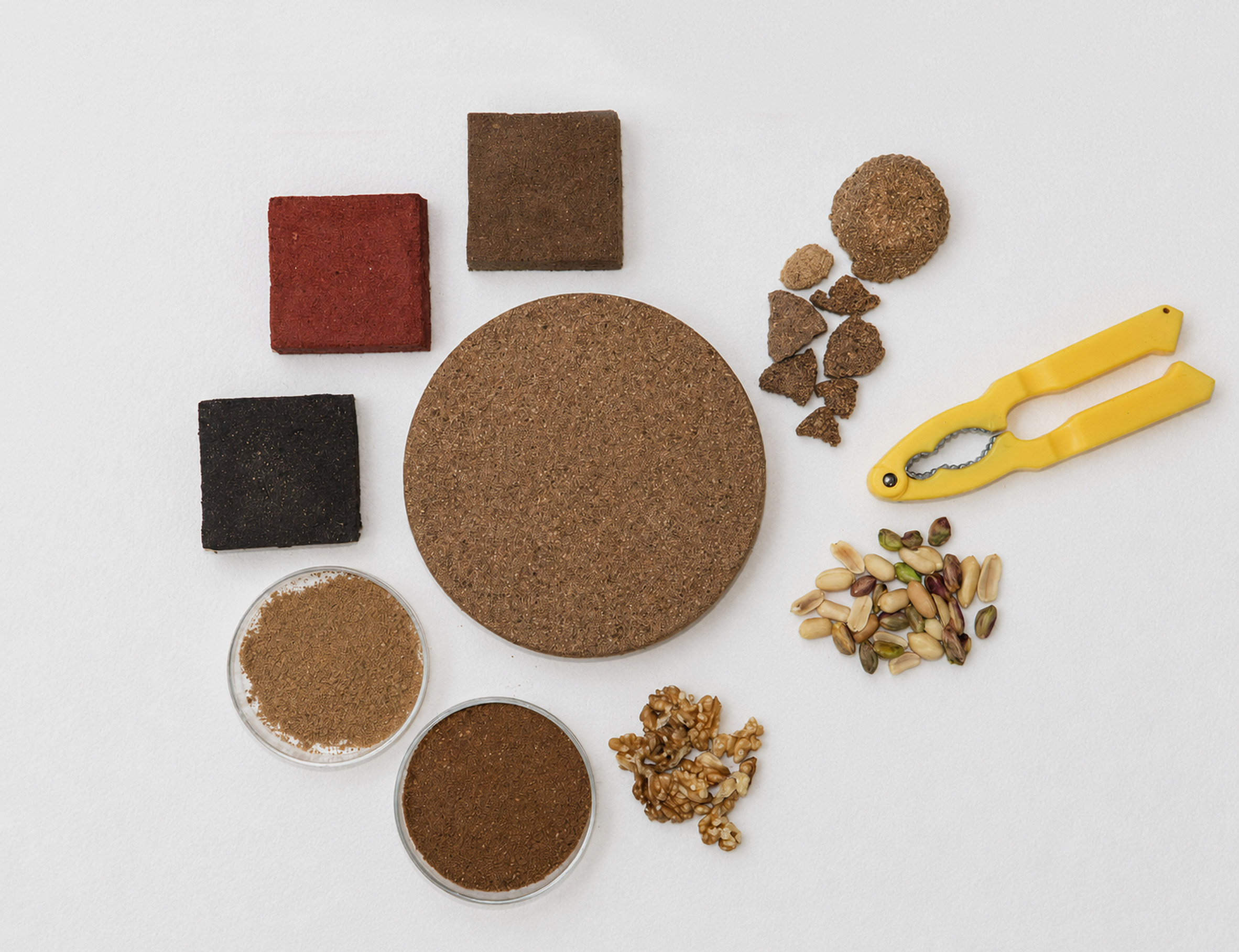
Whynut by Nicole Dalle Molle, Giulia Luppi, Selma Wittermann and Mrunal Deshpande
"This project investigates nutshell waste as a resource for circular material systems.
"Through material characterisation and iterative experimentation, different formulations and processing methods were tested to assess structural, tactile and aesthetic qualities.
"The resulting composite showed rigidity, texture and surface characteristics comparable to wood-based materials, suggesting applications as a decorative finish.
"Beyond material development, the project proposes a regenerative system linking food production, waste collection, processing and furniture restoration.
"Rather than creating new objects, it upcycles existing furniture by replacing worn components with nutshell-based surfaces, preserving embedded value while reducing virgin material use, extending product lifespans and minimising further waste."
Students: Nicole Dalle Molle, Giulia Luppi, Selma Wittermann and Mrunal Deshpande
Course: Materials x Transition in the Master of Design for Sustainability and Regeneration
Tutors: Sofia Soledad Duarte Poblete and Valentina Rognoli
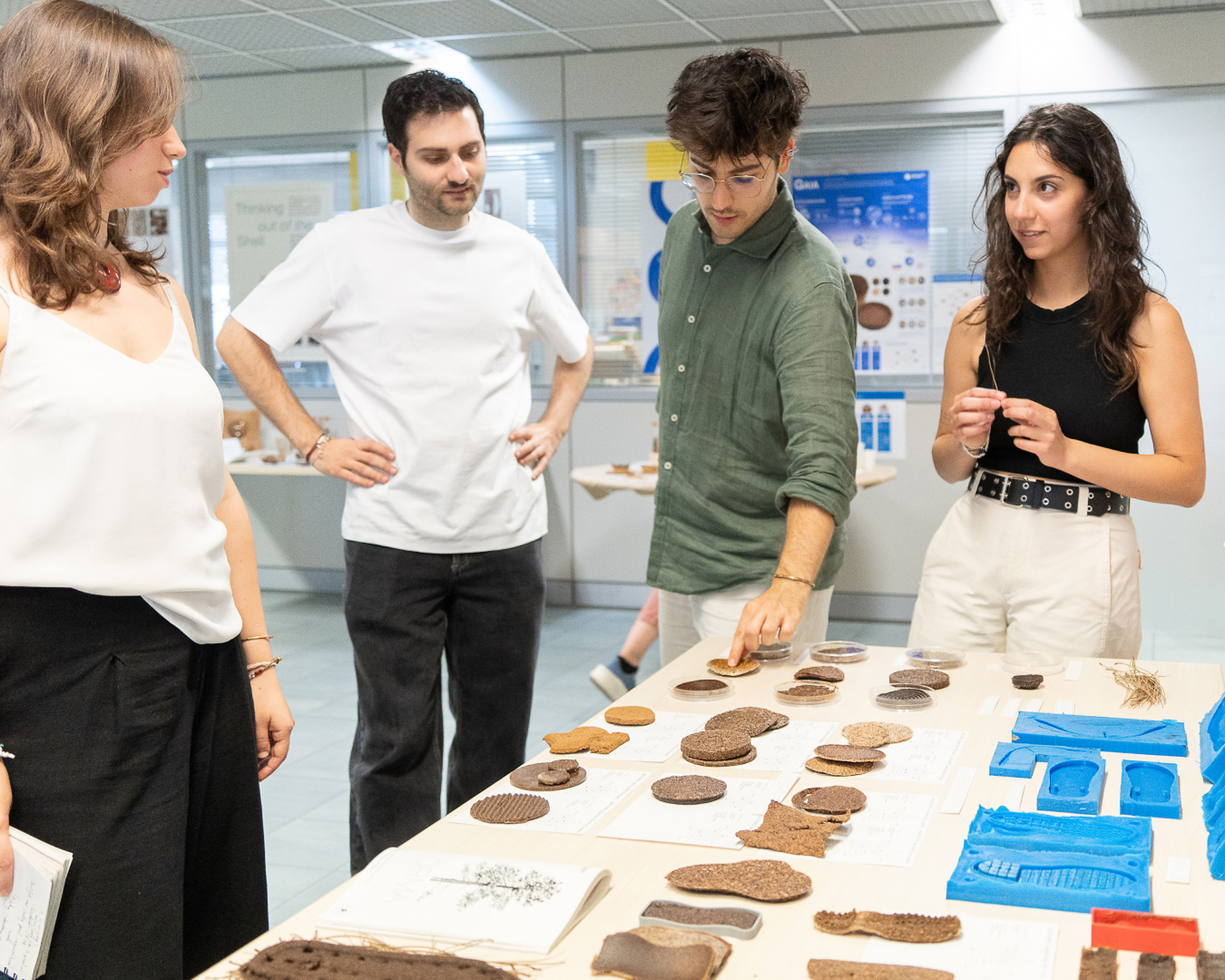
Orma by Ines Ravagani, Gülsüm Koç, Carloalberto Dusi and Mete Sümeli
"Orma reimagines pine needles, an abundant by-product of agriculture and timber production, as a valuable material resource.
"Through a materials-driven design process combining experimentation, material characterisation, research and documentation, the team developed a biocomposite whose properties ranged from leather-like flexibility to rubber-like resilience.
"These qualities led to the design of a bio-based, biodegradable footwear outsole that addresses the microplastic pollution generated by conventional soles.
"Rather than leaving persistent traces, Orma is conceived to return safely to natural cycles after use.
"The project demonstrates how overlooked waste streams can inspire material innovation while connecting circularity, performance and responsible product design in practice."
Students: Ines Ravagani, Gülsüm Koç, Carloalberto Dusi and Mete Sümeli
Course: Materials x Transition in the Master of Design for Sustainability and Regeneration
Tutors: Sofia Soledad Duarte Poblete and Valentina Rognoli
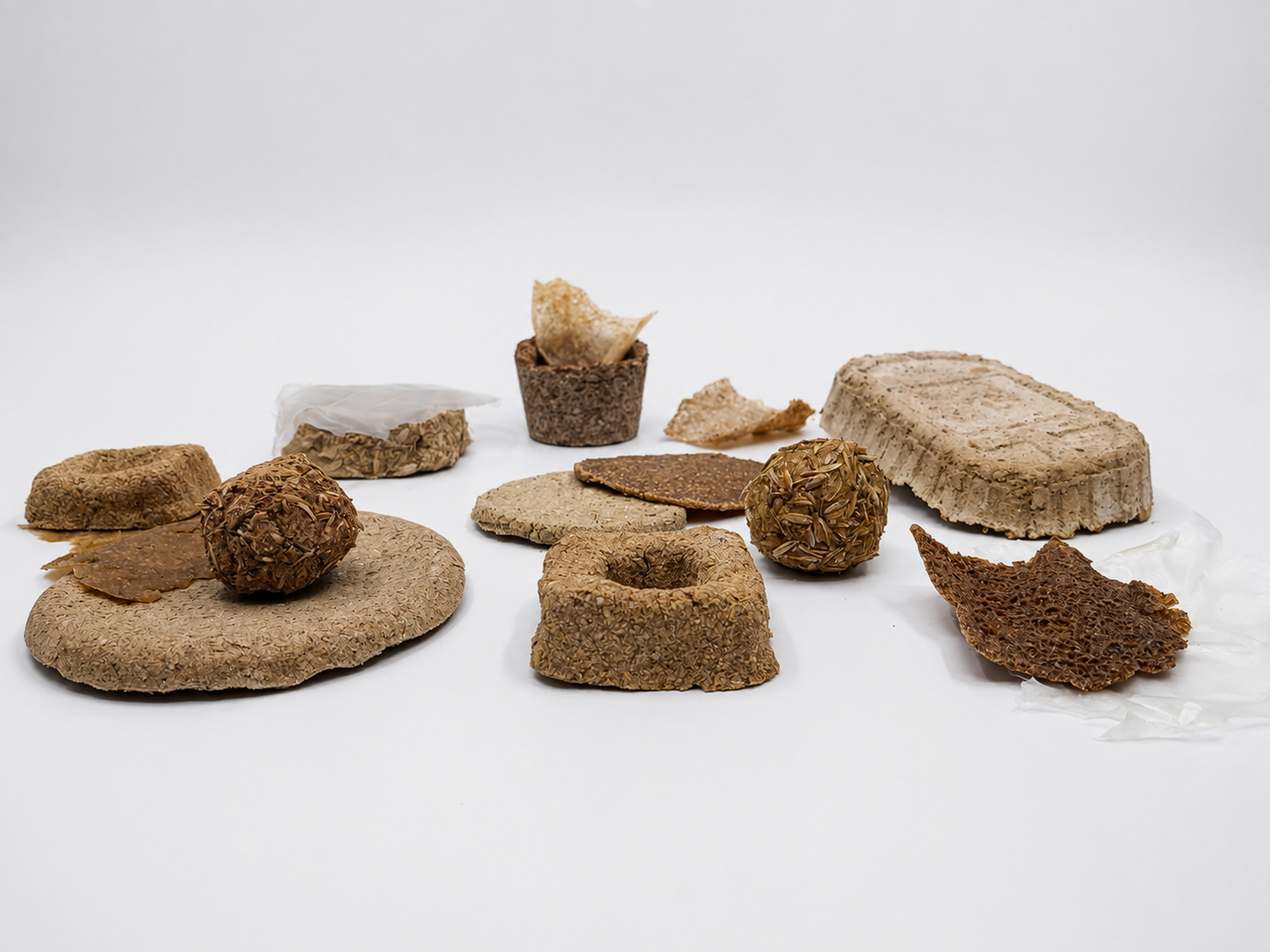
Trice by Josephine Plaum, Juliette Desertot, Matilde Reviglio and Nicola Sbrudolini
"Trice transforms rice-production by-products, including husk, bran, starch, fibre and broken grains, into 100 per cent compostable biomaterials without external binders.
"By combining the structural strength of rice husk with the binding properties of bran, the project develops materials that can be produced locally across rice-growing regions worldwide.
"Its prototypes demonstrate versatility, from rigid packaging components such as boxes and edge protectors to flexible bioplastic films for sealing.
"By redirecting residues that are often burned or underused, Trice closes loops within the rice value chain, reduces pollution and creates economic value while allowing materials to return safely to soil."
Students: Josephine Plaum, Juliette Desertot, Matilde Reviglio and Nicola Sbrudolini
Course: Materials x Transition in the Master of Design for Sustainability and Regeneration
Tutors: Sofia Soledad Duarte Poblete and Valentina Rognoli
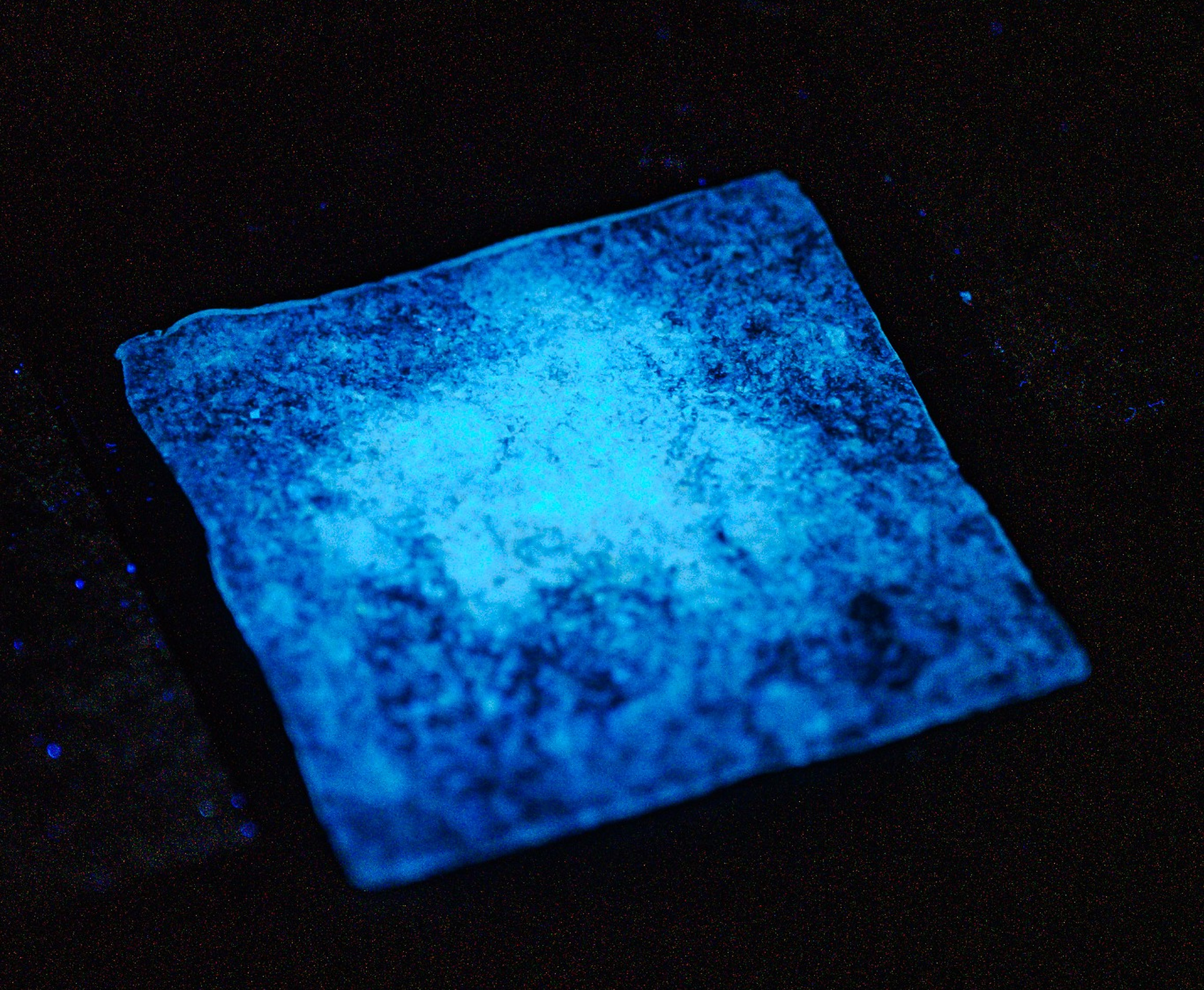
Scravita by Chuyue Zhang, Junshuo Cui, Keyan Wu, Mingsheng Li, Kevin Yang, Yifei Li, Yuwei Ma, Jinghui Zhou and Chencheng Liu
"Scravita transforms salmon bones, skin and scales collected from local Japanese restaurants into a family of regenerative materials and a final lighting application.
"Through cleaning, enzymatic treatment, grinding, gelatin extraction and thermal modification, the project explores the structural, translucent and fluorescent qualities of seafood by-products.
"Material experiments combine salmon bone powder, skin-derived gelatin and heat-treated scales with natural binders to achieve different levels of hardness, flexibility and transparency.
"The resulting Salmorph lamp integrates these materials into a softly glowing cube, where fluorescent scales animate the surface under light.
"Scravita reframes seafood waste as a resource for circular, sensory and materially expressive product design."
Students: Chuyue Zhang, Junshuo Cui, Keyan Wu, Mingsheng Li, Kevin Yang, Yifei Li, Yuwei Ma, Jinghui Zhou and Chencheng Liu
Course: Materials for Product Design and Innovation
Tutors: Valentina Rognoli, Zhang Yu, Chengjun Li and Ziqian Yu
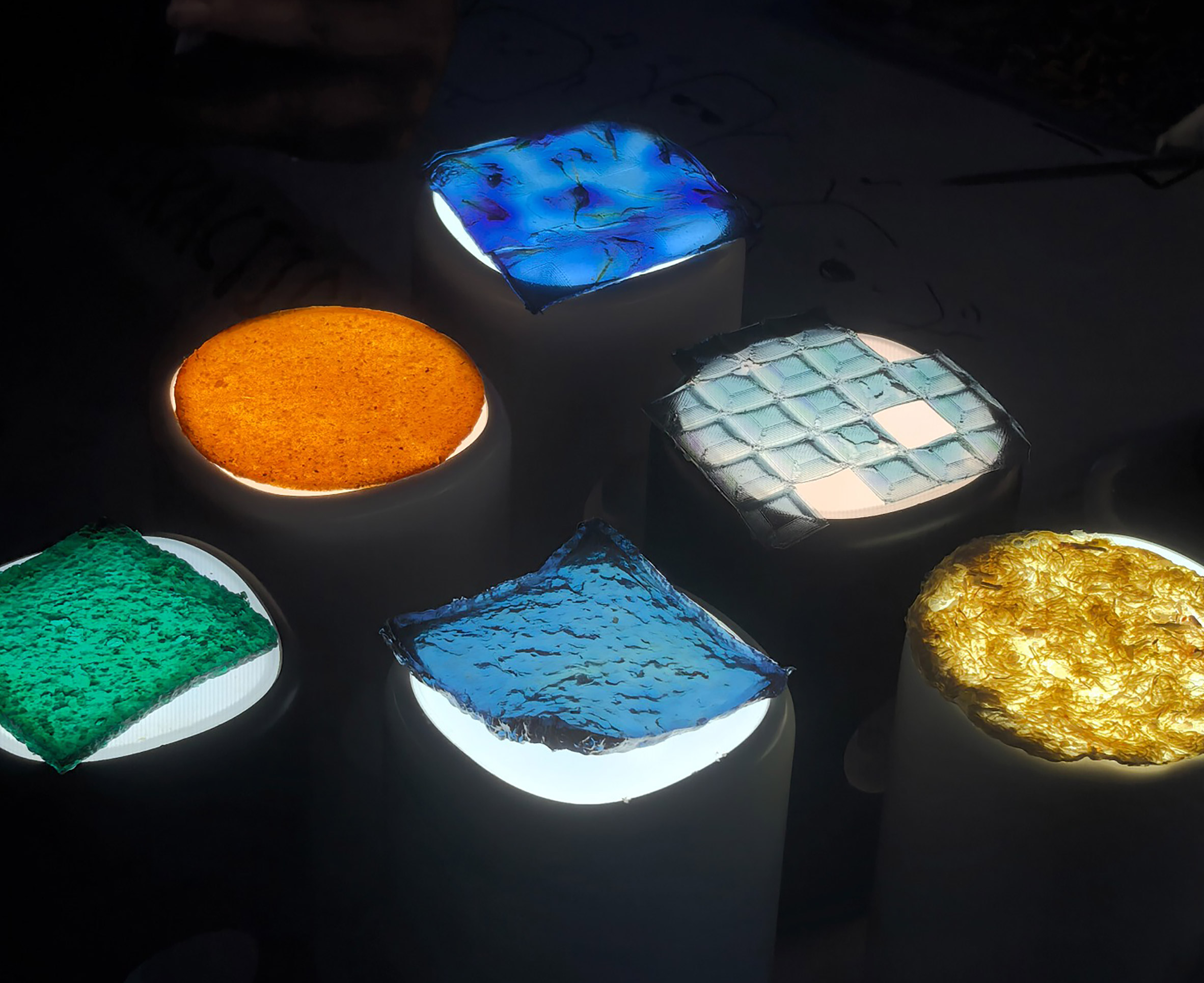
LumiStudio by Hu Yi, JiahaoHuang, Yumeng Li, Jiaxin Guo, Yanting Gao, Hanyu Wang, Wanming Feng, Youyou Li, Xindi Yang and Wenjun Ma
"LumiStudio transforms discarded flower tea residues collected from teahouses, restaurants and tea-processing sources in Xi'an into a series of translucent decorative materials.
"Through controlled experiments, the team explored butterfly pea, chrysanthemum, rose and lavender waste, adjusting binders, heating methods, moulds and drying conditions to preserve their natural colours, fibres and textures.
"The final pendant lamp combines selected samples with cotton threads, acrylic elements and 3D-printed supports.
"Illuminated from within, the suspended material pieces reveal varied translucency, surface detail and colour, presenting flower tea waste as an expressive resource for circular product design."
Students: Hu Yi, JiahaoHuang, Yumeng Li, Jiaxin Guo, Yanting Gao, Hanyu Wang, Wanming Feng, Youyou Li, Xindi Yang and Wenjun Ma
Course: Materials for Product Design and Innovation
Tutors: Valentina Rognoli, Zhang Yu, Chengjun Li and Ziqian Yu
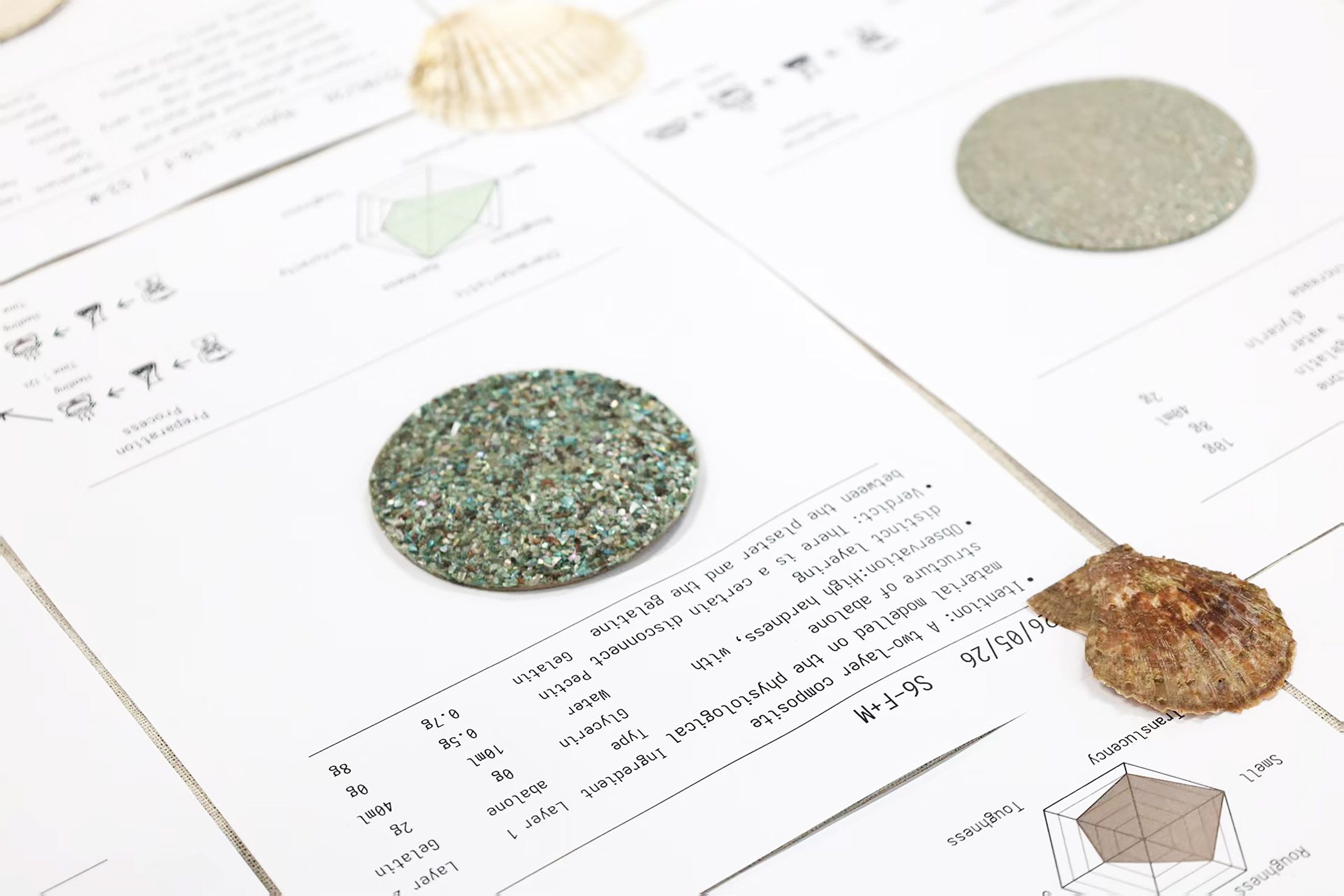
Reshelled by Tian Bingxin, Li Ziyu, Chen Xinyue, Li Hongxi, Chen Sixiao, Fan Mingyan, Zhang Baoqi, Tu Yurong, Yu Siyuan and Wang Chongwen
"Reshelled transforms discarded seafood shells collected in Weihai into mineral-based materials for lighting design.
"The team processed shells from different species into particles of varying sizes and combined them with multiple binders to tune their strength, surface texture, colour and translucency.
"Further experiments focused on isolating the iridescent nacreous layer inside abalone shells. Vinegar was used to gradually dissolve the outer shell, revealing a clean and highly reflective inner layer.
"By refining particle distribution, moulding methods and material formulations, the project produced durable, glossy and light-transmitting samples.
"Two lamp prototypes demonstrate how shell waste can replace conventional decorative panels while retaining its natural lustre and marine character."
Students: Tian Bingxin, Li Ziyu, Chen Xinyue, Li Hongxi, Chen Sixiao, Fan Mingyan, Zhang Baoqi, Tu Yurong, Yu Siyuan and Wang Chongwen
Course: Materials for Product Design and Innovation
Tutors: Valentina Rognoli, Zhang Yu, Chengjun Li and Ziqian Yu
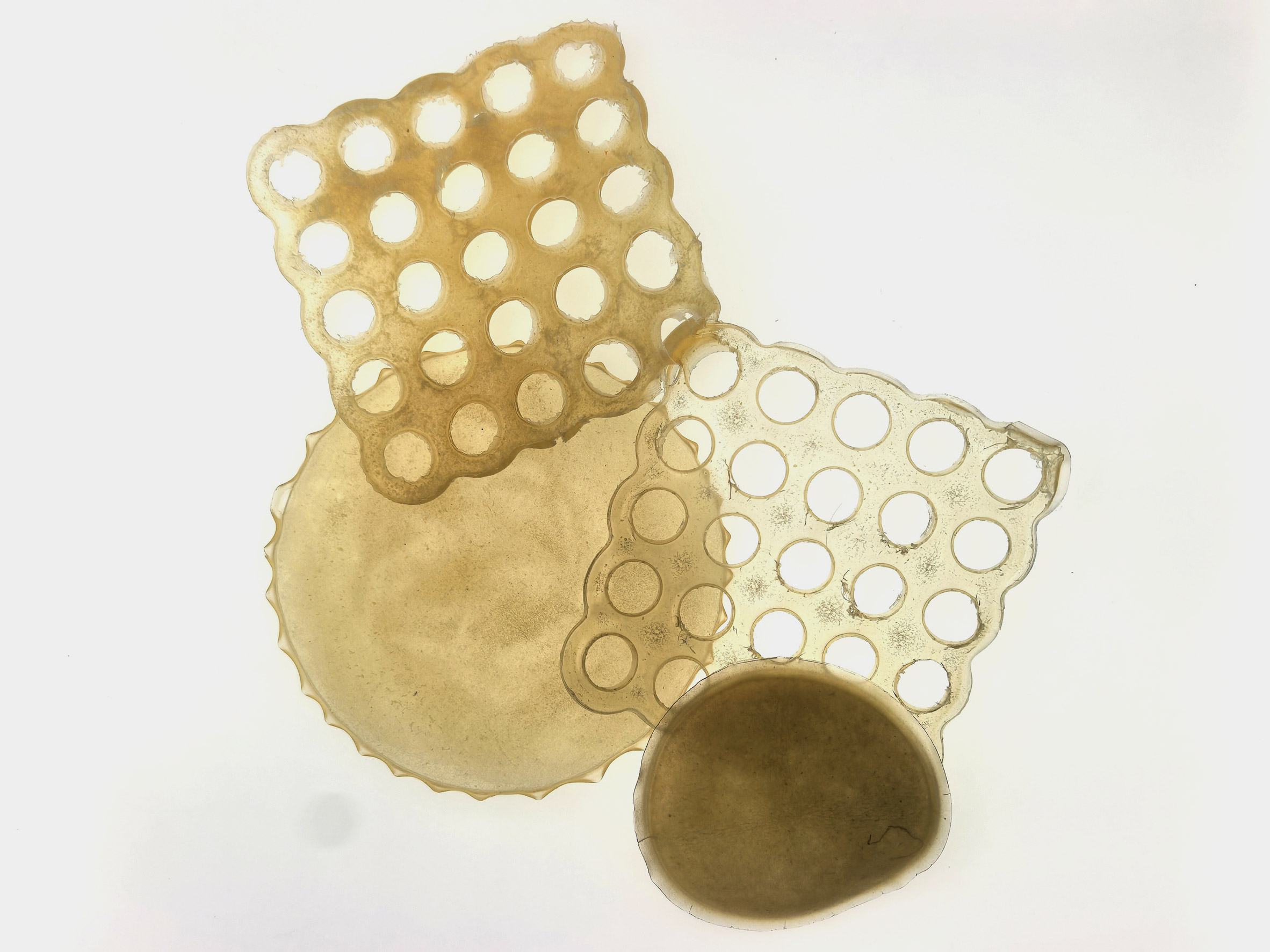
Osteomangus by Chen Zhang, He Mengfu, Li Yushuo, Sun Langjun, Zhao Qiyue, Li Yiming, Ni Zhenran, Cao Zhanchang, Sheng Xia and Li Kaifen
"Osteomangus explores chicken bones and mango pits as complementary waste resources for experimental material development.
"Chicken bones collected from a food-processing company in Shandong were cleaned, oxidised, dried and ground into mineral-rich powder, while mango pits sourced from local fruit vendors in Xi'an were processed into natural fibres.
"The team combined these components with gelatin, agar, starch, sodium alginate, mineral fillers and plant fibres to produce a diverse material library.
"Thirteen documented recipes range from flexible, translucent sheets to foamed, leather-like and rigid composites.
"Presented as a material cookbook, Osteomangus provides reproducible formulations while demonstrating the aesthetic and functional potential of agricultural and food-processing residues."
Students: Chen Zhang, He Mengfu, Li Yushuo, Sun Langjun, Zhao Qiyue, Li Yiming, Ni Zhenran, Cao Zhanchang, Sheng Xia and Li Kaifen
Course: Materials for Product Design and Innovation
Tutors: Valentina Rognoli, Zhang Yu, Chengjun Li and Ziqian Yu
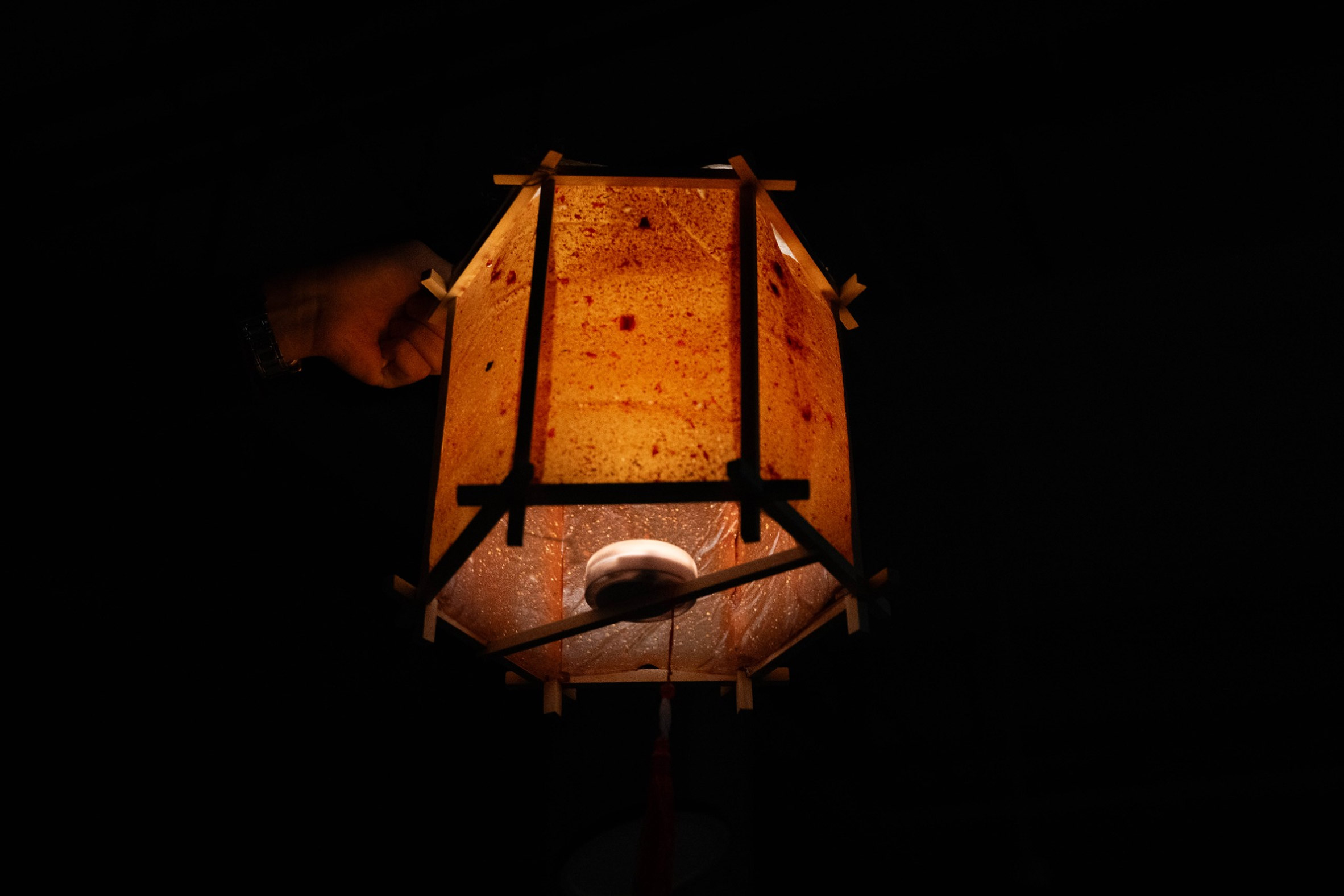
Farewell Flower Goddess by Zhaoyu Chen, Kangrui Chen, Xuming Zhu, Boyu Zhan, Huanxu An, Hanzhi Xu, Yanqiao Peng, Xuhan Zhu, Zi'ang Wang and Fang Shi
"Farewell Flower Goddess transforms organic waste from traditional Chinese medicine into translucent sheet materials for lighting design.
"The team collected herbal residues from a local traditional Chinese medicine hospital in Xi'an and investigated how these discarded materials could be recovered as a design resource.
"Through repeated formulation and casting experiments, they addressed brittleness, excessive thickness, poor ductility and curling by adding starch, controlling sheet thickness and testing different herbal mixtures.
"Poria produces a pale, fibrous surface that gently diffuses light, while goji berry creates a warm amber-red glow. The final hexagonal lantern demonstrates how locally sourced medical waste can support circular material development and sensory product design."
Students: Zhaoyu Chen, Kangrui Chen, Xuming Zhu, Boyu Zhan, Huanxu An, Hanzhi Xu, Yanqiao Peng, Xuhan Zhu, Zi'ang Wang and Fang Shi
Course: Materials for Product Design and Innovation
Tutors: Valentina Rognoli, Zhang Yu, Chengjun Li and Ziqian Yu
Partnership content
This school show is a partnership between Dezeen and Politecnico di Milano. Find out more about Dezeen partnership content here.
The post Lighting made from Chinese medicine waste among projects from Politecnico di Milano appeared first on Dezeen.