








House of EM draws on mid-century design principles for brick-clad home
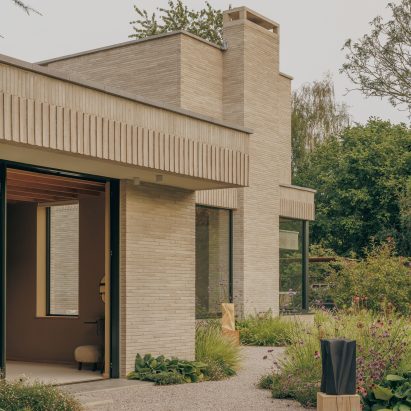
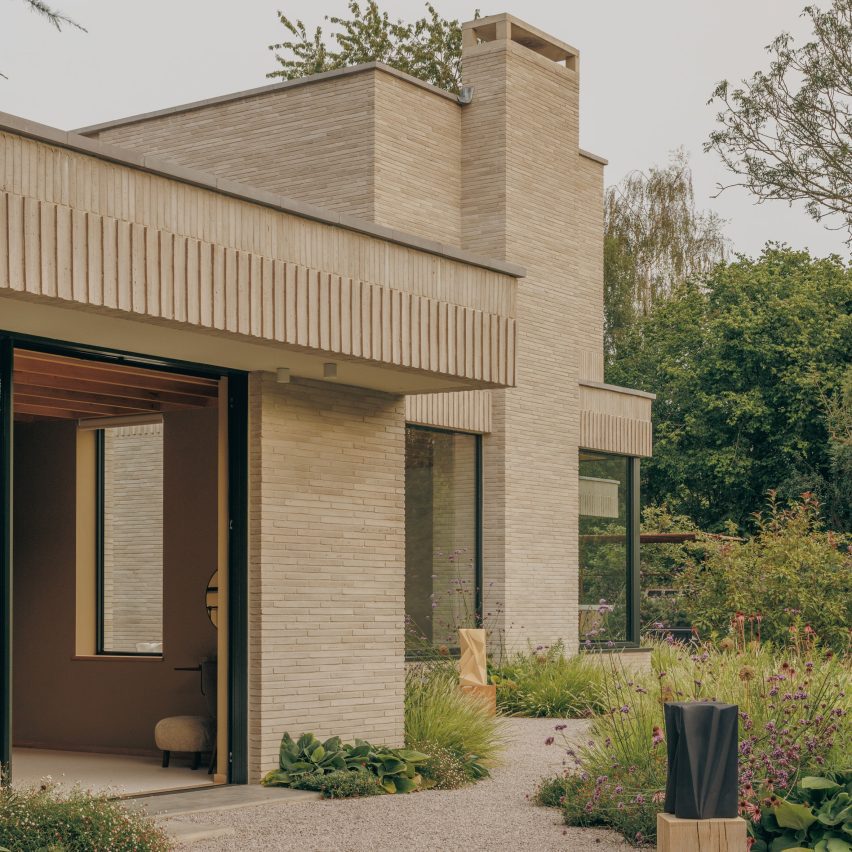
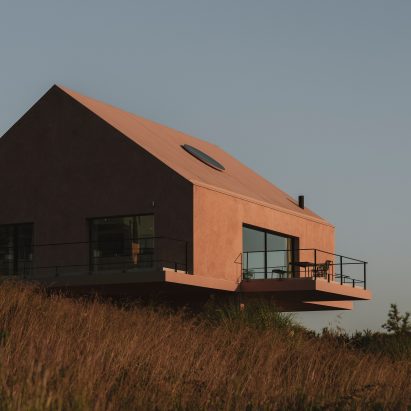
Architecture studio House of EM has used a restrained palette of brick, timber, concrete and lime plaster for Skylark, a contemporary F-shaped house in Shropshire, UK.
Set on a plateau overlooking the River Teme near the village of Ludlow, House of EM designed the four-bedroom home for property developers James and Sam Charters and their two children, marking the studio's first completed new-build project.
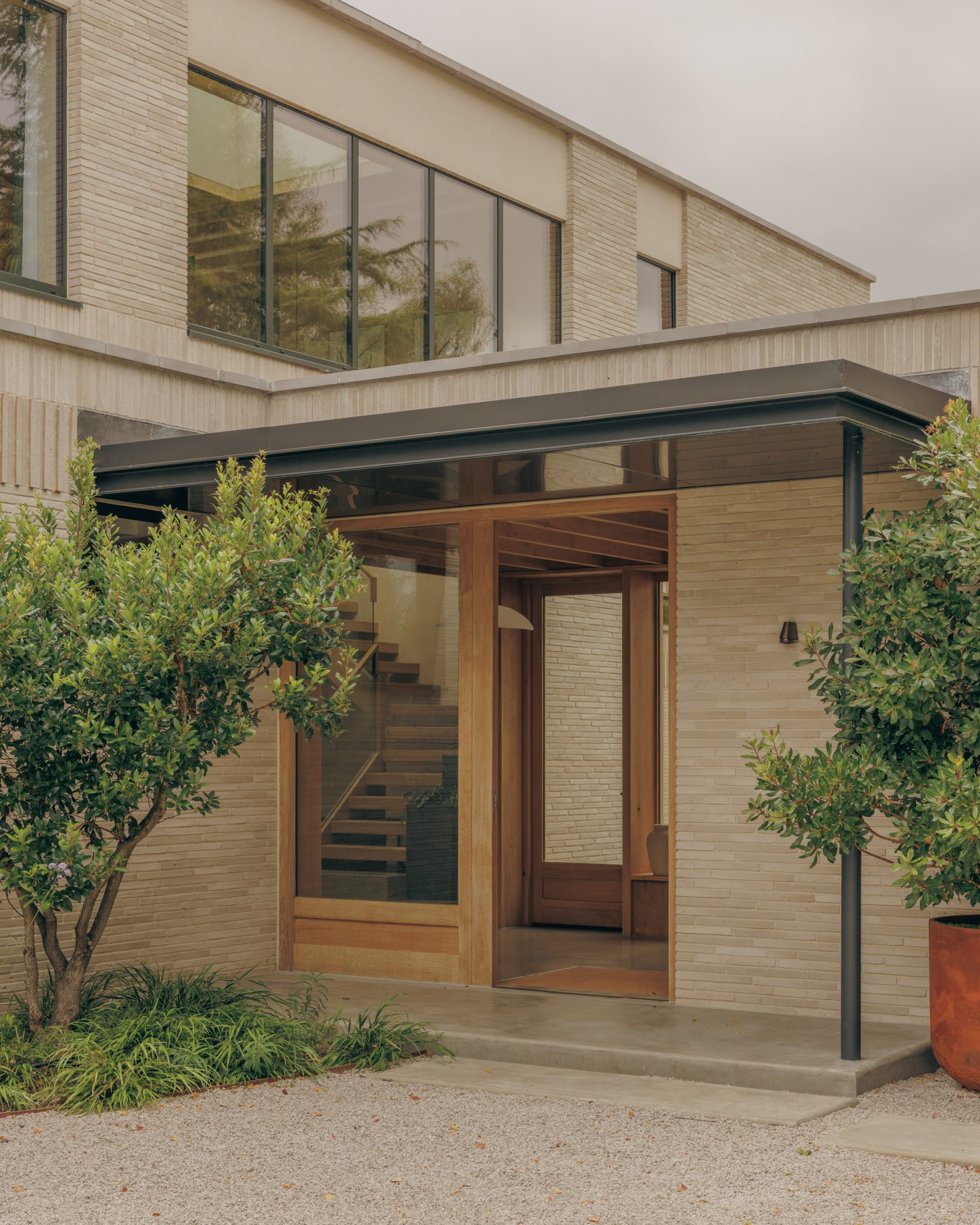
The studio set out to prioritise mid-century design ideas around proportion, natural light and indoor-outdoor connections.
The two-storey home has an F-shaped plan, with a stepped upper level and expansive glazing on the rear elevations creating a sense of immersion within the surrounding landscape.
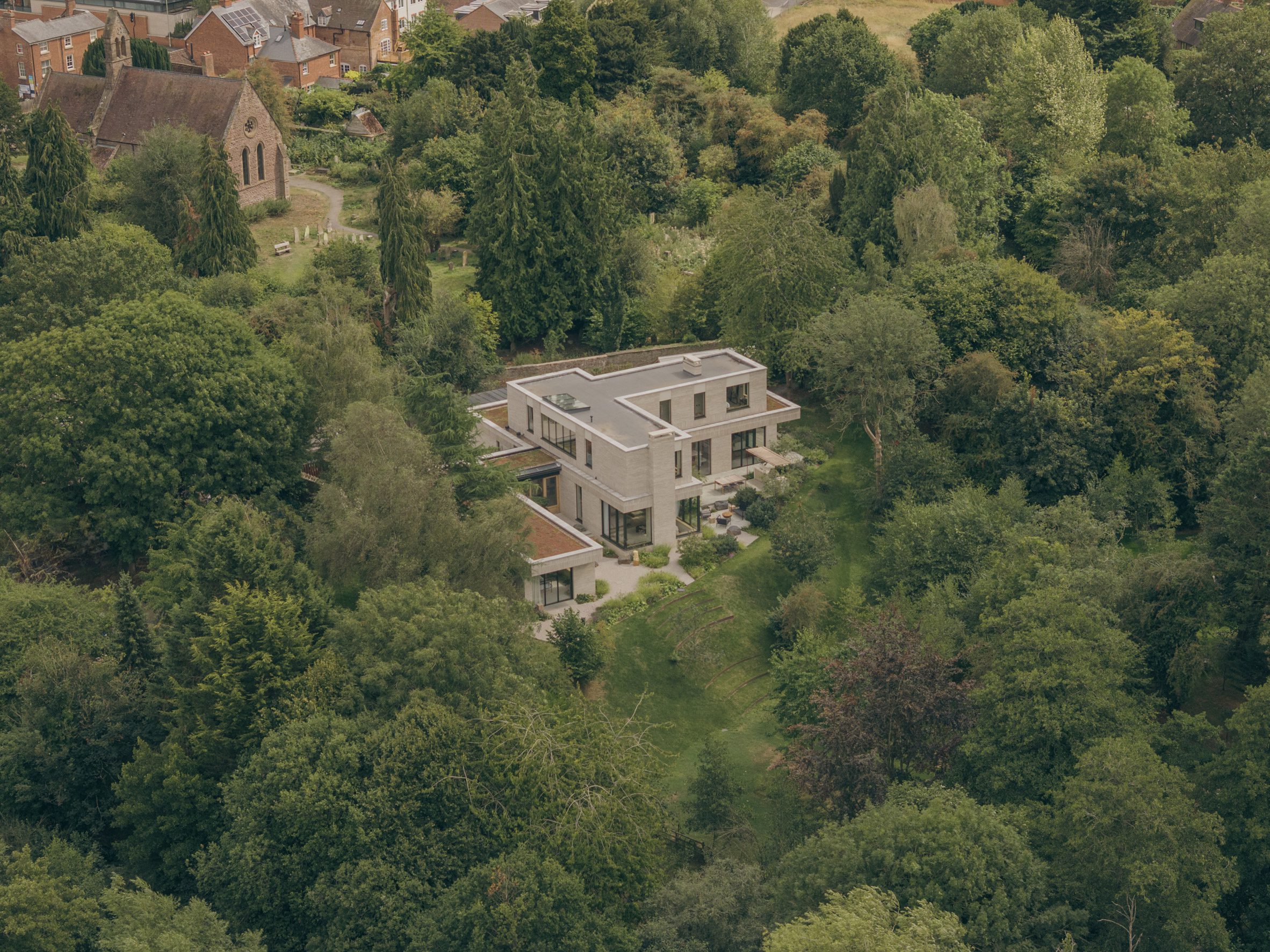
"The F-shaped plan was important in making sure the house sat comfortably within the site – it helped break up the overall form, create sheltered courtyards and terraces, and orients each part of the house towards a different green space or view," House of EM co-founder Emma Bodie told Dezeen.
"We spent a lot of time thinking about how the building would sit within the landscape so it felt anchored rather than imposed onto it – the first floor is stepped back from the ground floor to reduce the perceived mass of the building," Bodie stated.
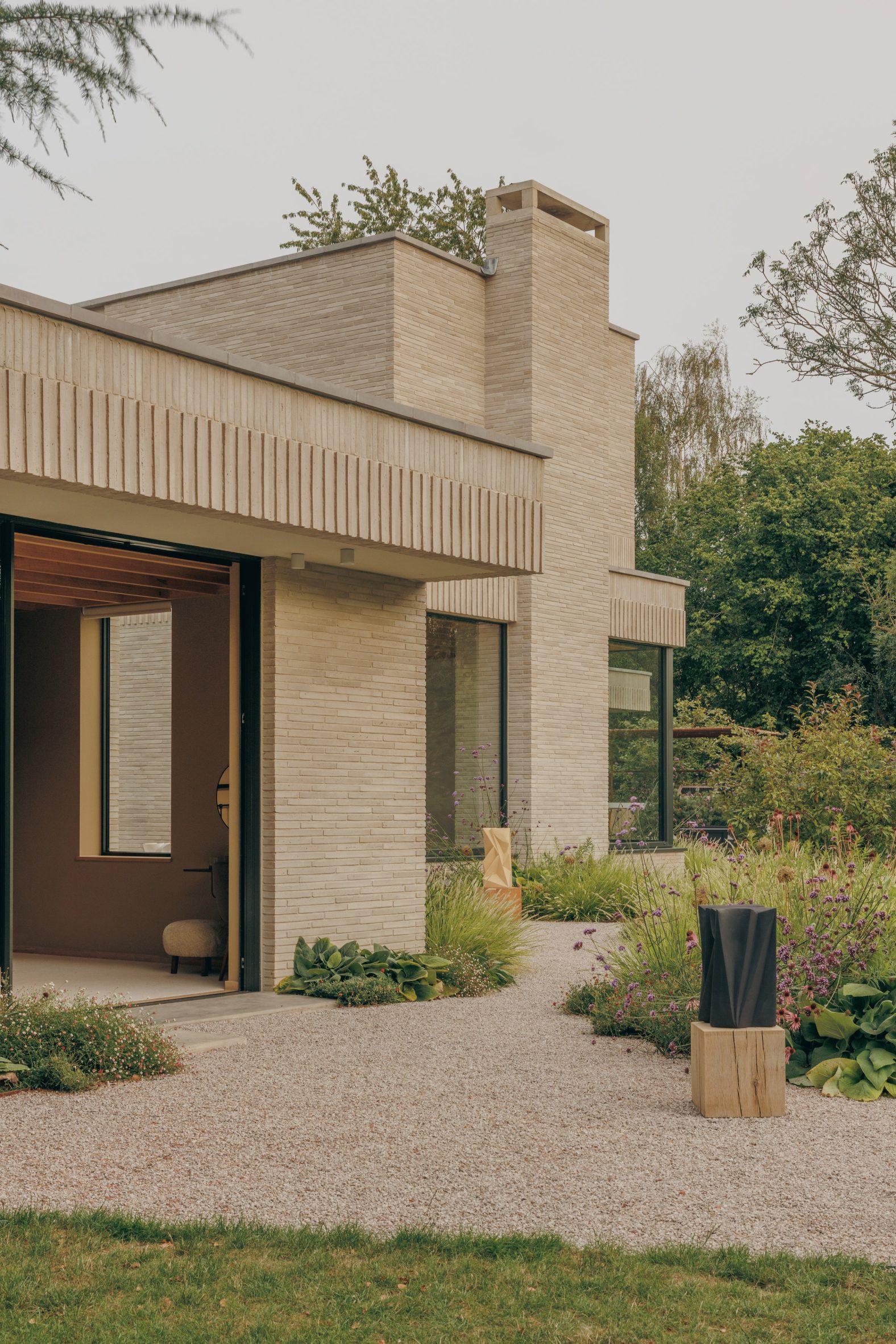
Warm grey Danish brick was selected for the exterior, with textured detailing that the studio explained was a reference to Herzog & de Meuron's Tate Modern.
"We were really interested in the textured brick detailing at the Tate Modern and how a relatively restrained material palette can still feel tactile and monumental," said Bodie.
"For Skylark, that translated into the castellated detailing across the brick facades. We wanted the elevations to change throughout the day as light moves across the surfaces, creating shifting shadow lines and texture while still keeping the overall form very clean and contemporary," Bodie described.
"We exaggerated the horizontal banding of the elevations by changing the orientation of the brickwork, which helped make the building feel more linear and grounded within the landscape rather than overly vertical."
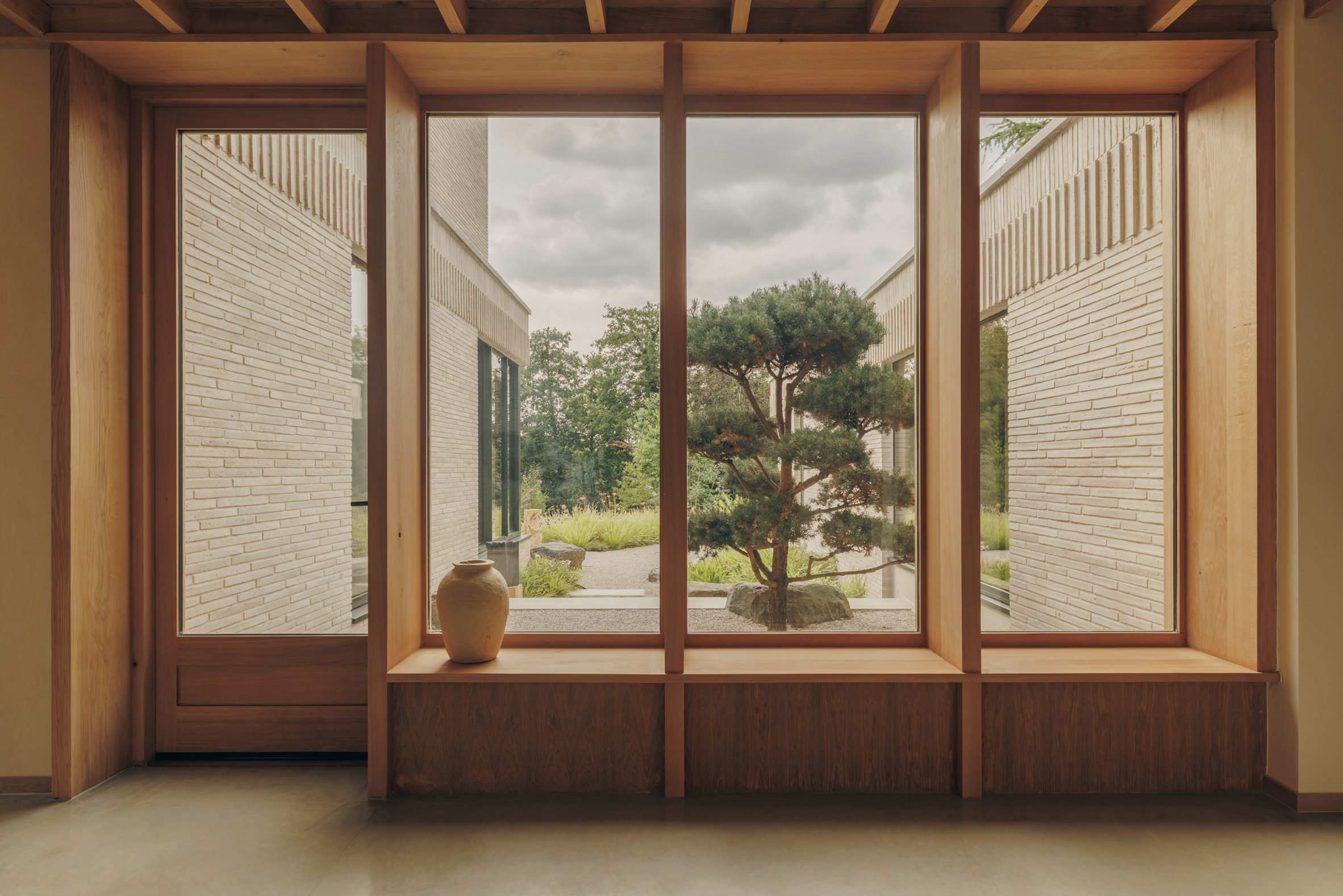
Throughout the property, large windows and openings were positioned to maximise natural light and frame views of the garden and countryside beyond.
Landscape design was a key consideration, with the addition of courtyards and terraces, gravel pathways and large concrete stepping stones, as well as the extensive planting of new trees and over 2,000 bulbs to increase the site's biodiversity.
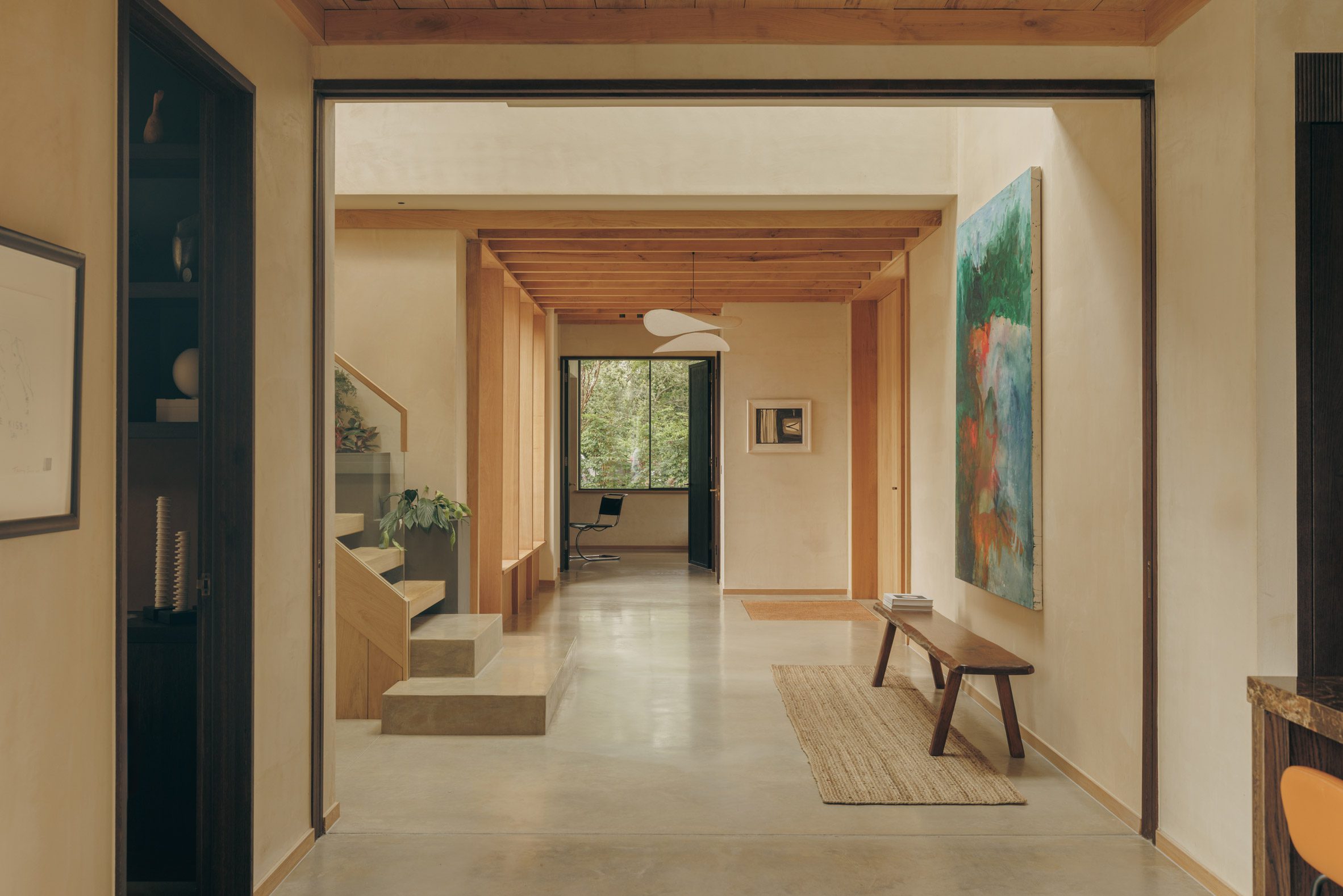
Inside, a skylight illuminates the double-height entrance hall, which the studio said was designed to "create a dramatic sense of arrival".
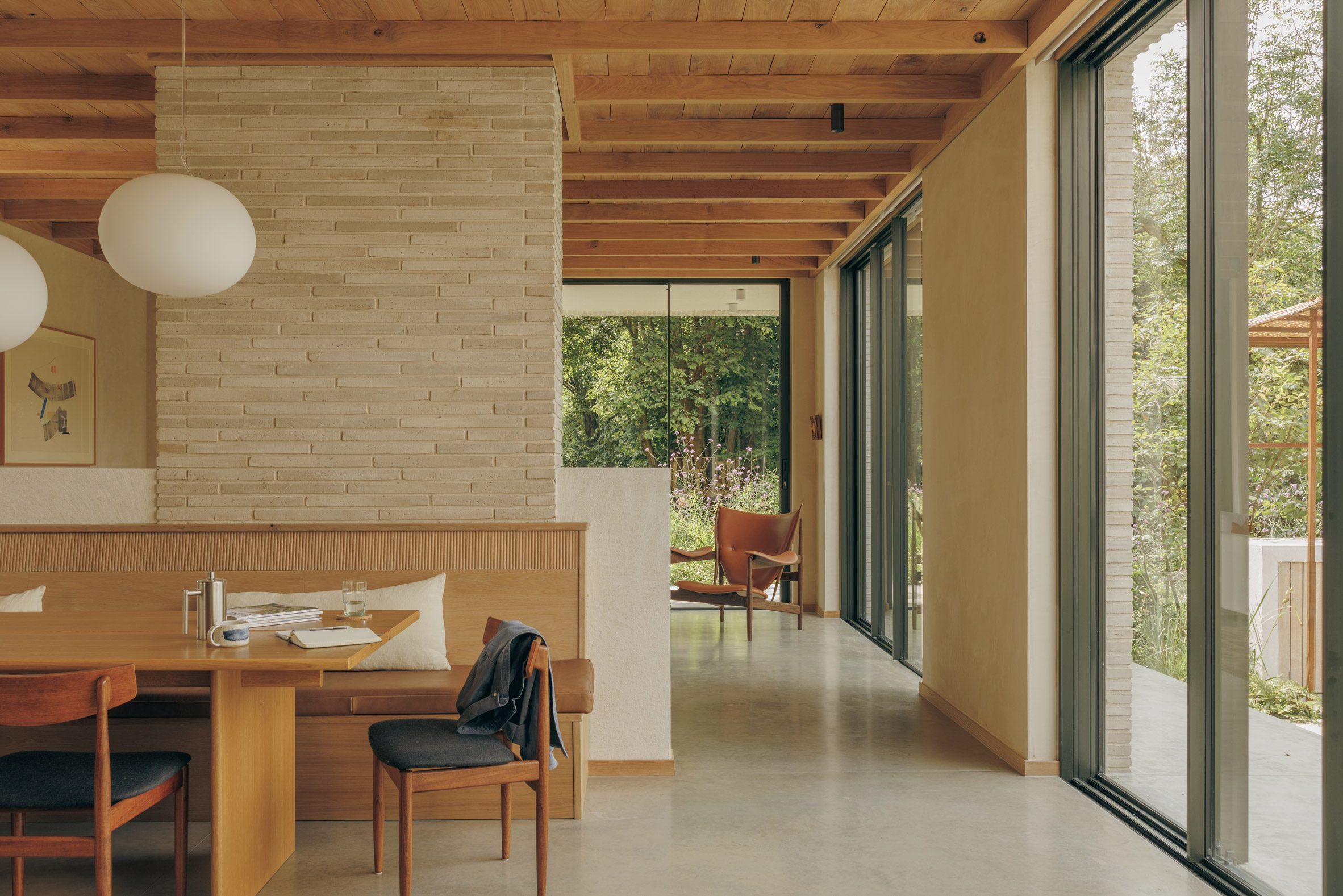
The interior palette is muted and grounded in natural tones, combining exposed concrete floors, chestnut timber ceilings and walls finished with locally-sourced lime plaster from Herefordshire.
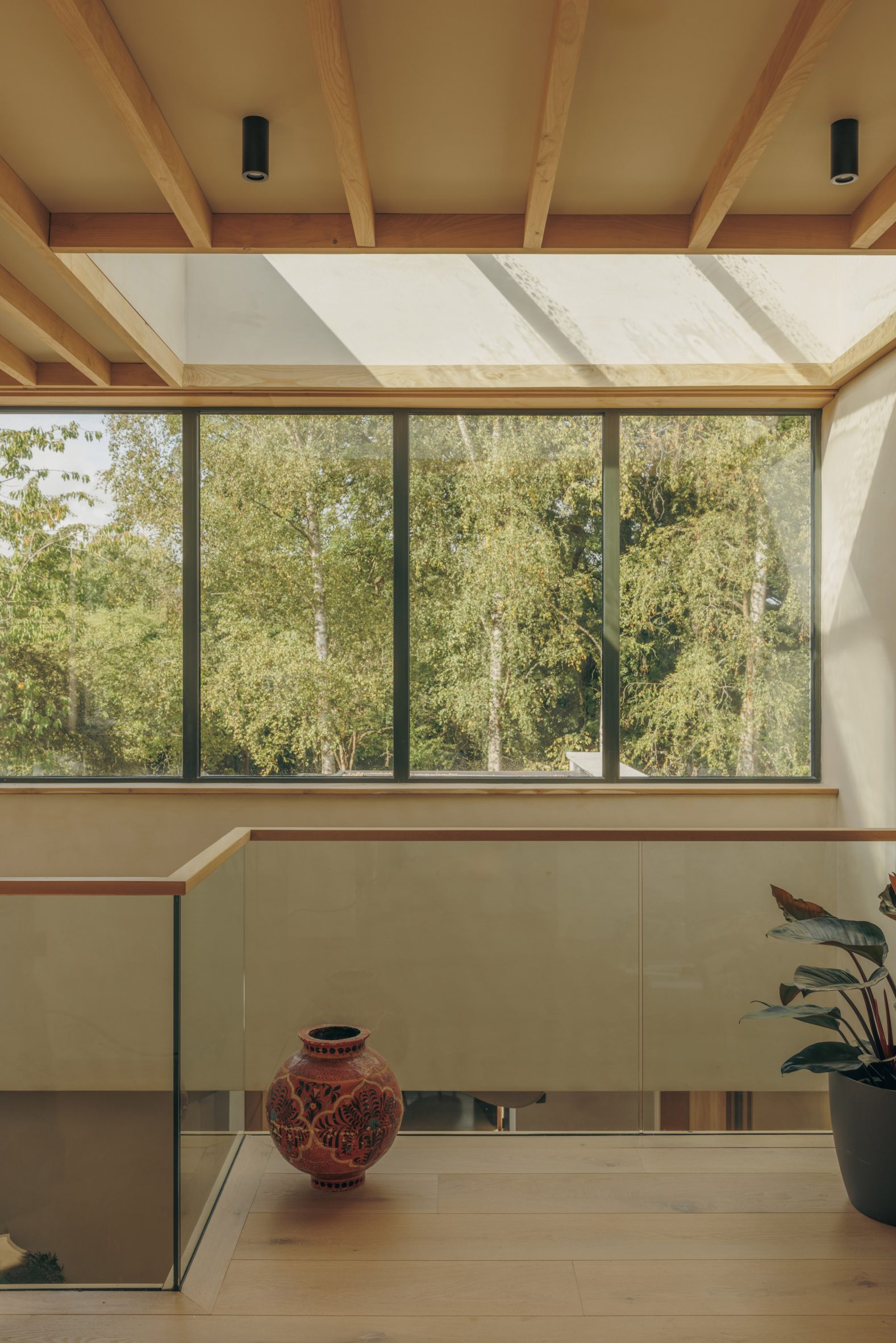
"We approached the palette with restraint so the focus remained on proportion, light and materiality," said Bodie.
"The interiors were designed to feel calm, grounded and comfortable for family life, while still retaining a strong sense of character," she continued.
"Much of this atmosphere comes from the use of natural materials, filtered light and carefully framed visual connections throughout the house."
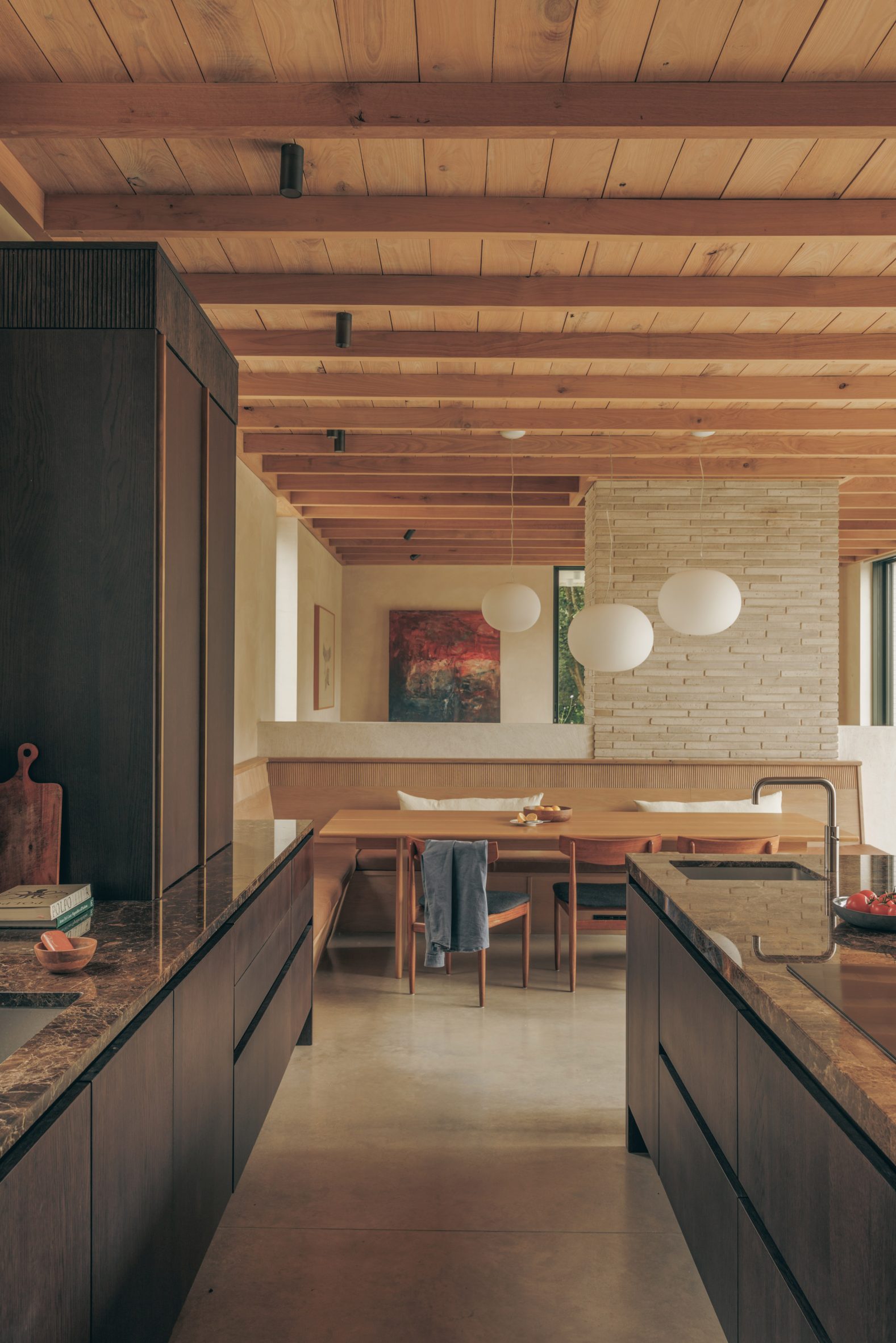
In the open-plan kitchen-dining area, brown veiny marble kitchen worktops are paired with dark timber cabinetry.
The clients designed and sourced much of the furniture and joinery themselves, integrating several bespoke pieces into the design.
Distinguishing the kitchen-dining space from the snug beyond, built-in timber banquette seating encloses the dining table, its detailing designed to echo the home's brick facade.
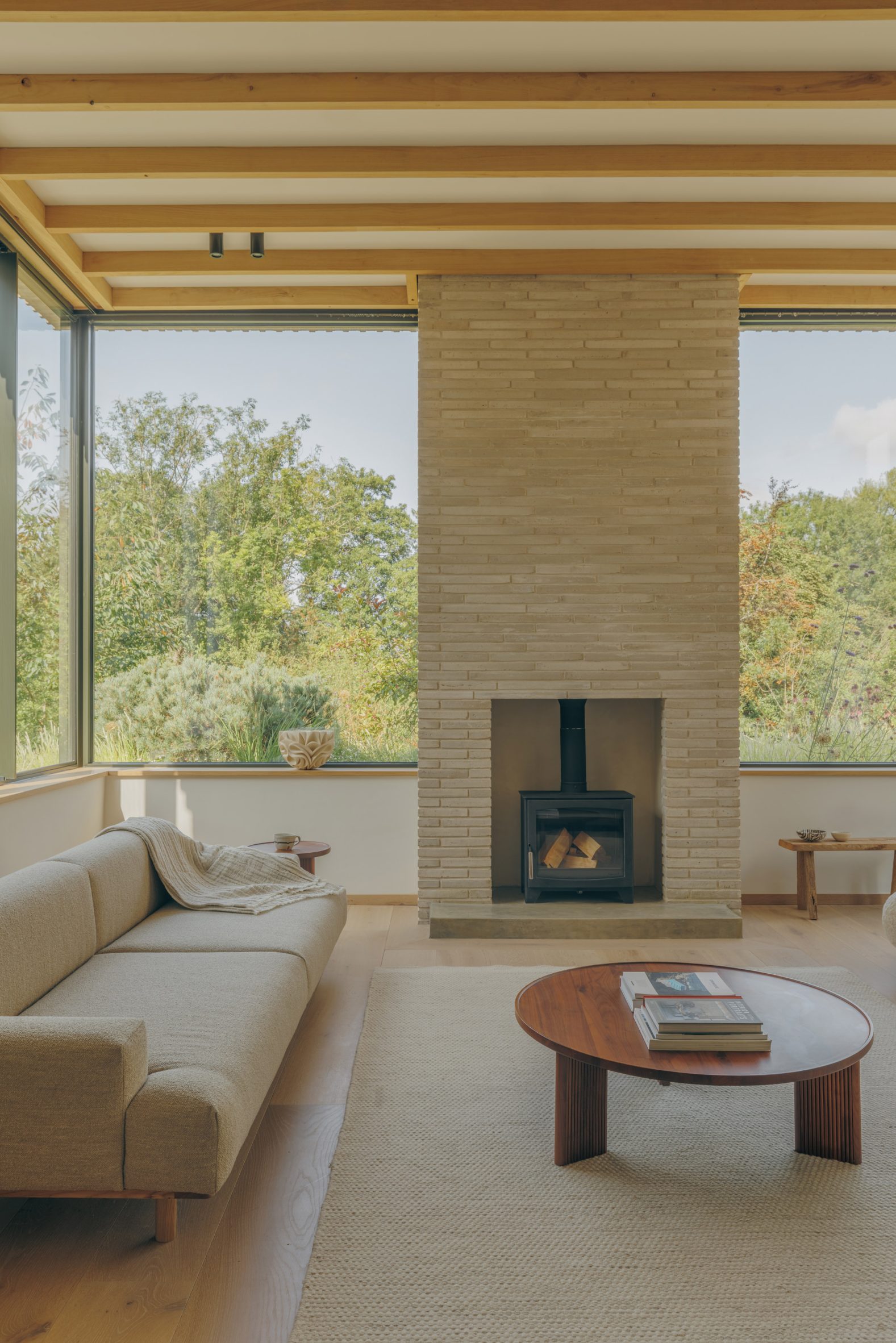
At the centre of the plan, a separate stepped down sitting room was designed to be a more intimate space within the otherwise open-plan ground floor.
Large wraparound windows allow for views of the landscape, while a wood-burning stove is integrated into a floor-to-ceiling fireplace in the same brickwork as the exterior.
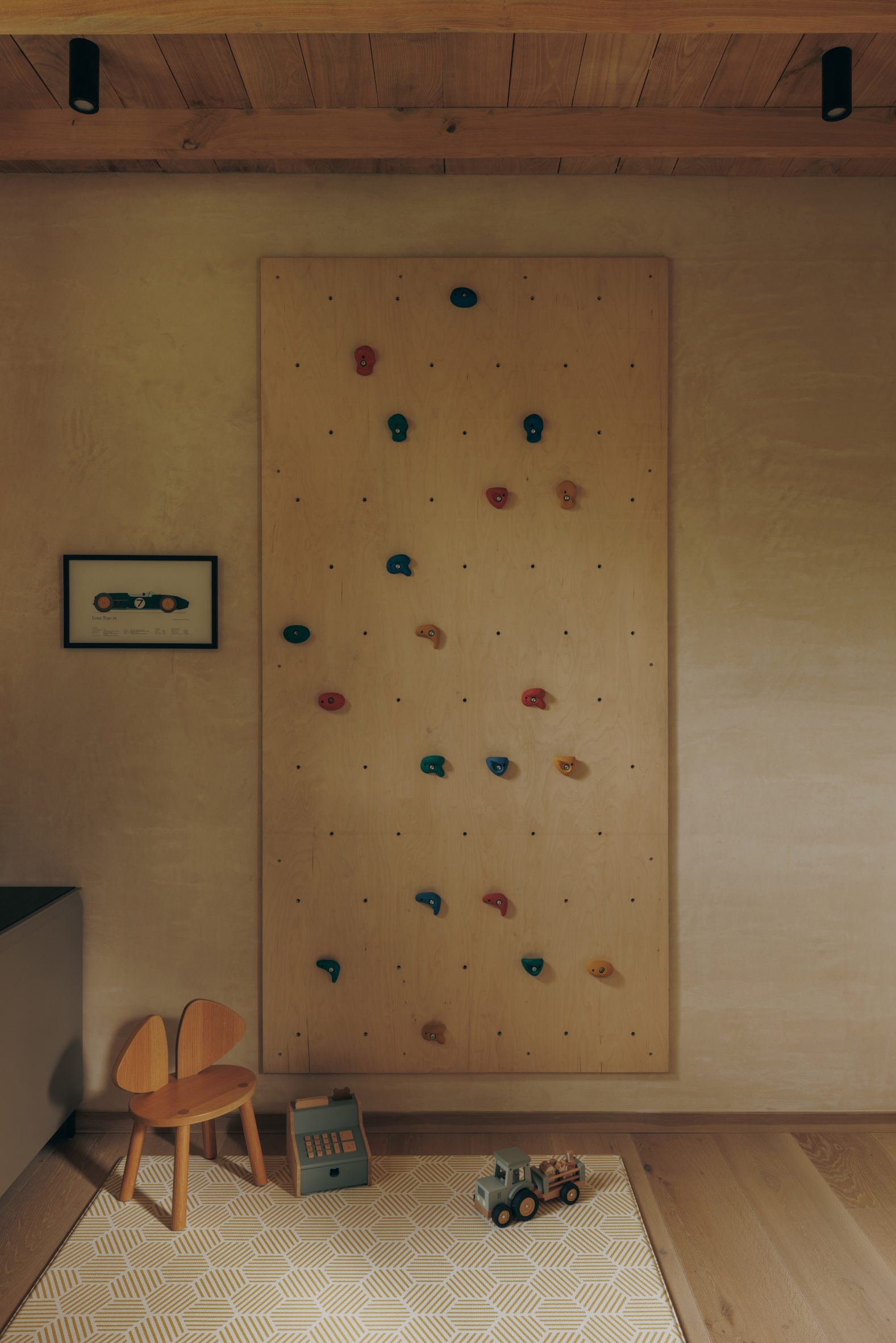
The home's northern wing contains a guest bedroom and bathroom, children's playroom and a home office, with an internal courtyard connecting to the central wing.
Upstairs, the first-floor houses the main bedroom, dressing room and bathroom, as well as the two children's bedrooms.
With sustainability in mind, Skylark was completed with a green roof, mechanical ventilation heat recovery (MVHR) system and air-source heat pump.
Other brick houses recently featured on Dezeen include a "house without windows" surrounded by brick screens in Brazil and a London home extended with walls of pale limestone.
The photography is by Richard Gaston.
The post House of EM draws on mid-century design principles for brick-clad home appeared first on Dezeen.