








From Specification to Authorship: Why Architects Are Designing Furniture Again
Architizer is thrilled to announce that the 2026 A+Product Awards is open for submissions! The clock is ticking — get your products in front of the AEC industry’s most renowned designers by submitting today.
For much of the 20th century, architects were expert specifiers. Once the drawings were done, their job was to select materials, products and furniture — producing the famous “FF&E” (Furniture, Fixtures, and Equipment) document. Product design remained a completely different discipline. Architects designed spaces, manufacturers supplied components and the rise of global product catalogs and standardized construction systems reinforced this division.
And yet, today we witness a shift, one that goes back to the principles of Modernism, when architects such as Mies Van Der Rohe and Alvar Alto advocated the idea of total design and produced some of the most famous product pieces ever created — objects that were architecture in miniature. Nowadays, architecture firms are once again starting to design products as well as buildings. From door handles to chairs and light fixtures, they put the same passion and rigor in assembling a table as they do a space. So, what changed? When did architects stop choosing products and start designing them — and what does that mean for the discipline?
This shift happening now is not random. In many cases, buildings have become increasingly value-engineered, leading architects to try and “regain” control by designing custom elements in smaller scales. Furthermore, custom products allow architecture firms to communicate their brand and identity beyond buildings, branching out to alternative markets and by extent, revenue streams. Still, perhaps the most notable aspect of this “design cycle” (building to object and back again), is how architectural thinking can reshape products, treating them as spatial or infrastructural rather than purely ergonomic or decorative.

Gather and Tiers by Foster + Partners | Jury Winner, Outdoor Furniture, 2025 Product Awards,
One example is Gather and Tiers by Foster + Partners, an outdoor furniture collection produced in collaboration with ESCOFET. This Barcelona-based company works with urban elements and concrete to transform cities and promote the use of public space. The product is a modular seating system, whose shape can range from liners, concave, convex and end modules, all of which can be reconfigured to create enclosed pocket spaces, straight benches, or seating around green islands.
The seating system is made from ultra-high-performance concrete and is available in four different colors – grey, black, white and beige – with a bespoke aluminum armrest. In parallel, the Tiers family is made up of a bench, table or perch, high tables or low stools that can be arranged in different formations for socializing or working. Ultimately, Gather and Tiers is furniture behaving like micro-architecture, rooted in the idea of configurations that can be deployed across any outdoor context to define space, offer degrees of privacy and encourage collective use.
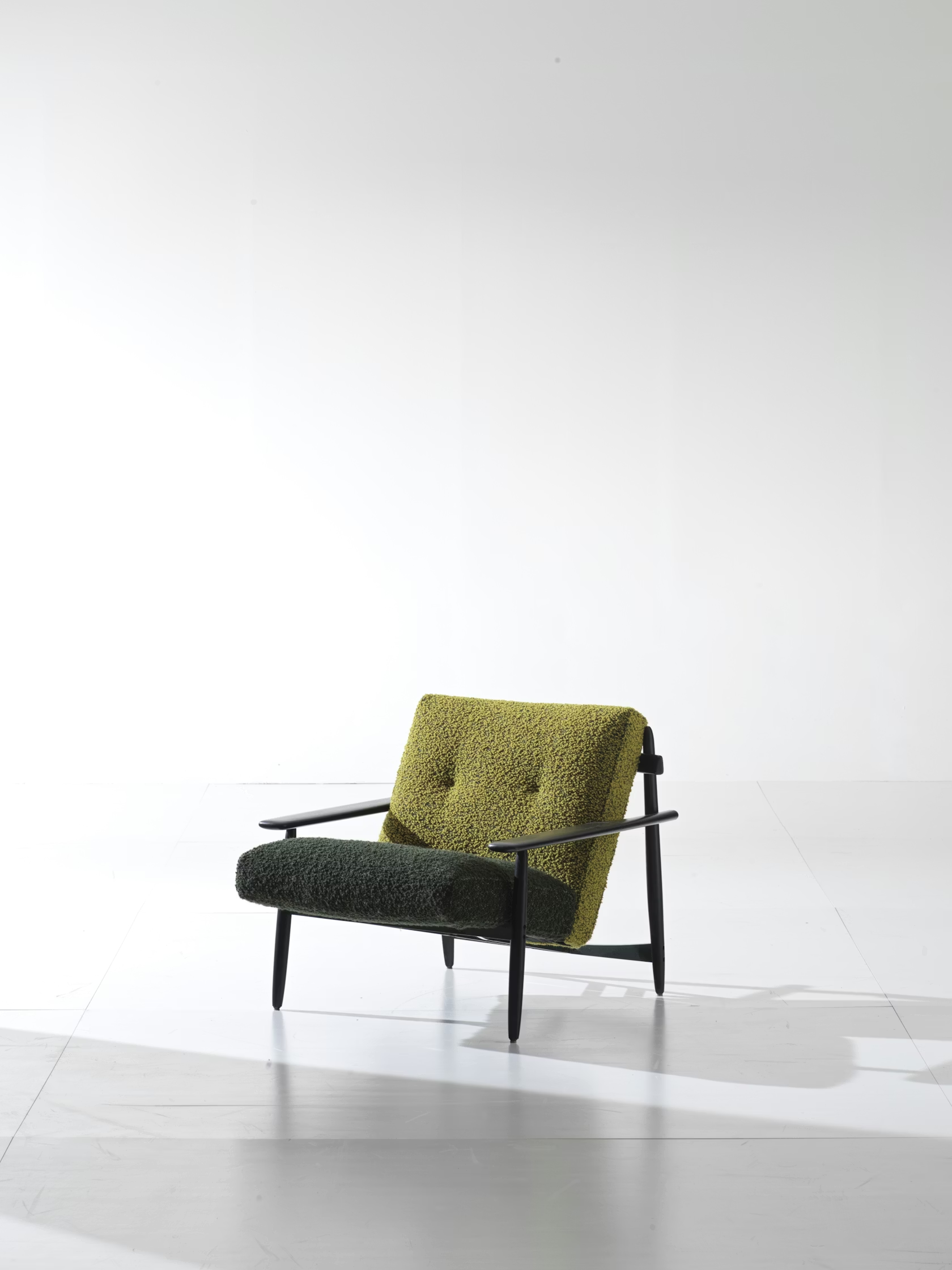
Trio by Studio mk27, | Finalist, Outdoor Furniture, 2025 Product Awards
An equally important motivator is the shift away from consumer-driven aesthetics, with architects emphasizing construction logic and craft rather than consumer trends. Trio by Studio mk27 is an armchair with a clear Brazilian twist produced in collaboration with Minotti, an Italian contemporary furniture brand. The armchair is comprised of three different materials – leather, fabric and wood for the seat, backrest and frame – all carefully assembled. The backrest is exquisitely crafted, drawing expertise from the typical Brazilian cabinet-making process, while the slender, padded seat is rested upon it. Finally, the polished armrests offer a tactile, sensory experience that echoes the curatorial precision of architectural detailing.
This is not the first time Studio mk27 and Minotti collaborate. The Brazilian architectural studio has an extensive product design line that includes seating systems, indoor and outdoor furniture, a line of sideboards and cabinets etc., underscoring how product design has become an integral extension of the studio’s architectural practice rather than a parallel pursuit.
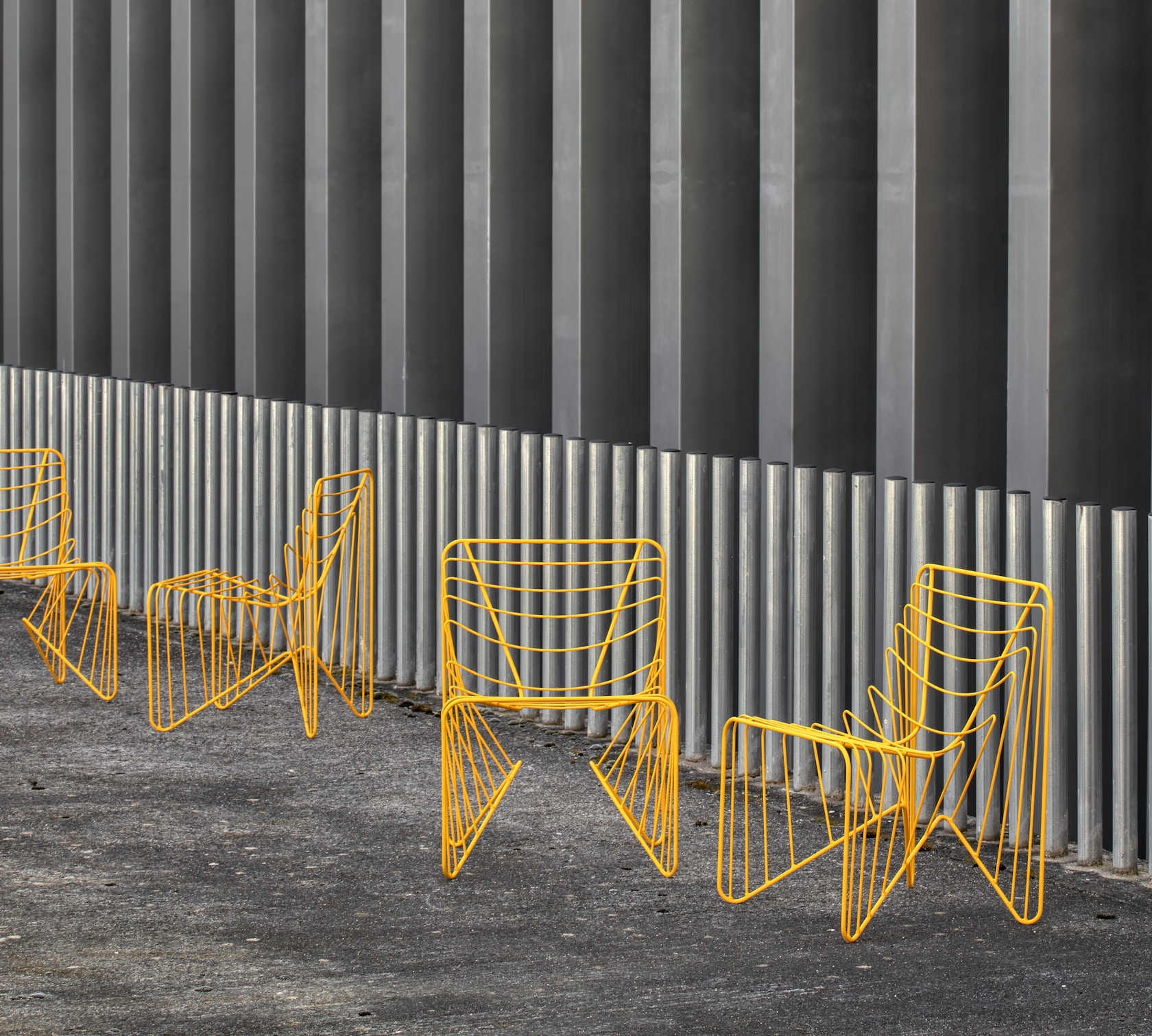
TOPOS Chair by Zaha Hadid Design, 2025 Product Awards, Special Mention, Best of the Year – Sustainable Design
Finally, product making through architectural practice often views materials as systems rather than finishes. A distinct example is the TOPOS Chair for iSiMAR as well as the Branch Console for Neutra, both designed by Zaha Hadid Design. TOPOS is a collection of outdoor furniture that celebrates Mediterranean living. Informed by the geographical concept of topography (where the word toposmeans place in Greek), the furniture converts contour lines into chair components, using material as the medium of translation. Specifically, TOPOS Chair is made from galvanized steel chosen for its durability as well as its recyclability, since the components of each piece can be recovered, repurposed or recycled.
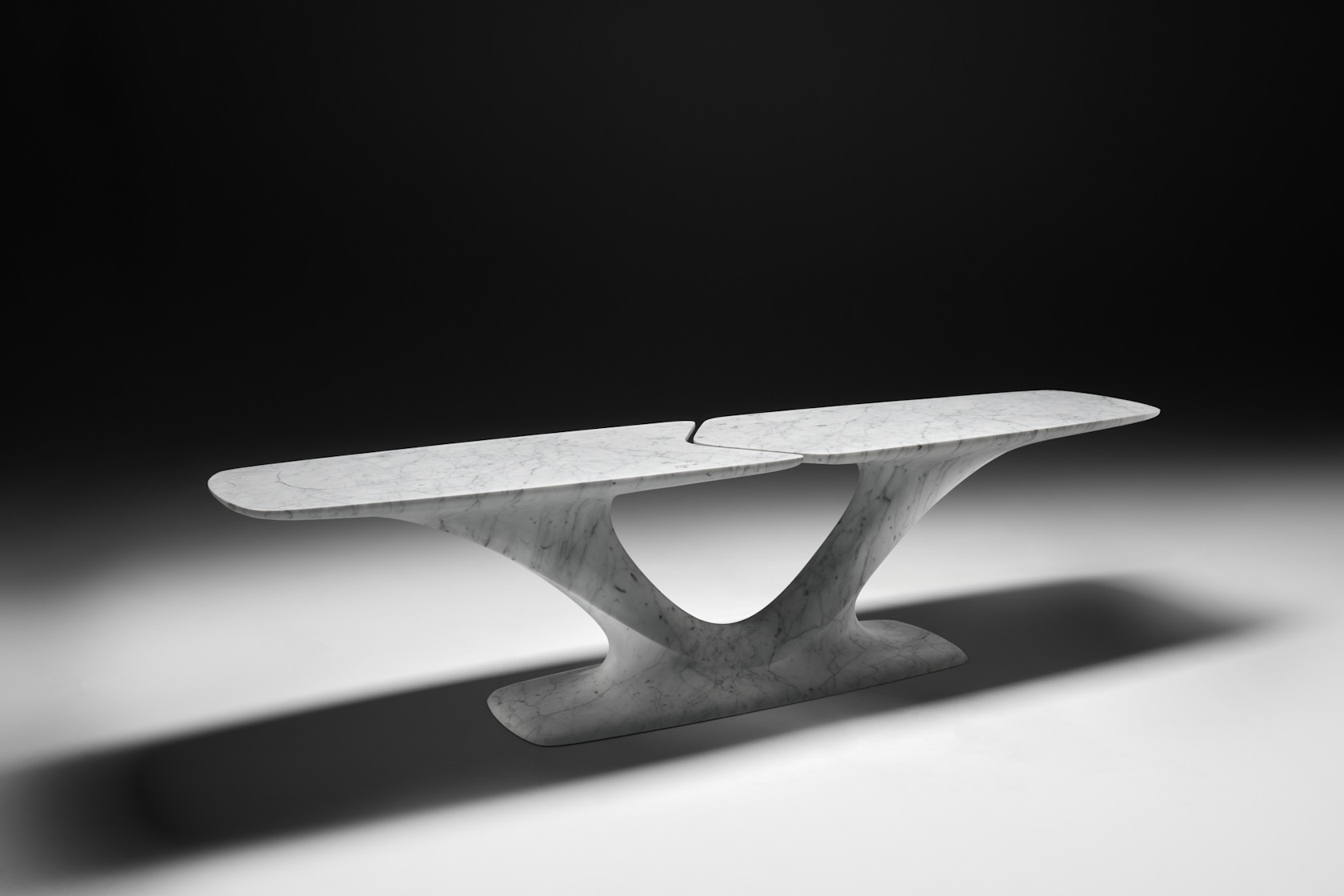
The material embodies the conceptual intent of the chair, with the contours adapting to each unique user, balancing ergonomics, structural resilience and geometric expression. Similarly, the Branch Console, part of the Erosion Collection, is carved from the finest Carrara marble, celebrating the beauty of natural stone transformed over time. The fluid forms and sinuous lines blur the boundary between furniture and sculpture, suggesting an alternative concept of space.
These examples allow architects to reclaim authorship at scales where experimentation is faster, and objects offer a more agile territory for creative testing. This renewed proximity between building and product reveals how architectural thinking is migrating across scales in search of relevance and impact. So, the question stands, should the people who shape cities also shape the chairs? Ultimately, the answer lies in whether architectural values and critical thought can be meaningfully transferred from the scale of the city to the scale of the chair.
Architizer is thrilled to announce that the 2026 A+Product Awards is open for submissions! The clock is ticking — get your products in front of the AEC industry’s most renowned designers by submitting today.
Featured Image: Branch Console by Zaha Hadid Design | Finalist, Residential Furniture 2025 Product Awards
The post From Specification to Authorship: Why Architects Are Designing Furniture Again appeared first on Journal.