
.jpg)










Bastiaan Jongerius Architecten cloaks Longhouse Farm with black timber and metal
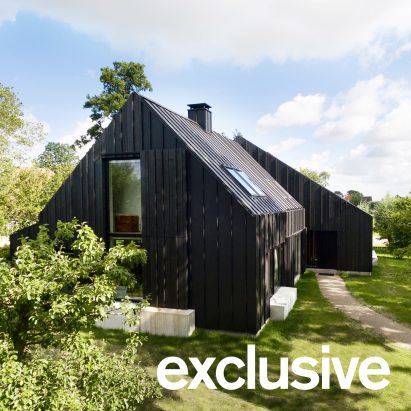
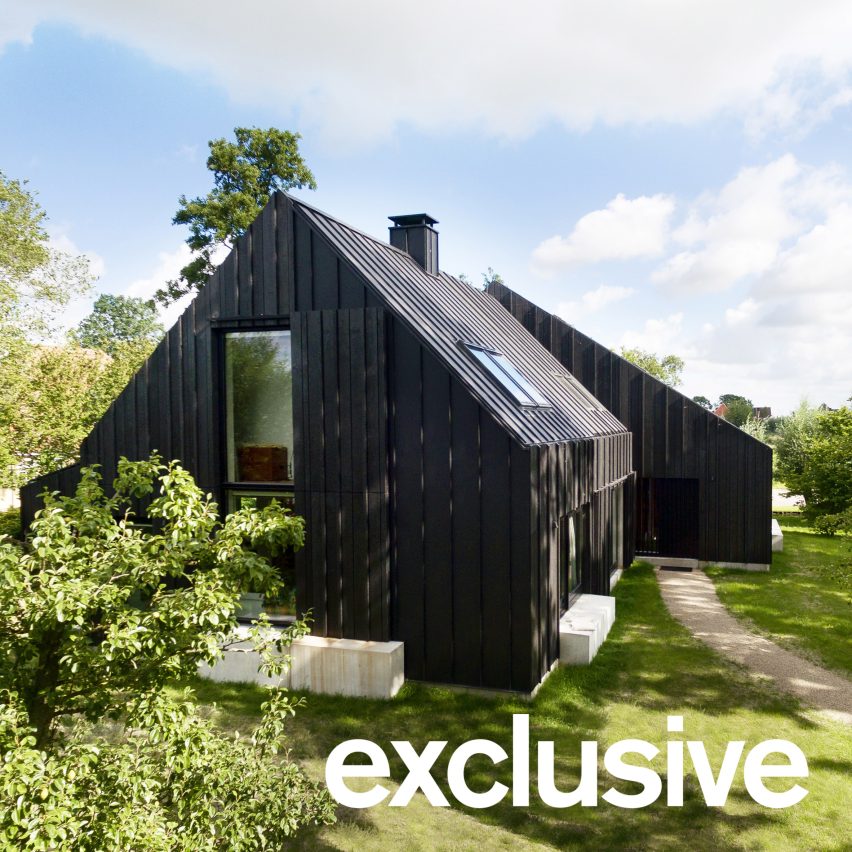
Dutch studio Bastiaan Jongerius Architecten has transformed a 1970s farmhouse outside Amsterdam, extending its timber structure and updating its exterior with black-metal panels and charred wood.
Named Longhouse Farm, the timber-and-brick farmhouse in Zunderdorp was originally slated for demolition until Bastiaan Jongerius Architecten opted to retain and extend it.
The studio created a series of layered openings and double-height voids in its interiors, opening up the home to the surrounding farmland while also highlighting the retained timber structure of its floors and roof.
"At first, it seemed obvious to demolish the small house and start over," the studio told Dezeen.
"But by choosing to preserve the little house, all steps in the design process were focused on what was already present, and those qualities guided the design," it added.
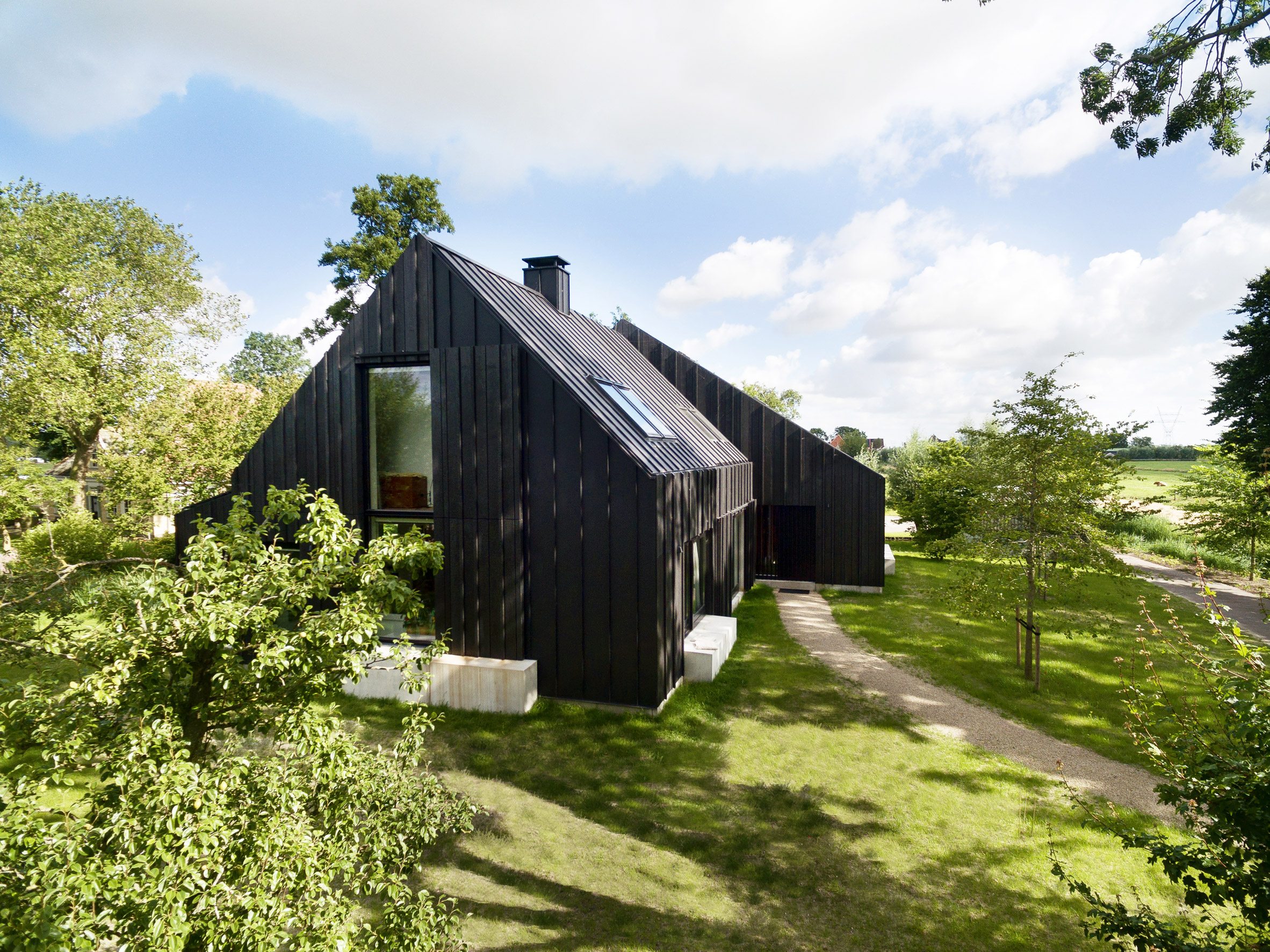
Longhouse Farm comprises a gabled volume to the south occupying the footprint of the existing home, and an adjoining monopitch form to the north that replaces a former garage.
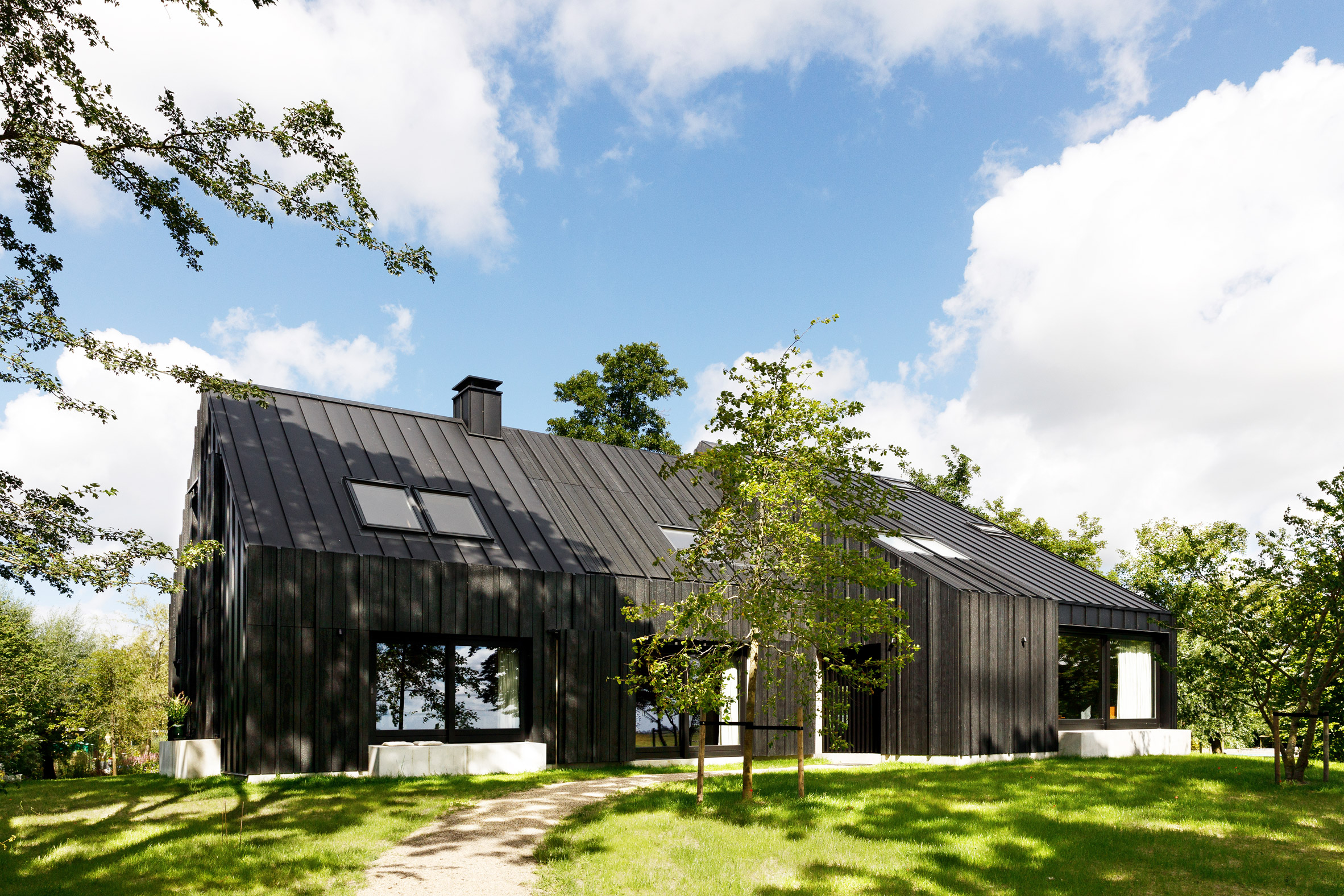
A desire for cladding that would require minimal maintenance led Bastiaan Jongerius Architecten to a combination of blackened Accoya wood, alternated with black metal standing-seam panels, with new insulation improving the home's energy efficiency.
Slightly offset from one another, the two volumes of Longhouse Farm are united by a long axis through the centre of the home, bookended by double-height windows that frame a nearby church tower and the landscape.
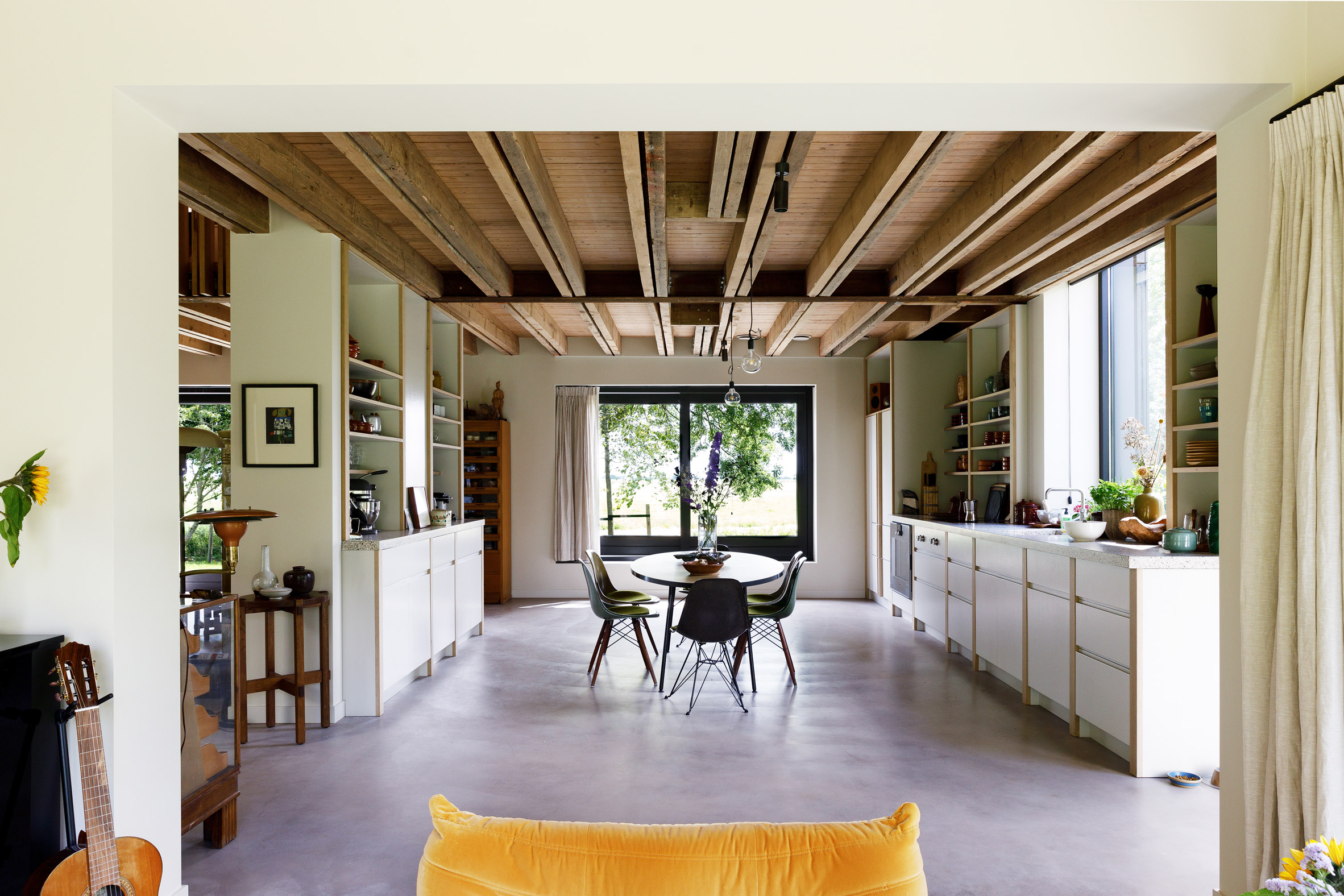
The house is entered in the northern volume, where a study space is separated from a porch by a slatted wooden screen.
Folding doors lead through into a large living, dining and kitchen area to the south, which steps down into a skylit lean-to.
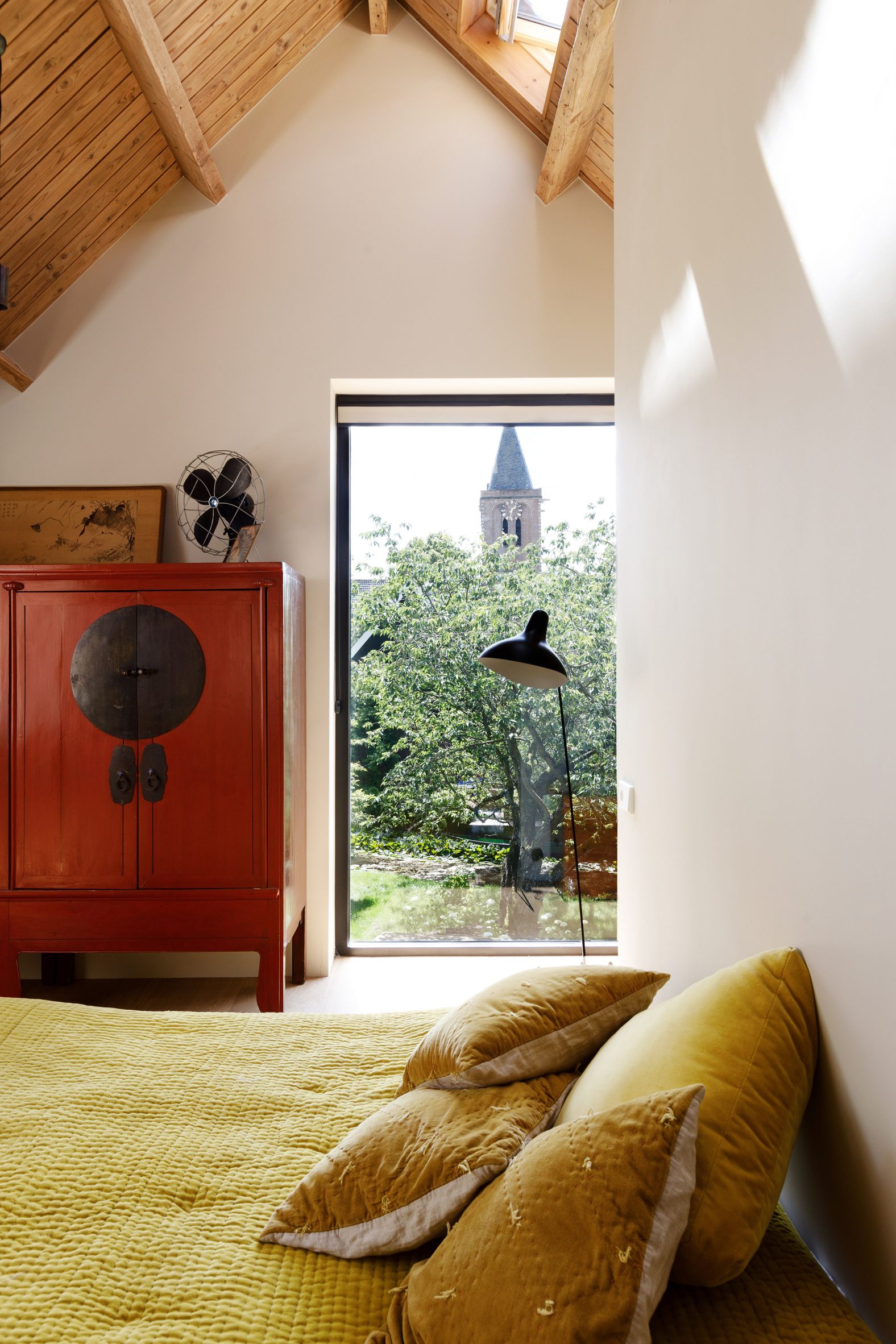
Voids above both this study and the living area reveal the home's timber roof structure, wrapped by landings on the first floor. These landings connect the ensuite main bedroom to two guest bedrooms and an additional bathroom.
"By creating voids, the floors are spatially connected with each other, there is a view of the existing wooden roof structure, it shapes the interior," said the studio.
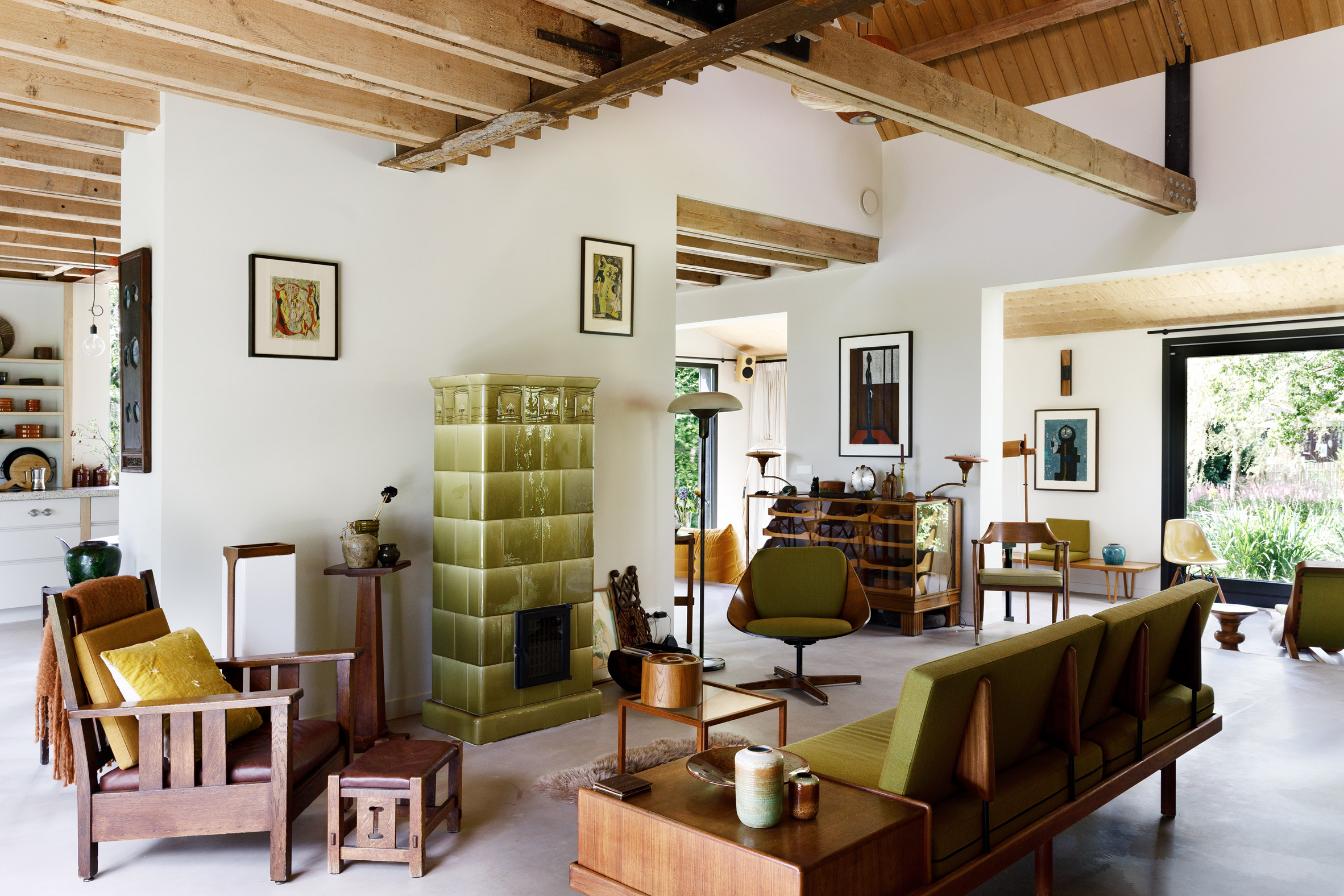
"Just as the facade openings align with each other, the openings in the interior walls also align," added Bastiaan Jongerius Architecten.
"These longitudinal axes connect the interior with the village church and the polder landscape through the windows in the gable ends."
A series of prefabricated concrete blocks has been placed around the perimeter of the home, serving either as outdoor benches or small terraces accessed via sliding glass doors.
Elsewhere in the Netherlands, Studioquint recently renovated and extended a brick farmhouse close to the Belgian border with a volume that resembles the "shadow" of the existing building, and Woonpioniers built a house that "moves with the dunes" on Goeree-Overflakkee island.
The photography is by Jansje Klazinga.
The post Bastiaan Jongerius Architecten cloaks Longhouse Farm with black timber and metal appeared first on Dezeen.