








Architecture for Houseplants: 6 Projects for Cultivating Domestic Greenery
Architects: Want to have your project featured? Showcase your work by uploading projects to Architizer and sign up for our inspirational newsletters.
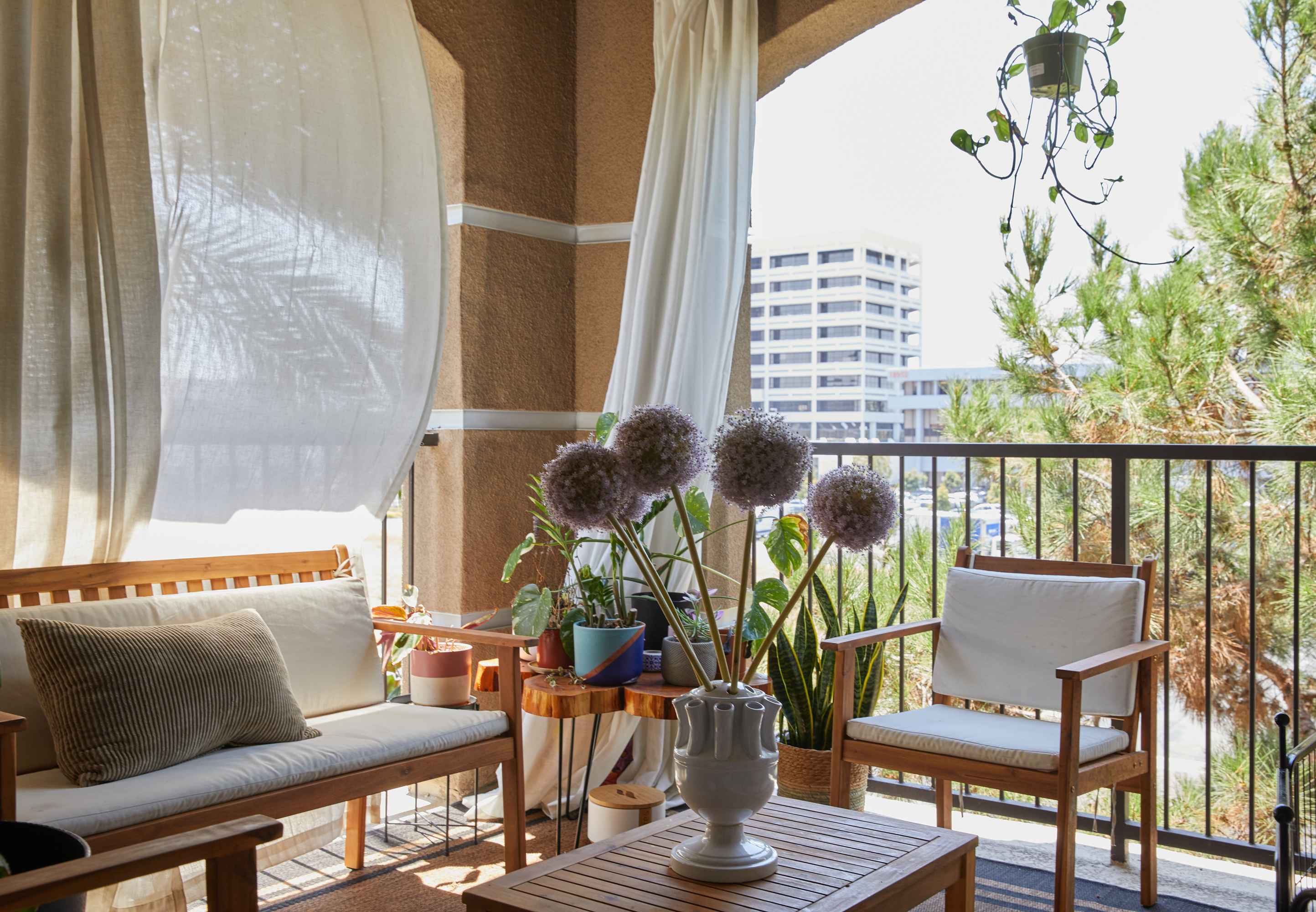
“Plant parents” have become a new client demographic. In the past couple of years, houseplants have been some of the most popular options for interior design and decoration. Forget en-suites and open-plan kitchens. Today’s house tours are guided by chlorophyll: “Here is my Ficus lyrata (Fiddle Leaf Fig), to the left is my Strelitzia nicolai (White Bird of Paradise) and finally, my ten-year-old Monstera deliciosa (Swiss Cheese Plant).”
Consequently, architects are stepping up their game, reshaping domestic space and designing around their leafy cohabitants. The following six projects explore interior courtyards, indoor micro gardens and overgrown balconies, showcasing how vegetation can shape spatial experience. Collectively, these projects elevate the notion of designing with houseplants, treating them not as decorative afterthoughts, but as integral architectural elements. In this case, plants are not mere accessories to space, but collaborators in its making.
Inside Out House
By Gaurav Roy Choudhury Architects, Bengaluru, India
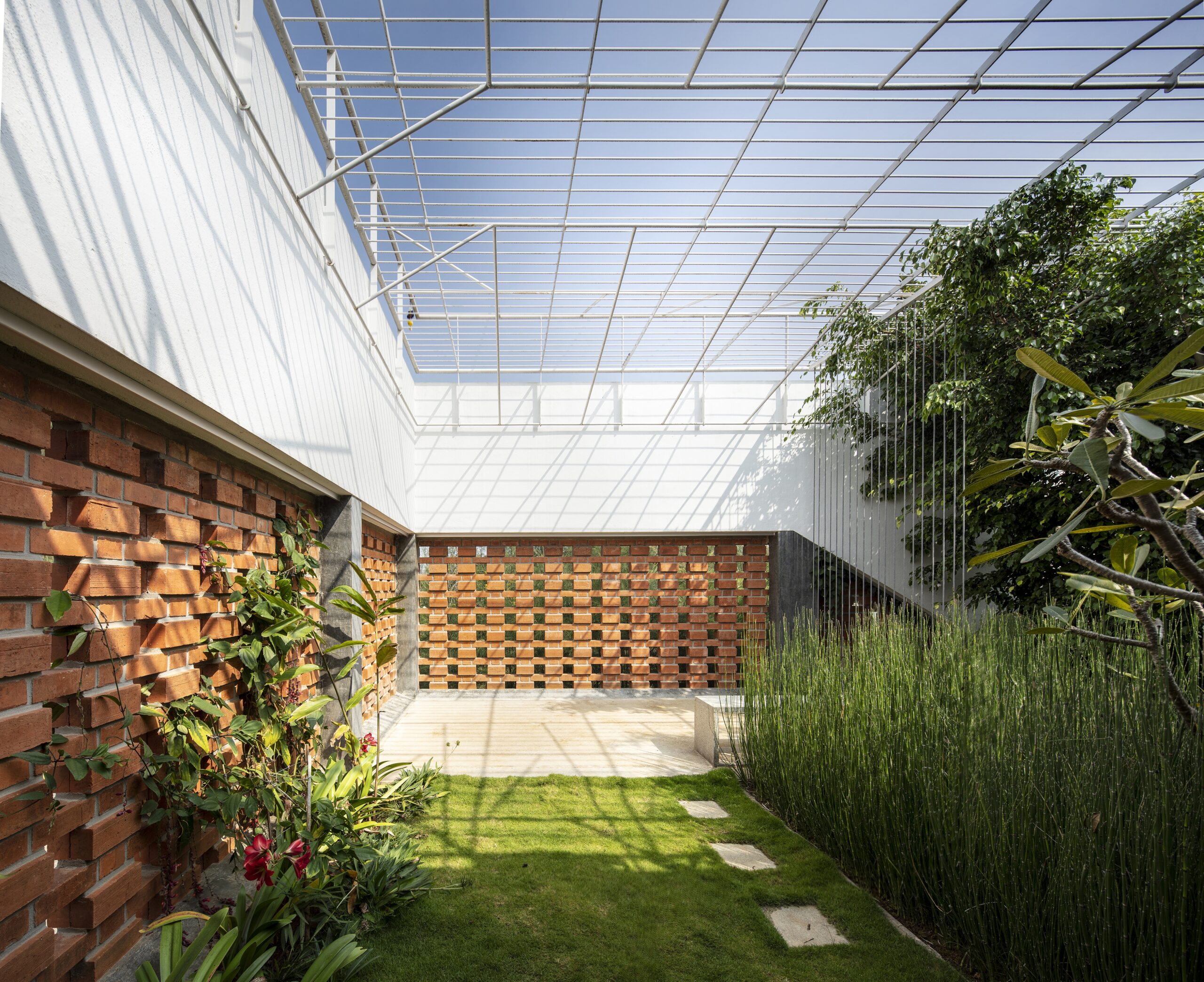
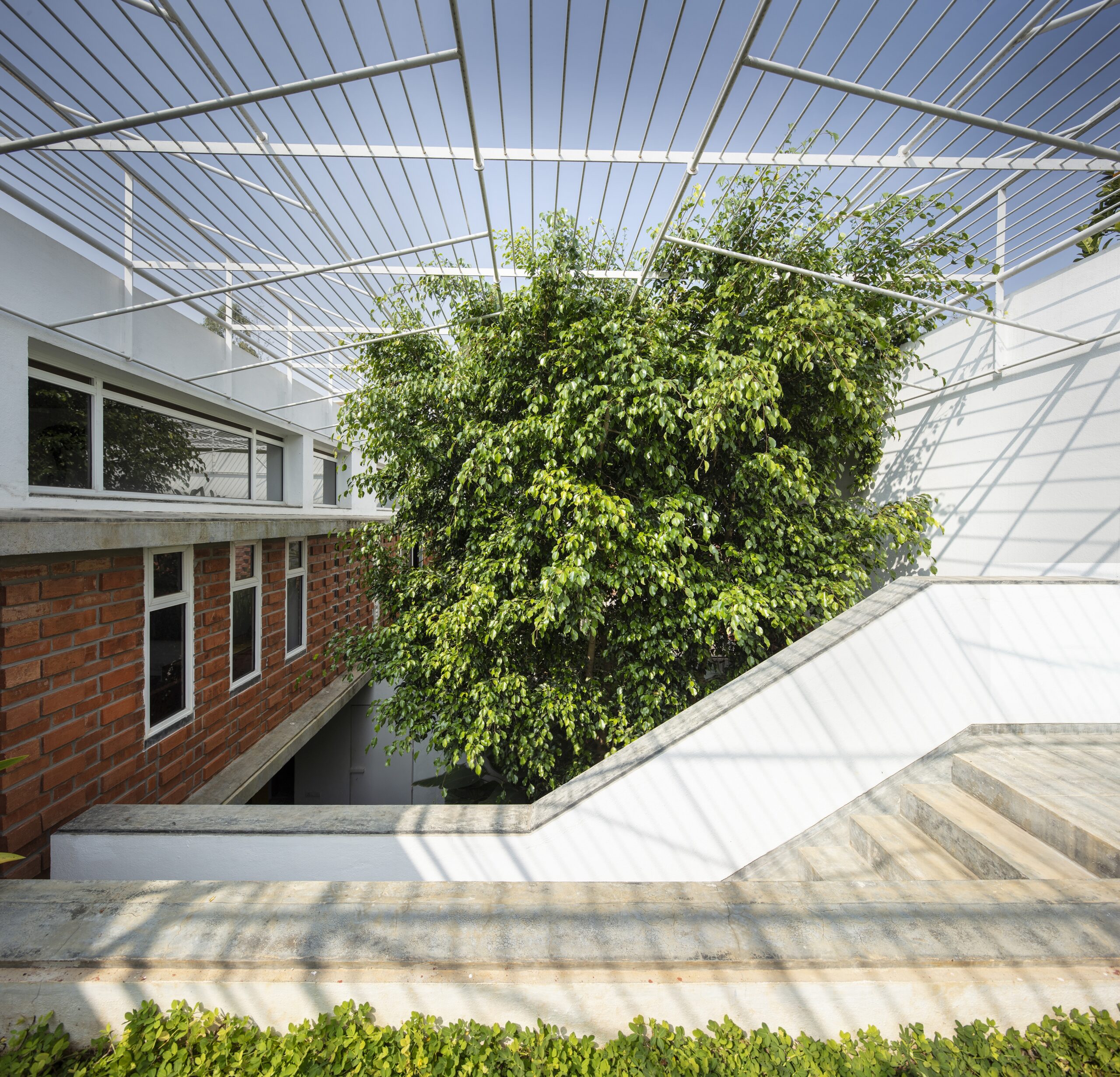
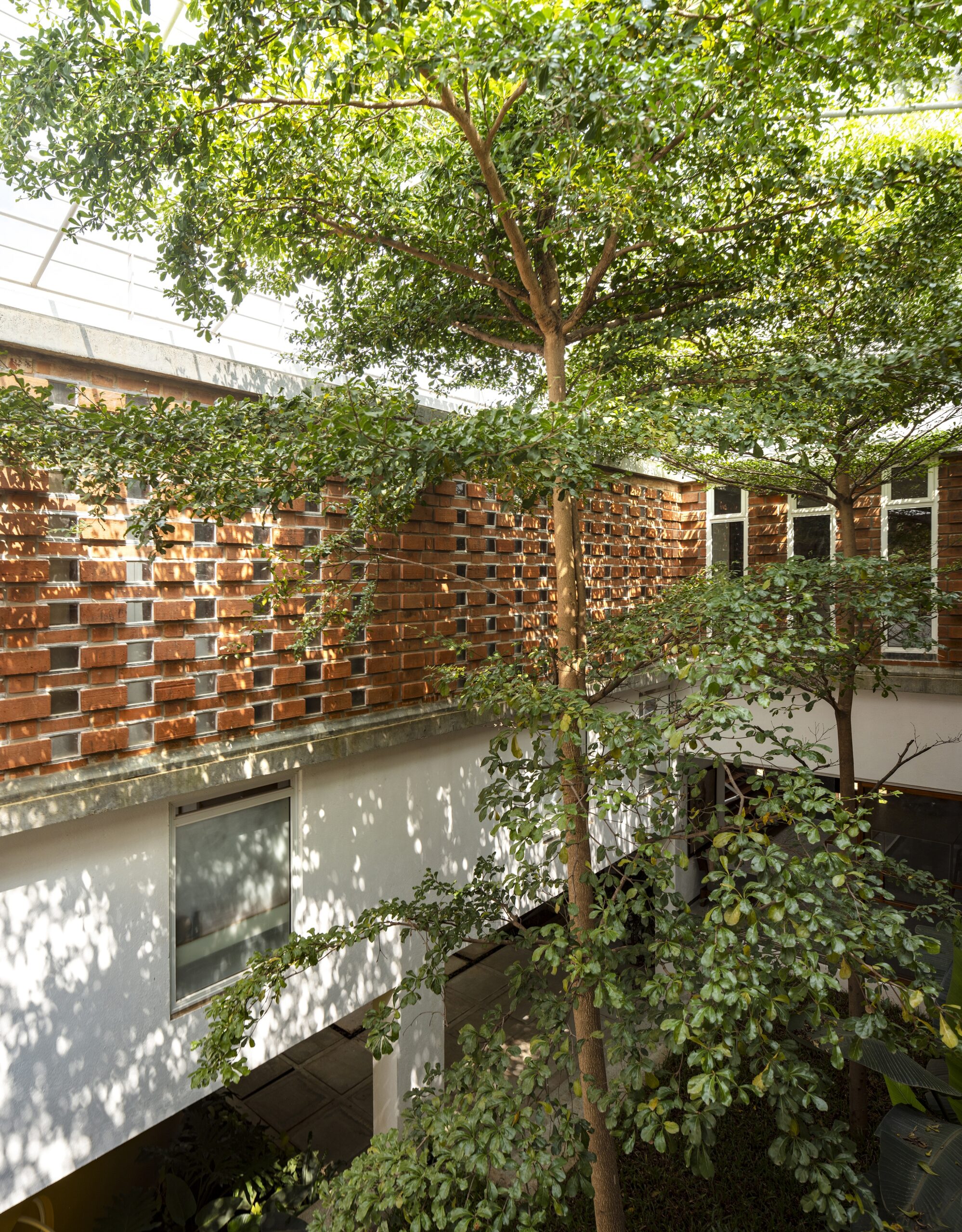 The house “looks” inside. From the outside, it appears as an enclosed structure, made from concrete and brick — most of it solid, with brickwork patterns shaping small apertures along the façade. Upon first glance, the design appears simple; however, turning inwards, a complexity is revealed, an interrelationship between architecture and plant.
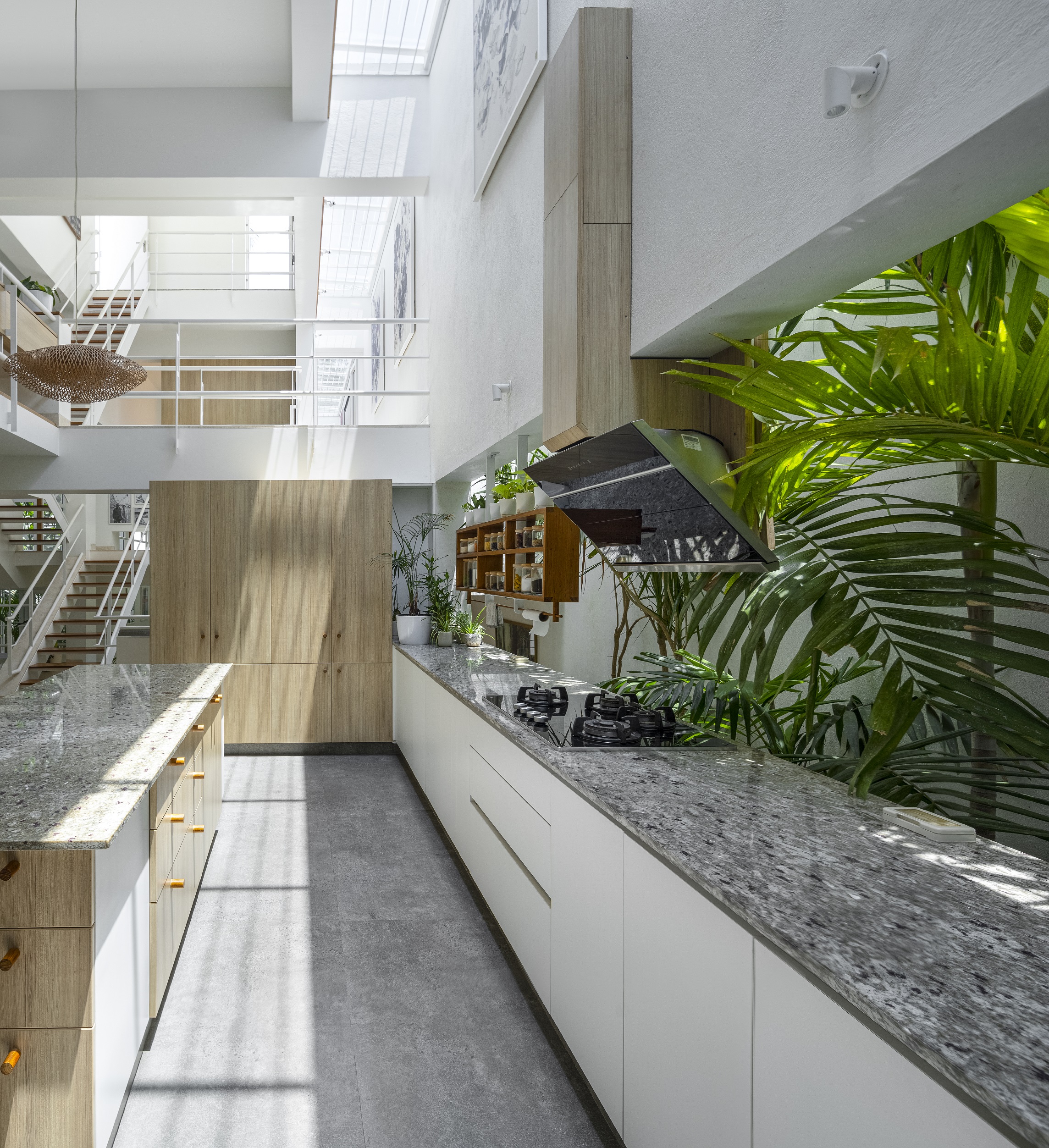
The house features an interior courtyard, where every nook is neatly filled with vegetation. The living and dining areas become an integral part of the courtyard, operating in between the plants, which eventually guide the user to the roof, where another garden-like space is discovered, gently framed by a metallic, white canopy.
Thao Dien House
By MM++ Architects / MIMYA, Ho Chi Minh City, Vietnam
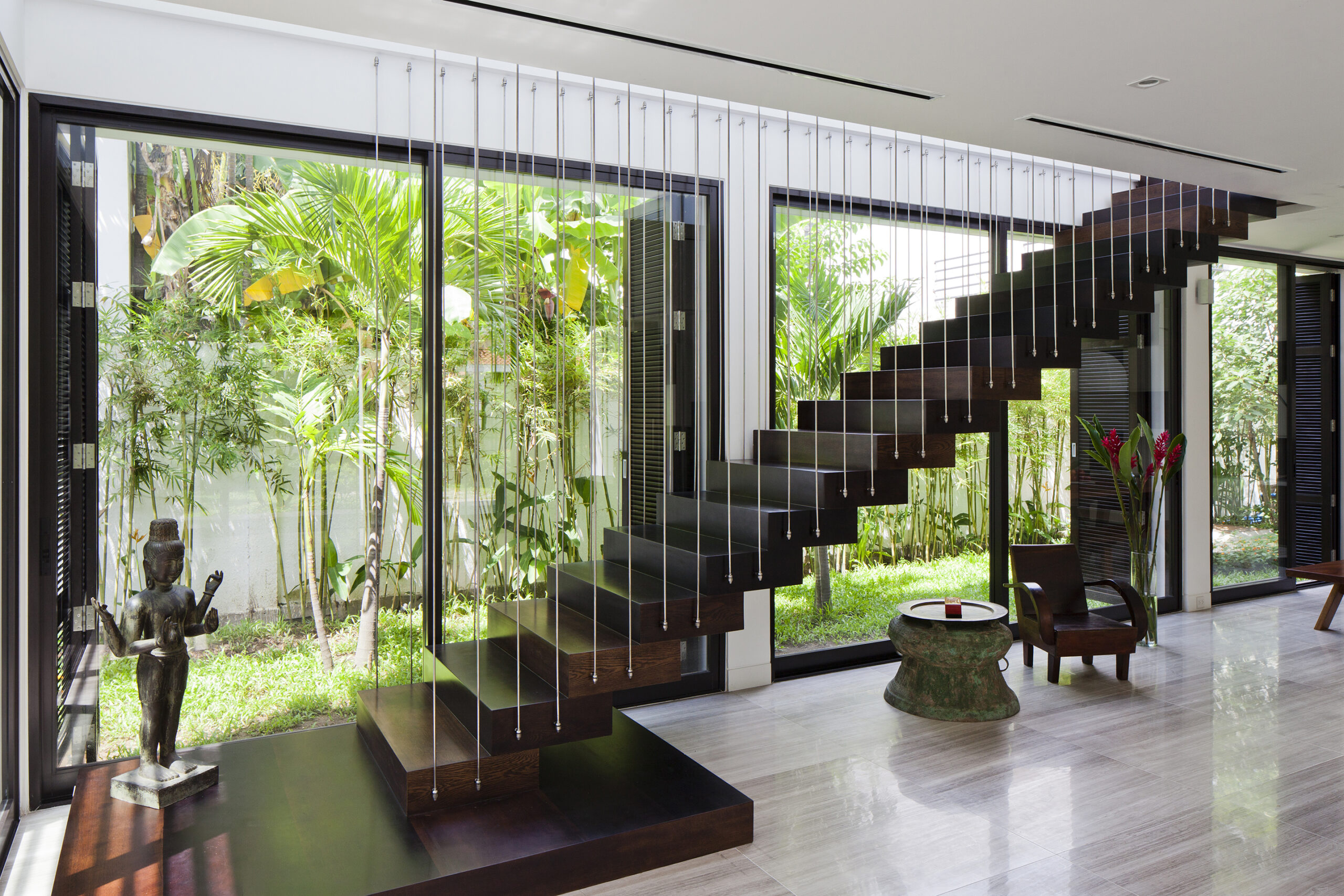
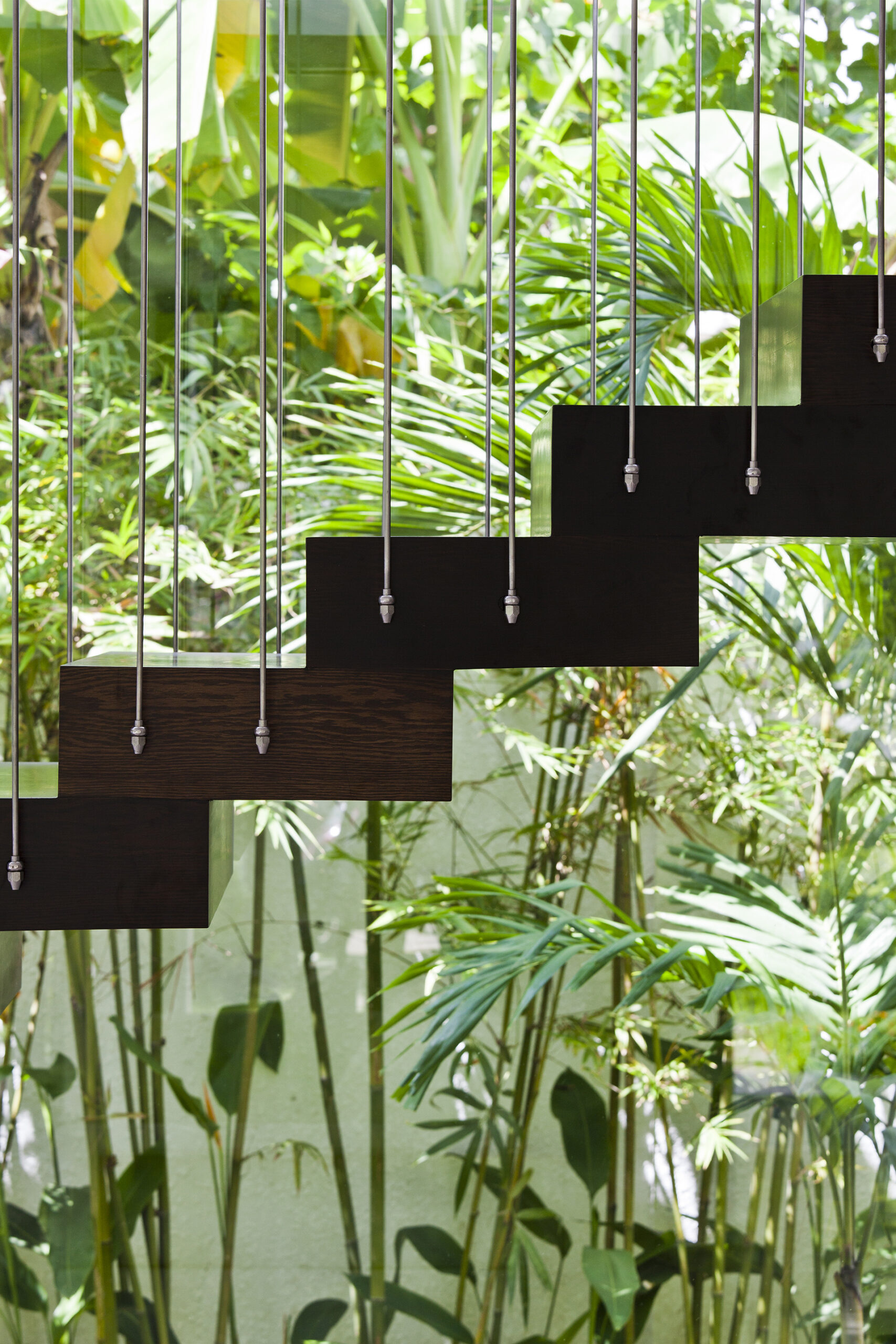 Thao Dien House establishes a different type of dialogue with plants. Specifically, the renovation focused on opening up the structure and reconnecting the interior to the garden. Through its glass openings and narrow balcony, the boundary between inside and outside becomes almost transparent while at the same time the vegetation serves as a backdrop for a series of lightweight architectural elements, such as the metallic staircase or the bathtub.
Broadway Penthouse
By Joel Sanders Architect, New York City, New York
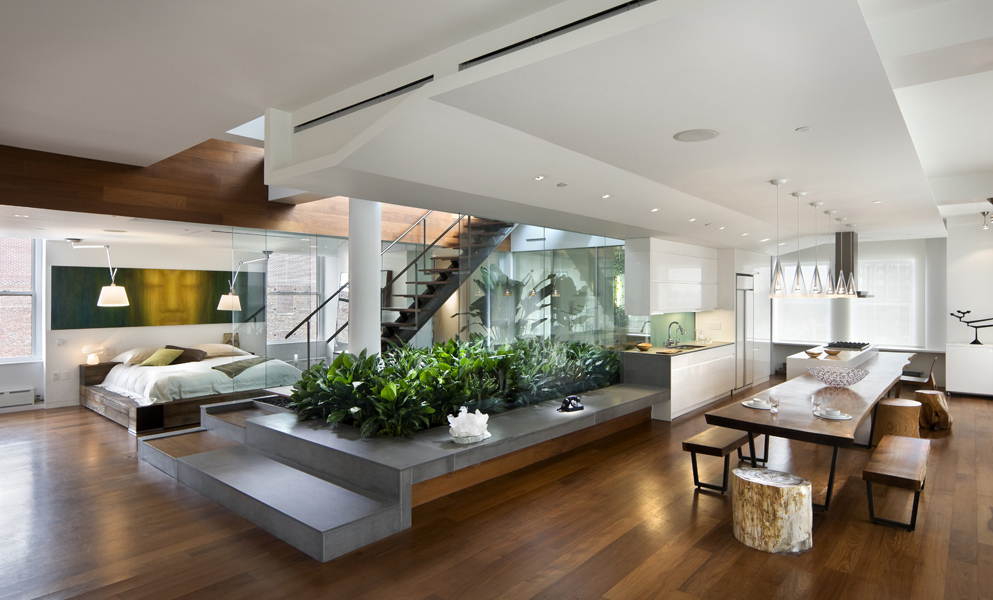
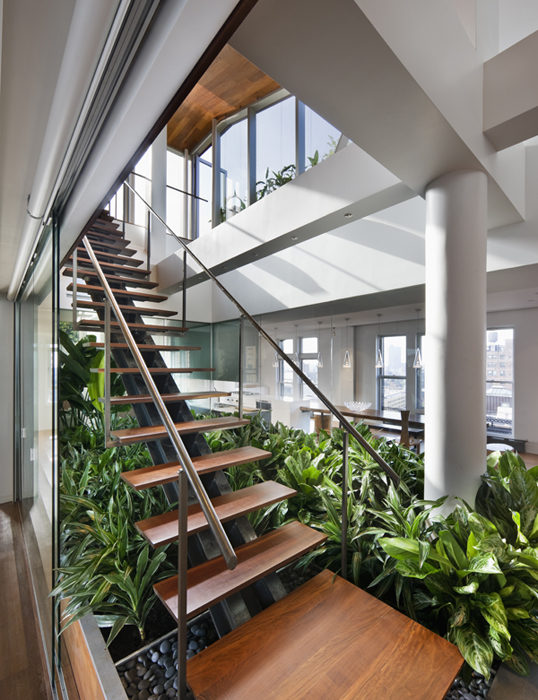 This house is perhaps the most “in sync” with houseplants. The central space features at its core a metallic staircase, surrounded by a canopy filled with vegetation. It acts as a green veil from which the central circulation route unfolds, leading to a terrace that is planted with sedum and grasses. Ultimately, this gesture rethinks the notion of the urban garden, using houseplants as a means to shape a central core that is both functionally and aesthetically cohesive.
Casa Jardin Escandon
By CPDA ARQUITECTOS, Mexico City, Mexico
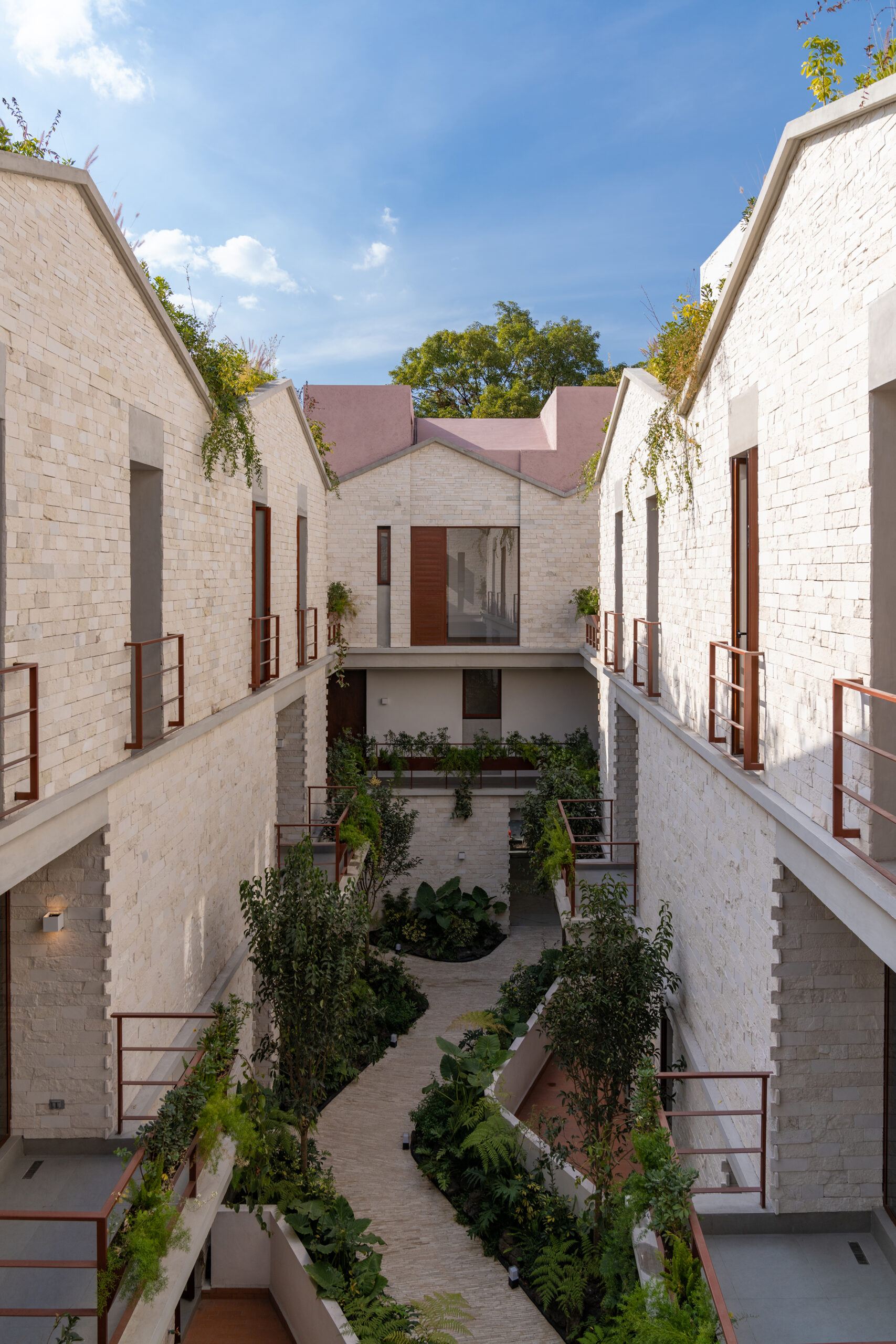
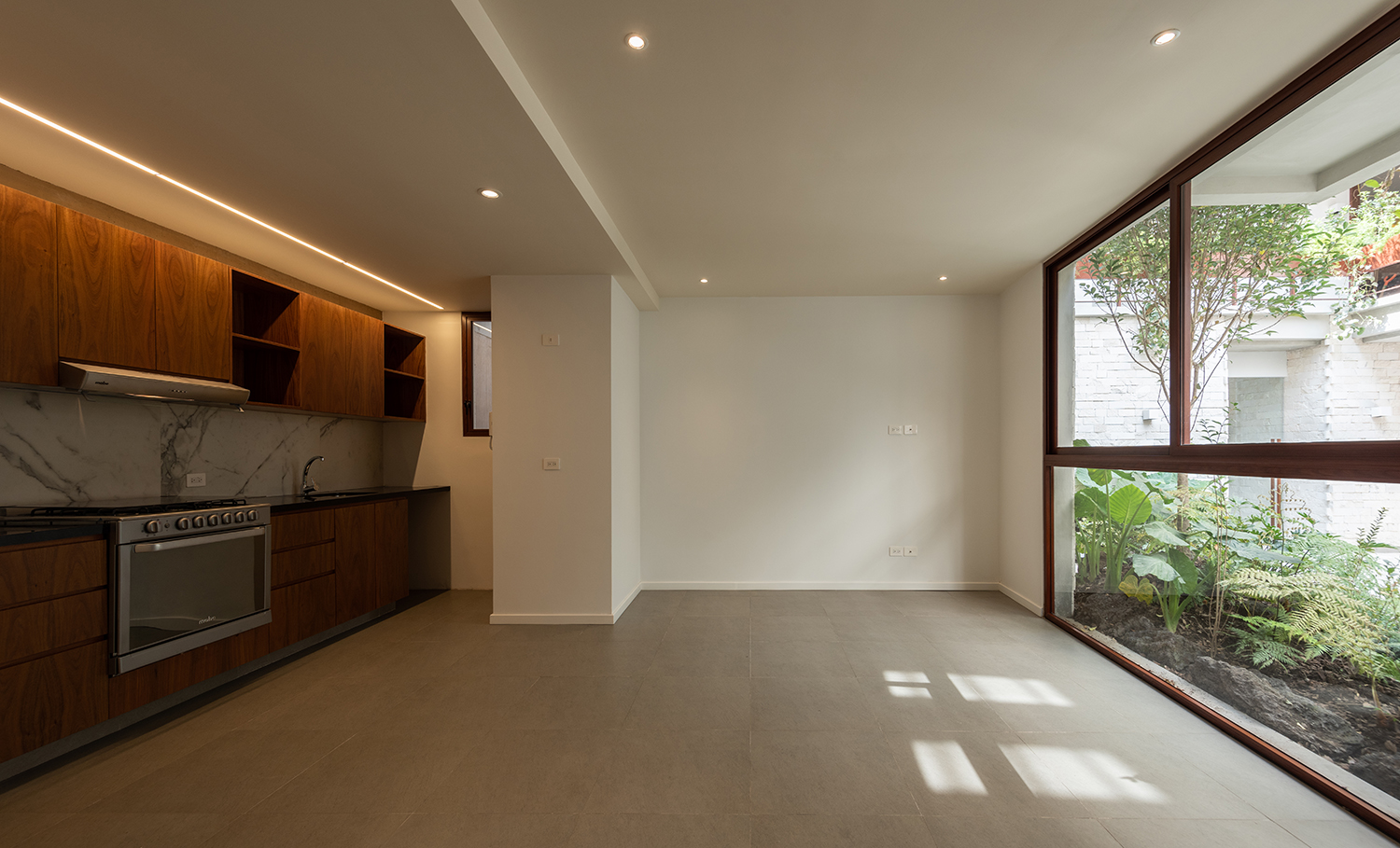 Going up a scale, this project is located at 19 Agricultura Street in the Escandón neighborhood of Mexico City and features a mixed-use complex with street-level commerce and 14 residential units. What binds the spaces together is a central courtyard that serves as an irregular circulation space and a planting bed for a variety of native plants.
Although vegetation is primarily dominant within the central courtyard, different plant species appear in other, unorthodox spaces such as the linings in-between the roofs, as well as in metallic flower boxes that make up part of the balcony railing. Together, these pockets of greenery weave a continuous thread through the building.
Kontum House
By KHUÔN Studio, Kon Tum Province, Vietnam
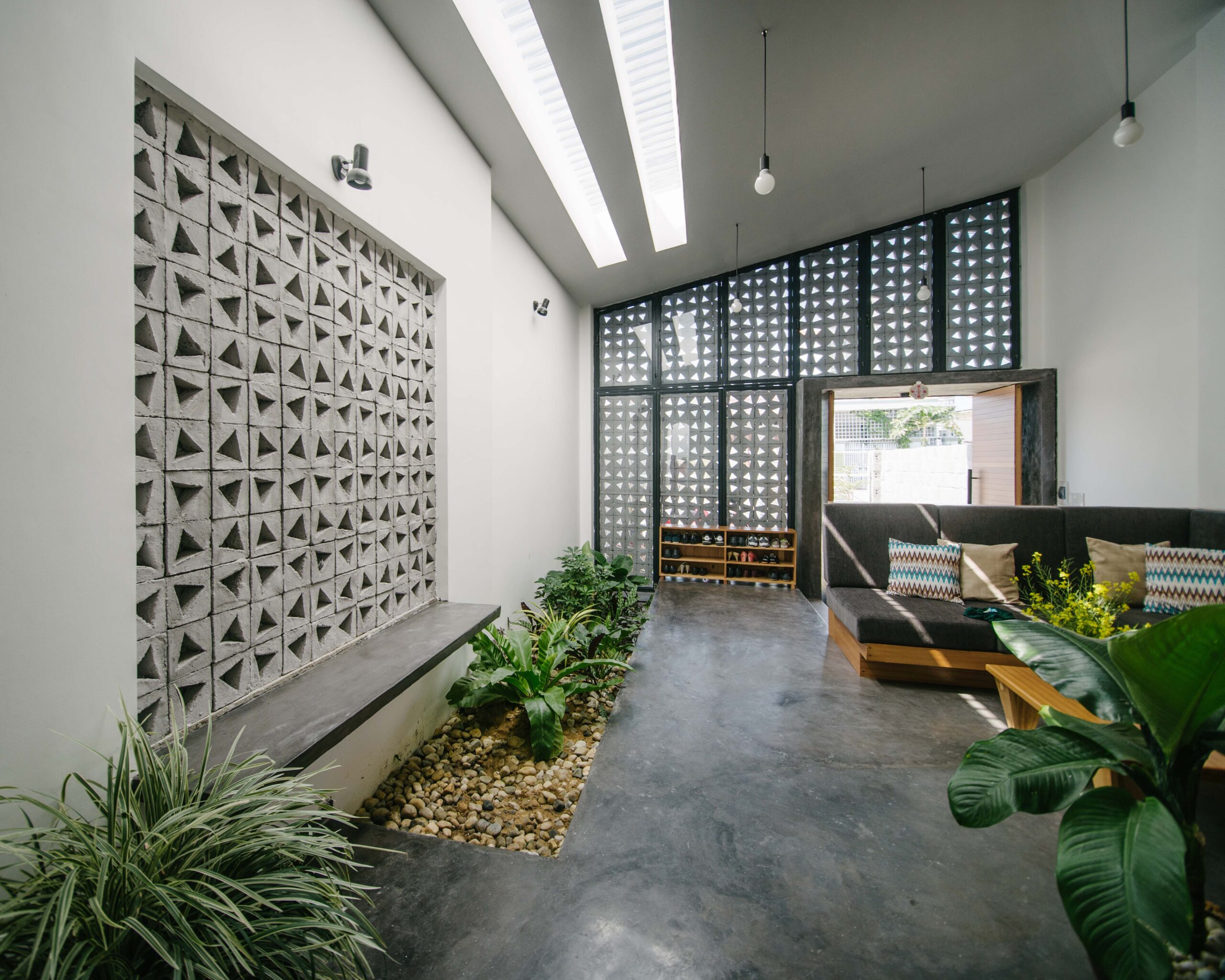
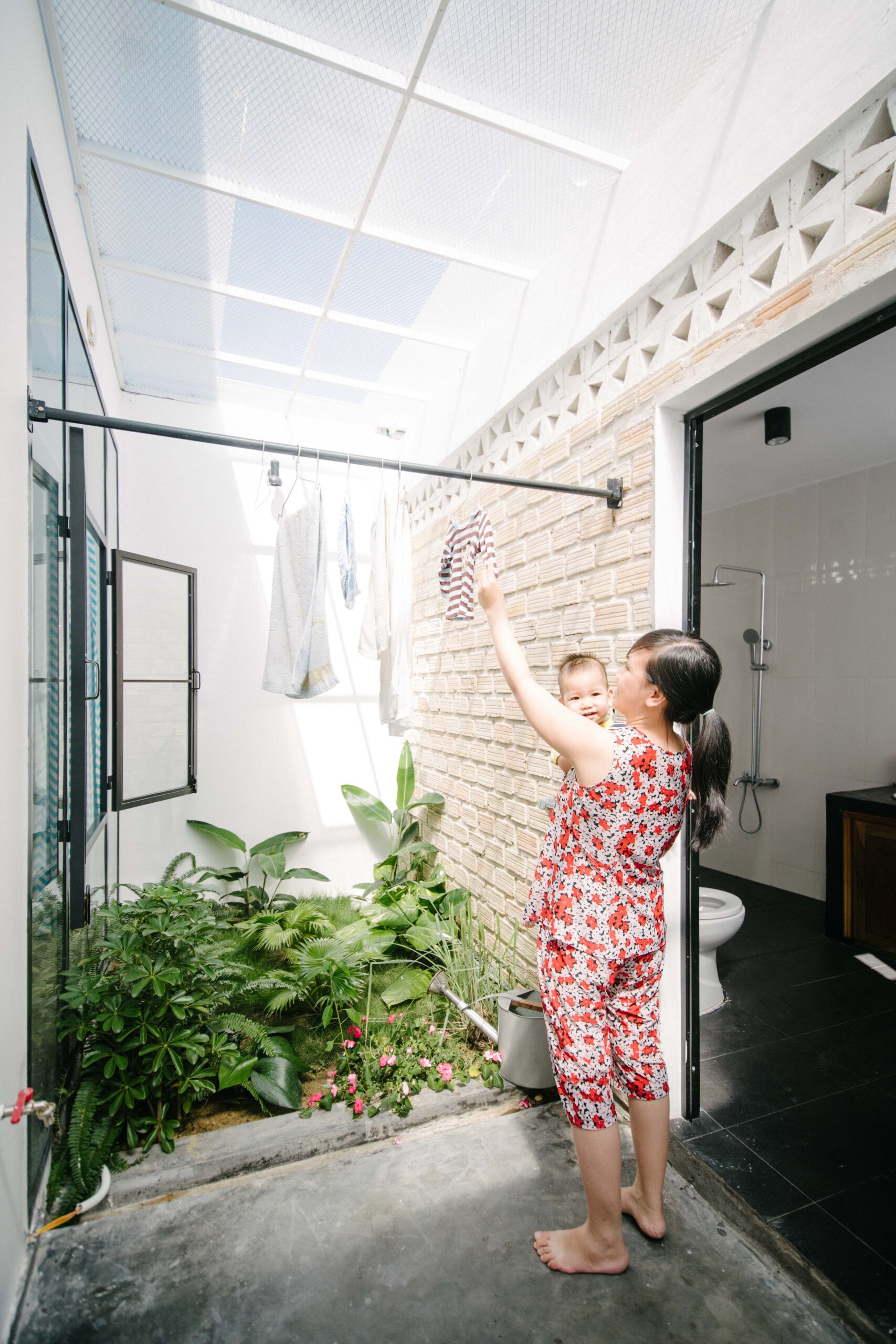 Finally, Kontum House acts as a vessel for carefully placed houseplants. Specifically, its uniform shape and texture – comprised of concrete and white brick – is playfully interrupted by planting beds scattered throughout the spaces. Above them, linear skylights puncture the ceiling, allowing natural light to enter the space, helping in parallel the interior plants to thrive.
These moments of greenery gradually expand, becoming part of smaller courtyards that surround the house. Consequently, the house is transformed into a porous landscape, where light, air, and vegetation flow through its concrete frame.
Veiled House
By Gaurav Roy Choudhury Architects, Kundapura, India
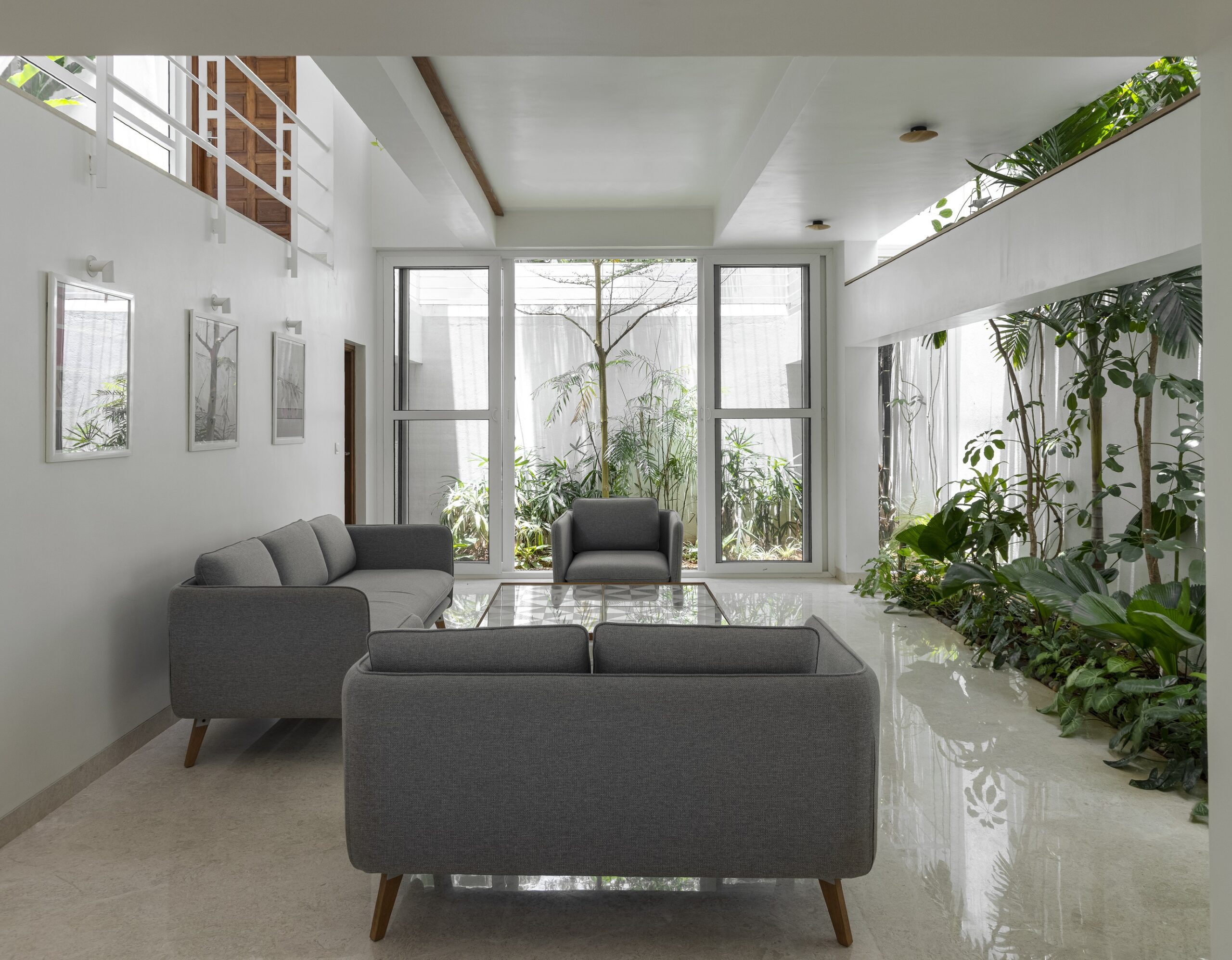
 Similar to the Inside Out House (featured at the onset of this list), this project is also an inward-looking residence. Its condensed, monolithic form is broken up by two courtyards, one in the higher southern block and one in the lower northern block, both placed in-between the public and private edges of the house. They are considered extensions of the indoor spaces, treated as thresholds that become a source of light as well as a home to a variety of plants. These indoor micro gardens are carefully curated, heavily contrasting the wild vegetation that surrounds — and at times enters violently — the house through its cracks.
Architects: Want to have your project featured? Showcase your work by uploading projects to Architizer and sign up for our inspirational newsletters.
Featured Image: Inside Out House by Gaurav Roy Choudhury Architects, Bengaluru, India
The post Architecture for Houseplants: 6 Projects for Cultivating Domestic Greenery appeared first on Journal.