







A Hotel That Rewards the Trained Eye: Inside Piero Lissoni’s New York Debut
Architizer is thrilled to announce that the 2026 A+Product Awards is open for submissions! The clock is ticking — get your products in front of the AEC industry’s most renowned designers by submitting today.
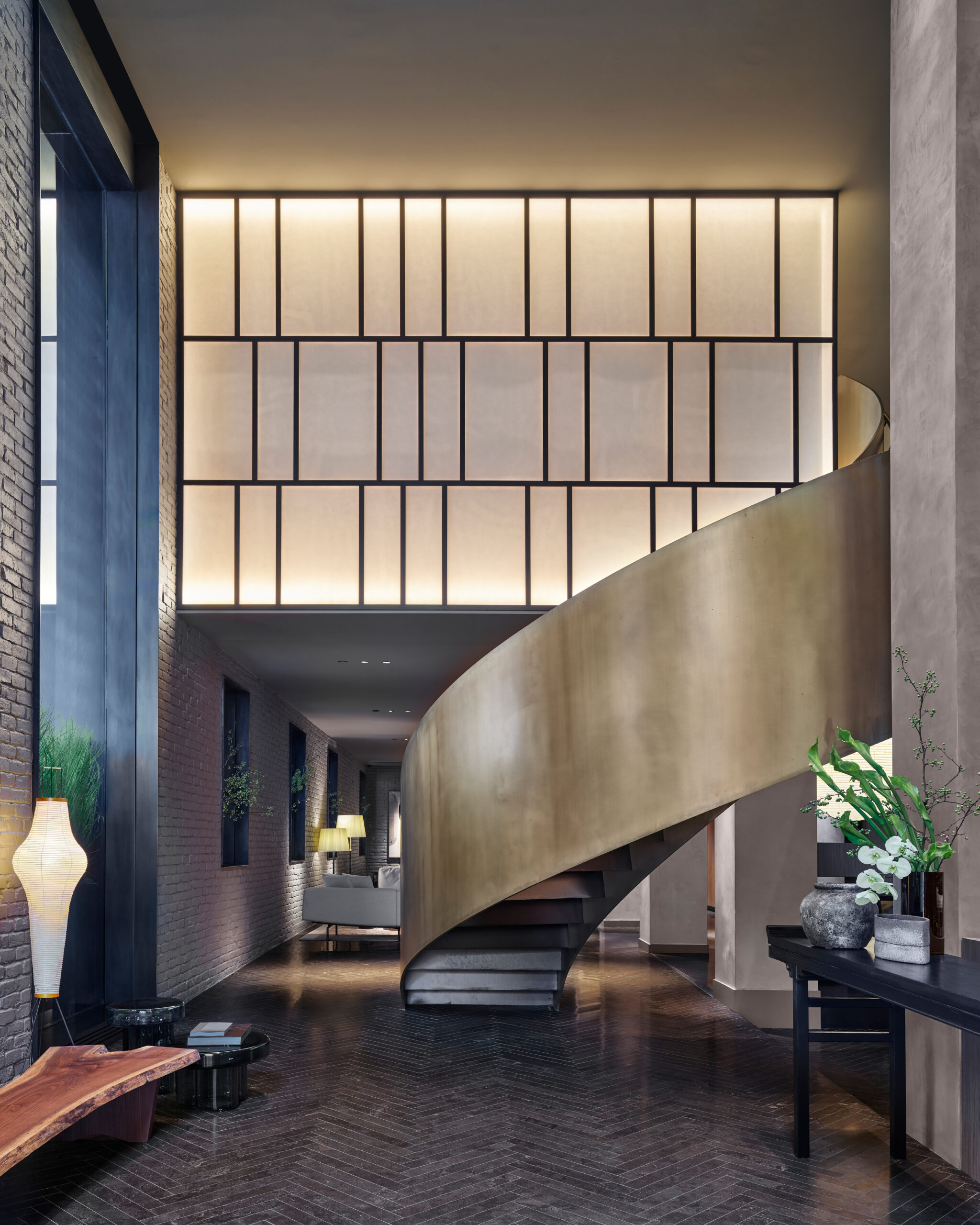
You notice the staircase first. Bronze-painted steel, floating in the center of the lobby. Then you look closer and catch the treads: Pietra d’Avola, a rich, chocolatey Sicilian limestone that Salvatori — the Tuscan stone house founded near Carrara in 1946 — has spent decades championing as a warmer alternative to the whites that dominate contemporary interiors. If you know Salvatori’s work, you know the story: Guido Salvatori invented the split-face finish in 1950, the company developed Lithoverde (the first recycled natural stone composite) sixty years later, the staircase isn’t just a staircase.
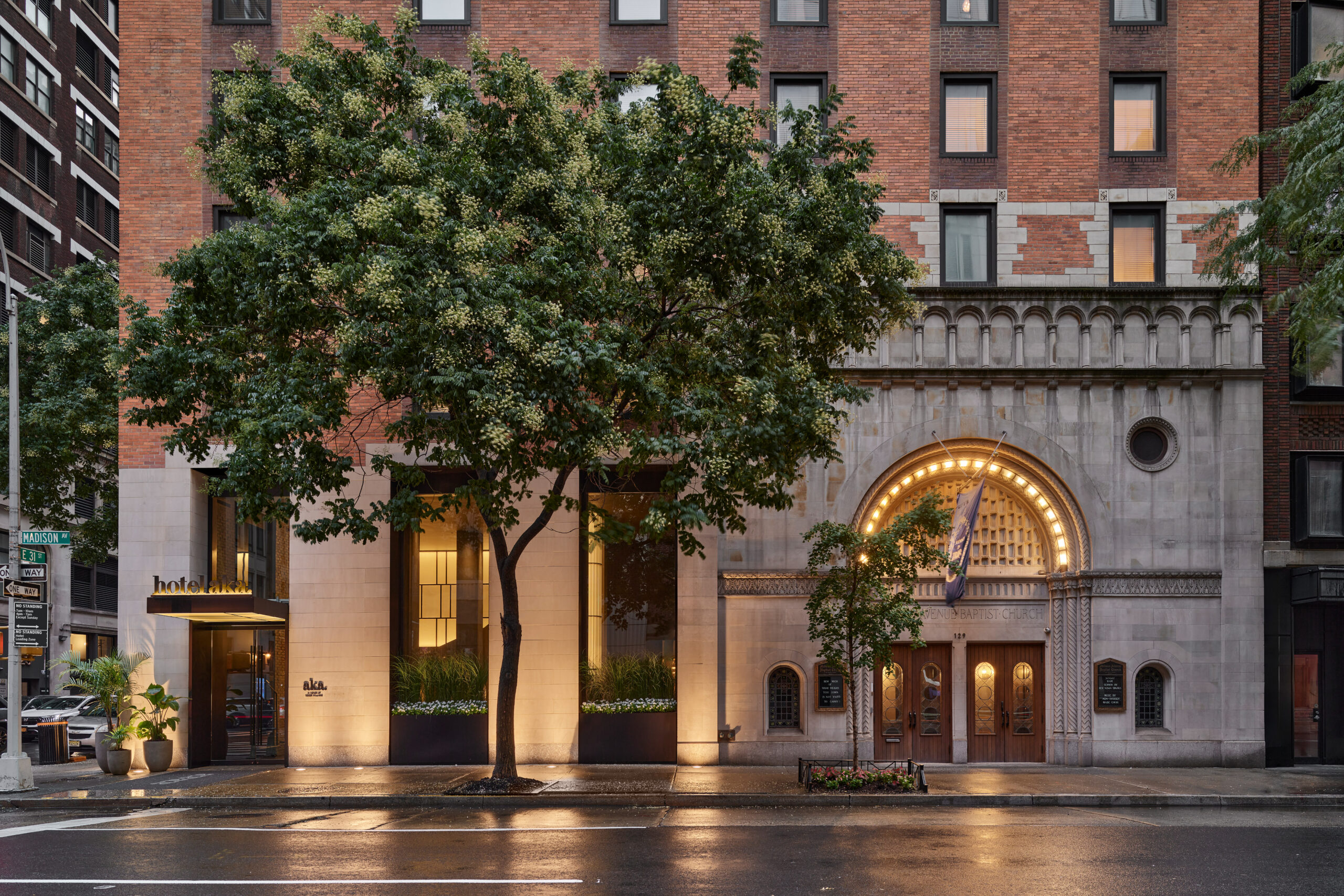
This is how Hotel AKA NoMad unfolds for anyone with a trained eye. Piero Lissoni’s first New York City hotel, which opened in May 2023 at 131 Madison Avenue, is filled with objects that carry histories, and those histories are legible to anyone who knows where to look.
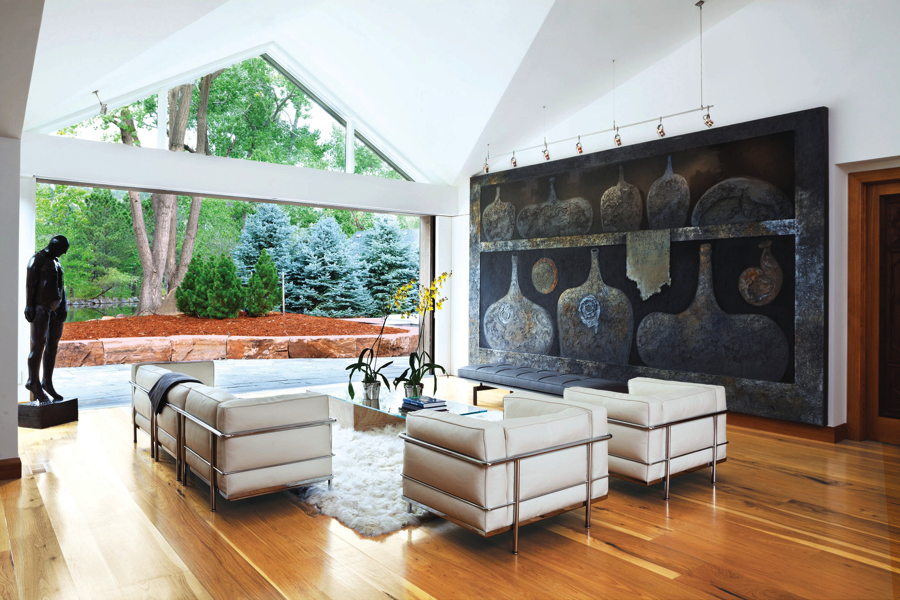
The sofas, for instance. They’re Living Divani, which means more than fifty years of Brianza upholstery tradition, which means Lissoni’s three-and-a-half-decade tenure as the company’s art director, which means a particular philosophy about proportion and comfort: how seat depth relates to backrest height, how foam densities and frame engineering can produce ease without visual bulk. His Frog chair, designed for Living Divani in 1995, anticipated the low-slung seating that would come to define contemporary interiors. His Extrasoft sofa, launched in 2008, remains a reference point for modular upholstery. To sit on one of these pieces at Hotel AKA NoMad is to sit inside a body of work.
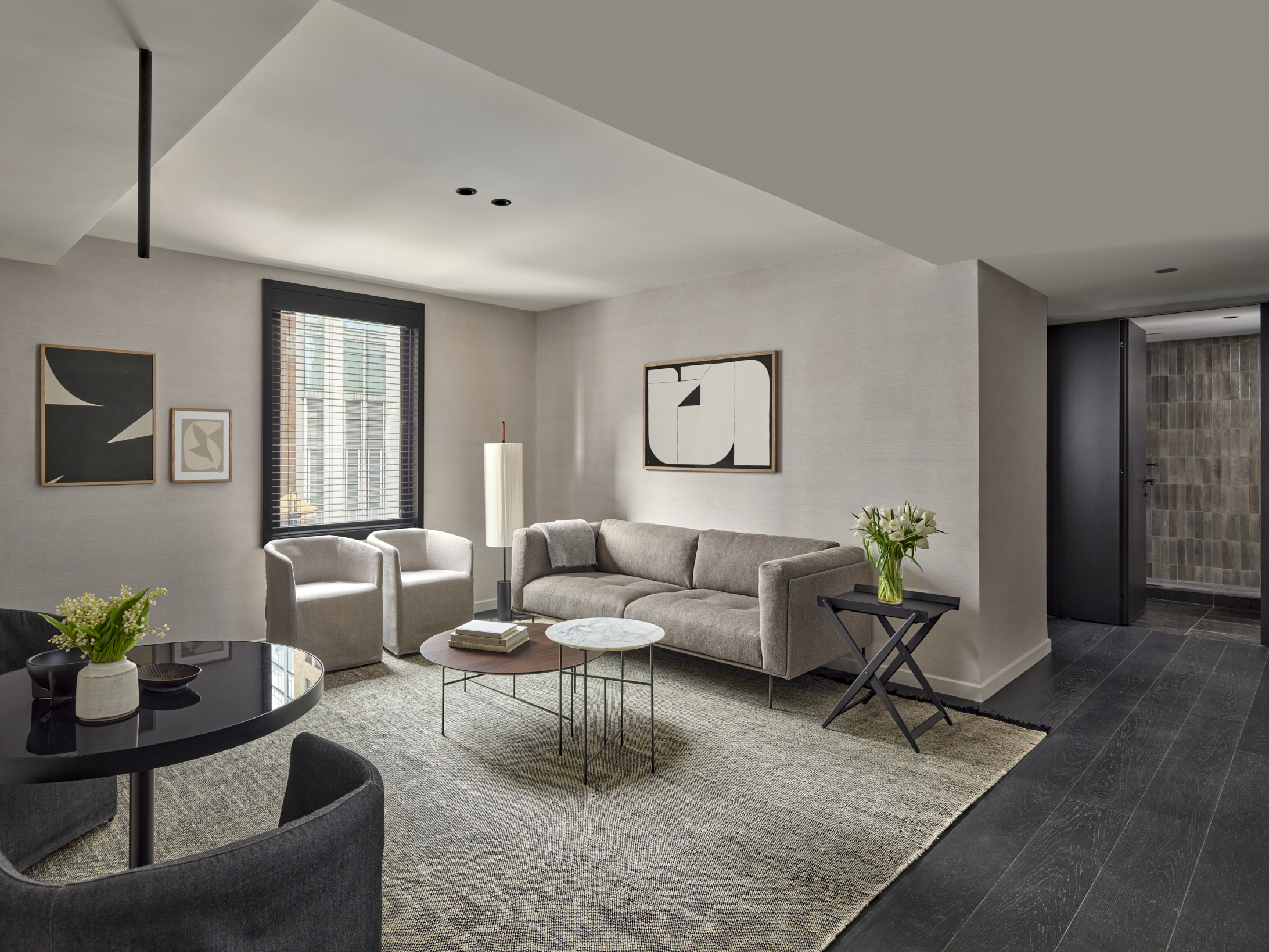
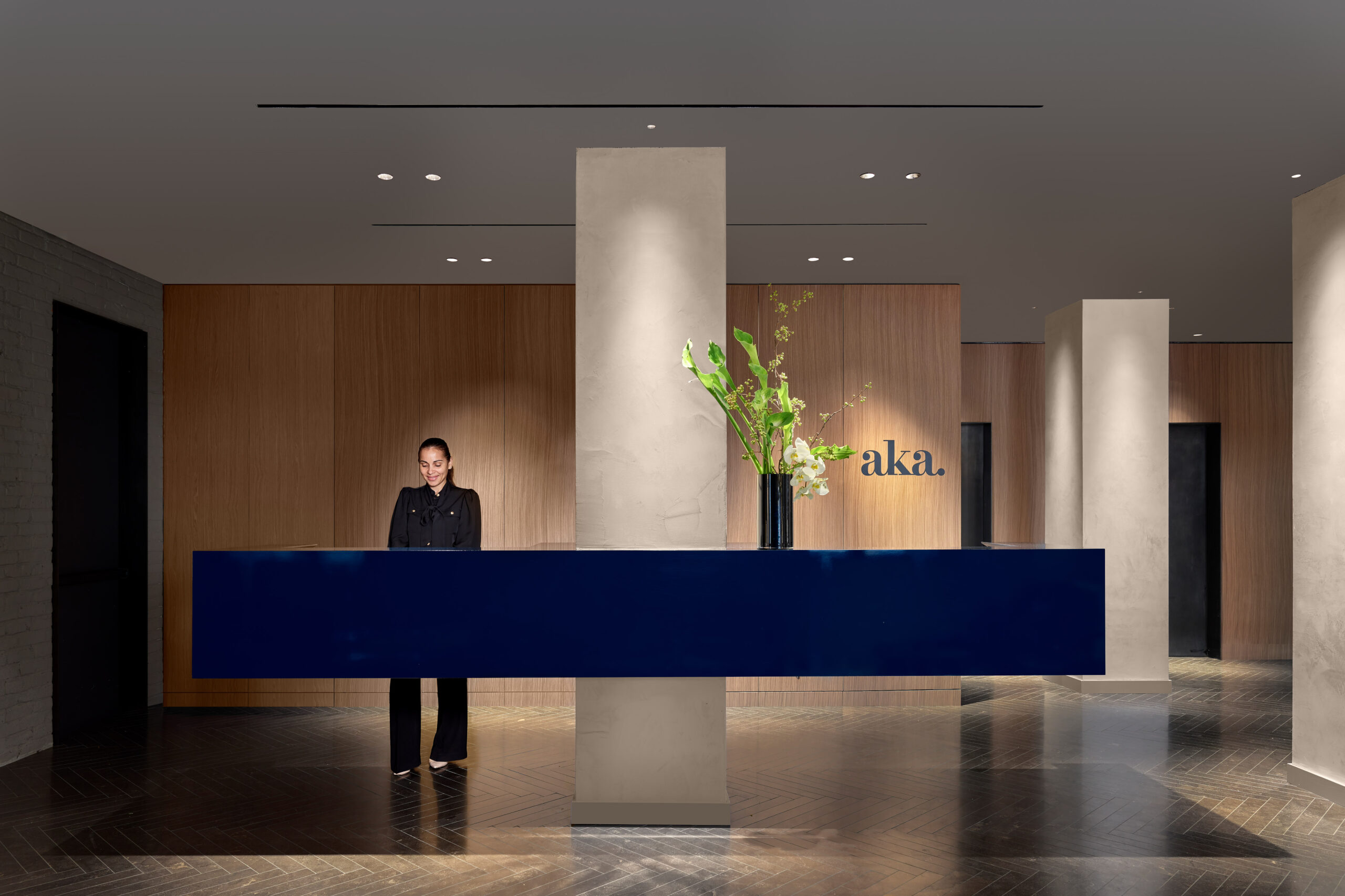 The furniture tells a similar story. Porro, the Brianza manufacturer where Lissoni has served as art director since 1989, built its identity on what the company calls “subtraction” — progressive simplification that strips furniture to essential geometry. That thinking lives throughout the hotel’s guestrooms. It lives, too, in the Fantini bathroom fixtures: a family-owned manufacturer on Lake Orta, founded in 1947, whose collaborations with leading designers have shaped contemporary fixture design. Lissoni’s own Aboutwater collection, co-designed with Naoto Fukasawa for Fantini, brought architectural rigor to the bathroom. These are not anonymous fittings; they are icons of design that have provenance.
Even the art is chosen at this level of specificity. The Poster Club, the Copenhagen platform that curates emerging Scandinavian artists, selected the guestroom works — pieces by Atelier Cph, Estelle Graf, Moe Made It, Nord Projects — for what the hotel describes as “soft, organic, graphic, simple shapes” in dialogue with Lissoni’s interiors. In the lobby, a different register: textile pieces by X+L, the Amsterdam duo Xander Vervoort and Leon van Boxtel, who have worked together since 1996. Their hand-dyed and hand-woven silk compositions, abstract and geometric, carry visible irregularity. They call it “the human touch.”
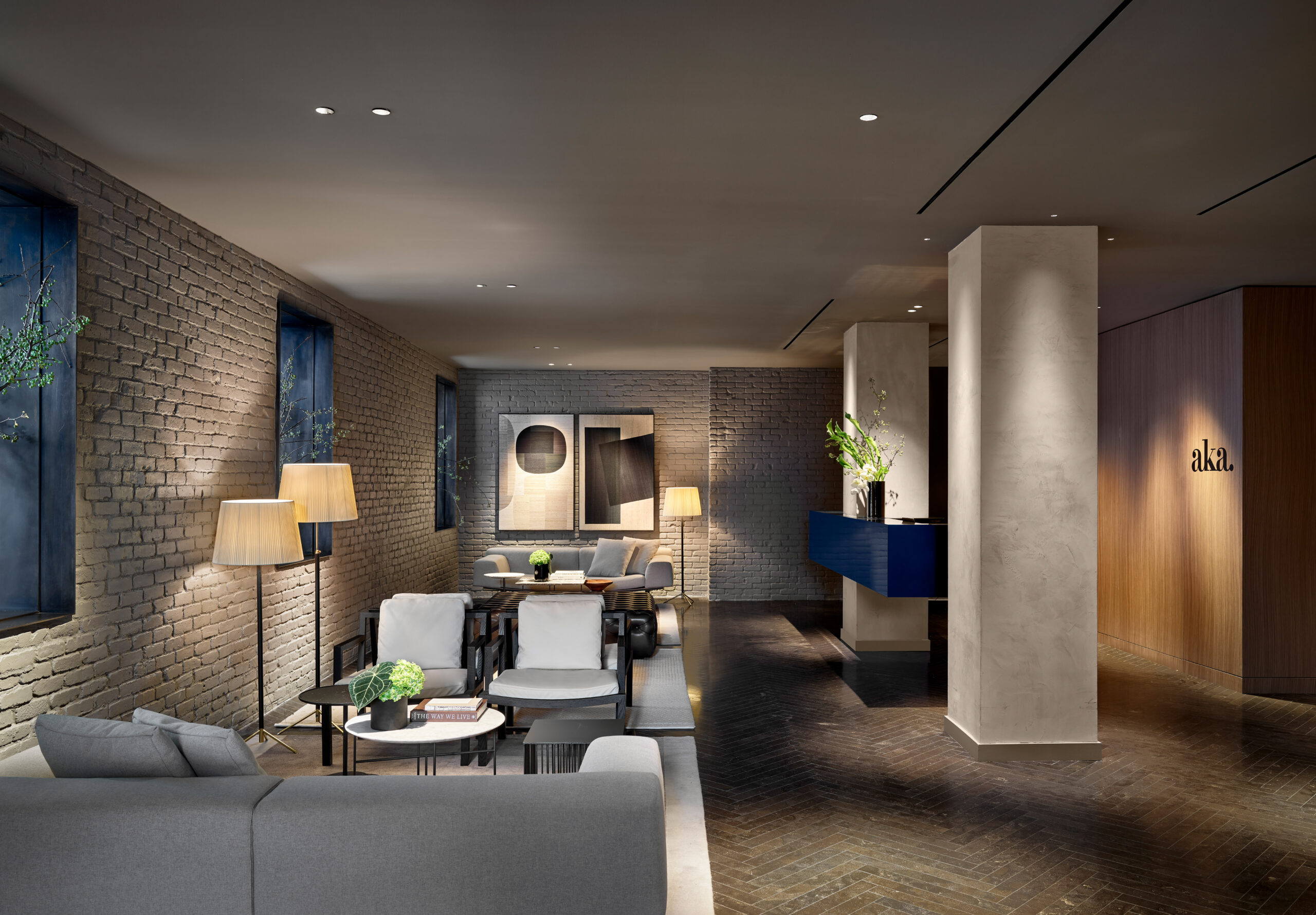 The through-line is a craft that can be traced. Every element connects to a workshop, a philosophy, a position within the discipline. For visitors who carry that knowledge, the hotel reveals itself. For those who don’t, the coherence still registers with warmth, restraint, the sense that decisions have been made consciously and meticulously.
AKA, the hospitality brand behind the project, built its model on extended stays: weeks and months rather than nights. A division of Korman Communities, a five-generation Philadelphia real estate family, the company operates sixteen properties and positions itself around “livability” and the idea that a hotel should function as a temporary residence rather than a way station. The Lissoni collaboration, which began with Hotel AKA Alexandria, reflects that ambition.
Architizer spoke with Larry Korman, CEO of AKA, about the design philosophy behind the property, the Lissoni partnership, and what it means to create spaces that feel genuinely inhabitable.
You’ve staked your brand identity on creating the “World’s Most Livable Hotels.” What are the non-negotiable design and experiential elements that make a hotel truly livable versus simply luxurious?
The ‘World’s Most Livable Hotel’ means designing spaces that feel genuinely like home, with comfort, functionality and thoughtful design at every turn, intended to welcome guests for weeks or even months at a time. Design sits at the core of AKA’s identity, turning each stay from simply purposeful to truly memorable. Each property reflects its surroundings while maintaining refinement and understated elegance, with intuitive layouts, personalized service and curated business, wellness and lifestyle amenities that bring the ease of residential living into every stay. Art and design have always been central to AKA, and Hotel AKA NoMad is a natural extension of that philosophy. Designed by Piero Lissoni, it showcases cultured, unique artistic flair to match the creativity of downtown Manhattan, offering our discerning travelers the world’s most livable hotel in one of New York City’s premier design destinations.
 Hotel AKA NoMad marks Lissoni’s first NYC hotel. What drew you to his work, and how does his Japanese-Scandinavian minimalism align with AKA’s residential philosophy?
AKA has a long-standing creative partnership with Piero Lissoni, whose design philosophy resonates deeply with AKA’s own. Lissoni’s Italian design heritage with Japanese-Scandinavian minimalist influences, where quiet elegance, functionality and calm coexist, mirrors AKA’s residential approach, creating spaces where guests feel truly at home while immersed in thoughtful, sophisticated design. As leaders in long-stay accommodations, we apply our residential philosophies to elevate traditional hotels into more livable, high-quality spaces — a vision strengthened by Lissoni’s work.
Hotel AKA NoMad, Lissoni’s first New York City hotel and his second collaboration with AKA after Hotel AKA Alexandria, brings this philosophy to life. From guestrooms to public spaces, his intentional approach transforms the property into a serene retreat in Manhattan’s Design District, balancing tranquility with the energy of the city. This collaboration highlights the seamless blend of comfort, privacy and style that distinguishes AKA within the hospitality landscape. The property offers a luxury escape that is truly quiet, and people can retreat and feel calm.
 You’ve positioned this hotel in Manhattan’s Design District. How does a neighborhood’s creative energy influence this property and indeed the other properties in the portfolio, and how does the hotel contribute back to NoMad’s design culture?
NoMad has become one of Manhattan’s most exciting neighborhoods, and that energy definitely shapes the vibe at Hotel AKA NoMad. Being in the heart of the Design District means we’re surrounded by innovative studios, showrooms and creative projects that are breathing new life into historic buildings and that inspiration shows up throughout the hotel. Our guests get to experience the best of the neighborhood, from the Empire State Building views in our Empire Suite to strolls through Madison Square, and all the furniture and design showrooms nearby.
At the same time, we contribute by creating spaces that celebrate design and craftsmanship. The hotel’s style and programming are all about reflecting the neighborhood’s creative pulse while offering a refined, welcoming place to stay. It’s really a two-way relationship: NoMad inspires us, and we aim to contribute to its reputation as a hub for design and culture.
From that floating origami staircase to custom window seats in the guestrooms — these feel like deliberate investments in moments of pause. How do you think about the role of these human-scaled design gestures in shifting how guests inhabit space?
The signature spiral staircase at Hotel AKA NoMad is more than just a design element; it’s a journey of elegance, form and function. As one of Lissoni’s signature architectural statements, the staircase anchors the lobby and becomes one of the very first elements guests encounter when they walk in, immediately setting the tone for the refined, sculptural design narrative that carries throughout the property.
At AKA, we see every detail as an opportunity to create moments that make guests slow down and engage with their surroundings. These touches help transform a room from simply a place to stay into an experience that feels personal and thoughtful. By designing for comfort, curiosity and discovery, we encourage guests to inhabit the hotel in a more intentional, immersive way. Ultimately, it’s these subtle gestures that make a stay at AKA feel both luxurious and distinctly memorable.
 With 16 properties across multiple continents, what is it you do to maintain design integrity while responding to each location’s unique character? What’s the through-line that makes an AKA property recognizable?
Our design process starts by really getting to know each location. Every property reflects its city, from the historic charm of Philadelphia to the relaxed sophistication of West Palm, to the lively energy of New York City, while keeping the warm, residential feel that’s unmistakably AKA. We lean into minimalist design: clean lines, natural materials, uncluttered spaces and understated touches that create a calm, welcoming vibe.
Across all our properties, the goal is the same: spaces that feel like home, where guests can cook in their own kitchen, work from their living room, or just unwind in comfort. Signature details like tailored furniture, a balance of style and functionality, and nods to the local neighborhood make each property feel connected to its city, yet instantly recognizable as AKA. With five generations of the Korman family’s experience in residential real estate shaping everything we do, we aim to offer spaces that are authentic, thoughtful and a little sanctuary-like, no matter where you stay.
How people work and travel has fundamentally changed over the last five years. How has AKA’s residential-forward model stepped up to meet that shifting mindset and reach new guest expectations, and what are you hearing from your visitors about what it is they need from hospitality now?
AKA has been at the forefront of the luxury long-stay market since 2005, offering a unique hotel-home hybrid that anticipates what today’s travelers are seeking. The last few years have accelerated a shift in how people work and travel — hybrid work, leisure trips and longer stays are now the norm. Guests aren’t just looking for a place to sleep; they want a residence where they can truly live. That means spacious accommodations with gourmet kitchens to cook in, living rooms to relax and entertain, and in-residence amenities like laundry to make life easier.
At the same time, they expect a high-level service consistency and thoughtful touches that only a hotel can provide. What we’re hearing from our visitors is clear: flexibility, comfort and authenticity are key. Extended-stay models like AKA have proven resilient and sustainable because they meet these needs, giving guests the freedom to work, live and explore while enjoying the stability and care of a luxury hotel environment.
When AKA entered the hotel space, it did so by reimagining what a stay could feel like, bringing residential warmth and spaciousness into a luxury hospitality framework. Rather than adapting to trends, AKA has consistently shaped them, creating a category where design, comfort and long-term livability coexist.
 As you look ahead, what’s the next frontier for livable luxury? Where is AKA — and the industry — heading in terms of how we design for the way people actually want to live?
With Airbnb and other players exploring hotel-focused models, it’s clear the long-stay, hybrid hotel-residence space is gaining renewed attention. Extended-stay and hotel-residence models like AKA have proven resilient because they combine the freedom of a home with high-level service consistency and the flexibility that only a hotel can deliver. Where others have struggled to make longer stays seamless, this model remains sustainable, meeting the evolving needs of travelers who want both independence and reliability.
Architizer is thrilled to announce that the 2026 A+Product Awards is open for submissions! The clock is ticking — get your products in front of the AEC industry’s most renowned designers by submitting today.
Images Courtesy of Hotel AKA NoMad
The post A Hotel That Rewards the Trained Eye: Inside Piero Lissoni’s New York Debut appeared first on Journal.