

.jpg)
















This device slows Citi Bikes in "rent-burdened" New York blocks
New York artist Justin Blinder has created a device that slows the city's paid-share bikes as they pass through parts of the city that are under "greater housing pressure".
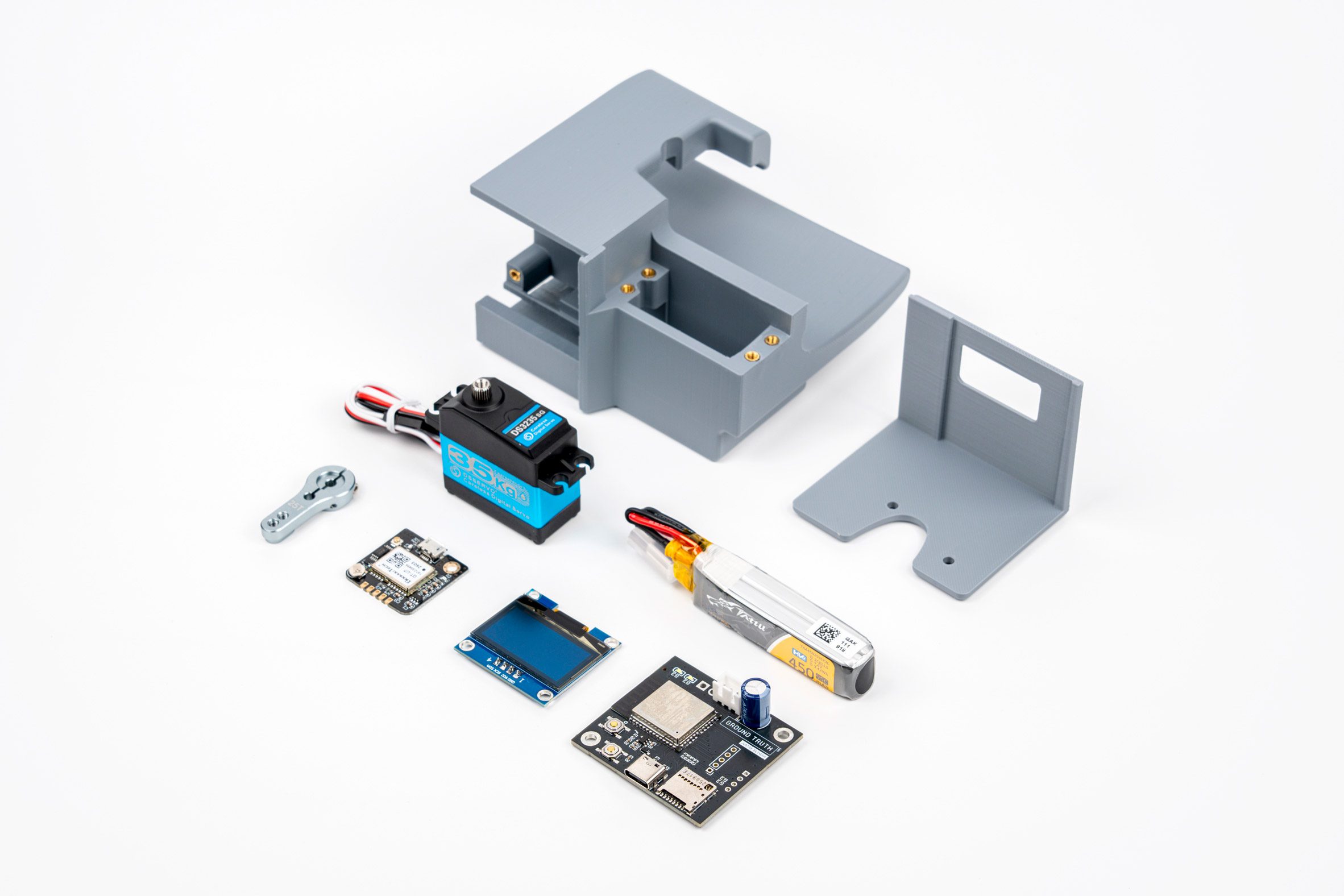
For the Ground Truth project, Blinder combined his backgrounds in data and design as well as his experience as a bike messenger to create a 3D-printed device that manipulates the brakes of a Citi Bike.
The device slows it down in areas where rent burden, the percentage of a household's income spent on rent and utilities, is high.
"The city stopped feeling like a map and started to feel like the sequence of really radically different conditions that I was encountering," Blinder told Dezeen.
This led the artist to ask, "what if affordability wasn't something you mapped onto the city, but became part of the terrain you actually had to move through?"
The project seeks to physicalize housing data.
"It's very hard to understand visually what affordability looks like with all of the complex policies embedded in the built environment," Blinder said.
"That idea was very much present in these preconceptions I had while I was biking throughout the city delivering food, especially with what affordable housing often ends up looking like, how people who are rent burdened are depicted, or people who live in NYCHA housing are represented in rent burden datasets."
Blinder primarily used data from the American Community Survey for the project, combining the median share of income spent on rent and the percentage of renter households spending at least half of their income on housing, according to his website dedicated to the project.
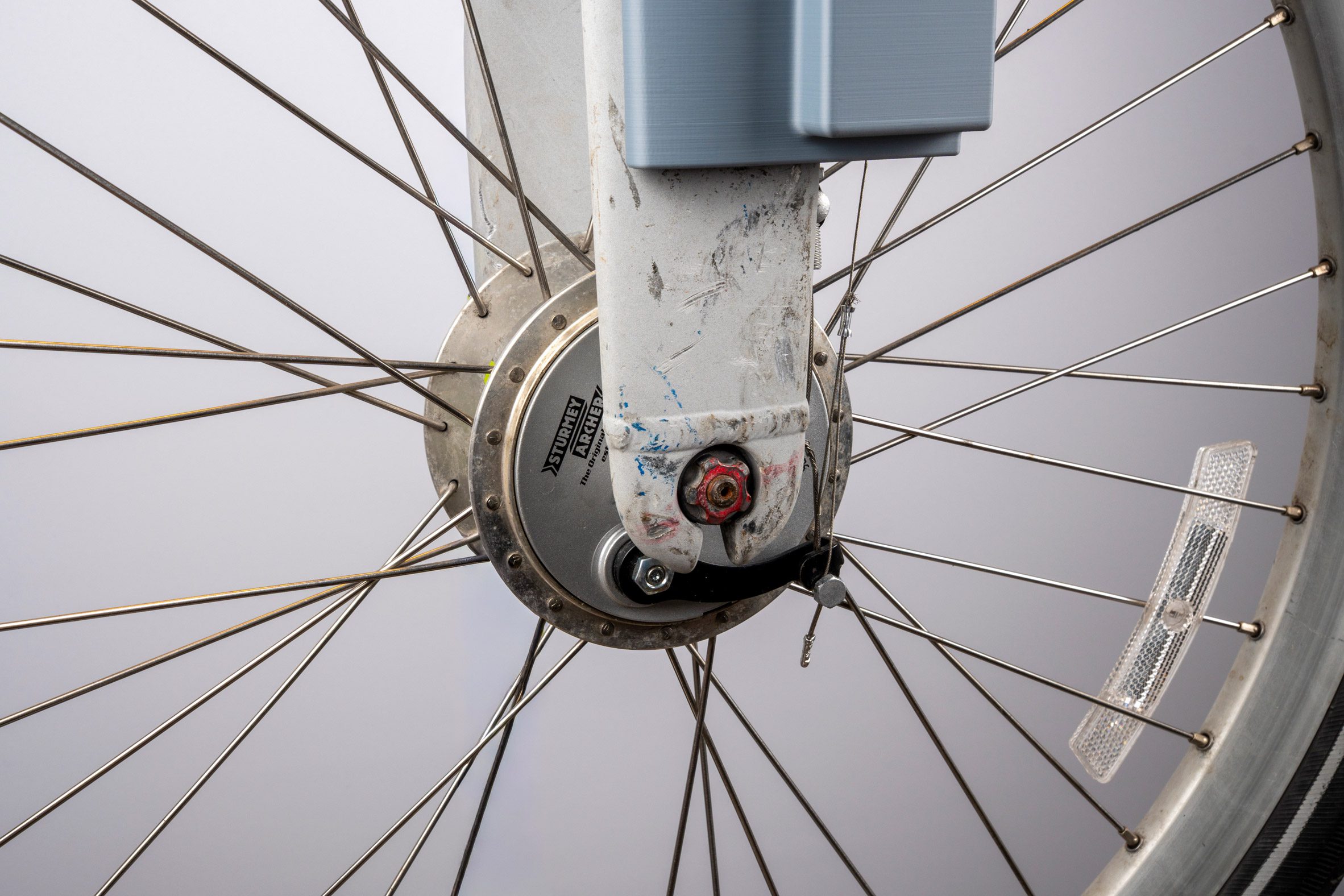
His research and data models are stored in the device, which in turn "applies tension" to the front brakes as a biker passes through the city.
"In areas with greater housing pressure, it applies more resistance; in more affordable areas, it releases that tension," reads a project description.
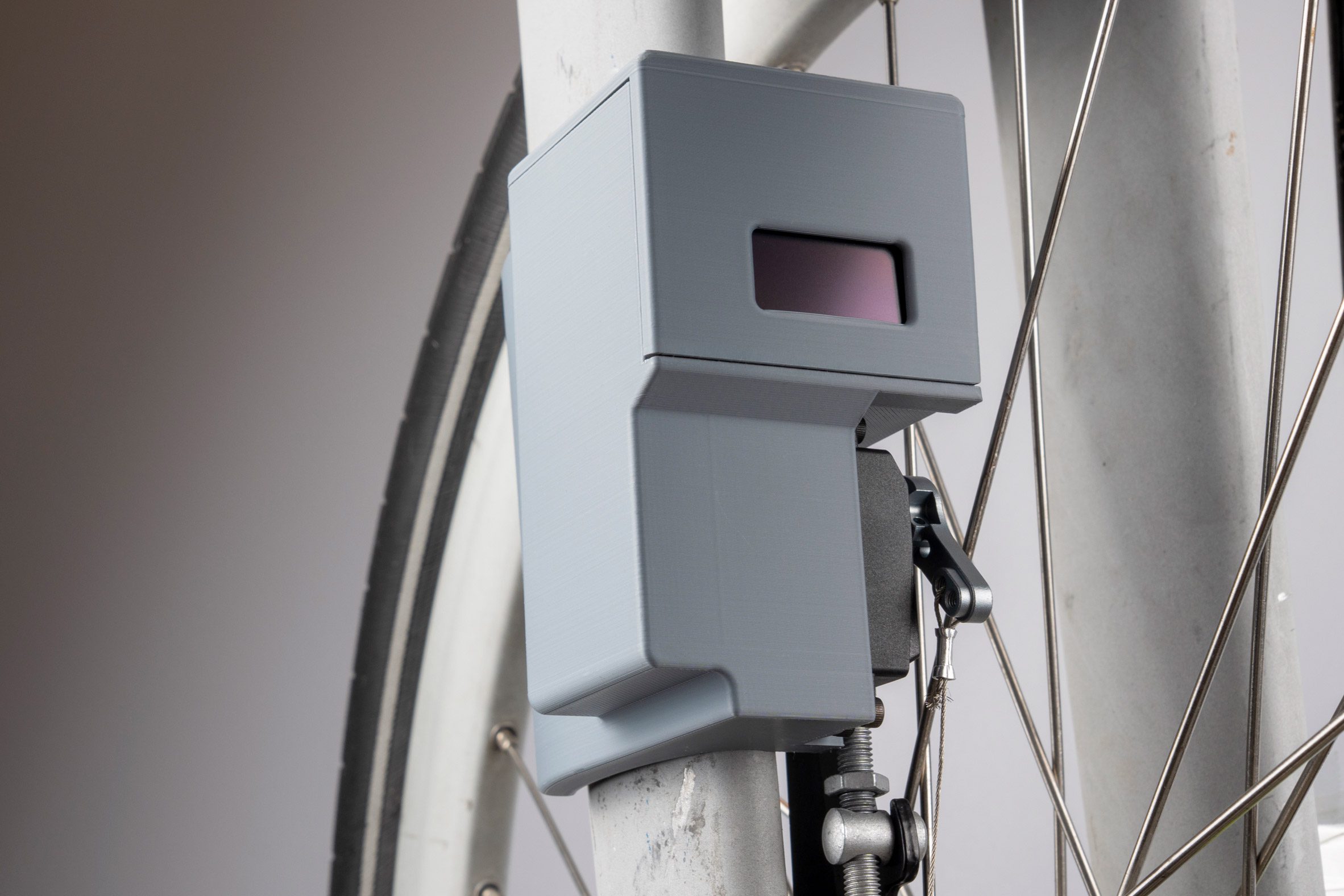
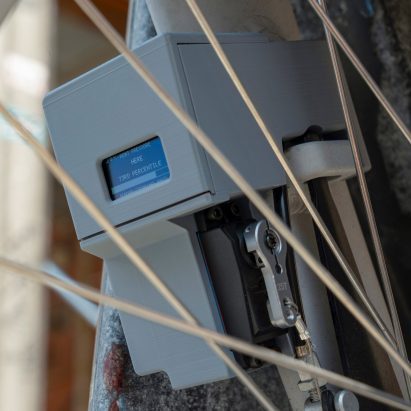
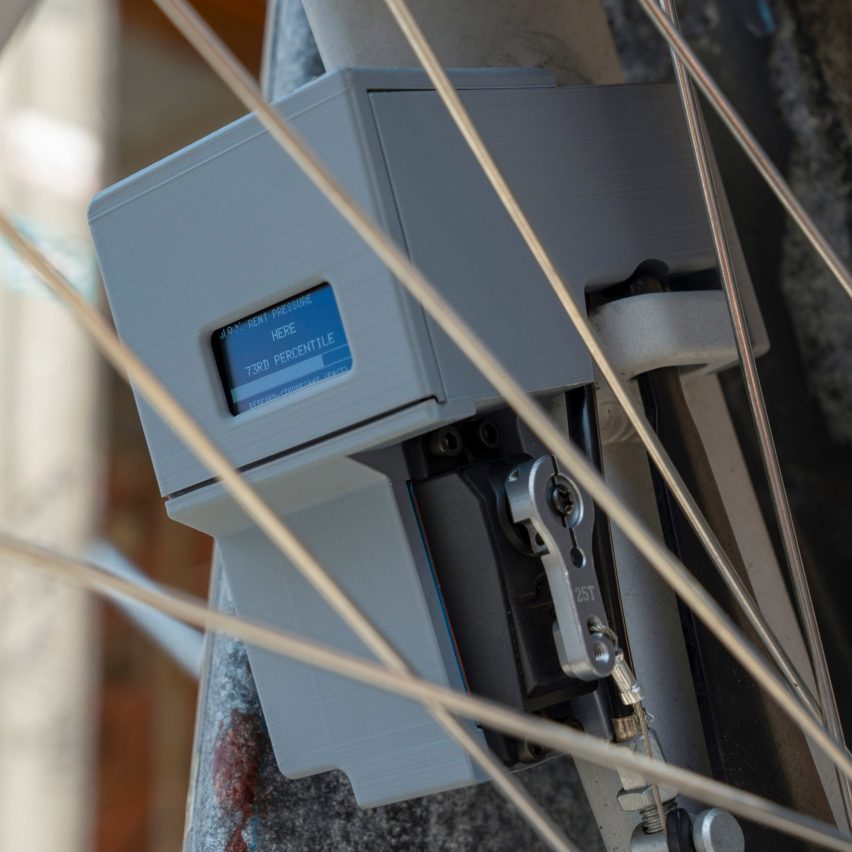
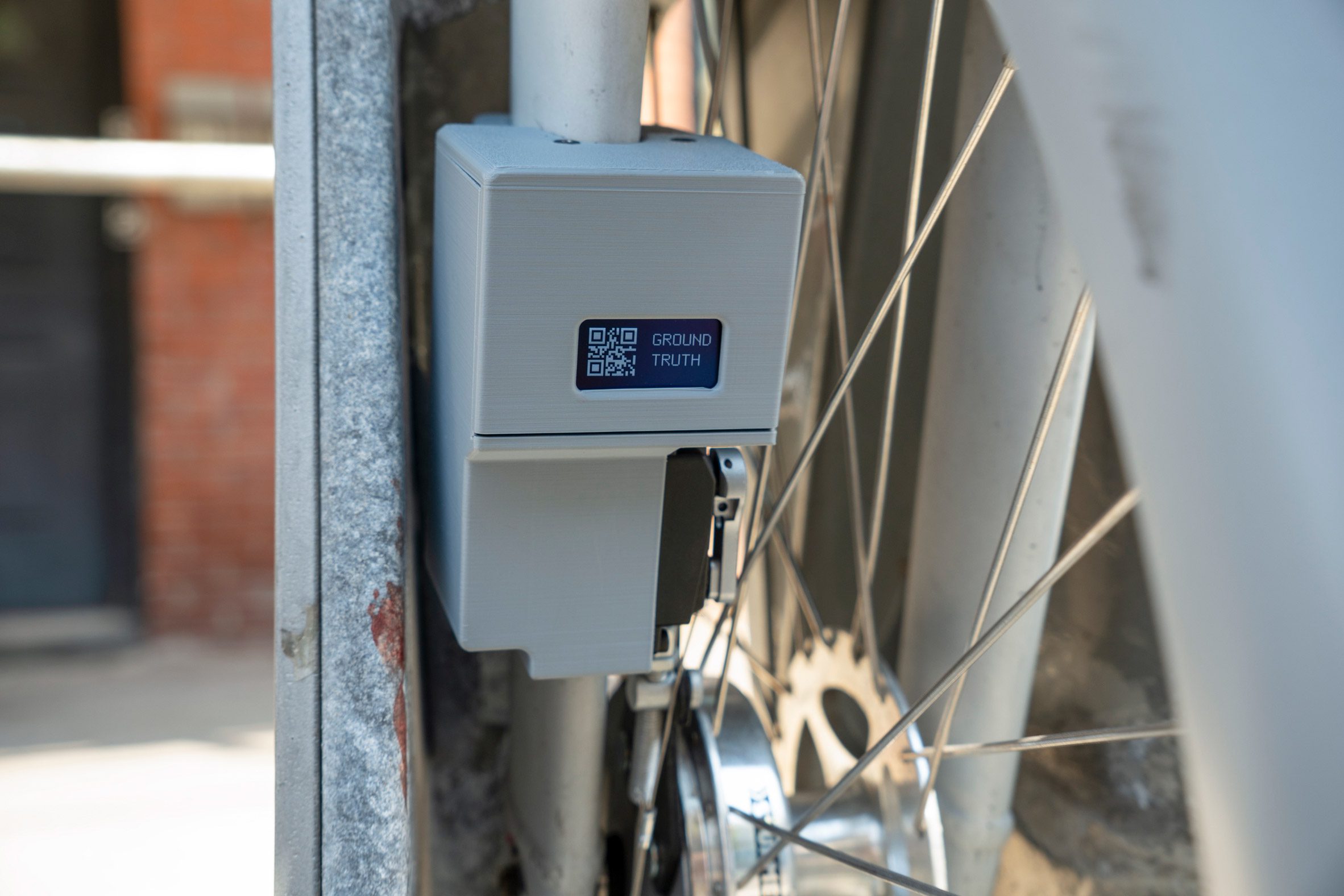
The small, grey machine clamps onto the front fork of a CitiBike. Blinder said he worked with an industrial designer on its creation and designed it to be installed with minimal effort.
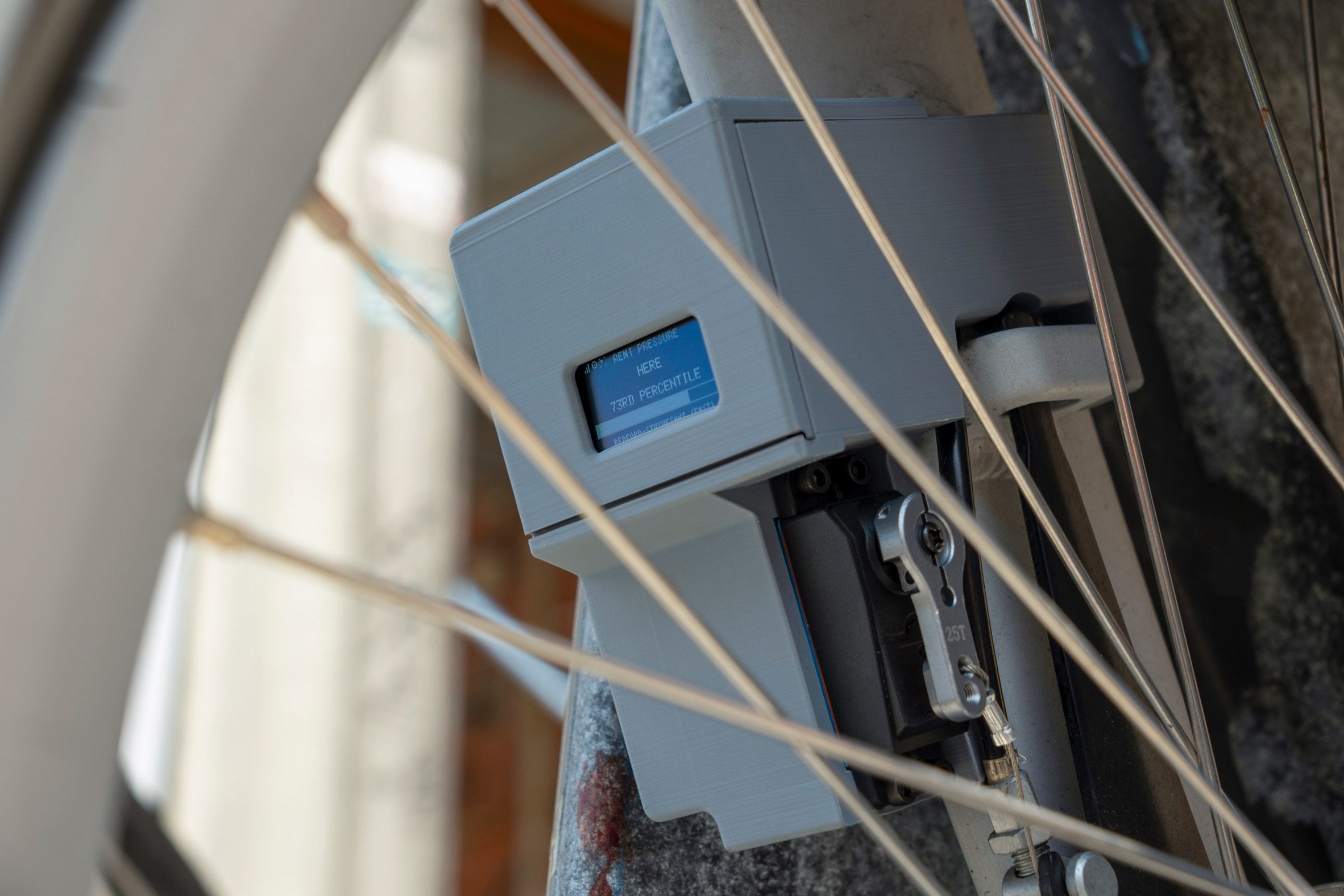
A tiny screen displays the local rent burden percentile as riders pass through the area, and a QR code that leads to the project website.
Building it was "maybe the easiest part of the project", according to Blinder. The artist says it consists of four main parts – a tiny computer called an ESP32S3, an SD card with Blinder's dataset, a GPS system and a servo motor with a tiny arm attached to it that reaches out to control the brakes.
According to the artist, the data is highly localised and can change even between blocks. Blinder also noted that Citi Bike docks themselves can illustrate differences in the city based on where they are available.
"Urban infrastructure isn't just experienced functionally – it's also experienced symbolically as a set of different social signals about who places are for, who it's being redesigned for, and what kind of changes are coming in the future, and so the same bike lane or city bike dock can signify access or safety to one person, but also displacement to someone else."
Blinder said that, for safety reasons, the device is not fixed to any public bikes. Instead, he's organised group tours where volunteers can experience the project with the help of sponsor Idle Hands, a Brooklyn-based incubator.
He said he hopes to eventually transform the project into an open-source resource, where others can create their own Ground Truth device.
"A lot of my projects try to take traditional representations and problematize them, make them a bit less stable, and to take the data off the screen and really put it back in contact with the streets, our bodies, and a lot of the assumptions we have about places and the built environment," said Blinder.
Conceptual tools for bringing awareness to affordability were also recently used in Sweden with tiny housing units by Developer Riksbyggen and creative agency BBDO.
Earlier this year, an ADU initiative was rolled out by New York mayor Zohran Mamdani in light of ongoing affordability issues in the city,
The photography is courtesy of Justin Blinder.
The post This device slows Citi Bikes in "rent-burdened" New York blocks appeared first on Dezeen.